
This is going to be a guide on Best AI Platforms for Business Constraint Optimization. Such platforms assist businesses in detecting workflow bottlenecks, automating redundant tasks, and optimizing resource allocation.
- Key Points & Best AI Platforms for Business Constraint Optimization
- 10 Best AI Platforms for Business Constraint Optimization
- 1. Blue Yonder Orchestrator
- 2. Salesforce Einstein
- 3. Make
- 4. UiPath
- 5. Motion
- 6. Tableau with AI
- 7. ClickUp
- 8. Zoho Books AI
- 9. Fyle
- 10. Ada
- What Makes Make Useful for Constraint Optimization?
- Why Choose Best AI Platforms for Business Constraint Optimization
- Conclusion
- FAQ
Utilizing AI-driven insights, predictive analytics, and intelligent automation can help improve efficiency, minimize operational delays, or enhance decision-making (next page:
Benefits of implementing AI in Operations) In this guide, we explore the leading tools revolutionizing constraint management in various domains.
Key Points & Best AI Platforms for Business Constraint Optimization
Blue Yonder Orchestrator – Optimizes supply chains using AI, predicting constraints and recommending efficient operational workflows.
Salesforce Einstein – AI-driven insights identify bottlenecks, automate processes, and optimize sales and service constraints.
Make – Automates complex business workflows, reducing manual errors and handling constraints efficiently across multiple systems.
UiPath – Robotic Process Automation (RPA) platform that streamlines repetitive tasks, solving workflow constraints effectively.
Motion – AI-powered task management tool prioritizing work intelligently, reducing scheduling and resource allocation bottlenecks.
Tableau with AI – AI-enhanced analytics visualizes constraints, predicts trends, and provides actionable optimization insights.
ClickUp – Centralizes tasks and projects with AI suggestions to overcome productivity and workflow constraints.
Zoho Books AI – Automates accounting tasks, detecting financial constraints and optimizing cash flow and reporting efficiency.
Fyle – AI-driven expense management identifies policy violations and constraint bottlenecks, automating approvals for efficiency.
Ada – AI chatbot automates customer interactions, resolving service constraints and improving operational workflow efficiency.
10 Best AI Platforms for Business Constraint Optimization
1. Blue Yonder Orchestrator
Built from decades of research and experience, Blue Yonder Orchestrator applies AI and machine learning to develop optimized complex supply chain plans.
Its prescriptive analytics continuously recommend the optimal pathways that minimize cost and maximize service level from planning through execution.
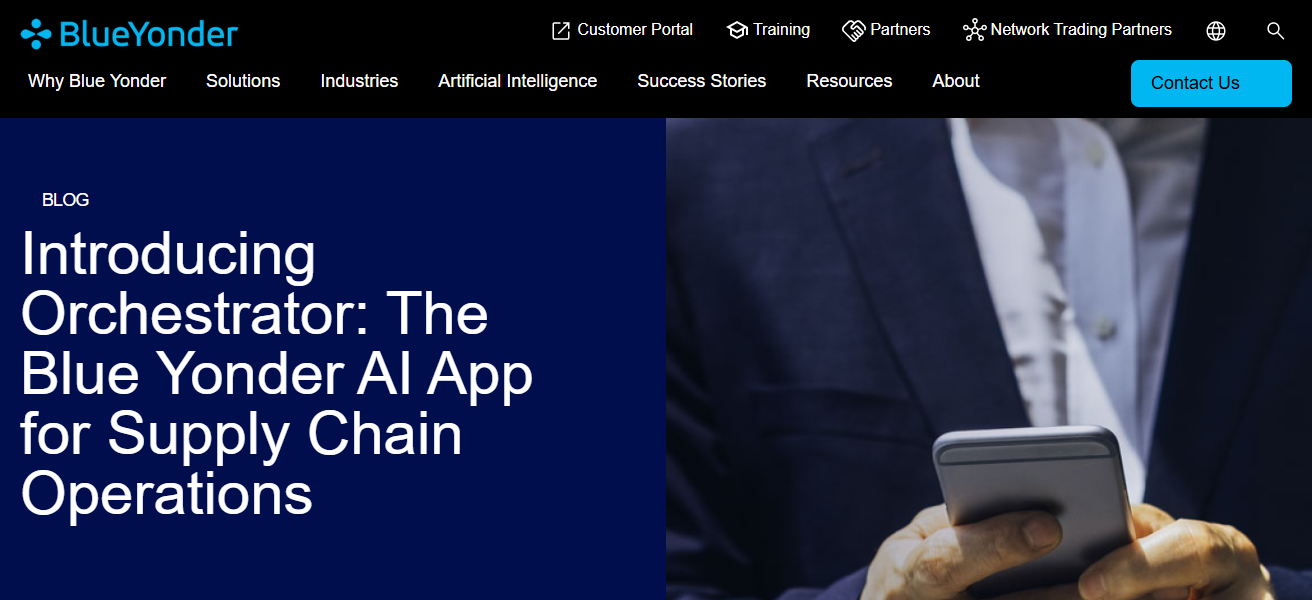
APIs to connect other solutions and integrate with ERP systems give Orchestrator the means to improve visibility, responsiveness for manufacturers and retailers.
The AI in this platform continues to learn on operational data, accelerating business decisions within constraint-rich environments.
Blue Yonder Orchestrator Features
- Artificial Intelligence and machine learning for real-time supply chain optimization
- Demand, inventory and logistics constraint predictive analytics
- Recommendations to saving operational costs and increasing service levels
- Drive ERP / system integrations for complete visibility and responsiveness
| Pros | Cons |
|---|---|
| Advanced AI for real‑time supply chain flexibility | High implementation complexity for small businesses |
| Prescriptive analytics reduce costs & delays | Requires strong data infrastructure |
| Integrates with ERP/operations systems | Can be expensive for broader deployment |
| Learns patterns to improve decisions | Training periods needed for accuracy |
| Improves responsiveness across functions | Limited applicability outside supply chain |
2. Salesforce Einstein
Salesforce Einstein integrates AI into the common expressions of your CRM To highlight where is the bottleneck in sales, service and marketing.
It leverages predictive modeling to predict pipeline gaps, resource allocation and high‑value opportunity ranking; recommending next best actions.
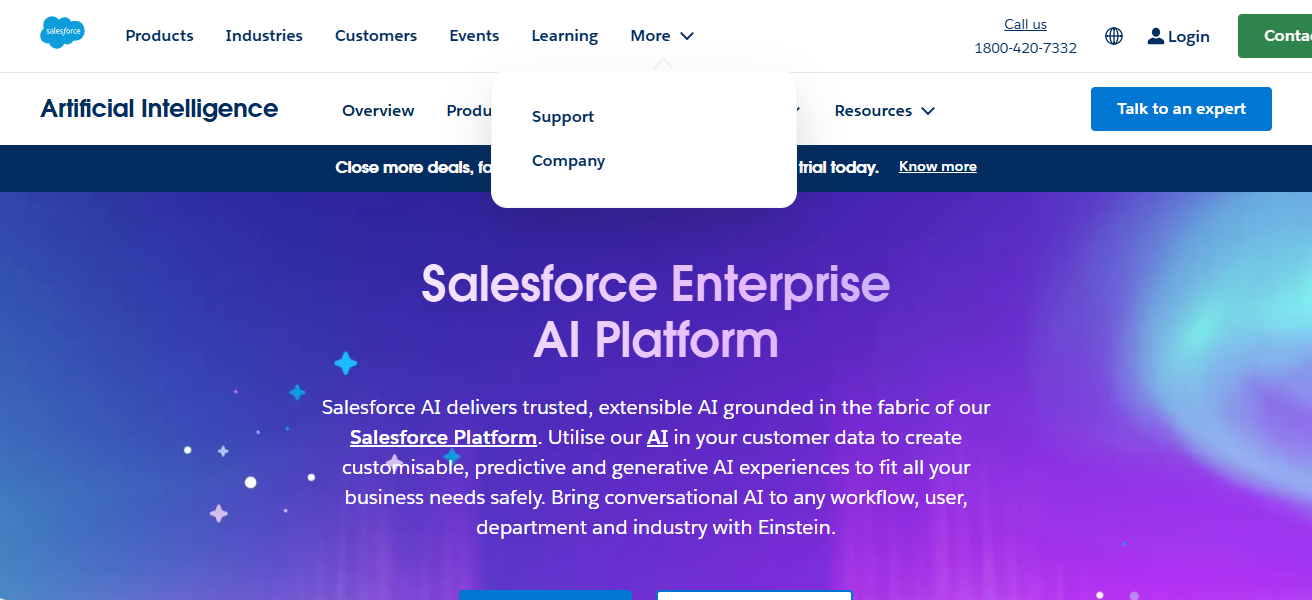
By using Einstein’s natural language processing and automated sentiment analysis, you’ll save on manual overhead and gain more focused insight from customers.
Heavily integrated into Salesforce Clouds, it assists enterprises in identifying friction points and automating repetitive tasks which allows teams to focus on most strategic constraints and grow.
Salesforce Einstein Features
- Predictive modeling to predict bottlenecks with sales, service and marketing.
- Recommended next-best-actions via AI to aid resource efficiency.
- Actionable customer insights through sentiment analysis and NLP
- Reducing friction with automation of repetitive CRM tasks
- Salesforce Clouds Integration for end-to-end constraint resolution
| Pros | Cons |
|---|---|
| Native AI within Salesforce ecosystem | Limited flexibility outside Salesforce |
| Predictive analytics for sales & marketing | Can be expensive for smaller teams |
| Easy integration with CRM workflows | Customization may require technical expertise |
| Strong NLP for customer insights | Dependent on Salesforce data |
3. Make
Make (formerly Integromat) is a visual automation platform that orchestrates data flows between systems to eliminate workflow constraints when platforms don’t communicate. Its AI‑assisted scenario builder and intelligent mapping minimize mistakes and remove manual handoffs between tools.
Make’s real‑time monitors spot bottlenecks and automate responses to exceptions, boosting operational throughput.
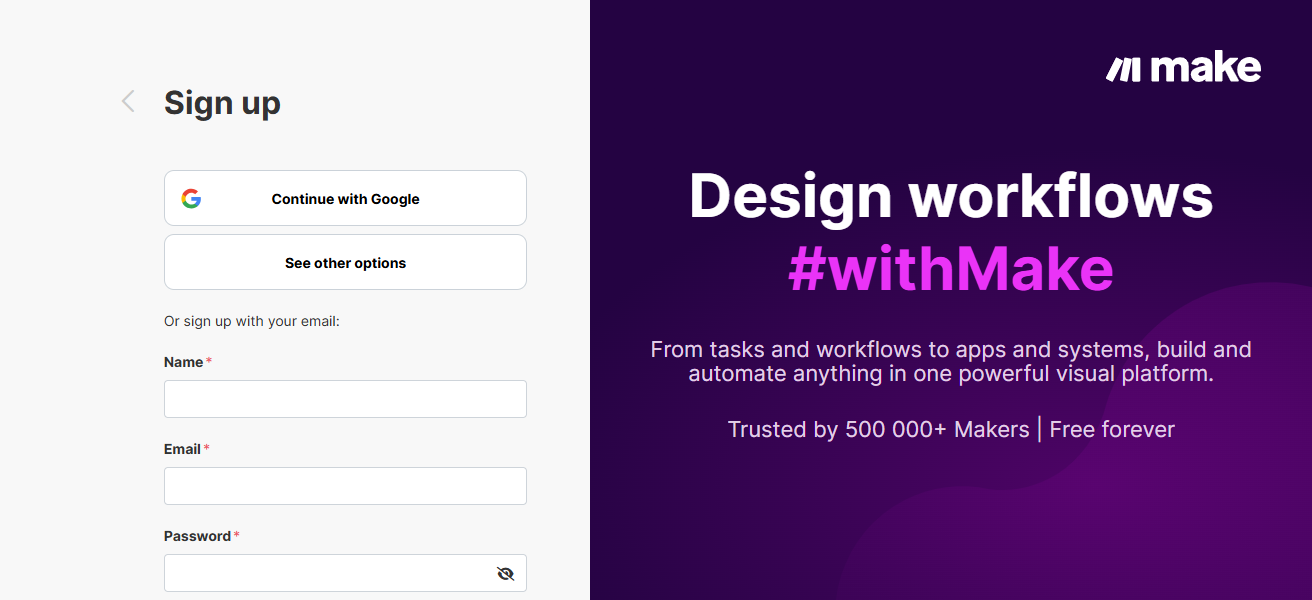
This platform offers flexible triggers and advanced scheduling (data no longer gets stuck in a well of constraint-induced delays) for scaling businesses to ensure its data keeps flowing fluidly between their CRM, finance and operational systems.
Salesforce Einstein Features
- Predictive modeling to predict bottlenecks with sales, service and marketing.
- Recommended next-best-actions via AI to aid resource efficiency.
- Actionable customer insights through sentiment analysis and NLP
- Reducing friction with automation of repetitive CRM tasks
- Salesforce Clouds Integration for end-to-end constraint resolution
| Pros | Cons |
|---|---|
| Powerful workflow automation | Steeper learning curve than Zapier |
| Visual interface for integrations | Complex scenarios can get overwhelming |
| Supports thousands of apps | Performance may slow with very large workflows |
| Cost-effective compared to competitors | Limited enterprise-grade governance |
4. UiPath
This is UiPath robots being able to automate repetitive tasks in a work environment through RPA combined with AI and analytics, helping identify bottlenecks or constraints happening in the business.
It automates cross-system end-to-end processes — liberating valuable human resources from mundane jobs like data entry and invoice processing.
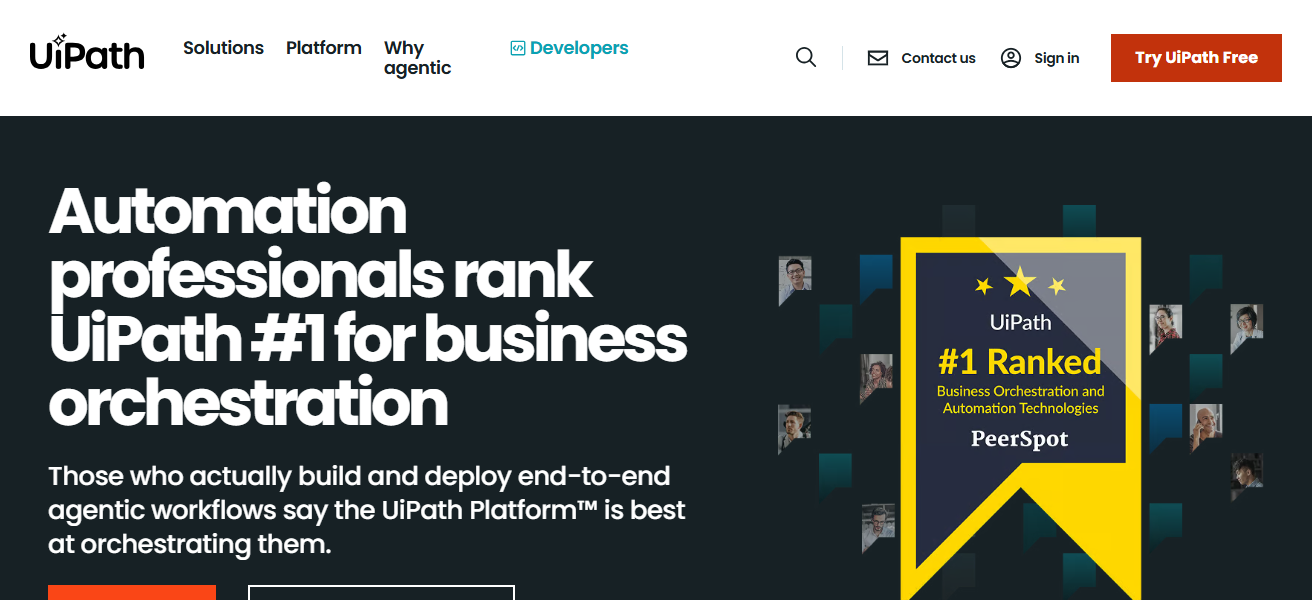
AI builders and document understanding allow these UiPath robots to read unstructured data, cutting down on error and rework.
Its insights dashboard surfaces process bottlenecks and recommends methods of optimization. Organizations become more efficient at scale as they accelerate workflows that have previously limited growth.
UiPath Features
- Robotic Process Automation to eliminate repetitive tasks.
- AI builders, as well as document understanding for unstructured data processing.
- Insight dashboard indicating process bottlenecks and optimization possibilities
- Truly end-to-end automation across finance, HR, operations.
- It scales operations and minimizes errors and manual rework.
| Pros | Cons |
|---|---|
| Leading RPA platform with strong AI integration | High licensing costs |
| Scalable for enterprise automation | Requires skilled developers for advanced bots |
| Strong community and marketplace | Can be resource-intensive |
| Good integration with ERP/CRM systems | Overkill for small automation needs |
5. Motion
Motion is an AI‑powered work management solution that streamlines scheduling and task prioritization, helping to mitigate constraint risks that plague overloaded teams or conflicting deadlines.
Its algorithm evaluates workload, deadlines and habits to automatically reorder tasks for maximum productivity.
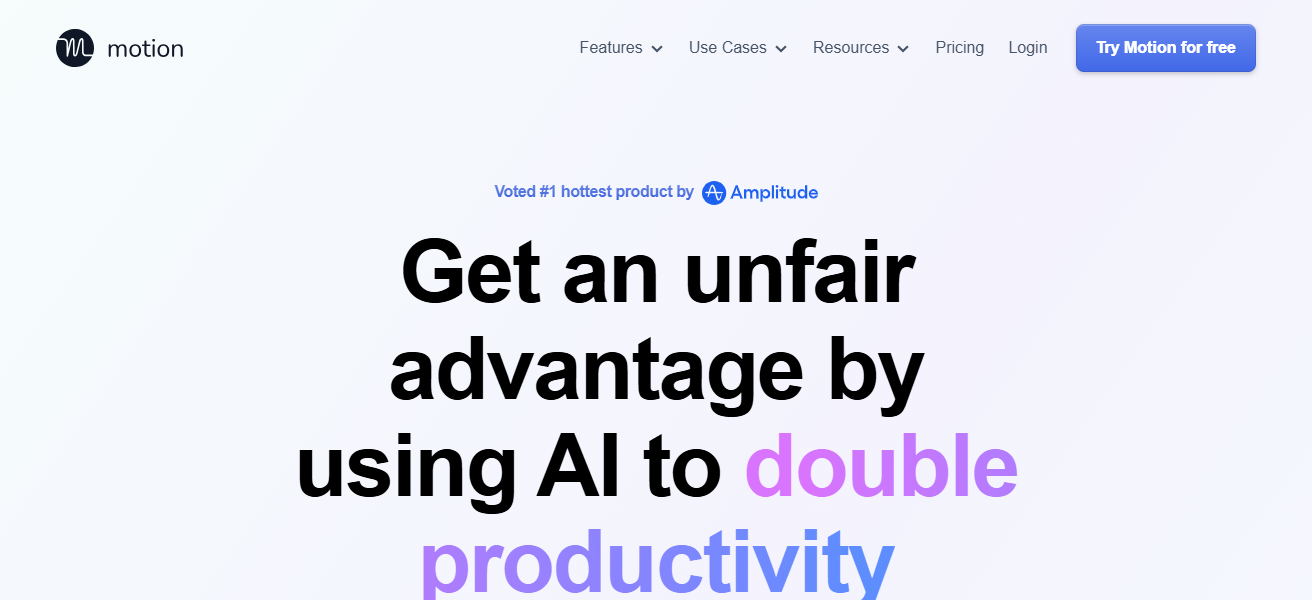
Motion’s real‑time alterations aid teams when priorities change, reducing cognitive friction and execution lag.
For managers, it opens visibility into constraints on resources, supporting better and more informed planning and helping to ensure that the firm meets its strategic objectives without burning out or being inefficient with its resources.
Motion Features
- AI Scheduling And Prioritization For Busy Teams
- Reorder tasks to optimize productivity on a whim
- Real-time adjustments for shifting priorities.
- Visibility into resource and workload limitations.
- Decreases cognitive friction and increases team output.
| Pros | Cons |
|---|---|
| AI-powered scheduling & task management | Limited customization compared to ClickUp/Asana |
| Automates calendar planning | Subscription cost may be high for individuals |
| Helps reduce decision fatigue | Less robust for large project management |
| Intuitive interface | Dependent on Google/Outlook integrations |
6. Tableau with AI
Tableau’s AI enhancements integrate visual analytics with natural language insights and automated modeling to reveal business constraints embedded in data.
Users can ask questions in plain language, discovering constraint patterns across performance or supply — or even customer behavior — without needing to possess deep technical skills.
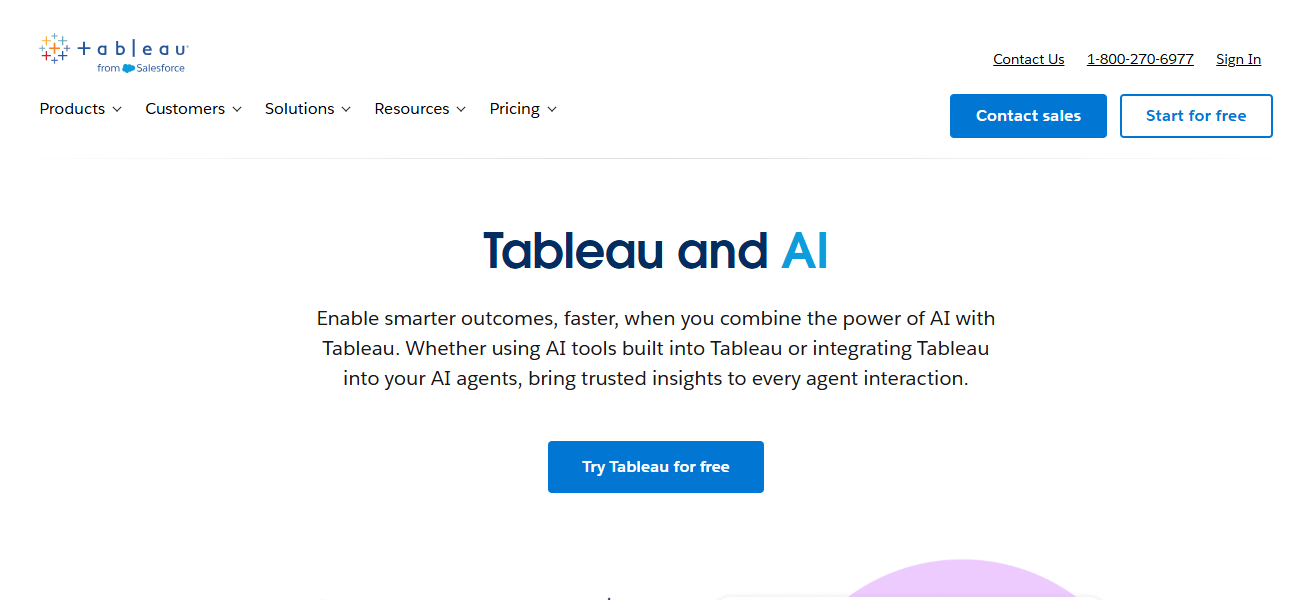
Predictive models identify future bottlenecks and simulate effects of corrective action. Tableau integrates with enterprise data sources to help leaders understand complex datasets, enabling data‑driven decision making and optimized resource pooling to defeat operational cap.
Tableau with AI Features
- AI Scheduling And Prioritization For Busy Teams
- Reorder tasks to optimize productivity on a whim
- Real-time adjustments for shifting priorities.
- Visibility into resource and workload limitations.
- Decreases cognitive friction and increases team output.
| Pros | Cons |
|---|---|
| Advanced data visualization with AI insights | Steep learning curve for beginners |
| Predictive analytics & trend forecasting | Licensing can be expensive |
| Strong enterprise adoption | Requires clean, structured data |
| Integration with multiple data sources | Limited real-time collaboration features |
7. ClickUp
Click Apps:Try these 1-click apps for the most productivityThis is a great way to alleviate the constraint pressures related to projects and tasks.
Its intelligent task creation and tagging alleviates ambiguity, while dependency tracking flags potential bottlenecks before they affect delivery.
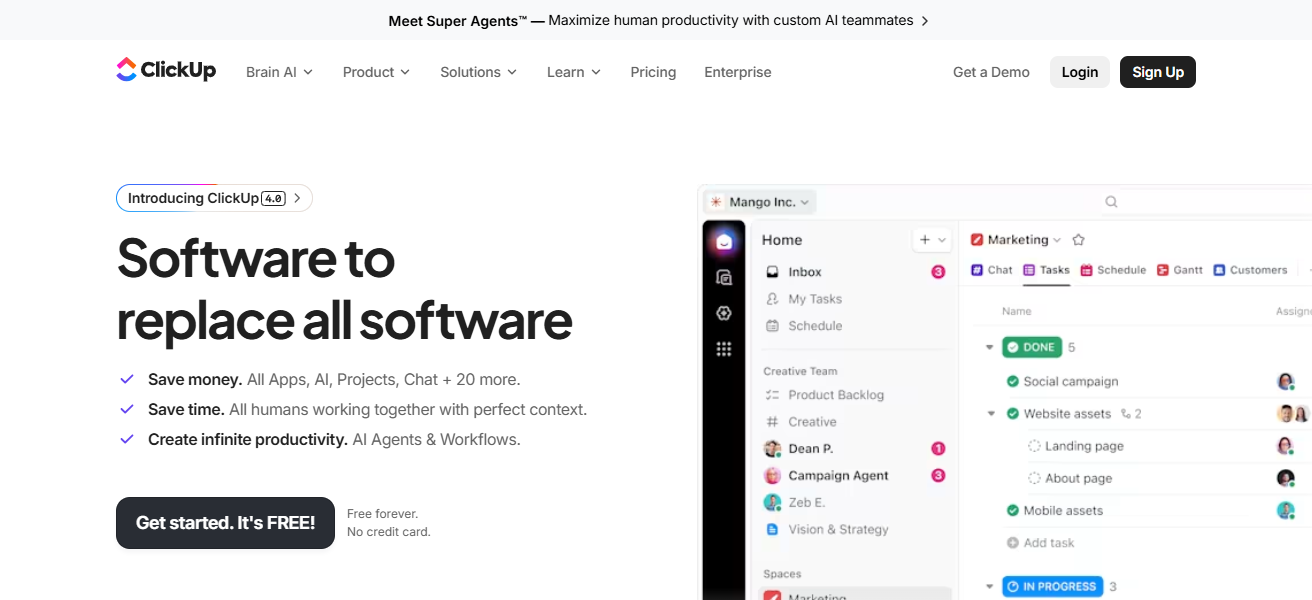
ClickUp connects goals, timelines and workload charts to give teams a single view of constraints impacting productivity.
ClickUp’s customizable automations liberate teams from manual coordination so every organization can pivot fast to change.
ClickUp Features
- Workflow automation (AI-powered: task/projects automation to prevent bottlenecks).
- Create and tag tasks smartly for clarity.
- Tracking dependencies to identify constraint points.
- Unified views of objectives, deadlines, and workload.
- Automations Which Are Customizable For Adaptive And Efficient Operations
| Pros | Cons |
|---|---|
| All-in-one project management tool | Can feel overwhelming due to feature overload |
| AI assistant for task summaries & insights | Some AI features locked behind premium plans |
| Highly customizable workflows | Performance issues with very large workspaces |
| Affordable compared to competitors | Learning curve for new users |
8. Zoho Books AI
Zoho Books uses AI to streamline accounting activities that tend to create financial and compliance hurdles.
Its automated classification and an anomaly detection help reduce errors in expense recognition, while AI‑driven cash flow forecasts give businesses early warning of shortfalls that can adjust spending.
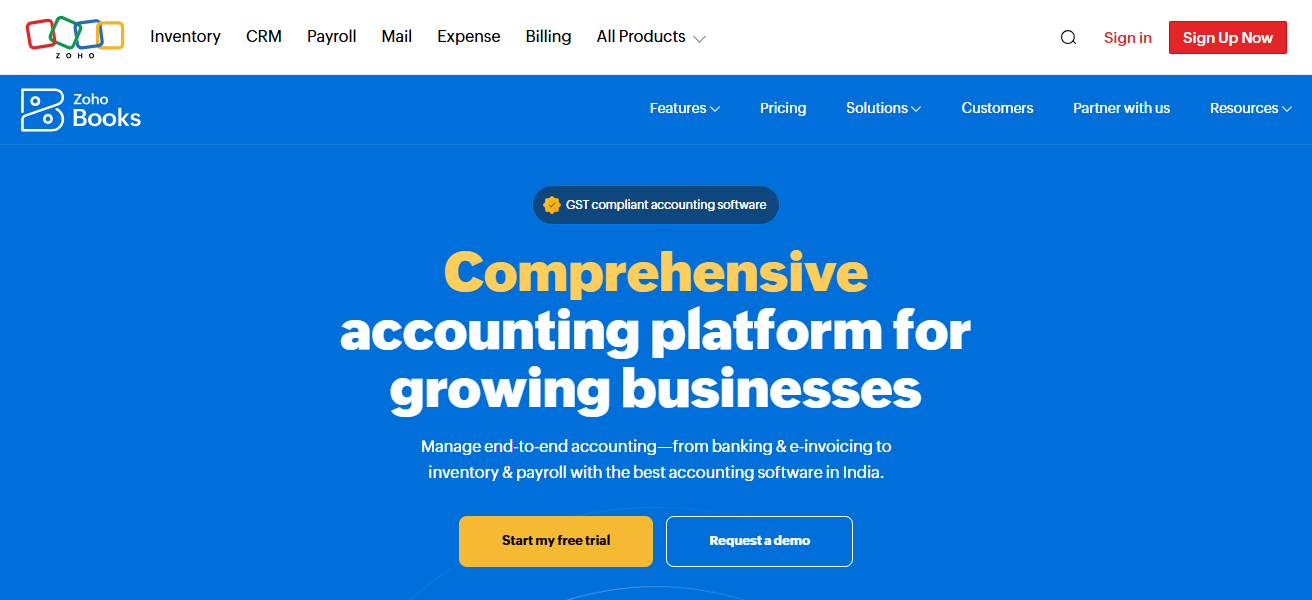
Armed with real‑time intelligence on receivables and payables, organizations can identify areas of constraint such as delayed payments or budget overruns.
The Zoho Books AI also recommends compliance‑ready invoicing and reconciliations, thus enabling finance teams to focus on strategy and risk mitigation.
Zoho Books AI Features
- Automation of accounting and finance tasks using AI
- Detection of anomalies for error avoidance in expenses and invoices
- Cash Flow Forecasting to Predict Cash Issues
- Visibility into receivables and payables in real time.
- Compliance-ready invoicing and reconciliation suggestions.
| Pros | Cons |
|---|---|
| AI-driven bookkeeping & financial insights | Limited advanced features compared to QuickBooks |
| Affordable for SMEs | Integration ecosystem smaller than competitors |
| Automates expense categorization | May lack depth for complex accounting |
| Strong compliance support | AI features still evolving |
9. Fyle
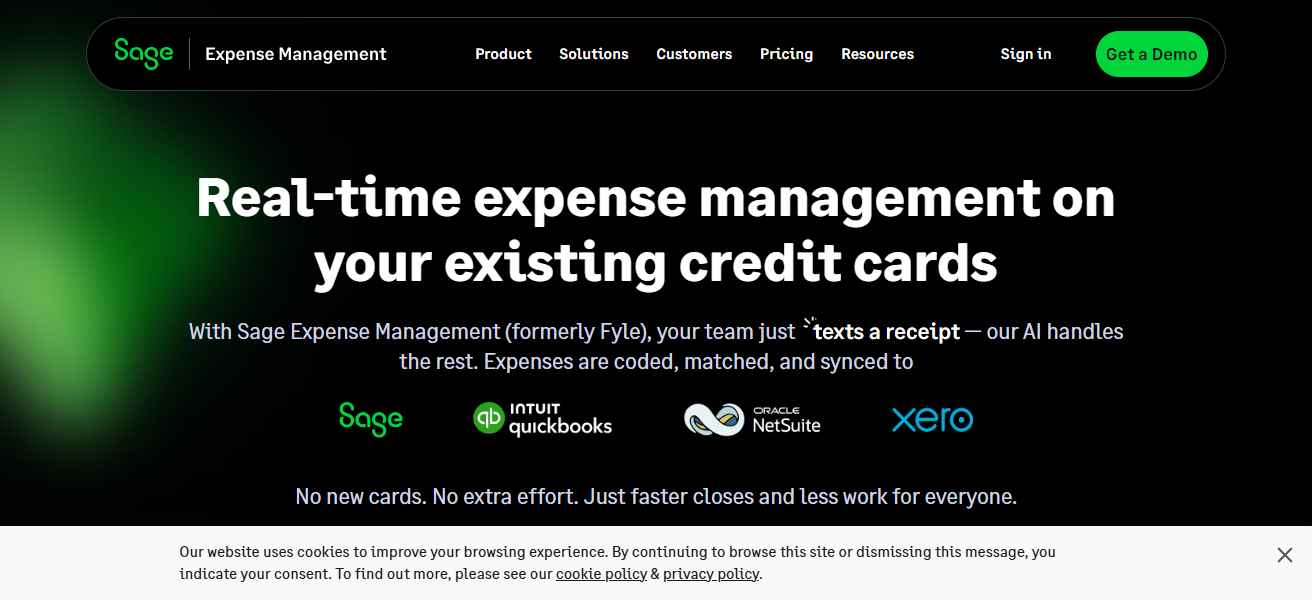
Fyle’s AI-powered corporate expense management tools break through barriers like policy non-compliance, long wait for reimbursement or inefficient approvals.
The smart scanning and categorization interpret receipts and match to the expense rules fully automatically.
AI alerts highlight discrepancies and possible policy violations, thus minimizing drains on finance review hours.
The analytics dashboard from Fyle pinpoints spending patterns that limit budgeting and forecasting accuracy.
Finance departments can free up time spent on manual audits by automating compliance and approvals, allowing time for optimization and strategy.
Fyle Features
- Automatically scanning and categorizing expenses to ensure policy compliance with AI.
- Discrepancy and potential violation alerts
- Automated approvals and reimbursement to streamline delays.
- Analytics dashboards that show where to cut spending and keep a budget in check.
- It streamlines finance workflows, freeing time for strategy.
| Pros | Cons |
|---|---|
| AI-powered expense management | Focused mainly on expense tracking, not full ERP |
| Real-time policy checks | Limited scalability for very large enterprises |
| Easy integration with accounting tools | Smaller ecosystem compared to Zoho/QuickBooks |
| User-friendly mobile app | Subscription cost may be high for startups |
10. Ada
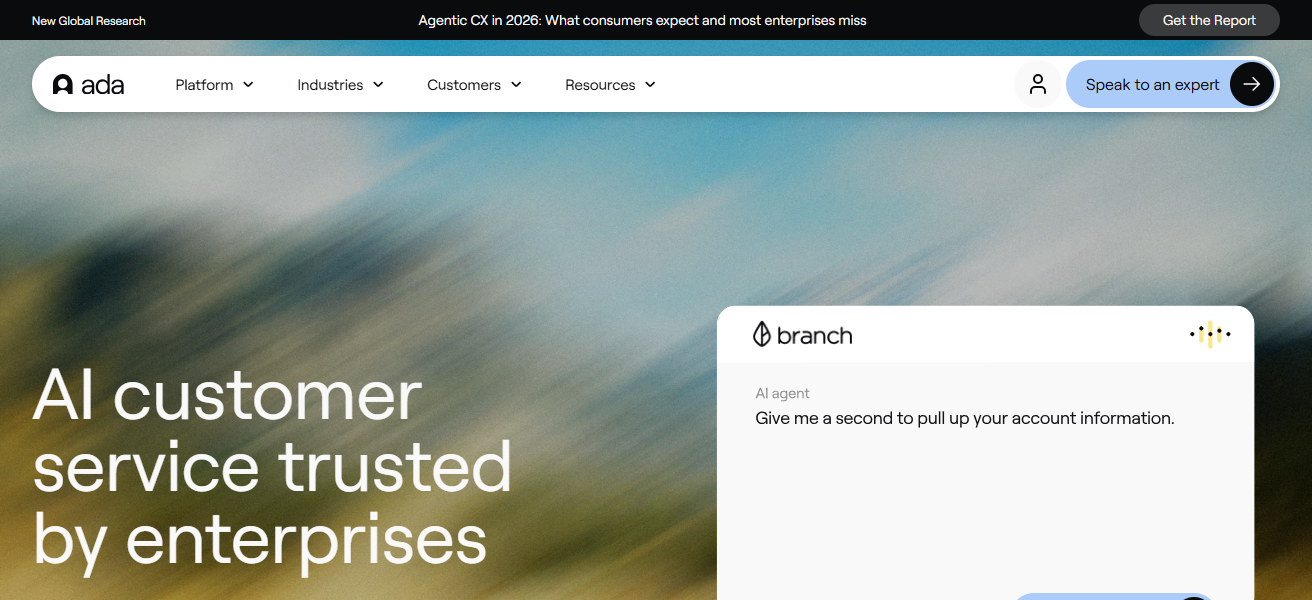
Ada is an AI‑driven customer support automation platform specializing in scalable, self‑service experiences that resolve service delivery constraints.
It leverages conversational AI to decipher and solve questions across channels, minimizing support wait times and strain on human agents.
Ada’s analytics help identify common friction points and trends in customer pain points, which helps teams proactively improve workflows and documentation.
Ada also strikes a balance between automation and personalized support, with smooth handoffs to human agents as needed, enhancing operational efficiency without the delays that come from needing to manage critical layers of constraint.
Ada Features
- Conversational AI for scalable customer support automation.
- Reduces wait times and support team workload.
- Analytics to identify common friction points in customer interactions.
- Seamless escalation to human agents when needed.
- Balances automation and personalized support to improve efficiency.
| Pros | Cons |
|---|---|
| AI-powered customer support chatbot | Limited customization for complex workflows |
| Strong NLP for automated responses | May struggle with nuanced queries |
| Scales easily across industries | Requires training for accuracy |
| Reduces support costs significantly | Lacks deep analytics compared to competitors |
What Makes Make Useful for Constraint Optimization?
Workflow Automation – Links different apps and systems to remove manual process roadblocks.
AI-Assisted Scenario Building – Calculatively maps processes to minimize errors and redundancies.
Real-Time Monitoring – Allows you to quickly identify workflow exceptions and initiate automatic remediation.
Flexible Scheduling – Guarantees that tasks and data flows happen at the right times, reducing delays.
Cross-System Integration — Effortlessly transfers data across platforms, alleviating limitations imposed by isolated systems.
Why Choose Best AI Platforms for Business Constraint Optimization
Organizations are using AI platforms for business constraint optimization, which can help identify bottlenecks, automate repetitive tasks, and optimize resource allocation.
They reduce operational lag, boost decision making and improve productivity through predictive analytics, AI-driven insights and workflow automation.
By overcoming bottlenecks in supply chains, finance, projects, and customer support, companies can run more efficiently, scale effectively and keep a step ahead in fast changing markets.
Conclusion
In summary, top AI platforms for business constraint optimization (e.g. Blue Yonder Orchestrator, Salesforce Einstein, Make, UiPath, Motion
Tableau with AI integration, ClickUp) help organizations automate workflows automate: predict bottlenecks and eliminate them — create efficiency in a resource-constrained environment making decisions faster with better analytics and intelligence.
These platforms allow businesses to eliminate inefficiencies, improve productivity and manage constraints by embedding AI in operations, finance, and customer support.
FAQ
Forecasts sales/service constraints, automates CRM tasks, and recommends next-best actions.
Automates workflows, connects multiple apps, and prevents process delays.
AI prioritizes tasks, adapts schedules, and highlights resource constraints.
Tracks dependencies, automates tasks, and optimizes project workflows.