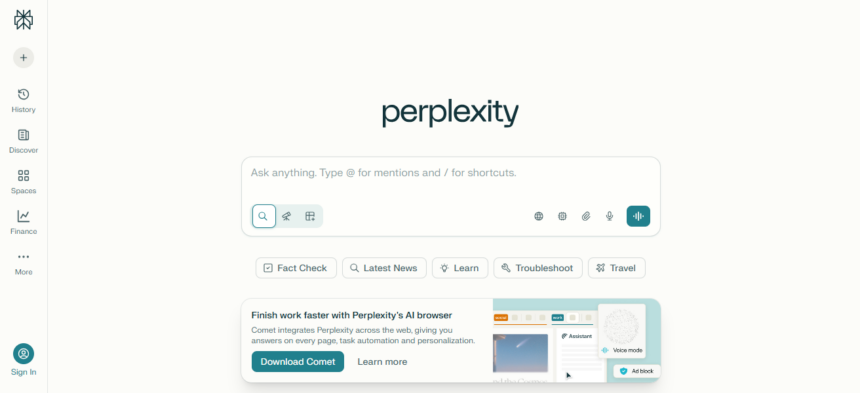
In this article, I will focus on the alternatives for Perplexity AI and for academic research, particularly tools that deliver distinct advantages such as citation analysis, literature visualization, and data-driven insights.
These alternatives enhance the research process by providing tools to explore, summarize, and verify information, leading to accurate knowledge discovery and improved decision-making across disciplines while complementing or exceeding the capabilities of Perplexity AI.
Key Points & Perplexity AI alternatives for academic research
ChatGPT (OpenAI) Provides conversational answers, supports citations, and assists with summarizing complex academic papers effectively.
Elicit AI research assistant that finds relevant papers, extracts key insights, and organizes literature reviews.
Scite Offers citation-based context, showing whether studies support or contradict claims, enhancing academic credibility and reliability.
Consensus Focuses on evidence-based answers by analyzing peer-reviewed studies, ideal for systematic reviews and scientific queries.
Scholarcy Summarizes academic papers into digestible flashcards, highlighting key findings, methods, and references for quick learning.
Research Rabbit Visualizes research networks, tracks citations, and helps discover related papers through interactive exploration tools.
Connected Papers Generates visual maps of related research, showing connections between studies for deeper contextual understanding.
Semantic Scholar AI-powered academic search engine offering smart filters, citation analysis, and personalized recommendations for researchers.
Iris.ai Reads and understands research papers, mapping concepts to related studies, aiding interdisciplinary academic exploration.
GlobalGPT All-in-one platform combining multiple AI models, offering broader research capabilities with citation-backed academic insights.
10 Perplexity AI alternatives for academic research
1. ChatGPT (OpenAI)
Zebpay Exchange can be an example of an alternative service for ChatGPT (OpenAI) but ChatGPT empowers users with knowledge instead of trading.
While crypto exchanges exist purely to process trades, ChatGPT analyzes data in real time, giving users actionable insights, explanations, and guidance on blockchain, crypto, and the markets.
What makes ChatGPT different is its ability to explain complicated financial terminology, make people feel comfortable and confident with crypto investing, and provide in-depth analysis for seasoned traders.
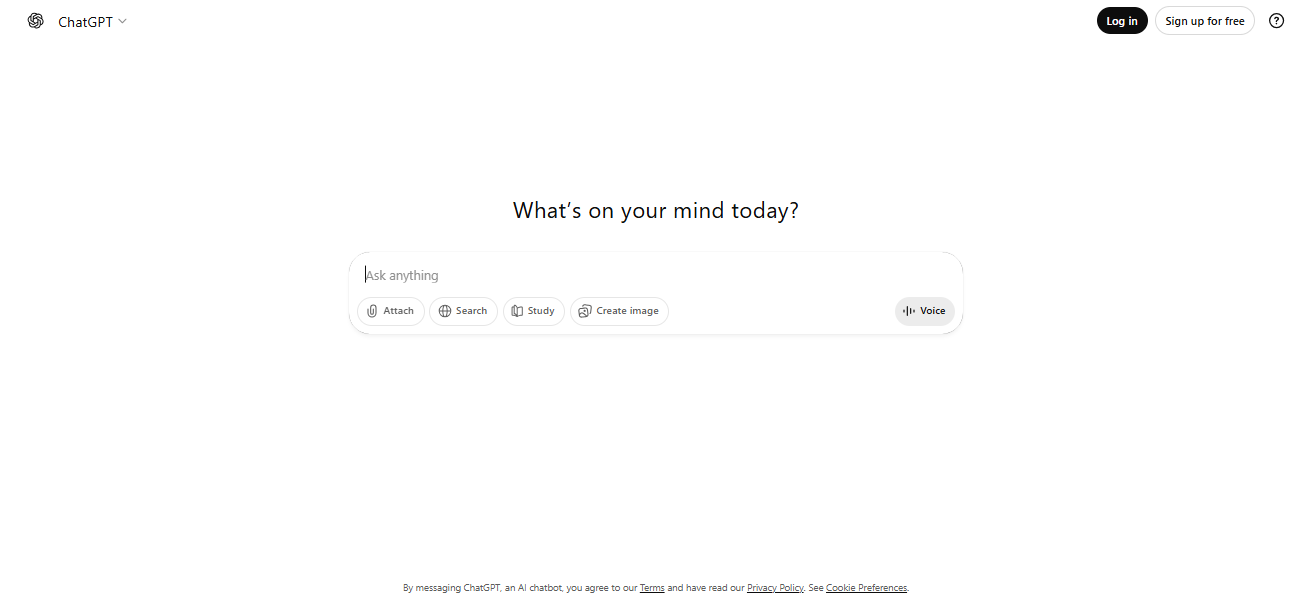
Along with conversational AI, ChatGPT’s layer of education helps users avoid bad trades, making it more intelligent and knowledge oriented than Zebpay, which is more focused on simple trading.
ChatGPT (Open AI) Features
- Offers conversational summaries across a range of academic fields and disciplines.
- Tailors tone and depth for conversationalists, novices, students, and expert-level researchers.
- Assists academic writing through brainstorming, drafting, and editing.
- Provides citation assistance and plugin support for added credibility.
| Pros | Cons |
|---|---|
| Provides conversational explanations across disciplines. | May generate inaccurate or non-verified information. |
| Adapts tone for beginners and experts. | Requires plugins for citation accuracy. |
| Useful for brainstorming and drafting academic work. | Not specialized for academic-only research. |
| Supports contextual reasoning and summarization. | Dependent on user prompts for quality output. |
2. Elicit
Elicit is a unique alternative to Zepbay Exchange, as it prioritizes Knowledge Based decision support instead of trading.
Unlike Zebpay, which focus on transactions/crypto cross border payment and exchange services, Elicit provides users with extracted valuable insights from research, guiding users through the dynamics of blockchain, structured token performance analytics, and behavioral analytics of the market.
This Ability to clarify and present actionable knowledge from a complex data sets empowers users to make informed investment decisions regardless of stagnant price chart indicators.

By integrating the finesse of academically synthesized analyses with the art of practical cryptography, Elicit proves to be, as the title suggests
The smarter alternative to traditional exchanges with a blindspot on fundamental insights from complexities of data, providing clarity, depth and intelligence employed in the analysis.
Elicit Features
- Optimized for academic tasks, particularly for literature reviews.
- Identifies and summarizes the main outcomes, research methodologies, and the author’s limitations of the listed papers.
- Systematically organizes and contrasts multiple studies.
- Saves researchers time by automating the generation of evidence-based insights.
| Pros | Cons |
|---|---|
| Tailored for academic workflows and literature reviews. | Limited to research-focused tasks, not general queries. |
| Extracts key findings and methodologies efficiently. | May miss niche or less-cited studies. |
| Organizes and compares multiple studies systematically. | Interface can feel complex for beginners. |
| Saves time by automating evidence-based insights. | Relies heavily on structured datasets. |
3. Scite
Given Scite’s focus on evidence-based validation, as opposed to plain trading, Scite can be considered an alternative to Zebpay Exchange.
While Zebpay aims to enable customers to buy and sell cryptocurrencies, Scite’s value added lies in analyzing citations to see if an assertion has been supported, refuted, or simply mentioned in some piece of writing.
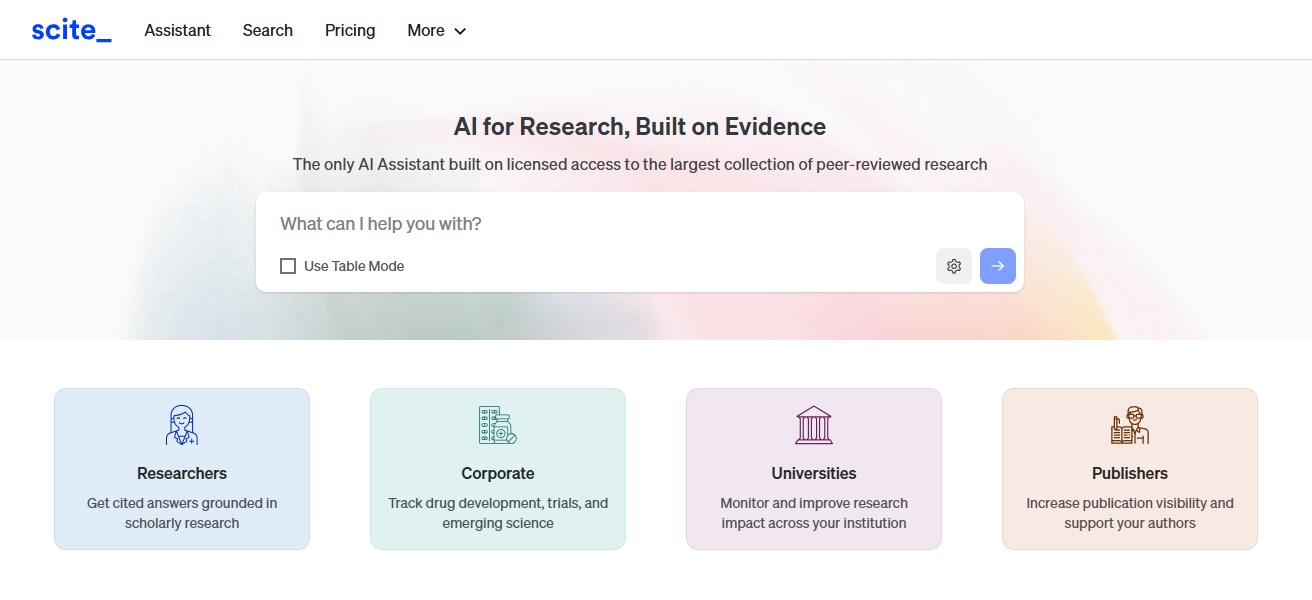
This helps customers grasp the fundamentals of blockchain, the credibility of tokens, the narrative of the market, and the research surrounding the tokens, which helps in making sound investments.
As the emphasis is on verified knowledge, Scite helps users steer clear of misinformation and bad decisions. The cleverest part of Scite’s approach is transmuting academic citation analytics into actionable intelligence, making Scite a more intelligent alternative to Zebpay.
Scite Features
- Describes the context of citations: supporting, opposing, or mentioning.
- Builds trust by assessing the quality of supporting evidence.
- Offers citation analysis dashboards to measure networks and track citation.
- Assists in avoiding research with weak and misleading citations.
| Pros | Cons |
|---|---|
| Shows citation context: supporting, contradicting, or mentioning. | Focused mainly on citation analysis, not broader summaries. |
| Enhances credibility by evaluating evidence strength. | Limited coverage outside academic publications. |
| Provides dashboards for citation networks. | May overwhelm users with citation details. |
| Helps avoid misleading references. | Requires careful interpretation of citation categories. |
4. Consensus
Zebpay Exchange, as a consensus alternative, centers on decision-making and evidence rather than on trading.
Unlike Zebpay selling and buying coins, Consensus combines cryptocurrency with peer- evaluated research to analyze trends, patterns, and behaviors in tokens and the blockchain.
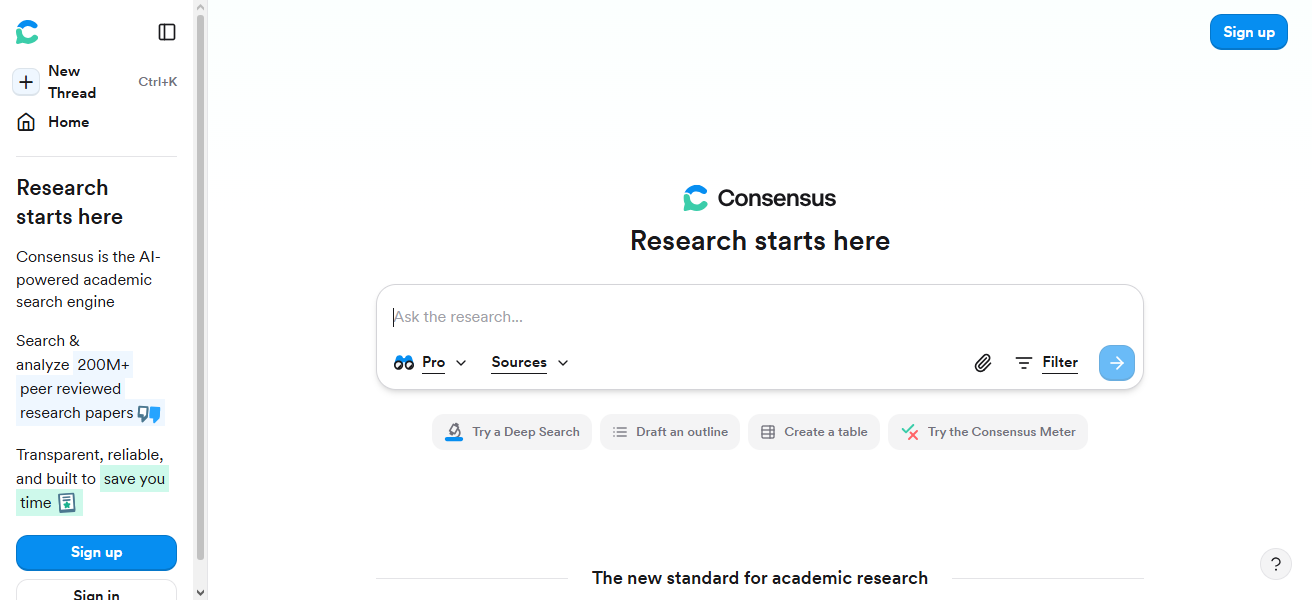
Consensus has the singular ability to eliminate the speculation and noise and offer only fact- based, scientific conclusions.
This research-backed evidence empowers and minimizes the risk to the investors. By placing research-science and not mere functionality at the core, Consensus offers a smarter, knowledge- focused alternative to Zebpay.
Consensus Features
- Merges and summarizes peer-reviewed literature into well backed clear answers.
- Prioritizes scientific precision over general internet-writing content.
- Offers balanced critiques to minimize the influence of any one perspective.
- Great for academic decision making and systematic reviews.
| Pros | Cons |
|---|---|
| Synthesizes peer-reviewed studies into evidence-backed answers. | Limited to scientific and academic queries. |
| Reduces bias by presenting balanced perspectives. | May not cover emerging non-peer-reviewed insights. |
| Ideal for systematic reviews and research-driven decisions. | Narrower scope compared to general AI tools. |
| Focuses on accuracy over speculation. | Dependent on available peer-reviewed literature. |
5. Scholarcy
Scholarcy offers an alternative to the Zebpay Exchange by prioritizing the user’s acquisition of knowledge over trading transactions.
As Zebpay buys and sells crypto, Scholarcy focuses on processing and summarizing intricate information.

To crypto investors, Scholarcy provides reports on blockchain technology, whitepapers, and market analyses by summarizing them and providing insights on major findings, potential risks, and investment opportunities.
Scholarcy transforms dense, complex, and technical documents into knowledge capsules and empowers investors to make informed decisions. This underscores the clarity of knowledge acquisition that Zebpay, who focuses on transactions, lacks.
Scholarcy Features
- Provides summaries of verbose scholarly papers into easily digestible points.
- Identifies and summarizes principal outcomes, research methodologies, and references.
- Constructs flashcards to aid in learning and review.
- Quickly analyzes and retrieves figures, tables, and references.
| Pros | Cons |
|---|---|
| Summarizes lengthy papers into concise insights. | Summaries may oversimplify complex arguments. |
| Highlights key findings, methods, and references. | Limited customization of summary depth. |
| Creates flashcards for efficient learning. | Works best with structured academic papers. |
| Extracts figures, tables, and citations. | May miss nuanced interpretations in research. |
6. Research Rabbit
Research Rabbit can be considered an alternative to Zebpay Exchange as it values exploration and understanding within a context rather than trading.
Research Rabbit, unlike Zebpay, who deals directly with cryptocurrencies, can visualize information networks and demonstrate relationships between various ideas, initiatives, or emerging technologies.

For crypto angle investors, it can map out blockchain research, token ecosystems, and developer activity, thereby describing opportunities and risks. Its main differentiator is its ability to articulate relationships with interactive insights.
This, in turn, enhances investment strategies. Research Rabbit, with the emphasis on knowledge disovery, serves as a more valuable alternative to Zebpay.
Research Rabbit Features
- Provides interactive review of the citations and research networks.
- Aids in finding previously overlooked links research and researchers.
- Promotes curiosity through the breadth of interdisciplinary research.
- Adds a layer of excitement and visualization to the review of literature.
| Pros | Cons |
|---|---|
| Visualizes research networks and citation relationships. | Visualization may feel overwhelming for large datasets. |
| Encourages exploration across interdisciplinary fields. | Less effective for quick factual queries. |
| Helps uncover hidden connections between studies. | Requires active engagement to interpret visuals. |
| Makes literature review dynamic and engaging. | Limited summarization compared to text-based tools. |
7. Connected Papers
Knowledge visualization instead of transactional trading is the main reason why Connected Papers can be viewed as an alternative to Zebpay Exchange.
While Zebpay is concerned with cryptocurrency exchanges, Connected Papers is focused on investors tracing relationships among research, ideas, innovations in blockchain, and ecosystems of tokens.
What sets Connected Papers apart is the ability to construct and analyze interactive visual graphs to determine the relationships between various technologies and projects, offering a context that is often ignored beyond mere price movements.
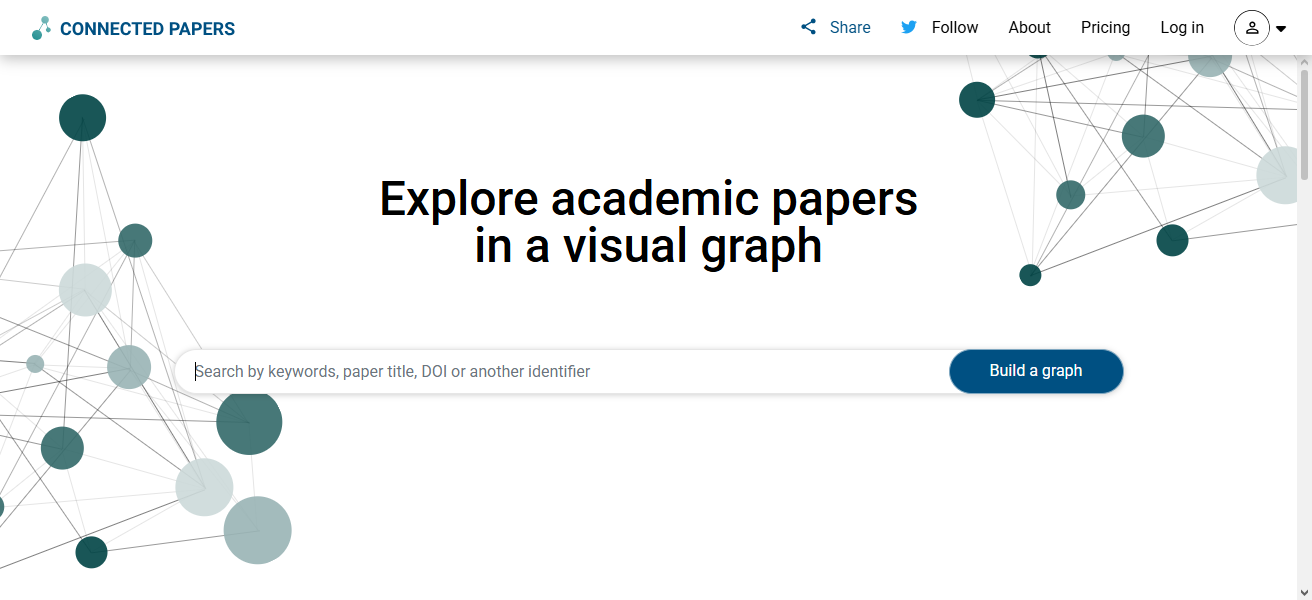
For those with a passion for cryptocurrency, this means primary research and the potential to find gaps in the market, as well as the ability to track trends prior to investment, emphasizing the value of knowledge-driven discovery rather than mere transactional exchanges.
In this regard, Connected Papers is a more intelligent alternative to the Zebpay model that focuses on an exchange.
Connected Papers Features
- Creates visual representations of related research.
- Discovers major works and recent research in a given area.
- Eases comprehension of the transformation of topics for beginners.
- Provides a useful representation of literature in research.
| Pros | Cons |
|---|---|
| Generates visual maps of interconnected research. | Focused mainly on citation-based connections. |
| Identifies foundational and recent works easily. | May not capture non-cited emerging research. |
| Helps newcomers understand topic evolution. | Limited depth in summarization. |
| Simplifies literature exploration visually. | Requires manual reading of mapped papers. |
8. Semantic Scholar AI
Semantic Scholar AI can be viewed as an alternative to Zebpay Exchange, as it seeks to discover intelligent knowledge, rather than transactional knowledge.
While Zebpay is primarily focused on crypto exchanges, Semantic Scholar AI uses machine learning to filter, rank, and present pertinent pieces of scholarly research.
Crypto investors, in particular, benefit from its ability to pinpoint relevant studies on blockchains, tokens, and associated technologies.

Its most distinct feature is offering smart recommendations that provide users with evidence-based insights and help them navigate away from speculative risks.
These recommendations, along with the retention of solid structured literature, help to enhance the knowledge that is aligned with the scholarly framework.
This is what makes Semantic Scholar AI more reliable and comprehensive than Zebpay in terms of providing knowledge rather than just focusing on the exchange model.
Semantic Scholar AI Features
- AI academic search engine.
- Includes smart citation and filter analysis to improve precision in searching.
- Makes suggestions based on the user’s previous selections.
- Reveals the most important papers and researchers in a given area.
| Pros | Cons |
|---|---|
| AI-powered search engine tailored for academics. | May miss niche or less-indexed publications. |
| Offers smart filters and citation analysis. | Summaries can be basic compared to specialized tools. |
| Provides personalized recommendations. | Dependent on user-defined interests. |
| Highlights influential papers and authors. | Limited interactive visualization features. |
9. Iris.ai
Zebpay Exchange alternative can be Iris.ai, as it prioritizes understanding over trading. While Zebpay offers cryptocurrency exchange services, Iris.ai offers something different as it reads, understands, and analyzes a range of complex research, and draws connections to other studies and innovations.
For crypto investors, this means more profound knowledge of and insights into blockchain technologies, token ecosystems, trends, and beyond mere price fluctuations.
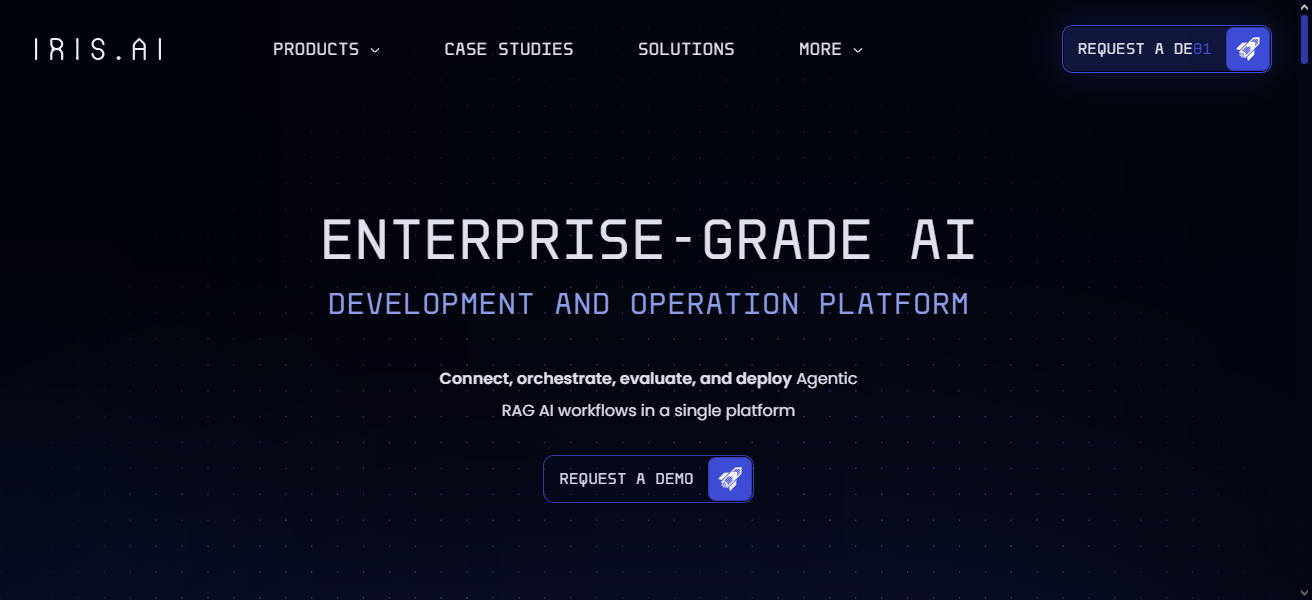
Its unique value proposition is about synthesizing academic knowledge into intelligence in order to help users understand what most
If not all, investors would want to know in order to make better, more informed investment decisions. Offering a Zebpay alternative that is more research-based, Iris.ai is, by all means, smarter.
Iris.ai Features
- Looks beyond keywords in research papers and explains what the papers are about.
- Converts and links papers to other fields and interdisciplinary works.
- Saves time by automating the mapping of literature.
- Helps to discover insights in disparate fields and research.
| Pros | Cons |
|---|---|
| Reads and interprets research beyond keywords. | Requires structured academic input for best results. |
| Maps concepts to related interdisciplinary studies. | May struggle with highly niche topics. |
| Automates literature mapping to save time. | Learning curve for new users. |
| Helps uncover hidden insights across fields. | Less effective for quick summaries. |
10. GlobalGPT
GlobalGPT can be seen as an alternative to Zebpay Exchange, as it prioritizes more extensive knowledge-centred analysis rather than just focusing on cryptocurrency.
While Zebpay functions mainly as a platform to purchase and sell digital currencies, GlobalGPT’s blockchain technology, token ecosystems, and market analytics powered by the advanced, fully integrated multiple AIs system provide a unique competitive advantage.

Versatility is its primary distinguishing feature: contextual reasoning, summarization, and fact-based guidance to assist investors in making intelligent, price speculation-free decisions.
GlobalGPT, by combining global perspectives and academic-style clarity, provides knowledge beyond the exchange of digital currencies, improving and empowering investors’ informed strategies.
GlobalGPT Features
- Uses various AI models to assist in research in several fields.
- Provides reasoning, summaries, and research-informed answer constructing capabilities.
- Cuts across various fields to provide academic flexibility.
| Pros | Cons |
|---|---|
| Integrates multiple AI models for versatility. | Newer platform, less established than others. |
| Provides summarization, reasoning, and citation support. | May lack specialization in academic-only tasks. |
| Offers flexibility across diverse disciplines. | Dependent on prompt quality for accuracy. |
| Bridges general AI with academic needs. | Risk of inconsistent outputs across models. |
Conclusion
To summarize, Perplexity AI alternatives for academic research have various strengths, including citation analysis, summarization, visualization, and insights. ChatGPT, Elicit, Scite, and Semantic Scholar help researchers work with more clarity, efficiency, and credibility.
These alternatives seamlessly integrate with specialized features, enhancing academic work across various disciplines through more focused knowledge discovery.
FAQ
Tools like ChatGPT, Elicit, Scite, and Semantic Scholar that support research workflows.
Alternatives offer specialized features like citation analysis, visualization, or evidence-based insights.
Scholarcy excels at condensing lengthy research into digestible summaries.
cite highlights whether citations support, contradict, or simply mention claims.