This article will focus on the exchanges that allow trading of tokenized real-world assets (RWA). These platforms integrate traditional financial markets with blockchain technology and provide fractional ownership, regulatory compliance, and liquidity on a variety of tokenized assets.
From real estate and securities to DeFi-backed offerings, each exchange presents a different opportunity to investors that value transparency, accessibility, and cutting-edge solutions within the contemporary financial space.
Key Points & Exchanges Where You Can Trade Tokenized Real-World Assets (RWA)
Securitize Provides compliant tokenization of securities, enabling fractional ownership and regulated secondary trading opportunities globally.
Polymath Focuses on security tokens, offering infrastructure for compliant issuance and trading of tokenized real-world assets.
Tokeny Delivers tokenization solutions for enterprises, ensuring compliance, investor onboarding, and secondary market liquidity.
RealT Specializes in tokenized real estate, allowing investors to buy fractional property ownership with blockchain transparency.
Lofty AI Offers tokenized real estate investments, enabling fractional ownership of rental properties with daily rental income.
Centrifuge Connects real-world assets like invoices and loans to DeFi, providing liquidity through asset-backed tokens.
Ondo Finance Tokenizes traditional financial assets like bonds and treasuries, bridging institutional finance with decentralized markets.
tZERO Operates a regulated marketplace for tokenized securities, offering compliant trading of real-world asset tokens.
ADDX Provides fractionalized investment opportunities in private markets, including tokenized funds, bonds, and real estate.
Kaleido Delivers enterprise blockchain solutions for tokenization, enabling compliant issuance and trading of diverse RWAs.
10 Exchanges Where You Can Trade Tokenized Real-World Assets (RWA)
1. Securitize
Securitize is one of the first platforms for the compliant issuance and trading of tokenized securities across jurisdictions.
It allows investors to acquire fractional shares of assets such as private equity, real estate, and funds. Its platform incorporates investor onboarding, KYC/AML, and secondary trading.
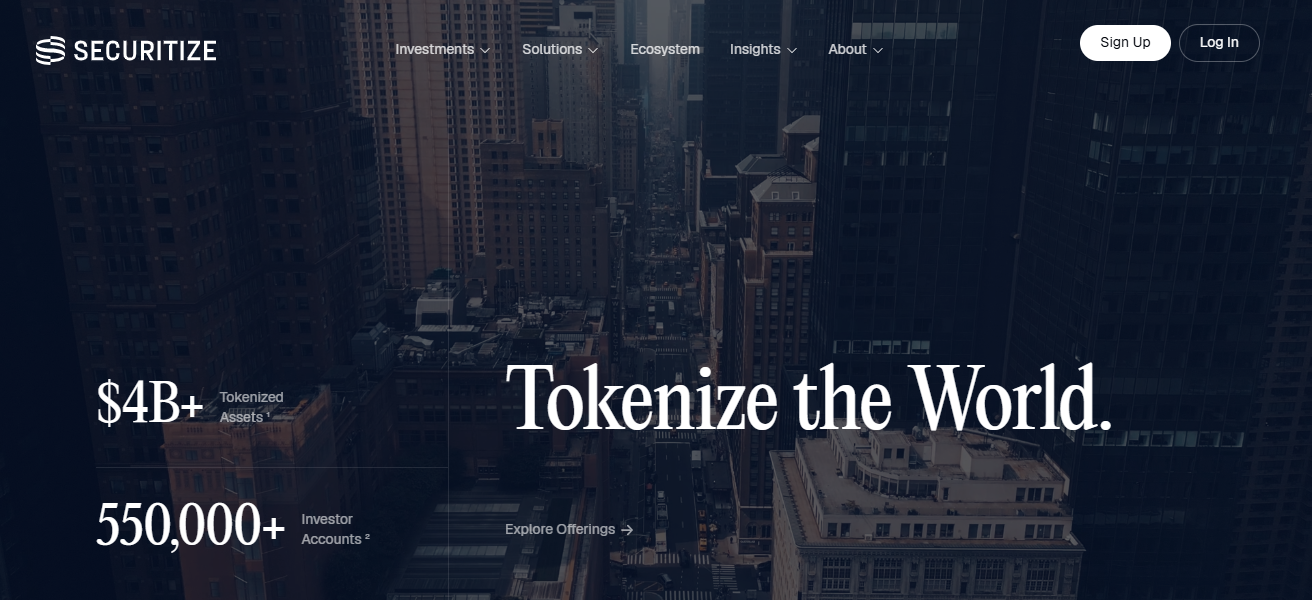
Securitize bridges traditional finance and blockchain technology by providing liquidity to previously illiquid assets.
Its partnerships with leading banks and other financial institutions add trust as a gateway to tokenized real-world assets.
For investors, Securitize provides transparency, efficiency, and easy access to a variety of investment options.
Securitize Features
- Compliant issuance and trading of tokenized securities over different jurisdictions.
- Fractional ownership of private equity, real estate, and fund.
- Integrated investor onboarding including KYC/AML.
- Secondary marketplace liquidity provision for previously illiquid assets.
| Pros | Cons |
|---|---|
| Strong regulatory compliance across jurisdictions | Limited to regulated securities, not all asset classes |
| Enables fractional ownership of diverse assets | Complex onboarding for retail investors |
| Integrated KYC/AML and investor management | Secondary market liquidity still developing |
| Partnerships with major institutions enhance credibility | Higher costs compared to smaller platforms |
2. Polymath
Polymath simplifies the complexity of tokenization of real-world assets by focusing on building the infrastructure for security tokens.
Polymath provides tools that allow for compliant issuance, investor relations, and secondary market trading throughout the global regulated markets.

Polymath’s blockchain, Polymesh, offers a regulated assets blockchain that has governance and verified identity capabilities.
Polymath increases access to institutional investments by enabling citizens to partake in the fractional ownership of securities.
Polymath’s ecosystem encourages all participants to operate compliantly, which is a necessity for institutions in the early tokenization of finance, offering integrated solutions to issuers, investors, and service providers.
Polymath Features
- Compliant issuance of security tokens
- Polymesh blockchain providing regulation for digital assets
- Integrated identity and governance
- Ecosystem for issuers, investors, and service providers
| Pros | Cons |
|---|---|
| Purpose-built Polymesh blockchain for regulated assets | Focused mainly on security tokens, less diversity |
| Simplifies compliant token issuance | Adoption limited compared to larger exchanges |
| Strong identity verification and governance features | Requires institutional-level understanding |
| Ecosystem supports issuers, investors, and providers | Liquidity options remain narrow |
3. Tokeny
Tokeny provides enterprise-grade solutions in the field of asset tokenization, in particular equity, debt, and fund tokenization.
They tokenize funds while providing onboard verification and compliance monitoring solutions, as well as verification and compliance monitoring consoles to ensure process and regulatory compliance to clients.
Their infrastructure for the secondary market provides liquidity for the tokenized assets. Their T-REX Protocol enables the interoperability of tokenized securities across different platforms and provides standardization for them.
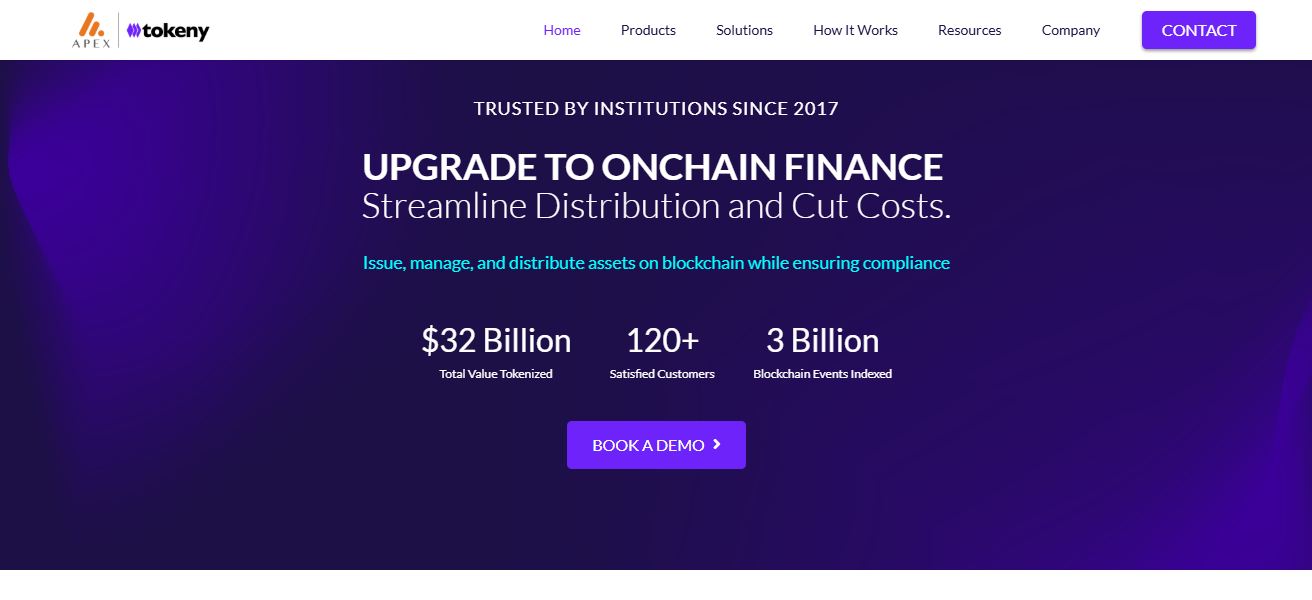
By integrating traditional finance and blockchain technology, they facilitate the process for both investors and issuers.
They also tokenize funds, which helps clients generate new business opportunities while providing regulatory compliance.
Focusing on the growing demand for transparency in the industry, they are a value-added tokenized asset supplier.
Tokeny Features
- Enterprise-grade tokenization of equity, debt, and funds.
- Standardization of tokenized securities via T-REX protocol.
- Integrated investor onboarding and compliance.
- Secondary market trading for liquidity.
| Pros | Cons |
|---|---|
| Enterprise-grade tokenization infrastructure | Primarily geared toward large enterprises |
| T-REX protocol ensures interoperability | Limited retail investor accessibility |
| Integrated compliance and onboarding | Secondary trading volume relatively small |
| Supports equity, debt, and funds | Requires technical expertise for issuers |
4. RealT
RealT’s focuses on tokenized real estate, which enables investors to buy fractional stakes in multi-family homes.
The company tokenizes each individual property with a specific blockchain, and then issues fractional ownership tokens (i.e., real estate tokens) to investors.
Rental income is distributed proportionately to each token holder on a daily basis. The blockchain verifies ownership, and as a result, investors can be sure of the authenticity of their ownership.
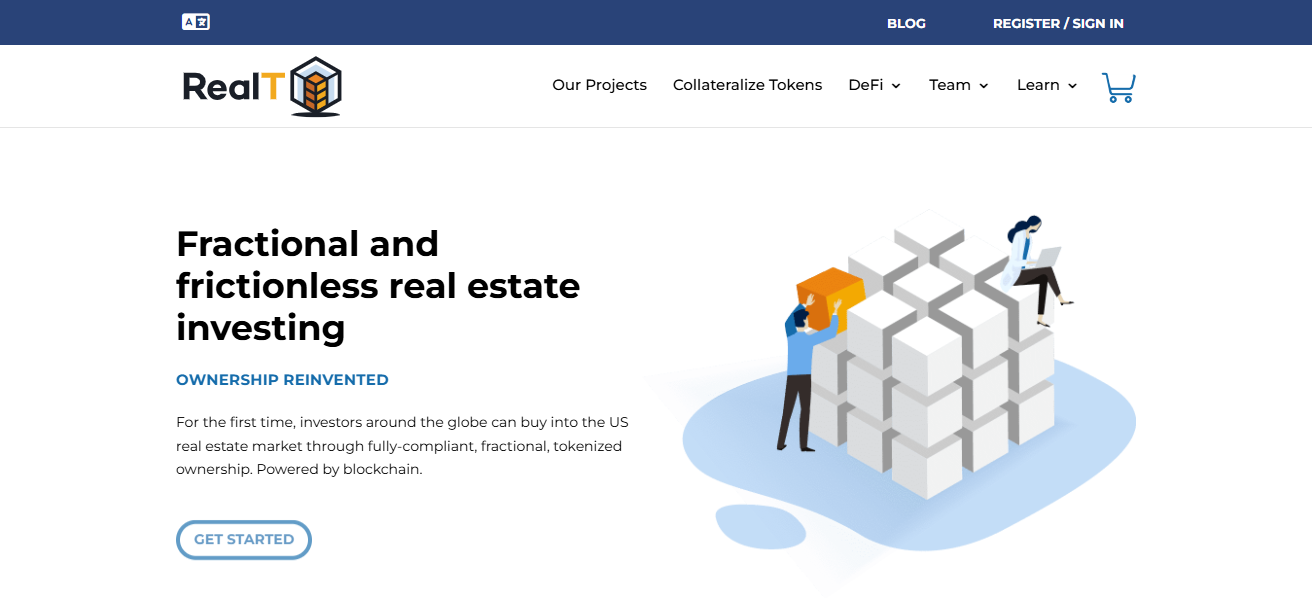
RealT streamlines the process of investing in real estate on a large scale and allows people worldwide to invest in U.S. real estate.
Real estate investors receive added liquidity because the fractional ownership tokens can be bought and sold in secondary markets.
The company is the first to integrate real estate with blockchain technology, which provides a completely new approach to investing in real estate.
The company allows investors to achieve portfolio diversification, as with traditional real estate investing, cash flow from rental income is provided.
RealT Features
- Tokenized real estate offering fractional ownership.
- Daily rental income distribution to investors.
- Transparent real estate records via blockchain.
- Secondary market trading for liquidity.
| Pros | Cons |
|---|---|
| Fractional ownership of U.S. rental properties | Focused only on real estate |
| Daily rental income distribution | Limited geographic scope (mostly U.S.) |
| Transparent blockchain-based ownership records | Dependent on property market fluctuations |
| Accessible entry for global investors | Liquidity depends on secondary market demand |
5. Lofty AI
Lofty AI’s innovative approach to real estate investing revolves around applying tokenization to physical assets.
This model allows investors to buy fractional interests in real estate and covers the full spectrum of the investment cycle, allowing both investors and token holders to earn and collect daily rents distributed.
Through an AI-powered analytical platform, investment opportunities are discovered and a full catalog of opportunities is developed, utilizing robust and transparent investment methodologies.
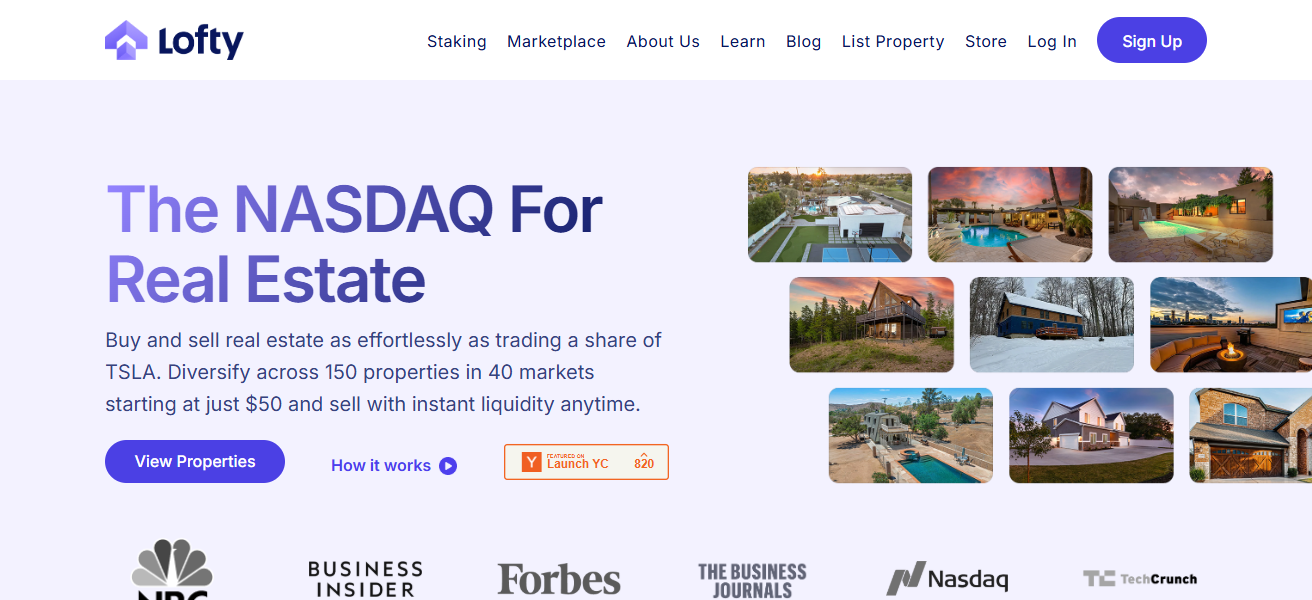
With investments starting at just $50, tokenization opens the doors to real estate investment opportunities to more investors than ever before.
Through the innovative use of AI and tokenization, real estate investing is further simplified, allowing investors to diversify investments, earn income, and partake in transparent real estate investments across the globe.
Lofty AI Features
- Fractured real estate investment for as low as $50.
- AI optimization of property selection for high upside.
- Daily rental income distribution to token holders.
- Ownership and transparency via blockchain governance.
| Pros | Cons |
|---|---|
| Low entry barrier (investments from $50) | Limited to real estate sector |
| AI-driven property selection | Rental income subject to market risks |
| Daily rental income distribution | Smaller scale compared to institutional platforms |
| Blockchain-secured ownership transparency | Liquidity options still evolving |
6. Centrifuge
Centrifuge opens up the world of decentralized finance (DeFi) for traditional financial assets, like invoices, loans, and receivables.
With Centrifuge, businesses can use their assets to obtain liquidity by tokenizing the assets and using them as collateral.
Investors using Centrifuge’s Tinlake protocol can earn a return while helping businesses by financing a pool backed by real-world assets.
Centrifuge offers a way to integrate traditional finance and DeFi a little more seamlessly for both issuers and investors.
Centrifuge uses blockchain technology to achieve a high level of transparency and efficiency and to eliminate the need for middlemen.
Investors gain access to capital-backed tokens, and small and medium-sized businesses can free up cash. Centrifuge is one of the first companies to incorporate real-world financial assets into decentralized finance.
Centrifuge Features
- Tokenized invoices, loans, and receivables.
- Asset-backed pools enabled via Tinlake protocol.
- Defi-based liquidity for SMEs.
- Efficient and clear transactions via blockchain.
| Pros | Cons |
|---|---|
| Bridges real-world assets with DeFi | Exposure to DeFi risks and volatility |
| Tinlake protocol enables asset-backed pools | Complex for traditional investors |
| Provides liquidity for SMEs | Regulatory clarity still developing |
| Transparent and efficient blockchain transactions | Limited mainstream adoption |
7. Ondo Finance
Ondo Finance is committed to tokenizing conventional financial instruments such as bonds, treasuries, and money market funds.
The company integrates institutional finance and decentralized finance by providing investors access through blockchain to stable and yielding financial instruments.
By allowing fractional investment units of institutional quality, Ondo brings transparency, efficiency, and universal access to investment opportunities.
The company’s tokenized investments, which are fully compliant, ensure that investors can participate in fully regulated markets.
Innovative application of blockchain technology to traditional finance unlocks new investment opportunities that are both diversified and stable.
By focusing on liquidity and accessibility, Ondo Finance differentiates itself and provides investors with the opportunity to access institutional quality yields without friction.
Ondo Finance Features
- Tokenization for bonds, treasuries, and money market funds
- Yield generation from bonds through blockchain technology
- Blockchain-based financial instruments with regulatory compliance
- Global Investor accessibility along with liquidity
| Pros | Cons |
|---|---|
| Tokenizes bonds, treasuries, and funds | Focused mainly on traditional financial assets |
| Provides institutional-grade yields | Retail access may be restricted |
| Strong compliance and transparency | Limited product diversity beyond fixed income |
| Global accessibility and liquidity | Market adoption still growing |
8. tZERO
tZERO is the first regulated marketplace for trading tokenized securities. They are compliant and give transparency to their investors for trading.
Their platform allows users to do fractional ownership of private equity, real estate, and investment funds.
They are the only company integrating the blockchain to provide compliant securities and tokenized asset settlements. tZERO improves efficiency, settlement times, and security of transactions.
They strengthen their credibility by partnering with financial institutions, enabling them to gain the trust of the market as a tokenized asset exchange.
They also unlock secondary trading to provide liquidity and other investment opportunities that are limited to institutions.
tZERO is compliant with the regulation of trading and the law which provides safety to both the investors and issuers.
tZERO focuses on the adoption of tokenized securities by combining traditional finance and blockchain for the first time.
tZERO Features
- Tokenized security marketplace
- Private equity and fund fractional ownership
- Blockchain for faster settlement
- Compliance and credibility through partnerships
| Pros | Cons |
|---|---|
| Regulated marketplace for tokenized securities | Limited asset categories compared to DeFi platforms |
| Fractional ownership of private equity and funds | Higher entry barriers for retail investors |
| Blockchain reduces settlement times | Liquidity depends on institutional participation |
| Strong institutional partnerships | Regulatory complexity may slow expansion |
9. ADDX
ADDX allows for fractionalized investments on private markets including funds, bonds, and real estate, all of which are tokenized for investment opportunities via fractional ownership.
ADDX lowers the barriers to entry for private investments and provides investors the ability to use less capital.
By using blockchain technology, ADDX improves the accessibility and liquidity of previously illiquid assets.
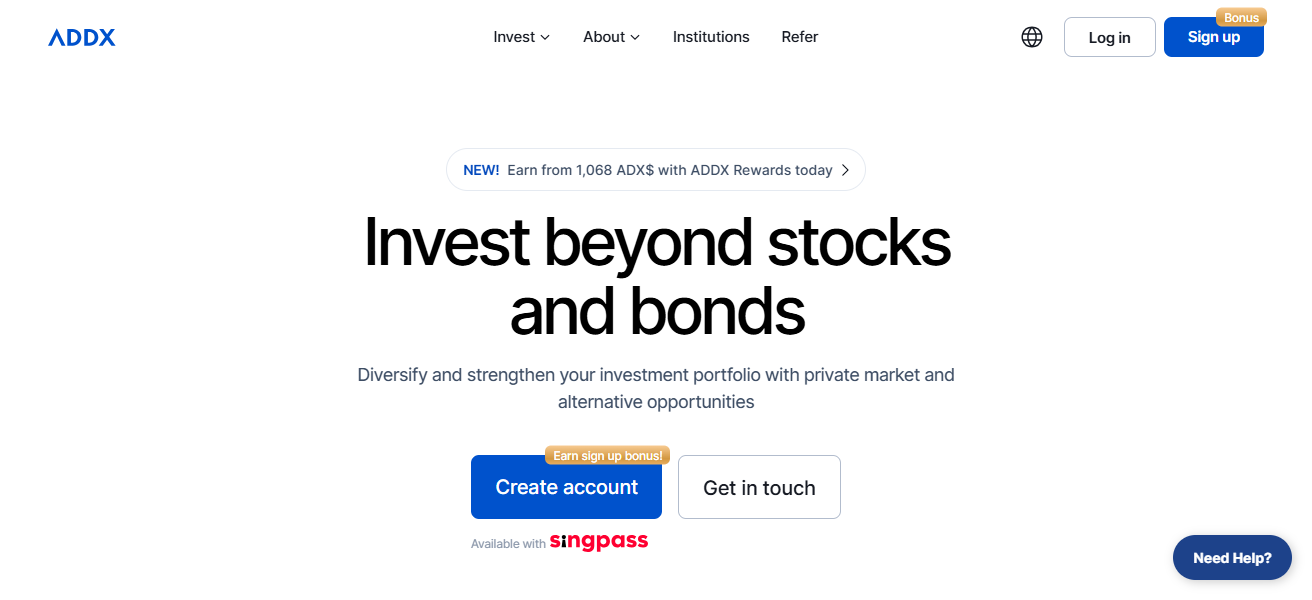
ADDX invests in private capital markets, allowing investors to diversify their portfolios with institutional-level investments.
ADDX is bridging the fintech and blockchain industries, enabling retail investments in private securities for the first time. ADDX is the first marketplace of tokenized real-world assets.
ADDX Features
- Private market investments (funds, bonds, real estate) fractionalized
- Retail investors with reduced entry barriers
- Illiquid assets’ liquidity through secondary trading
- blockchain-based transparency and efficiency
| Pros | Cons |
|---|---|
| Fractionalized private market investments | Focused mainly on Asia-Pacific region |
| Low entry barriers for retail investors | Limited global reach compared to larger exchanges |
| Secondary trading for liquidity | Regulatory restrictions vary by jurisdiction |
| Blockchain-enabled transparency and efficiency | Smaller scale compared to global platforms |
10. Kaleido
Kaleido provides enterprise blockchain solutions for the tokenization and compliant issuance and exchange of various real-world assets.
The platform assists enterprises in the digitization of equity, debt, and fund instruments, maintaining compliance.
Kaleido’s infrastructure includes identity verification, investor management, and transaction monitoring.
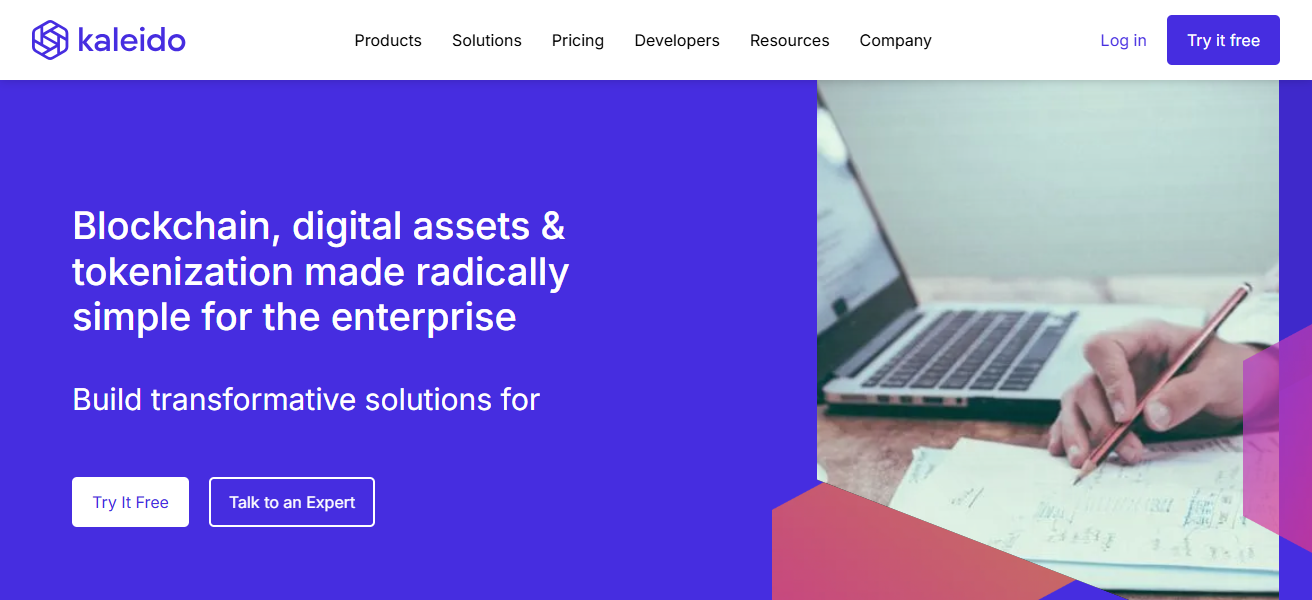
Kaleido’s customizable blockchain solutions allow enterprises to stay compliant and drive innovation. Kaleido integrates traditional finance and blockchain and enhances transparency, efficiency, and security.
Its ecosystem covers issuers, investors, and service providers. With enterprise adoption, innovation in real-world asset markets, and tokenization, Kaleido is a preferred partner for enterprises.
Kaleido Features
- Tokenization of enterprise blockchain services
- Fund, equity, and debt customizable infrastructure for tokenization
- Compliance, identity verification and monitoring integrated
- Investors, enterprises, and issuers an ecosystem
| Pros | Cons |
|---|---|
| Enterprise blockchain tokenization solutions | Primarily enterprise-focused, less retail access |
| Customizable infrastructure for diverse assets | Requires technical expertise for implementation |
| Integrated compliance and monitoring | Liquidity options not as robust |
| Supports issuers, investors, and enterprises | Adoption depends on enterprise demand |
Conclsuion
To summurize, trading tokenized real-world assets (RWA) on exchanges restructures tradfitional financial markets by integrating technology.
They impact how people invest by offering global accessibility, fractional ownership, compliance, and liquidity.
From real estate and securties to DeFi, these platforms bring efficiency and transparency to provide investors more posibilities and diversify their investments and participatiton in the modern ecosystem of digital assets.
FAQ
They are physical or financial assets represented digitally on blockchain for fractional ownership and trading.
Exchanges provide liquidity, compliance, and accessibility, making traditionally illiquid assets easier to invest in.
Real estate, bonds, equities, funds, invoices, and other tangible or financial instruments can be tokenized.
Most leading platforms comply with financial regulations, integrating KYC/AML processes for investor protection.