Top Crypto Exchanges to Trade Tokenized Real World Assets possible. These include real estate, commodities, and financial securities.
- What Are Tokenized Real-World Assets?
- Key Point
- 1. Coinbase
- Coinbase
- 2. Kraken
- Kraken
- 3. Binance
- Binance
- 4. Bitfinex
- Bitfinex
- 5. KuCoin
- KuCoin
- 6. Gate.io
- Gate.io
- 7. Bybit
- Bybit
- 8. OKX
- OKX
- 9. Gemini
- Gemini
- 10. Crypto.com
- Crypto.com
- Factors to Consider When Choosing an Exchange to Trade RWAs
- Lawful Activity
- Defensive Protocols
- Considerable Trading Volume
- Assets
- Charges
- Accessibility and Equipment
- Reliability and Reputation
- Support Services
- Conclusion
- FAQ
Thanks to major cryptocurrency exchanges, investing has become more accessible, liquid, and transparent for investors around the world.
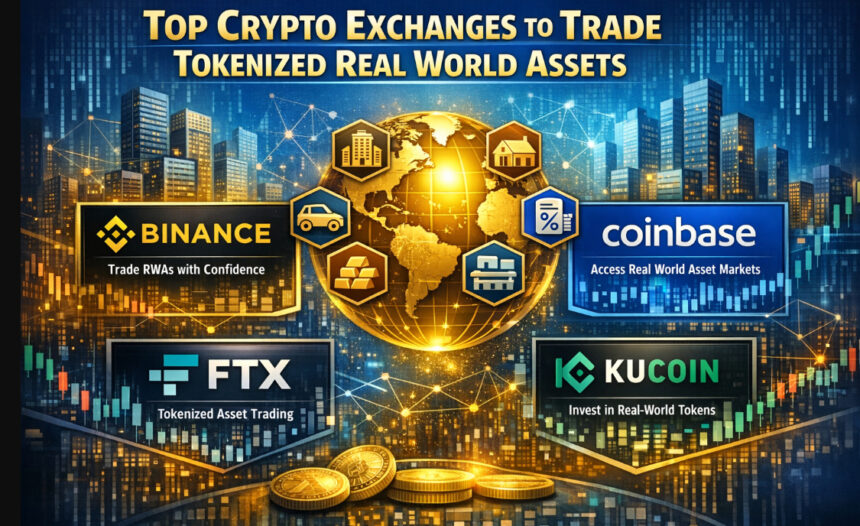
Binance, Coinbase, and Kraken are leading this innovation. This article will look at the best cryptocurrency exchanges for trading tokenized real-world assets and how they stand out.
What Are Tokenized Real-World Assets?
Physical or conventional financial assets that are transformed into digital tokens on a blockchain are known as tokenized real-world assets, or RWAs. Investors can more readily purchase, sell, and exchange these tokens online because they represent ownership or a portion of the underlying asset.
Tokenized real estate, commodities, bonds, equities, art, and private equity are typical examples. Tokenization allows fractional ownership by breaking up assets into smaller digital units, opening up high-value investments to more people.
Because each transaction is documented on a decentralized ledger, blockchain technology also increases efficiency, security, and transparency. Tokenized real-world assets are thereby revolutionizing the global management and trading of conventional investments.
Key Point
| Exchange | Key Point |
|---|---|
| Coinbase | Supports institutional-grade infrastructure and compliance, making it a trusted platform for trading tokenized assets and blockchain-based securities. |
| Kraken | Offers regulated crypto trading with strong security and expanding support for tokenized financial products. |
| Binance | One of the largest exchanges by volume, providing access to multiple tokenized assets and blockchain-based investment tokens. |
| Bitfinex | Known for supporting tokenized securities and real-world asset tokens through its advanced trading platform. |
| KuCoin | Provides a wide range of emerging tokens, including projects focused on tokenized real-world assets. |
| Gate.io | Offers a diverse marketplace for crypto assets and supports innovative tokenized asset projects. |
| Bybit | Expanding ecosystem with spot trading and listings of blockchain projects involved in RWA tokenization. |
| OKX | Integrates DeFi, Web3 wallets, and trading tools that enable access to tokenized assets and RWA projects. |
| Gemini | Regulated U.S. exchange focused on compliance and institutional-friendly infrastructure for digital assets. |
| Crypto.com | Provides a full crypto ecosystem with trading, custody, and support for innovative tokenized asset projects. |
1. Coinbase
Along with Binance, Coinbase is one of the top, most regulated, and safest exchanges in the world. They value your safety and compliance with the laws. They also aim to make things easier for you when it comes to trading assets that have a real value.
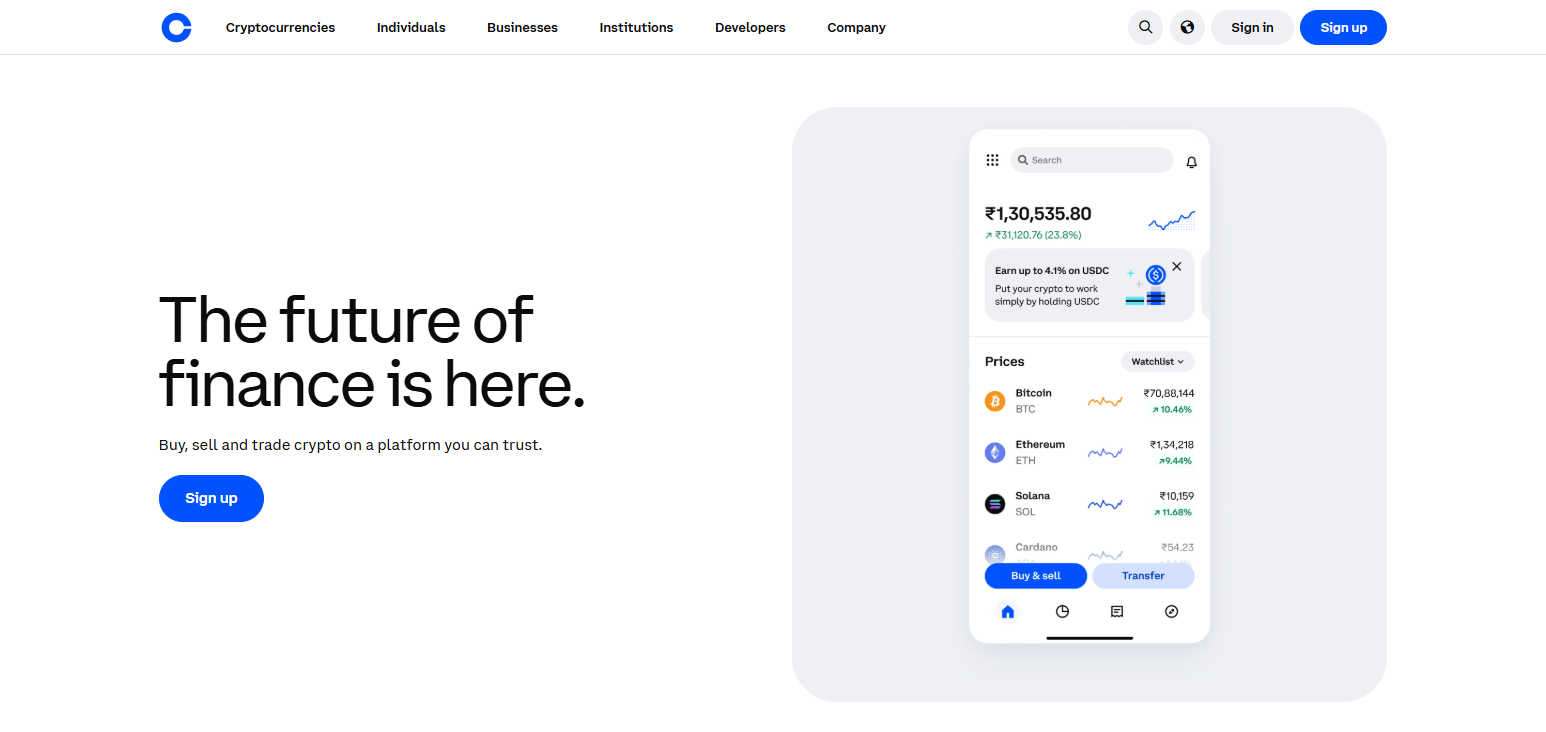
Coinbase also collaborates with other blockchain and finance companies to support the real world tokenization of assets, such as real estate tokens, tokenized funds, and securities.
As the tokenization of assets continues to grow, Coinbase is a top exchange for the safekeeping and trading of tokenized real world assets for both beginner and professional investors.
| Pros | Cons |
|---|---|
| Very easy-to-use interface suitable for beginners. | Trading fees are higher than many other exchanges. |
| Strong regulatory compliance and transparency. | Limited availability of some advanced trading tools compared to competitors. |
| High security standards with insured custodial wallets. | Supports fewer altcoins than some global exchanges. |
| Trusted platform widely used by institutions and retail investors. | Some services are restricted in certain countries. |
Coinbase
- Easy to Use Interface – Coinbase has created a simplified and straightforward process in order for anyone to make trades and manage their digital assets on any level of experience.
- Institutional-Grade Security – Coinbase has set up advanced methods to insure the safety of their users’ funds, and also takes cold storage and other digital asset protection methods to the next level.
- Trust & Transparency Due to Regulation – Because of the regulations Coinbase has to adhere to, they can be trusted and operate with transparency throughout the world.
- Professional Grade Trading Tools – Users can get powerful trading instruments on Coinbase Advanced, in order to analyze charts, and use different types of orders.
2. Kraken
Kraken is one of the oldest cryptocurrency exchanges, offering robust security features, regulatory compliance, and advanced trading capabilities. Its trading services include spot trading, futures trading, and margin trading, while its custody services support a wide range of digital assets.
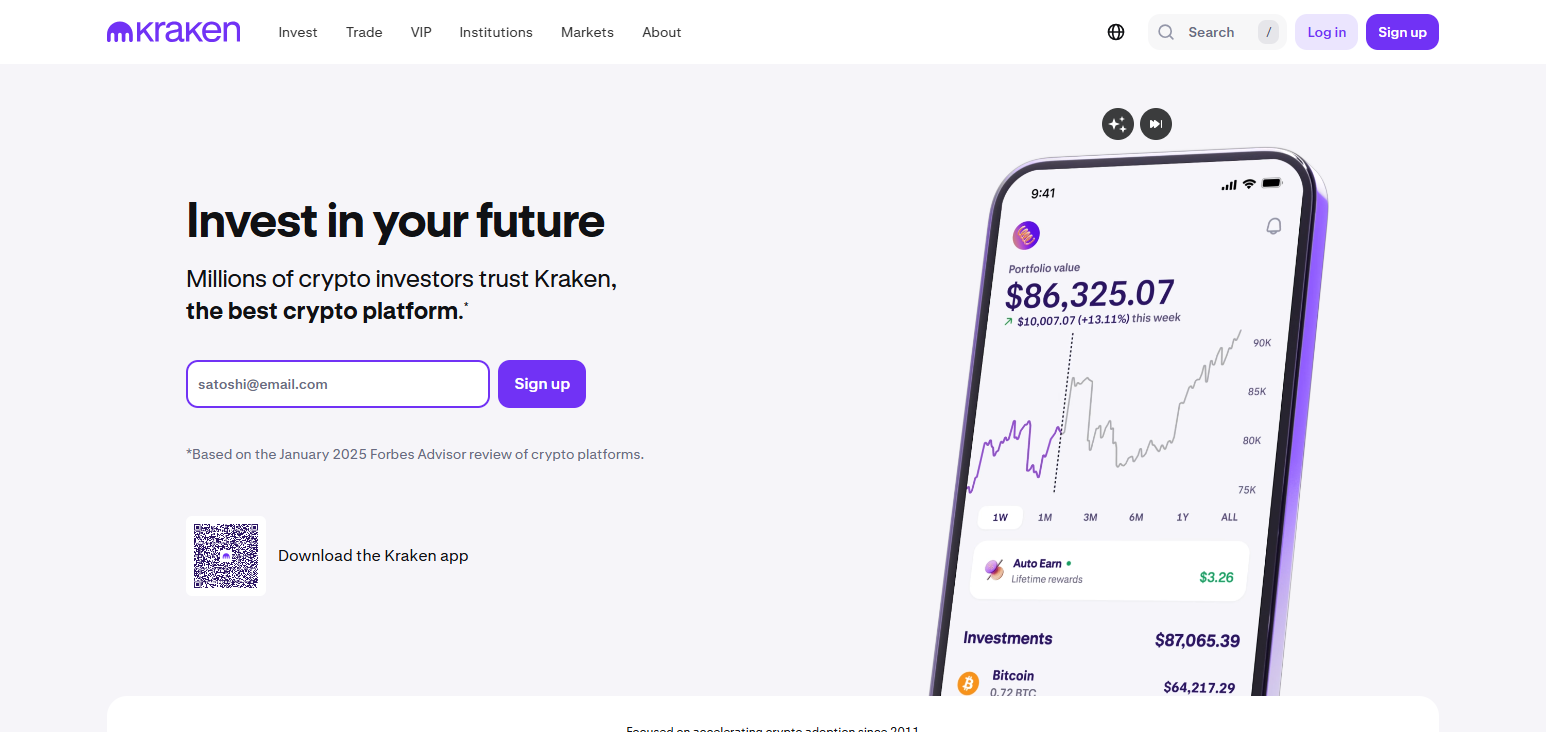
Kraken has also expressed interest in traditional finance and blockchain integration and is involved with bridged finance projects including tokenized stocks, commodities, and other real-world assets.
Kraken’s transparent fee structure, coupled with its global reach, creates a safe trading environment for investors interested in blockchain-asset-tokenization. It is for these reasons Kraken is often recognized among the Top Crypto Exchanges to Trade Tokenized Real World Assets.
| Pros | Cons |
|---|---|
| Strong reputation for security and reliability. | User interface can be complex for beginners. |
| Offers margin trading and futures for advanced traders. | Verification process can take time. |
| Supports a wide range of cryptocurrencies. | Customer support response may sometimes be slow. |
| Transparent fee structure and competitive pricing. | Limited payment methods in some regions. |
Kraken
- Strong Security Infrastructure – Cold wallet storage, proof of reserves, and other strong methods create a secure environment for assets.
- Advanced Trading Options – Professional level trading is possible with features such as margin trading, futures contracts, and various order types.
- Wide Asset Selection – Many cryptocurrencies and blockchain projects are available for users to choose from.
- Institutional Services – Professional tools, custody, and OTC trading are provided to institutional investors.
3. Binance
As the world’s largest exchange by trading volume, Binance has the largest and most diverse ecosystem of services in the crypto economy. In addition to spot and futures trading and staking services, the platform offers launchpads and Web3 services.
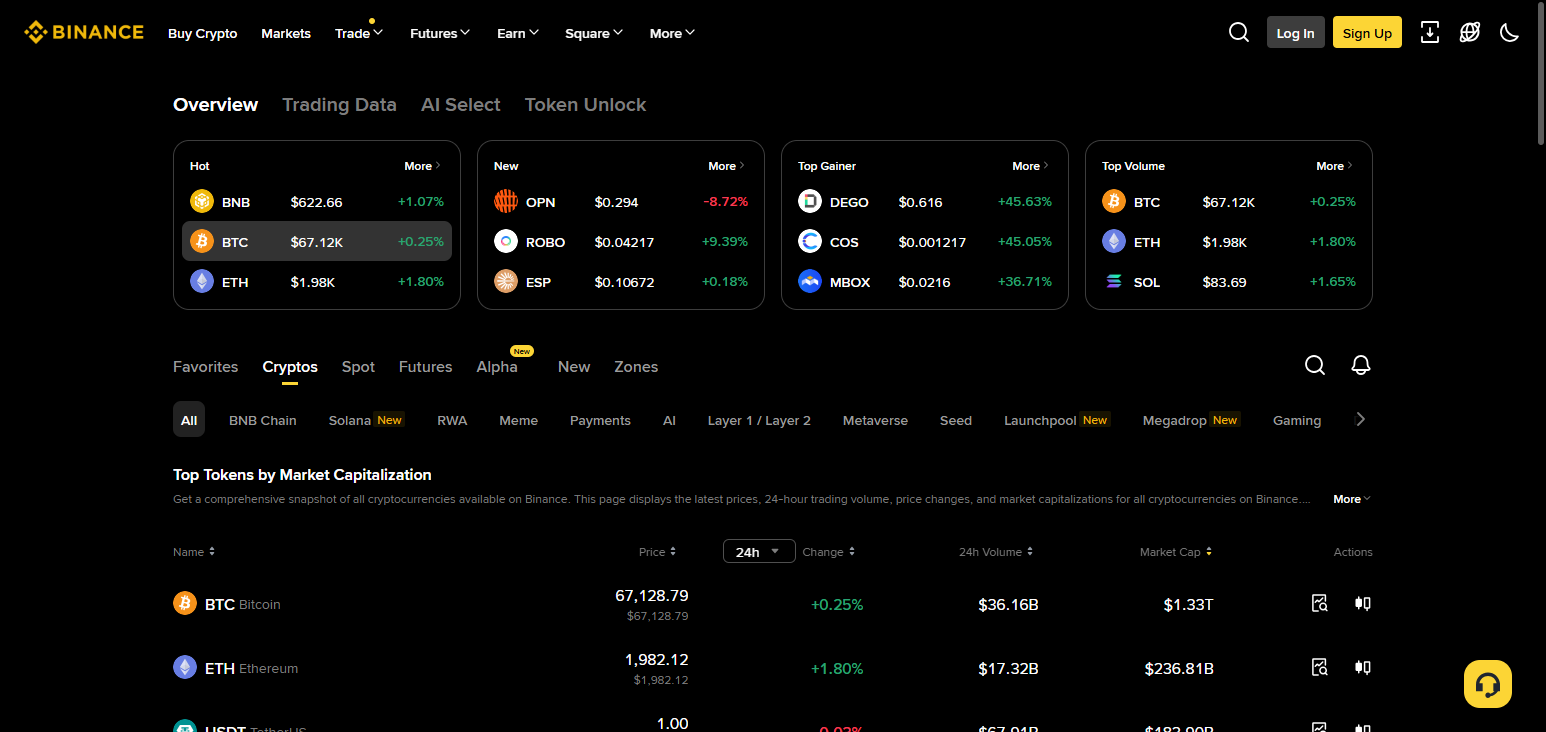
Binance has backed many initiatives in the tokenization of digital representations of real-world assets, investment funds, and infrastructure. With the largest global trader base for tokenized assets and an emphasis on market liquidity, Binance is the go-to platform for accessing new tokenized assets.
In addition, Binance incorporates DeFi mechanisms and blockchains that underpin Real World Asset (RWA) tokenization projects. For these reasons, Binance ranks among the Top Crypto Exchanges to Trade Tokenized Real World Assets.
| Pros | Cons |
|---|---|
| One of the largest exchanges with high liquidity. | Faces regulatory challenges in some countries. |
| Offers hundreds of cryptocurrencies and trading pairs. | Interface can be overwhelming for new users. |
| Low trading fees and discounts using BNB token. | Some features vary depending on region. |
| Large ecosystem including staking, NFTs, and DeFi. | Customer support can be slow during high demand. |
Binance
- High Liquidity – Binance has some of the biggest trading volumes in the market.
- Extensive Crypto Listings – Hundreds of cryptocurrencies and also tokenized projects are available for trading.
- Comprehensive Ecosystem – Access to NFTs, and also including staking, launching, and DeFi, is available.
- Low Trading Fees – Competitive fee structures and discounts are available via the native BNB token.
4. Bitfinex
Bitfinex targets institutional clients and advanced retail traders. Users benefit from margin trading, derivatives, and advanced liquidity. Additionally, the platform provides expert charting. They collaborate with asset tokenization platforms, providing them with the opportunity to work with digital securities and other tokenized financial instruments.
The exchange has embraced blockchain-based financial products and tokenized securities, especially bonds, emphasizing their purpose to bridge the gap between traditional and decentralized markets. Bitfinex top-tier infrastructure has earned them a well-deserved place in the Top Crypto Exchanges to Trade Tokenized Real World Assets.
| Pros | Cons |
|---|---|
| Advanced trading tools designed for professionals. | Not beginner-friendly due to complex interface. |
| High liquidity for major cryptocurrency pairs. | Limited availability in some jurisdictions. |
| Supports margin trading and derivatives. | Past security incidents affected reputation. |
| Offers API access for algorithmic traders. | Fewer fiat on-ramp options compared to some exchanges. |
Bitfinex
- Professional Trading Platform – They offer advanced charts, and APIs, and provide complex order types.
- Margin and Derivatives Trading – They offer leveraged trading and derivatives markets to seasoned traders.
- High Liquidity Markets – Major market pairs have substantial liquidity.
- Institutional Connectivity – Connectivity tailored for large-scale traders, hedge funds, and institutional investors.
5. KuCoin
KuCoin is an established cryptocurrency exchange that is best-known for its early adoption and innovativeness in listing new tokens. The exchange features a wide variety of digital assets including blockchain projects in their early stages of growth, as well as Offering differentiated trading services, including futures, margin trading, staking, and crypto lending.
KuCoin also features an extensive selection of altcoins that offer strong liquidity, including Real World Assets (RWA) tokens. As a result of this, KuCoin is becoming regarded as one of the best crypto exchanges for trading tokenized RWA.
| Pros | Cons |
|---|---|
| Large variety of altcoins and emerging projects. | Regulatory status is unclear in some countries. |
| Built-in trading bots for automated strategies. | Customer support response time can be slow. |
| Competitive trading fees and promotions. | Some tokens listed may carry higher risk. |
| Offers futures, margin trading, and staking services. | Not as strictly regulated as U.S. exchanges. |
KuCoin
- Large Altcoin Selection – They provide a vast selection of new and creative crypto projects.
- Trading Bots – Automated trading bots for different strategies are available.
- Multiple Trading Services – They provide spot trading, futures, margin trading, and also staking.
- Global User Base – They support a large number of users in various countries and provide support in multiple languages.
6. Gate.io
Gate.io is a key global cryptocurrency exchange that is recognized for the considerable number of supported blockchain projects and digital tokens. The platform provides spot trading, derivatives, staking, and Web3 ecosystem services that allow users to engage in decentralized finance and tokenized assets.
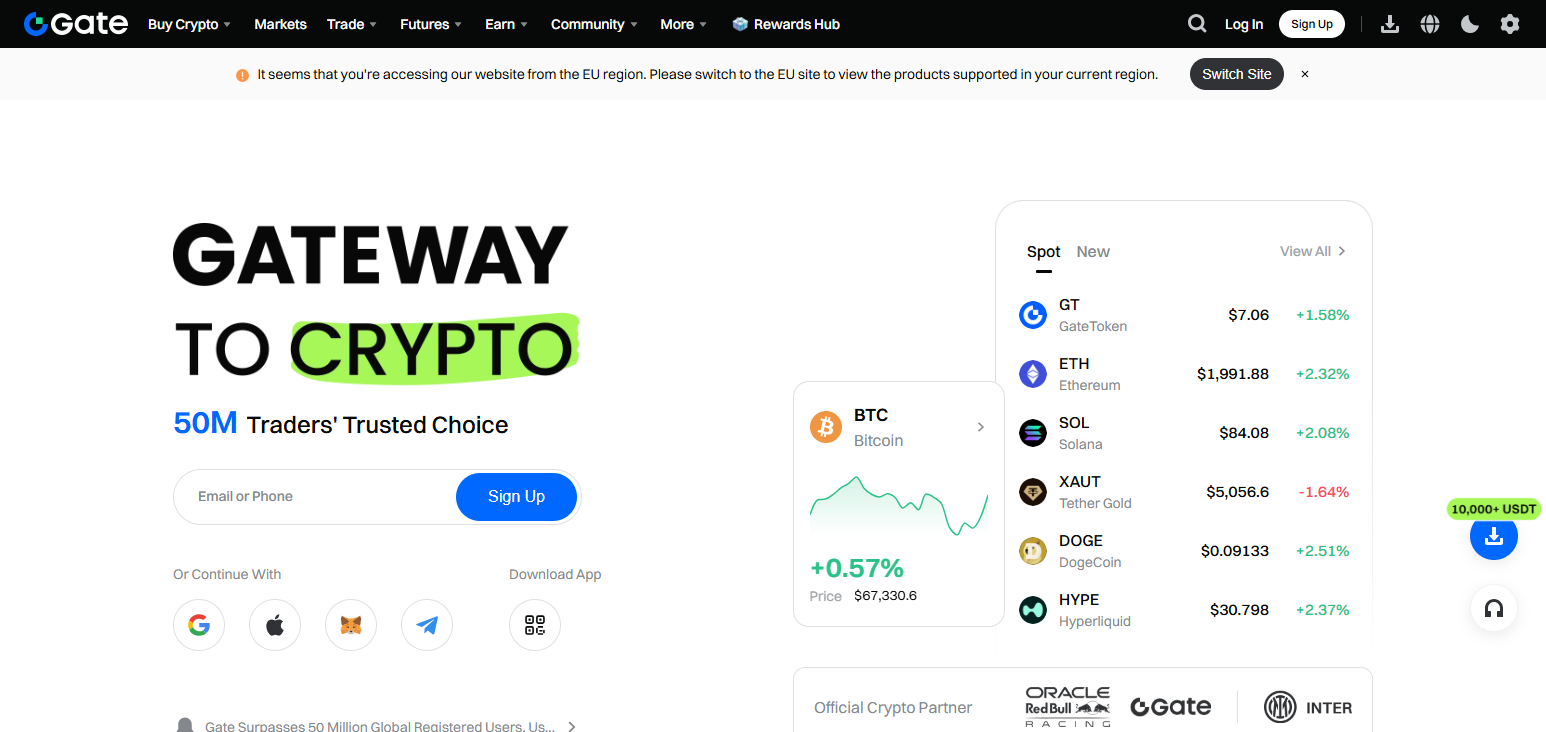
Gate.io is innovative, and frequently lists new blockchain projects, including those that revolve around the tokenization of the world’s assets, such as property, commodities, and investment funds.
Gate.io offers strong liquidity and advanced trading tools, providing investors with access to a broad marketplace of digital assets. As tokenization expands across industries, Gate.io is being recognized more and more for being among the Top Crypto Exchanges to Trade Tokenized Real World Assets.
| Pros | Cons |
|---|---|
| Offers a very large selection of cryptocurrencies. | Interface may be confusing for beginners. |
| Supports derivatives, margin trading, and staking. | Limited regulatory oversight in some regions. |
| Frequently lists innovative blockchain projects. | Customer support may take time to respond. |
| Provides startup launch platform for new tokens. | Some features restricted depending on location. |
Gate.io
- Extensive Token Listings – They provide extensive lists of cryptocurrencies and blockchain projects.
- Derivatives and Margin Trading – They offer advanced trading options for professional traders.
- Startup Launch Platform – They offer token launches for new blockchain projects.
- Web3 and DeFi Access – They provide the tools for decentralized finance and blockchain services.
7. Bybit
Bybit is one of the fastest-growing and most innovative cryptocurrency exchanges worldwide. It was the first to provide derivatives and Web3 services. Bybit has been great for crypto innovation and supports differentiated strategies to tokenize real-world assets.
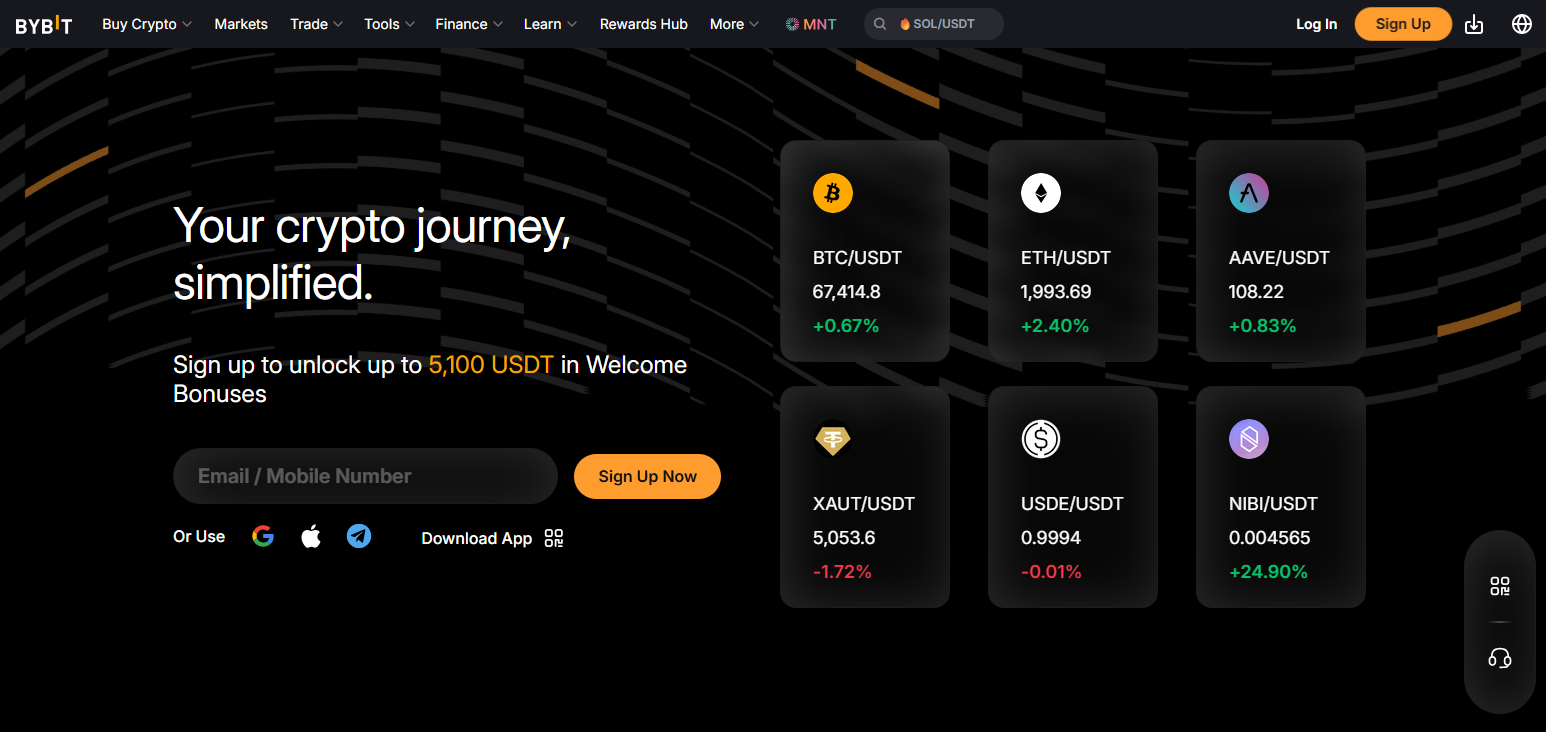
Bybit has an entire ecosystem of decentralized finance services and blockchain finance products. They offer a launchpad and an entire suite of blockchain investments and finance tools.
Bybit’s trading engine is one of the best, and its trading tools and ecosystem flow are funneling more and more institutional and trader liquidity to tokenized assets. Bybit’s growth is making it one of the Top Crypto Exchanges to Trade Tokenized Real World Assets.
| Pros | Cons |
|---|---|
| High-performance trading engine with fast execution. | Limited availability in certain regulated markets. |
| Popular platform for derivatives and futures trading. | Spot market listings smaller than some exchanges. |
| Copy trading allows beginners to follow experts. | Advanced tools may be difficult for new traders. |
| Competitive trading fees and liquidity. | Regulatory restrictions in some countries. |
Bybit
- High-Performance Trading Engine – Creates fast execution speeds to handle upon large volumes.
- Derivatives Trading – Offers crypto futures and prolonged contract trading.
- Copy Trading Feature – Helps novices to follow the moves of seasoned traders.
- Web3 Integration – Offers DeFi features, NFT trading, and blockchain apps.
8. OKX
OKX is one of the largest crypto exchanges and offers the unique combination of centralized Web3 trading and decentralized Web3 services. Users can utilize spot and derivatives trading, access DeFi services, trade NFTs, and use a non-custodial wallet to interact with Apps on the blockchain.
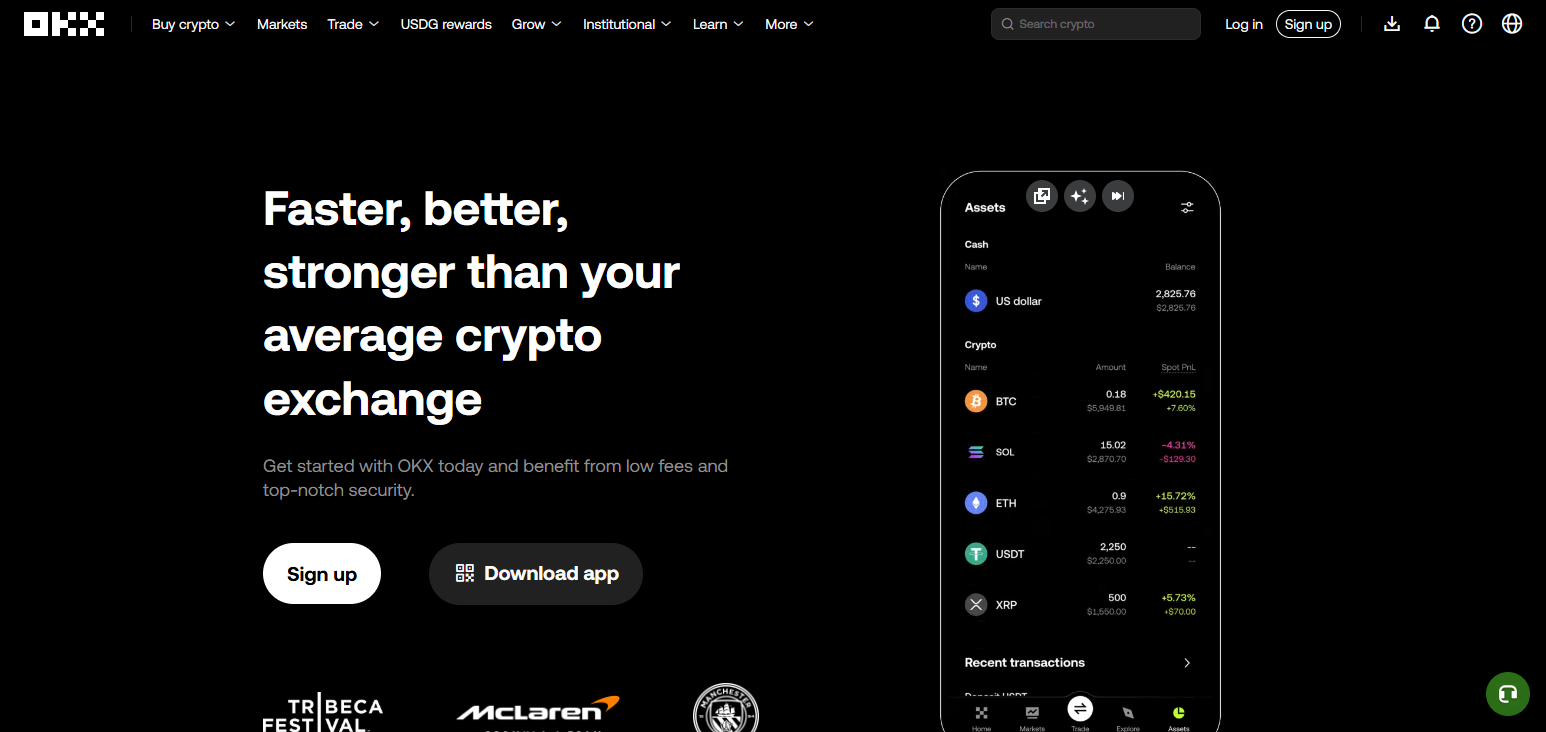
OKX is one of the largest supporters of projects integrating real world assets like real estate, bonds, and commodities onto the blockchain. The institution-grade global liquidity and strong technical infrastructure offered by OKX attracts a lot of traders and institutions seeking user-friendly solutions to trade innovative digital assets.
With the increasing integration of blockchain technology in traditional finance, OKX remains one of the Best Crypto Exchanges for Trading Tokenized Real World Assets.
| Pros | Cons |
|---|---|
| Comprehensive ecosystem including DeFi and NFTs. | Interface may feel complex for beginners. |
| Offers spot, margin, futures, and options trading. | Some regulatory uncertainty in certain regions. |
| Integrated Web3 wallet for decentralized apps. | Verification requirements vary by country. |
| Competitive fees and strong liquidity. | Certain services may not be available globally. |
OKX
- All-Inclusive Trading – Provides spot, futures, options, margin trading, and derivatives.
- Web3 Wallet – Provides access to DeFi and web3 apps.
- NFT Marketplace – Allows for the minting, purchasing, and selling of NFTs.
- Trading Tools – Provides charts, trading tools, and analytics for informed trading.
9. Gemini
Founded in the US, Gemini was the first cryptocurrency exchange to prioritize compliance with regulations, transparency, and the protection of investors. Gemini is the first cryptocurrency exchange to offer registered trading and institutional custody services.
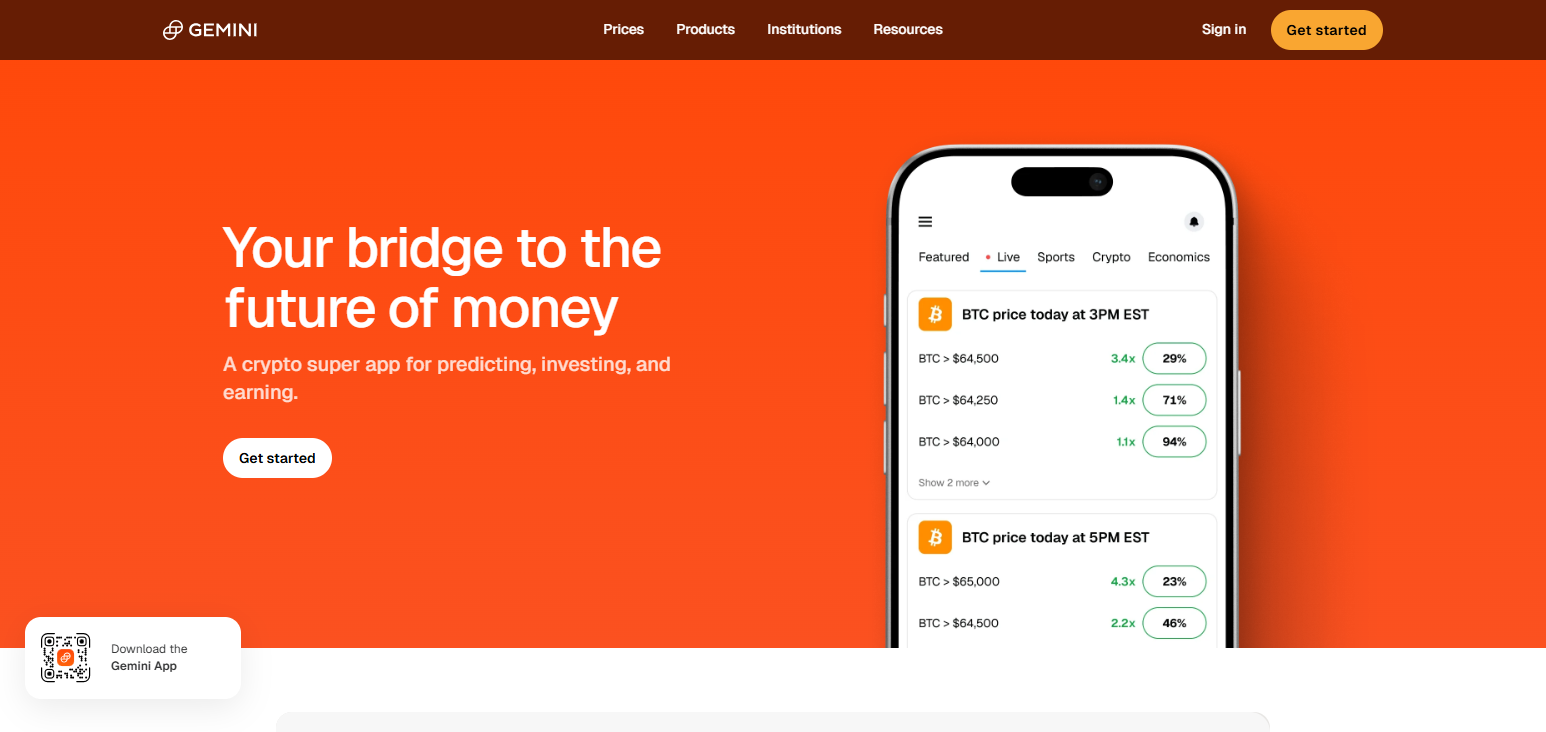
By working with financial regulators, they assist in the development of products based on blockchain technology. As the real world assets (RWA) tokenization market develops, Gemini will become a preferred platform for institutions and investors due to its regulatory compliance and innovative custody service.
For these reasons, Gemini has gained the reputation of being one of the Top Crypto Exchanges to Trade Tokenized Real World Assets.
| Pros | Cons |
|---|---|
| Highly regulated exchange with strong compliance. | Trading fees can be higher than competitors. |
| Strong focus on security and user protection. | Smaller selection of cryptocurrencies. |
| Trusted platform for institutional investors. | Limited advanced trading features compared to some global exchanges. |
| Offers secure custody services for digital assets. | Availability varies in different countries. |
Gemini
- Regulated Trading – Activity is closely monitored to comply with legal financial obligations.
- Crypto Custody – Offers crypto custody to keep client assets secure.
- Customer Protection – Strong security is enforced to protect user’s trading accounts.
- Crypto Trading for Institutions – Provides advanced trading tools such as custom orders and APIs for large corporate clients.
10. Crypto.com
Crypto.com offers a multi-faceted ecosystem comprised of a cryptocurrency exchange, payment solutions, staking, and DeFi capabilities. With a large number of supported digital assets and blockchain projects, including many that focus on the tokenization of traditional financial assets, Crypto.com is a rapidly expanding digital asset platform.
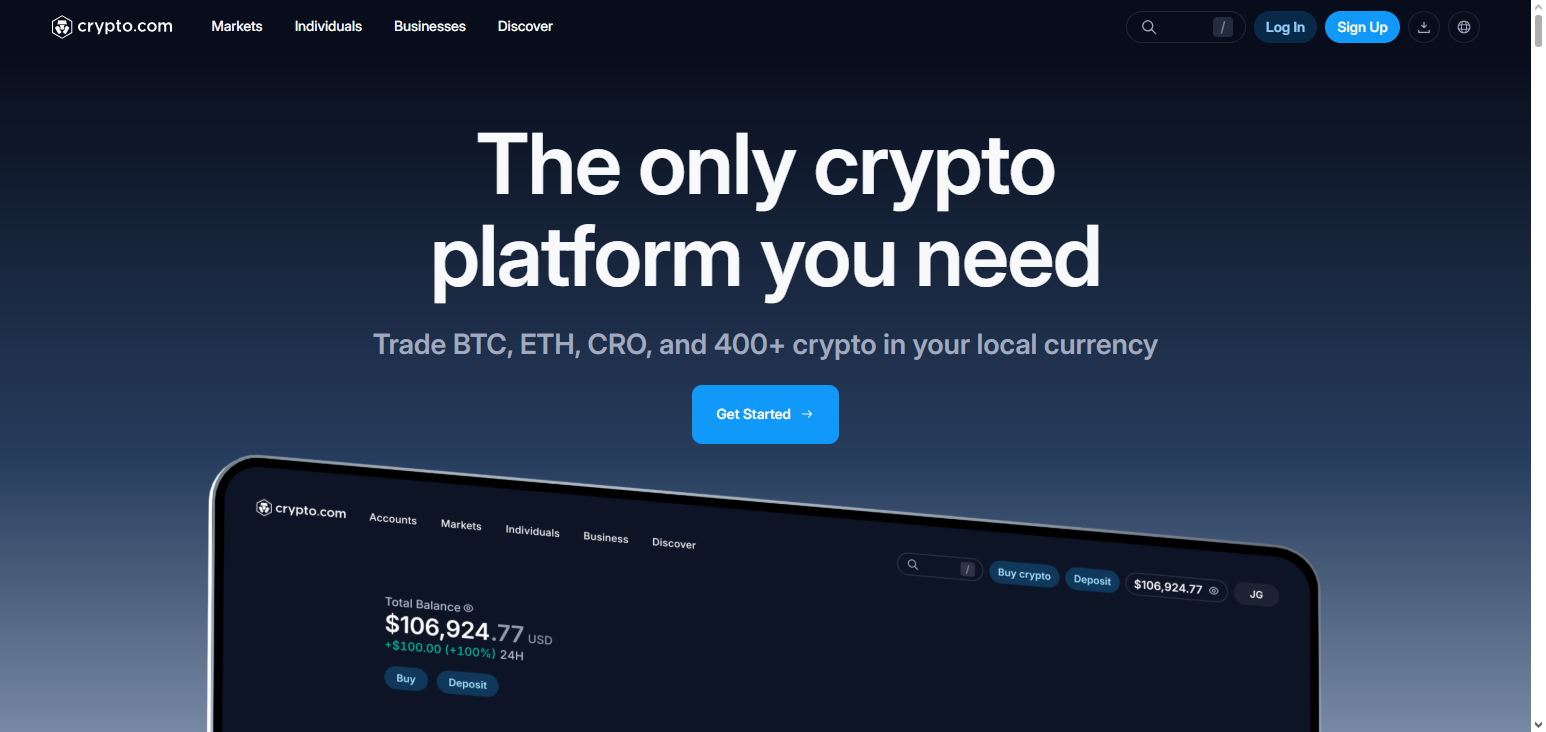
Their user-friendly mobile app and intuitive interface make it easy to transact, stake, and invest, making it easy to transact, stake, and invest.
Crypto.com is paving the way for the growing adoption of blockchain-based financial solutions through its extensive global reach, robust marketing partnerships, and an expanding Web3 ecosystem. For these reasons, Crypto.com is listed among the Top Crypto Exchanges to Trade Tokenized Real World Assets.
| Pros | Cons |
|---|---|
| Large ecosystem including payments, staking, and DeFi. | Trading fees can be complex for new users. |
| Popular mobile app with simple crypto buying options. | Customer support response may sometimes be slow. |
| Offers crypto debit card with rewards. | Some features require staking CRO tokens. |
| Supports many cryptocurrencies and blockchain projects. | Certain services vary depending on region. |
Crypto.com
- Trading and Crypto Services – Offers payments, trading, staking, and DeFi crypto services.
- Brokerage App – Simple design for easy use trading app.
- Crypto Rewards Card – Allows for spending of crypto with cash-back stake rewards.
- Crypto-Earn and Staking – Offers staking and asset deposits to earn rewards.
Factors to Consider When Choosing an Exchange to Trade RWAs
Lawful Activity
As a standard, choose exchanges that practice operational transparency and accountability. Regulatory compliance as such is a good sign of an exchanges commitment to protecting and advocating for investors, and combating fraud and abuse, especially in trading tokenized RWAs.
Defensive Protocols
Upon consideration, a trading venue should have provisions to prevent the loss of money because of stolen credentials or hacking. These include cold wallets, two-step verification, and regular audits.
Considerable Trading Volume
The trading venue should have the ability to facilitate a large number of transactions, and in as short a time as possible, so that investments in tokenized RWAs can be realized without loss due to price changes.
Assets
To be able to invest in tokenized RWAs, the trading venue you use should offer a variety of assets to enable you to choose the ones you prefer.
Charges
A trading venue should have very low trading, withdrawal, and transaction fees, as this will enhance your profitability if you trade tokenized RWAs frequently.
Accessibility and Equipment
To both novice investors and veterans, an ideal exchange should have a simple to navigate and use interface, modern and functional equipment such as real time data tracking and a variety of order types.
Reliability and Reputation
Look into an exchange’s reputation, duration of trading, and trust within the community. The longer and better the track record, the more dependable the exchange is for trading tokenized assets.
Support Services
Good customer support is important in the case of technical issues or problems with a transaction. Go for exchanges that have fast and multi-channel support, including chat, email, and help centers.
Conclusion
In conclusion, by placing conventional investments like bonds, real estate, and commodities onto blockchain networks, tokenized real-world assets are revolutionizing the financial environment. Investors may now trade fractional ownership of valuable assets more effectively because to this innovation, which also increases accessibility, transparency, and liquidity.
By offering safe trading infrastructure and worldwide access, well-known platforms like Coinbase, Binance, Kraken, and OKX are contributing to the growth of this market. Tokenized assets are anticipated to play a significant role in connecting traditional finance with the digital economy as blockchain use grows, opening up new options for investors globally.
FAQ
Tokenized real-world assets are physical or traditional financial assets such as real estate, commodities, bonds, or stocks that are converted into digital tokens on a blockchain. These tokens represent ownership or shares of the underlying asset and can be traded online.
Tokenized assets are gaining popularity because they allow fractional ownership, improve transparency through blockchain records, and provide global access to investment opportunities that were previously limited to large investors or institutions.
Several major exchanges support projects related to tokenized assets, including Coinbase, Binance, Kraken, OKX, and Crypto.com.
Many real-world assets can be tokenized, including real estate properties, gold and commodities, government or corporate bonds, artwork, private equity funds, and even intellectual property rights.
Tokenized assets can be secure when traded on reputable exchanges with strong security systems and regulatory compliance. However, like all crypto investments, they still carry risks such as market volatility and regulatory uncertainty.