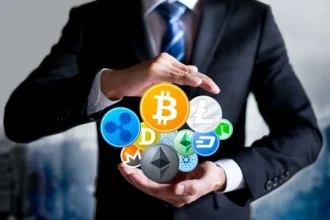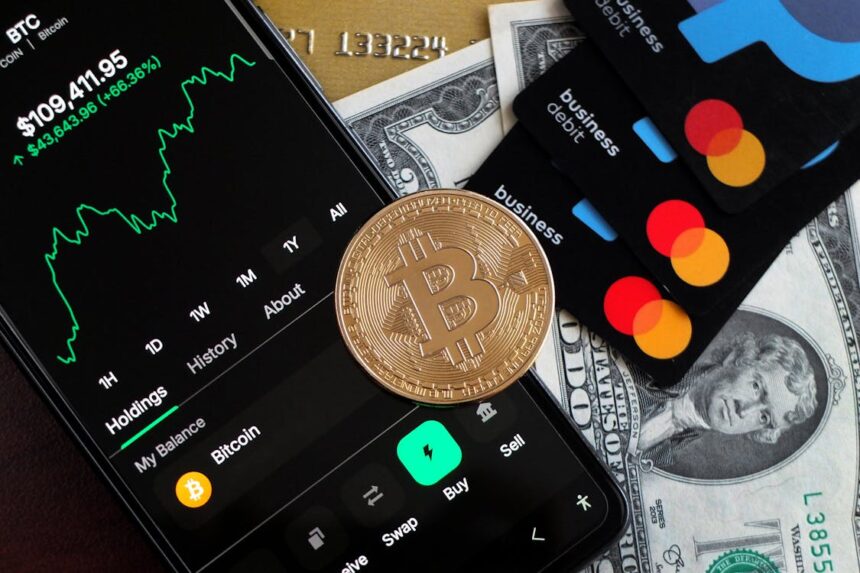
This article will deal with the strange yet interesting crypto apps you didn’t know existed, such as Steemit, Brave Browser, and Uniswap, and how they are changing
- Key Points & Weird but Powerful Crypto Apps You Didn’t Know Exist
- 10 Weird but Powerful Crypto Apps You Didn’t Know Exist
- 1. Steemit
- 2. Brave Browser
- 3. Axie Infinity
- 4. Audius
- 5. Helium Network
- 6. Mirror Protocol
- 7. Decentraland
- 8. Golem Network
- 9. Sweatcoin
- 10. Uniswap
- How To Choose Weird but Powerful Crypto Apps You Didn’t Know Exist
- Conclsuion
- FAQ
The way people earn money by transforming their daily activities and changing the way entire industries operate with the help of decentralized systems and innovative reward mechanisms.
Key Points & Weird but Powerful Crypto Apps You Didn’t Know Exist
Steemit Earn cryptocurrency by writing blog posts, commenting, and curating content in decentralized social media.
Brave Browser Blocks ads automatically while rewarding users with Basic Attention Tokens for viewing privacy-respecting advertisements.
Axie Infinity Play-to-earn gaming ecosystem where players breed, battle, and trade fantasy creatures for cryptocurrency rewards.
Audius Decentralized music streaming platform allowing artists to publish tracks and earn crypto directly from listeners.
Helium Network Community-powered wireless network rewarding users with crypto for providing IoT connectivity through hotspots.
Mirror Protocol Enables creation of synthetic assets mirroring real-world stocks, allowing decentralized trading without traditional brokers.
Decentraland Virtual reality metaverse where users buy land, build experiences, and monetize creations using cryptocurrency.
Golem Network Decentralized marketplace for computing power, letting users rent unused resources and earn crypto payments.
Sweatcoin Fitness app converting physical steps into digital currency, encouraging healthier lifestyles with crypto incentives.
Uniswap Automated decentralized exchange enabling instant token swaps without intermediaries, using liquidity pools smartly.
10 Weird but Powerful Crypto Apps You Didn’t Know Exist
1. Steemit
Steemit is an unusual platform because it rewards users for participating in social media. As a social media platform on the blockchain, it operates with no central authority.
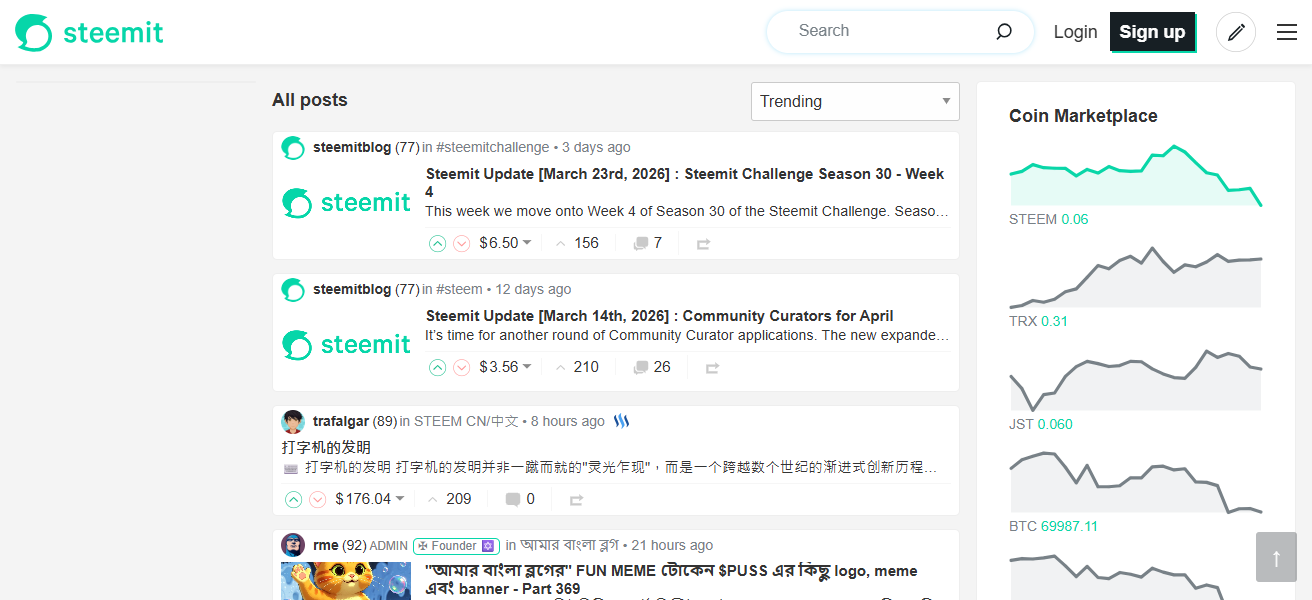
This means users create the guidelines that influence what content rises or falls in visibility. This is done through community voting on rewards, which are given in the form of a cryptocurrency token—the STEEM token.
Like most economic systems, STEEM is built on the principle of ‘the bigger, the better’, meaning users are incentivized to possess larger amounts of STEEM tokens to amplify their voting influence.
Steemit Features
- Uses a blockchain-based voting system to reward users with STEEM tokens for posting, commenting, and curating content.
- Content can be created by anyone, meaning there is no central content authority.
- Users of the site get rewarded, but the reverse is also true, system abuse is possible (to prevent this, the Steemit system uses the blockchain to audit and record the entire system and provide a means to verify the system).
- Users gain control of a larger community the more tokens (in STEEM and/or SBD) they possess.
| Pros | Cons |
|---|---|
| Users earn crypto rewards (STEEM) for posting and engagement, creating a monetized social media experience. | Earnings depend heavily on token price volatility, making income unpredictable. |
| Decentralized structure removes censorship and central authority control. | Users with more tokens have greater influence, leading to inequality in visibility. |
| Transparent reward system based on blockchain ensures fairness. | Platform growth and user base are smaller compared to mainstream social media. |
| Encourages quality content through voting incentives. | Beginners may struggle to gain traction without initial support. |
2. Brave Browser
Brave is a browser that puts privacy first. By default, it will block ads and trackers, but it offers users something no other browser does. Users can earn cryptocurrency through viewing ads.
Unlike other browsers, which make money at the user’s expense, Brave puts money back into the pockets of the users. Users can also tip other users through cryptocurrency.
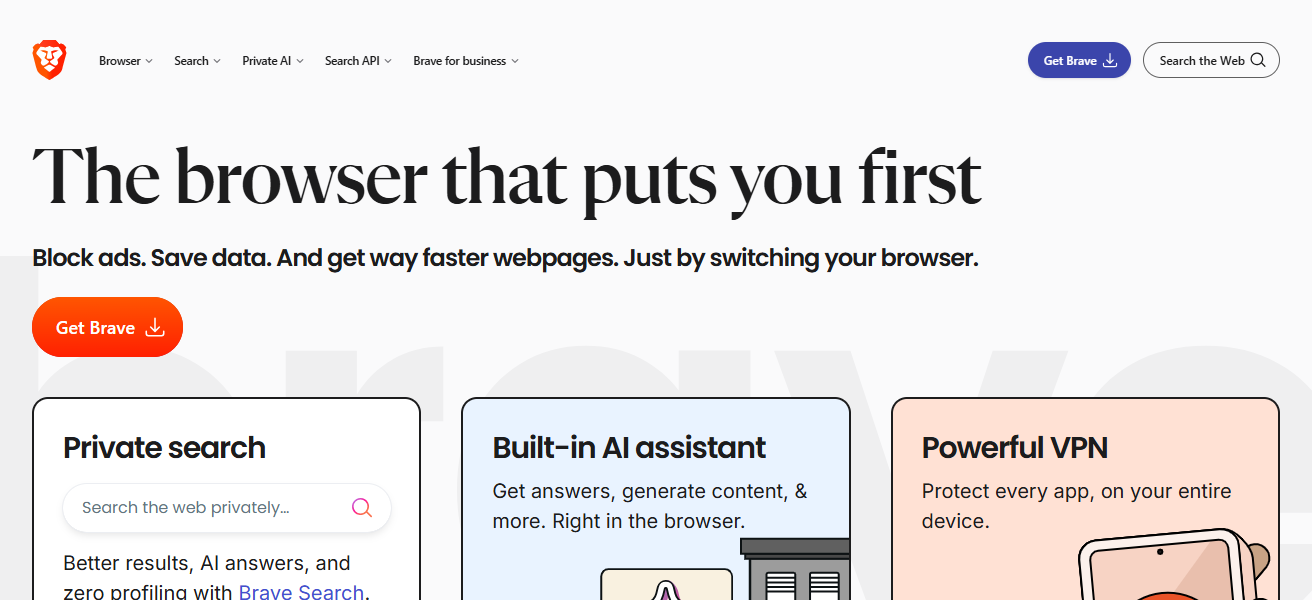
Brave’s unique combination of use, privacy features, and earn opportunity puts money back into the pockets of users and does not compromise user data or experience.
Brave Features
- Integrated tracker protection and ad blocking to stream content more quickly than with ads.
- Users can earn Basic Attention Tokens (BAT) by viewing ads. Users must opt in.
- An integrated crypto wallet allows users to send and receive tips in BAT to content creators and sites.
- Could be considered dangerous for users because it does not track users or collect data.
| Pros | Cons |
|---|---|
| Blocks ads and trackers, enhancing privacy and browsing speed. | BAT earnings are relatively low for average users. |
| Users earn Basic Attention Tokens (BAT) for viewing ads. | Limited ad availability in some regions reduces earning potential. |
| Supports direct tipping to content creators. | Some websites may not function properly due to aggressive ad blocking. |
| Reduces data exploitation by big tech companies. | Requires user understanding of crypto wallets for full benefits. |
3. Axie Infinity
Axie Infinity is a play to earn game. In this game, users can collect, breed, and battle fantasy creatures called Axies. Each creature is its own NFT, making the game unique.
Players can also earn money outside of the game through its use of tokens that have a real world value. When the game was popular, it created whole digital economies, especially in developing countries.

However, to play this game and earn money by selling Axies, the player must have an initial investment to purchase Axies.
Axie Infinity Features
- In Axie Infinity, play to earn is the dominant means of earning in the game. Players can earn tokens (SLP, AXS) by battling and breeding Axies.
- Players can trade or sell their creatures as they own the in-game assets (NFT)
- The in-game economy is created and controlled by the players.
- The economy and controls/strategies work together to create a game mix of traditional gaming and decentralized finance.
| Pros | Cons |
|---|---|
| Players can earn real income through gameplay and trading NFTs. | Initial investment to start playing can be expensive. |
| Creates digital economies and job opportunities. | Token values (SLP, AXS) can fluctuate significantly. |
| Combines gaming with decentralized finance (DeFi). | Gameplay can become repetitive over time. |
| Ownership of in-game assets via NFTs. | Security concerns and past hacking incidents affect trust. |
4. Audius
Audius allows musicians to directly distribute their songs to fans via streaming. Audius operates on the Blockchain to allow fans to listen for free while providing the musicians with fair compensation.
Audius is unique in the sense that they streamline the antiquated traditional music publishing process by cutting out the big players.

In addition to fair compensation, musicians are free to develop their own reward systems for their fans through means such as exclusive content, etc.
Audius places artists in control of the music streaming process by giving artists all the rights to their music while allowing them to innovate the way they engage with their fanbase.
Audius Features
- Upload music and keep ownership without working with record labels.
- Stream and engage with users to earn AUDIO token rewards.
- Data censorship and decentralized storage ensures storage transparency.
- Interact with fans directly and give exclusive releases with token rewards.
| Pros | Cons |
|---|---|
| Artists retain ownership and earn directly without intermediaries. | Smaller audience compared to major streaming platforms. |
| Transparent and fair revenue distribution. | Limited monetization compared to traditional platforms. |
| Enables direct fan engagement using tokens. | User interface and discovery tools are still evolving. |
| Free streaming access for listeners. | Requires crypto knowledge for full participation. |
5. Helium Network
Helium Network is set up to provide decentralized wireless broadband to the general public via the installation of their broadband hotspot through which the public will be privy to low-range broadband for their smart devices.
The Helium Network operates in opposition to traditional smartphone network companies, in that they provide access to wireless internet service through the crowd-sourced user network as opposed to a carrier-based user network.
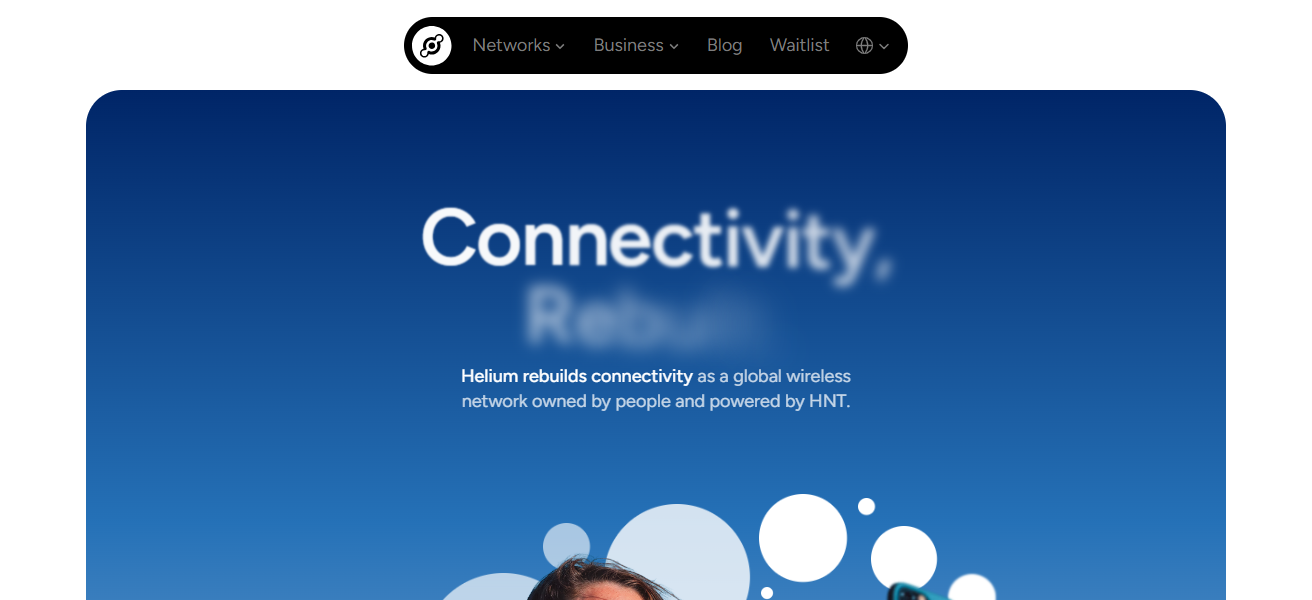
Helium’s Blockchain technology is applied to network service provided through broadband hotspots, illustrating that cryptocurrency can be applied to areas beyond just finance as opposed to a traditional smartphone network.
Helium Network Features
- Users set up hotspots for decentralized IoT wireless coverage.
- Earn HNT tokens from providing network coverage and transaction validation.
- Smart device use low-power long-range wireless.
- Community-governed infrastructure replaces old telecom systems.
| Pros | Cons |
|---|---|
| Users earn HNT by providing network coverage. | Hardware setup (hotspots) requires upfront investment. |
| Builds decentralized IoT infrastructure. | Earnings depend on location and network demand. |
| Low-power network ideal for smart devices. | Network growth varies by region, limiting usefulness. |
| Real-world utility beyond finance. | Technical setup may be complex for beginners. |
6. Mirror Protocol
Using the Mirror Protocol, users can create synthetic assets, known as “mAssets”, that mimic the values of real-world assets, such as stocks.
Users worldwide can access equity exposure mAssets obviate the need to directly purchase the assets. It is built on the principles of decentralized finance (DeFi) to eliminate geographic and regulatory constraints.
The blockchain technology used to create mAssets mirrors the financial markets and enables the buying and selling of the assets 24/7 without a broker. Users can also earn liquidity provider rewards.

mAssets and the Mirror Protocol are revolutionary to the conventional investment paradigm by challenging the closure of access to financial assets and regulations on equity ownership and control, and making the markets more accessible to all users.
Mirror Protocol Features
- Create synthetic mAssets that replicate stock prices.
- Access to trade stocks globally without owning them.
- 24/7 operated by DeFi smart contracts.
- Earn rewards for providing liquidity in trading pools.
| Pros | Cons |
|---|---|
| Allows trading of synthetic assets representing real-world stocks. | Regulatory uncertainty around synthetic assets. |
| Enables global access to financial markets. | Requires understanding of DeFi concepts. |
| Operates 24/7 without intermediaries. | Risk of price tracking inaccuracies. |
| Liquidity providers can earn rewards. | Smart contract risks and potential exploits. |
7. Decentraland
In Decentraland’s virtual environment, users can buy, trade, and develop digital real estate represented as non-fungible tokens (NFTs) with a cryptocurrency called MANA.
Each NFT tag grants the purchaser true ownership of the digital real estate. Moreover, Decentraland is a virtual world with a user-governed economy.
Users can hold virtual events, develop businesses, and trade virtual real estate. Numerous brands and individuals engage in this virtual metaverse.
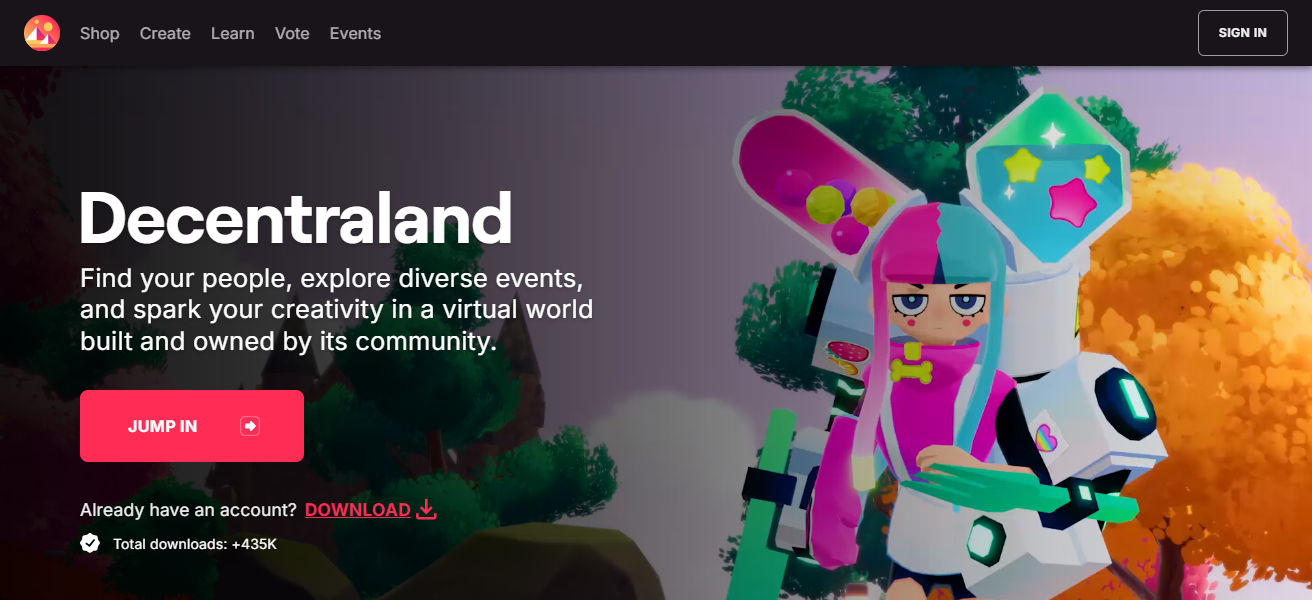
If this virtual “world” was devoid of the means to trade, Decentraland would more correctly be described as a video game that facilitated social interaction with a lot of commerce.
In a decentralized digital world, the intersection of social interaction, creative expression, and investment is the opportunity for the development of a fully immersive virtual economy.
Decentraland Features
- Own virtual land with NFTs and complete control of your assets.
- Create your own games or events or open virtual stores.
- Use crypto to buy and sell assets in the built economy.
- A social environment that games, commerce, and communication.
| Pros | Cons |
|---|---|
| Users own virtual land as NFTs with real value. | High cost of virtual land limits accessibility. |
| Supports business, events, and social interaction. | Graphics and user experience can feel outdated. |
| Fully decentralized virtual economy. | Requires strong internet and hardware performance. |
| Opportunities for creators and investors. | Market speculation can create volatility. |
8. Golem Network
Golem Network users can offer their spare computing power to others, and in turn, build a decentralized supercomputer.
Instead of using centralized cloud providers, participants can use their cloud computing power and earn GLM tokens. This incentivizes cheaper and more accessible computing.
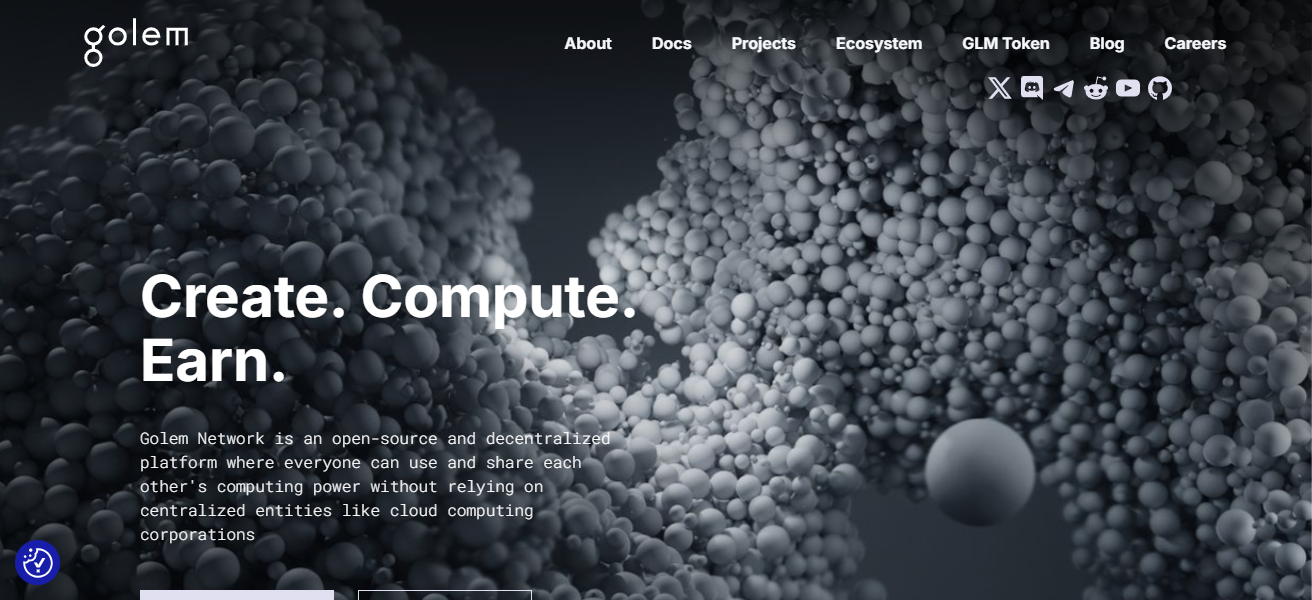
The innovation consists of letting users turn their unused equipment into a source of income. For developers, researchers, and creators
Golem enables large-scale rendering and data-analysis jobs by providing large-scale computing power. Golem is revolutionizing cloud computing by providing a decentralized peer-to-peer computing solution.
Golem Network Features
- A marketplace to rent and share computing power that is unused.
- Users earn GLM tokens by contributing resources, including CPU/GPU capacity.
- Supports sophisticated tasks including rendering, AI, and data processing.
- Provides a decentralized option for standard cloud computing services.
| Pros | Cons |
|---|---|
| Monetizes unused computing power. | Demand for computing tasks can be inconsistent. |
| Provides cheaper alternative to cloud computing. | Setup process may be technical for beginners. |
| Decentralized and scalable infrastructure. | Performance may vary compared to centralized services. |
| Useful for rendering and complex computations. | Limited mainstream adoption so far. |
9. Sweatcoin
Sweatcoin is a fitness application that monetizes walking and exercising by rewarding users with digital currency.
It calculates the user’s steps using smartphone sensors and converts them into Sweatcoins. Sweatcoins can be spent on a variety of products and services.
The concept is rather outlandish, yet it motivates users to stay active while it also exposes users to the world of cryptocurrency.
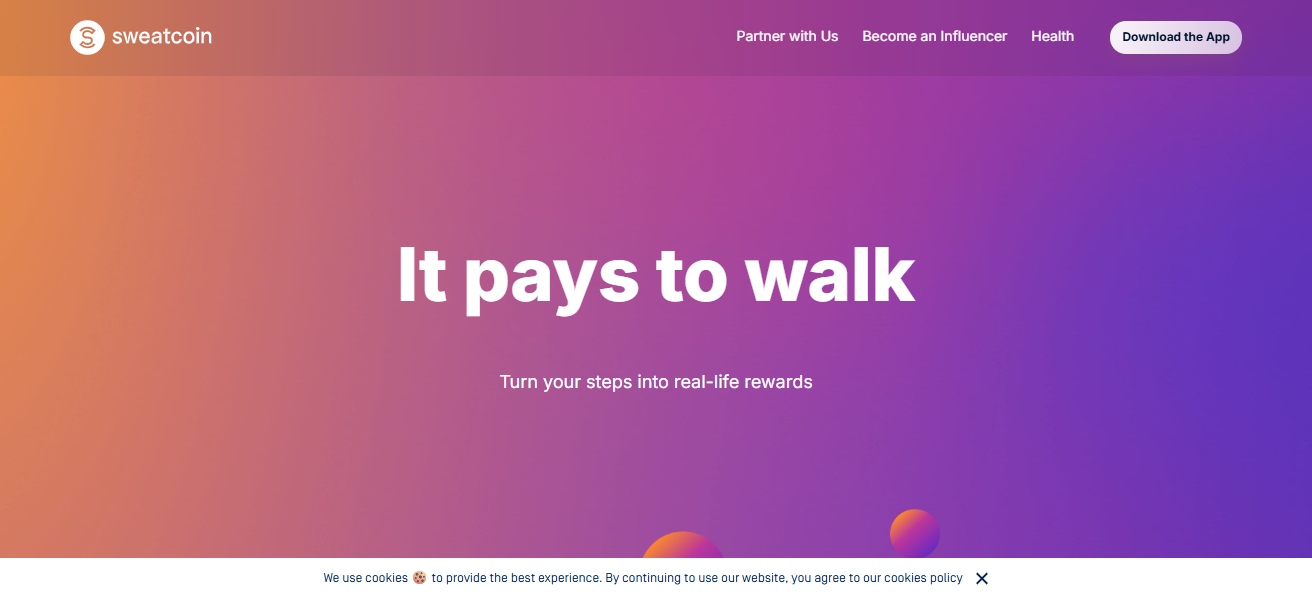
Although the app is not fully based on the blockchain, it has a more decentralized focus than it did in the beginning.
It is rewarding people’s movement by integrating the world of finance with exercising, and advocating for physical activity by offering a digital reward.
Sweatcoin Features
- Incentivizes every recorded daily step for the duration of the campaign.
- Promotes healthy habits by rewarding and creating incentives to walk.
- Users gain access to a marketplace to use their coins to buy goods and services.
- Extremely easy to begin use, with no initial investment needed to start earning.
| Pros | Cons |
|---|---|
| Encourages healthy lifestyle through rewards. | Rewards have limited real-world value in some cases. |
| Easy to use with no major investment required. | Step tracking accuracy may vary. |
| Converts daily activity into digital currency. | Full crypto integration is still developing. |
| Motivates consistent physical activity. | Earnings are relatively small for most users. |
10. Uniswap
Uniswap is an example of a decentralized exchange (DEX). Users are able to conduct trades directly from their own wallets without the need for a third party to facilitate the trade.
They employ an Automated Market Maker (AMM) system rather than traditional order books and place trades against pools of liquidity from collaborators.
Anyone who collaborates and provides liquidity to the pool can earn a share of the trade fees. Because of the levels of simplicity and transparency that the Uniswap platform provides, it is one of the most popular trades in the world.
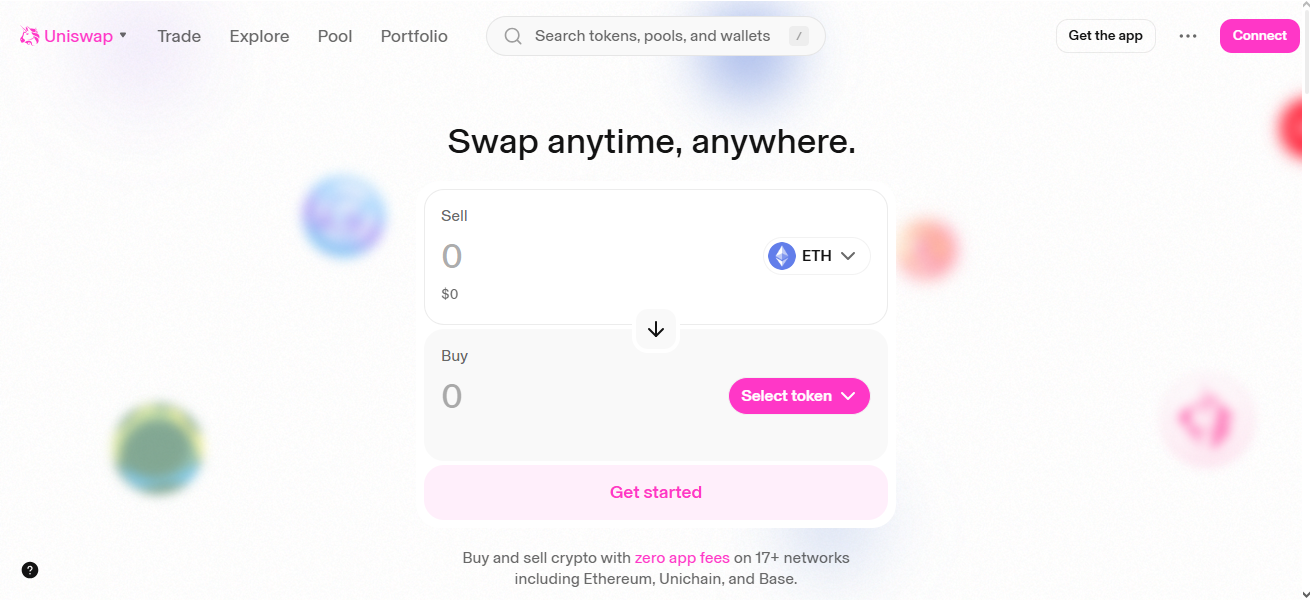
There are no account requirements, no KYC and approval processes. Simply engage with the smart contracts that govern the platform.
Uniswap trades are executed based on proprietary algorithms rather than matching buyers and sellers as is the case on traditional exchanges.
Dapp’s disruptive innovation is the democratization of access to trade in the crypto sector. Anyone can trade.
Sweatcoin Features
- Incentivizes every recorded daily step for the duration of the campaign.
- Promotes healthy habits by rewarding and creating incentives to walk.
- Users gain access to a marketplace to use their coins to buy goods and services.
- Extremely easy to begin use, with no initial investment needed to start earning.
| Pros | Cons |
|---|---|
| Fully decentralized trading without intermediaries. | Gas fees can be high on certain networks. |
| Anyone can provide liquidity and earn fees. | Impermanent loss risk for liquidity providers. |
| No account or KYC required. | Complex for beginners unfamiliar with DeFi. |
| Transparent and permissionless system. | Vulnerable to smart contract risks. |
How To Choose Weird but Powerful Crypto Apps You Didn’t Know Exist
- Function & Ideal Use – Select apps like Steemit and Audius depending on what you want to achieve (earning, gaming, music, etc.).
- Potential Earnings – See how you can earn through apps like Axie Infinity and Uniswap.
- User-Friendliness – Apps like Sweatcoin that are geared for beginners can be easier to get started with.
- Financial Commitment – Certain apps require an initial monetary investment (Decentraland, for example) and some have no cost to enter.
- Safety & Reliability – Use security-conscious apps like the Brave Browser.
- Network & Maturity – Communities that are active like the Helium Network demonstrate people have trust in the app.
- Applications in the Real World – Golem Network is an example of an app used outside of the trading world.
- Token Value Consistency – Find out if the app’s token price is consistent.
- Availability – Check that you have access to the app, your location is supported, and your device is compatible.
- Future Value – Pick platforms like Mirror Protocol that have positive predicted future value.
Conclsuion
To sum up, strange yet effective crypto applications are changing the way users engage with technology, finance, and everyday tasks.
Steemit, Brave Browser, and Uniswap are examples of innovation that goes beyond mainstream finance, providing earning potential, decentralization, and real-world utility, and transforming digital ecosystems for the better.
FAQ
These are unique blockchain-based apps like Steemit that combine unusual ideas (like earning from blogging or walking) with real crypto rewards.
Apps like Brave Browser are considered safe, but users should always check security, reviews, and risks before using any platform.
Yes, platforms such as Axie Infinity allow users to earn tokens that can be converted into real money.
Some apps like Sweatcoin are free, while others like Decentraland may require initial investment.