This article talks about best crypto wallets supporting key sharding. Key sharding is an essential feature for safely handling crypto. Key sharding divides private keys into several pieces.
This helps mitigate potential losses from hacks or failures that could be catastrophic. I will discuss wallets such as Ledger, Trezor, MetaMask Institutional, etc., covering security, usability, and crypto investors’ benefits.
Key Points & Best Crypto Wallets Supporting Key Sharding
Ledger: Hardware wallet offering offline storage, advanced security, and wide cryptocurrency support for safe management.
Trezor: Open-source hardware wallet providing strong encryption, user-friendly interface, and reliable protection against online threats.
MetaMask Institutional: Enterprise-focused wallet enabling secure crypto custody, compliance tools, and seamless decentralized finance access.
Exodus: Software wallet with intuitive design, multi-asset support, and built-in exchange for easy portfolio management.
Phantom: Solana-based wallet supporting NFTs, DeFi applications, and fast transactions with simple, user-friendly interface.
Tangem: Smart card wallet offering tap-to-use convenience, offline security, and portability for everyday crypto transactions.
SafePal: Affordable hardware wallet integrated with mobile app, supporting multiple blockchains and decentralized applications securely.
Zengo: Keyless wallet using MPC cryptography, eliminating seed phrases while ensuring secure, user-friendly crypto management.
Coinbase Wallet: Self-custody wallet linked to Coinbase ecosystem, supporting dApps, NFTs, and multiple cryptocurrencies securely.
Trust Wallet: Mobile wallet supporting thousands of tokens, decentralized applications, and offering simple, secure crypto access.
10 Best Crypto Wallets Supporting Key Sharding
1. Ledger
Ledger is a top hardware wallet that prioritizes the secure storage of user keys through its proprietary Secure Element (SE) chips.
While Ledger doesn’t use sharding in the industry standard way, Ledger’s infrastructure divides cryptographic processes, which means that private keys remain trapped inside the wallet.
With a Ledger wallet, customers can offline manage a number of different cryptocurrencies, which reduces their exposure to hacks.

Alongside the wallet, Ledger’s Live app allows users to manage their transaction and track their portfolios.
Ledger supports advanced security measures like PIN protection, passphrase locking, recovery seed handling, and erase-by-acceleration
Ledger is tailor made for users needing offline security that is complimented by a deep level of key management.
Ledger Features
- Hardware Security: Private keys are kept offline within a Secure Element (SE) chip. This makes them immune to hacking.
- Multi-Currency Support: Supports hundreds of coins and tokens, including BTC, ETH, and altcoins.
- Recovery & Backup: Because of the lost device recovery option, recovery seed offers a backup feature similar to sharding.
- Integration: Compatible with MetaMask and various DeFi apps for comprehensive crypto management.
| Pros | Cons |
|---|---|
| Hardware wallet with offline private key storage for maximum security. | Requires purchase of physical device. |
| Supports hundreds of cryptocurrencies and tokens. | Slightly complex setup for beginners. |
| Secure Element chip protects against hacks. | Ledger Live software updates can sometimes be confusing. |
| PIN and passphrase protection enhance safety. | Recovery seed must be stored securely; if lost, funds can be unrecoverable. |
| Integrates with other wallets like MetaMask for added flexibility. | Limited mobile support without extra adapters. |
2. Trezor
Trezor offers excellent customer protection and even provides some partial key fragmentation to keep your crypto assets even more secure. Trezor encrypts all private keys and, dbecause of this, important details are never revealed to the web.
Trezor offers passphrase protection, pebased two-factor authentication, and shard recovery management that lets you restore your access in case your device is acquired by someone else.
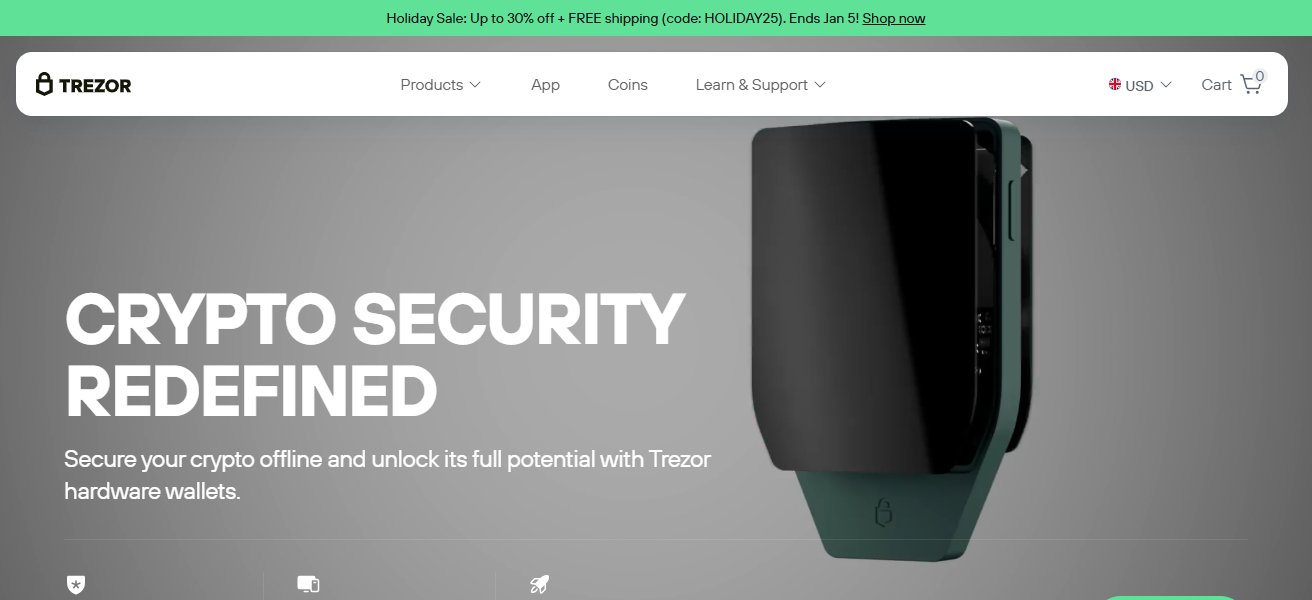
Trezor also supports many cryptocurrencies and offers integration with third-party applications such as MetaMask, adding more value to the already established
Trezor as a top hardware crypto wallet. The affordable price and simple design of Trezor also make it a great choice for both novice and more experienced crypto users.
Trezor Features
- Offline Key Storage: Keys are created and stored in the device. They are never exposed online.
- Wide Asset Compatibility: Third party apps can be added. Major cryptocurrencies are compatible.
- Security Features: Passphrase, PIN protection, and two-factor authentication combined add more protection.
- Recovery System: Backup seed acts as a sharding replacement. Funds can be restored if the wallet is ever lost.
| Pros | Cons |
|---|---|
| Hardware wallet with strong offline key security. | Physical device purchase required. |
| Open-source firmware allows transparency and trust. | Limited support for certain newer tokens. |
| Passphrase protection and two-factor authentication options. | Can feel less user-friendly for non-technical users. |
| Supports a wide range of cryptocurrencies and integrations. | Recovery seed must be carefully stored. |
| Frequent firmware updates improve security. | Device can be lost or damaged, affecting access. |
3. MetaMask Institutional
MetaMask Institutional tailors its services to meet the needs of institutional investors for whom safety and scalability when it comes to crypto custody is of utmost importance.
MetaMask Institutional has a unique approach to the custody of its private keys by utilizing a form of key sharding through M of N computation (MPC)
Whereby keys are split and only partially exposed to a limited number of computational units, and are stored on different nodes.

Because of this unique method, the risk of key loss or compromise is minimized. Furthermore, as a corporate customer, you receive tools to help you remain compliant with regulations, while still being able to integrate with various DeFi protocols and Ethereum wallets.
MetaMask Institutional’s combination of usability and enterprise-grade security is what makes it so valuable to hedge funds, crypto trading firms, and exchanges.
MetaMask Institutional Features
- MPC Key Management: Uses Multi-Party Computation. Keys are split to eliminate single-point-of-failure.
- Enterprise Features: Monitoring tools and compliance for trading firms and institutional clients.
- Ethereum Ecosystem Support: Access to Ethereum, DeFi, and ERC-20 tokens.
- Multi-Account Management: Secure management of numerous accounts is offered.
| Pros | Cons |
|---|---|
| Uses Multi-Party Computation (MPC) for key sharding, reducing single-point-of-failure risk. | Primarily designed for institutional users; may be overkill for individuals. |
| Seamless access to Ethereum-based assets and DeFi protocols. | Requires higher technical knowledge. |
| Compliance and monitoring tools for enterprise use. | Integration with third-party platforms can be complex. |
| Supports multiple accounts and wallets securely. | Not ideal for casual users who want simple setup. |
| Enterprise-grade security with robust transaction tracking. | Limited support for non-Ethereum assets. |
4. Exodus
The software wallet Exodus is well regarded for its easy-to-use interface and support for multiple assets. Wallet keys are stored locally on the user’s device and hardware wallet integration can be used for extra security.
Although Exodus does not natively split keys across nodes, the backup and recovery system functions like a sharded system, letting users recover assets with a secret recovery phrase.
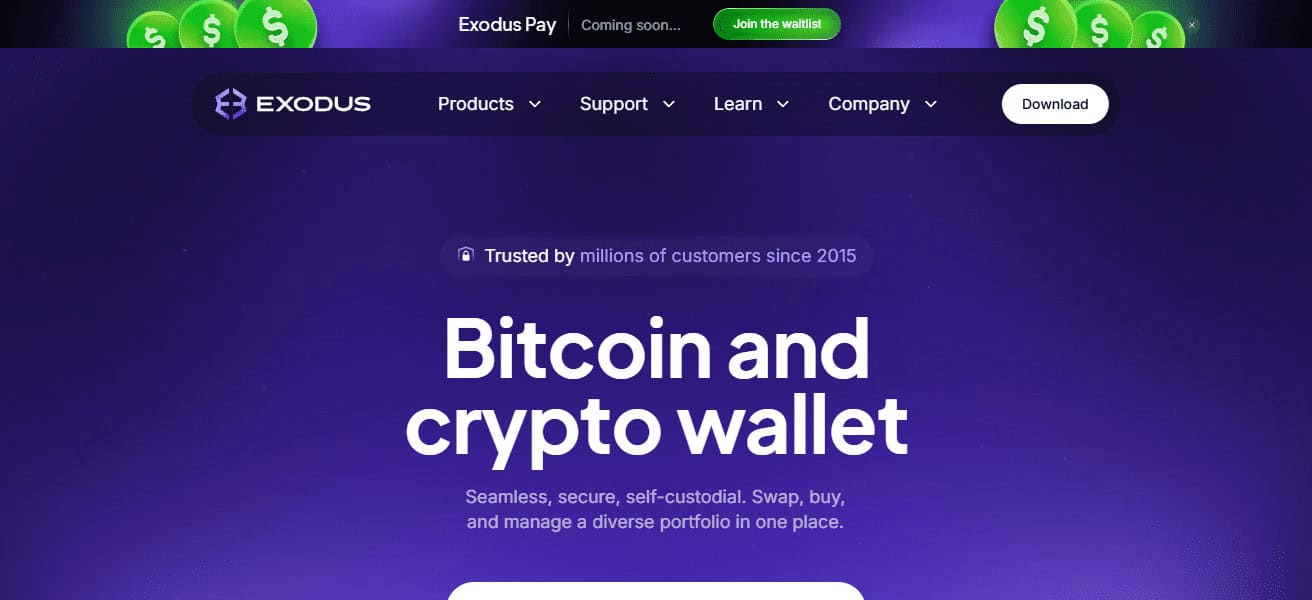
Built-in exchange functionality, portfolio tracking, and staking are some of the wallet’s features. It is also accessible on both desktop and mobile devices.
Exodus is a convenient wallet with security features that won’t compromise the user’s control of the keys.
Exodus Features
- User-Friendly Interface: Exodus has a very sleek, straightforward, and easy-to-use design for any type of customer, even for someone who is not very tech-savvy.
- Local Key Storage: The software even has local storage options so users can integrate hardware wallets and manage their keys completely offline.
- Multi-Asset Support: The software wallet even has built-in support and allows users wallet their cryptocurrencies and tokens that are over 200.
| Pros | Cons |
|---|---|
| User-friendly interface for beginners. | Keys stored locally on device; less secure than hardware wallets unless paired. |
| Supports over 200 cryptocurrencies and tokens. | Lacks native key sharding; relies on backup phrases. |
| Built-in exchange and staking features. | Desktop and mobile versions may not sync automatically. |
| Integration with hardware wallets like Trezor for extra security. | Backup phrases must be securely stored by user. |
| Cross-platform availability. | Limited advanced security features for institutional users. |
5. Phantom
Phantom is a premier wallet in the Solana ecosystem that emphasizes speed, security and usability.
Users can manage their own security through the wallet’s encrypted local storage and the optional integration of secured hardware wallets such as Ledger that enable a fragmented security approach by splitting keys across the device and the software.
Phantom is a wallet that allows users to stake and trade NFTs as well as to connect to dApps for a seamless experience in the Solana ecosystem.
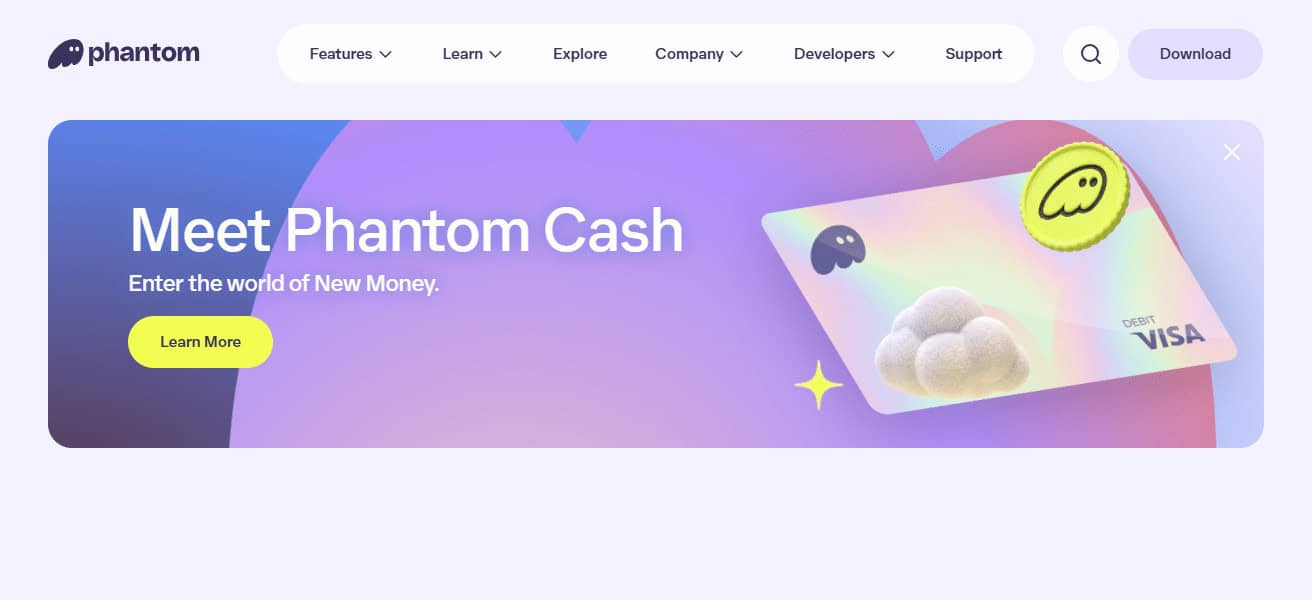
Users of all experience levels appreciate the wallet’s interface as it is clean and quick. Phantom’s recovery system further balances the cryptographic
Security of the wallet with the convenience of customer support, allowing for access restoration in the event that the customer loses their devices. As such, it stands out to crypto investors focused on Solana.
Phantom Features
- Solana-Focused Wallet: Designed for Solana, for both transactions and supporting assets. *
- Hardware Wallet Integration: Ledger can be used for advanced protection of wallet keys.
- DeFi & NFT Access: Access to staking, NFTs, and decentralized apps.
- Encrypted Local Storage: Private keys are safely stored on an enclosed local device.
| Pros | Cons |
|---|---|
| Optimized for Solana ecosystem; fast and lightweight. | Primarily supports Solana; limited cross-chain support. |
| Integration with hardware wallets like Ledger for enhanced security. | Key recovery depends on secret phrase; loss can mean permanent loss of funds. |
| Supports staking, NFTs, and DeFi dApps. | Mobile-only version may limit desktop convenience. |
| Intuitive interface suitable for beginners. | Some advanced features require technical knowledge. |
| Encrypted local key storage reduces hack risk. | Limited token support outside Solana ecosystem. |
6. Tangem
Tangem offers a smart card option as a hardware wallet. They keep private keys with high security offline. Key management is more secure and harder to replicate with a unique sharding-like method: keys are stored in different cards.
For recovery in enterprise environments, multiple cards are needed. Transactions are mobile and private keys won’t be exposed because the cards are NFC enabled. They support many crypto assets and can connect with other wallets and exchanges.
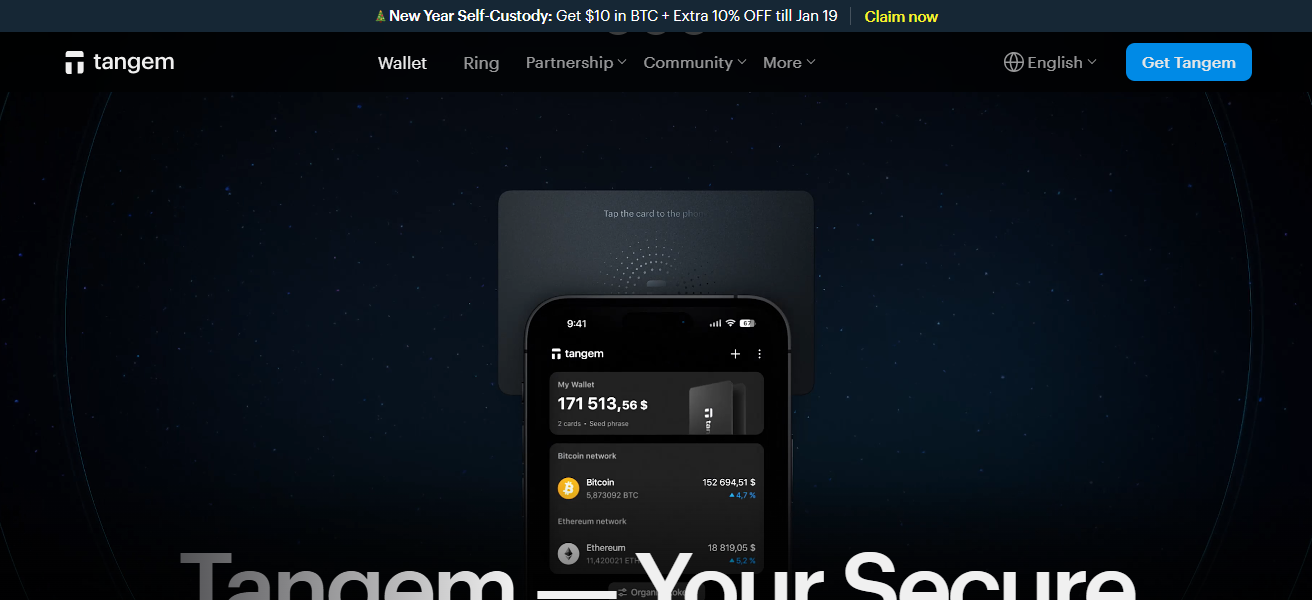
Tangem offers an alternative to traditional hardware wallets in terms of offline storage, multiple card recovery systems, and high portability. They are perfect for people who want secure key separation, and space and time efficiency.
Tangem Features
- Smart Card Design: Physical cards have NFC technology to keep keys stored offline.
- Portable & Mobile-Friendly: Private keys stay hidden while transactional convenience is offered.
- Multi-Card Recovery: Recovery options are expandable with multiple cards involved for a sharded effect.
- Offline Security: Precautionary measures to keep keys unexposed to the internet lower the risk of an external attack.
| Pros | Cons |
|---|---|
| Unique smart card design stores keys offline. | Physical cards need to be carried safely. |
| NFC-enabled, making transactions fast and mobile-friendly. | Limited asset support compared to major wallets. |
| Keys remain offline, reducing exposure to hacks. | Backup and recovery require multiple cards for redundancy. |
| Multi-card setup allows sharding-like security for enterprise use. | Not as widely supported by third-party apps. |
| Portable and convenient for mobile transactions. | May feel unconventional for traditional crypto users. |
7. SafePal
SafePal is a flexible crypto wallet with a focus on secure key management. Primary keys are stored on the hardware and remain on the device.
Recovery options provide key backups similar to sharding, allowing key restoration if the device is lost. SafePal supports hundreds of coins and works with most decentralized exchanges and Defi protocols, enabling on-device trading.
SafePal uses QR codes to close the wallet’s transaction which keeps the wallet from using the network. SafePal works with mobile and hardware. SafePal is secure and flexible, allowing users to trade crypto coins with good offline key storage.
SafePal Features
- Air-Gapped Security: Keeps keys offline, via QR code transactions.
- Multi-Currency Support: Compatible with a myriad of different coins.
- Hardware & Software Modes: Wallet users can operate in either mobile or physical wallet mode.
- Integration with DeFi & Exchanges: Trade options while keys stay protected.
| Pros | Cons |
|---|---|
| Hardware and software wallet combination increases flexibility. | Hardware wallet purchase required for full security. |
| Offline key storage reduces hacking risks. | Backup and recovery can be confusing for beginners. |
| Supports hundreds of cryptocurrencies. | Mobile app can be slightly slower than competitors. |
| Air-gapped QR code transactions prevent internet exposure. | Limited advanced institutional features. |
| Integrates with exchanges and DeFi protocols. | Requires users to manually manage security practices. |
8. Zengo
Zengo is a mobile wallet that uses advanced multi-party computation to store a single private key across a number of servers.
This splitting approach means that complete key exposure is impossible, making it extremely hack-resistant.
Users can recover their assets through their phone number or through biometrics, eliminating the need for cumbersome seed phrases.
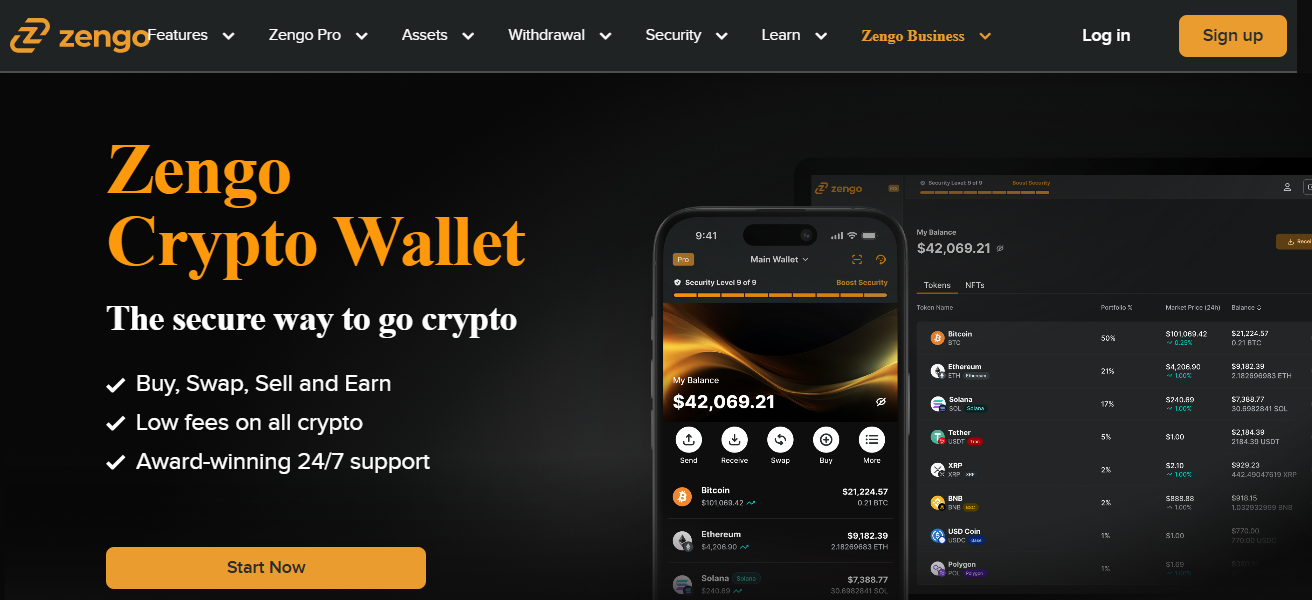
Zengo is one of the most user-friendly wallets, supporting a large number of digital currencies and decentralized finance protocols, while also ensuring that services remain secure at an institutional level.
Zengo’s continuous authentication and cloud-based key management set it apart. Zengo is optimal for users wanting a wallet that is easy to use and for a mobile manager wanting high level cryptographic security.
Zengo Features
- MPC Key Sharding: Your private keys are divided and stored across different servers for better safety.
- Seedless Recovery: No need to keep a recovery seed phrase, you can recover using biometrics or your phone.
- Mobile-First Design: Created for on-the-go management of your crypto.
- DeFi & Multi-Asset Support: Access to a wide range of tokens and decentralized apps.
| Pros | Cons |
|---|---|
| Uses MPC for key splitting; no single point of failure. | Relies on cloud infrastructure, potentially less appealing to purists. |
| Recovery without seed phrases, using biometrics or phone. | Limited support for certain lesser-known tokens. |
| User-friendly mobile-first design. | Primarily mobile; desktop options are limited. |
| Supports DeFi and multiple cryptocurrencies. | Internet dependency for some operations. |
| High security without sacrificing convenience. | Advanced users may prefer full control over keys. |
9. Coinbase Wallet
Coinbase Wallet is a non-custodial wallet that allows users to keep their private keys and have fully integrated access to DeFi and NFTs.
Coinbase Wallet uses local key storage with fully optional recovery methods that split key data and store them on encrypted backups.

For more convenient access, users can link their wallet with Coinbase accounts. However, the wallet still remains fully in control of the users. Coinbase Wallet offers dApp browsing, token swaps, and support for a variety of cryptocurrencies.
For beginners, Coinbase Wallet’s design is accessible, and for advanced users in need of non-custodial crypto custody, Coinbase Wallet offers a variety of strong security practices.
Coinbase Wallet Features
- Non-Custodial Control: Users have complete ownership of their keys.
- Multi-Asset Support: Users can engage with various cryptocurrencies, tokens, and DeFi services.
- Built-in Web3 Browser: Integrated access to decentralized apps in the wallet.
- Seed Phrase Recovery: Users are offered a way to back up the wallet in the event of a device loss.
| Pros | Cons |
|---|---|
| Non-custodial wallet; users control private keys. | Backup phrases must be carefully stored. |
| Supports wide range of cryptocurrencies and DeFi protocols. | Primarily mobile-focused; desktop features limited. |
| Integrates with Coinbase ecosystem for added convenience. | Less advanced security options compared to hardware wallets. |
| Built-in dApp browser for Web3 interaction. | Some users may find UI complex initially. |
| Easy token swaps within wallet interface. | Recovery depends on seed phrase; loss means permanent loss. |
10. Trust Wallet
Trust Wallet is a non-custodial mobile wallet that keeps users’ private keys on their devices. Even though it doesn’t divide keys on different nodes, it uses a backup system that is similar to sharding, allowing users to recover their devices.
Selling or giving away a mobile device won’t expose the funds. Trust Wallet users can do much more than hold a mobile wallet.
Trust Wallet users can compose thousands of different tokens and coins, stake them, and manage NFTs.

Users can also participate in DeFi. Trust Wallet has open-sourced code that has shown to be reliable and has a large amount of community trust.
The integrated Web3 wallet dApp browser helps Trust Wallet users to access Web3 and maintain the confidentiality of the keys.
Trust Wallet remains reliable, accessible, and has excellent cross-chain support and users keep their keys safe.
Trust Wallet Features
- Non-Custodial & Open-Source: Users are in full control over their keys, and the wallet’s code is publicly available.
- Multi-Currency Support: Users can access thousands of available cryptocurrencies and tokens.
- Web3 Integration: Users can access a built-in browser for decentralized apps.
- Backup & Recovery: Recovery is secured with mnemonic phrases, which serve as a sharded backup.
| Pros | Cons |
|---|---|
| Non-custodial wallet; users fully control private keys. | Relies on backup seed phrase; loss can be permanent. |
| Supports thousands of cryptocurrencies and tokens. | No native key sharding; recovery depends on mnemonic phrase. |
| Built-in Web3 browser for dApps. | Mobile-only; desktop support limited. |
| Staking and NFT support. | Advanced security features like MPC are absent. |
| Open-source code ensures transparency. | Users must follow proper security practices to avoid hacks. |
How We Choose Best Crypto Wallets Supporting Key Sharding
Security Protocols: Wallets are made with encryption and key sharding to prevent attacks on single points of failure.
Key Sharding Technology: Wallets that support seed splitting or multi-party computation (MPC) are best.
Private Key Ownership: Users must always have control, and wallets shouldn’t store your keys on a central server.
Multi-Asset Support: Wallets that support a range of currencies and tokens are best for diversified portfolios.
Backup and Recovery: Providers must ensure that recovery options secured with sharded phrases or multi-device options are available.
Hardware Integration: Offline key security and transactions are enhanced when wallets support integrations with hardware wallets.
User-Friendly Interface: Wallets that have smooth user navigation and detailed instructions are best for crypto novices and experts.
DeFi and dApp Access: Wallets that integrate with decentralized apps without the risk of exposing private keys are preferred.
Reputation & Updates: Providers who have positive reviews and offer security updates are preferred.
Conclusion
To summarize, peace of mind and superior protection as crypto holders are possible with best crypto wallets supporting key sharding.
Ledger, Trezor and MetaMask Institutional wallets, and others, provide investors with the ability to offline store their assets, and all the alternatives come with key recovery and protection options.
By using these wallets investors protection from hacks, and management of multiple cryptocurrencies, access is easy and confident.
FAQ
What is key sharding in crypto wallets?
Key sharding splits private keys into multiple parts, reducing risk of single-point failure.
Why is Ledger considered secure?
Ledger stores keys offline in a Secure Element chip and integrates with other wallets.
How does Trezor protect my assets?
Trezor keeps keys offline, uses passphrases, PIN protection, and backup seeds for recovery.
What makes MetaMask Institutional different?
It uses MPC to split keys across nodes and provides enterprise-grade compliance tools.
Can Exodus be used safely for key sharding?
Exodus stores keys locally and allows optional hardware wallet integration for extra security.