This article reviews the Best AI Startups Raised Over $100 Million. Rapid development of generative AI, robotics, healthcare, enterprise software, and AI infrastructure is driven by these innovative firms.
Each of these highly funded start-ups is developing new tech, attracting big investors, and scaling fast around the globe.
You will learn what makes these firms successful, competitive, and innovative, and the key products they offer, as well as the major differentiator in the AI broad space and the amounts raised.
What Are AI Startups?
AI startups are businesses that apply their technology to develop AI and solve problems in any given industry. They produce AI chatbots, ML software, robotics, AI healthcare and enterprise solutions, and generative AI.
Traditional software companies develop their products without the same dependency on advanced algorithms, computing, and vast hoards of data that AI companies rely on.
Venture capital funding leads to the large-scale proliferation of many AI companies, thus impacting digital transformation, automation, and innovation based on productivity in the global market.
Why Funding Matters for AI Startups
- Even More Advanced AI Models — Funding helps build more advanced models and new types of AI.
- Better Hardware Purchases — Investments help purchase cloud resources and AI hardware.
- Can Afford Better Employees — More funding allows for hiring better researchers and data scientists.
- Improvements and Updates Become Faster — More funding allows better and faster updates and improvements for AI products.
- More Customers — Funding gets more customers and allows businesses to expand to other countries.
- More Unique Ideas — Financial funding allows for more research into more difficult and complex AI applications.
- Partnerships Become More Common — If a start-up gains funding, they can partner with more businesses and research institutions.
- Better Funding > Ideas > Competitors — Compared to AI leaders, better funding helps develop ideas faster and improve competitiveness.
Key Points & Best AI Startups Raised Over $100 Million
| AI Startup | Explanation |
|---|---|
| OpenAI | Raised $40 billion, developing GPT language models powering leading generative AI applications worldwide today. |
| Anthropic | Raised $13 billion+, creating Claude AI models with strong emphasis on safety and responsible innovation. |
| xAI | Raised $20 billion, developing Grok AI and advancing reasoning capabilities alongside real-world intelligence research. |
| Skild AI | Raised $1.4 billion, building foundational robotics models enabling intelligent machines to perform complex physical tasks. |
| Lambda | Raised $480 million, providing GPU infrastructure and cloud computing for training advanced artificial intelligence models. |
| Runway | Raised $315 million, offering multimodal AI tools for professional video generation, editing, and creative content production. |
| Glean | Secured major venture funding, delivering enterprise AI search and intelligent workplace automation agent solutions globally. |
| Harvey | Raised $300 million, streamlining legal workflows using AI-powered automation for law firms and professionals. |
| Abridge | Raised $300 million, transforming doctor-patient conversations into accurate, structured medical documentation using clinical AI. |
| Celestial AI | Raised $250 million, developing photonic technology improving AI computing speed, bandwidth, and memory efficiency dramatically. |
10 Best AI Startups Raised Over $100 Million
1. OpenAI
OpenAI is one of the best-financed AI startups in the world, having raised nearly $40 billion. The company is at the forefront of the AI race with its family of large language models and is commercially leading the AI-powered advanced chatbots, coding assistants, and multimodal AI enterprise and business solutions.
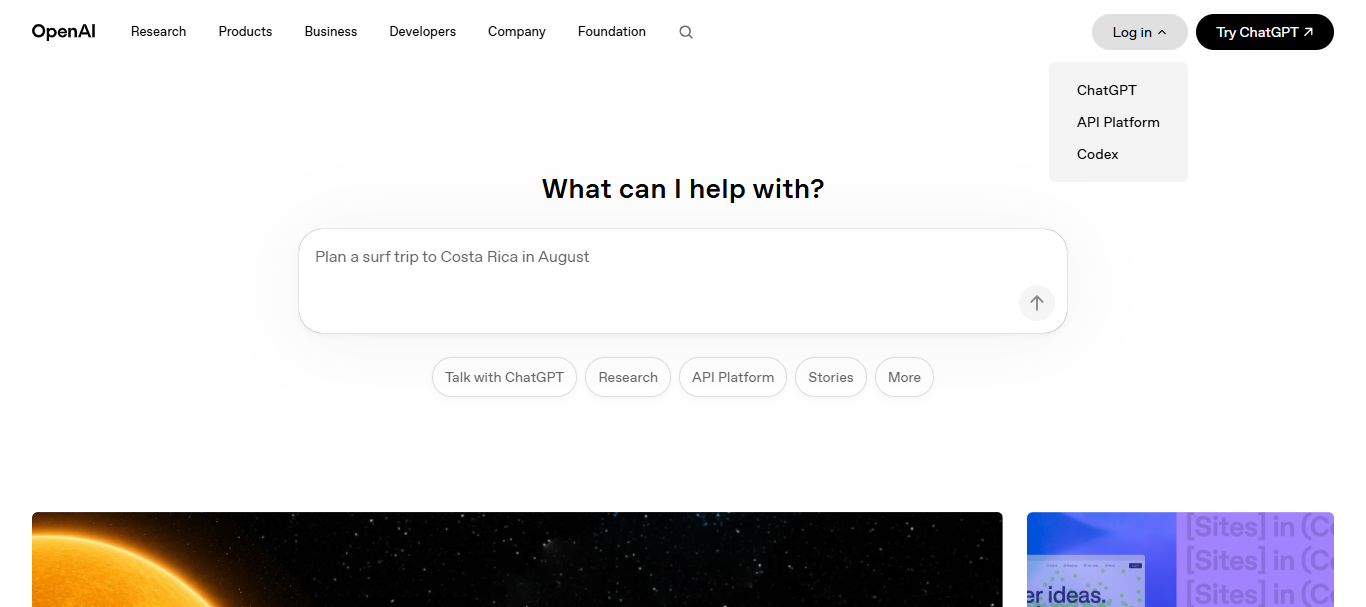
OpenAI is also commercially leading the advanced AI technologies for healthcare, finance, education, and software development. OpenAI will continue to be an important innovative company for both sustained investment and commercially available artificial general intelligence research.
OpenAI Features
- Advanced GPT Models – Available for text, code, logic, and all other multimodal AI apps.
- Enterprise AI Solutions – Includes APIs, automation, and productivity tools for businesses.
- Multimodal Capabilities – Can understand/generate text, images, audio, and video.
- Developer Ecosystem – APIs at every scale for developers, businesses, and enterprise customers.
| Pros | Cons |
|---|---|
| Industry-leading GPT foundation models. | Premium enterprise features can be expensive. |
| Strong ecosystem for developers and businesses. | Faces intense regulatory and copyright scrutiny. |
| Supports text, image, audio, and coding AI. | High computing costs for model training. |
| Continuous innovation through large research investments. | Heavy dependence on massive infrastructure. |
2. Anthropic
Anthropic has raised over $13 billion to create advanced AI that systems are safe and reliable. The startup is known for developing Claude family AI Assistants, and like its other AI systems employs a patented safety and transparency technique, which they call constitutional AI.
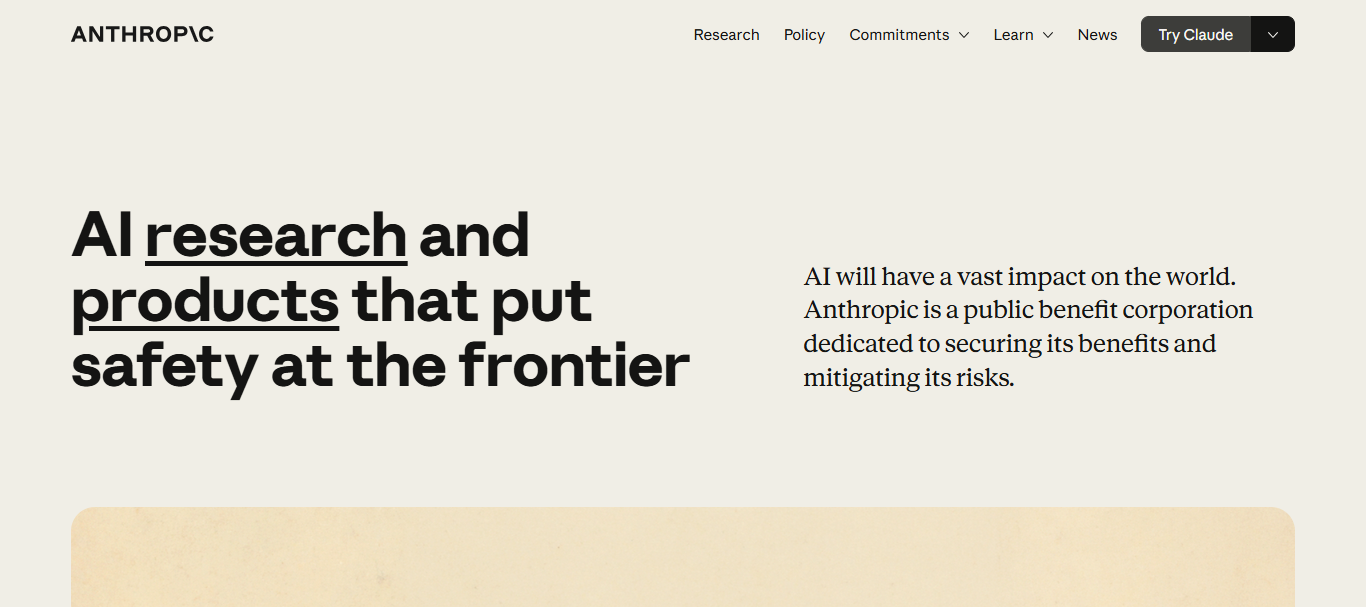
Anthropic is developing more enterprise AI with long-context reasoning and coding. They also attract more business customers compared to other AI companies, because its research is dedicated to advanced AI alignment with human values.
Anthropic Features
- Claude AI Models – Powerful conversational AI with enhanced reasoning.
- Constitutional AI – Safety of the model is increased with rule-based alignment.
- Long Context Window – High accuracy with extended text.
- Enterprise Security – Safe and private AI for business.
| Pros | Cons |
|---|---|
| Strong focus on AI safety and alignment. | Smaller ecosystem than leading competitors. |
| Claude excels at long-context understanding. | Limited consumer product portfolio. |
| Enterprise-friendly security and privacy features. | Faces growing competition in enterprise AI. |
| Reliable coding and reasoning performance. | High infrastructure expenses for scaling. |
3. xAI
Co-founded by Elon Musk, xAI has a goal to advance the research of sophisticated AI and has already raised almost $20 billion. xAI develops Grok, AI Assistants embedded in the X business ecosystem, and is also researching and developing AI that is scientifically autonomous and advanced with reasoning capabilities.
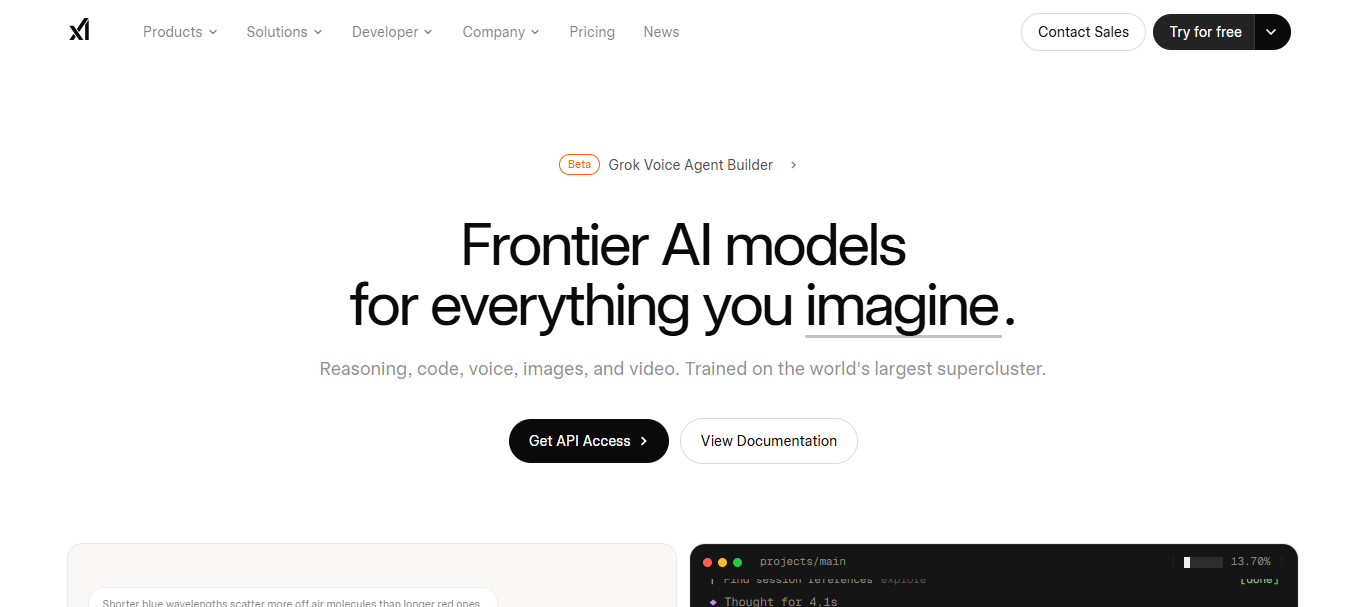
xAI is investing even more of its own capital into the large-scale infrastructure of AI enterprise by building even more high performance GPU clusters, which will also allow faster training time for foundational models. The long term focus of xAI is solving real world challenges and advanced scientific research using AI.
xAI Features
- Grok AI Assistant – Conversational AI that can generate answers with up-to-the-second information.
- Scientific Reasoning – Capable of high-level scientific and mathematical thinking.
- Large GPU Infrastructure – Large-scale computing for AI model training.
- X Platform Integration – Direct AI Service Integration with the X social platform.
| Pros | Cons |
|---|---|
| Massive funding accelerates AI research. | Product ecosystem remains relatively new. |
| Tight integration with the X platform. | Heavy infrastructure investment requirements. |
| Strong focus on scientific reasoning. | Global availability still expanding. |
| Rapid model improvements and innovation. | Faces fierce competition from established rivals. |
4. Skild AI
Having raised almost $1.4 billion, Skild AI focuses on foundation models for robotics. Traditional AI organizations build digital assistants. Skild AI is unlike those companies. It focuses on designing universal software for robots. Such software allows robots to comprehend, learn, and interact with the physical world.

It builds the software needed to automate manufacturing, logistics, healthcare, and robotics. Skild AI is working toward bringing the world more intensive automation. It focuses on the intersection of large-scale machine learning and robotics.
Skild AI Features
- Robotics Foundation Models – Specialized AI modeling for robotic applications.
- Universal Robot Intelligence – Capable of learning any task.
- Industrial Automation – Covers entire operation of warehouses and manufacturing and logistics.
- Physical Environment Learning – Safe navigation and learning of real-world environments by robots.
| Pros | Cons |
|---|---|
| Specializes in robotics foundation models. | Commercial robotics adoption takes time. |
| Enables physical intelligence across industries. | Requires expensive robotic hardware deployments. |
| Large funding supports long-term research. | Technology remains in early development stages. |
| Broad applications in manufacturing and logistics. | Limited consumer-facing products today. |
5. Lambda
Lambda has raised about $480 million to improve AI-enabled cloud infrastructures. Lambda focuses on building high-powered clusters of GPUs, AI servers, and cloud infrastructures that are highly optimized for training and deploying large machine learning models.
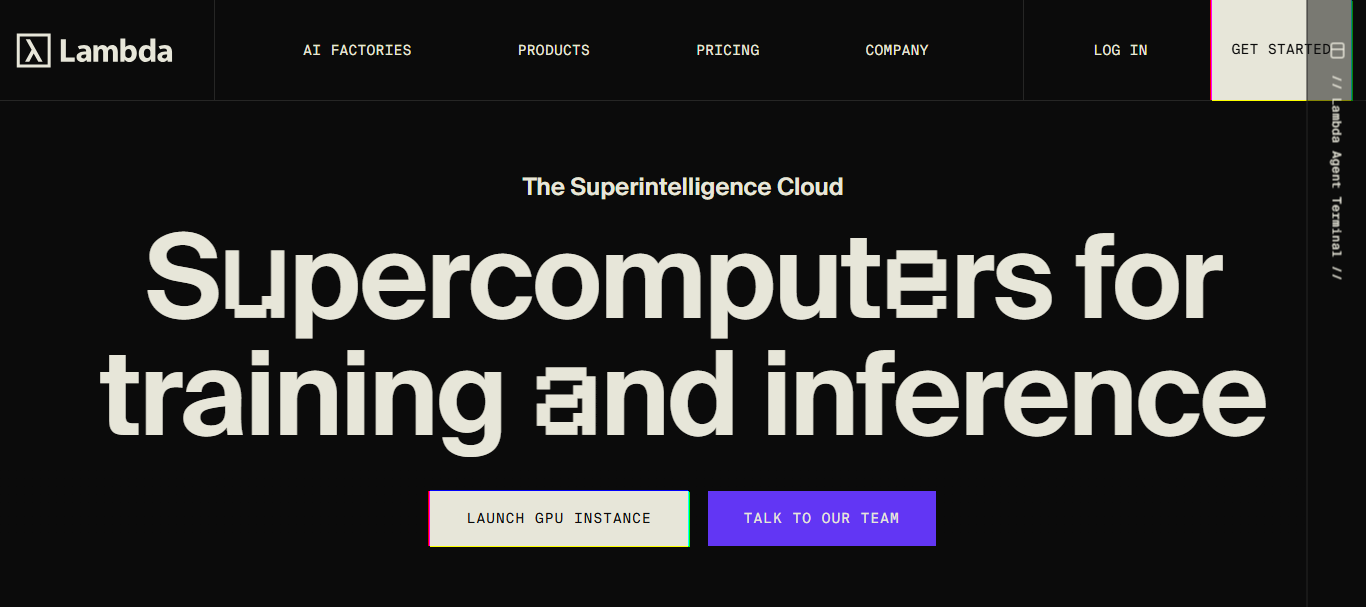
Lambda has become increasingly popular over the years as a provider for cloud infrastructure for use by AI and ML startups over the years. Lambda’s infrastructure allows ML practitioners to design and deploy complex AI systems without the need for costly investments in local infrastructure.
Lambda Features
- GPU Cloud Computing – Highly efficient cloud GPUs for AI and ML.
- AI Model Training – Supports enterprises with vast AI ML Model training.
- Scalable Infrastructure Provides support to companies, research, and entities of all sizes and types.
- High-performance Servers Provides sophisticated AI hardware customized to high-demand applications.
| Pros | Cons |
|---|---|
| High-performance GPU cloud infrastructure. | Dependent on GPU supply availability. |
| Supports AI startups and researchers. | Infrastructure services require significant investment. |
| Flexible cloud computing for AI workloads. | Competes with major cloud providers. |
| Optimized for large-scale model training. | Premium GPU resources can be costly. |
6. Runway
Runway has raised some $315 million and has established itself as one of the leading companies in the field of generative media. The tools and applications that Runway are creating are helping to simplify the process of video editing by using AI.

More traditional editing tools help to edit and refine video content, but take a very long time to use and understand. There has been a lot of improvement in the utility and quality of tools provided by Runway, and as such it has become one of the most popular tools that now exist in the world of AI.
Runway Features
- AI-Powered Video Production – Automatically generates high-quality video content from text.
- AI-Enhanced Editing – Edits media content with the assistance of AI.
- Automated Content Production – Optimizes the content creation process for speed.
- Global Media Production Tool – A favorite among filmmakers, designers, and marketers.
| Pros | Cons |
|---|---|
| Advanced AI-powered video generation tools. | Output quality may vary by prompt. |
| Speeds up creative production workflows. | Professional plans can be expensive. |
| Supports multimodal content creation. | Copyright concerns around generated media. |
| Popular among filmmakers and designers. | Requires internet access for processing. |
7. Glean
Having gathered substantial venture capital, Glean seeks to use artificial intelligence to reshape enterprise knowledge management. With Glean, disparate workplace applications, documents, emails, and collaboration software are integrated into an AI search experience.
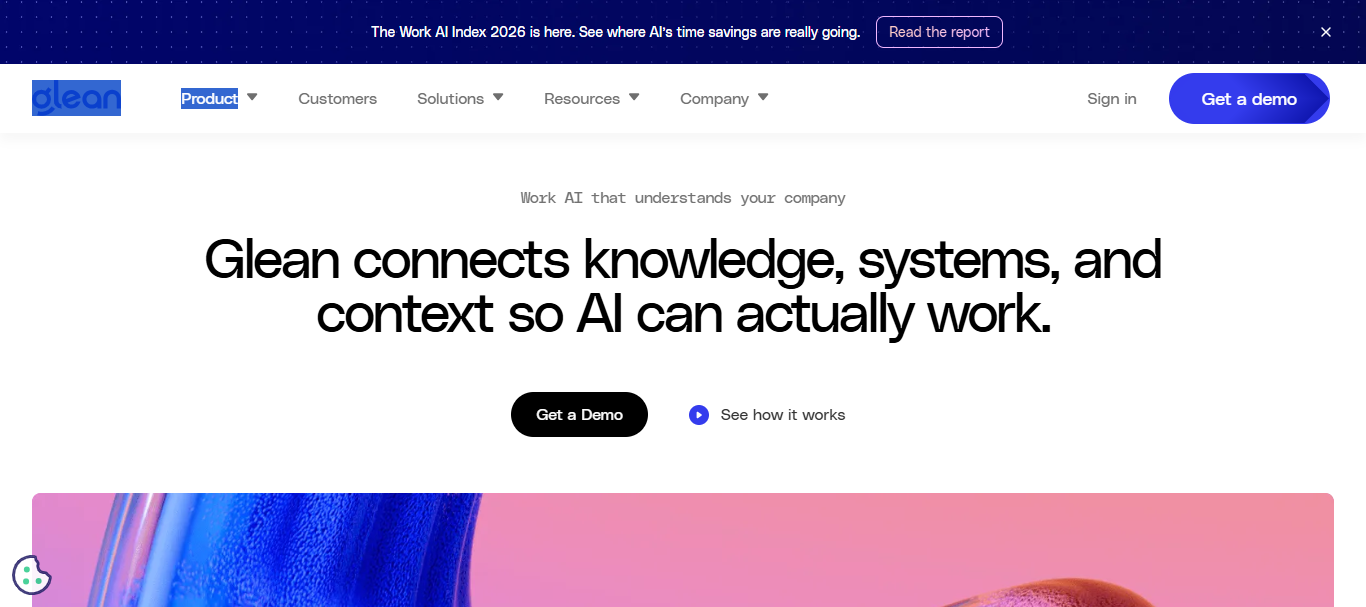
Glean has intelligent AI agents who assist employees with repetitive business tasks. Many large enterprises rely on Glean’s secure infrastructure and contextuality to support their teams to discover information in order to make quicker, informed decisions throughout the enterprise.
Glean Features
- AI-Enhanced Enterprise Search – Searches for data within connected enterprise applications.
- Intelligent AI Agents – Automates time-consuming tasks and business processes.
- Data Organization – Modularizes and categorizes company data and resources.
- Controlled Data Security – Implements enterprise-level security and access controls
| Pros | Cons |
|---|---|
| Powerful enterprise AI search platform. | Primarily designed for businesses. |
| Connects multiple workplace applications seamlessly. | Implementation may require IT integration. |
| AI agents improve employee productivity. | Subscription costs may challenge smaller firms. |
| Strong enterprise-grade security architecture. | Less suitable for individual consumers. |
8. Harvey
Harvey is an AI-based platform that was created to modernize legal services and has raised around $300 million of funding. Harvey was built with lawyers and legal professionals in mind to help with contract reviews, legal research, drafting documents, compliance, and case prep.
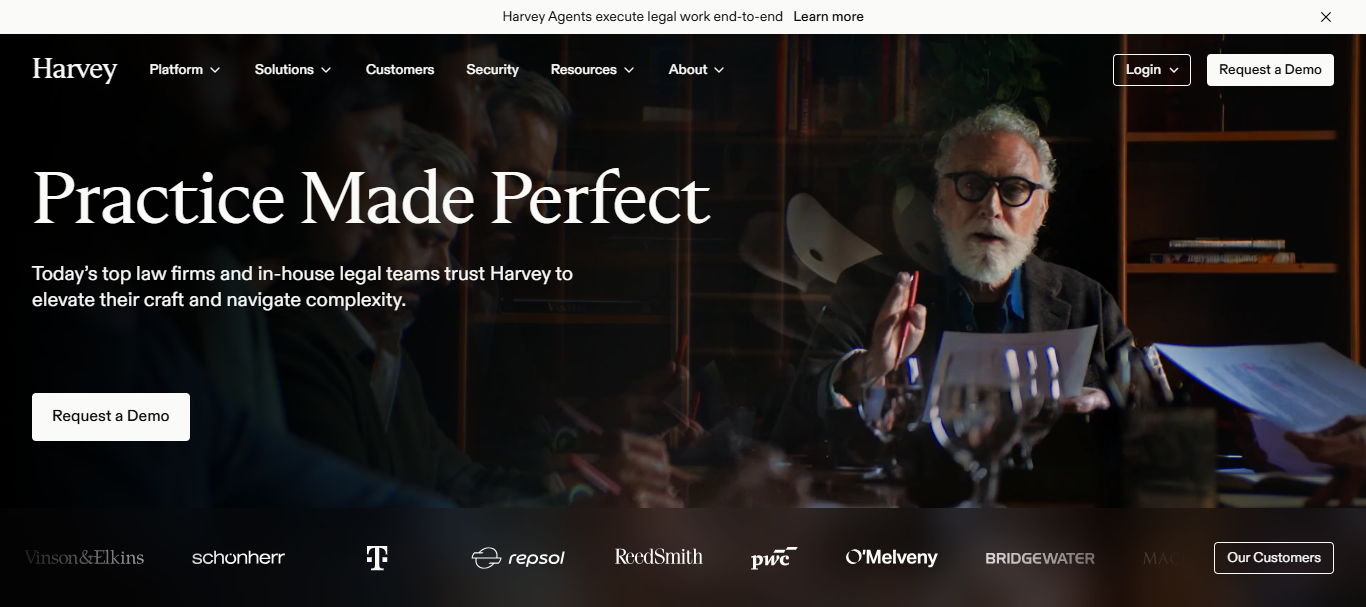
Harvey has integrated advanced legal language models into the legal workflow while maintaining the enterprise security and precision of legal work.
The popularity of Harvey among the legal community demonstrates that there is a need for specialized legal AIs to help lawyers and legal professionals improve their workflow and ease the burden of repetitive and mundane legal tasks.
Harvey Features
- Automated Legal Research – Rapidly interprets and analyzes case law and statutes.
- Streamlined Contract Creation – Simplifies the drafting of contracts and review of legal documents.
- Compliance and Risk Services – Integrates legal risk and compliance services.
- Legal Practice Focused Design – Tailored specifically for legal practitioners.
| Pros | Cons |
|---|---|
| Built specifically for legal professionals. | Limited to legal industry use cases. |
| Automates legal research and drafting. | Requires expert review of AI outputs. |
| Improves law firm productivity. | Premium pricing targets enterprise clients. |
| Secure workflows for sensitive documents. | Adoption depends on legal regulations. |
9. Abridge
With funding of around $300 million, Abridge is trying to transform clinical documentation in healthcare by using conversational AI.
Abridge’s clinical platform minimizes the administrative burden of healthcare professionals and helps reduce clinician burnout by translating patient-doctor conversations into clinician-patient

encounter notes electronically to enhance the clinical documentation workflow and integrate with Electronic Health Record systems. Abridge uses speech AI and medical AI to enhance clinical documentation, transform workflow efficiency, and improve patient care.
Abridge Features
- AI Clinical Documentation – Transforms verbal interactions into clinical notes.
- Real-Time Speech Capture – Precisely records clinical interactions as they occur.
- Interoperable EHRs – Integrates directly with most EHRs.
- AI-Enhanced Healthcare Workflow – Minimizes the administrative burden for clinicians.
| Pros | Cons |
|---|---|
| Reduces physician documentation workload. | Primarily serves healthcare organizations. |
| Integrates with electronic health records. | Requires strict regulatory compliance. |
| Improves clinical note accuracy. | Integration complexity varies by hospital. |
| Helps reduce clinician burnout. | Patient privacy remains a critical concern. |
10. Celestial AI
Celestial AI has accumulated nearly $250 million in funding to create a new type of AI infrastructure utilizing advanced photonic interconnect technology. The company’s Photonic Fabric platform tackles memory bandwidth, latency, and efficiency processing bottlenecks.
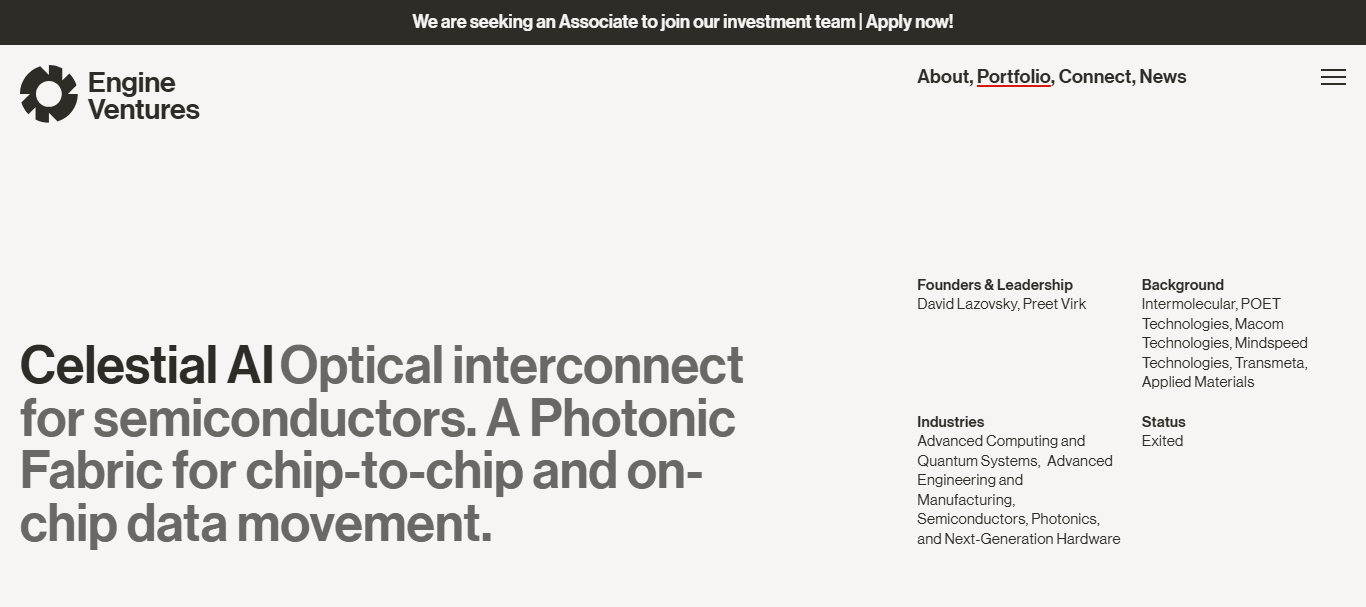
The traditional electronic interconnections cannot support the demands of large AI models. Celestial AI’s optical technology promotes enhanced interprocess communication by establishing faster connections between processing units and memory, creating a powerful and scalable AI data center that is more efficient with energy.
Celestial AI Features
- AI Photonic Fabric – Light-based communication systems for rapid AI computation.
- High Bandwidth Memory – Facilitates efficient memory and processor communication.
- Energy-Efficient Infrastructure: Power usage in AI data centers is lowered.
- Scalable AI Hardware: Next-gen high-performance AI systems are accommodated.
| Pros | Cons |
|---|---|
| Innovative photonic AI interconnect technology. | Technology is still emerging commercially. |
| Improves bandwidth and memory efficiency. | High research and manufacturing costs. |
| Enables faster AI infrastructure performance. | Market adoption may take several years. |
| Supports future large-scale AI computing. | Faces competition from established chipmakers. |
How To Choose The 10 Best AI Startups Raised Over $100 Million
- Evaluate funding history – Look into past funding rounds, the investors’ confidence, the valuation, and the overall financial stability of the startup.
- Review product innovation – Startups developing proprietary AI tech that offer innovative and valuable business solutions will be the most successful.
- Analyze market adoption – For a startup to fulfill their potential, customers, enterprise clients, and the market at large must adopt their offering.
- Check leadership team – Look for founders and executives with the experience and know how to successfully build and run AI and tech ventures.
- Assess strategic partnerships – Collaborations with large tech and enterprise companies and research institutions will yield valuable results.
- Consider long-term growth potential – Startups with scalable and innovative business models who plan to continually enhance their AI capability will be the most successful.
Future Trends in AI Startup Funding
Physical AI and Autonomous Systems – More funding will go toward autonomous robotics and vehicles and AI for automating real-world functions.
AI Infrastructure – More global funding will go to GPU and AI compute resources and AI infrastructure in general.
AI Agents – AI agents will take over automation of many workflows including customer service, research, and business functions.
Robotics Foundation Models – More funding will support the next generation of intelligent robots for learning and performing robotic tasks across industries.
Development of Multimodal AI – AI that merges text, images, audio, and movies will enhance the user experience.
AI in Healthcare – AI startups will enhance diagnosis and clinical documentation, drug discovery methods, and improve patient care.
Enterprise Automation – Companies will adopt more AI to automate repetitive tasks, analysis, and decisions across company functions.
AI Hardware – More power efficient AI compute resources will appear on the market.
Conclusion
In conclusion, these successful AI startups, all with $100 million plus funding, built innovations in generative AI, robotics, healthcare, enterprise software, and computing infrastructure, and truly dominate the field and drive the future of their respective industries.
The funding gives these companies the tools to mass produce their systems globally. These are still the most influential companies changing the rules of technology in the world, and that won’t be changing anytime soon.
FAQ
Why do AI startups raise over $100 million?
They require significant funding for research, AI infrastructure, talent acquisition, and global expansion.
Which AI startup has raised the most funding?
OpenAI has raised approximately $40 billion, making it one of the world’s best-funded AI startups.
Which AI startup focuses on AI safety?
Anthropic is widely recognized for building safe and responsible AI through its Claude models.
What is xAI known for?
xAI develops Grok AI and focuses on advanced reasoning, scientific research, and autonomous intelligence.
Which AI startup specializes in robotics?
Skild AI develops foundation models that enable robots to perform complex physical tasks intelligently.