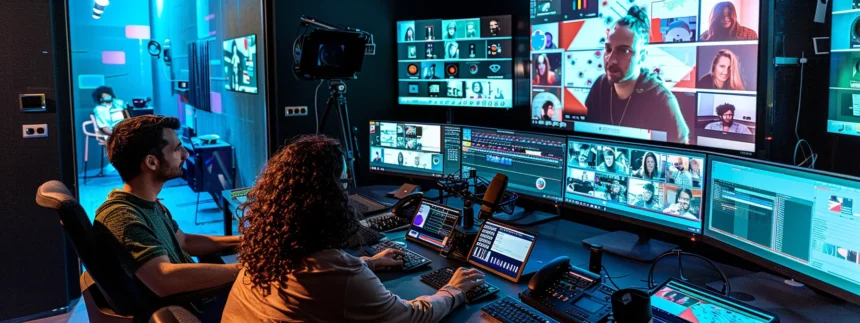
This article explores Enterprise AI Video Localization Tools for Global Corporate Training. These tools assist businesses in developing training programs that are multilingual and inclusive.
- What Are Enterprise AI Video Localization Tools?
- Why Businesses Need AI Video Localization for Global Training
- Key Points & Enterprise AI Video Localization Tools for Global Corporate Training
- 10 Enterprise AI Video Localization Tools for Global Corporate Training
- 1. Synthesia
- 2. HeyGen
- 3. DeepBrain AI
- 4. Papercup
- 5. Rask AI
- 6. ElevenLabs
- 7 VEED AI
- 8 Maestra AI
- 9. Descript
- 10. Lovo AI
- Conclusion
- FAQ
These tools utilize advanced AI to improve voice and text translation and add world training easier. We’ll examine their advantages and disadvantages from a corporate education standpoint and the challenges and opportunities that might influence the future.
What Are Enterprise AI Video Localization Tools?
Enterprise AI Video Localization Tools use AI to make corporate training videos more readily available to a global audience. These tools merge multiple technologies to improve the efficiency of enterprise learning content.
Natural language processing and machine learning assist with translation, while AI voices, subtitles, and avatars make the content.
These tools help businesses break the language barrier and allow training content to be consistent across different regions. These tools also improve corporate engagement and knowledge sharing.
Why Businesses Need AI Video Localization for Global Training
- Facilitates the Development of the Global Workforce: Global teams can conveniently access training resources and upgrade their skills in their native languages.
- Eliminates Language Barriers: Learning resources are understood clearly by communicatively diverse employees.
- Provides Consistent Messaging Training: All employees across the globe receive the same training messages.
- Decreases Production and Translation Costs: Video translation, dubbing, and localization are automated.
- Enhances Employee Engagement: Training that is widely accessible, personalized, and localized becomes more effective and meaningful.
Key Points & Enterprise AI Video Localization Tools for Global Corporate Training
| Enterprise AI Video Localization Tool | Explanation |
|---|---|
| Synthesia | AI avatars translate training videos into multiple languages with realistic corporate presentations. |
| HeyGen | Creates multilingual training videos using AI translation, voice cloning, and avatars. |
| DeepBrain AI | Localizes corporate videos with AI avatars, translations, and natural voiceovers. |
| Papercup | Uses AI dubbing technology to translate enterprise videos with human-like voices. |
| Rask AI | Provides automated video translation, dubbing, and localization for global teams. |
| ElevenLabs | Generates realistic multilingual AI voices for international corporate training content. |
| VEED AI | Offers AI-powered subtitles, translations, and editing for localized training videos. |
| Maestra AI | Converts corporate videos into multiple languages using automated transcription tools. |
| Descript | Enables AI transcription, translation, and editing for global training materials. |
| Lovo AI | Produces multilingual voiceovers with AI voices for enterprise learning videos. |
10 Enterprise AI Video Localization Tools for Global Corporate Training
1. Synthesia
An enterprise-level AI video localization tool, Synthesia, is perfect for companies needing global training content.
By using AI avatars, automated translations, and multilingual voice generation, Synthesia can create corporate training videos in different languages without the reshooting costs typically associated with filming.
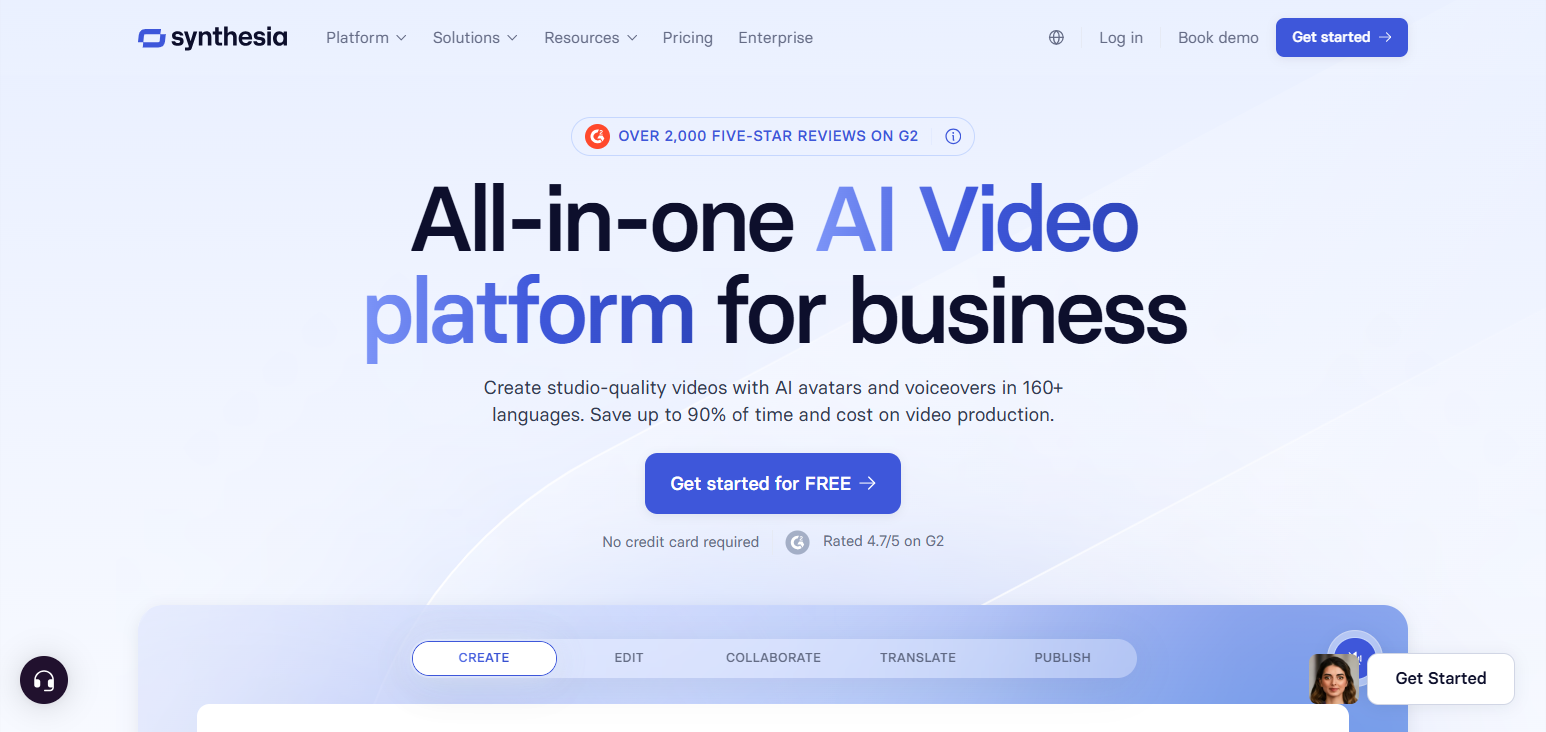
Synthesia’s platform is made for large, international companies with the need to train employees in multiple locations, as it can quickly add brand customizations and presenter styles.
| Pros | Cons |
|---|---|
| Creates realistic AI avatar training videos without studio production costs. | Advanced features can become expensive for large enterprise teams. |
| Supports multiple languages for global employee learning programs. | AI avatars may sometimes feel less personal than real trainers. |
| Enables quick updates to training content across regions. | Limited customization options compared with professional video production. |
| Reduces localization time through automated translation workflows. | Requires internet access for cloud-based video creation. |
| Helps maintain consistent corporate messaging worldwide. | Complex projects may require additional editing tools. |
2. HeyGen
Like Synthesia, HeyGen is an enterprise AI video localization tool, but it also uses voice cloning and AI dubbing. With these tools, HeyGen can create localized training materials while maintaining the original speaker’s tone and communication style.

Because of this, HeyGen is a tool that companies can use to train and educate all employees, regardless of their location, and it helps companies create personalized training and learning materials while requiring minimal time and effort on their part.
| Pros | Cons |
|---|---|
| Provides high-quality AI voice cloning and multilingual translation. | Voice cloning accuracy may vary depending on input quality. |
| Creates engaging training videos using realistic AI avatars. | Premium enterprise plans can be costly. |
| Preserves speaker tone and communication style during localization. | Some languages may have limited voice options. |
| Speeds up global content adaptation processes. | AI-generated expressions may occasionally appear unnatural. |
| Suitable for personalized employee training experiences. | Requires learning time for advanced features. |
3. DeepBrain AI
DeepBrain AI uses specially designed technology to help enterprises easily localize training videos. With the use of realistic, digitally created presences and natural speech, DeepBrain AI is the perfect solution for companies needing to create training videos in many different languages.
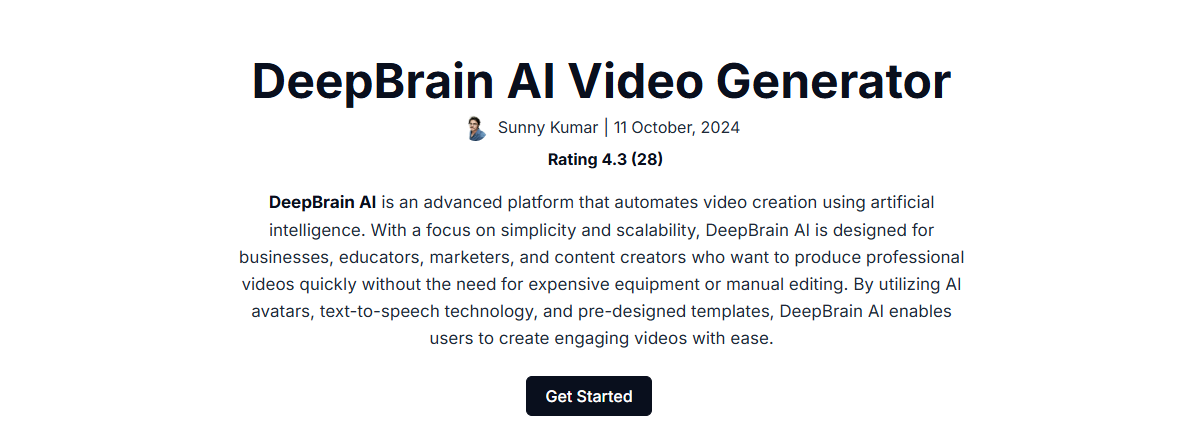
DeepBrain AI’s simple and fast technology allows companies to quickly and easily create digital training videos for new employees and for training employees on the use of new products.
| Pros | Cons |
|---|---|
| Generates professional AI presenter videos quickly for training. | Avatar customization options may be limited for specific industries. |
| Supports multilingual content creation for international teams. | Some advanced features require higher subscription plans. |
| Reduces dependency on physical presenters and recording setups. | AI presenters may lack human emotional connection. |
| Provides scalable solutions for enterprise learning programs. | Editing flexibility can be lower than traditional video tools. |
| Improves consistency across global training materials. | Rendering complex videos may take additional processing time. |
4. Papercup
Papercup uses AI to natural-sounding multilingual voices to dub corporate training videos. Their technology uses advanced speech tech to preserve emotional tone and pronunciation along with the speaker’s identity.
Papercup enables enterprises to internationalize instructional videos while making them available to their employees worldwide.
Papercup streamlines the learning process within an organization and helps cut costs associated with localization and voice recording for other training resources. They enable organizations to distribute high-quality training resources.
| Pros | Cons |
|---|---|
| Produces natural-sounding AI dubbing for corporate videos. | Primarily focused on dubbing rather than complete video creation. |
| Maintains speaker emotion and voice characteristics during translation. | Enterprise pricing may not suit small businesses. |
| Helps reduce professional voice-over production expenses. | Requires quality original audio for better results. |
| Supports large-scale multilingual training distribution. | Limited creative editing capabilities compared with video platforms. |
| Improves accessibility for international employees. | Some language accents may need manual corrections. |
5. Rask AI
Rask AI is an AI localization tool that helps businesses translate and dub corporate videos for international audiences. It offers automated transcription, voice translation, and AI dubbing across multiple languages.
Rask AI is utilized by companies to rapidly localize employee training and corporate communication videos.
With its powerful speech tech, Rask AI helps ensure that the speaker’s identity and message are maintained, giving large organizations the capability to consistently and efficiently train employees around the world.
| Pros | Cons |
|---|---|
| Offers automated video translation and AI dubbing features. | Translation accuracy may require human review for technical terms. |
| Supports many languages for global training programs. | Subscription costs increase with higher video volumes. |
| Preserves original speaker identity through voice technology. | Processing speed depends on video length and complexity. |
| Simplifies localization of existing corporate videos. | Advanced features may require technical understanding. |
| Reduces manual translation workload significantly. | Limited avatar creation compared with AI video platforms. |
6. ElevenLabs
ElevenLabs provides organizations with realistic AI voice generation technology that streamlines the localization of corporate videos and multilingual training content.
Its voice models are capable of reproducing human speech that is naturally different across a number of languages and maintains the tone, character, and emotions of the original voice.
Organizations are able to develop digitally safe and compliant training content at scale with the use of ElevenLabs. The technology also helps globally dispersed companies maintain voice-over standards for corporate communications.
| Pros | Cons |
|---|---|
| Creates highly realistic AI voices with natural pronunciation. | Mainly focuses on voice generation, not complete video localization. |
| Supports multilingual voice production for training content. | Voice customization options may require premium plans. |
| Maintains emotional tone and speaker characteristics effectively. | AI voices may still require human review for accuracy. |
| Helps enterprises produce professional narration quickly. | Usage-based pricing can increase with large projects. |
| Improves employee engagement through realistic audio experiences. | Limited built-in video editing capabilities. |
7 VEED AI
VEED allows enterprises to make training videos more accessible with their AI driven editing suite. VEED makes it easy for companies to put videos in every language by creating automatic captions, translating verbs, and even optimizes videos for employees across the world.
VEED AI makes the localization process even more simple by merging video editing and AI language tools. If your company has remote learning, compliance, or internal training programs that making video content adaptable to your global teams is a big time requirement, then this tool is incredibly helpful.
| Pros | Cons |
|---|---|
| Combines video editing, subtitles, and translation in one platform. | Advanced AI localization features may be limited compared with specialized tools. |
| Easy-to-use interface suitable for corporate teams. | Large enterprise projects may need additional integrations. |
| Quickly creates localized training videos with captions. | Export quality depends on selected subscription plan. |
| Supports collaboration among remote training teams. | AI translations may require manual proofreading. |
| Reduces video production complexity for businesses. | Less focused on AI avatar-based training solutions. |
8 Maestra AI
Maestra offers a suite of solutions for the localization of training videos and voiceover. The tool offers corporate video translation and automatic captioning in target languages complete with audio.
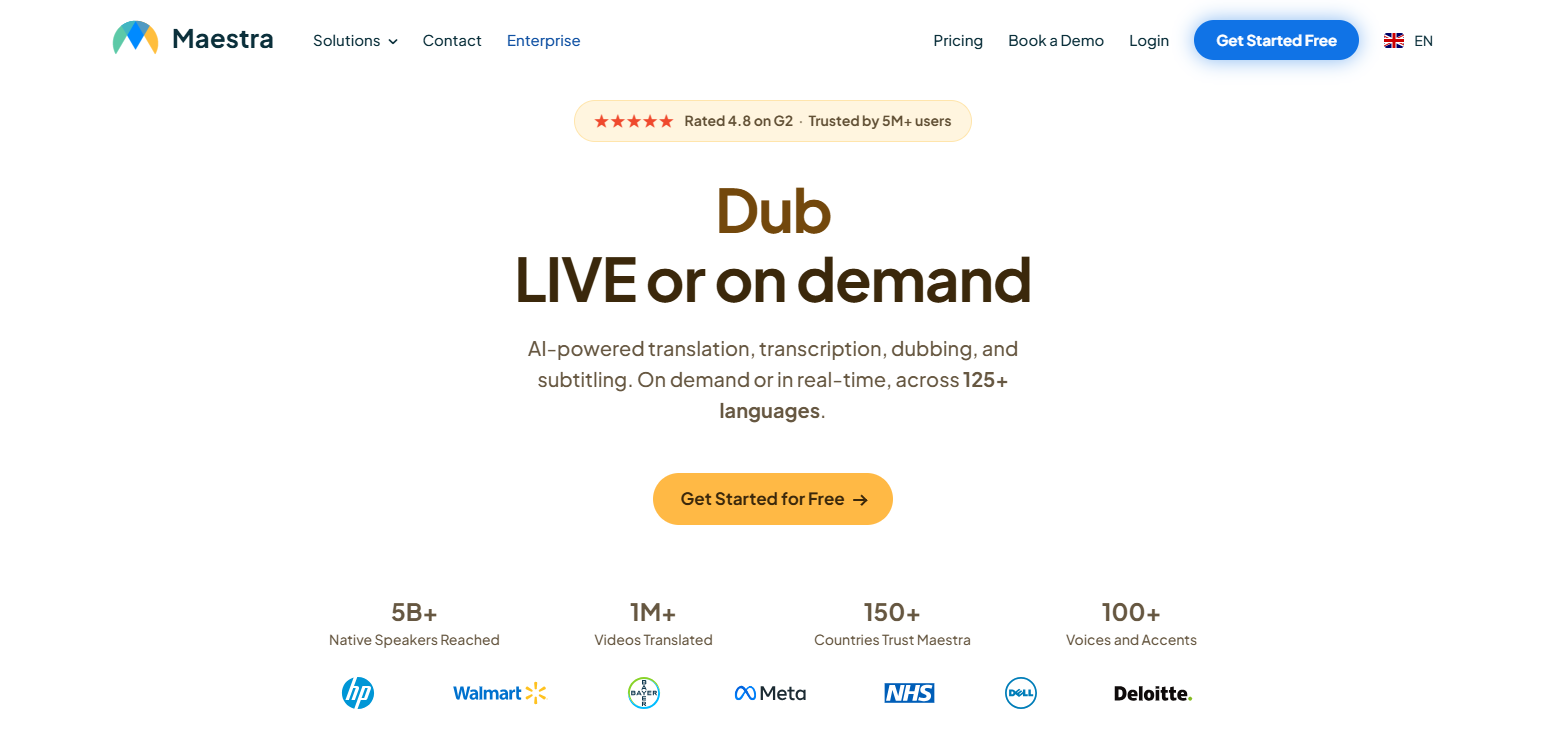
Organizations offering training services and corporate education solutions have offerings that are more accessible to global audiences by using Maestra AI.
The tool offers a simplified way to scale training services by integrating an AI workflow and removing manual translation tasks. This tool is especially valuable for companies with a vast repository of corporate training and instructional videos.
| Pros | Cons |
|---|---|
| Provides fast transcription and multilingual translation services. | Voice quality may vary between different languages. |
| Supports subtitles, captions, and voiceover generation. | Advanced enterprise features may require higher pricing tiers. |
| Helps manage large libraries of training videos efficiently. | Human editing may still be needed for accuracy. |
| Improves accessibility for global employees. | Less suitable for creating interactive avatar videos. |
| Reduces manual localization efforts significantly. | Processing time increases for longer training content. |
9. Descript
Descript offers a way to easily translate and edit training videos through their AI transcription and editing suite. Their text-based editing suite ensures that editing video content and captioning and transcribing are accurate and completed in record speed.
Descript aids companies to tailor training videos for regional use without having to edit or recreate a whole video.
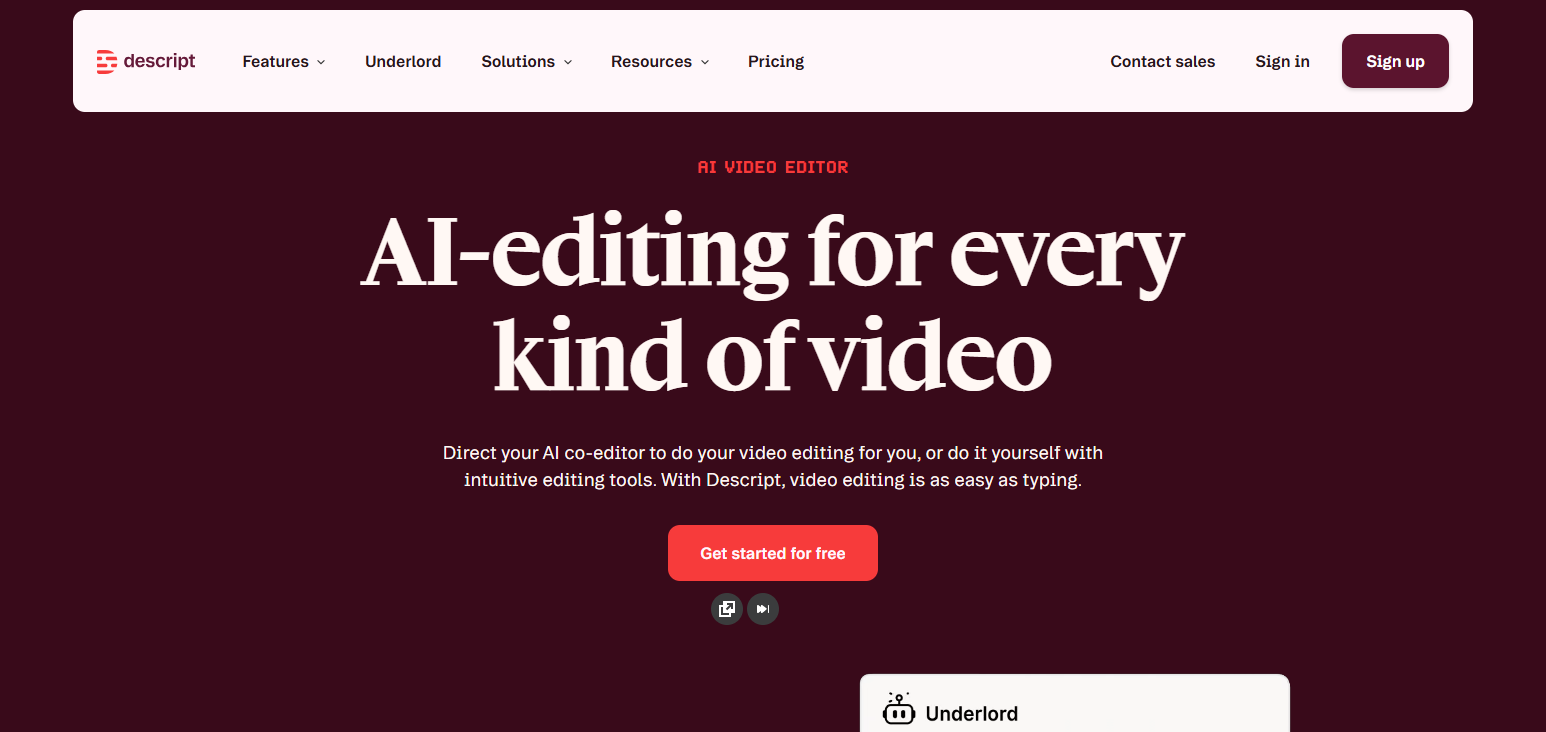
Descript offers a host of tools to simplify the localization process while enhancing collaboration and video editing. Descript ensures that training resources are do not become stagnant and remain updated across multiple languages.
| Pros | Cons |
|---|---|
| Offers powerful AI transcription and text-based video editing. | Localization features are not as specialized as dedicated platforms. |
| Simplifies editing and updating corporate training videos. | Requires additional tools for advanced dubbing workflows. |
| Supports collaboration between distributed content teams. | Large video projects may require higher computing resources. |
| Helps maintain updated multilingual training materials. | Beginners may need time to understand advanced functions. |
| Combines audio, video, and transcript management effectively. | Limited AI avatar functionality for training presentations. |
10. Lovo AI
LOVO provides AI speech technology for developing enterprise eLearning and corporate training videos in multiple languages. Lovo AI’s text-to-speech engine produces lifelike voice narrations which eliminates the need for casting voice actors.
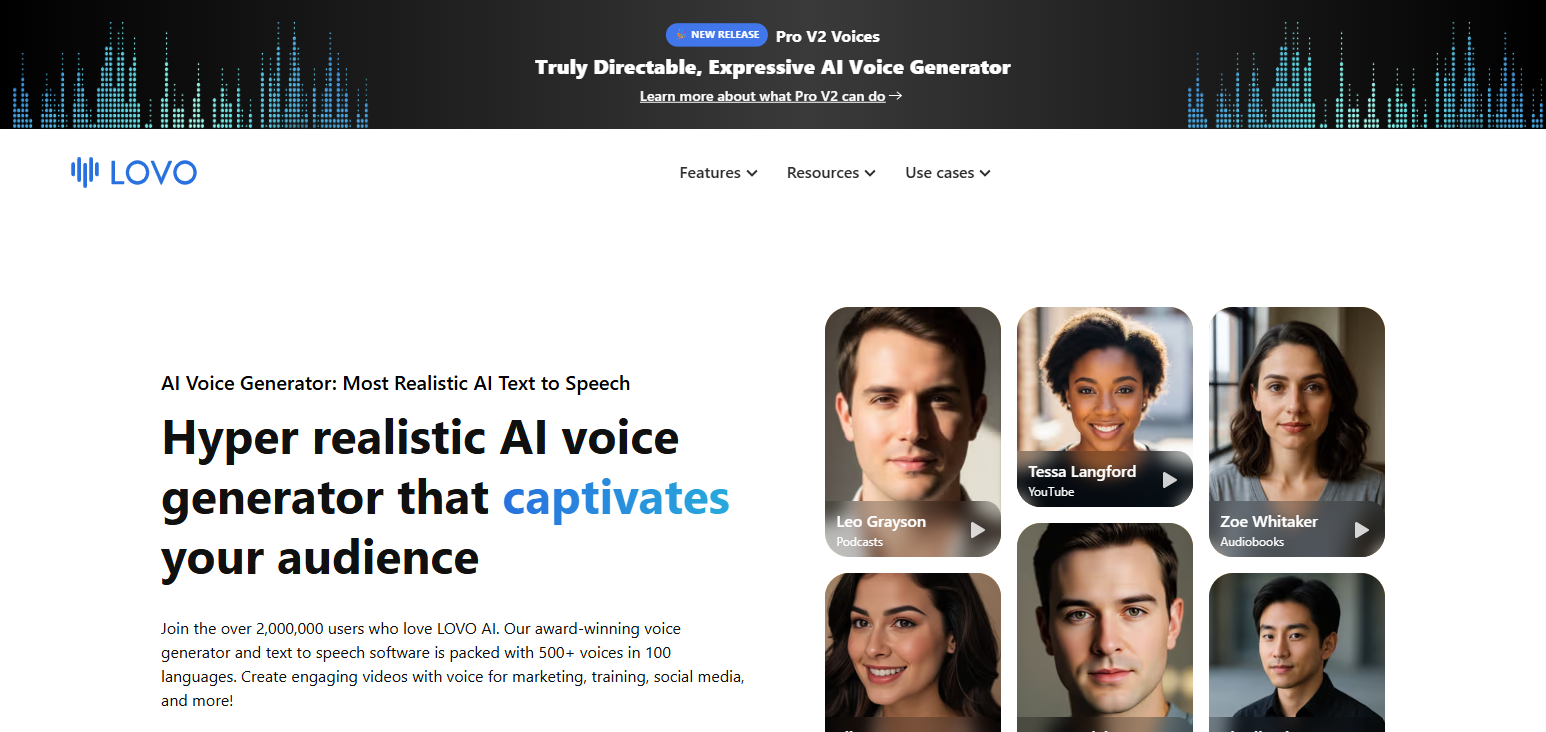
Lovo AI offers voice localization solutions for developing corporate training, onboarding, and education resources in multiple languages.
Training and educational videos can be produced faster and at a higher quality. This makes corporate training resources more effective and engaging for employees around the world.
| Pros | Cons |
|---|---|
| Generates realistic multilingual AI voices for training videos. | Voice quality differs across some languages and accents. |
| Reduces costs associated with professional voice recording. | Does not provide complete video localization solutions alone. |
| Offers a wide range of AI voice styles. | Premium voice features require paid subscriptions. |
| Helps enterprises create scalable learning content. | AI voices may require editing for specialized terminology. |
| Improves accessibility for international employee training. | Limited advanced video editing capabilities compared with full platforms. |
How To Choose the Best Enterprise AI Video Localization Tool
- Evaluate Language Offerings: Choose tools that widespread, accurate language coverage as well as regional dialects for your global teams.
- Evaluate AI Voice Quality and Speech Accuracy: The better the voice generation (realism, speech clarity, and naturalness), the better the learning.
- Examine Enterprise Security: Choose tools that have enterprise-level data security, privacy, and content protection.
- Evaluate Compatibility: Choose tools that will work with the LMS, HR, and the enterprise apps you will be using.
- Evaluate Costs and Growth Potential: Choose the tools where the balance of all the above factors is cost effective and will grow with your training needs.
- Review Flexibility: Choose tools that will let you style your brand, customize avatars, choose voices, and edit content.
- Evaluate Ease of Use: Choose tools that will minimize the Learning Curve of your training team and help Maximize the training team productivity.
Future Trends of AI Video Localization in Corporate Training
- Instant AI Translation for Live Training: The AI of the future will translate and voice convert in real time for live webinars and global training events.
- Emotion AI Voice Technology: AI voices that interpret emotions and voice tones will create more natural voice-based learning systems.
- Tailored Learning Videos for Employees: AI will adapt training videos based on the employee’s role, skill, language, and learning preference.
- AI Virtual Trainers: AI will create virtual trainers that deliver training, answer questions, and offer guidance to employees around the world.
- Interfacing with Learning Management Systems: AI tools for localization will seamlessly interconnect with LMSs to deploy multilingual training on demand.
- Generative AI for Training Content: Generative AI will create training videos, scripts, translations, and images with very little effort and time from trainers.
Conclusion
In Conclusion Enterprise AI Video Localization Tools are changing the way global corporate training is done. Learning content is more affordable and personalized. AI brings translation, voice cloning, and virtual instructors.
So businesses can now have a reliable training experience in any region of the world. AI in technology to adjust tools will bring a connected workforce, more engaged employees, and will allow businesses to easily and quickly scale their training programs to a global level.
FAQ
How does AI video localization work?
These tools use AI translation, speech recognition, voice cloning, and subtitles to convert videos into multiple languages.
Can AI localization tools create multilingual training videos?
Yes, AI localization platforms can generate translated videos with different voices, subtitles, and localized content for global teams.
Are AI-generated voices suitable for corporate training?
Modern AI voices provide realistic pronunciation, natural tone, and multilingual support suitable for professional training programs.
Can AI video localization tools integrate with LMS platforms?
Yes, many enterprise tools integrate with Learning Management Systems to simplify training delivery and content management.