In this article, I will discuss the Top Contract Lifecycle Management (CLM) Tools and how they help businesses manage contracts from creation to renewal. I’ll compare their key features, AI capabilities, workflow automation, integrations, advantages, and limitations.
This guide will help legal, procurement, sales, and business teams identify the right CLM platform for their specific contract management needs.
Key Points & Top Contract Lifecycle Management (CLM) Tools
| Top Contract Lifecycle Management (CLM) Tools | Explanation |
|---|---|
| Sirion Agentic CLM Platform | Uses AI agents to automate contract workflows, obligations, risks, and renewals. |
| Ironclad CLM | Streamlines contract creation, approvals, collaboration, execution, and lifecycle management across organizations. |
| Icertis Contract Management (ICM) | Provides enterprise contract management with AI-powered insights, compliance, governance, and automation. |
| Agiloft | Offers flexible contract automation, customizable workflows, reporting, compliance, and centralized contract management capabilities. |
| Conga CLM | Automates contract creation, negotiation, approvals, execution, and post-signature processes efficiently. |
| Juro | Simplifies contract creation, collaboration, negotiation, signing, and management through intuitive workflows. |
| LinkSquares CLM | Helps teams create, review, analyze, store, and manage contracts using AI. |
| PandaDoc | Combines document creation, electronic signatures, approvals, and contract management in one platform. |
| fynk | Enables businesses to create, collaborate, sign, automate, and manage contracts efficiently. |
| Contractbook | Provides digital contract creation, automation, signing, storage, and lifecycle management for businesses. |
10 Top Contract Lifecycle Management (CLM) Tools
1. Sirion Agentic CLM Platform
Sirion Agentic CLM Platform is one of the most advanced solutions among Top Contract Lifecycle Management (CLM) Tools. It is highly concentrated on agentic AI, intelligent contract operations. The platform leverages autonomous workflows to automate contract creation, review, negotiation and post-signature management reducing manual effort.
Sirion excels at obligation management, tracking commitments, milestones and service-level requirements through the contract lifecycle. Its AI-driven risk detection identifies unfavorable clauses, compliance issues and potential liabilities before they impact the business operations.

The platform also offers renewal intelligence to help organizations avoid missed deadlines and unfavorable auto-renewals. Extensive integrations, governance controls, audit trails, and AI oversight features that foster responsible and compliant contract management are advantages to large enterprises.
Sirion Agentic CLM Solution Features
- Agentic AI automates contract review, drafting, risk detection and lifecycle workflows
Obligation management tracks commitments, SLAs, deadlines and post-signature requirements. - AI agents offer contract insight, recommendations, and renewal intelligence.
- Enterprise integrations connect your contracting data to the business systems and workflows you already use
| Pros | Cons |
|---|---|
| Strong agentic AI capabilities for complex contract workflows. | May require significant implementation for complex enterprise environments. |
| Automates obligation, risk, and renewal management. | Advanced capabilities may be more than smaller teams need. |
| Supports enterprise-scale contract operations and integrations. | AI governance and configuration can require specialist oversight. |
| Provides deeper visibility into post-signature contract performance. | Pricing and deployment complexity may be less suitable for small businesses. |
2. Ironclad CLM
Ironclad CLM is a leading contract management platform that automates legal and business workflows and powers contract processes with AI. Ironclad is one of the Top Contract Lifecycle Management (CLM) Tools providing an intuitive workflow automation to help organizations standardize the approval, review, and contract routing processes.
Its centralized repository allows for access to contract records, reducing search time and improving visibility. AI capabilities help with extracting keywords, summarizing agreements and identifying contracts requiring action.
The platform integrates with popular business systems like CRM, ERP and collaboration tools. Strong reporting capabilities help track compliance and measure performance, and enterprise-grade security lets businesses handle sensitive legal data with ease.
The Ironclad CLM Features
- Drafting, reviewing, analyzing and risk detection of contracts with AI enabled.
- Approvals, negotiations, signatures, and contract requests are handled by automated workflows.
Central repository offers searchable contract data and portfolio visibility. - Integrations link contracts to CRM, procurement, collaboration and business applications.
| Pros | Cons |
|---|---|
| Strong workflow automation for contract creation and approvals. | Advanced features may require configuration and training. |
| AI supports drafting, review, analysis, and risk identification. | Enterprise functionality can be excessive for simple contracting needs. |
| Centralized repository improves contract visibility and searchability. | Implementation may take time for complex organizational workflows. |
| Broad integrations support connected business processes. | Costs can increase as requirements and usage expand. |
3. Icertis Contract Management (ICM)
Icertis Contract Management (ICM) is an enterprise-grade solution for managing complex global contract operations at scale. Icertis is a Top Contract Lifecycle Management (CLM) Tool that blends AI-powered contract intelligence with workflow automation to improve contract visibility and business outcomes.
The platform automatically tracks obligations, compliance requirements and contractual milestones to reduce operational risks. Advanced analytics can provide insight into contract performance, revenue opportunities and supplier relationships.

Icertis integrates with leading ERP, CRM, procurement and HR systems to build a connected contract ecosystem. Its scalability supports industries such as healthcare, manufacturing, technology and financial services that need complex governance and regulatory compliance controls.
Icertis Contract Management (ICM) Features
- AI aids in contract analysis, summaries, insights, and workflow automation.
- Obligation management tracks commitments, compliance, and contractual milestones.
- Enterprise integrations handle complex processes for procurement, sales, legal and finance.
- Enterprise contract intelligence structures agreements into searchable data.
| Pros | Cons |
|---|---|
| Designed for large-scale and complex enterprise contract management. | Enterprise deployment can involve considerable implementation effort. |
| Strong AI-powered contract intelligence and analytics capabilities. | May be unnecessarily complex for smaller organizations. |
| Supports extensive obligation, compliance, and governance requirements. | Requires planning to configure complex business processes effectively. |
| Broad enterprise integration capabilities improve contract data connectivity. | Total implementation costs can be significant for smaller teams. |
4. Agiloft
Agiloft is a highly customizable CLM platform that’s well-known for its flexibility, no-code configuration tools, and robust workflow automation capabilities. Within the Top Contract Lifecycle Management (CLM) Tools category, Agiloft is a popular choice for organizations looking for customized contract processes without the need for extensive development resources.
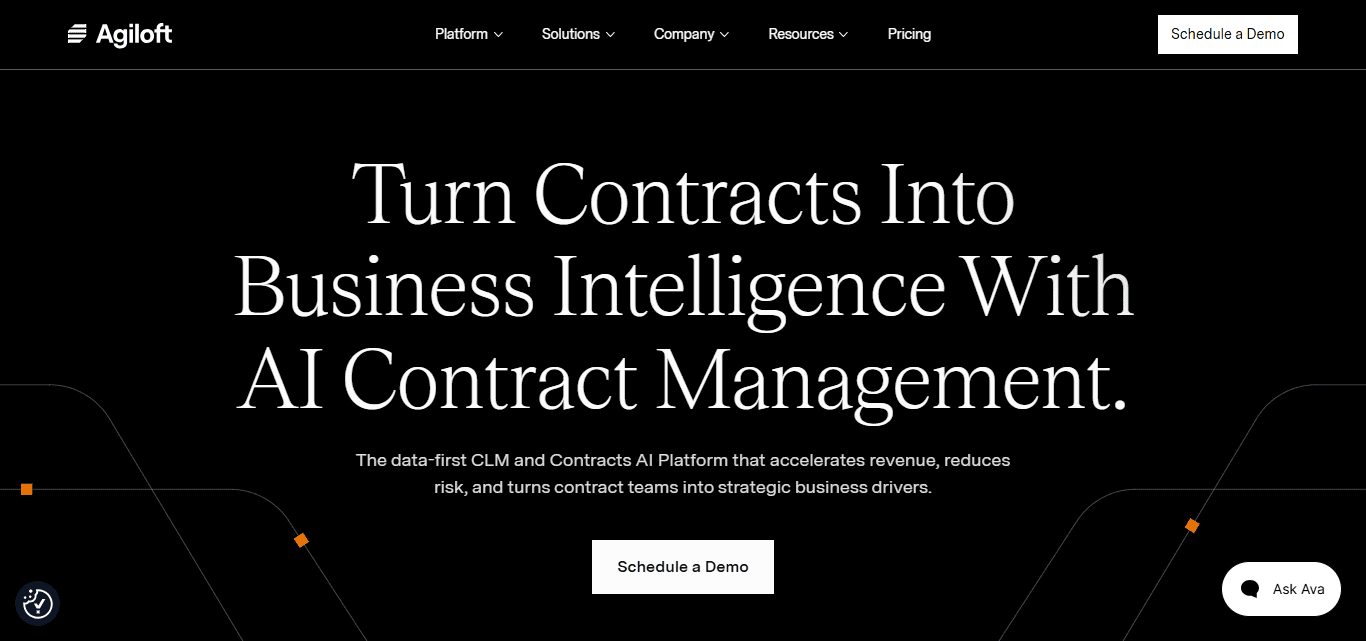
With visual configuration tools, users can set up custom workflows, approval routes, business rules and contract templates. AI-powered features help with contract review, clause analysis and data extraction. It also has audit trails and automated monitoring to assist with compliance management.
Integration capabilities connect Agiloft with CRM, ERP and document management systems. Its scalability is perfect for growing businesses and enterprises that require adaptable contract management environments.
Agiloft Features
- No-code workflows are highly configurable and adaptable to different contracting processes.
- AI enables contract analysis, clause comparison, risk detection, and document insights.
- *automated obligation management for tracking responsibilities, deadlines and compliance requirements.
- Integrations link CLM workflows to enterprise applications and business systems
| Pros | Cons |
|---|---|
| Highly customizable workflows accommodate diverse business requirements. | Extensive customization can increase implementation complexity. |
| No-code configuration reduces dependence on traditional programming. | Users may need training to manage advanced configurations. |
| Strong contract automation and obligation management capabilities. | Interface and configuration options may feel complex initially. |
| Flexible integrations support different enterprise technology environments. | Smaller teams may not need its full customization capabilities. |
5. Conga CLM
Conga CLM offers comprehensive contract lifecycle automation focused on sales, legal, and procurement processes. One of the Top Contract Lifecycle Management (CLM) Tools, Conga is ideal for organizations that work within the Salesforce ecosystem.
The platform automates document creation, contract drafting, approval routing, negotiation workflow and post signature management activities. Contract analytics provide organizations with insight into contract performance and obligations, and help them spot risks and opportunities.

And, to help ensure contractual commitments are met throughout the life of the agreement, Conga also provides obligation management. Enterprise-scale architecture enables companies to efficiently manage large volumes of contracts with governance, process consistency and operational control across all departments.
Conga CLM Features
- Automates the processes of contract creation, negotiation, approval, execution and renewal.
Tight Salesforce integration links contracts to CRM data and workflows.
Templates, clauses, and standard contracting processes are utilized for document generation. - Analytics and obligation management provide more visibility across the contract lifecycle
| Pros | Cons |
|---|---|
| Strong integration with Salesforce environments and CRM workflows. | Best value may require organizations already using Salesforce extensively. |
| Automates contract creation, negotiation, approval, and execution. | Complex implementations can require considerable configuration. |
| Supports document generation and standardized contract processes. | Learning advanced functionality may take time for new users. |
| Provides contract analytics and post-signature management capabilities. | Smaller businesses may find enterprise features unnecessarily extensive. |
6. Juro
Juro is a modern contract management platform with AI assistance that makes contract creation, collaboration, approval and signing simple in one workspace. Juro is among the Top Contract Lifecycle Management (CLM) Tools and is especially appealing to SMBs seeking user-friendly contract automation.

The platform enables collaborative editing like today’s document applications, breaking down legal bottlenecks and shortening turnaround times for agreements. Artificial intelligence can help you create contract content, summarize clauses, and locate key terms.
Built-in e-signature functionality means you don’t need multiple software tools. Juro integrates with CRM, HR and productivity tools, and a searchable repository that makes contracts more visible, accessible and manageable.
Juro Features
- Contract data drafting, review, summarization and extraction powered by AI.
Workflows enable collaborative editing, approvals, negotiations and version management. - E-signatures built-in make it easy to execute an agreement, with no separate process needed.
Integrations link contracting workflows to CRM, HR, productivity and business platform
| Pros | Cons |
|---|---|
| Intuitive approach to contract creation and collaborative workflows. | Advanced enterprise requirements may require additional configuration. |
| AI assists with drafting, review, summaries, and contract information. | Some complex CLM environments may need deeper customization. |
| Built-in e-signatures simplify agreement execution. | Feature depth may vary compared with larger enterprise-focused platforms. |
| Integrates with common CRM, HR, and productivity applications. | Larger organizations may require more sophisticated governance controls. |
7. LinkSquares CLM
LinkSquares CLM utilizes AI to enable legal teams to efficiently manage the review, analysis, and lifecycle of contracts. LinkSquares is a recognized leader in AI-powered contract analytics and is among the Top Contract Lifecycle Management (CLM) Tools, extracting critical terms, identifying risks and surfacing obligations across massive contract repositories.

The centralized repository’s advanced search capabilities allow faster and more accurate contract retrieval. Workflow automation helps with drafting, approvals and execution processes, and reduces the burden of administration. Reporting dashboards that give insight into contract health, compliance and business performance.
Integrations with popular business applications further enhance productivity, making LinkSquares an attractive option for legal departments seeking operational efficiency and enhanced contract intelligence.
LinkSquares CLM Features
- Centralized search storage and portfolio management repository.
- Automated workflows for approvals, reviews and renewal tracking of contracts.
- Reporting and analytics offer legal teams insight into contracts and risk.
| Pros | Cons |
|---|---|
| Strong AI capabilities for contract analysis and information extraction. | Primarily attractive to organizations with significant legal workflows. |
| Centralized repository improves contract search and organization. | Advanced functionality can require user training and configuration. |
| Useful workflow automation for reviews, approvals, and renewals. | May be more functionality than smaller teams require. |
| Reporting provides better visibility into contract portfolios and risks. | Broader enterprise requirements may require additional integrations. |
8. PandaDoc
PandaDoc is a contract management and document automation platform that makes it easier to create, approve, sign, and track business agreements. PandaDoc is one of the Top Contract Lifecycle Management (CLM) Tools that offers document generation, e-signatures, workflow automation and analytics in one solution.
Reusable templates and automated content libraries can help organizations improve consistency and productivity. Approval workflows allow documents to move through review stages before execution in an efficient manner.
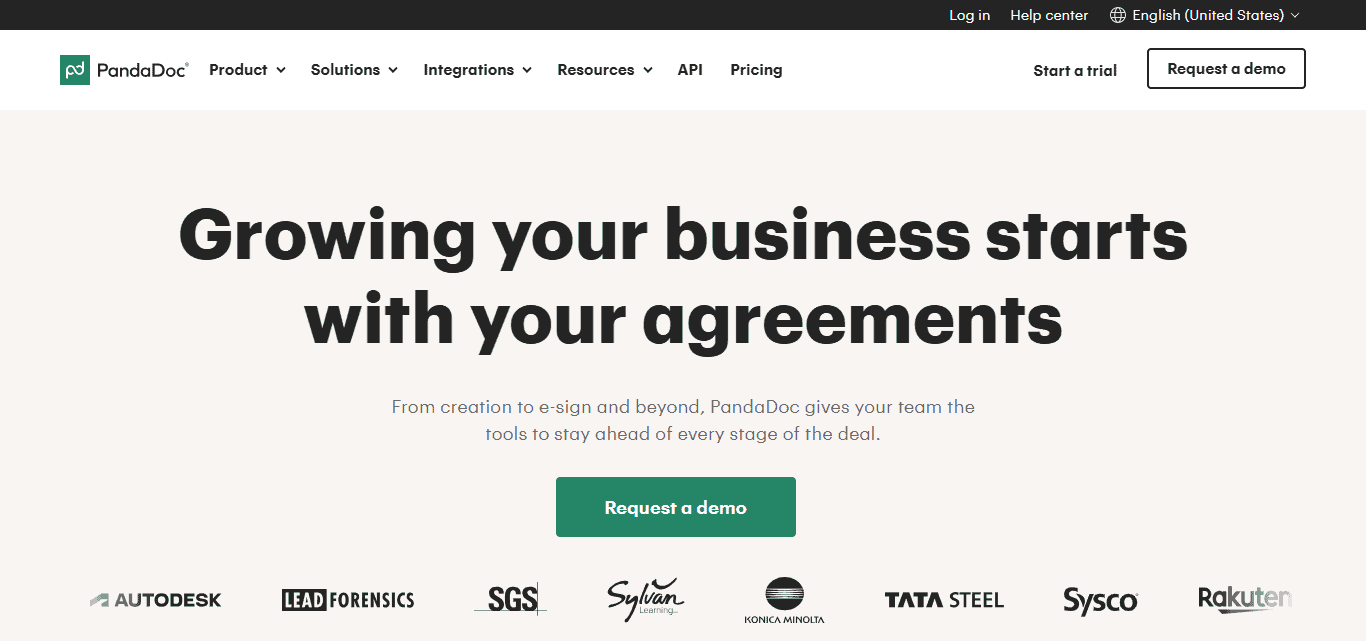
CRM integrations facilitate seamless sales processes, such as creating contracts directly from customer records. Performance analytics offer insight into document engagement for sales and business teams, enabling them to optimize contract conversion rates and operational efficiency.
PandaDoc Features
- Creation of documents with capabilities for templates, approvals, collaboration and contract workflows.
E-signatures facilitate digital agreements and simplify the signing process.
Artificial intelligence can help you pull information from contracts and keep an eye on key terms and dates. - CRM integrations link contracts to sales and revenue workflows
| Pros | Cons |
|---|---|
| Combines document creation, approvals, and e-signatures in one platform. | CLM depth may be less extensive than specialized enterprise CLM platforms. |
| Strong fit for sales and revenue-related contract workflows. | Advanced legal and compliance requirements may need additional capabilities. |
| CRM integrations connect documents with sales processes. | Some advanced features depend on selected subscription plans. |
| Generally supports faster adoption for growing businesses. | Complex enterprise contract structures may require more specialized solutions. |
9. fynk
fynk is a new breed of contract management platform combining AI-assisted contract creation with workflow automation and compliance focused processes. fynk is one of the Top Contract Lifecycle Management (CLM) Tools and simplifies contract drafting with intelligent templates and automated content suggestions.
The platform facilitates approvals by circulating agreements to relevant stakeholders while providing visibility throughout the review cycle. Built-in e-signatures help speed up contract execution and reduce paperwork.

A central repository helps teams organize, search and manage agreements better. Compliance capabilities enhance governance requirements and integrations with business applications to ensure data consistency. fynk is especially suited for organizations looking for a modern, user-friendly contract automation solution.
fink Features
- AI pulls out contract data, clauses, deadlines, obligations, key information.
- With contract templates you can make standard contracts and manage documents easily.
Automated workflows for approvals, tasks, reminders and e-signature processes. - Dashboards and central repositories offer lifecycle visibility and contract organization
| Pros | Cons |
|---|---|
| AI extracts important contract information and deadlines efficiently. | Less established enterprise ecosystem than some major CLM vendors. |
| Supports templates, workflows, approvals, and electronic signatures. | Complex enterprise implementations may require additional evaluation. |
| Centralized repository improves contract organization and accessibility. | Advanced requirements may require careful workflow configuration. |
| Suitable for businesses seeking AI-assisted contract management. | Smaller organizations may not use every available capability. |
10. Contractbook
Contractbook is a complete digital solution for contract management that allows companies to automate the process of creating, negotiating, executing and storing contracts. Contractbook is one of the best Contract Lifecycle Management (CLM) Tools for its automation and user-friendly experience.
AI-enabled features reduce the administrative effort for drafting, extracting information and organizing contracts. The platform supports collaborative negotiations and e-signatures, built-in to enable quicker agreement completion. Centralized repository enhances visibility and secure access to contract data.
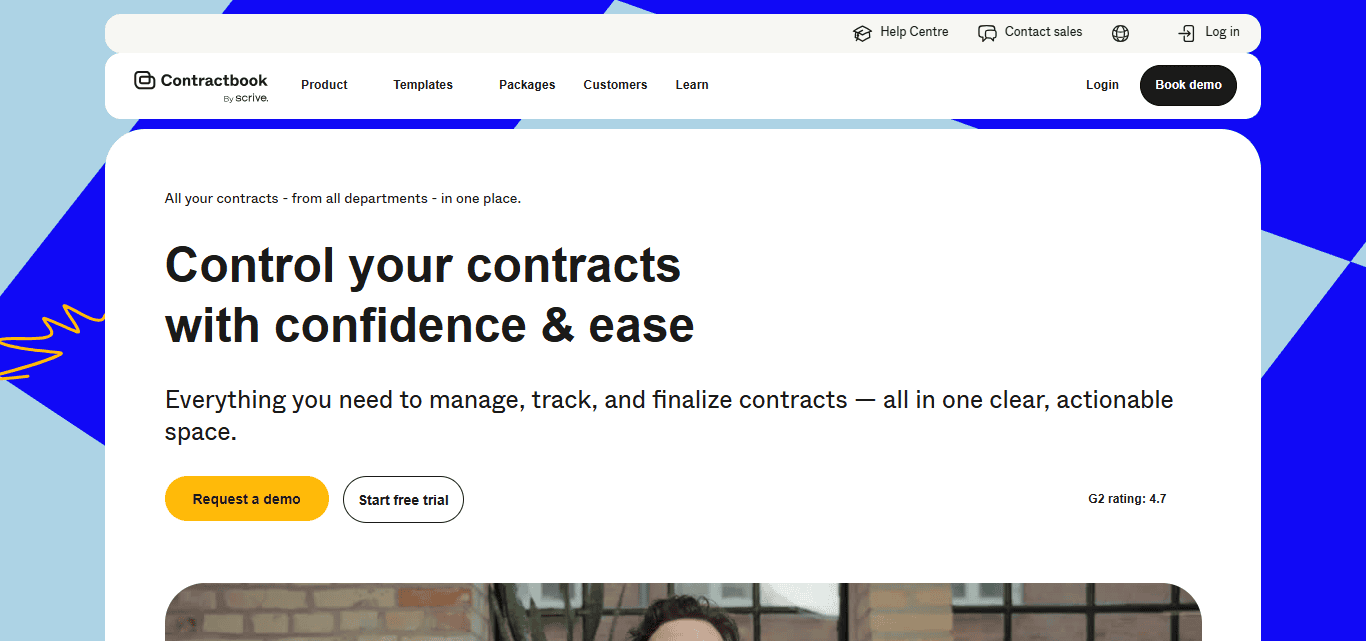
Contractbook is ideal for growing and operations-focused organizations, with business software integrations that help synchronize information across systems and analytical tools that provide insights into contract performance, obligations and efficiency.
Contractbook Features
- Contract templates help to make agreements faster and more standardized.
Centralized management organizes contracts and makes key information searchable. - Automation enables companies to manage contract data, workflows, and lifecycle activities.
- AI extracts structured information from contracts and uploaded documents.
| Pros | Cons |
|---|---|
| Centralizes contract data and improves agreement organization. | May not match the depth of highly specialized enterprise CLM platforms. |
| AI helps extract useful information from contracts and documents. | Complex enterprise workflows may require additional evaluation. |
| Supports contract creation through templates and digital processes. | Advanced customization needs may be more limited than enterprise alternatives. |
| Helps reduce manual contract administration and information searching. | Organizations with highly complex governance requirements may need broader functionality. |
Conclusion
To summarize, choosing from the top contract lifecycle management (CLM) tools depends on your organization’s contract volume, workflow complexity, AI needs, integrations and budget.
Other platforms catering to complex enterprise needs include Sirion, Ironclad, Icertis, Agiloft, and Conga. Juro, PandaDoc, fynk, LinkSquares, and Contractbook provide flexible options for various teams. Seek automation, security, scalability, usability and reporting.
FAQ
What are CLM tools?
CLM tools help businesses create, review, approve, sign, store, track, and renew contracts efficiently.
Why use CLM software?
CLM software reduces manual work, improves compliance, centralizes contracts, and provides better lifecycle visibility.
Which CLM tool is best?
The best option depends on contract volume, workflow complexity, integrations, AI requirements, and budget.
Do CLM tools use AI?
Yes, many modern CLM platforms use AI for drafting, analysis, risk detection, summaries, and data extraction.