The Best Token Vesting and Unlock Management Platforms that assist blockchain projects in effectively managing token allocations, vesting schedules, and unlock events will be covered in this post.
These platforms include capabilities for tracking impending token releases, allocating investor funds, safeguarding liquidity, and securing team tokens. Token management may be made easier with these solutions, regardless of whether you oversee a startup, DAO, or cryptocurrency initiative.
How We Select the Top Platforms for Token Vesting and Unlock Management
- Security and Reliability: We take platform dependability, audits, and smart contract security into account.
- Blockchain Support: We verify cross-chain interoperability and supported networks.
- Vesting Features: We assess automatic token releases, lockups, cliffs, and adjustable timetables.
- Expenses & Fees: We evaluate subscription plans, setup expenses, and transaction fees.
- Usability: We evaluate the entire user experience, navigation, and dashboard design.
- Transparency and Tracking: We look at reporting tools, unlock schedules, and token allocation visibility.
- Use Cases and Flexibility: We take into account token holders, investors, teams, startups, and DAOs.
Key Points & Best Token Vesting and Unlock Management Platforms
| Platform | Description |
|---|---|
| Team Finance | Provides secure token vesting, liquidity locking, and transparent token management solutions. |
| Hedgey | Enables customizable token vesting, distribution schedules, and on-chain incentive management. |
| TokenTable | Simplifies token distribution, vesting schedules, and automated allocations for projects. |
| Magna | Offers comprehensive token management, investor vesting, and compliant distribution infrastructure. |
| UNCX Network | Provides decentralized token locking, liquidity locks, and customizable vesting solutions. |
| FlokiFi Locker | Secures liquidity pools, tokens, and assets through blockchain-based locking mechanisms. |
| Streamflow | Automates token vesting, payroll, subscriptions, and scheduled payments across blockchain networks. |
| TrustSwap | Delivers token locking, vesting schedules, and secure smart contract-based token launches. |
| Tokenomist | Tracks token unlock schedules, vesting events, and upcoming cryptocurrency supply changes. |
| TokenOps | Helps projects manage token allocations, vesting schedules, and treasury operations efficiently. |
10 Best Token Vesting and Unlock Management Platforms In 2026
1. Team Finance
A multi-chain suite for token generation, locks, liquidity locks, vesting, and staking, Team Finance is managed by TrustSwap. The company claims that its vesting supports 26 blockchains, however DefiLlama mentions it on 22 chains, including Ethereum, BSC, Base, and Avalanche. Pricing is primarily a one-time fee per service

Solana locks cost $150 per operation, vesting was advertised at $100, and the pricing page started at $50. Annual Pro plans provide limitless services, and testnet use is free. For founders, DAOs, and launch teams who prefer locking, vesting, and minting from a single vendor, it works well.
Group Finance Features
- Token Vesting: Provides advisers, investors, and teams with personalized vesting timelines.
- Token Locking: Uses smart contracts to secure project tokens and liquid assets.
- Liquidity Locking: Assists projects in proving their commitment to liquidity and fostering investor trust.
- Token Management: Offers resources for controlling the distribution and allocation of tokens.
- Transparency: Allows users to check on-chain vesting schedules and locked tokens.
| Best Use Case | Explanation |
|---|---|
| Token Launch Management | Helps newly launched crypto projects lock tokens and organize initial token distribution. |
| Team Token Vesting | Enables founders to establish structured token release schedules for employees and team members. |
| Liquidity Protection | Allows DeFi projects to lock liquidity provider tokens and demonstrate long-term commitment. |
| Investor Allocations | Helps manage scheduled token releases for early investors and strategic funding partners. |
| Community Confidence | Provides publicly verifiable token locks that help demonstrate project transparency and accountability. |
2. Hedgey
Hedgey offers token claims, investor lockups, and onchain employee vesting. Ethereum, Arbitrum, Base, Optimism, Polygon, Avalanche, and other EVM networks are covered, but Solana is not. You only pay network gas because its vesting and lockup features are said to be totally free to use.
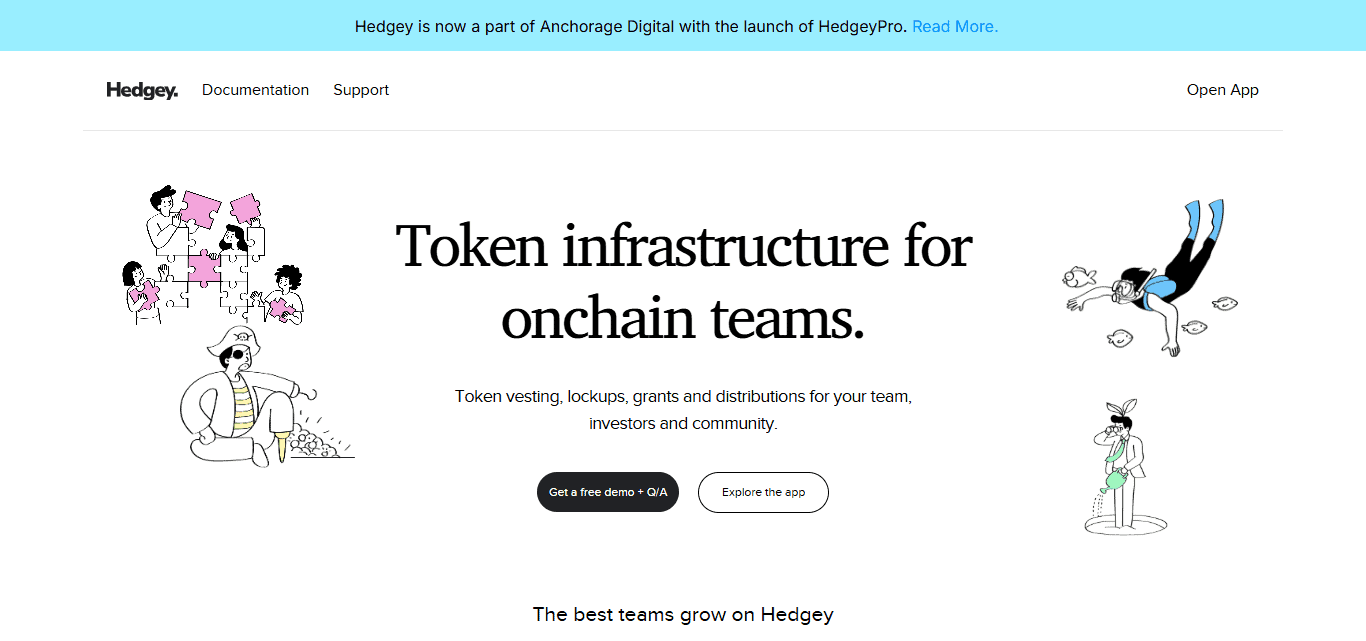
It provides a dedicated Safe app with Tally governance compatibility, and it works with DAOs, pre-token initiatives, and live token teams. Two warnings: investors should review the provisions because a 2024 attack on its claim contract was estimated to be worth around $44.7 million, and its vesting plans are automatically revocable by the administrator.
Hedgey Features
- Token Vesting: Develops adaptable token vesting contracts for investors and teams.
- Token Distribution: Facilitates recipient allocations and planned token distributions.
- Token Streaming: Through programmable blockchain-based agreements, token payments can be made continuously.
- Incentive Management: Assists DAOs in overseeing token-based incentives and contribution rewards.
- On-Chain Management: Uses smart contracts to offer visible, verifiable token agreements.
| Best Use Case | Explanation |
|---|---|
| DAO Treasury Management | Helps DAOs distribute governance tokens and manage contributor allocations through programmable agreements. |
| Employee Compensation | Creates customized token vesting arrangements for employees, founders, and advisors. |
| Investor Token Distribution | Establishes scheduled token releases for private investors and fundraising participants. |
| Contributor Incentives | Automates recurring token rewards for developers, community managers, and ecosystem contributors. |
| DeFi Incentive Programs | Supports programmable token distributions for liquidity providers and decentralized finance participants. |
3. TokenTable
For projects looking for organized token distribution and allocation processes, TokenTable is one of the token vesting and unlock management options. Vesting contract generation, investor and team allocations, scheduled token releases, recipient management, and unlock reporting should all be considered while assessing its services.
Its precise chain-by-chain availability and currently relevant supported blockchain networks should be verified through its official documentation rather than presumed. Project teams should define deployment, transaction, and recipient costs and get a current quotation
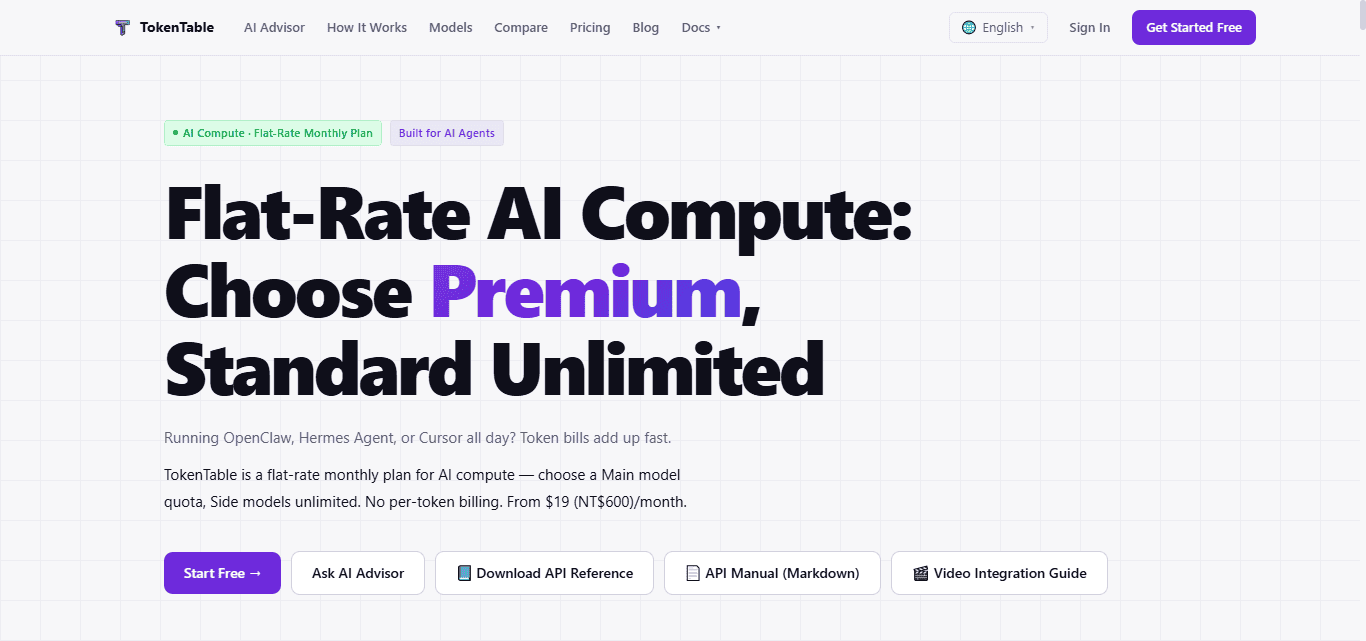
Because publicly verifiable pricing was not established in the available sources. Token issuers, cryptocurrency startups, investment teams, and blockchain companies in charge of scheduled distributions are among its possible audience.
TokenTable Features
- Token Vesting: Helps projects establish structured token vesting schedules.
- Allocation Management: Organizes token allocations for investors, employees, and contributors.
- Token Distribution: Simplifies distributing tokens to multiple recipients.
- Unlock Management: Helps manage scheduled token releases and vesting milestones.
- Reporting: Provides visibility into token allocations and distribution progress.
| Best Use Case | Explanation |
|---|---|
| Fundraising Management | Organizes token allocations and vesting arrangements for fundraising participants. |
| Investor Records | Helps projects maintain structured records of investor token allocations and ownership. |
| Employee Token Programs | Supports organizing employee token compensation and scheduled vesting arrangements. |
| Token Distribution | Helps coordinate token allocations and distribution workflows across eligible recipients. |
| Project Administration | Provides a centralized approach to managing token allocation and distribution operations. |
4. Magna
Web3 businesses may handle token cap tables, investor allocations, vesting schedules, airdrops, grants, custody, and escrow operations with the aid of Magna, a digital asset management platform. Solana, Ethereum, Aptos, and Arbitrum are just a few of the blockchain ecosystems it supports. Its architecture also makes other networks accessible.

Although actual rates vary depending on the chosen services and business needs, its listed pricing starts at $500 per month. Established cryptocurrency startups, blockchain foundations, venture capital firms, token issuers, and businesses requiring centralized management of investor allocations, employee compensation, token distribution, and treasury-related processes may find Magna very useful.
Magna Features
- Token Management: Offers the framework for overseeing the operations of project tokens.
- Token Vesting: Facilitates organized vesting plans for team members and investors.
- Token Distribution: Makes it easier for qualified recipients to receive tokens.
- Compliance Tools: Facilitates the management of token receivers and distribution specifications.
- Investor Management: Assists projects with token-related operations and investor allocations.
| Best Use Case | Explanation |
|---|---|
| Institutional Token Management | Helps established Web3 companies manage complex digital asset operations and stakeholder allocations. |
| Venture Capital Management | Organizes investor allocations, vesting agreements, and token ownership records. |
| Employee Compensation | Supports managing employee token grants and long-term compensation arrangements. |
| Airdrop Campaigns | Helps projects coordinate token airdrops and manage eligible recipient distributions. |
| Treasury Operations | Provides infrastructure for managing project token holdings and distribution workflows. |
5. UNCX Network
For blockchain projects, UNCX Network offers decentralized token vesting, liquidity locking, and asset management solutions. For team members, investors, and ecosystem allocations, its vesting contracts allow for linear, cliff-based, and milestone-based release schedules.
Although product availability varies, supported networks include Ethereum, BNB Chain, Polygon, Base, Arbitrum, Optimism, Avalanche, and Solana. Vesting fees may include a portion of allotted tokens in addition to network gas; these fees vary according on the chosen service, blockchain, and transaction setup.

DeFi developers, decentralized exchanges, token launch teams, cryptocurrency investors, and projects needing publicly verifiable locking and vesting arrangements may find UNCX very useful.
UNCX Network Features
- Token Vesting: Creates customizable vesting schedules for team and investor allocations.
- Cliff Periods: Supports cliff-based, linear, and customized token release schedules.
- Liquidity Locking: Locks liquidity provider tokens to demonstrate project commitment.
- Smart Contract Security: Uses audited smart contracts to enforce token locking conditions.
- On-Chain Transparency: Allows investors to verify vesting schedules and unlock information publicly.
| Best Use Case | Explanation |
|---|---|
| DeFi Liquidity Protection | Enables decentralized projects to lock liquidity provider tokens for predefined periods. |
| Token Launch Security | Helps token creators lock project tokens and demonstrate transparent launch commitments. |
| Team Vesting | Establishes scheduled token releases for founders, developers, and project contributors. |
| Investor Confidence | Allows investors to verify token locks and vesting arrangements through blockchain records. |
| Community Token Locks | Helps projects demonstrate accountability through publicly verifiable token-locking mechanisms. |
6. FlokiFi Locker
Using smart contracts, users may safeguard ERC-20 tokens, liquidity pool tokens, NFTs, and ERC-1155 assets using FlokiFi Locker, a multi-chain digital asset locking platform. Ethereum, BNB Chain, Base, Arbitrum, Polygon, Avalanche, Optimism, Fantom, Cronos, and Blast are among the fifteen EVM-compatible networks that it supports.
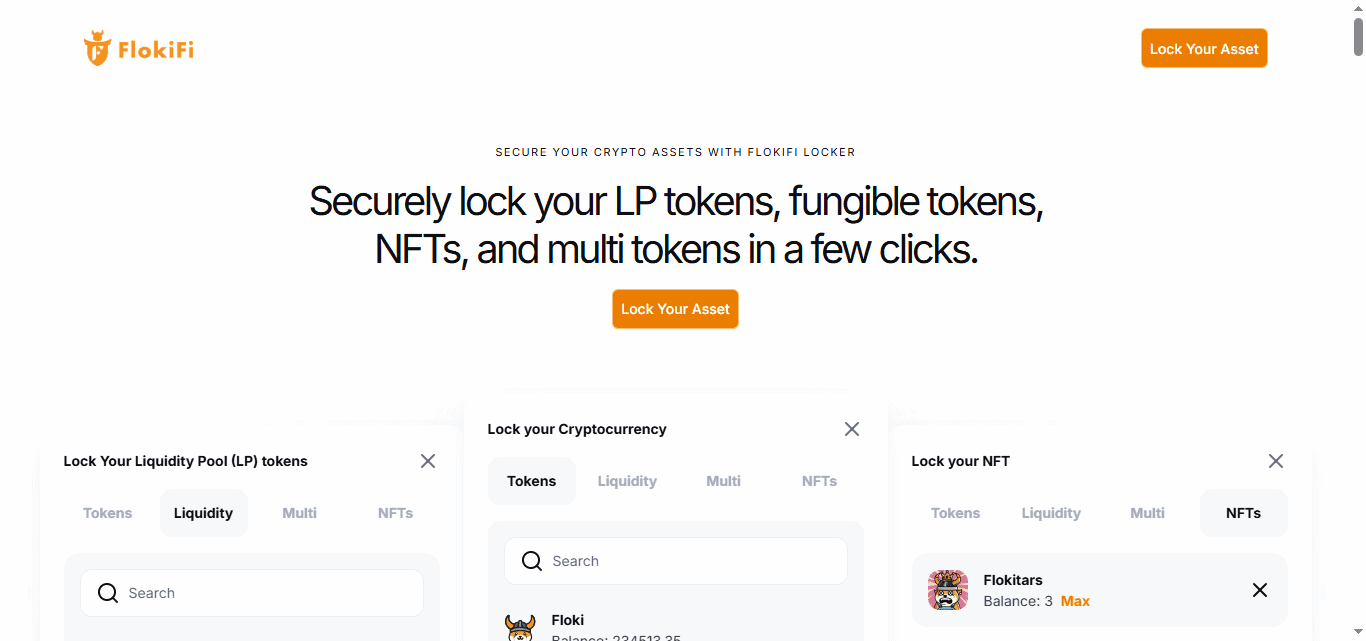
Its service includes transaction-based locking fees; however, before making a lock, the precise current cost should be verified using the official application. DeFi projects, NFT developers, token developers, liquidity providers, and cryptocurrency firms looking to show asset-locking pledges and increase community transparency may find the platform very useful.
FlokiFi Locker Features
- Token Locking: Locks ERC-20 tokens securely through blockchain-based smart contracts.
- Liquidity Locking: Helps projects lock liquidity pool tokens for specified durations.
- NFT Locking: Supports locking NFTs and other compatible digital assets.
- Multi-Chain Support: Provides asset-locking capabilities across multiple blockchain networks.
- Lock Verification: Enables communities to verify locked assets and associated unlock conditions.
| Best Use Case | Explanation |
|---|---|
| Liquidity Pool Security | Allows DeFi projects to lock liquidity provider tokens through smart contracts. |
| Project Token Locking | Helps token creators secure project tokens for specified locking periods. |
| NFT Asset Protection | Enables NFT creators to lock digital collectibles through supported locking contracts. |
| Multi-Chain Asset Management | Supports projects managing locked assets across multiple EVM-compatible blockchain networks. |
| DeFi Project Transparency | Provides verifiable locking records that help communities assess project commitments. |
7. Streamflow
Token locks, airdrops, scheduled releases, and cryptocurrency payments can all be automated with Streamflow, a token distribution and vesting platform. It is compatible with Solana, Aptos, and Sui; at the moment, Solana offers the entire product suite, while Aptos and Sui offer specific distribution services. In addition to any applicable network expenses, its stated Solana vesting creation charge is 0.16 SOL plus a token fee of 0.19%.

An extra 0.25 SOL is charged for optional automated claiming. As documentation changes, prices may also change. Solana startups, DAOs, Web3 payroll providers, blockchain gaming projects, community administrators, and companies that offer investment or recurring contributor rewards will find Streamflow very useful.
Streamflow Features
- Token Vesting: Creates customizable token vesting contracts with predefined release schedules.
- Automatic Claims: Automatically deposits unlocked tokens into recipients’ wallets.
- Bulk Distribution: Supports CSV uploads for creating multiple vesting contracts simultaneously.
- Transferable Contracts: Allows supported vesting agreements to be transferred between wallets.
- Email Notifications: Sends recipients updates about their token vesting activities
| Best Use Case | Explanation |
|---|---|
| Solana Token Vesting | Helps Solana projects create customizable token vesting schedules and release conditions. |
| Web3 Payroll | Automates recurring cryptocurrency payments for remote employees and blockchain contributors. |
| DAO Contributor Payments | Distributes scheduled rewards to DAO members and ecosystem development contributors. |
| Token Airdrop Campaigns | Supports bulk token distribution for community incentives and promotional campaigns. |
| Investor Token Releases | Automates scheduled token unlocks for investors through blockchain-based vesting contracts. |
8. TrustSwap
Token launches, smart contract services, token locking, and vesting solutions are all related to TrustSwap, a Web3 infrastructure platform. In the past, its vesting capability has allowed for configurable release schedules, such as hourly token claims, which have assisted projects in distributing allocations gradually as opposed to releasing everything at once.

Ethereum, BNB Chain, Avalanche, Algorand, Conflux, and Polygon are listed as supporting networks for vesting locks in historical documentation. A $75 token-lock cost is also mentioned in earlier public documents, however this should not be regarded as current pricing.
Crypto startups, token launch teams, fundraising initiatives, early investors, and blockchain companies looking for infrastructure for token launch and allocation management can all benefit from TrustSwap.
TrustSwap Features
- Token Vesting: Provides customizable vesting schedules for teams and token investors.
- SmartLocks: Offers smart contract-based token and liquidity locking services.
- Token Creation: Enables projects to create customizable tokens without coding.
- MultiSender: Supports distributing tokens to multiple recipients through batch transfers.
- Security Audits: Uses independently audited smart contracts to support secure token management.
| Best Use Case | Explanation |
|---|---|
| Token Launches | Supports cryptocurrency projects launching tokens with structured locking and vesting arrangements. |
| Investor Protection | Helps establish scheduled token releases for early investors and fundraising participants. |
| Liquidity Locking | Enables projects to lock liquidity tokens through smart contract-based mechanisms. |
| Token Distribution | Helps projects distribute tokens to multiple recipient wallets through batch transfers. |
| Startup Fundraising | Supports blockchain startups coordinating token-related arrangements during fundraising campaigns. |
9. Tokenomist
Token unlock timings, vesting events, circulating supply, and token emissions are the areas of expertise for Tokenomist, a cryptocurrency research and analytics platform. Instead of generating on-chain vesting contracts, it mainly monitors and evaluates unlock data, in contrast to conventional vesting platforms.

With monitored assets across Ethereum, Solana, BNB Chain, Polygon, Avalanche, and other networks, it covers major blockchain ecosystems and tokens.
There is a free plan, Pro starts at $69 a month, Standard API costs about $249.95 a month, and Elite API costs about $449.95 a month. Crypto investors, market analysts, trading teams, research businesses, and institutional investment professionals will find it very useful.
Tokenomist Features
- Unlock Tracking: Tracks upcoming token unlock events across cryptocurrency projects.
- Vesting Schedules: Displays cliff-based and linear token release schedules.
- Supply Analysis: Monitors circulating supply changes and upcoming token emissions.
- Unlock Alerts: Provides alerts for important token unlock events and schedule changes.
- Tokenomics Analytics: Analyzes token allocations, emissions, and potential market supply pressure
| Best Use Case | Explanation |
|---|---|
| Unlock Event Tracking | Helps investors monitor upcoming token unlock dates and scheduled supply releases. |
| Investment Research | Provides tokenomics information for evaluating cryptocurrency projects and investment opportunities. |
| Market Supply Analysis | Tracks circulating supply changes and scheduled token emissions across projects. |
| Trading Strategy Research | Helps traders assess upcoming unlock events that could affect market supply. |
| Portfolio Monitoring | Enables investors to monitor vesting schedules associated with their cryptocurrency holdings. |
10. TokenOps
Built on the Zama Protocol, TokenOps is a private token distribution platform that helps businesses handle token cap tables, airdrops, and private vesting. Allocation amounts are encrypted using ERC-7984 secret tokens, while wallet addresses, distribution dates, and transaction events remain publicly observable.
The Ethereum mainnet is supported by its existing application, and other blockchain networks will be developed in the future. While organizations control distributions using team accounts and administrative rights, recipients can claim tokens without having to pay gas fees.

Businesses should get in touch with the provider as public pricing for organizational services is not well defined. Blockchain foundations, cryptocurrency startups, institutional investors, DAOs, and businesses needing private employee and investor allocations can all benefit from TokenOps.
TokenOps Features
- Confidential Vesting: Supports private token distribution and vesting with confidential amounts.
- Airdrop Management: Helps projects launch and manage confidential token airdrop distributions.
- Cap Table Management: Organizes token allocations and ownership records for project stakeholders.
- Automated Distribution: Enables on-chain token payouts through programmable distribution workflows.
| Best Use Case | Explanation |
|---|---|
| Confidential Token Vesting | Helps organizations manage private token allocations and scheduled distribution arrangements. |
| Private Investor Allocations | Supports confidential management of investor token amounts and distribution records. |
| Employee Token Distribution | Enables organizations to coordinate employee token grants while protecting allocation privacy. |
| Confidential Airdrops | Supports private token distribution campaigns using confidential token infrastructure. |
| Institutional Token Management | Helps foundations and organizations manage sensitive stakeholder allocations through privacy-focused workflows. |
Conclusion
In conclusion, your project’s needs, budget, blockchain support, and security requirements all play a role in selecting the best token vesting and unlock management platforms. A variety of tools are available for managing token allocations and unlock schedules, including
Team Finance, Hedgey, TokenTable, Magna, UNCX Network, FlokiFi Locker, Streamflow, TrustSwap, Tokenomist, and TokenOps. Choose the platform that best supports the long-term expansion and transparency of your project by carefully comparing their features.
FAQ
Why do blockchain projects need token vesting platforms?
They prevent sudden token releases, encourage long-term commitment, and improve transparency among stakeholders.
Which platforms are best for token vesting management?
Popular options include Team Finance, Hedgey, TokenTable, Magna, UNCX Network, FlokiFi Locker, and Streamflow.
Can token vesting platforms manage team and investor allocations?
Yes, they help projects distribute tokens to employees, founders, investors, and contributors systematically.
Are token vesting and token unlock tracking the same?
No, vesting controls scheduled releases, while unlock tracking monitors upcoming token supply changes.
Do token vesting platforms support multiple blockchains?
Many support multiple blockchain networks, but supported chains vary depending on each platform.