
This article will focus on recent advancements in AI-powered analytics platforms for crypto investors and how these smart analytics platforms assist in decision-making, analysis of on-chain data, and future predictive analytics.
- Key Points & AI-Powered Analytics Platforms For Crypto Investors
- 12 AI-Powered Analytics Platforms For Crypto Investors
- 1. Nansen
- 2. Dune Analytics
- 3. Glassnode
- 4. DeFiLlama
- 5. TradingView
- 6. OptionsPro
- 7. ConfluxCapital
- 8. GPT Usage Analyzer
- 9. CryptoQuant
- 10. Santiment
- 11. Messari
- 12. XIX.AI Tools
- What are the key benefits of using AI-powered Analytics Platforms for crypto investing?
- How To Choose AI-Powered Analytics Platforms for Crypto Investors
- Cocnlsuion
- FAQ
With digital assets evolving rapidly, crypto-investors need AI-driven analytics and intelligent decision-making to manage risks and gain a competitive edge in the crypto-investing space.
Key Points & AI-Powered Analytics Platforms For Crypto Investors
Nansen Tracks wallet activity, token flows, and DeFi protocols, offering actionable insights into smart money movements.
Dune Analytics Community-driven platform enabling custom dashboards and queries for blockchain data visualization and crypto market research.
Glassnode Provides advanced on-chain metrics, market intelligence, and behavioral analysis to guide crypto investors’ strategic decisions.
DeFiLlama Aggregates decentralized finance data, tracking liquidity, yields, and protocol performance across multiple blockchain ecosystems.
TradingView Popular charting platform with AI-enhanced indicators, enabling technical analysis and community-driven crypto trading strategies.
OptionsPro AI-powered trading assistant delivering real-time signals and trend analysis for effective crypto investment decisions.
ConfluxCapital Automated AI trading platform simplifying digital asset investment by continuously monitoring and executing profitable trades.
GPT Usage Analyzer Chrome extension leveraging AI to analyze crypto-related GPT usage trends and market sentiment insights.
CryptoQuant Offers AI-driven analytics on exchange flows, miner activity, and market sentiment for predictive trading strategies.
Santiment Provides behavioral data, sentiment analysis, and AI-powered alerts to anticipate crypto market shifts early.
Messari Comprehensive research platform combining AI analytics, news, and market data for institutional-grade crypto intelligence.
XIX.AI Tools Curated suite of AI crypto analysis platforms offering superior on-chain insights and investment recommendations.
12 AI-Powered Analytics Platforms For Crypto Investors
1. Nansen
Nansen is an exceptional AI-powered on-chain research tool that analyzes smart money wallets, tracking behavior across more than 20 blockchains and over tens of millions of tagged wallet addresses.

Crypto investors use Nansen to track the flow of capital to and from whales and institutions, capture insights from burgeoning narratives, and receive instant notifications on large on-chain transactions.
Nansen also provides investors with advanced analytics such as Token God Mode, wallet profiling, and integrated trading for certain tokens on the Solana and Base blockchain.
| Pros | Cons |
|---|---|
| Tracks smart money wallets across 20+ blockchains with AI insights. | Premium pricing can be high for retail investors. |
| Real-time alerts for whale movements and emerging trends. | Complex dashboards may overwhelm beginners. |
| Token God Mode and wallet profiling provide deep on-chain intelligence. | Limited execution options; not all chains supported for in-platform trading. |
2. Dune Analytics
Dune Analytics is a community-driven crypto analytics tool that turns unprocessed On-chain public data into personalized SQL dashboards.
Investors, developers, and analysts create or reuse dashboards to monitor DeFi flows, NFT activities, bridge use, TVL trends, and user interactions across dozens of chains.

Due to the ability of anyone to fork and disseminate insights, Dune aggregates dozens of intelligence streams in a research-friendly environment.
This is particularly useful for deep exploratory studies and analysis, which go beyond capturing simple price signals.
| Pros | Cons |
|---|---|
| Community-powered dashboards allow unlimited customization. | Requires SQL knowledge for advanced analytics. |
| Real-time on-chain data across multiple protocols. | Limited predictive analytics compared to AI-focused platforms. |
| Strong ecosystem for collaborative insights. | Reliant on community contributions, which can vary in quality. |
3. Glassnode
Glassnode is a leading provider of on-chain metrics for major cryptocurrencies, with top analytics being used by institutions for neither bitcoin and ethereum network and other major networks.
Proprietary metrics, such as SOPR, MVRV, and cohort behavior give insight into market and network cycles, market volatility, supply and demand, and distribution and capital flow.
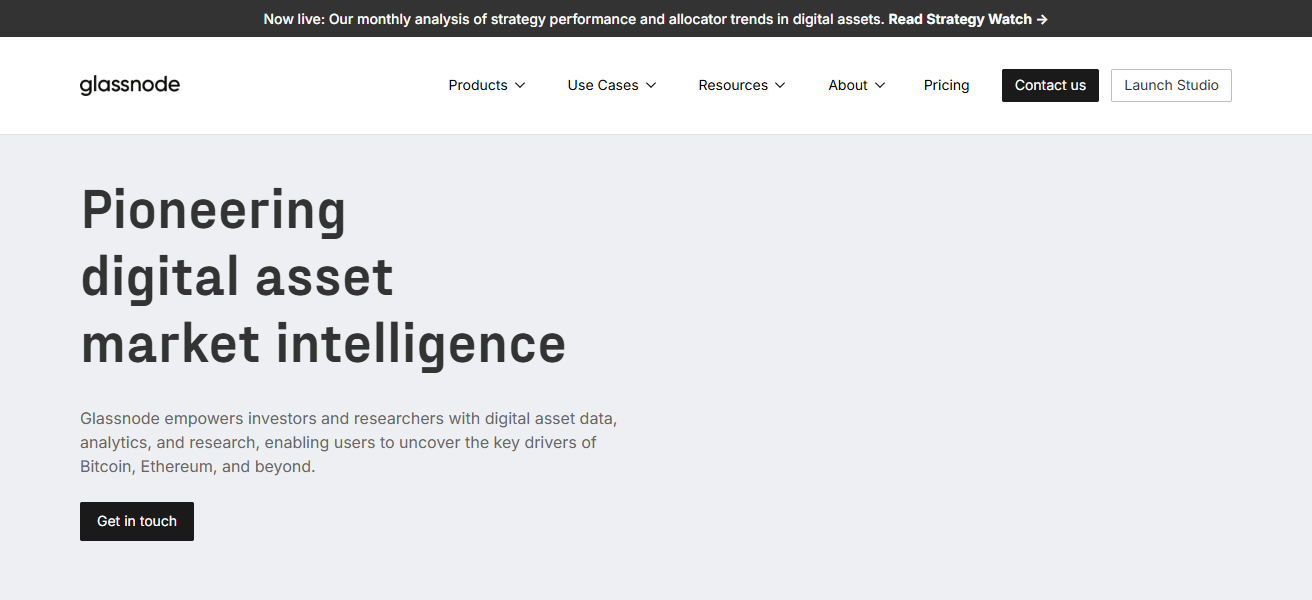
Glassnode is used by firms and hedge funds through its API and Studio dashboards for structural analysis – as opposed to price action analysis – using extensive historical data spanning multiple market cycles.
| Pros | Cons |
|---|---|
| Institutional-grade on-chain metrics for Bitcoin, Ethereum, and more. | Subscription tiers can be expensive. |
| Proprietary indicators like SOPR, MVRV for market cycle assessment. | Best suited for intermediate to advanced users. |
| Deep historical datasets enable trend analysis. | Real-time alerts less flexible than specialized trading platforms. |
4. DeFiLlama
DeFiLlama is the unofficial open-source tracker for Total Value Locked (TVL) and protocol stats for hundreds of DeFi projects across over 100 blockchains.
DeFiLlama offers free and immediate access to data regarding liquidity, revenue of protocols, stablecoin market caps, yield farming, and flows across different blockchains.
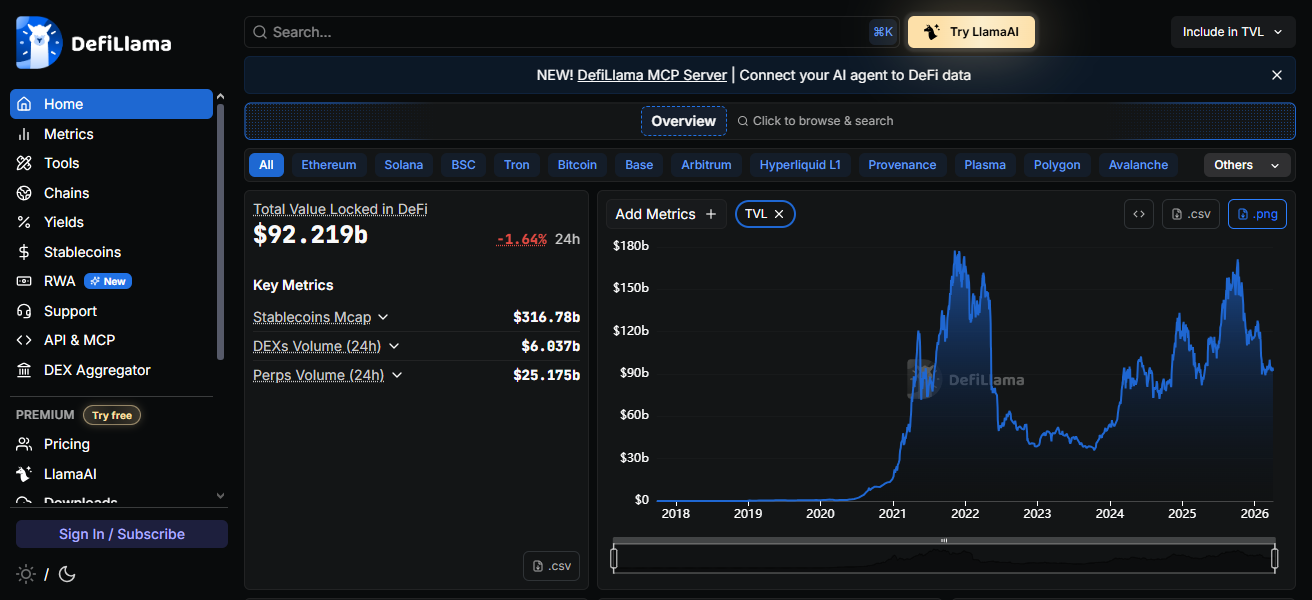
Investors and builders utilize DeFiLlama to evaluate DeFi ecosystems, analyze new opportunities, and see the first changes in the allocation of capital across lending, AMMs, and liquid staking markets. Best of all, DeFiLlama is completely free to use.
| Pros | Cons |
|---|---|
| Free, open-source TVL and protocol metrics across 100+ chains. | Focused mainly on DeFi, not NFTs or other crypto segments. |
| Benchmarking of liquidity, revenue, and yield opportunities. | No integrated trading or AI prediction features. |
| Transparent, community-supported data. | Limited alerting and automation capabilities. |
5. TradingView
TradingView continues to be the leading platform for charting and technical analysis in crypto, featuring real time price feeds, multi time frame charts, and a vast library of indicators (RSI, MACD, MA, Ichimoku, etc.).

TradingView is not fully AI driven nor does it have strict AI/ML capabilities, however, it does allow for community built indicators, custom alerts, and integrations with custom Pine Script strategies
Which emulate AI/ML strategies. Traders often use TradingView in conjunction with on chain signals to make more holistic timing decisions.
| Pros | Cons |
|---|---|
| Extensive charting tools and technical indicators library. | Not fully AI-driven; manual interpretation often needed. |
| Supports custom AI/ML strategies via Pine Script. | Can be complex for beginners. |
| Real-time alerts and multi-asset coverage. | Limited on-chain data compared to dedicated crypto platforms. |
6. OptionsPro
Currently, credible public information regarding an “OptionsPro” crypto analytics platform is scarce or non-existent (there are several services with similar names, but none are well known in mainstream crypto analytics research).
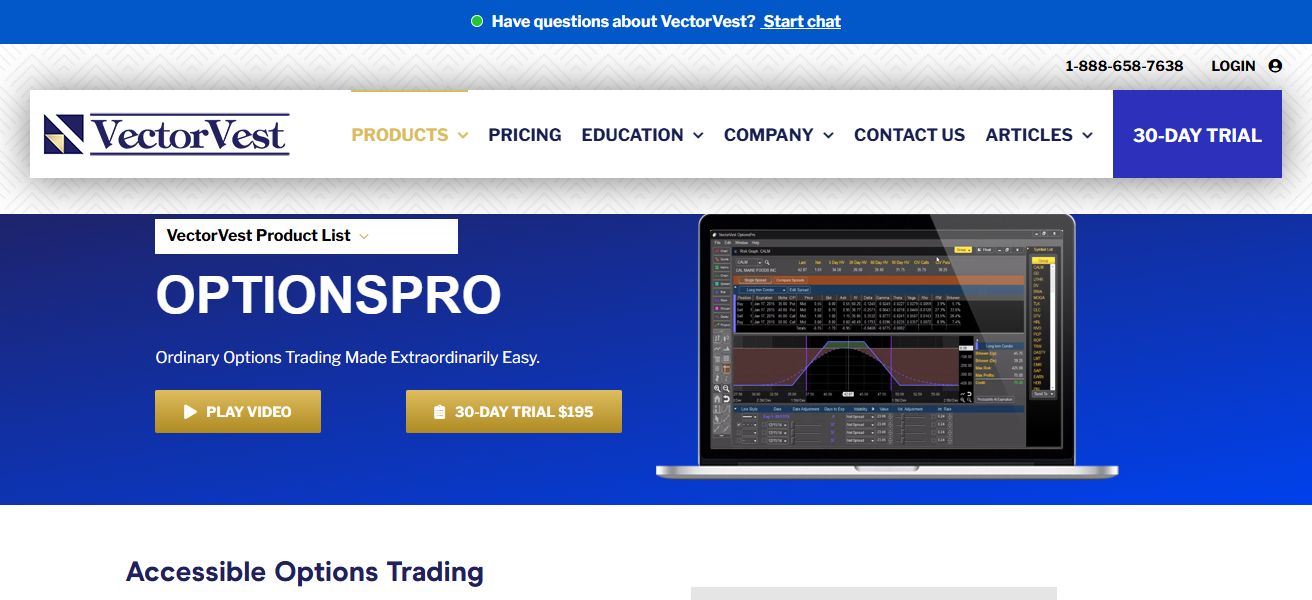
If this is an AI options‑pricing or risk tool, those usually employ machine learning to recommend strike, expiry, and volatility probability — but do cross-check with official ones to avoid relying on any particular tool.
| Pros | Cons |
|---|---|
| Conceptually offers AI-assisted options pricing and risk analysis. | Reliable public information is limited. |
| Potential machine learning predictions for strike, expiry, volatility. | Not widely recognized; high verification needed. |
| Could automate derivatives strategies if fully developed. | Unknown track record; unverified transparency. |
7. ConfluxCapital
ConfluxCapital promotes itself as an AI-driven quantitative trading and automated investment service that trades and arbitrages crypto using ML and algorithms.
They offer an online dashboard, claims to analyze market data and proprietary algorithms in real-time, and promotes access to multiple packages to assist in trading.
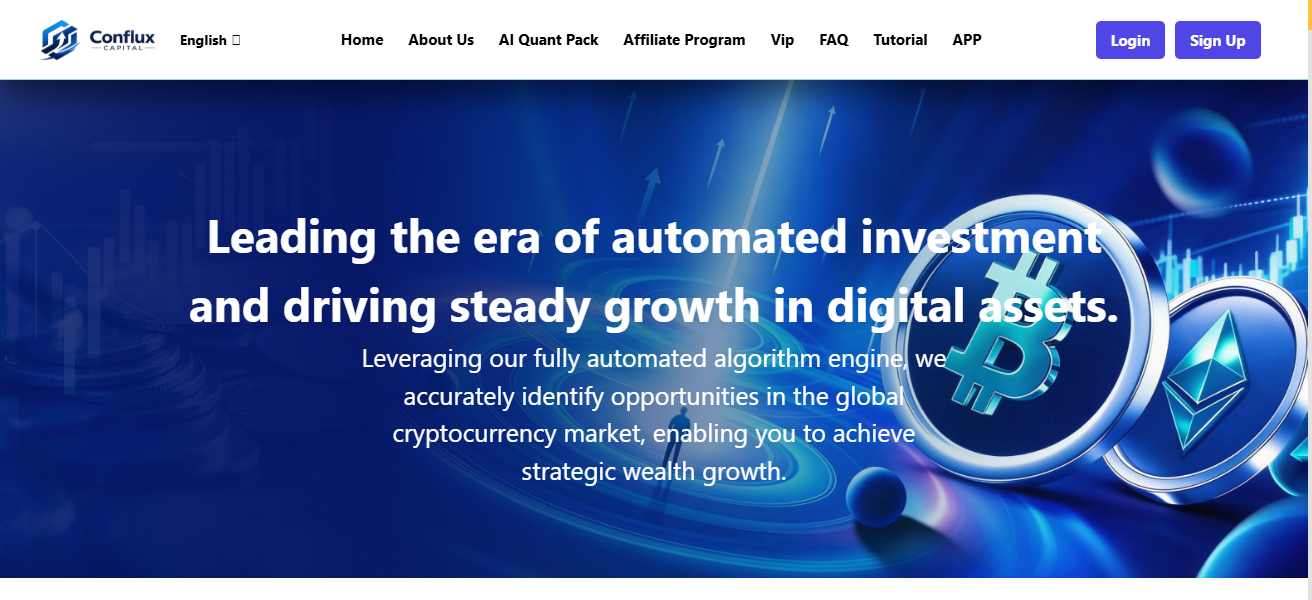
They offer claims of real-time analysis and promote access to multiple packages to assist in trading. They provide analysis, maintain an online instructions, and promote access to packages to aid in trades.
Concerns to be cautious and diligent are due to lack of transparency, clear methodologies, and the absence of longitudinal data in third-party research.
| Pros | Cons |
|---|---|
| AI-driven quantitative trading with multiple strategy packages. | Transparency and methodology details are scarce. |
| Automated arbitrage and trading opportunities. | Limited public track record; caution required. |
| Mobile access for monitoring trades. | Not fully audited by independent research. |
8. GPT Usage Analyzer
An established, widely referenced crypto analytics tool specifically named “GPT Usage Analyzer” does not seem to exist in the most comprehensive crypto analytics listings.
Generally, tools purporting to analyze GPT usage for crypto would assess some form of activity or signals originating from generative‑AI models in the domain data or sentiment analytics.
In the absence of a verifiable tool of industry recognition, this seems to be a placeholder or proprietary/internal tool, rather than something of an industry standard.
| Pros | Cons |
|---|---|
| Could analyze AI usage signals or sentiment in crypto. | No widely recognized mainstream platform. |
| Potential to integrate AI-based insights in trading research. | Likely experimental or proprietary; low transparency. |
| May complement existing analytics tools. | Limited historical data and community validation. |
9. CryptoQuant
CryptoQuant provides analytics for the blockchain and the market with a focus on exchange flow analysis, miner activity, stablecoin supply, and unique metrics such as the Exchange Whale Ratio.
They offer customizable dashboards, analytics builders with no coding required, low latency APIs, and alert systems to assist traders and funds in the analytics and monitoring of supply dynamics

The state of leverages, signal of derivatives, and various risk metrics, especially for the Bitcoin and Ethereum networks.
| Pros | Cons |
|---|---|
| Exchange flow and on‑chain data | Paid tiers needed for premium signals |
| Alerts for whale movements | UI is less intuitive for beginners |
| Strong derivative & demand metrics | Limited social sentiment analytics |
| Good for macro trend identification | Smaller assets have patchy data |
10. Santiment
Santiment analyzes over 2,000 assets and 1,100 metrics, combining on-chain, social, and behavioral data, including sentiment analytics.
It captures community mentions, whale activity, project engagement, and developer activity. This helps investors understand shifts in narratives and crowd psychology that price charts overlook.
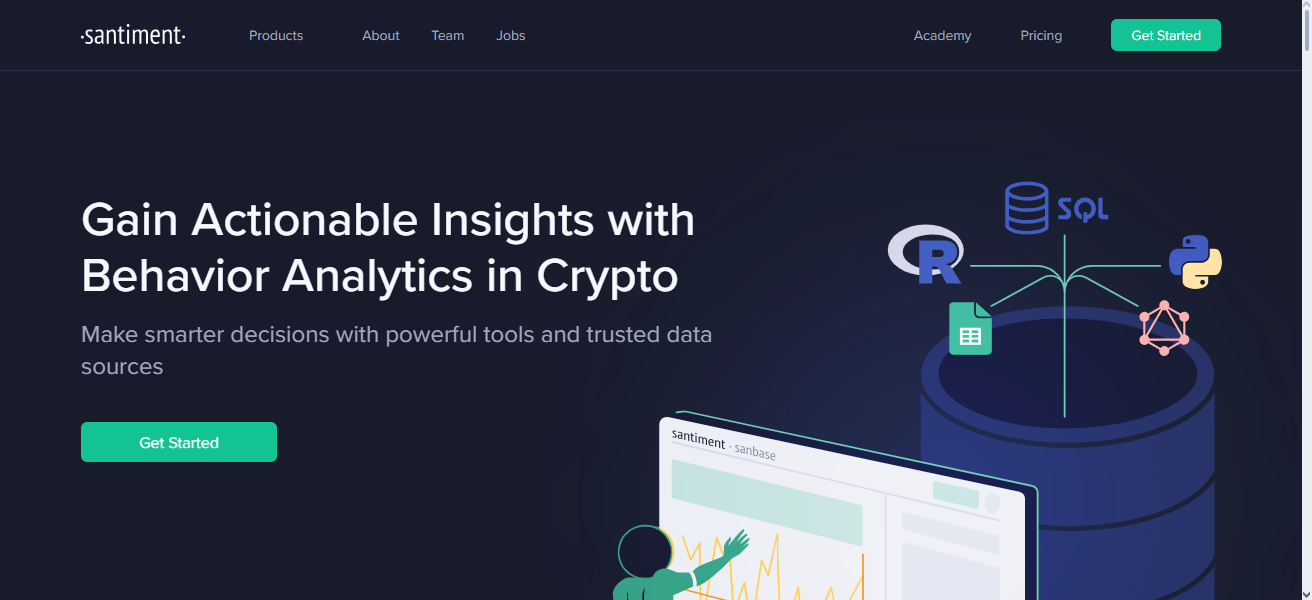
With its extensive data and customizable metrics, Santiment is valuable for sentiment-driven research and risk management.
| Pros | Cons |
|---|---|
| Deep fundamental crypto research | Pro subscription cost |
| Protocol profiles & risk metrics | Less real‑time price analytics |
| News & curated insights | Not as strong on AI signal generation |
| Standardized data reporting | Learning required for full utility |
11. Messari
Messari is a premier fundamental research and market intelligence platform providing detailed asset profiles and market data, as well as token governance tracking and AI-enhanced research tools (including an AI Toolkit and customized digest).
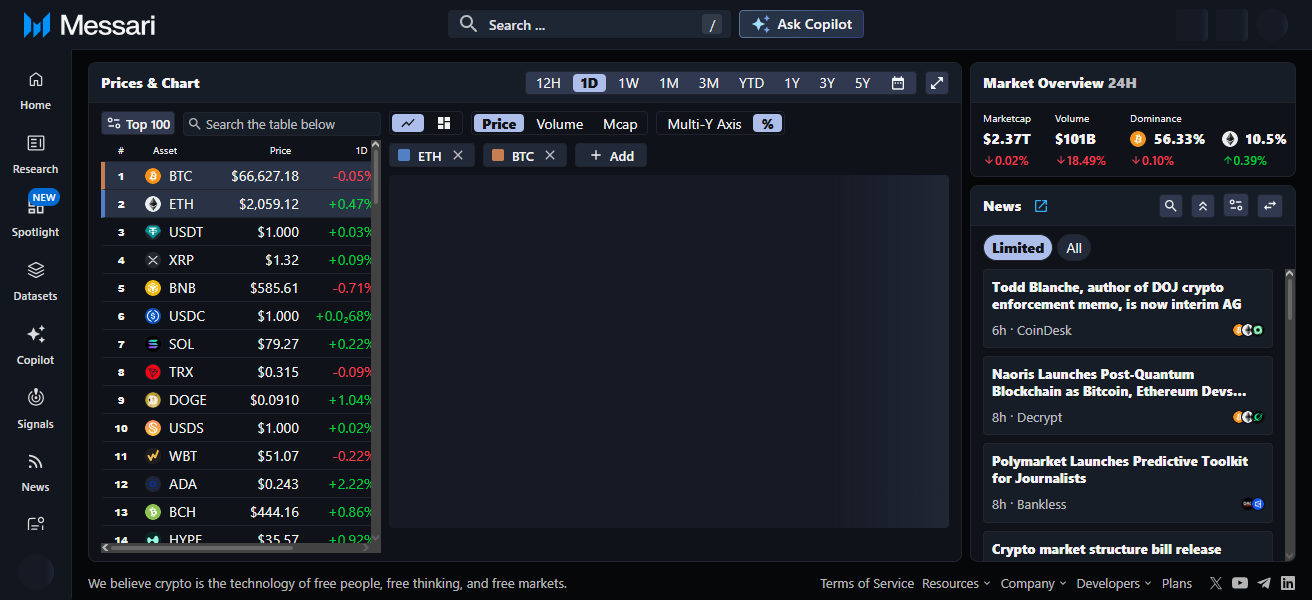
Messari also offers institutional and retail analysts deep due diligence, narrative context, and protocol evaluations through its structured reports, quarterly insights, and advanced APIs.
12. XIX.AI Tools
Mainstream crypto analytics companies with documented services as “XIX.AI Tools” do not appear in reputable industry rankings as of 2026.
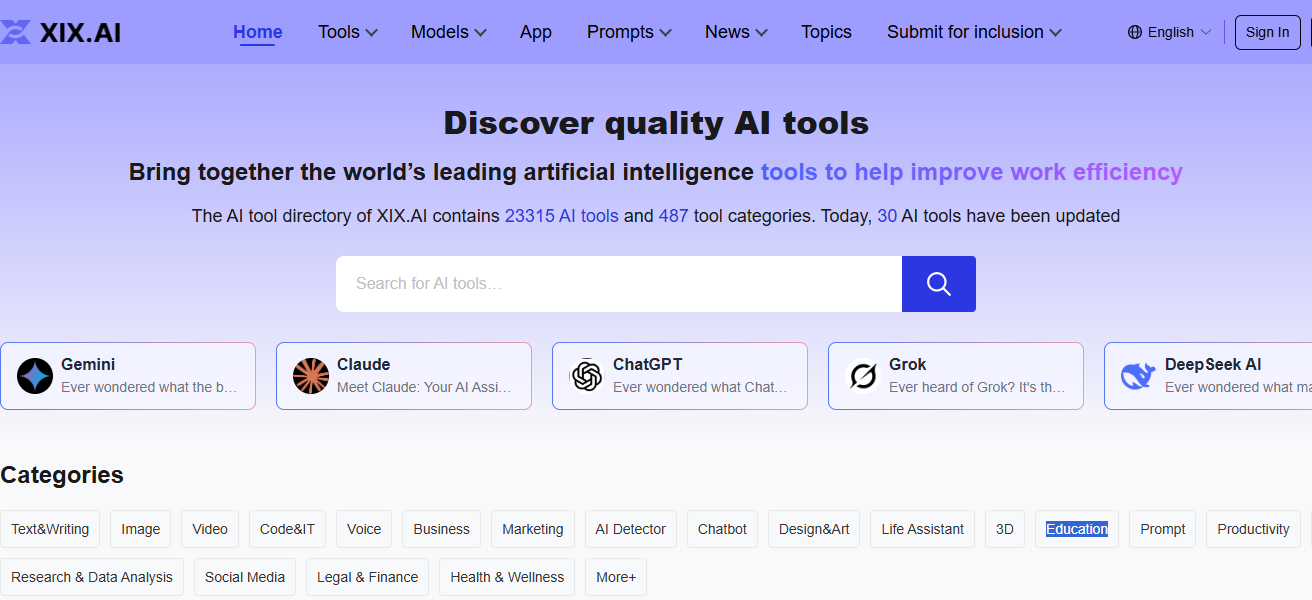
In case this points to a possible bot suite or set of proprietary AI research tools, the specifics could be specialized or distributed in closed circles.
Due to the experimental nature of the crypto analytics ecosystem, always check the legitimacy and transparency of an offering before engaging, as there are many low clarity options.
| Pros | Cons |
|---|---|
| AI‑based trading insights | Variable accuracy depending on data |
| Automated pattern recognition | Tools can be niche |
| Potential predictive modeling | Not focused on on‑chain transparency |
| Can speed up research tasks | Some features require expertise |
What are the key benefits of using AI-powered Analytics Platforms for crypto investing?
Data Processing at Scale. AI enables investors to track thousands of wallets, transactions, and tokens. AI instantly and automatically analyzes massive datasets on blockchain and markets.
Analyzing and Forecasting AI-Powered Insights. AI offers predicting best possibilities, quicker than others’ intuition and analysis, and market pattern recognition, forecasting, and identifying anomalies and possibilities.
Market Behavior and Sentiment Analysis. AI analyzes social media, news, and marketing trends to forecast and track sentiment which results in predicting market behavior in price movement.
Improved Decision Making and Risk Management. AI assesses, analyzes strategies, and manages risk through simulations which reduces emotional decision making or impulsive trading that lead to significant losses.
Time Savings. AI offers automated dashboards that track large transfers or market volatility, and real-time alerts that save manual research and update time.
Customization and Automation. Some AI tools offer automated trading recommendations, and improved efficiency through personalized dashboards, alerts, and data metrics aligned with investment strategies.
Cross Chain and Market Analysis. Nansen and DeFiLlama are examples of AI solutions that create omniscient offers to identify valuable market opportunities and factors in cross blockchain and DeFi protocols.
How To Choose AI-Powered Analytics Platforms for Crypto Investors
Define Investment Goals Focus on platforms that match your goals, be it for long-holding, active trading, or even DeFi yield farming.
Check Data Coverage The platform should cover a range of blockchains, tokens and exchanges for better analytics on the crypto market.
Evaluate AI Capabilities Consider platforms with predictive analytics, sentiment analysis and anomaly detection through advanced machine learning models.
Assess User Interface Choose platforms with a user-friendly interface, customizable charts and easy visual aids to assist with decision-making.
Verify Data Accuracy Choose platforms that rely on accurate on-chain and off-chain data to eliminate the risk of outdated or misleading data.
Consider Security Measures Platforms with data encryption, secured API connections, and compliance to the security standards will protect your confidential investment data.
Review Community Support Platforms with active user communities, shared dashboards, and open source collaboration will provide better support and collaboration.
Cocnlsuion
To sum up, analytics platforms utilizing artificial intelligence offer predictive technology, smarter insights, as well as real-time analytics.
In turn, analytics platforms assist traders in keeping on top of the ever-changing market, pinpoint market opportunities and assess risks.
By optimizing the latest Machine Learning technology and Blockchain Intelligence, analytics platforms facilitate informed decision making, optimal trading success, and sustainable growth.
FAQ
They provide predictive insights, risk management, and smarter trading strategies in volatile markets.
Yes, many offer simple dashboards, tutorials, and automated alerts for new investors.
No, they only improve decision-making; market risks and volatility still exist.
Data accuracy, AI-driven predictions, security, integration with exchanges, and customizable dashboards.