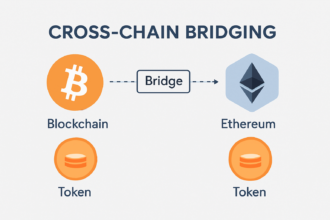
This article will cover Anti-MEV (maximal extractor value) protection of retail investors by defending investors from inequitable transaction manipulations in blockchain networks.
- What is MEV (Maximal Extractable Value)?
- Anti-MEV Protection Mechanisms
- Confidentiality of Transactions
- Intelligent Routing & Execution
- Limit Orders and DCA (Dollar-Cost Averaging)
- How MEV Protection Works
- Key Retail Anti-MEV Protections
- Why Retail Traders Are Vulnerable
- Core Concepts of Anti-MEV Protection
- Private Transaction Routing
- MEV- Resisting DEXs
- Slippage Control
- Transaction Simulation
- MEV Blockers and Wallet Integrations
- Why Retail Needs Protection
- Comparison of Retail Anti-MEV Tools
- Risks & Trade-offs
- The Future of MEV and Retail Protection
- Cocnlsuion
- FAQ
Anti-MEV protection defends traders from bots/miners who order transactions for profit. This protection provides retail investors a more secure and transparent environment to trade.
What is MEV (Maximal Extractable Value)?
Maximal Extractable Value (MEV) refers to the profits that can be obtained by miners, validators, or bots through the strategic ordering of transactions in a block of a blockchain.
They can reorder or even omit certain transactions (trades) to gain an advantage. Those extracting MEV may benefit financially but, in the process, they adversely affect the average user.

This impact is specifically on retail traders as it can increase slippage, inflation, and bias against execution.
Retail users end up losing value in everyday transactions in decentralized finance (DeFi) systems, often without any awareness of it.
Anti-MEV Protection Mechanisms
Confidentiality of Transactions
- Flashbots Protect (Ethereum): Sends transactions through private relays so they stay concealed from the public mempool.
- Jito Bundles (Solana): Enables users to submit transactions to validators directly so they can skip MEV bots.
Intelligent Routing & Execution
MEVX (multi-chain tool): Provides anti-sandwich attacks, rapid execution, and intelligent routing to reduce exposure.
Price Manipulation: Guarantees that trades are executed at the optimal price available to avoid price manipulation.
Limit Orders and DCA (Dollar-Cost Averaging)
By utilizing limit orders or splitting trades, retail users decrease the predictability of their trades, making it more difficult for bots to exploit their trades.
How MEV Protection Works
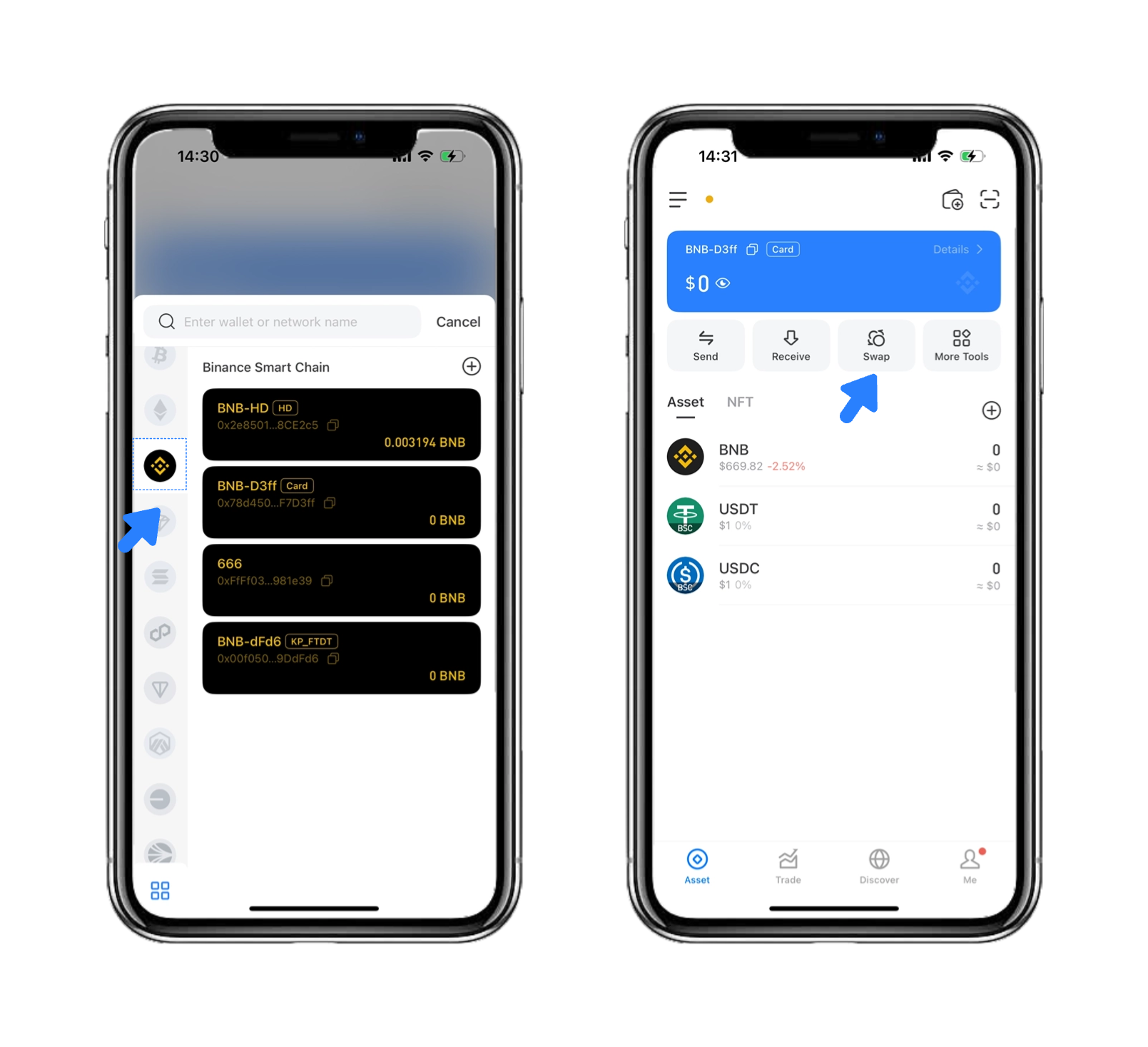
MEV protection uses several critical methods to ensure transaction safety.
Trade details are shielded until they’re included in a block, preventing others from manipulating the situation to their advantage.
In fair ordering, original sequencing of transactions is preserved so trades can be executed in the desired manner.
Decentralized ordering involves several different agents, making it less likely that one agent can control the system.
Finally, the protection against front-running allows trades to be executed without being placed behind a potentially better pricing trade.
Key Retail Anti-MEV Protections
Private Transactions / RPC: Services such as Flashbots Protect or MEV Blocker transmit transactions to builders instead of the public mempool.
Wallet-Level Protection: Protection mechanisms for users’ swaps are integrated in many wallets (MetaMask, Rabby, Ledger Live, Binance Web3 Wallet) to make the process of staying protected during swaps as simple as possible.
DEX Protections: Some decentralized exchanges utilize batch auction or cowswap mechanisms to avoid sandwich trading by uniting individual transactions.
Setting Slippage Tolerance: In DEX settings, attackers’ profit potential is reduced, making sandwich attacks less economically interesting, by the simple maneuver of lowering slippage.
Why Retail Traders Are Vulnerable
Retails traders are often at a disadvantage when it comes to technological resources and sophisticated MEV bots.

On the contrary to more sophisticated players, they have to depend on the publicly available interface, as well as the transactional submission methods, creating a clear path (and opportunity) to be exploited by MEV bots.
Furthermore, retail traders tend to:
- Utilize a wallet without MEV protection by default
- Set slippage targets that are abnormally high (and are therefore targeted by MEV bots)
- Trade at times the network is congested
All of these factors combine to form a situation where the MEV extractor predominantly preys on the small fish.
Core Concepts of Anti-MEV Protection
As MEV emerged, the industry devised a collection of potential solutions. The core of these solutions seek to make certain that the MEV practices do not come to fruition through mitigation of transaction visibility, transaction execution fairness, etc.
Private Transaction Routing
Private routing does not allow for public broadcasts of their transactions to public mempool, and instead sends these transactions to the validators directly or to an exclusive set of networks. Prior to transaction confirmation, the transaction will not be seen or exploited by any bots.
Some examples of this include private RPC endpoints, and transaction relays that forgo the public mempool for private relay.
MEV- Resisting DEXs
Certain decentralized exchanges are characterized by their ability to resist MEV through the use of batch auctions and uniform clearing prices that guarantee all trades in a block are executed uniformly and therefore are fair.
Because of the way the transactions are ordered, batch transactions eliminate any order advantage, making front-running and sandwich attacks impossible.
Slippage Control
To enhance the resistance of a transaction to MEV attacks, a tighter control of slippage is ideal. Although this may increase the chances of a transaction getting stuck, the chances of the bots taking advantage of the large price fluctuation is nullified.
For retail traders, a balance in slippage is recommended based on the prevalent market conditions.
Transaction Simulation
Some tools allow for MEV mitigation through transaction simulations, and allow for the analysis of price impact, and the potential for a sandwich. These tools assess the probability of the potential MEV on the transaction prior to the execution of the transaction.
Such tools help assess the probable behavior of a transaction based on real conditions prior to execution.
MEV Blockers and Wallet Integrations
Newer integrations on web browsers and wallets are starting to include protective features that shield users from MEV attacks. These tools cover their transactions by routing them through private methods or by blocking known patterns of MEV attacks.
In addition to integrated protective MEV features, some wallets will alert users to transactions that are likely to be MEV attacked.
Why Retail Needs Protection
Sandwich Attacks: Attackers artificially create losses by positioning user orders to manipulate their prices before and after the user’s order.
Front-Running: Bots detect large-value transactions before and pay increased gas fees to push their transaction to the front.
Price Manipulation: Users, in the absence of protection, take execution prices of their tokens that are considerably worse.
Comparison of Retail Anti-MEV Tools
| Tool/Protocol | Supported Chains | Key Features | Retail Benefit |
|---|---|---|---|
| Flashbots Protect | Ethereum | Private transaction relay | Prevents front-running |
| Jito Bundles | Solana | Direct validator submission | Stops sandwich attacks |
| MEVX | Ethereum, Solana, EVM chains | Smart routing, anti-sandwich, limit orders | Comprehensive retail protection |
Risks & Trade-offs
Added Fees: A few anti-MEV services will charge a small protection fee.
Execution Speed: Your transaction may execute slower on private relays than on the public mempool.
Limited Awareness: A significant portion of retail traders do not understand MEV risks, which continues to leave them vulnerable.
The Future of MEV and Retail Protection
While MEV is not inherently malicious, it is a result of fully transparent systems. However, without mitigating controls, it poses a risk to trust and fairness in decentralized markets.
Increasingly, there is recognition of the need for consumer-first approaches. With MEV protection being incorporated into wallets, exchanges, and protocols, retail traders will be able to trade in a more balanced and safe way.
Ultimately, a mix of changes on the protocol side and tools on the user side will be required. Developers, researchers, and the community will need to work together in order to achieve this.
Cocnlsuion
To wrap up, the importance of Anti-MEV protection for retail traders operating in DeFi is clear. It decreases the risk of unfair losses, gives better pricing, and increases the safety of trading overall.
Even though there are obstacles such as complexity, and lack of accessibility, the increasing protective tools’ adoption is making trading safer.
Anti-MEV solutions will continue to innovate and contribute significantly to the formation of a transparent and fair decentralized ecosystem.
FAQ
MEV can cause higher slippage, worse trade prices, and hidden losses.
Tools and strategies that prevent MEV exploitation on retail transactions.
By hiding transactions, routing them privately, or using MEV-resistant protocols.
Sometimes, private routing or batching may slightly delay execution.