In this article, I will focus on the Apps That Show What You Should Have Done Instead series, which offers an opportunity to think about your choices, monitor your habits, and enhance your decision-making skills.
- What Do These Apps Do?
- Key Points & Apps That Show What You Should Have Done Instead
- 10 Apps That Show What You Should Have Done Instead
- 1. One Sec
- One Sec
- 2. Habitica
- Habitica
- 3. Daylio
- Daylio
- 4. Cloverpop
- Cloverpop
- 5. Finch
- Finch
- 6. Duolingo
- Duolingo
- 7. Notion
- Notion
- 8. Stoic
- Stoic
- 9. MyFitnessPal
- MyFitnessPal
- 10. Forest
- Forest
- How To Choose Apps That Show What You Should Have Done Instead
- Conclsuion
- FAQ
These applications show the user’s weaknesses and missed opportunities within their everyday lives. They direct the user towards more informed choices, increased productivity, and personal development, all of which can be achieved by journaling, tracking, and other interactive methods.
What Do These Apps Do?
These applications track users’ historical conduct and choices, assist users with self-reflection, and teach users self-reflection.
They collect data on habits, moods, and productivity to allow for evaluations. They analyze data to instruct on improved selections for daily conduct.
These applications include journaling, game-like features, and focus timers to assist users with improved conduct, refined choices, and focus timers.
Key Points & Apps That Show What You Should Have Done Instead
One Sec – Helps pause before acting, showing users what they could have done differently.
Habitica – Turns habits into RPG goals, showing progress and missed actions for better choices.
Daylio – Tracks moods and activities, reflecting on past days to improve future decisions.
Cloverpop – Provides decision analytics, showing outcomes of choices to guide smarter decision-making.
Finch – Offers journaling and habit tracking, reflecting on past actions to improve daily routines.
Duolingo – Tracks language practice progress, showing missed opportunities and areas needing improvement.
Notion – Organizes tasks and notes, helping analyze past productivity to optimize future planning.
Stoic – Guides reflection and journaling, showing personal growth and areas needing better habits.
MyFitnessPal – Tracks diet and exercise, highlighting past choices to encourage healthier lifestyle decisions.
Forest – Encourages focused work sessions, showing wasted time and motivating better concentration habits.
10 Apps That Show What You Should Have Done Instead
1. One Sec
One Sec helps users practice self-control and intentionality. They do this by giving the user a pause, allowing them to think about the possible repercussions of their actions.
Over time, the user will learn to predict how their actions will affect their future and their behavior will improve.
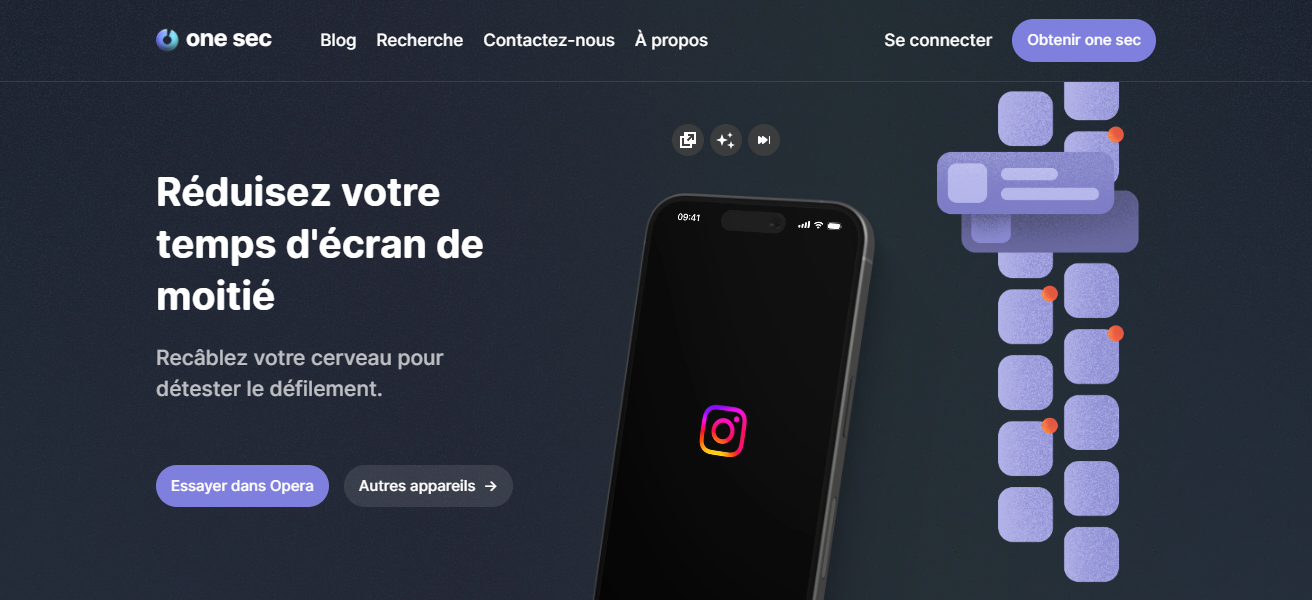
The app’s goal is to help users think about their actions instead of just reacting, and to help them develop a pattern of good habits. This will help the user to develop their emotional intelligence and improve their self-control.
One Sec
- Mindful Pause: Delay mechanisms are built to counter impulsive acts.
- Reflection Prompts: Thoughtful consideration of alternatives and their consequences is in focus.
- Behavior Pattern Awareness: Identification of habits is done over a duration.
- Emotional Regulation: Boosts on self-control and emotional intelligence are supported.
| Pros | Cons |
|---|---|
| Encourages mindfulness and deliberate decision-making. | Requires discipline; may feel unnatural initially. |
| Helps reduce impulsive actions and emotional reactions. | Small delay may be ignored if user is distracted. |
| Improves emotional intelligence and self-awareness over time. | Limited functionality beyond pause reminders. |
| Simple, focused design encourages consistent use. | Does not track long-term patterns automatically. |
2. Habitica
Turn your habits into an engaging rpg game with Habitica. Turn daily tasks into quests, and challenge yourself with opportunities to see daily improvement.
It’s a habit breaking behaviorally responding game. It visually rewards you while tedious tasks, and encourages you to reflect on your own patterns.
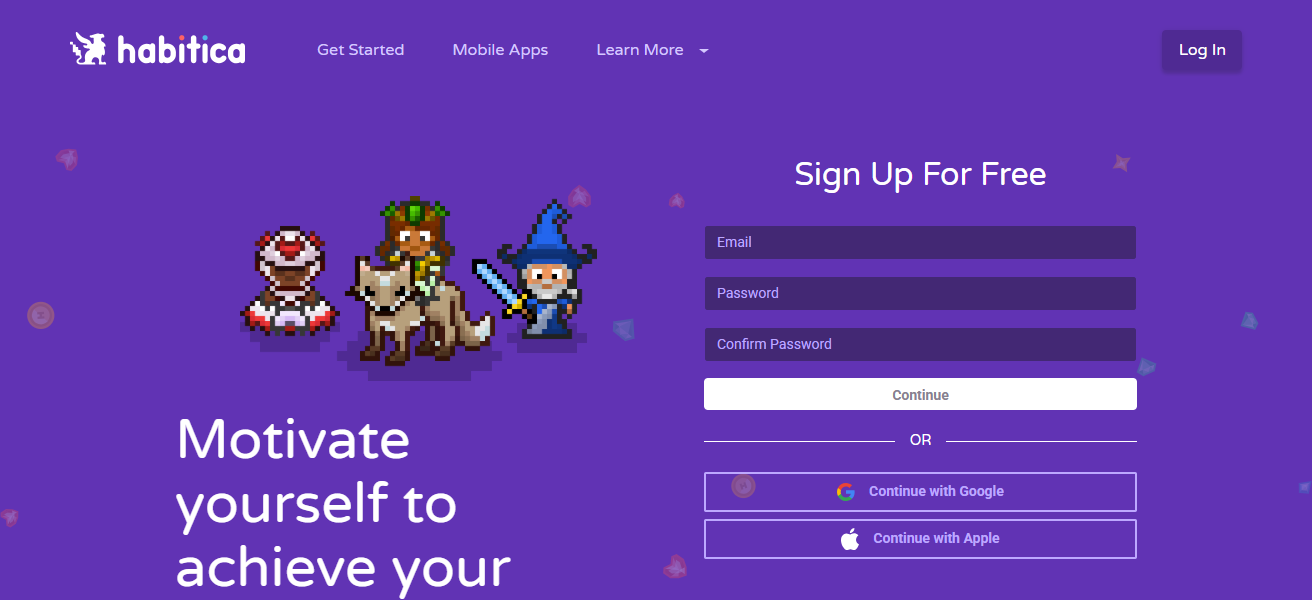
Also helping you to reinforce opportunities you may have missed, and challenge yourself to a develop a disciplined approach to setting and achieving goals.
Habitica
- Gamified Habits: Daily duties transformed into RPG quests, complete with points and rewards.
- Progress Tracking: Reflection on personal insight is done through the monitoring of for/against done.
- Motivation & Accountability: Game rewards & challenges ensure that consistency is held.
- Social Features: Engaging support/competition from community and team is made possible.
| Pros | Cons |
|---|---|
| Gamifies habits, making daily routines engaging and motivating. | RPG format may feel childish for some users. |
| Tracks completed and missed tasks for reflection. | Requires consistent input to be effective. |
| Visual rewards encourage positive habit reinforcement. | May overwhelm users with too many features at once. |
| Promotes discipline, goal-setting, and self-improvement. | Social/community features can be distracting. |
3. Daylio
Record your experience for the day. Daylio helps you track your activities, and your mood. All without the need for daily journal entries.
Analyze the data, and the developed patterns for behavioral, emotional, and activity trends. Daylio helps you identify the outliers that contribute to your emotional high’s and low’s to improve your decision making when it comes to your activities.
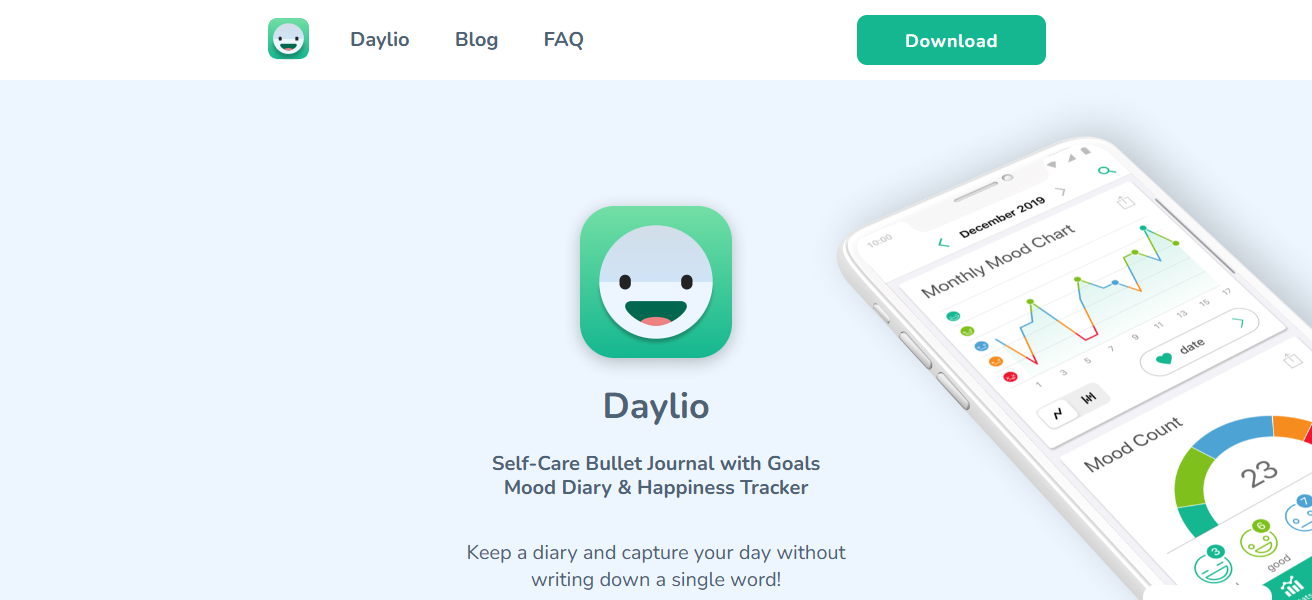
Use Daylio to gain insights on what activities you should spend less time on outside of work to increase happiness and productivity. It helps with self awareness. Simple and to the point.
Daylio
- Mood Tracking: Simple icons or ratings are used to denote moods.
- Activity Logging: Entry lengths are minimized with daily tasks/routines.
- Pattern Analysis:** Mood & activity correlations are tracked with time.
- Reminders & Insights: Daily action reflections made smarter are encouraged.
| Pros | Cons |
|---|---|
| Easy mood and activity tracking without long journal entries. | Limited qualitative insights; mostly numeric/emoji based. |
| Highlights behavioral patterns and moods over time. | May require daily consistency for meaningful results. |
| Encourages self-reflection and awareness of daily routines. | Free version has limited analytics. |
| Supports better decision-making through past activity insights. | Not a full productivity or habit management tool. |
4. Cloverpop
Cloverpop improves decision making by utilizing data analysis. It aids in evaluating decisions and their possible outcomes compared to other possible outcomes.
This evaluation of results uses historical data to identify patterns and trends. The decision making gaps will show the strengths and weakness and give areas to improve on.

This is especially beneficial in professional or team settings where their decisions may have potential positive or negative impacts.
The tool improves decision making by providing evidence of the impact of previous decisions, whether positive or negative, and providing guidelines to improve the quality of future decisions.
Cloverpop
- Decision Analytics: Judgements are improved for choices that brought about certain outcomes.
- Pattern Recognition: Shortcomings and strengths in decisions are identified.
- Outcome Tracking: Future decisions are informed by result monitoring of the past.
| Pros | Cons |
|---|---|
| Provides data-driven decision insights and analytics. | More suited for professional/team use than casual users. |
| Highlights strengths and weaknesses in decision-making. | Can feel complex or overwhelming at first. |
| Helps compare outcomes and learn from past choices. | Limited personalization for individual lifestyle choices. |
| Encourages structured, evidence-based decision strategies. | Focused on business decisions, not personal habits. |
5. Finch
Finch is an app that is described as a personal growth application. This is due to the app being an aggregated tool for journaling, habit tracking, and self-reflection.
Users can track how their actions, moods, and feelings, as well as their goals, which will give the user an understanding of their daily routine over time.
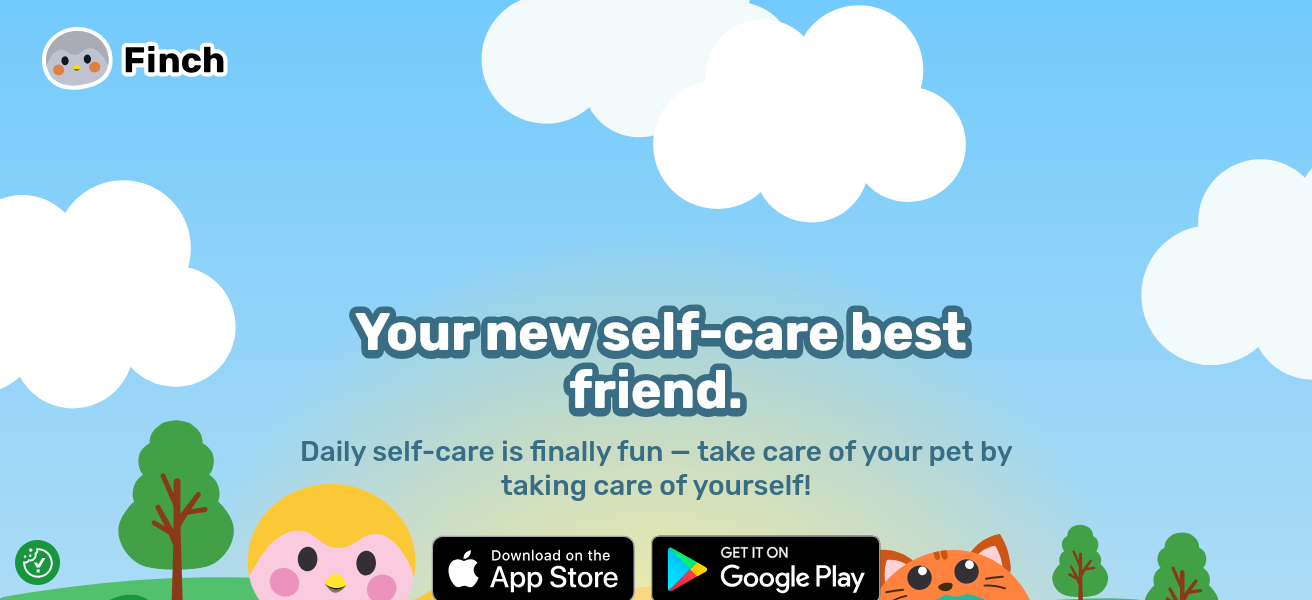
Users can look at a summary of their previous themselves, and identify positive results, and the actions that limited them.
Finch helps daily goal adjustment to convey higher daily positive actions towards the daily goal. This is through habit tracking and daily goals to reiterate the positive actions until the unproductive actions are eliminated.
Finch
- Journaling: Daily mood, goal, and reflection entries.
- Habit Tracking: Identify and analyze behavioral trends.
- Progress Analysis: Identify behavioral trends positively and negatively over time.
- Goal Setting: Daily behavior and habit improvement support.
| Pros | Cons |
|---|---|
| Journaling and habit tracking encourage self-reflection. | Requires regular entries to track progress effectively. |
| Reveals positive and negative patterns in daily routines. | Free version has limited features. |
| Helps set realistic goals and adjust actions. | Less gamified; may feel less engaging. |
| Encourages intentional, mindful living and growth. | Analytics may be basic compared to advanced habit apps. |
6. Duolingo
As a language learning program, Duolingo helps users measure their progress and identify areas in which they struggle.
By recording areas of improvement, Duolingo helps users identify weak spots so that they can practice and enhance their knowledge in that area.
The program offers users the choice of practicing skills that have already been covered, along with the ability to help users find the most efficient practice skills.
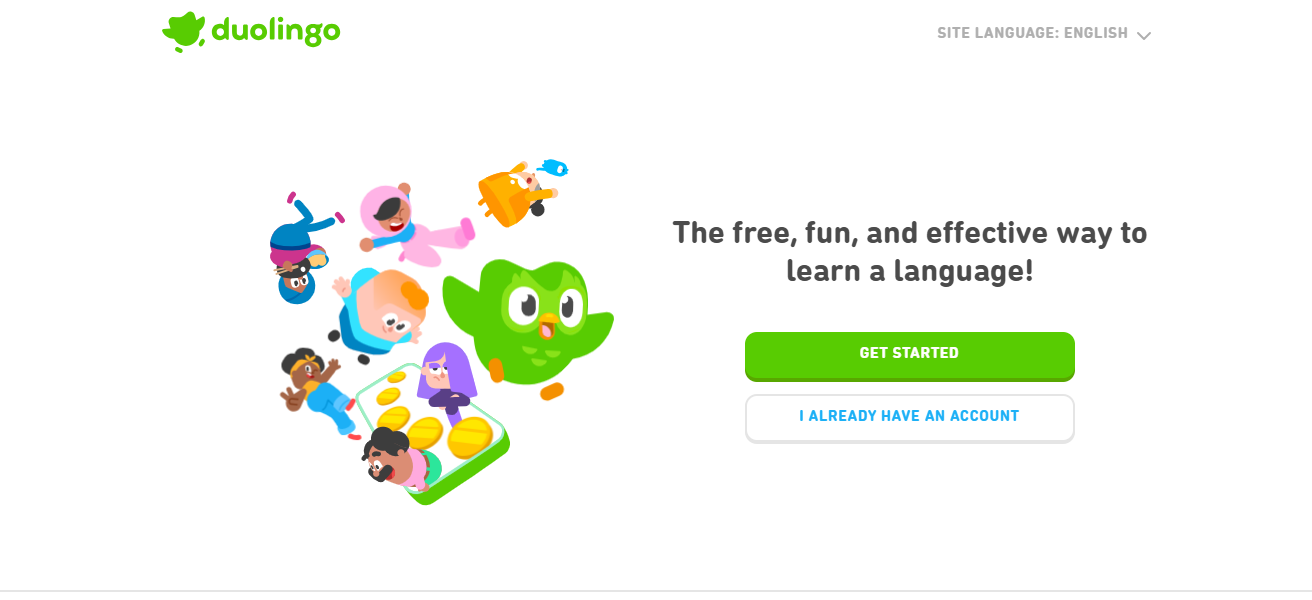
The program motivates learners by offering a streak bonus and practice skills that will help learners enhance their knowledge in a productive and fun way.
By reminding them of their opportunities to practice, Duolingo offers its users the opportunity to practice more often in order to enhance their knowledge of a language more quickly.
Duolingo
- Language Practice Tracking: Track number of sessions and skills acquired.
- Weak Point Identification: Identify and analyze learned lessons.
- Gamification: Daily lessons through streaks, points, and levels.
- Progress Feedback: Feedback to improve learning behavior and efficiency.
| Pros | Cons |
|---|---|
| Tracks language learning progress and missed exercises. | Can feel repetitive over time. |
| Highlights weak areas and missed opportunities for improvement. | May not provide deep cultural or conversational learning. |
| Motivates through streaks, challenges, and rewards. | Focused on short practice sessions; less comprehensive for fluency. |
| Encourages consistent, informed practice and habit formation. | Free version includes ads; some features require subscription. |
7. Notion
Notion’s all-in-one workspace offers users a way to organize their tasks, notes, projects, and goals in an efficient way.
Unlike other document management systems, Notion provides users the ability to keep track of their previous work, deadlines, and productivity.
By evaluating the previous work completed, users will be able to measure their efficiency and identify areas of work that may need improvement.
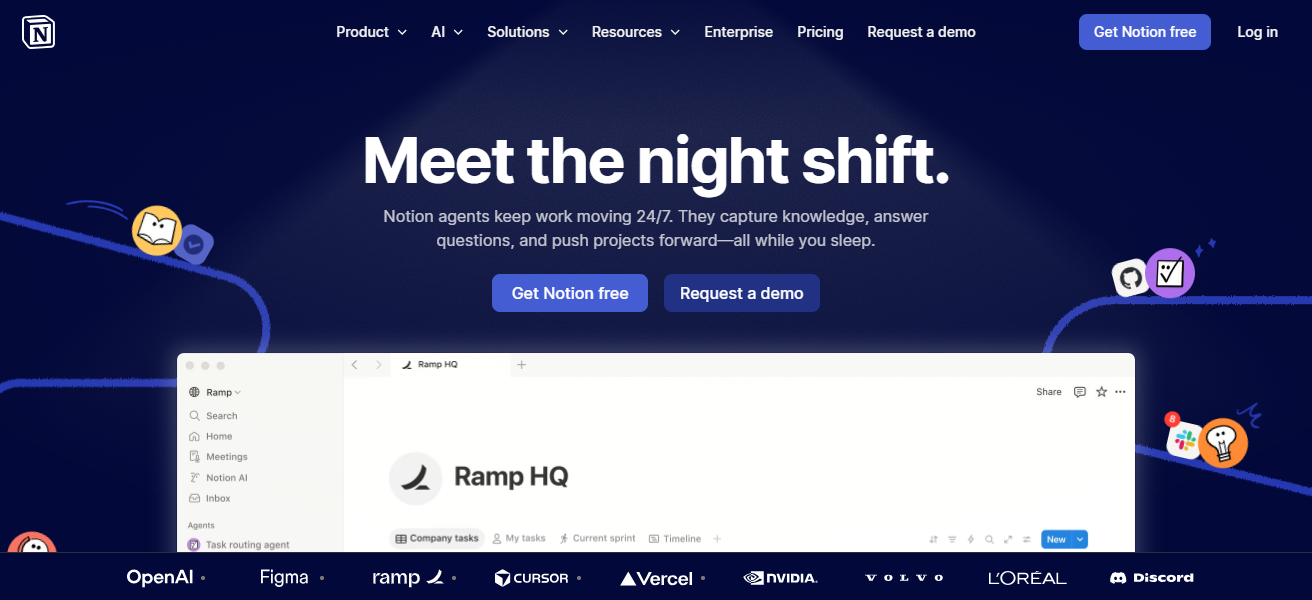
Notion’s flexibility provides users the ability to create more detailed project plans and track knowledge more easily, which will help users identify more opportunities to improve their work.
Notion provides a single platform to allow users to combine all of their planning and reflection, which will improve the efficiency of their knowledge.
Notion
- Task & Project Organization: Integrate notes, to-do lists, and projects in one workspace.
- Productivity Tracking: Analyze behavior through reflection on completed tasks and deadlines.
- Customizable Templates: Track and analyze personalize workflows.
- Collaboration & Documentation: Support teamwork and long-term knowledge retention.
| Pros | Cons |
|---|---|
| Organizes tasks, notes, projects, and goals in one workspace. | Steep learning curve for new users. |
| Tracks productivity patterns and missed opportunities. | Requires manual input for maximum effectiveness. |
| Flexible for planning, reflection, and documentation. | Can feel overwhelming with too many templates or pages. |
| Encourages smarter decisions and increased accountability. | Lacks automatic habit tracking without customization. |
8. Stoic
Stoic is a reflection and journaling app that utilizes the Stoic school of philosophy. The app’s philosophy leads users to build the daily habit of self-reflection.
The app gets users to evaluate their emotional responses and behavioral patterns by allowing entries based on mood, goals, and challenges.
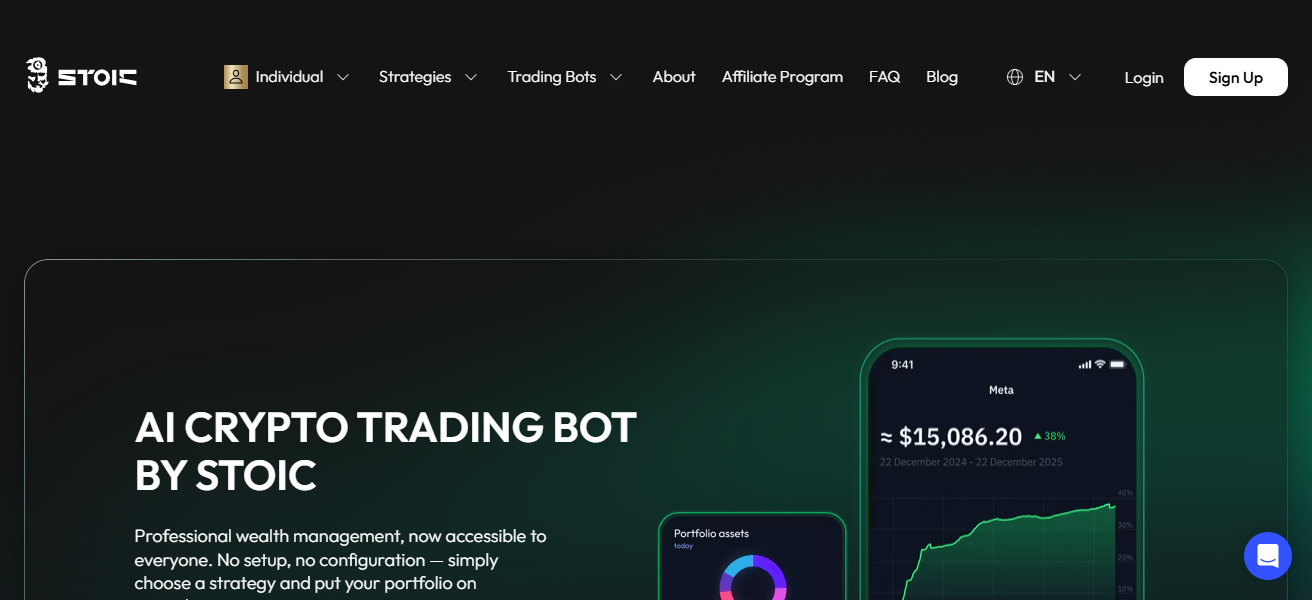
The app asks users to record entries, and those entries are custom, allowing growth to be targeted.
Users can identify areas to improve, negative habits to eliminate, and virtues, such as patience and resilience, to add.
Stoic
- Daily Reflection Prompts: journaling about mood, goals, and obstacles.
- Philosophy-Based Guidance: Develop emotional resilience through Stoic principles.
- Progress Tracking: Identify improvement, habitual, and recurring gaps.
- Gratitude & Mindfulness: Self-awareness and positive habit reinforcement.
| Pros | Cons |
|---|---|
| Guides reflection using Stoic philosophy and journaling. | Philosophy-based prompts may not suit everyone. |
| Promotes emotional intelligence, mindfulness, and gratitude. | Requires daily consistency for meaningful impact. |
| Highlights growth areas and personal development opportunities. | Free version has limited features compared to premium. |
| Encourages healthier habits, perspective, and wiser decisions. | Limited integration with other productivity or habit apps. |
9. MyFitnessPal
MyFitnessPal is a goal-setting, diet, and exercise app that keeps track of users’ health and fitness. Users are able to make educated decisions based on previous behaviors
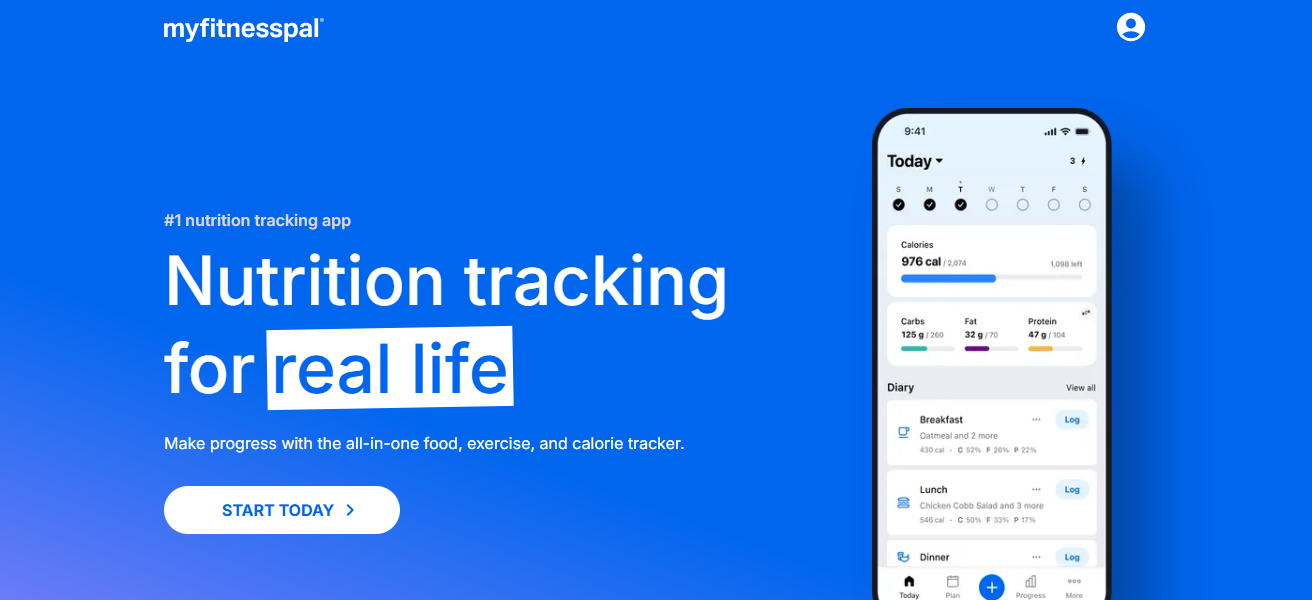
That supported or hindered their goal and result(s) by logging: the nutrition of their meals, their workouts, and their weight.
Choosing behaviors that will improve health, such as exercise, will be easier as the app notifies users of habits that are unhealthy and chose their nutrition
MyFitnessPal
- Diet Tracking: Log your meals and gain insight on nutritional information.
- Exercise Logging: Record your workouts and activity to monitor your progress.
- Goal Monitoring: Monitor your progress on weight, fitness, and lifestyle goals.
- Analysis & Feedback: Provides data on unhealthy patterns, and suggests changes.
| Pros | Cons |
|---|---|
| Tracks diet, nutrition, and exercise for health improvement. | Requires consistent logging for accuracy. |
| Provides insights on past choices and nutritional patterns. | Free version lacks some advanced tracking features. |
| Encourages accountability and better lifestyle decisions. | Can become time-consuming to enter detailed meals. |
| Supports weight management and habit formation. | Focuses mainly on fitness; mental or emotional habits not tracked. |
10. Forest
The app encourages users to stay focused for greater periods of time. As users stay off their devices and complete their desired focused time, their virtual trees grow.
The more time users spend focused, the more trees users grow. The longer the users take to complete their time goal, the more time users “lose” by destroying their trees.
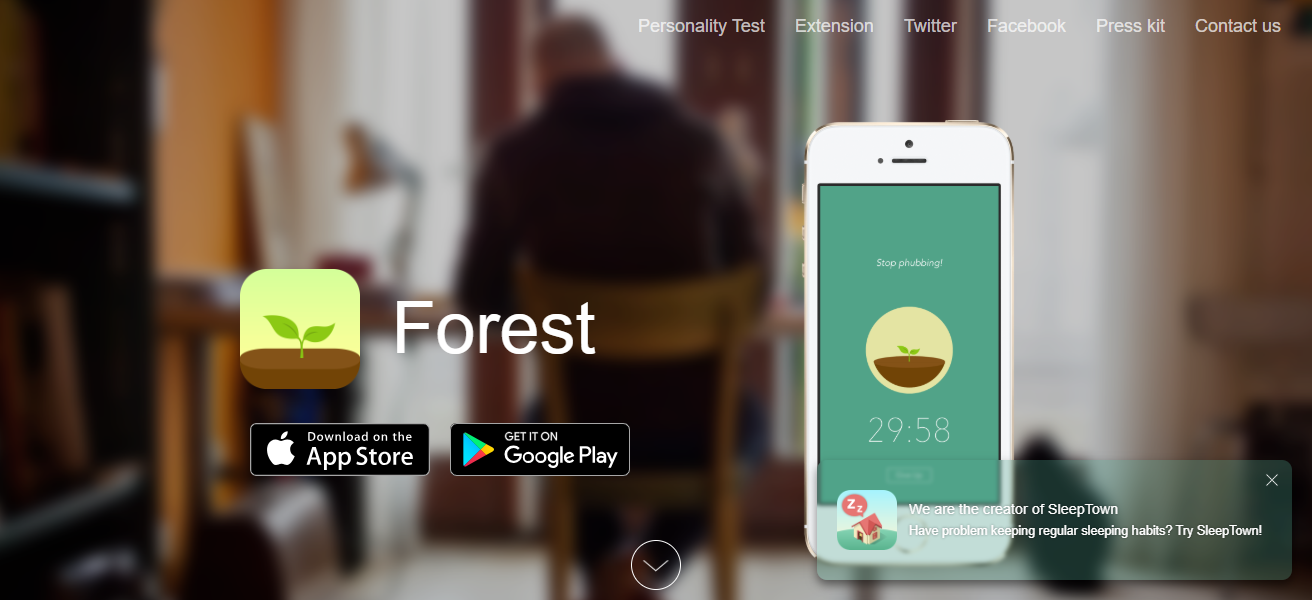
The app provides users with very clear time guides to better manage their time. Each focused work session is tracked in the app, and users can look back and reflect on their time during those focused work sessions.
Forest
- Focus Timer: Work uninterrupted for a set amount of time.
- Gamified Tree Planting: When you concentrate and avoid distractions, a tree will grow.
- Distraction Reduction: Increased productivity by reducing phone usage.
- Progress Overview: Displays focused and distracted time throughout sessions.
| Pros | Cons |
|---|---|
| Encourages focused work and reduces phone distractions. | Focused only on phone usage; not full task management. |
| Gamified tree-growing system motivates sustained concentration. | May feel gimmicky for some users. |
| Provides visual feedback on wasted or productive time. | Limited analysis of long-term productivity patterns. |
| Builds consistent work habits and mindfulness. | Requires commitment to be effective; trees can “die” if interrupted. |
How To Choose Apps That Show What You Should Have Done Instead
- Functionality: Recognize whether you want an app for habit formation, mood tracking, focus, or decision.
- User Experience: Identify app that is simple, streamlined, and fits with how you operate.
- Options: Find one with journaling, analytics, reminders, game-like features, or progress tracking.
- Engagement: Identify one that you can use on a daily basis without feeling too stressed.
- Functionality: Consider apps that sync with other items, or calendars.
- Rewards: Identify one that will keep you interested with bonuses or visual updates.
- Budgeting: Identify one that has no cost and consider premium options to meet your needs.
Conclsuion
In summary, Apps That Show What You Should Have Done Instead promote self-reflection, behavioral analysis, and decision-making improvements.
These apps analyze past choices, missed opportunities, and behavioral patterns to assist users in developing better behavior, increased productivity, and improved personal routines. These apps create increased awareness and better decision-making behavior over time.
FAQ
Yes, apps like Forest and Notion enhance focus and task management.
Yes, Habitica, Finch, MyFitnessPal, and Stoic monitor routines and behaviors.
Yes, Daylio and Stoic record moods to boost self-awareness.
Most offer free versions; premium features may require subscriptions.