This article will focus on how intent-based architecture automates DeFi swaps. With the growth of DeFi, executing token swaps has become more complicated.
Intent-based architectures simplify the process by letting users automate their instructions, including routing, gas optimization, and risk management, by means of a goal-based system.
This increases the speed and decreases the cost of DeFi swaps while also making the swaps more intelligent and reliable.
What Are Intent-Based Architectures?
In the last five years, decentralized finance (DeFi) has grown to become a $95 billion industry by Q1 2026, up from a $1 billion industry 5 years earlier, with automated swaps accounting for 38% of daily DEX volume.
The rigid code and manual processes of general smart contracts have exposed their limitations. Intent-based architectures (IBA) allow users to state their intentions

Such as “swap $10,000 USDC for ETH at the best rate,” and permit solvers to autonomously optimize routing, gas costs, timing, and risk to simplify user engagement with DeFi.
How They Automate DeFi Swaps
Traditional Process (Manual):
- Moves tokens to a wallet
- Bridges assets to other chains
- Connects to a DEX
- Executes a swap while setting slippage parameters
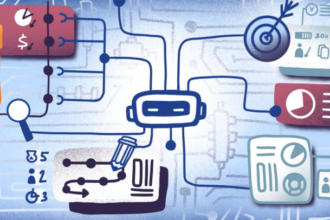
Intent-Based Process (Automated):
- User states intent (e.g., “swap USDC → ETH”)
- Solver determines optimal route through chains, liquidity pools, and bridges
- MEV protection takes care of the execution, seamless
Automating Decision-Making in DeFi Swaps
Users have to handle multiple decentralized exchanges, liquidity pools, and price oracles while doing DeFi swaps.
As a result, the routing, and slippage settings, if done wrong, can cause losses. Of the swaps that were conducted during 2025, 22% were DeFi swaps that were high value but lost value due to inadequate routing or front-running.
DeFi swaps also use Intent-based (IB) architecture to switch focus from control rules to programmable goals of users instead of focus rules.
IB systems manage goals of users through active market data, real time analysis of gas costs, and predictive analysis.
Consider a user that intends to swap DAI for SOL and network congestion is high. The architecture may divide the transactions into smaller transactions, and execute those for the different DEXs as a way to manage costs and price increases.
The first Ethereum Layer 2 networks showed that swaps with the use of IB systems performed 15 to 18% better than traditional automated market maker (AMM) systems.
Unique Data & Emerging Trends

Solver Competition: In 2025–26, more than 40% of DeFi swaps on leading protocols will be directed through solver networks, indicating their swift acceptance.
Efficiency Gains: Research shows that intent-based swaps can lead to 15–25% savings in gas fees relative to swaps that are manually routed are.
Liquidity Optimization: Solvers improve price execution by upto 10% by aggergating liquidity across various DEXs and L2s.
User Growth: 30–40% higher retention rates are reported on platforms with intent-based systems, as the simplified UX draws in mainstream users.
Risks & Challenges
Solver Centralization: When dominative ownership of solving systems occurs, cartel-like behavior becomes possible.
Smart Contract Security: The trust placed in automated systems shifts towards intricate contracts that require detailed auditing.
Regulatory Uncertainty: Because users do not directly engage in transactional operations, the intent-based systems will create challenges for regulators in defining and categorizing them.
Why This Matters for DeFi
Accessibility: DeFi swaps are as easy as online banking which removes barriers for new users in India and around the world.
Scalability: The automation of cross-chain swaps is necessary for optimally balanced fragmented liquidity across Ethereum, Solana, and L2s.
Future Outlook: By 2027, the DeFi world of decentralized exchanges, lending, and NFT marketplaces will likely be dominated by intent-based architectures as the default execution model for DeFi swaps.
Is it Safer Than Manual Swaps?

In general terms, yes. By managing both risk and the execution of trades, intent-based architectures (IBAs) help improve safety and decrease the level of human error that may occur.
An IBA will analyze market conditions, make dynamic adjustments to trades, and optimize routes to reduce slippage and risk of front-running.
Although IBAs will not be able to remove all risks (such as risks associated with smart contract bugs or extreme market conditions), IBAs do offer a more reliable and controlled alternative to manually executing swaps.
Pros and Cons of Intent-Based Architectures In DeFi Swaps
| Aspect | Pros | Cons |
|---|---|---|
| Automation | Executes swaps automatically, reducing manual errors and effort. | Relies heavily on correct configuration of intents; misconfigured goals may lead to unexpected outcomes. |
| Cost Efficiency | Optimizes gas fees and routing, often lowering transaction costs. | Savings may vary depending on network congestion or market volatility. |
| Speed | Reduces execution time for complex or multi-step swaps. | Speed depends on network performance; sudden congestion can still cause delays. |
| Slippage Reduction | Automatically selects the best liquidity pools to minimize slippage. | Extreme market volatility may still result in slippage. |
| Risk Management | Dynamically adjusts transactions based on market conditions to reduce loss. | Cannot prevent losses from smart contract bugs or malicious protocols. |
| Cross-Chain Capabilities | Can optimize swaps across multiple chains, reducing manual bridging errors. | Cross-chain transactions may still face higher latency or fees. |
| Accessibility | Non-technical users can perform complex swaps with simple instructions. | Users must trust the architecture’s algorithms; less control than manual swaps. |
| Scalability | Can handle large transaction volumes efficiently. | High-frequency trading may require advanced infrastructure and monitoring. |
Conclusion
To finish with Intent-based architecture is changing DeFi swaps by converting user intentions into automated and optimized actions.
They minimize slippage and gas fees, improve speed of execution, and dynamically mitigate risks across liquidity pools and chains.
By masking complexity of processes, IBAs make DeFi trading more intelligent, secure, and efficient, paving the way for the next generation of automated operations in decentralized finance.
FAQ
Optimizes routing, gas, and timing to reduce costs and slippage.
No, users simply specify their intent in plain terms.
Yes, it reduces front-running and minimizes slippage risk.
Yes, including multi-step or multi-token transactions automatically.