
In this article I will explain Autonomous Wealth Systems Combining Crypto Yield and Expense Optimization, a new way for users to passively earn crypto income while effectively managing expenses.
- Key Points & Autonomous Wealth Systems Combining Crypto Yield and Expense Optimization
- 10 Autonomous Wealth Systems Combining Crypto Yield and Expense Optimization
- 1. Alchemix Finance
- 2. Yearn Finance Vaults
- 3. iYield
- 4. Request Finance
- 5. Beefy Finance
- 6. Kamino Finance
- 7. Origin Dollar (OUSD) (Wallet Yield)
- 8. Rebalance Finance
- 9. Contango Finance
- 10. Pendle Finance
- Conclsuion
- FAQ
These systems should combine various DeFi protocols such as Alchemix Finance, Yearn Vaults, and OUSD will automate yield generation and inject capital allocation to get investors the best returns with the least manual time investment while minimizing transaction costs.
Key Points & Autonomous Wealth Systems Combining Crypto Yield and Expense Optimization
Alchemix Finance: Self‑repaying DeFi loans that convert future yield into immediate borrowing while optimizing users’ capital efficiency.
Yearn Finance Vaults: Automated yield aggregators that auto‑compound returns across DeFi protocols, maximizing yield with minimal user interaction.
iYield: Unified crypto finance platform tracking assets, debts, income, expenses, and live DeFi yield in one dashboard.
Request Finance: Business payment and invoicing tool enabling global crypto/fiat transactions, reconciliation, and treasury automation.
Beefy Finance: Multichain yield optimizer deploying auto‑compounding strategies to maximize returns from LP and single‑asset deposits.
Kamino Finance: Solana‑focused DeFi suite offering automated liquidity provision, lending, borrowing, and leveraged yield strategies.
Origin Dollar (OUSD) (Wallet Yield): Yield‑bearing stablecoin that auto‑rebases earned interest directly into user wallet balances seamlessly.
Rebalance Finance: AI service that dynamically reallocates funds across DeFi protocols to optimize risk‑adjusted yields.
Contango Finance: Advanced DeFi strategies combining structured products and yield mechanisms for enhanced returns over basic farming.
Pendle Finance: Yield tokenization protocol separating principal and future yield for fixed or variable rate trading.
10 Autonomous Wealth Systems Combining Crypto Yield and Expense Optimization
1. Alchemix Finance
Alchemix Finance is a DeFi protocol that enables users to borrow on deposited collateral against future yield, automatically repaying their loans.

Depositing stablecoins (e.g. DAI) routes your collateral into yield‑generating strategies (often through Yearn vaults) and the yields produced automatically pay down your loan which means that your debt self‑repays over time without manual intervention.
This design allows users to access liquidity today while earning yields behind the scenes. More exotic strategies can utilize borrowed synthetic tokens to create secondary returns, increasing capital efficiency while making it easier to plan personal expenses and yield optimize.
| Pros | Cons |
|---|---|
| Self‑repaying loans reduce manual debt repayment. | Complex mechanics may confuse new DeFi users. |
| Capital efficiency by earning yield on collateral. | High gas fees on Ethereum mainnet can reduce profitability. |
| No liquidation risk if yield covers debt. | Strategy returns depend on volatile yield markets. |
| Innovative synthetic assets enhance liquidity options. | Limited assets supported compared to other protocols. |
2. Yearn Finance Vaults
This is Yearn Finance, one of the oldest DeFi yield aggregation solutions, famous for yVaults that automatically auto‑compound yields by moving deposited funds between Aave, Compound and Curve lending protocols.
Yearn has grown considerably since launching in 2020 — it now handles in excess of $1billion TVL across several networks, including Ethereum, Fantom and Polygon.
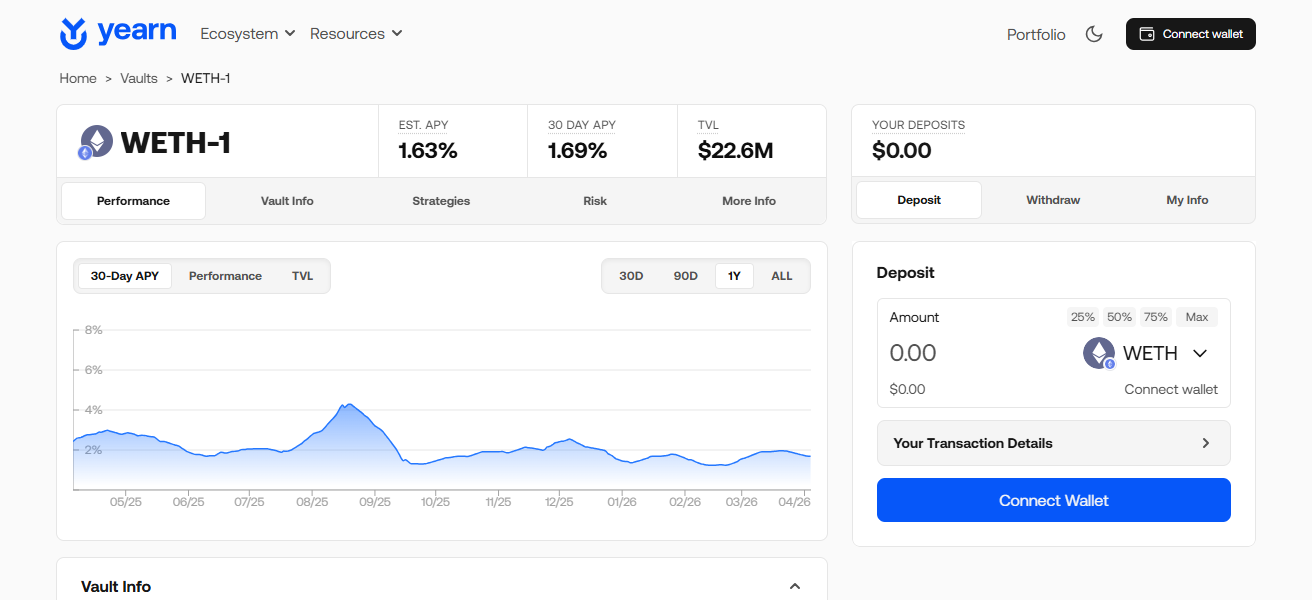
Its vaults transform sophisticated strategies into simple deposits—constantly adjusting positions to extract the best yields, and bundling transactions together to reduce gas fees.
The governance of the protocol has been decentralized to YFI token holders, empowering them to control future development of strategies and risk parameters.
| Pros | Cons |
|---|---|
| Automated auto‑compounding maximizes yield. | Vault strategies may experience smart contract risks. |
| Supports multiple vaults for diverse assets. | High performance fees on certain vaults. |
| Community‑driven governance via YFI token. | Gas costs still significant on Ethereum. |
| Continuously optimized by developer strategies. | Some vaults may underperform during low yield periods. |
3. iYield
iYield is an all-in-one crypto financial planning tool that marries your assets, debts, incomes, expenses and DeFi yields in one dashboard instead of being just a portfolio tracker.
It also aggregates yield data from thousands of embedded tokens and DeFi protocols, delivering a true net worth and savings rate calculator for crypto and fiat assets all in real time.

Yield reported across 19 blockchains including Ethereum, Base, Arbitrum and Solana with support for up to 16,000+ tokens with iYield automatically reporting consistent yields makes comparing yield simple and less complex for astute crypto investors.
| Pros | Cons |
|---|---|
| Unified view of assets, liabilities, and yields. | Not a yield protocol — tracking only. |
| Supports multi‑chain portfolios. | Accuracy depends on reliable data sources. |
| Helps with financial planning and budgeting. | No direct yield generation tools. |
| Easy comparison of DeFi yields side‑by‑side. | Requires wallet connections for full insights. |
4. Request Finance
Request Finance is the first blockchain‑native business finance platform enabling crypto and fiat operations, handling accounts payable, receivable, invoicing, payroll and expenses for enterprises and freelancers in more than 190 countries.
Used by 2,000+ global brands including leading names in Web3, it enables batch crypto payments, automated invoice management and provides crypto‑to‑fiat settlement with real-time reconciliation.

By automating data input and preventing errors with wallet addresses, Request streamlines financial workflows, cutting down on operational friction and optimizing cost and time for global cross‑currency spend management and treasury tasks.
| Pros | Cons |
|---|---|
| Simplifies business invoicing and payments. | Not a yield‑generating protocol. |
| Supports both crypto and fiat operations. | Adoption limited compared to mainstream accounting software. |
| Automates reconciliation and payment tracking. | Requires learning invoicing workflows. |
| Multi‑currency, global payment support. | No direct investment features. |
5. Beefy Finance
Beefy Finance is a multichain DeFi yield optimizer featuring hundreds of vaults across 20+ blockchains including Ethereum, Avalanche, BNB Chain, Arbitrum, and Base.
Users deposit a single asset or LP tokens, and Beefy’s smart contracts auto- compound rewards earned back into the original asset, maximizing returns while eliminating the need for hands-on interaction.

With gas-efficient automated harvests and a diverse array of yield strategies, Beefy allows users to compound APYs while minimizing fees.
Its governance token (BIFI) balances incentives between users and protocol, and vaults are scored for safety to inform deployment.
| Pros | Cons |
|---|---|
| Auto‑compounding yields across many chains. | Smart contract and audit risks inherent in DeFi. |
| Supports diverse vault strategies. | Some vaults may have low TVL or low returns. |
| Gas‑efficient harvests increase net yield. | Impermanent loss risk for LP token strategies. |
| Community governance via BIFI token. | Complexity may intimidate new users. |
6. Kamino Finance
Kamino Finance (kamino.finance) – the Solana‑centric DeFi suite that combines lending, borrowing, liquidity provision, and leveraged position strategies into a single platform.
It enables users to deploy assets such as SOL, USDC, and USDT into automated liquidity vaults on DEXs along with participation in lending markets, and even taking leveraged positions to increase yield exposure.
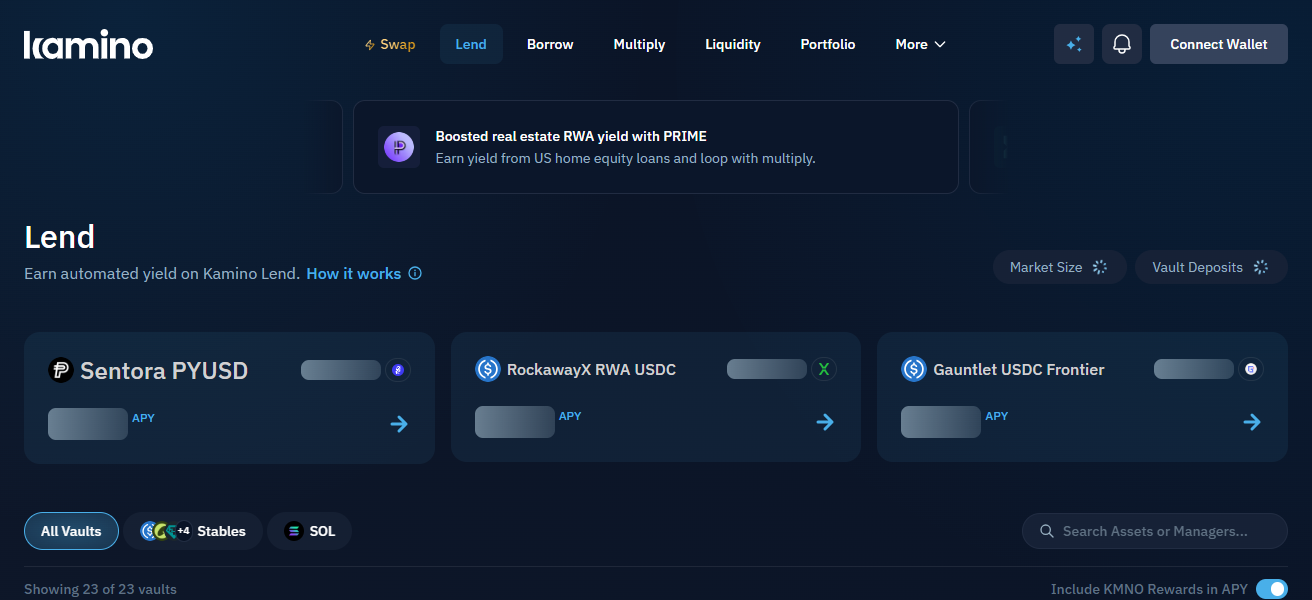
Kamino’s auto‑compounding concentrated liquidity strategies simplify complex DEX LP management for users, with transparent analytics and risk controls that seek to improve capital efficiency and yield generation without manual juggling of each component.
| Pros | Cons |
|---|---|
| Automated concentrated liquidity strategies. | Limited to Solana ecosystem. |
| Supports lending and leveraged positions. | Potential risk from leverage amplification. |
| High capital efficiency on DEXs. | Solana outages impact performance. |
| Simplifies complex yield strategies. | Not available on major EVM chains yet. |
7. Origin Dollar (OUSD) (Wallet Yield)
Origin Dollar (OUSD) is a yield‑bearing stablecoin that automatically earns interest but remains fully liquid in users’ wallets.
OUSD, which is fully collateralized with USDC and other stablecoins, utilizes on‐chain strategies deployed into lending (i.e., Morpho + Yearn vaults) and liquidity provision in Curve to produce yield.
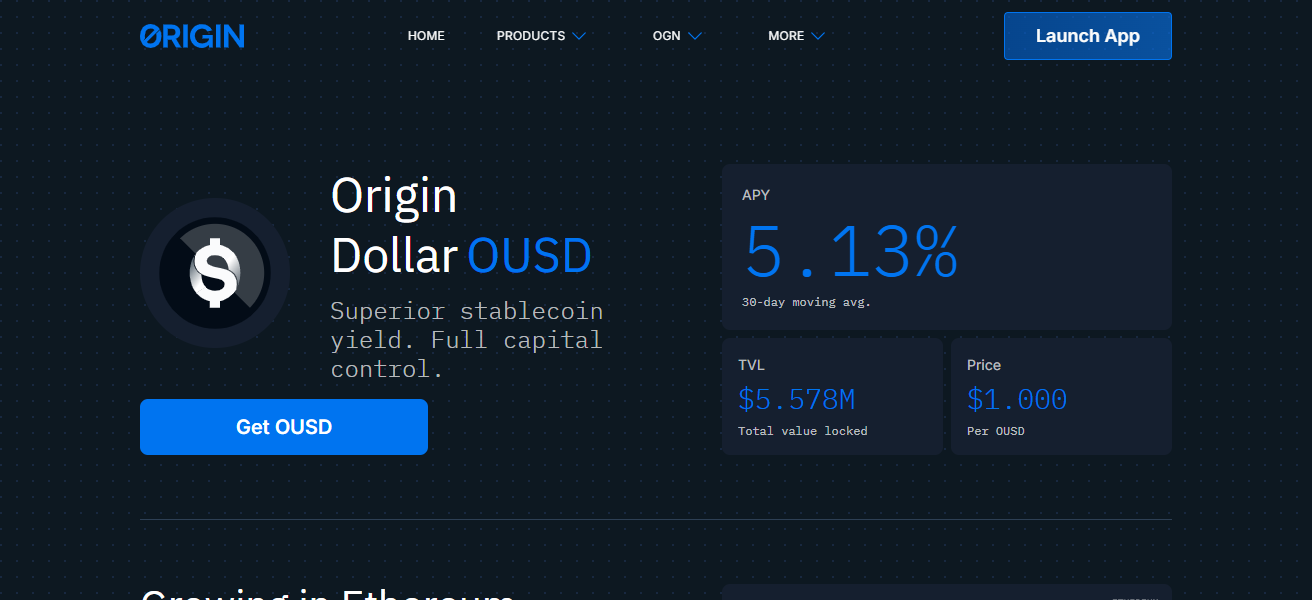
Earnings are rebased directly into holders balances rather than requiring staking or locking of assets, which compounds 24/7 without manual activity.
This allows yield earning on fiat‑pegged assets with predictable liquidity and governance via Origin’s DAO.
| Pros | Cons |
|---|---|
| Auto‑rebasing yield directly in wallets. | Stablecoin yield may underperform volatile assets. |
| No need to lock or stake tokens. | Depends on underlying yield strategy performance. |
| Predictable liquidity and easy transfers. | Protocol risks tied to yield providers. |
| Easy for passive stablecoin yield. | Limited stablecoin choice supported. |
8. Rebalance Finance
Rebalance Finance is a machine learning-based DeFi yield aggregator that enables users to optimizing returns with risk-based automation.
It dynamically reallocates capital across yield opportunities, betting on protocols and strategies with the best rates whilst remaining within risk limits.
Rebalance intends to capture yield in the market that goes up or down with greater efficiency than in static placements by automating rebalancing and position adjustments without human intervention.
This makes it appropriate for users seeking passive but evolving exposure to spot returns in all the decoupled DeFi layers, though risks including smart contract risk and DeFi market risk remain applicable.
| Pros | Cons |
|---|---|
| AI‑driven reallocation optimizes yields. | AI performance dependent on market conditions. |
| Adaptive risk‑adjusted strategies. | May incur additional fees for AI optimization. |
| Automated rebalancing reduces manual effort. | Not suitable for users seeking static strategies. |
| Diversifies across multiple yield protocols. | Still exposed to DeFi smart contract risk. |
9. Contango Finance
Contango Finance — A DeFi options and structured yield platform that enables users to perform enhanced yield strategies (structured vaults, yield stacking)
Users can put their assets in Contango vaults that extract returns from strategies like fixed yield farming, options premiums, and volatility capture.
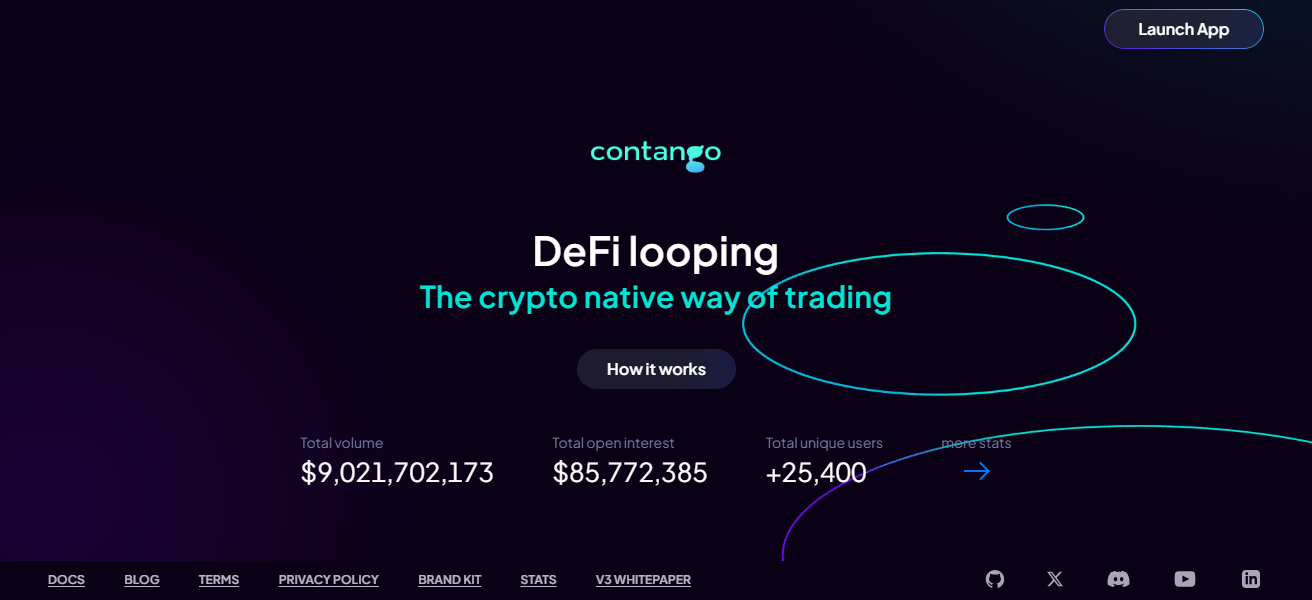
Focuses on high expected returns over basic lending, or LP strategies by stacking up advanced DeFi primitives such as futures options and yield protocols, catering to users looking for as many diverse possible yield mechanisms but within only one platform.
| Pros | Cons |
|---|---|
| Combines structured yield and options strategies. | Complex — may be hard for beginners. |
| Potential for enhanced yield versus basic farming. | Higher risk from derivative exposure. |
| Offers sophisticated yield mechanisms. | Lower liquidity compared to simple protocols. |
| Helps diversify yield sources. | Structured product complexity increases audit risk. |
10. Pendle Finance
Pendle Finance is a yield tokenization and trading protocol that enables users to decompose the principal and future yield parts of any yield‑bearing assets.
This allows traders to secure a fixed yield, or get exposure to variable yield in the Degen market, establishing an on-line decentralized market similar to fixed income markets.

Tokenized yield derivatives here allow people to trade future yield claims or hedge exposure, providing sophisticated tools that are not found in most other DeFi.
This is a particularly useful feature for users who want to quote fixed‑rate payoff structures or take directions on the yield curve.
| Pros | Cons |
|---|---|
| Tokenizes future yield for trading. | Requires understanding of yield derivatives. |
| Enables fixed and variable rate management. | Lower adoption relative to simple vaults. |
| Hedging and yield‑curve strategies possible. | Limited assets available initially. |
| Brings bond‑like features to DeFi. | Market for yield tokens may be illiquid. |
Conclsuion
The end goal of using Autonomous Wealth Systems Combining Crypto Yield and Expense Optimization is to simplify how passive income is generated, making the process seamless while simultaneously safeguarding finances and properly distributing resources.
Using DeFi such as Alchemix Finance, Yearn Vaults, and OUSD enabling this concept automating yield generation and expenses maximizing capital efficiency.
These have made complicated strategies much more manageable, decreased trading across humans and increased utility in crypto finance.
FAQ
A platform that automatically manages crypto yield and expenses.
By deploying assets into DeFi protocols for passive income.
Alchemix Finance, Yearn Vaults, Beefy Finance, Kamino Finance, OUSD.
Basic knowledge helps, but most systems automate processes.