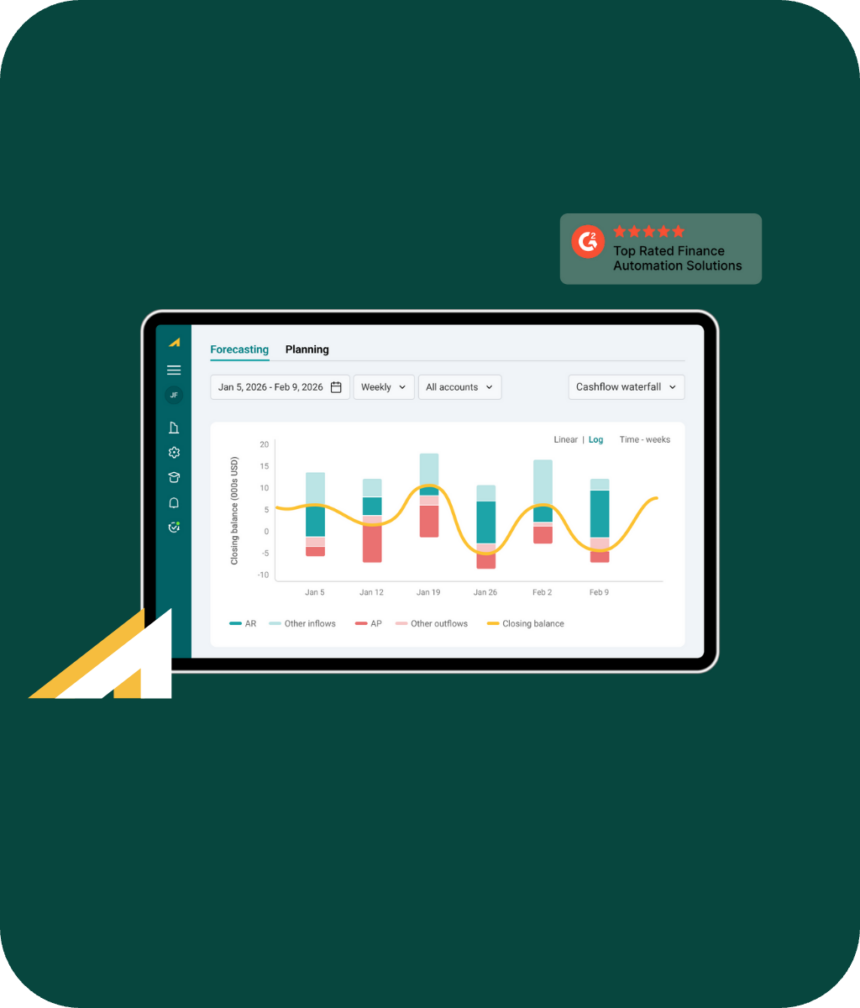
This article will focus on the Best AI Cash Flow Forecasting Software Tools that aim to help businesses accurately determine their forthcoming cash positions.
- Key Point & Best AI Cash Flow Forecasting Software Tools
- 1. QuickBooks Cash Flow AI
- QuickBooks Cash Flow AI – Top Features
- QuickBooks Cash Flow AI – Pros & Cons
- 2. Xero Cash Flow AI
- Xero Cash Flow AI – Top Features
- Xero Cash Flow AI – Pros & Cons
- 3. Zoho Books AI Cash Flow
- Zoho Books AI Cash Flow – Top Features
- Zoho Books AI Cash Flow – Pros & Cons
- 4. FreshBooks AI
- FreshBooks AI – Top Features
- FreshBooks AI – Pros & Cons
- 5. Float AI
- Float AI – Top Features
- Float AI – Pros & Cons
- 6. Pulse Cash Flow AI
- Pulse Cash Flow AI – Best Features
- Pulse Cash Flow AI – Pros & Cons
- 7. Fyle AI
- Fyle AI – Best Features
- Fyle AI – Pros & Cons
- 8. Expensify AI
- Expensify AI – Best Features
- Expensify AI – Pros & Cons
- 9. Ramp AI
- Ramp AI – Top Features
- Ramp AI – Pros & Cons
- 10. Brex AI
- Brex AI – Top Features
- Brex AI – Pros & Cons
- Conclusion
- FAQ
These tools use AI to examine previous data and spending trends to predict cash flow in real-time. From small businesses to large enterprises, these AI tools optimize cash flow management, reduce the amount of manual work, and facilitate better financial decision-making.
Key Point & Best AI Cash Flow Forecasting Software Tools
| Software | Key Point |
|---|---|
| QuickBooks Cash Flow AI | Uses AI to predict cash inflows/outflows and provide actionable insights for small to mid-sized businesses. |
| Xero Cash Flow AI | AI-driven cash flow projections with scenario planning and real-time updates for smarter financial decisions. |
| Zoho Books AI Cash Flow | Provides AI-based forecasts, automated alerts, and trend analysis to help manage liquidity efficiently. |
| FreshBooks AI | Offers AI insights on expected payments, overdue invoices, and predicted cash gaps for freelancers and SMBs. |
| Float AI | Integrates with accounting software to deliver AI-powered cash flow forecasting and scenario modeling in real time. |
| Pulse Cash Flow AI | Focuses on real-time AI cash tracking, forecasting, and alerting to maintain positive liquidity. |
| Fyle AI | Uses AI to analyze expenses and cash flow patterns, providing predictive insights for better budgeting. |
| Expensify AI | AI-enabled cash flow tracking combined with automated expense reporting for seamless financial management. |
| Ramp AI | Offers AI cash flow insights, expense forecasting, and optimization for corporate spending efficiency. |
| Brex AI | Provides AI-powered cash flow management with scenario analysis, trend predictions, and spend insights. |
1. QuickBooks Cash Flow AI
QuickBooks Cash Flow AI is an AI-powered tool from Intuit, offering cash flow management and forecasting services using AI. It helps users analyze and understand historical accounting and draws predictions on upcoming cash flow in and out. It assists small businesses in predicting cash flow shortages or excesses by forecasting and analyzing past business advertising.
The predictive tool identifies future cash flow challenges and alters predictions regarding invoice payments and cash flows. Users see QuickBooks predictions and payment suggestions in their regular accounting dashboards. This reduces time spent on forecasting to make better day-to-day business decisions.
QuickBooks Cash Flow AI – Top Features
- Predictive Cash Flow Forecasts – Cash flow forecasts are automatically created using AI, a cash flow forecasting tool that analyzes cash flow historical patterns for revenue and expenses.
- Smart Alerts – Users are automatically notified of cash flow predictions and potential cash shortage problems.
- Automated Transaction Categorization – Transaction forecasting will improve by automatically categorizing cash flow transactions.
- Scenario Planning – Businesses can evaluate a variety of “what if” changes, such as late payments, changes in cash flow expenses, and more.
- Insights on Dashboards – Dashboards are visual and updated in real-time. Dashboards are available for cash flow insights and are available alongside your accounting information.
QuickBooks Cash Flow AI – Pros & Cons
| Pros | Cons |
|---|---|
| Deeply integrated with QuickBooks accounting ecosystem | Limited advanced forecasting features compared with enterprise FP&A tools |
| Automated predictive forecasts reduce manual effort | Forecasts accuracy depends on quality of historical data |
| Smart alerts help prevent cash shortages | Best suited for small/mid‑size businesses, not complex enterprises |
| Easy for non‑financial users to interpret | Custom scenario modeling is basic |
| Real‑time insights from bank sync & transactions | Some features require higher subscription tiers |
2. Xero Cash Flow AI
With Xero Cash Flow AI, users of the widely used cloud accounting software can utilize machine learning and conversational AI. Users can predict the future cash flow by asking, “What will my cash balance be next month?”
With added features like Syft Analytics, Xero is able to improve cash flow forecasts to 60-180 days by integrating transactional data and history. Certain AI tools improve cash flow by predicting trends and spotting anomalies in receivables and payables that could affect cash flow, allowing finance teams to make adjustments proactively.
Even for those without a finance background, Xero’s banking integration and user-friendly interface make it easy to understand their financial situation.
Xero Cash Flow AI – Top Features
- Natural Language Questions – Users automatically receive cash flow insights by asking cash flow questions using natural language.
- Rolling Forecasts – New cash flow data automatically updates previous cash flow forecasts.
- Analysis of Trends – Cash flow position analyzes and detects patterns, seasonality, and recurring expenses.
- Synchronized Bank Feeds – Cash flow data in a bank account and cash flow transactions are synced in real-time.
- Forecasting Horizons are Flexible – Cash flow forecasts are customizable for planning cash flow in the short term of 30, 60, or 90+ days.
Xero Cash Flow AI – Pros & Cons
| Pros | Cons |
|---|---|
| Natural language AI queries make insights accessible | Forecast horizon options may be limited without add‑ons |
| Clean, intuitive interface for cash visibility | Some predictive functions require third‑party integrations |
| Real‑time syncing with bank feeds | Advanced scenario planning requires expertise |
| Trend and pattern detection built‑in | Less granular than full FP&A platforms |
| Flexible forecasting periods (30–180+ days) | Larger org needs may exceed core feature set |
3. Zoho Books AI Cash Flow
Via Lucy, Zoho Books AI Cash Flow incorporated AI anomaly forecasting and detection into the Zoho Finance Suite. Lucy is able to respond to prompts like, “How does my cash flow look?” & create projections based on transactional history.
Uses of AI on reporting and dashboards allow for the display of cash flow, trends, and possible anomalies, leading to a potential pivot in spending or collections strategy.
Zoho’s AI enables the automation of processes previously done by humans, the identification of unusual payment patterns, and the summarization of important financial data. Forecasting and reporting create visibility on future cash flow making it unnecessary to have sophisticated, point-in-time forecasting models.
Zoho Books AI Cash Flow – Top Features
- AI-Powered Assistant (Zia) – Assists with questions related to cash flow and provides cash flow predictions.
- Anomaly Detection – Detects and explains outlier cash flow patterns.
- Automated Reports – Establish cash reports without doing manual work.
- Trend Forecasting – Based on patterns found in historical data, provides future trends cash.
- Expense & Invoice Forecasting – Provides estimates on when to expect payables and receivables.
Zoho Books AI Cash Flow – Pros & Cons
| Pros | Cons |
|---|---|
| AI assistant (Zia) answers questions directly | Forecast accuracy tied to transaction volume |
| Automated anomaly detection highlights risks | Not as powerful for enterprise forecasting |
| Easy, automated forecasting for SMEs | Some advanced features behind premium plans |
| Predicts invoice & expense timing | May under‑serve complex scenario modeling |
| Strong automation reduces manual reporting | Custom driver‑based forecasting is limited |
4. FreshBooks AI
FreshBooks AI amplifies the widely-used platform for invoicing and accounting with automation and predictive analytics regarding cash flow.
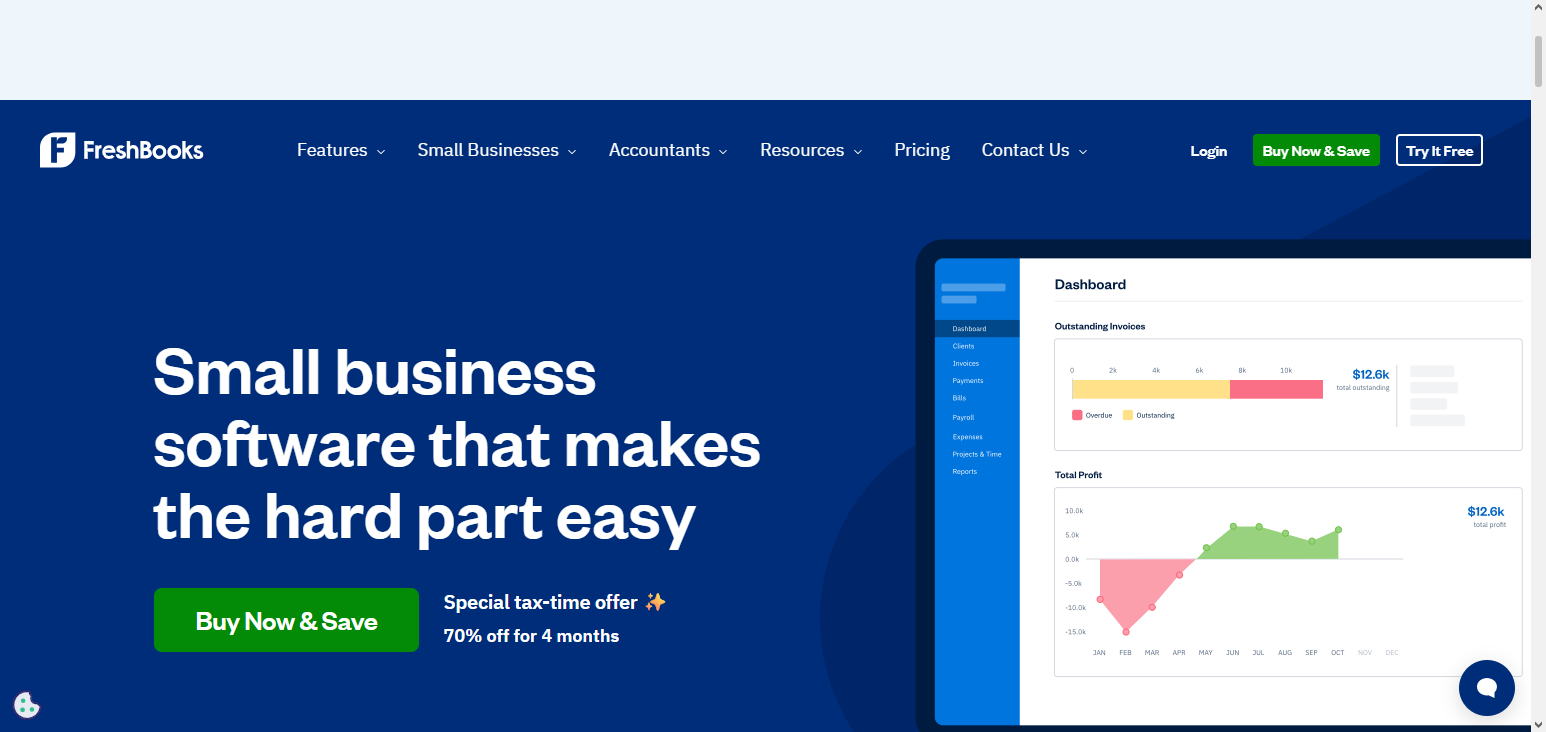
FreshBooks caters to freelancers and small service businesses, but its AI features capabilities such as predicting payment arrival dates and offering recommendations to mitigate risks to cash balances. FreshBooks can notify users of overdue tasks, expected invoice payments, and forthcoming cash shortages.
This streamlines decision-making regarding spending and hiring. FreshBooks may not provide the level of sophistication of FP&A software used in large enterprises but their AI software helps users convert liquidity data into actionable insights.
FreshBooks AI – Top Features
- Estimation of Payment Timings – Predicts what time will invoices be paid, through AI.
- Client Behavior Anticipation – Predicts which customer will pay on time and which wont.
- 3 Cash Gap Alerts – Alerts the user when funds will run out.
- Cash Flow Summaries – Brief and simple summary of cash flow.
- Billing & Projects Integrations – Expectations related to invoices and projects being worked on.
FreshBooks AI – Pros & Cons
| Pros | Cons |
|---|---|
| Predicts likely payment timing for invoices | Cash flow forecasting breadth is limited |
| Great for freelancers & service businesses | Not ideal for mid‑large corporations |
| Alerts on cash gaps and overdue trends | No deep driver‑based predictive modeling |
| Links forecasts directly to projects/billing | Requires complete data entry for accuracy |
| Simplifies complex accounting insights | Forecasting may be basic vs specialized tools |
5. Float AI
Float AI is predicted to be the most cash-flow forecasting tool in 2026, and is designed to be integrated with accounting software, like Xero or QuickBooks Online. Float AI employs automation and predictive modelling to accurately forecast cash inflow and outflow, identify current cash positions, and assess multiple scenarios (e.g., delayed invoices or variations in cost).
Float AI simplifies cash-flow forecasting through a visual timeline, which enhances the operational effectiveness of finance personnel or business owners in addressing cash shortages and deciding on investments. Float AI’s real-time data synchronisation adjusts forecasts based on the most updated financial data.
Float AI – Top Features
- Live Cash Flow Forecasts – Syncing with the accounting systems in real time to provide latest estimates
- Scenario Modelling – Assess the results of postponed payments, new employees, or changing expenses.
- Analytic Timeline – Easily visualized projected cash flow over a period.
- Different Forecast Scenarios – Analyze forecasts that are optimistic, realistic, and conservative.
- Automated Data Updates – Updates sync automatically, removing the need for manual spreadsheet updates.
Float AI – Pros & Cons
| Pros | Cons |
|---|---|
| Strong real‑time cash balance projections | Can be costly for small businesses |
| Excellent visual forecast timelines | Learning curve for new users |
| Supports multiple forecast scenarios | Advanced scenario planning takes training |
| Solid integration with QuickBooks/Xero | May be overkill for very small firms |
| Automatic data updates reduce manual work | Premium plans for advanced features |
6. Pulse Cash Flow AI
Real-time and automated cash flow forecasting is what Pulse Cash Flow AI aims to accomplish through pull live data from accounting platforms like QuickBooks and Xero. Its forecasting engine focuses on driver-based forecasting and incorporates intelligence to model cash flows to the future, therefore limiting the need to forecast using cash flows manually through spreadsheets.
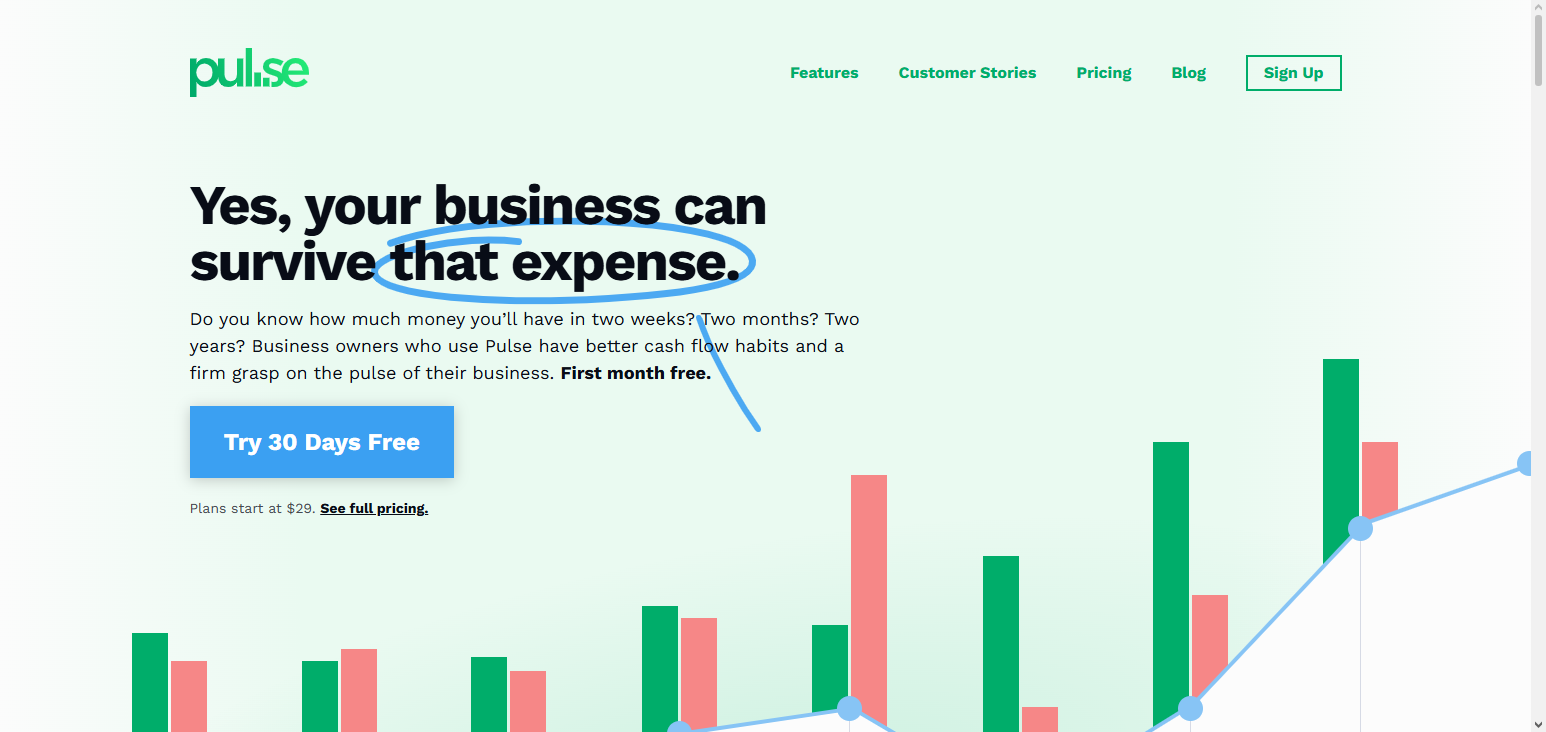
Users can forecast cash flows and model the financial impacts of slower receivables, additional new expenses, and changes to the timings of bills. Pulse Cash Flow AI provides dashboards and alerts in order to spot cash shortages. Users can take the guesswork out of financial decisions by making them proactive.
Pulse Cash Flow AI – Best Features
- Driver-Based Forecasting – Uses major financial drivers so forecasts are more precise.
- Tracking Cash Position in Real Time – Displays current cash reserve and cash changes forecast.
- What-If Analysis – Tools for planning possible scenarios.
- Notifications & Risk Alerts – Warns possible cash shortage.
- Cash Flow Models – Models adjust to meet the business drivers and needs.
Pulse Cash Flow AI – Pros & Cons
| Pros | Cons |
|---|---|
| Driver‑based forecasting increases accuracy | Interface may feel technical to non‑financial users |
| Real‑time cash tracking & alerts | Not ideal for very basic cash visibility needs |
| Scenario “what‑if” analysis tools | Subscription cost can be high for small businesses |
| Highly customizable models | Takes time to set up tailored drivers |
| Integrates with major accounting systems | Learning required to leverage full power |
7. Fyle AI
The best-known use case of Fyle AI is expense reporting, automation, and compliance. Fyle AI is capable of analyzing your spending habits and classifies outflows offering finance departments insight into cash out positions over time. Fyle AI is driven by the data in the cash flows to the company.
It identifies cash out patterns which come from reimbursements, vendor payouts, employee spend Fyle AI is one of the most noticeable contributors of cash flow out patterns. It helps finance departments to short-term cash flow forecast. It provides anticipatory insights on budget improvement to variances. Its General AI expense forecasting knowledge is an asset.
Fyle AI – Best Features
- Expense Analysis – AI detects repeated cash outflows that impact cash availability.
- Expense Categorization – Reduced manual input, and thus, increases accuracy.
- Cash Impact Analysis – Displays cash available/how expense trends impact cash available.
- Compliance with Policy Automation – Enforces rule compliance to ensure business objectives are met.
- Expense Dashboard in Real Time – Cash outflows visualized
Fyle AI – Pros & Cons
| Pros | Cons |
|---|---|
| Automated expense capture & patterns | Not a dedicated cash forecasting tool |
| Helps reveal expense‑driven cash trends | Forecasting limited to outflows |
| Expense policy automation improves control | Influent forecasting requires other tools |
| Reduces manual categorization work | Less comprehensive cash inflow forecasting |
| Real‑time dashboards for expense impact | Not designed for full‑cycle forecasting |
8. Expensify AI
Automatically tracking expense receipts and giving cash flow insights through expense report generation which are categorized and explained provides Expensify AI with the necessary information to complete cash flow forecasts. Expensify’s AI also highlights spending patterns and flags outlier events to predict potential cash outflows and cash reimbursements.
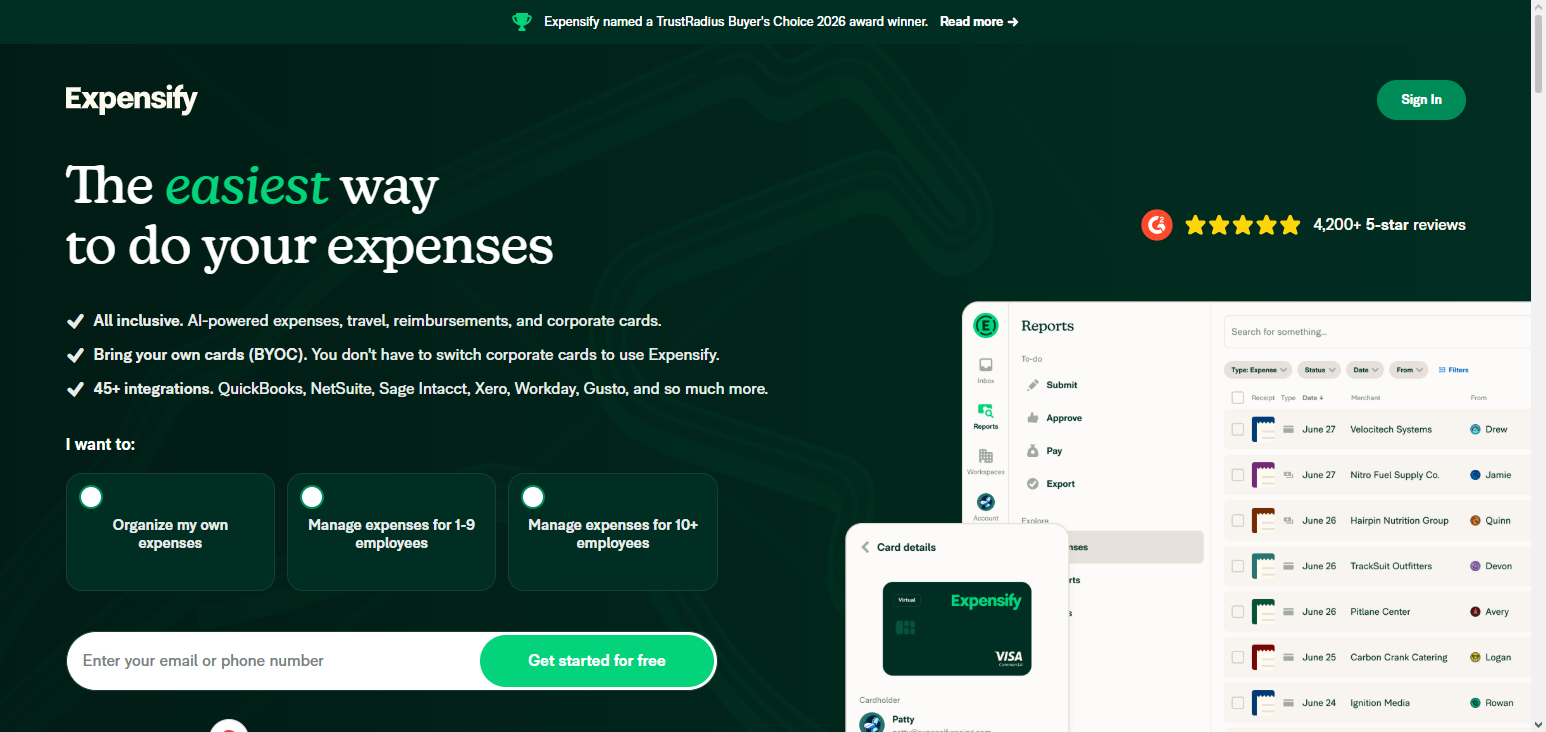
Although the focus of Expensify is expense management, the forecasting component assists in cash forecasting and liquidity planning enabling finance teams and CFO’s to pinpoint spending patterns which affect available cash. Expensify AI also provides forecasts to ensure that cash is available based on transaction feeds to your bank account and card(s).
Expensify AI – Best Features
- Capture Receipts – AI automatically extracts expense data from the receipt.
- Forecasts: Predict future spend trends based on past data.
- Anomalous Spend Alerts – Alerts on unusual cash-spending activity.
- Automated Reimbursements – Reduces time lag by speeding up receivable employee expense claims.
- Integration with Bank Data – Connects card and bank data for better forecasting.
Expensify AI – Pros & Cons
| Pros | Cons |
|---|---|
| Smart receipt capture and spend tracking | Forecasting insights limited compared to dedicated tools |
| Detects atypical spend affecting cash | Expense forecasting not full cash flow forecasting |
| Easy reimbursements speed processes | Not designed as stand‑alone forecasting software |
| Bank & card integration adds context | Requires pairing with accounting for full forecasts |
| Improves spend visibility overall | Best for expense management rather than cash‑flow planning |
9. Ramp AI
Ramp AI incorporates artificial intelligence into its analytics platform for corporate spend management, allowing finance teams to assess spending, budgets, and corporate credit usage to predict cash flows. Based on prior payments or cash pledges, the predictive models identify when there will be less cash available, which allows for the planning of when to spend or invest.
AI models further identify and suggest less spending, and also identify absent spending during periods when cash flow is available. For mid-sized businesses that require hands-on management of corporate spending and burn rates, Ramp AI enables more active management of cash flows. (General spend management + forecasting)
Ramp AI – Top Features
- AI Spend Insights – Predicts cash flows based on spending habits.
- Budget Forecasting – Estimates cash required in the future based on existing budget.
- Cost Optimization Suggestions – Determines by AI where to cut costs.
- Real‑Time Corporate Spend Tracking – Keep up to date with ongoing spending.
- Scenario Testing – Evaluate big costs or corporate policy changes on cash availability.
Ramp AI – Pros & Cons
| Pros | Cons |
|---|---|
| AI spend analytics improves cash insight | Cash flow forecasting is emerging, not core focus |
| Helps optimize corporate spend | Limited compared to dedicated FP&A platforms |
| Real‑time tracking of corporate expenses | May not give deep inflow predictions |
| Budget forecasting tied to spend trends | Best paired with other forecasting systems |
| Scenario spending models included | Not ideal for pure forecasting specialist needs |
10. Brex AI
Brex AI boosts Brex’s financial platform through machine learning, which tracks spending, revenue, cash burn, etc., and provides liquidity forecasts. From the patterns of revenue and expenses, Brex AI predicts future cash positions and advises on financing and timing.
Brex’s ML models incorporate spend management (via corporate card usage), bank balances, and subscription outflows. Brex AI Tools quantifies the effect on cash flow which helps startups and growing businesses decide strategically on runway, hiring and investments.
Brex AI – Top Features
- Cash Position Projections – Forecasts cash flow position in the long and short term.
- Revenue vs Spend Analysis – Income vs expense trend analysis.
- Runway Forecasting – Estimates how long a business can operate for new ventures and growing organizations.
- Expense Pattern Recognition – Identify repeating cash drain activities.
- Unified Financial Dashboard – Integrates cash with card and bank data for forecasting.
Brex AI – Pros & Cons
| Pros | Cons |
|---|---|
| Unified view of revenue & expenses | Not a standalone cash forecasting engine |
| Runway forecasting helpful for startups | Limited predictive customization |
| Recognizes patterns in spending & cash | Best for finance teams already in Brex ecosystem |
| Aligns cash predictions with card activity | Forecasting insights sometimes generalized |
| Real‑time bank and card data sync | Deeper modeling requires FP&A tools |
Conclusion
In 2026, all types of businesses, from freelancers to large corporations, rely on AI cash flow forecasting tools to optimize cash flow management, spending, improve decision-making, and prevent cash shortages.
Tools like QuickBooks Cash Flow AI, Xero Cash Flow AI, Zoho Books AI Cash Flow, and Float AI provide businesses with cash flow forecasting and spending forecasting. For example, Planful AI and Brex AI provide enterprise clients with scenario planning and driver-based forecasting, which aids in predictive planning and strategy.
AI tools are able to provide predictive cash flow management, planning, and liquidity visibility. These tools save employees from having to manually perform predictive planning and provide real time forecasting and reporting of cash flow data. This results in employees having more time for high-value, proactive planning.
FAQ
AI cash flow forecasting software uses artificial intelligence and machine learning to analyze historical financial data, detect patterns, and predict future cash inflows and outflows. These tools help businesses anticipate liquidity issues, make better budgeting decisions, and plan for growth more accurately than manual spreadsheet forecasting.
AI improves forecasting by automatically identifying trends, adjusting predictions as new data arrives, and generating scenarios such as best‑case or worst‑case forecasts. It reduces human error, saves time, and provides actionable insights that help finance teams react quickly to changing business conditions.
Businesses of all sizes benefit—from freelancers and small businesses needing simple cash visibility to mid‑sized companies and enterprises requiring advanced scenario planning, driver‑based models, and strategic financial insights.
Most modern AI cash flow forecasting platforms offer intuitive dashboards, real‑time data syncs with accounting systems, and natural language querying, making them accessible even to users without deep financial expertise.