
This article will cover the Best AI Portfolio Managers for Institutional Grade Investing. I will focus on the analytics, machine learning, and risk management features of certain platforms geared toward managing the portfolios of institutional investors.
- Key Points & Best AI Portfolio Managers For Institutional Grade Investing
- 10 Best AI Portfolio Managers For Institutional Grade Investing
- 1. BlackRock Aladdin
- 2. Bloomberg PORT
- 3. QuantConnect
- 4. Morningstar Direct
- 5. SigTech
- 6. Kavout (K Score)
- 7. Daizy
- 8. Qraft Technologies
- 9. Empower (formerly Personal Capital)
- 10. TradeStation (with AI Add-ons)
- Conclsuion
- FAQ
These tools help institutional investors, asset managers, pension funds, and hedge funds gain efficiency, compliance, and a competitive edge in transparency, actionable insights, and portfolio construction in today’s ever-changing financial markets.
Key Points & Best AI Portfolio Managers For Institutional Grade Investing
- BlackRock Aladdin Provides risk analytics, portfolio management, and trading tools with AI-driven insights for institutional investors.
- Bloomberg PORT Delivers advanced portfolio analytics, benchmarking, and scenario modeling powered by Bloomberg’s financial data intelligence.
- QuantConnect Algorithmic trading platform enabling institutional investors to design, backtest, and deploy AI-driven investment strategies.
- Morningstar Direct Offers institutional-grade research, portfolio analysis, and AI-enhanced investment decision support with global coverage.
- SigTech Cloud-native quant platform using AI to build, test, and deploy systematic investment strategies efficiently.
- Kavout (K Score) AI-powered stock ranking system leveraging machine learning to generate predictive investment signals for institutions.
- Daizy Provides AI-driven portfolio intelligence, ESG insights, and risk analysis tailored for institutional asset managers.
- Qraft Technologies Uses deep learning to create AI-powered ETFs and institutional-grade investment strategies with adaptive models.
- Empower (formerly Personal Capital) Combines AI-driven financial planning with portfolio management tools for institutional and high-net-worth investors.
- TradeStation (with AI Add-ons) Enhances trading platform with AI-powered analytics, strategy automation, and institutional-grade portfolio management capabilities.
10 Best AI Portfolio Managers For Institutional Grade Investing
1. BlackRock Aladdin
BlackRock Aladdin is an all-in-one platform for institutional investors that includes portfolio management, trading, compliance, and risk analytics.
Through Aladdin’s AI capabilities, asset managers can analyze exposures, conduct stress tests and develop optimal strategies for all asset classes.
Aladdin’s AI-driven market analytics, predictive analytics, and scenario modeling are market analytics that help institutions maximize their decision-making ability.
Aladdin’s focus is on integrating all investment processes, providing large-scale transparency, and improving investment efficiency. Aladdin’s proprietary machine learning promotes risk and opportunity discovery.
This is why Aladdin is the solution of choice for large, sophisticated investors such as pension funds, sovereign wealth funds, and global asset managers.
BlackRock Aladdin
- Portfolio management, trading, compliance, and risk analytics on a single platform.
- AI-empowered stress testing and scenario modeling on all asset classes.
- Machine learning to uncover risks and opportunities.
- The operational transparency and efficiency trusted by all the large global institutions.
| Pros | Cons |
|---|---|
| Comprehensive integration of portfolio, trading, compliance, and risk management. | High cost, making it less accessible for smaller institutions. |
| AI-driven stress testing and predictive analytics. | Complexity requires significant training and expertise. |
| Trusted by global asset managers and pension funds. | Limited flexibility for highly customized strategies. |
| Enhances transparency and operational efficiency. | Heavy reliance on BlackRock’s ecosystem. |
2. Bloomberg PORT
Bloomberg PORT offers institutional investors a complex system used for portfolio and risk analytics.
By combining risk analytics and portfolio management, Bloomberg incorporates benchmarking, scenario modeling, and performance attribution analytics using artificial intelligence.
Exposure modeling, market shock simulation, and benchmark industry strategy comparisons can be performed by portfolio managers.
PORT provides AI-driven insights and proprietary analytics used to supplement decision-making, especially regarding correlations and weaknesses within global markets.
The PORT system integrates with the Bloomberg terminal allowing for real-time risk and portfolio analytics.
Institutional investors use the PORT system to enhance the asset allocation process, improve the analytics used to manage the portfolio, and maintain the investors’ asset management transparency.
Bloomberg PORT
- Combines AI analytics with Bloomberg’s financial data.
- Offers scenario analysis and attribution.
- Real-time intelligence from Bloomberg Terminal.
- Improves asset allocation and compliance.
| Pros | Cons |
|---|---|
| Seamless integration with Bloomberg Terminal. | Expensive subscription model. |
| Real-time portfolio analytics and benchmarking. | Best suited for institutions already using Bloomberg ecosystem. |
| AI-powered scenario analysis and risk attribution. | May overwhelm smaller teams with data complexity. |
| Strong global market coverage. | Limited customization compared to open-source platforms. |
3. QuantConnect
QuantConnect provides a platform for research and algorithmic trading. Institutional clients design, backtest, and deploy strategies incorporating AI.
Using Lean, QuantConnect’s open-source engine, clients can design strategies for trading equities, futures, options, forex, and cryptocurrencies.
QuantConnect’s cloud-based machine learning model testing scales to any volume of historical data.
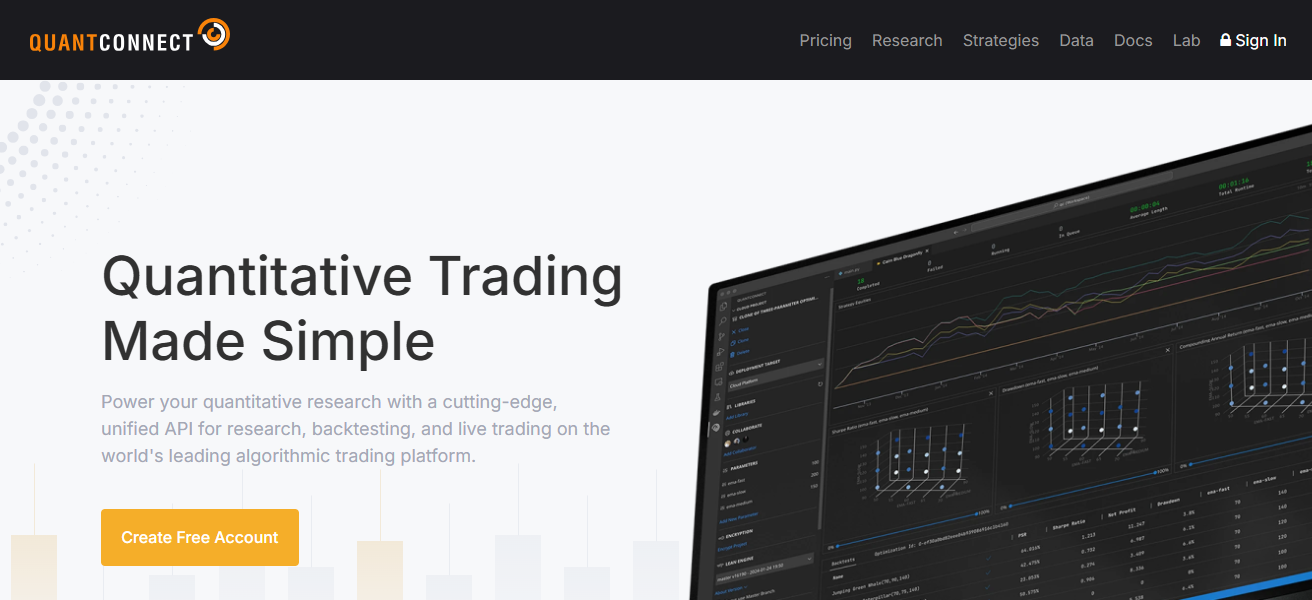
The platform offers a community-driven marketplace for strategy collaboration and licensing, while AI technology streamlines trading and adjusts to market changes.
For Delta Neutral Arbitrage, Forex, and Quant Strategies, hedge funds and quant teams, an institutional-grade investing platform offering advanced, customizable solutions is of utmost importance.
QuantConnect
- Multi-asset algorithmic trading using open-source Lean engine.
- Cloud-based infrastructure for scalable backtesting & deployment.
- AI-based models close trading inefficiencies by automating the trade.
- Strategy sharing and licensing marketplace for the community.
| Pros | Cons |
|---|---|
| Open-source Lean engine supports multi-asset strategies. | Requires technical expertise in coding and quant finance. |
| Cloud-based scalable backtesting infrastructure. | Less intuitive for non-technical portfolio managers. |
| Community marketplace for strategy sharing. | Limited built-in compliance and reporting tools. |
| AI-driven automation for trading strategies. | Smaller institutional adoption compared to legacy platforms. |
4. Morningstar Direct
Morningstar Direct is a market-leading solution for institutional investment research and portfolio management. It uses AI and combines Morningstar’s database on funds, equities, and market research.
Users can analyze performance, conduct attribution analysis, and assess ESG issues. AI and other tools help to find trends, allocate assets, and to compare strategies against peers.
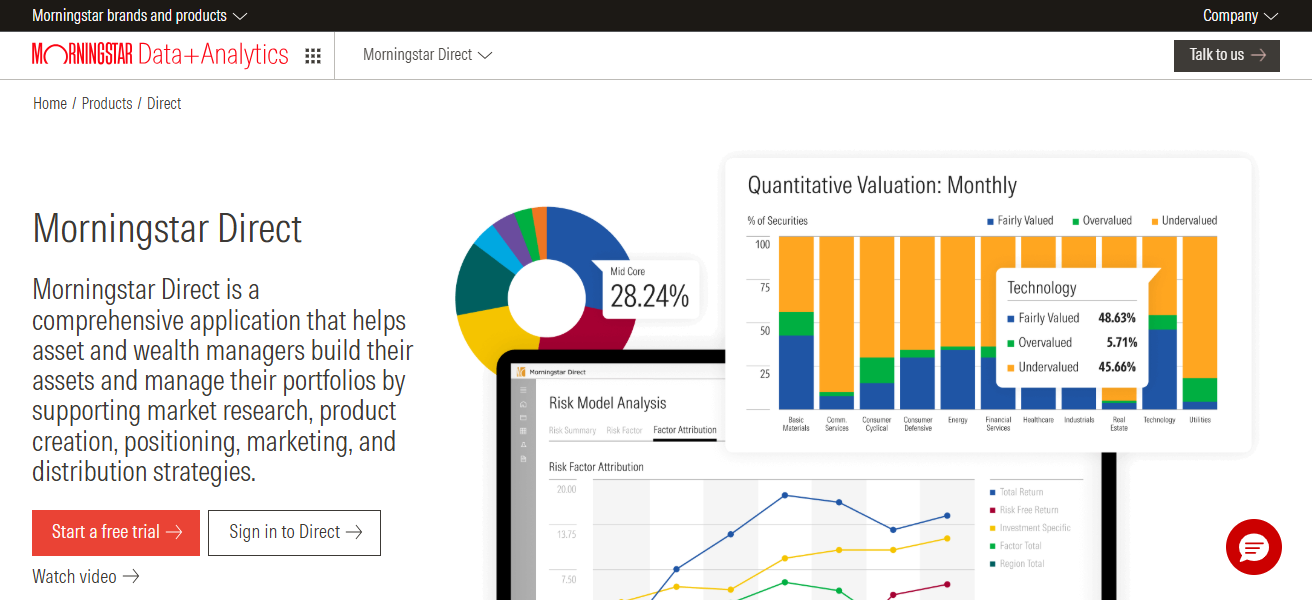
Direct combines and integrates the best of both worlds – qualitative research and quantitative research, providing a comprehensive analysis of investment.
It is trusted, providing transparency, compliance, and provision of data for institutional asset managers, consultants, and pension funds across the globe.
Morningstar Direct
- Merges global database of Morningstar with AI Powered analytics.
- Portfolio decisions involve ESG factors.
- Provides transaprent compliance to institutional investors.
- Performance evaluation and attribution analysis supported.
| Pros | Cons |
|---|---|
| Extensive global database of funds and equities. | Primarily focused on research, less on execution. |
| AI-enhanced analytics for performance and ESG. | Limited customization for advanced quant strategies. |
| Strong compliance and transparency features. | Can be costly for smaller firms. |
| Integrates qualitative and quantitative insights. | Less emphasis on real-time trading tools. |
5. SigTech
SigTech is a quantitative investment platform for institutional investors targeting systematic strategies via the cloud. Its AI/s machine learning technologies build, analyze, and deploy models for all asset classes.
Its empirical, flexible, scalable, and cloud-based infrastructure facilitates rapid prototyping and backtesting on the most advanced datasets.
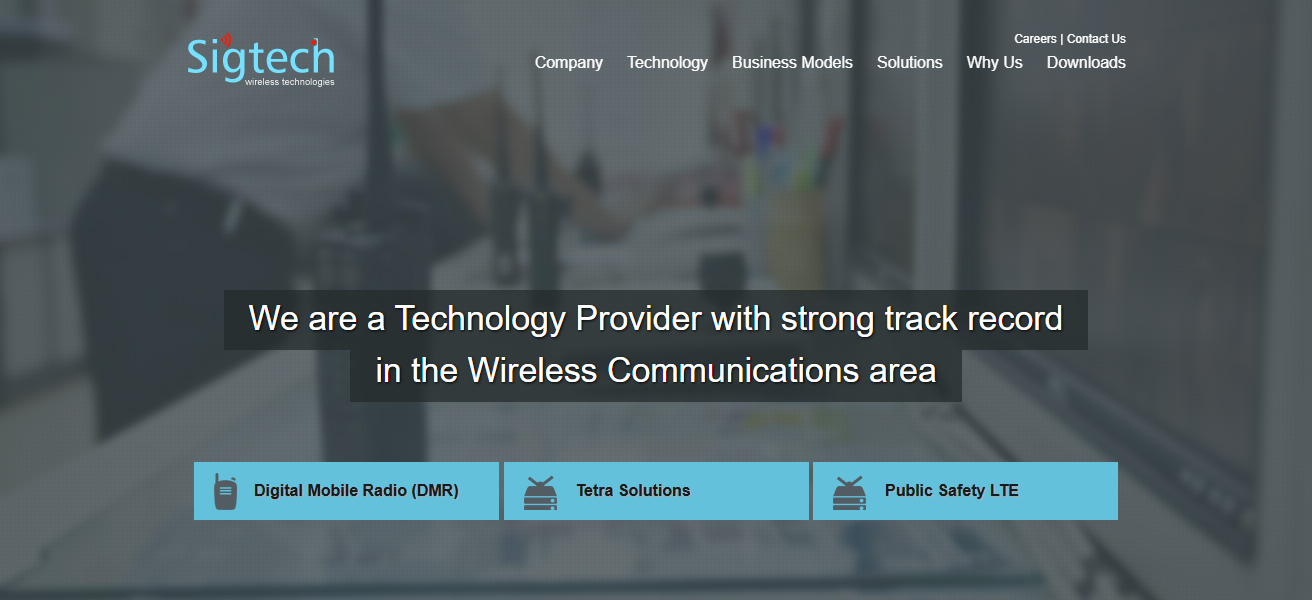
This means that institutions can conduct research and execute via cloud-optimized and AI-augmented technologies.
Additionally, SigTech employs AI to streamline research and execution, revealing concealed patterns in investment portfolios and improving risk management and portfolio optimization.
Finally, emerging market conditions can be leveraged through SigTech\’s modular architecture and adaptable strategies.
As a result, SigTech helps hedge funds, pension funds, and asset managers remain innovative and gain a sustainable edge for institutional investing.
SigTech
- A quantitative systematic strategy cloud-native platform.
- Portfolio optimization is done by AI and Machine Learning.
- For rapid protyping and backtesting, scalable infrastructure.
- Modular structure for flexible adaptation to the changing market.
| Pros | Cons |
|---|---|
| Cloud-native platform with scalable infrastructure. | Requires strong quant expertise to maximize value. |
| AI-driven systematic strategy development. | Smaller ecosystem compared to Bloomberg or BlackRock. |
| Rapid prototyping and backtesting capabilities. | High learning curve for traditional managers. |
| Modular design allows customization. | May lack integrated compliance features. |
6. Kavout (K Score)
Kavout’s K Score employs AI and machine learning and integrates predictive analytics, data fundamentals, technical data, and alternative datasets, and analyzes and finds investment opportunities within K Score.
Institutional investors use it to improve stock selection and reduce bias in the stock selection process while increasing the performance of the participant’s portfolio.
Locked model Kavout’s AI-driven model learns from market activity and adjusts to changing market conditions and improves predictive analytics.
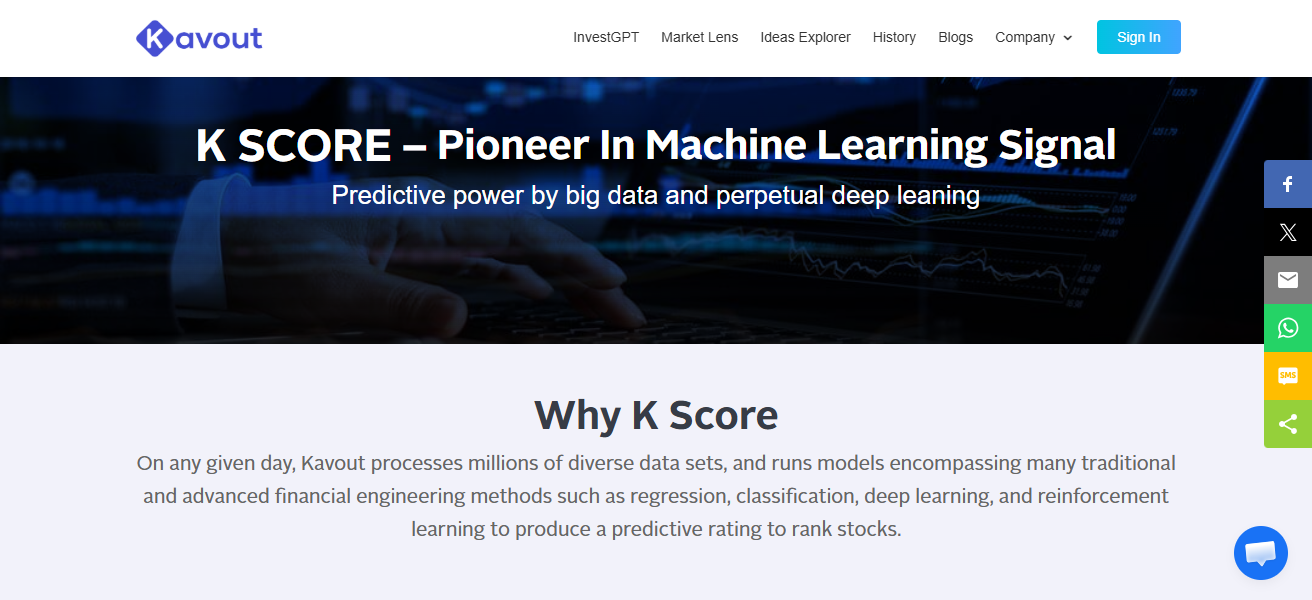
Kavout provides end-to-end integration within the institution’s business processes while providing actionable insights in the form of data to equity managers and quantitative analysts.
K Score provides capabilities for identifying undervalued or potentially high-quality business opportunities by integrating traditional and non-traditional data sources with predictive analytics.
Kavout (K Score)
- A machine learning AI-empowered stock ranking system.
- Examines the fundamentals, technicians, and alternative data.
- For predictive signal’s market behavior continuously adapts.- Improves selection of equities and performance of portfolio.
| Pros | Cons |
|---|---|
| AI-powered predictive stock ranking system. | Focused mainly on equities, less multi-asset coverage. |
| Continuously adapts to market conditions. | Limited adoption among large institutions. |
| Enhances stock selection and reduces biases. | May oversimplify complex portfolio needs. |
| Integrates easily into workflows. | Dependent on data quality and model accuracy. |
7. Daizy
Daizy is an artificial intelligence portfolio insight platform built for institutional asset managers. It analyzes portfolio composition, ESG, analytics, and risk exposure, giving managers actionable, risk exposure insights.
Southeast Asia’s institutions benefit from Daizy’s analytics ESG intelligence portfolio insights and structured and unstructured data.
Daizy combines unstructured data, structured data, and financial analysis with ESG intelligence and AI to highlight, recommend, and provide actionable insights.
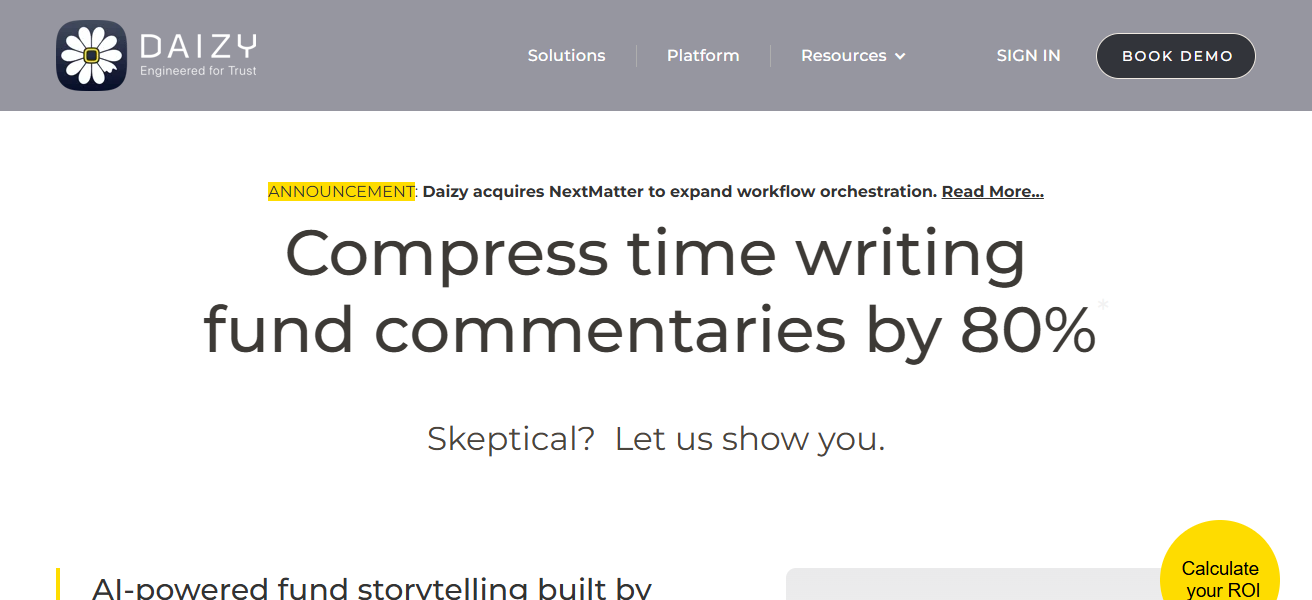
Daizy’s risk exposure analytics ESG intelligence and data visualization tools provide managers with insightful analytics, making them more efficient.
Daizy allows institutions to meet their long-term regulatory, and investor expectations goals, by improving transparency and accountability in asset management.
Daizy
- Portfolio intelligence through AI and ESG integration.
- Investment research across unstructured and structured data.
- Unveils hidden risks and sustainability metrics.
- Offers actionable insights through visual intuitive tools.
| Pros | Cons |
|---|---|
| AI-driven portfolio intelligence with ESG integration. | Relatively new player with smaller institutional footprint. |
| Analyzes structured and unstructured data. | Limited advanced trading execution features. |
| Identifies hidden risks and sustainability metrics. | May require integration with other platforms for full functionality. |
| Intuitive visualization tools for decision-making. | Focused more on analysis than trading. |
8. Qraft Technologies
Qraft Technologies focused on developing AI-based investment solutions such as ETFs and strategies that are applicable at the institutional level.
Its deep learning models’ ability to sort and analyze enormous volumes of data allows it to pinpoint weaknesses in the market and maximize the optimal construction of a portfolio.
Qraft’s adaptive algorithms are a great advantage for Institutions as they adjust to the market on their own.
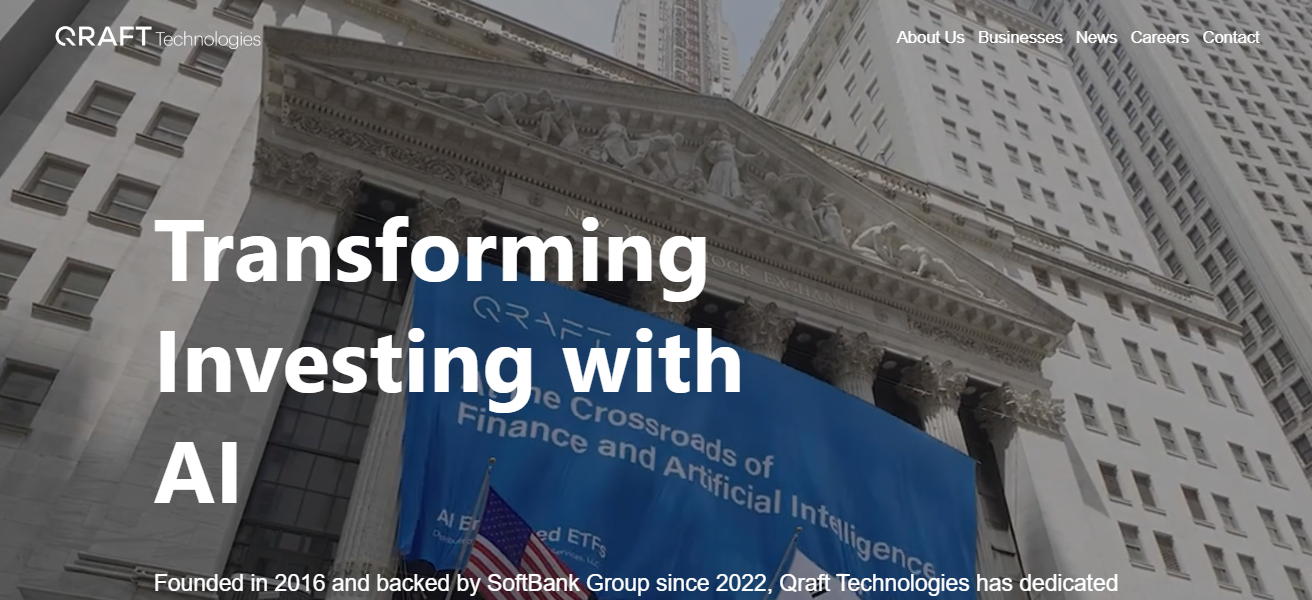
Qraft demonstrates AI’s practical use in precious metals asset management through the transparency and scalability of their AI-powered ETFs.
Qraft’s technology gives investors the ability to automate decision-making to minimize the impact of human judgment and maximize results.
Qraft integrates AI across the board of the investment process, allowing Institutions to have a competitive advantage in the market and at the same time control their risks in a sensible manner.
Qraft Technologies
- Focuses on AI and ETFs for institutions.
- Deep learning models optimize and find gaps in portfolios.
- Portfolio trading strategies adjusted to gaps.
- Automation of trading saves time and removes bias.
| Pros | Cons |
|---|---|
| Specializes in AI-powered ETFs and strategies. | Narrower focus compared to multi-functional platforms. |
| Deep learning models optimize portfolios. | Limited customization for bespoke institutional needs. |
| Adaptive algorithms evolve with markets. | Still building global institutional adoption. |
| Reduces human bias in decision-making. | ETFs may not suit all institutional strategies. |
9. Empower (formerly Personal Capital)
Formerly called Personal Capital, Empower uses AI for financial planning and combines it with institutional-level portfolio management.
It also specializes in analytics for asset allocation, retirement, and wealth management. Institutions can use Empower for client-level insights and portfolio strategy integrations, which improves customization and scale.

Empower uses AI models for spending, saving, and investing behaviors and provides personalized recommendations. Its platform is transparent and compliant which makes it a good fit for institutional and high-net-worth investors.
Empower combines financial planning with portfolio intelligence and still offers individual wealth management and institutional-level investing which promotes long-term growth and sustainability.
Empower (formerly Personal Capital)
- Financial planning using AI and portfolio management tools.
- Advanced analytics for retirement and asset allocation.
- Client-level insights to personalize strategies.
- Institutional clients for compliance and transparency.
| Pros | Cons |
|---|---|
| AI-driven financial planning and portfolio management. | More retail-focused, less institutional-grade depth. |
| Advanced analytics for retirement and wealth planning. | Limited support for complex institutional strategies. |
| Personalizes strategies using client-level insights. | May lack advanced compliance features. |
| Transparent and scalable platform. | Stronger fit for high-net-worth individuals than large funds. |
10. TradeStation (with AI Add-ons)
Institutional investors can use advanced analytics, automated trading, and portfolio management through TradeStation’s AI-enhanced tools.
The platform accommodates trading across all asset classes – equities, options, futures, and cryptocurrencies.
TradeStation’s AI tools help optimize strategies, analyze and manage risk, and develop predictive models. This gives institutions an advantage in staying ahead of market trends.
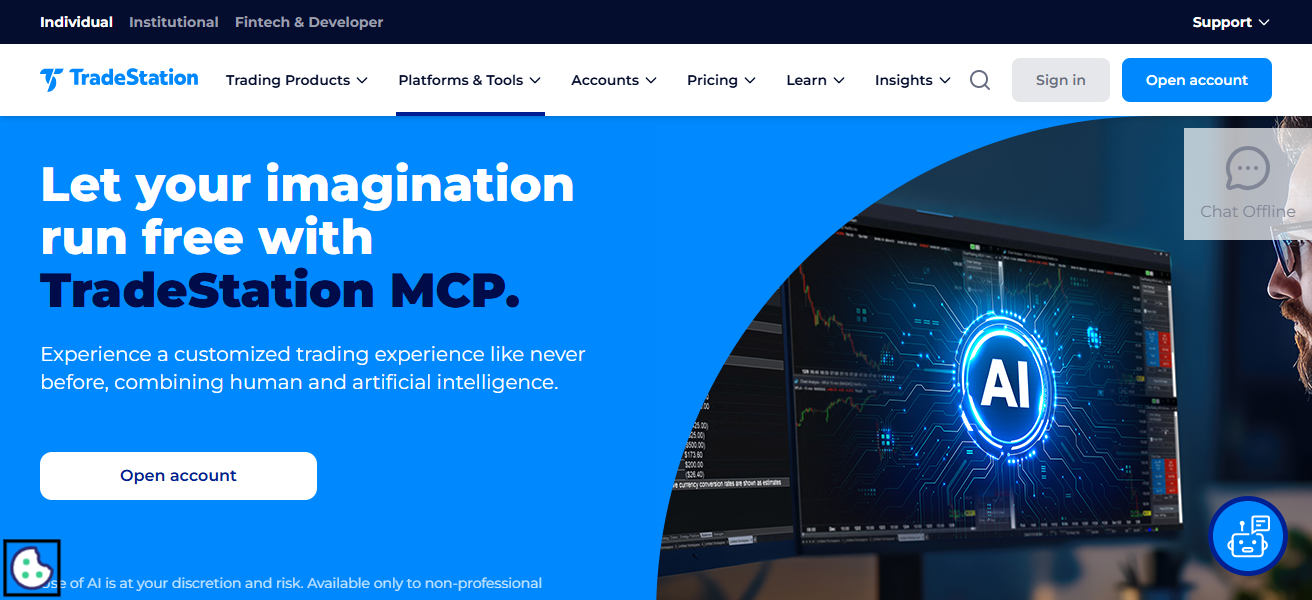
The platform’s use of machine learning to identify patterns and opportunities elevates decision making. TradeStation’s customizable platform allows institutions to use systematic trading and portfolio management.
Combining innovative AI tools and advanced trading infrastructure gives hedge funds, asset managers, and institutional investors of TradeStation a wide range of options to gain a competitive edge.
TradeStation (with AI Add-ons)
- AI Add-ons for options, equities, futures, and cryptocurrency.
- AI analytics to optimize trading.
- For predictive modeling and risk analysis, machine learning.
- Environment for systematic trading and control.
| Pros | Cons |
|---|---|
| Supports equities, options, futures, and crypto. | Primarily trading-focused, less institutional portfolio depth. |
| AI-powered analytics optimize strategies. | Requires technical expertise for customization. |
| Machine learning enhances predictive modeling. | Smaller institutional adoption compared to legacy platforms. |
| Customizable environment for systematic trading. | May lack integrated compliance and reporting tools. |
Conclsuion
Finally, the Best AI Portfolio Managers for Institutional Grade Investing provide organizations with sophisticated analytics, risk management, and automation solutions.
AI Portfolio Manager Platforms such as Aladdin, Bloomberg PORT, and QuantConnect AI change the landscape of investing by streamlining the decision-making process, improving transparency, and eliminating biases.
By applying machine learning to portfolios, institutions achieve the desired level of productivity, scalability, and competitive edge in the modern global financing complex.
FAQ
AI portfolio managers use machine learning and analytics to optimize investment strategies and manage risks.
They provide scalability, transparency, and advanced risk management for large, complex portfolios.
BlackRock Aladdin and Bloomberg PORT are widely adopted by global institutions.
Yes, platforms like QuantConnect and SigTech are tailored for hedge funds and quant teams.