This article is about the Best AI-Powered Alternatives to Zoho that can help optimize your business processes.
These platforms with sophisticated AI capabilities assist in automating tasks, enhancing customer interaction, and offering valuable insights.
These alternatives also provide advanced intuitive solutions to the problems of streamlining operations and driving better business outcomes
Improving productivity, and streamlining operations, whether it is CRM, marketing automation, or project management.
Key Poinst & Best AI-Powered Zoho Alternatives
| Platform | Key Point |
|---|---|
| Clappia | AI-driven no-code workflows for mobile field operations and enterprise apps |
| Salesforce Einstein | Predictive analytics that enhance customer engagement and sales forecasting |
| HubSpot CRM | Conversational AI for lead nurturing and customer support |
| Freshworks CRM | AI-powered deal insights to prioritize opportunities and improve conversions |
| Pipedrive | Smart sales assistant that automates repetitive tasks and tracks deal progress |
| Insightly | AI-enhanced project management integrated with CRM for workflow efficiency |
| Apptivo | Customizable AI modules for industry-specific CRM and automation |
| Keap | AI-powered marketing automation tailored for small businesses |
| Nimble | Social media intelligence to enrich CRM profiles and customer insights |
| Zendesk Sell | AI-driven pipeline visibility for sales teams to optimize performance |
10 Best AI-Powered Zoho Alternatives
1. Clappia
Automating complicated business workflows and maintaining flexibility is not easy, but doing so with AI can even be more difficult. As an AI-powered alternative to Zoho, Clappia does just that.
Built with AI, automation, and app-building features, employees can easily create internal tools that require little to no technical skills.
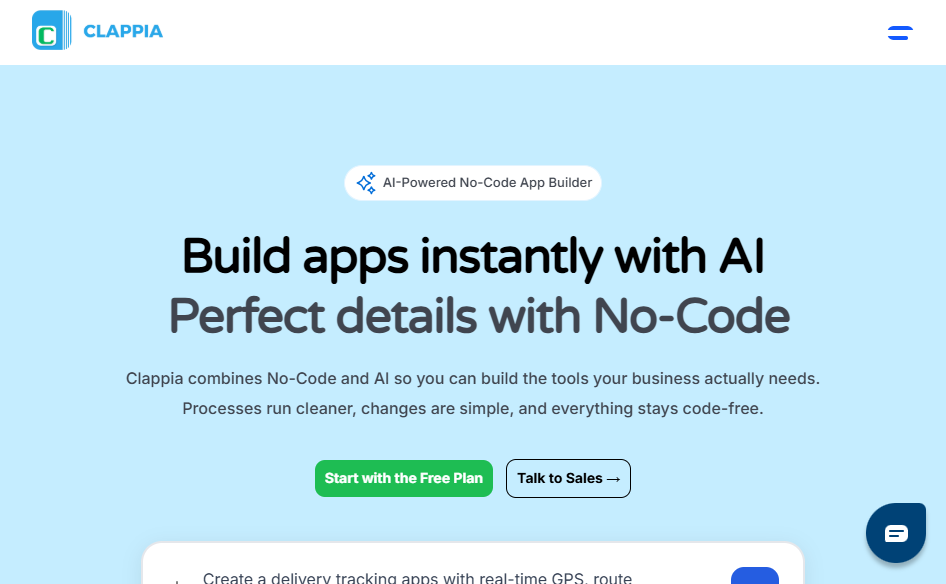
Many other platforms are modular and rigid, but Clappia is not one of them. It is fully integrated and provides a unique environment where workflows
forms, analytics, and AI create a seamless user experience where business processes can be quickly adapted and repetitive tasks automated. For all of these reasons, Clappia is a better alternative to Zoho than other platforms.
Clappia – Key Features
No-Code App Builder: Build your own business apps without coding, and set up workflows that work best for your team.
AI Workflow Automation: Automate workflows and processes using smart triggers and decision-making logic.
Dashboards: Gain insights and visualize your data in order to track and monitor performance and identify bottlenecks.
Integrated Processes & Form Systems: Reduce manual work and errors by connecting forms, approvals, and actions.
| Pros | Cons |
|---|---|
| Very intuitive no-code app builder for workflows | Limited advanced CRM features compared to full suites |
| Strong AI automation for internal tools | Learning curve for complex business logic |
| Customizable without developers | Fewer integrations with mainstream apps |
| Fast to deploy process automation | Smaller community/support ecosystem |
2. Salesforce Einstein
One of the best alternatives to Zoho that use AI is Salesforce Einstein because of the way it implements AI. Instead of treating AI as an add-on, Einstein integrates AI with CRM.
Its most powerful attribute is predictive intelligence, which makes recommendations in real time based on analyses of customer behavior, sales, and service data.
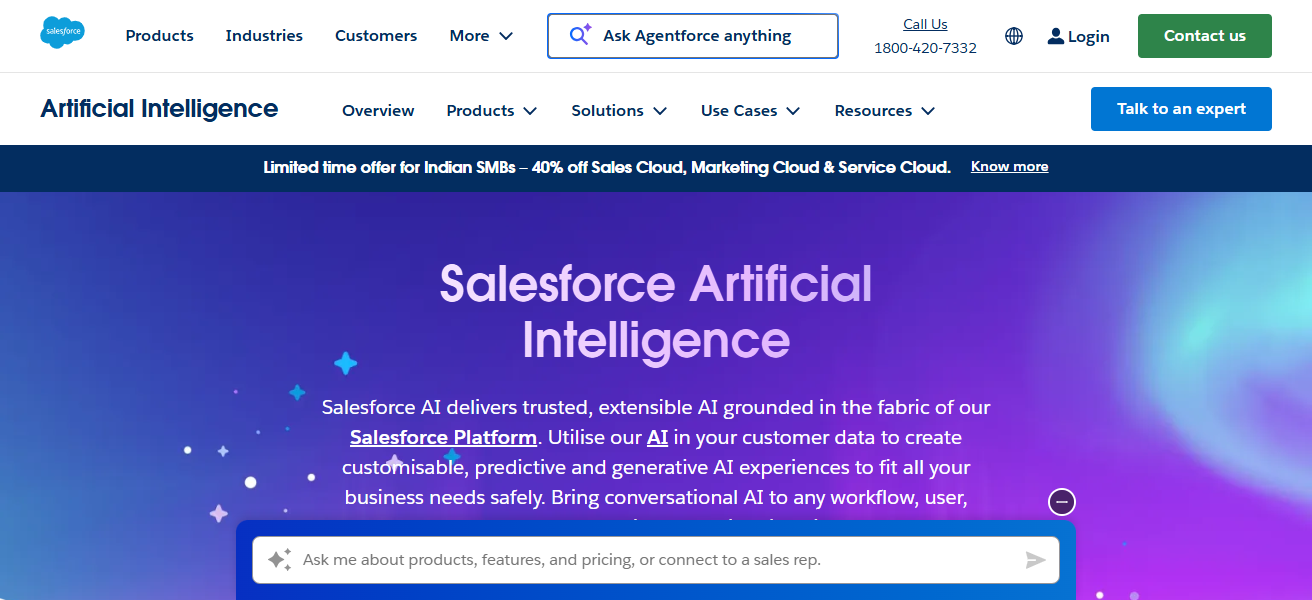
Einstein assists businesses in automating actions in sales, marketing, and support. Unlike Zoho, which takes a more broad, tool-based approach, Einstein focuses on data-driven, personalized automation at scale to optimize decision making and enhance customer interaction and revenue.
Salesforce Einstein – Key Features
- Predictive Analytics: Analyzes data to make predictions about future sales and customer behaviors.
- AI Lead Scoring: Assigns a score to each lead based on how likely they are to convert using machine learning.
- Smart Recommendations: Provides suggestions for the best next actions for sales reps to help them close deals more quickly.
- Automation & Einstein Bots: Keeps customer service agents free by allowing AI chatbots to do routine service tasks.
| Pros | Cons |
|---|---|
| Deep AI predictions and recommendations | Expensive for small businesses |
| Excellent sales & service forecasting | Requires Salesforce knowledge |
| Strong enterprise-grade analytics | Setup can be complex |
| Scales across departments | Overkill for simple CRM needs |
3. HubSpot CRM
One of the most impressive AI-powered alternatives to Zoho is undoubtedly HubSpot, as it combines smart automation technology with a delightful user experience.
For example, businesses can automate personal touches with customers, evaluate lead and deal success, and classify interactions with little to no setup.
HubSpot’s strongest feature is its consolidated view of integrated sales, marketing, and customer service data.
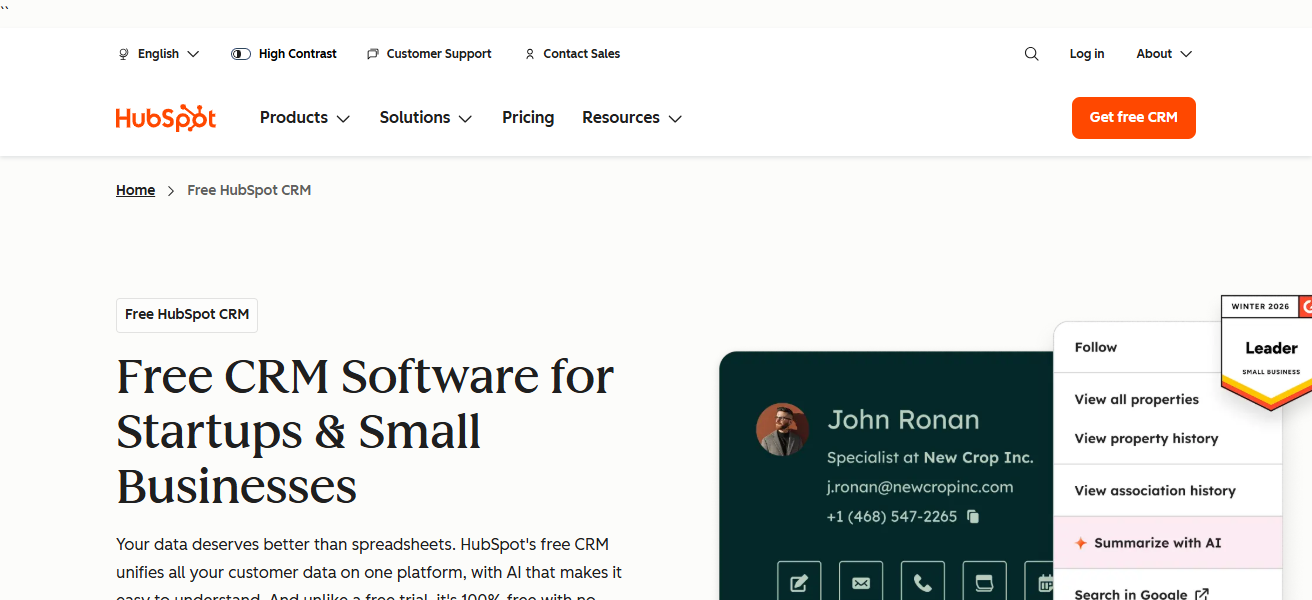
Because of the aI-infused marketing insights and the integrated data from sales and service, users have a clear competitive edge.
Unlike Zoho, with its highly automated yet siloed pieces, HubSpot offers a truly aligned solution empowering fast-growing companies to sustainably enhanced customer engagement, robust data-driven decision-making, and to grow with a balanced service and sales strategy.
HubSpot CRM – Key Features
- AI Insights on Contacts & Deals: Provides smart recommendations on when and how to follow up and engages.
- Data Consolidation: Merges sales, service, and marketing data into a single platform and provides context around it.
- Automation of Emails & Sequences: Automates customer outreach using smart sequencing and performance analytics.
- Predictive Lead Scoring: AI ranks each lead by likelihood of converting.
| Pros | Cons |
|---|---|
| User-friendly with smart automation | Advanced AI features often in paid tiers |
| Unified view across sales/marketing | Cost rises quickly with add-ons |
| Personalized engagement AI | Limited customization in free plan |
| Easy onboarding for teams | Not ideal for niche industry workflows |
4. Freshworks CRM
Powered by Artificial Intelligence (AI), Freshworks CRM is a solid alternative to Zoho CRM due to its contextual emphasis on speed and ease of adoption.
Freshworks contextual AI analyzes customer interactions via email, chat, phone, and web to surface intent-based insights, helping sales teams target the right opportunities at the right time.
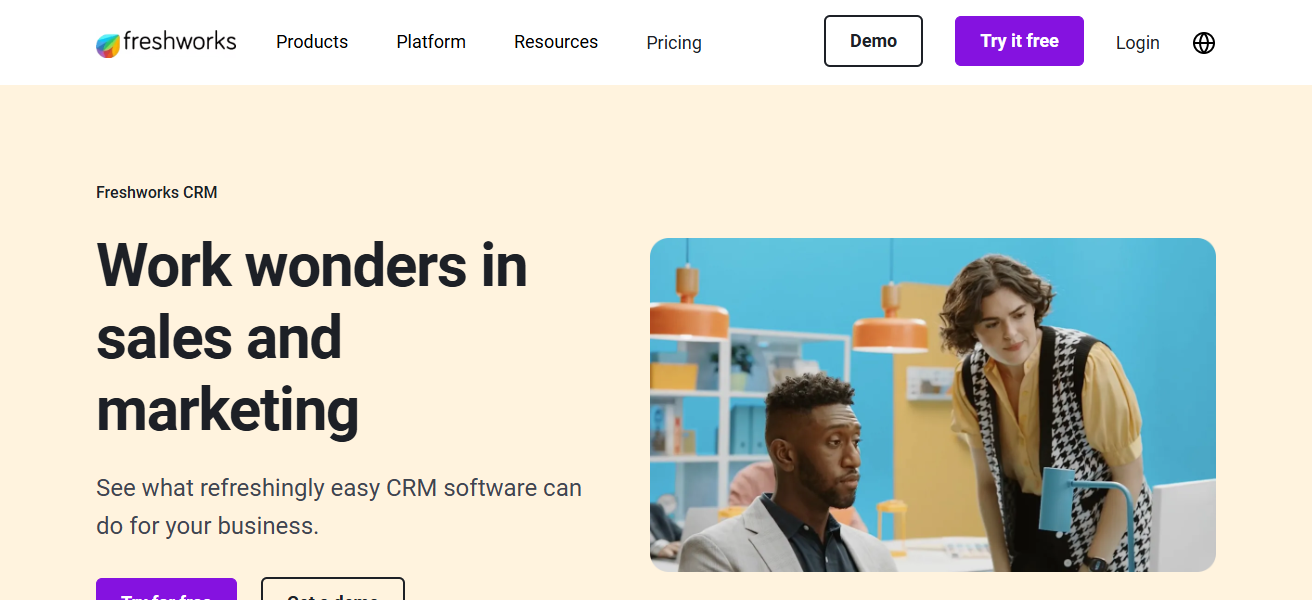
This platform’s unique ability to automatically score leads and suggest subsequent actions and follow-ups (without extensive customization), is a valuable asset.
In contrast to Zoho’s complex, confusing set-up, Freshworks CRM provides a straightforward, intuitive user experience that enables teams to close deals and offers personalized, data-driven customer engagement.
Freshworks CRM – Key Features
- Intent-Based Lead Scoring: AI analyzes customer behavior and identifies potential buyers.
- AI Contact Matching: Automatically adds missing customer information to records.
- Conversation Intelligence: Reviews and analyzes interactions to suggest follow-ups and improvements.
- Smart Workflow Suggestions: AI prepares and recommends automation workflows based on activity.
| Pros | Cons |
|---|---|
| Context-based AI insights | Mid-range features may not suit enterprises |
| Real-time lead scoring and suggestions | Integration ecosystem is growing |
| Unified inbox for customer touchpoints | UI can feel busy for new users |
| Easy to adopt for sales teams | Less robust analytics than some competitors |
5. Pipedrive
One of the best AI-powered alternatives to Zoho is Pipedrive, as they focus on sales execution and how to do it clearly.
Pipedrive’s AI-powered sales assistant analyzes the deal activity, health of the pipeline, and performance of sales reps to pinpoint risks and suggest actions for improvement.
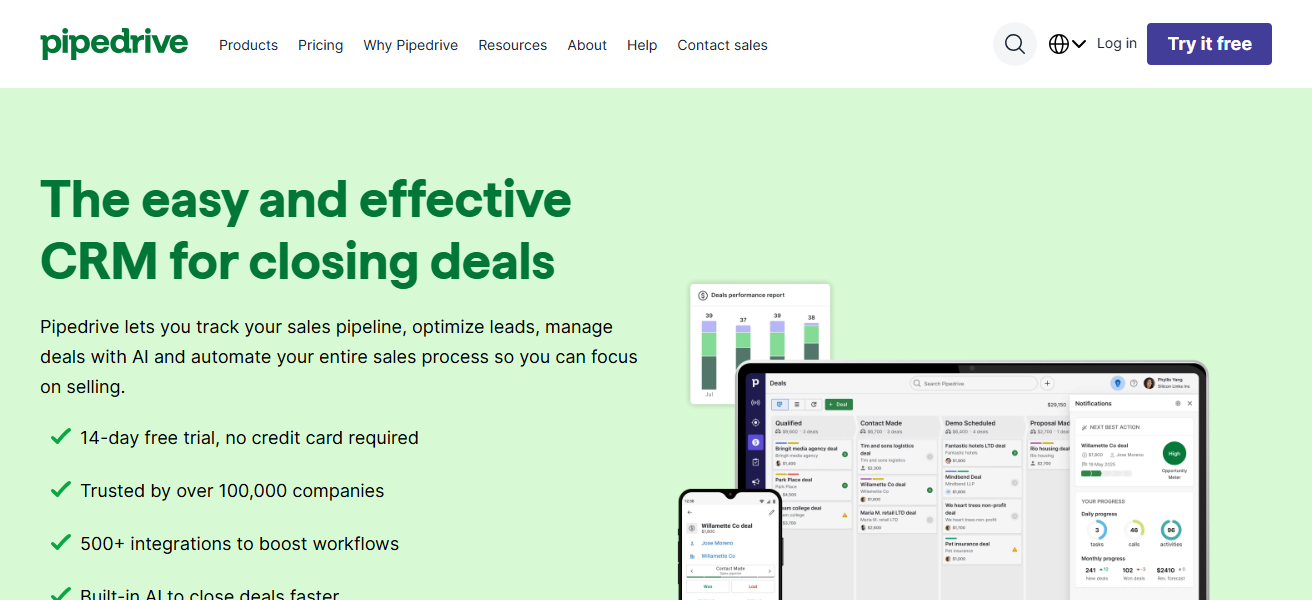
Pipedrive’s key selling point is the visual deal-centric pipeline and the intelligent insights which allows sales teams to focus on closing the the deal instead of administrative tasks.
Pipedrive’s emphasis on simplicity and actionable intelligence makes it better for teams that want quicker adoption and intelligent automation to drive sales.
Pipedrive – Key Features
- Visual Sales Pipeline: A drag-and-drop pipeline where users can view each stage of the deals and identify potential bottlenecks.
- AI Sales Assistant: Analyzes sales activity within the pipeline and provides actionable recommendations.
- Activity Reminders & Alerts: Suggest next steps to users and remind them to follow-up.
- Performance Reporting: Analyzes sales processes and provides insights on conversion rates, team productivity, and sales velocity.
| Pros | Cons |
|---|---|
| Visual pipeline with smart guidance | Not a full business suite |
| Action-oriented sales AI assistant | Limited marketing automation |
| Simple, clear interface | Fewer support tools |
| Helps focus sales activity | Smaller third-party app ecosystem |
6. Insightly
One of the top AI alternatives to Zoho is Insightly, which combines customer relationship management with project and workflow management.
The AI-powered insights assist businesses in integrating sales and post-sale delivery, providing a comprehensive view of the customer journey.
Insightly’s strength is in seamlessly integrating leads, opportunities, and projects within the same ecosystem, which enhances predictive analytics and streamlines team handoffs.
While Zoho offers a broader but fractured suite of tools, Insightly is a focused alternative that offers relationship-driven
AI to help growing businesses improve collaboration, close operational gaps, and provide a more consistent experience to their customers with better operational intelligence.
Insightly – Key Features
- CRM + Project Management: Combines lead and customer tracking with project management.
- Relationship Mapping: Visualizes the relationships between contacts and organizations to improve outreach tactics.
- Automated Workflow Builder: Uses smart triggers to eliminate repetitive tasks.
- Forecasting & Analytics: Analyzes project and pipeline data to provide actionable insights.
| Pros | Cons |
|---|---|
| Combines CRM with project intelligence | Interface can feel dated |
| AI that connects sales and delivery | Slightly complex setup |
| Helps tie workflows across teams | Fewer prebuilt automation flows |
| Strong lifecycle visibility | Not best for pure sales focus |
7. Apptivo
Apptivo is widely regarded as one of the top AI-enhanced competitors to Zoho due to its intelligent automation and modular versatility.
With the help of AI automation, Apptivo assists businesses in customer data analysis, adaptable application automation, and workflow automation.
Apptivo’s modular design is one of its core competitive advantages, as it offers businesses the flexibility to create custom applications
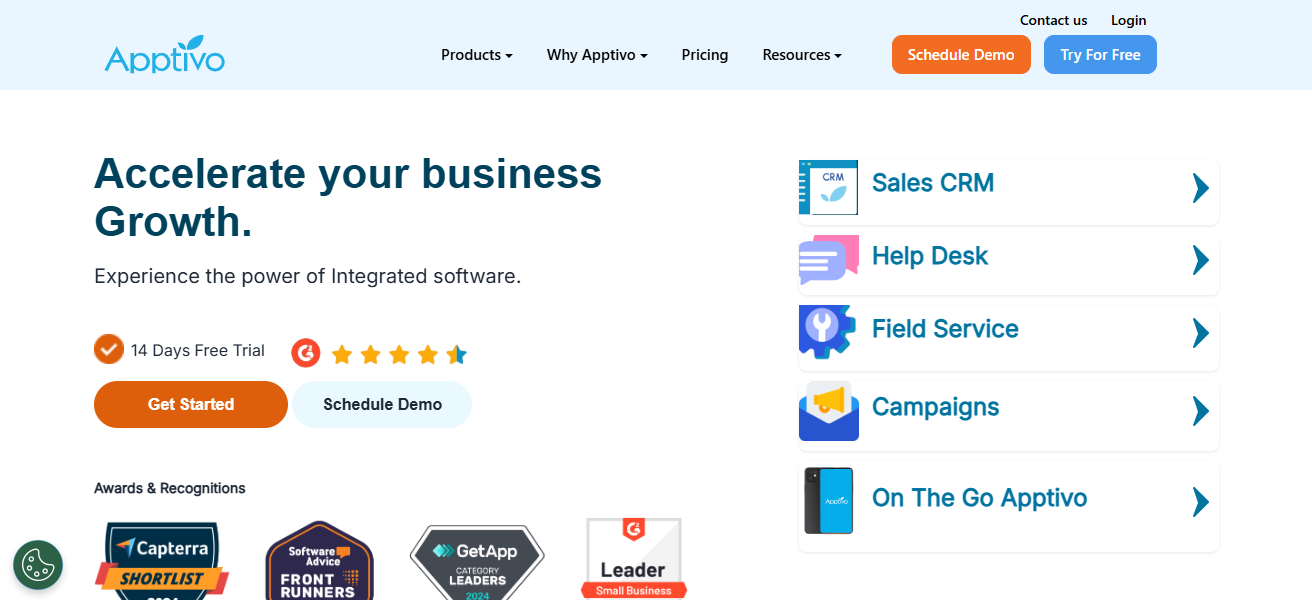
While leveraging intelligent automation to link data across the various functions of sales, marketing, finance, and customer support.
Compared to Zoho’s pre-configured applications, Apptivo is a better value option for developing companies that desire adaptable, scalable AI-enhanced CRM capabilities with operational intelligence and sophisticated streamlined workflows.
Apptivo – Key Features
- Modular App Suite: Users can select from diverse modules like CRM, projects, invoicing, and support.
- AI-Driven Workflows: Employs AI logic to streamline and automate workflows across various modules.
- Custom Business Logic: Users can personalize and configure business logic for individual modules.
- Centralized Data Hub: Integrates and organizes customer data across sales, support, and finance.
| Pros | Cons |
|---|---|
| Modular and highly customizable | Some modules require paid tiers |
| AI helps automate cross-functional workflows | UI not as polished |
| Cost-efficient for growing teams | Integrations can be limited |
| Build only what you need | Learning curve for customization |
8. Keap
Keap is among the top AI-powered alternatives to Zoho. Unlike the rest, Keap is tailored for small businesses and requires no technical know-how to set up smart automations.
Capturing leads, follow-ups, and nurturing customers is made even easier with automations that respond to specific user actions.
Keap combines CRM, email marketing, and payment processing into one seamless workflow, which is one of its strongest features.
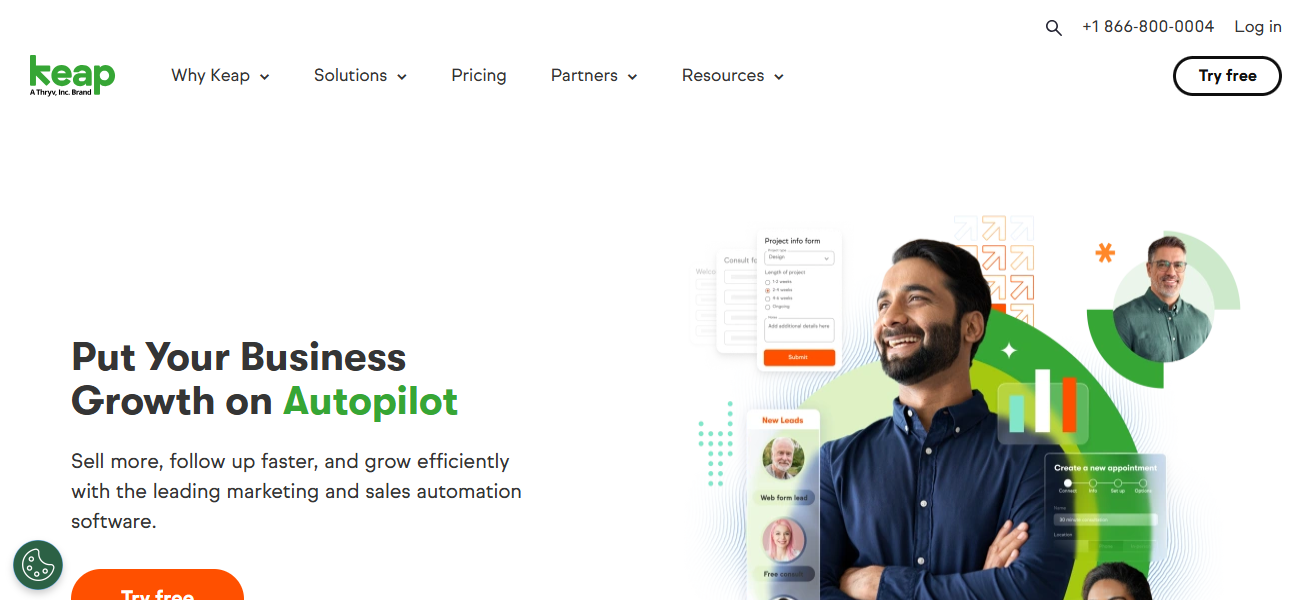
While Zoho emphasizes a greatly expanded, enterprise-level ecosystem, Keap focuses on automations that drive revenue and ease of use, allowing entrepreneurs to save time
foster consistent engagement with customers, and convert leads into long-term customers, all with little to no manual work.
Keap – Key Features
- Sales & Marketing Automation: Initiates communications based on customer behavior.
- Smart Lead Capture: Automatically captures leads from web forms and landing pages, and assigns a score.
- Automated Follow-Ups: Creates reminders, sequences, and workflows so that no prospect is neglected.
- Built-In Payment Tools: Allows users to create invoices and process payments within the CRM workflows.
| Pros | Cons |
|---|---|
| Ideal AI automation for small businesses | Not suited for large enterprises |
| Combines CRM with marketing & payments | Less advanced analytics |
| Easy follow-up automation | Limited sales forecasting depth |
| Saves time on repetitive tasks | Fewer integrations than bigger CRMs |
9. Nimble
Nimble is an interesting AI-powered alternative to Zoho because, unlike Zoho, which relies heavily on complex system management, Nimble focuses on relationship management.
Its AI updates contact records automatically, pulling in information from emails, calendars, and social media. This gives users rich and current profiles without any manual input.
The platform also prepares profiles for the interaction to give context and allow the user to foster a stronger personal rapport.
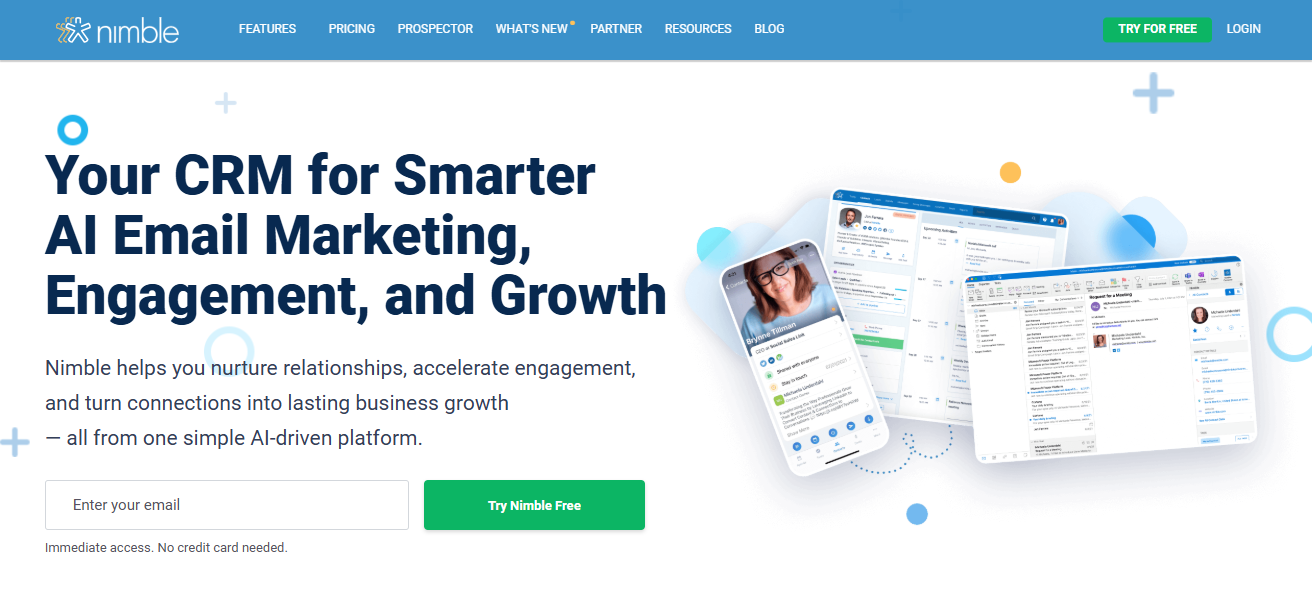
Nimble stands out because, unlike Zoho which is feature dense, it has a clean user interface. Nimble is perfect for people
Whose work is centered on building professional relationships to foster sales and also need automated insights on clients.
Nimble – Key Features
- Contact Enrichment: Compiles and enriches contacts with social media, email, and web data.
- Relationship Intelligence: Provides context to Relationship Intelligence before calls or emails.
- Smart Activities & Reminders: Predicts and suggests the next actions to take based on prior communications and activities.
- Unified Inbox: Merges and syncs messages and activities for a consolidated view of a customer.
| Pros | Cons |
|---|---|
| Excellent relationship intelligence | Not a full suite CRM |
| Auto-updates contact data | Social data reliability can vary |
| Simple and clear UI | Basic reporting tools |
| Great for networking-driven teams | Less automation breadth |
10. Zendesk Sell
Zendesk Sell offers a robust alternative to Zoho focusing on the integration of sales intelligence with customer support.
It employs machine learning to guide sales teams on how to track engagement, deal prioritization, and deal outcomes based on interactions with customers.
The integration with Zendesk’s support ecosystem, which provides tools to support sales teams before, during, and after customer conversations, is a differentiator.
Zendesk Sell’s contextual and adaptive focus on increasing revenue makes it a better alternative to Zoho compared to its expansive suite of business tools.
It empowers teams to gain a better understanding of customer expectations, increasing the speed and efficiency with which they respond to customer needs.
Zendesk Sell – Key Features
- Sales & Support Integration: Merges customer service data with CRM to provide comprehensive context.
- AI-Powered Deal Prioritization: Suggests where to direct attention using engagement signals.
- Sales Activity Tracking: Automatically logs calls, emails, and other touchpoints.
- Predictive Insights: Assists in revenue prediction with changes in the pipeline in real-time.
| Pros | Cons |
|---|---|
| Aligns sales with customer support data | Not focused on marketing automation |
| AI helps prioritize and predict deals | Best with Zendesk ecosystem |
| Streamlined for customer engagement | Some analytics are basic |
| Easy handoff from support to sales | Less flexible customization |
How To Choose Best AI-Powered Zoho Alternatives
Assess Business Needs: Identify what workflows, features, and automation your team needs on a daily basis.
AI Capabilities: Evaluate how the platform utilizes AI for prediction, automation, and decision-making efficiencies.
Ease of Use: Evaluate how much training your team needs to adopt the new platform.
Integration: Check how well the platform works with your email, marketing, finance, and project management tools.
Scalability: Choose a solution that accommodates significant growth and increases in your data.
Cost Effectiveness: Evaluate the price of the subscription against features provided and the size of the team.
Customization Freedom: Identify platforms that provide no-code or low-code alternatives to modify workflows.
Help & Community: Choose a platform with an active community and responsive support for quicker assistance.
Reporting & Analytics: Analyze the AI insights for tracking sales, engagement with customers, and processes.
Conclusion
To summarize, the top AI-driven alternatives to Zoho foster more intelligent, quick, and effective frameworks to handle the management of sales, marketing, and customers.
Through automation, predictive insights, and adaptable workflows, these AI platforms assist businesses in saving time, improving interactions, and making more informed decisions.
Selecting the ideal alternative assures growth, productivity, and seamless operations uniquely designed for your team.
FAQ
AI-powered Zoho alternatives are CRM and business tools using artificial intelligence to automate tasks and insights.
Alternatives may offer better AI features, simpler workflows, faster automation, or cost efficiency for your business.
Small, medium, and large businesses looking to streamline sales, marketing, support, and project workflows.
Most AI-powered alternatives provide intuitive, no-code or low-code interfaces for quick adoption.