This article covers the Best AI Threat Hunting Platforms for Proactive Security, which allow organizations to identify, examine, and act against cyber threats before they inflict damage.
- Key Points & Best AI Threat Hunting Platforms For Proactive Security
- 10 Best AI Threat Hunting Platforms For Proactive Security
- 1. CrowdStrike Falcon XDR
- 2. Palo Alto Networks Cortex XDR
- 3. Microsoft Defender XDR
- 4. Elastic Security
- 5. Hunt.io
- 6. Sqrrl (by Amazon)
- 7. RSA NetWitness
- 8. Exabeam
- 9. SentinelOne Singularity
- 10. Darktrace
- How We Choose Best AI Threat Hunting Platforms For Proactive Security
- Cocnlsuion
- FAQ
The platforms use sophisticated AI, machine learning, and behavioral analytics to find and remove threats and offer extensive visibility throughout endpoints, networks, the cloud, and identity systems for cyber security.
Key Points & Best AI Threat Hunting Platforms For Proactive Security
| Platform | Key Point |
|---|---|
| CrowdStrike Falcon XDR | Real-time AI-driven detection across endpoints, cloud, and identity layers |
| Palo Alto Networks Cortex XDR | Behavioral analytics to uncover stealthy attacks missed by signature-based tools |
| Microsoft Defender XDR | Unified threat hunting across email, endpoints, and cloud workloads |
| Elastic Security | Open-source flexibility with machine learning models for anomaly detection |
| Hunt.io | Predictive modeling to anticipate attacker moves before execution |
| Sqrrl (by Amazon) | Graph-based threat hunting to visualize attacker paths and lateral movement |
| RSA NetWitness | Deep packet inspection combined with AI for advanced network visibility |
| Exabeam | User and entity behavior analytics (UEBA) for insider threat detection |
| SentinelOne Singularity | Autonomous response powered by AI to contain threats instantly |
| Darktrace | Self-learning AI that adapts to evolving attacker techniques |
10 Best AI Threat Hunting Platforms For Proactive Security
1. CrowdStrike Falcon XDR
Falcon XDR incorporates a cloud-based artificial intelligence engine and the Falcon Threat Graph that cross-reference data at the endpoint, cloud, identity, and network levels for top-tier threat insights.
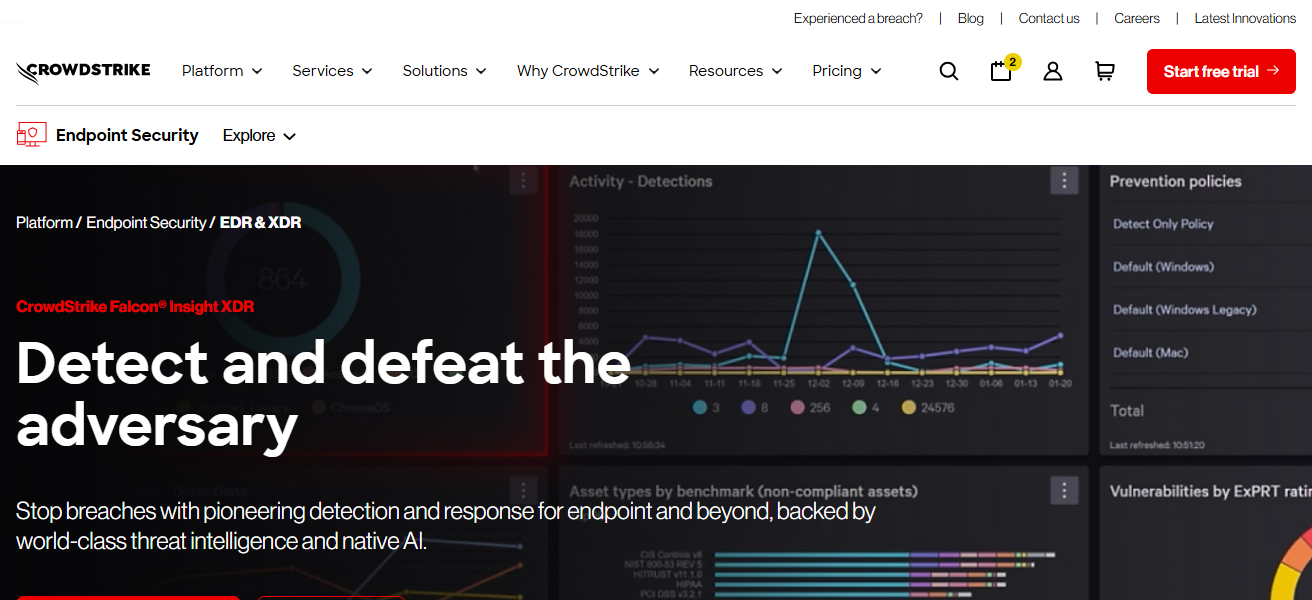
Through the use of behavioral AI, the system records and identifies anomalies and the lateral movements of threats, with in-built threat intelligence that streamlines hunts and threat response.
The consolidation of the agents and management through the Falcon platform allows for easier and more effective proactive detection and investigation of large environments.
Features CroudStrike Falcon XDR
- Real-time detection of AI threats taking place on multiple integrated endpoints, the cloud, and any identities.
- Integration of Threat Intelligence with Falcon X, expanding the dataset when performing a data search.
- Automated Signal Correlation is done for the purpose of adjusting the analytics to a signal.
- Flexibility of a Scalable Cloud-Native Infrastructure for instant configuration and software updates to be done
| Pros | Cons |
|---|---|
| Unified cloud‑native platform that integrates endpoint, identity, and network telemetry for holistic hunting. | Higher cost compared with basic EDR solutions — may be overkill for smaller teams. |
| Strong AI/ML analytics with real‑time threat intelligence and behavioral indicators. | Complexity of advanced features can require training for new users. |
| Excellent scalability and performance with minimal on‑prem hardware. | Some third‑party integration limitations outside the Falcon ecosystem. |
2. Palo Alto Networks Cortex XDR
Palo Alto Cortex XDR integrates data from endpoints, network traffic, firewalls, and cloud workloads for behavioral analytics and cross-domain correlation using AI.
Its analytical engine automates workflows, increases efficiency, decreases automation, and mitigates invisible threats.

Because of its seamless connection with other Palo Alto security products, Cortex XDR is an excellent option for advanced threat hunting in complex systems.
Features Palo Alto Networks Cortex XDR
- AI-Driven Behavior Analyses To identify the stealthy attacks and breaches.
- Automated Incident Response through the use of playbooks.
- Integration of Networks and endpoints from the cloud to be cross analyzed.
- Application of Improved Machine Learning Models to search for and analyze the data in ways to identify concealed hidden anomalies.
| Pros | Cons |
|---|---|
| Correlates data across endpoints, network, and Palo Alto firewalls for context‑rich hunts. | Best results when paired with Palo Alto products; third‑party data may need tuning. |
| Advanced analytics reduce false positives and speed detection. | Pricing can be complex based on modules and telemetry ingested. |
| Automated response with deep investigation workflows included. | UI can feel busy to new analysts. |
| Strong support and threat intelligence. |
3. Microsoft Defender XDR
Microsoft Defender XDR brings together endpoint, identity, cloud, and email security into a single hunting platform integrated with Azure and Microsoft 365.
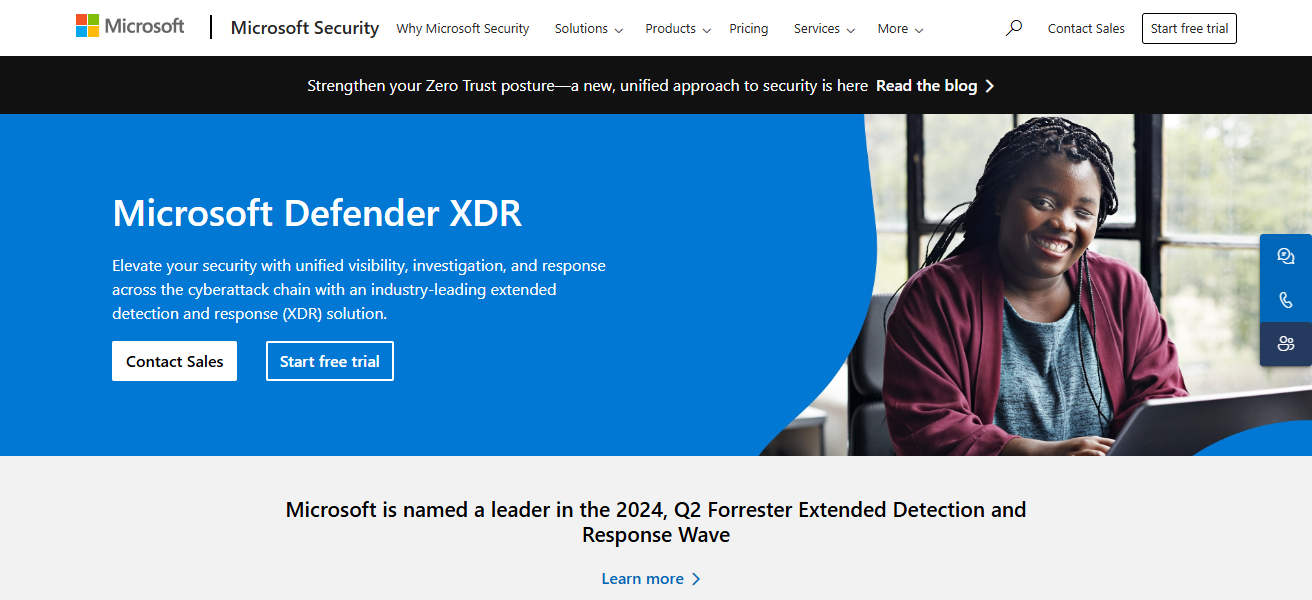
Using AI, it employs machine learning and threat intelligence to identify a range of anomalies, trigger automated actions, and streamline response management via Defender and Sentinel.
This integrated model provides greater visibility and improved response capability for multicloud environments.
Features Microsoft Defender XDR
- Integration of Multiple Services for visibility to be unified.
- AI-Driven Threat Hunting with the use of KQL query language in Microsoft Sentinel.
- Integration and Collaboration of Azure services, extending the cloud to a security position for defense.
| Pros | Cons |
|---|---|
| Deep integration with Microsoft 365 and Azure makes it ideal for Microsoft‑centric environments. | Requires Microsoft licensing stacks — can be expensive if not already in ecosystem. |
| AI and automation reduce alert noise and accelerate hunts. | Limited third‑party visibility without connectors. |
| Centralized management with Sentinel correlation and automation. | Setup can be complex for hybrid deployments. |
| Built‑in threat intelligence with automated remediation. |
4. Elastic Security
Elastic Security utilizes the capabilities of the open-source Elastic Stack to provide scalable, efficient, and threat-agnostic hunting across logs and other data repositories, including cloud data and endpoints.
Its framework of machine learning jobs detects and analyzes unusual and aberrant behavior across vast data sets.
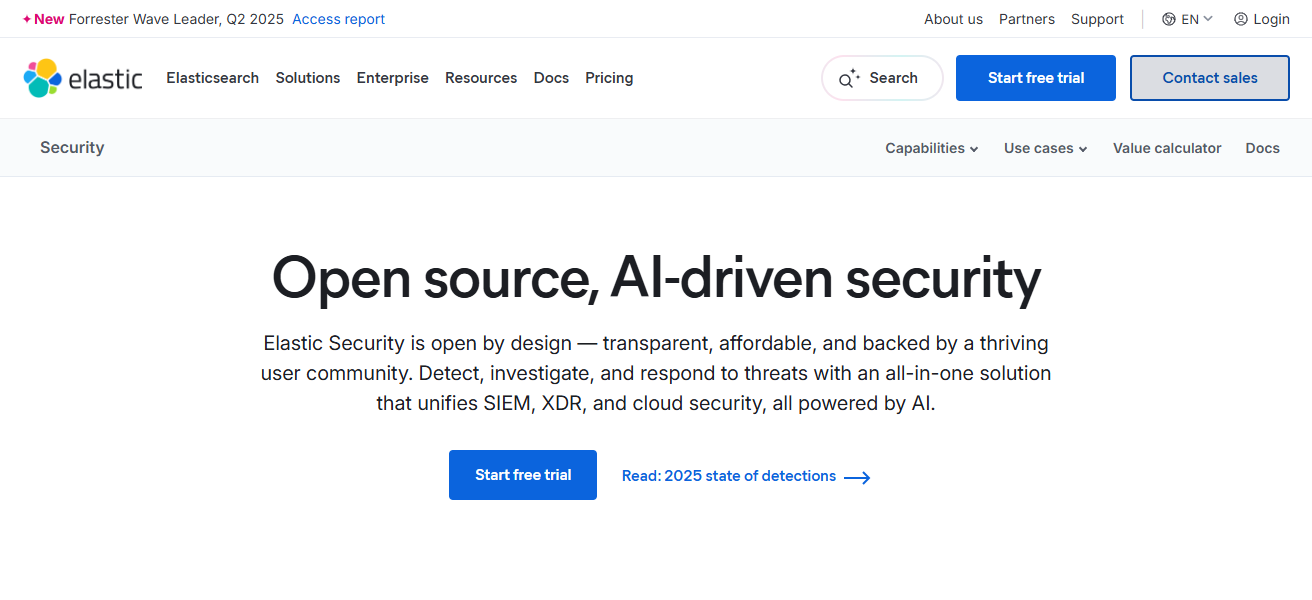
Elastic provides a proprietary query language and customer real-time dashboards that create a flexible environment
for security teams to design and deploy bespoke hunting rules, visualize intricate chains of attacks, and customize the ecosystem to automate alerts and responses.
Features Elastic Security
- Flexibility of Open Source to allow customized Machine Learning Models.
- Elastic ML jobs through the use of flexible ML jobs in the cloud provided anomaly detection.
- Massive Data-Set Scalable Log Ingestion with rapid analytics.
- Behavior Attacker Pattern Visualization through custom dashboards.
| Pros | Cons |
|---|---|
| Highly flexible and scalable with powerful search and custom detection rules. | Requires expertise in Elastic Stack tuning and query language. |
| Real‑time threat hunting across logs, endpoints, cloud, and network data. | No turnkey “out‑of‑the‑box” AI models — analysts build rules. |
| Open‑source roots allow customization and extensibility. | Potentially resource‑heavy for large deployments. |
| Visual dashboards and threat timeline views. |
5. Hunt.io
Hunt.io zeroes in on monitoring dangerous online systems and high-detail threat data, providing teams with the information required to connect indicators of compromise (IOCs) and uncover concealed enemy movements.
Hunt.io’s worldwide sensor system and data streams provide advance notification of new threats, changes in command-and-control (C2) infrastructure, and phishing sites.
Hunt.io enriches threat hunting with real-time data, assisting defenders in managing risks and examining possible breaches before they worsen.
Features Hunt.io
- Predictive modeling for anticipating the next move of attackers.
- AI-driven prioritization of triaging alerts by risk level.
- Cloud-native deployment for flexibility and extensibility.
- Learning models that incorporate and adapt to new threat intelligence.
| Pros | Cons |
|---|---|
| Excellent external threat intelligence and early warning feeds. | Not a full SIEM/XDR replacement — focused on IOCs and infrastructure tracking. |
| Unique visibility into attacker infrastructure and C2 networks. | Requires integration with other tools for full hunt cycle. |
| Helpful for prioritizing emerging threats. | Utility depends on threat intel sophistication of team. |
| Real‑time tracking of malicious domains and IPs. |
6. Sqrrl (by Amazon)
Sqrrl was a threat-hunting platform rooted in the NSA which was one of the first to integrate massive datasets together to conduct proactive investigations that integrated user/entity behavior analytics (UEBA) and visual link analysis to uncover sophisticated attack path trajectories.

Even though AWS absorbed the technology after the acquisition, the methodology continues to inform various threat-hunting frameworks.
Sqrrl’s methodology allows for more in-depth hypothesis-driven hunting and anomaly detection across both structured and unstructured data.
Features Sqrrl (by Amazon)
- Hunting attacks using a graph to detect and visualize all points of traversal.
- Link analysis for the discovery of under-identified relationships and associations.
- AWS services integration for use in the public cloud.
- AI-driven proactive hunting to conduct high-fidelity reconnaissance.
| Pros | Cons |
|---|---|
| Link‑analysis and UEBA excel at visualizing complex attack paths. | Native Amazon AWS integration is stronger than non‑AWS environments. |
| Ideal for hypothesis‑driven threat hunting. | Sqrrl as a standalone product is largely integrated into AWS tools — standalone support may be limited. |
| Good for deep analytics with large datasets. | Requires analyst expertise in graph analytics. |
| Strong foundation in structured and unstructured data correlation. |
7. RSA NetWitness
The RSA NetWitness Platform gets data from logs, packets, endpoints, & threat intelligence for thorough session forensics and automated case creation.
Security teams can leverage augmented analytics to spot risky behavior and focus on the most urgent cases.

NetWitness enhances visibility, as well as improves response time, by reconstructing threat data and correlating metrics to support proactive tracking and response.
Features RSA NetWitness
- Enhanced network visibility through deep packet inspection.
- AI-based abnormal detection in the network traffic flow.
- Enrichment through threat raw data intelligence feeds integration.
- Incident response by reconstructing and retracing the actions of the threat actor.
| Pros | Cons |
|---|---|
| Deep session forensics across packets, logs, and endpoints. | Deployment complexity and storage requirements can be high. |
| Automated case generation and prioritization. | Steeper learning curve for small teams. |
| AI‑augmented analytics to uncover hidden threats. | Licensing and costs can be significant for large feeds. |
| Excellent visibility for complex environments. |
8. Exabeam
Exabeam uses technology based on user behavior analytics and machine learning to identify abnormal activity and identify technologically sophisticated threats in an advanced way.
Its automated capabilities in correlation and anomaly detection make the task of identifying attackers, insider threats, stealthy or otherwise, much easier.

The technology of implantation analytics from Exabeam enriches the context for hypothesis testing and investigation in order to enhance the precision and speed of the process, all the while decreasing the amount of noise alerts received by security analysts.
Features Exabeam
- User and entity behavioral analytics (UEBA) to detect insider threats.
- AI-based abnormality detection to establish a baseline of normal user behavior.
- Investigation timelines constructed fully by an automation tool.
- Cloud-scale log ingestion to support visibility at the totality level.
| Pros | Cons |
|---|---|
| Strong UEBA & SIEM with user behavior analytics. | Primary SIEM focus means additional tools may be needed for endpoint actions. |
| Automated correlation and anomaly detection. | Can generate many alerts if not properly tuned. |
| AI helps reduce alert fatigue and speeds hunts. | Implementation and maintenance require analyst expertise. |
| Enriched context and risk scoring. |
9. SentinelOne Singularity
Singularity by SentinelOne relies on correlation of security events Storyline™ AI for cloud workload, endpoint, and identity security, and generates complete attack stories without any queries and manually.
It can undo, isolate, and neutralize threats through autonomous remediation within minutes. The unified data lake coupled with automation increases the pace of negative hunts within the system.
Singularity is particularly suited to highly dynamic, hybrid environments where manual inspections would fall behind on evolving threats due to the lake’s automation.
Features SentinelOne Singularity
- Instant containment of threats by an autonomous response of AI.
- Behavorial AI models to identify attacks with zero-days and that are fileless.
- Automatic mapping of attack chains using Storyline Technology.
- Supports coverage of all environments including endpoints, IoT, and cloud.
| Pros | Cons |
|---|---|
| Storyline AI correlates events across environments for full attack stories. | License tiers based on capabilities; full AI features cost more. |
| Autonomous response (isolate, remediate, rollback). | Some advanced features require cloud connectivity. |
| Strong integration across endpoints, cloud workloads, and identity. | Dashboards can feel technical for junior analysts. |
| Good for rapid automated response. |
10. Darktrace
Darktrace leverages self-learning AI that adjusts to the specific normal activities of an organization’s surrounding area, identifying flag subtle changes that may indicate possible threats.
Its self-responding modules can neutral suspicious activity there and then while granting security units visible noticed manifestations of the threats’ e bullying.
By learning the networks’ behaviors, Darktrace further improves the proactive detection and the hunted and hunted of an unknown in the case of which the threats are zero attacks.
Features Darktrace
- Self-learning AI adapts to changing techniques of the attacker.
- Autonomous discovery of new threats with no signatures.
- Real-time neutralization of attacks through AI-driven automated response actions.
- Visualization tools to map network and cloud gaps.
| Pros | Cons |
|---|---|
| Self‑learning AI adapts to unique organizational behavior patterns. | Black‑box AI can lack explainability for some analysts. |
| Autonomous response to contain threats in real time. | Premium pricing for full Autonomous Response features. |
| Detects novel and zero‑day threats with minimal rules. | Deployment tuning required to reduce false positives. |
| Intuitive visualizations of threat evolution. |
How We Choose Best AI Threat Hunting Platforms For Proactive Security
Data Coverage & Integration – Make sure the platform gathers and correlates data across the endpoints and integrations across from network location, cloud, and identity systems.
AI & Analytics Capabilities – To accurately hunt for threats, the platform should offer machine learning alongside behavioral analysis and anomaly detection.
Automation & Response – See if it helps automate incident response containment, remediation, and alert tiering.
Scalability & Performance – Should be able to process and grow with your organization’s data volume.
Threat Intelligence & Enrichment – Should support and enrich context for real time threat intelligence.
User Experience & Reporting – Should offer easy to use dashboards, data visualization and reports for analysts to take action.
Regulatory Compliance & Security Standards – Meets regulations such as ISO, GDPR, HIPAA, etc.
Cost vs Value – Analyze the costs for licensing and deployment as well as ROI in relation to the features delivered and the value that is delivered.
Cocnlsuion
To sum up, the best AI Threat Hunting Platforms For Proactive Security enable companies to get ahead of cyber threats.
They employ AI, ML, and behavior analytics to get to proactive detection, automated response, and visibility across all environments.
The focus is on automated response, detection, and proactive AI. These platforms help mitigate threats faster, reduce risk, and improve your overall security posture.
FAQ
It’s a security solution that uses AI and machine learning to detect, investigate, and respond to cyber threats proactively.
AI helps identify subtle, unknown threats faster than manual monitoring, reducing dwell time and risk.
Top platforms include CrowdStrike Falcon XDR, Palo Alto Cortex XDR, Microsoft Defender XDR, Elastic Security, Hunt.io, Sqrrl, RSA NetWitness, Exabeam, SentinelOne Singularity, and Darktrace.
Yes, most support SIEMs, SOARs, firewalls, and endpoint solutions for unified security management.
Many, like SentinelOne and CrowdStrike, include automated containment, remediation, and rollback features.