
This article will evaluate some of the best AI voice Infrastructure Providers. These providers allow companies to build advanced AI voice applications, AI assistants, and virtual conversational interfaces.
These Infrastructure Providers give a variety of voice transformation technologies such as speech recognition, text to speech, voice cloning, and similar other real-time communication technologies.
Key Points & Best AI Voice Infrastructure Providers
| AI Voice Infrastructure Provider | Explanation |
|---|---|
| ElevenLabs | Provides realistic AI voice generation, cloning, multilingual speech, and developer voice APIs. |
| Deepgram | Offers powerful speech recognition APIs for accurate real-time voice applications development. |
| AssemblyAI | Delivers advanced speech-to-text APIs with intelligence features for voice workflows. |
| Google Cloud Speech-to-Text | Provides scalable speech recognition infrastructure supporting multiple languages and enterprise applications. |
| Microsoft Azure AI Speech | Enables speech synthesis, recognition, translation, and custom voice experiences globally. |
| Amazon Transcribe | Provides automatic speech recognition services for applications using AWS infrastructure. |
| OpenAI Voice API | Enables natural conversational voice interactions with advanced AI speech capabilities. |
| PlayHT | Offers realistic AI voices, voice cloning, and developer-focused voice solutions. |
| Murf AI | Provides AI voice generation tools for professional audio and applications. |
| Cartesia | Delivers ultra-fast AI voice models for real-time conversational experiences. |
10 Best AI Voice Infrastructure Providers
1. ElevenLabs
One of the top AI voice infrastructure providers is ElevenLabs. It prides itself in developing the most lifelike AI voices along with advanced speech synthesis solutions. Its API and infrastructure can be easily integrated into multiple applications
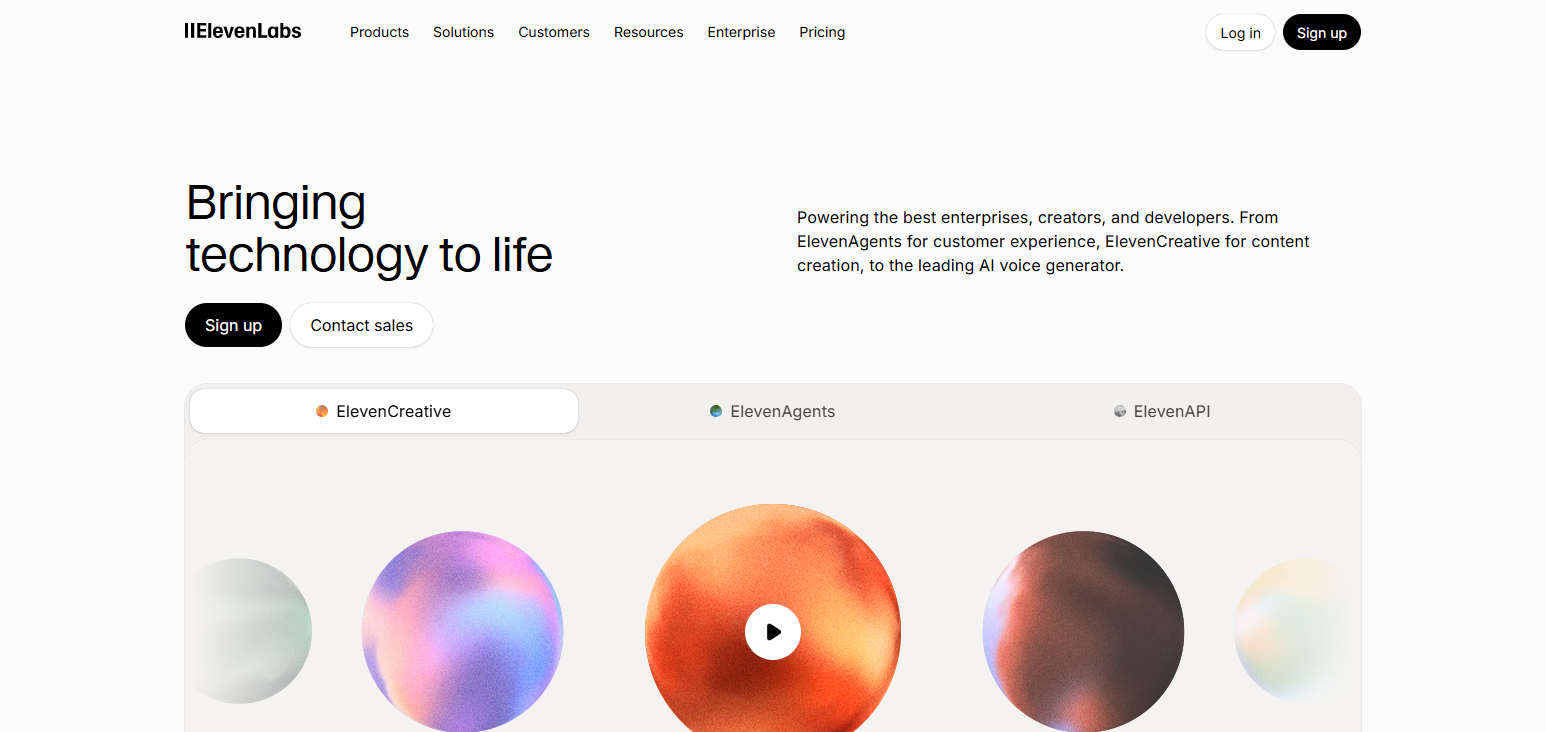
like customer support systems, content creation applications, gaming platforms, customer support systems, customer support systems, customer support systems, and customer support systems.
Its technology allows customers to create their own personality-based digital voices. ElevenLabs has the infrastructure and technology needed to create a wide variety of commercial applications designed to meet various industry needs.
Features of ElevenLabs
- Realistic Voice Generation: AI text to human audible voice with natural emotions, tones, and pronunciation.
- Advanced Voice Cloning: Custom digital voices from AI technology, helping businesses develop digital assets.
- Multilingual Speech Support: For global needs, ElevenLabs uses its AI technology across different languages.
- Developer API Integration: Offers easy API integration for business and enterprise applications.
- Scalable Voice Infrastructure: Provides reliable enterprise-grade scalable voice technology.
| Pros | Cons |
|---|---|
| Produces highly realistic AI voices with natural emotions and expressions. | Advanced features may require expensive premium subscription plans. |
| Offers powerful voice cloning with customized voice creation options. | Voice cloning requires strict permission and ethical usage considerations. |
| Supports multiple languages for global voice applications. | Limited control over some advanced voice customization settings. |
| Provides easy API integration for developers and businesses. | Large-scale usage can increase operational costs significantly. |
| Delivers reliable infrastructure for enterprise voice solutions. | Some generated voices may still lack perfect human variation. |
2. Deepgram
Deepgram is a top AI voice infrastructure provider that specializes in providing real-time speech recognition and voice intelligence APIs.
The infrastructure and APIs can easily be integrated into numerous applications such as customer support systems, content creation applications, gaming platforms, customer support systems, customer support systems, customer support systems, and customer support systems.

Its low-latency speech-to-text capabilities can be easily integrated into any customer support system. Businesses can use Deepgram APIs to generate scalable voice applications for various industries.
Features of Deepgram
- Real-Time Speech Recognition: Accurate text from live spoken word audio using natural language processing.
- Voice Intelligence APIs: Tools for transcribing speech, analyzing it, understanding the audio, and providing rich data in an intelligent manner.
- Speaker Identification: Separates the various speakers in a recorded conversation.
- High Accuracy Transcription: Highly reliable text from voice or spoken word using advanced AI techniques.
- Developer-Friendly APIs: Easily integrates into the developer’s application.
| Pros | Cons |
|---|---|
| Provides fast and accurate real-time speech recognition capabilities. | Primarily focused on speech recognition rather than voice generation. |
| Offers powerful APIs for voice intelligence applications. | Advanced features may require technical implementation knowledge. |
| Supports speaker identification and conversation analysis. | Pricing can become higher for heavy transcription workloads. |
| Handles large-scale voice processing efficiently. | Accuracy may decrease with extremely noisy audio conditions. |
| Provides developer-friendly integration tools. | Limited built-in creative voice generation features. |
3. AssemblyAI
Welcome to AssemblyAI! We are an AI Voice Infrastructure Provider that offers robust speech-to-text APIs and a variety of voice intelligence solutions for developers.
The following features are available on our speech recognition platform: accurate transcription, automated speaker identification, analysis of sentiments, content moderation, and understanding of audio.

At AssemblyAI, we help organizations transform their audio data into important insights for several business scenarios including customer service, media, meetings, and enterprise communication.
Our AI models are designed for conversations of all complexities including background noise and conversation involving multiple speakers.
Features of AssemblyAI
- Advanced Speech-to-Text: Tool which uses AI to convert recorded speech into text. This tool is reliable and highly predictable.
- Real-Time Speech Recognition: AI technology tool that can recognize speech in real time.
- Voice Intelligence APIs: API tools that use AI to automatically transcribe spoken word into text, analyze the text, derive insightful data from the text, and understand the audio.
- Developer API Integration: Easily integrates API tools into a developer’s application and platform.
| Pros | Cons |
|---|---|
| Delivers highly accurate AI-powered speech transcription services. | Mainly focused on speech-to-text applications. |
| Provides useful audio intelligence and analysis features. | Some advanced features require additional configuration. |
| Supports speaker detection and conversation understanding. | Enterprise pricing may not suit small businesses. |
| Handles complex audio processing effectively. | Performance depends on audio quality and recording conditions. |
| Offers simple APIs for developer integration. | Limited options for custom voice generation. |
4. Google Cloud Speech-to-Text
Google Cloud Speech-to-Text is one of the most popular AI Voice Infrastructure Provider based on enterprise level speech recognition solutions, built on Google’s leading edge machine learning models.
Google Cloud Speech-to-Text converts audio to text with high accuracy across various languages and dialects. It performs real time speech to text transcription, automatic punctuation, speaker recognition, and voice models customized for industry specific applications.

Google Cloud Speech-to-Text offers several solutions for voice assistants, customer service, media platforms, meetings, accessibility, and communication tools for businesses. Our cloud infrastructure enables reliable scalability to meet the different requirements of businesses.
Features of Google Cloud Speech-to-Text
- Multilingual Speech Recognition: Google’s AI speech recognition technology that supports many different languages and various regional variations of speech.
- Real-Time Transcription: Transcription of live spoken word audio into text in real time.
- **Automatic Punctuation
| Pros | Cons |
|---|---|
| Provides highly accurate speech recognition using Google AI models. | Pricing complexity can be challenging for beginners. |
| Supports many languages and global speech variations. | Requires cloud expertise for advanced configurations. |
| Offers reliable enterprise-level scalability. | Usage costs can increase with large audio volumes. |
| Provides custom speech model capabilities. | Some specialized features require additional setup. |
| Integrates smoothly with Google Cloud services. | Less focused on creative AI voice generation. |
5. Microsoft Azure AI Speech
Microsoft Azure AI Speech is an AI voice infrastructure provider that offers businesses a full-service solution for speech recognition, text-to-speech, translation, and other custom voice needs.
Within the platform, businesses can create natural, conversational experiences for their clients using advanced AI technologies for voice.
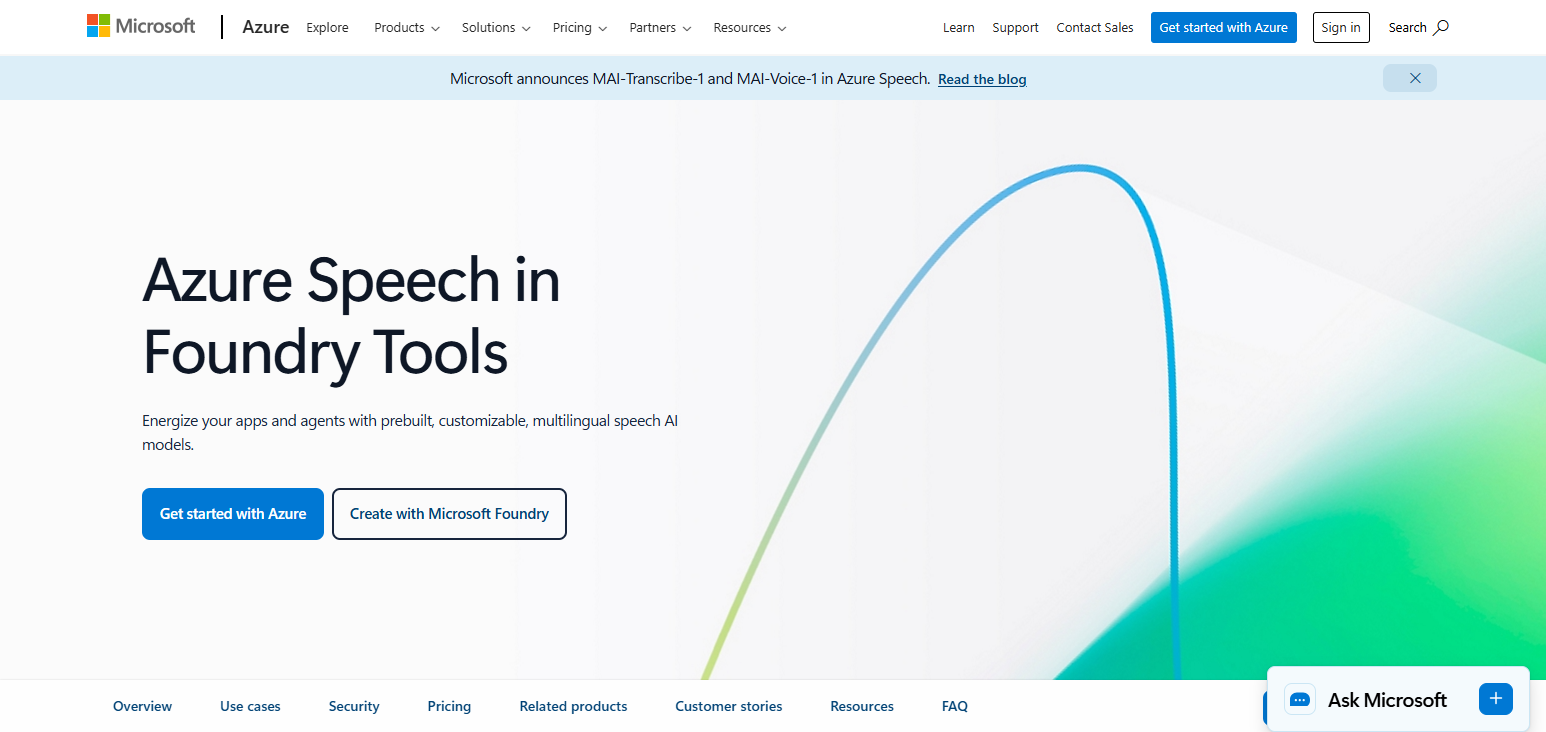
Azure Speech offers a range of services including neural voice generation, real-time speech to text, language translation, as well as personalized voice models for enterprise applications.
It integrates with Microsoft’s cloud ecosystem to provide developers with infrastructure for processing large volumes of voice data.
Features of Microsoft Azure AI Speech
- Natural Text-to-Speech: AI will provide life-like voices.
- Speech Translation: AI will convert real-time speech to many different languages.
- Custom Voice Creation: AI allows businesses to create customized voices.
- Real-Time Speech Recognition: With this technology, AI will provide fast and accurate speech recognition.
- Azure Integration: AI seamlessly connects with the Microsoft enterprise cloud solutions.
| Pros | Cons |
|---|---|
| Provides complete speech recognition and voice generation solutions. | Azure ecosystem can be complex for new users. |
| Offers realistic neural text-to-speech capabilities. | Requires technical knowledge for customization. |
| Supports custom voice creation for businesses. | Pricing depends on multiple service factors. |
| Integrates with Microsoft enterprise applications. | Advanced voice features may require additional permissions. |
| Provides strong security and compliance features. | Setup process can be time-consuming for beginners. |
6. Amazon Transcribe
Amazon Transcribe is an AI voice infrastructure provider that uses AWS to provide businesses with automation for speech recognition. The platform provides audio and visual file conversions to text with support for real-time text conversions for various applications.
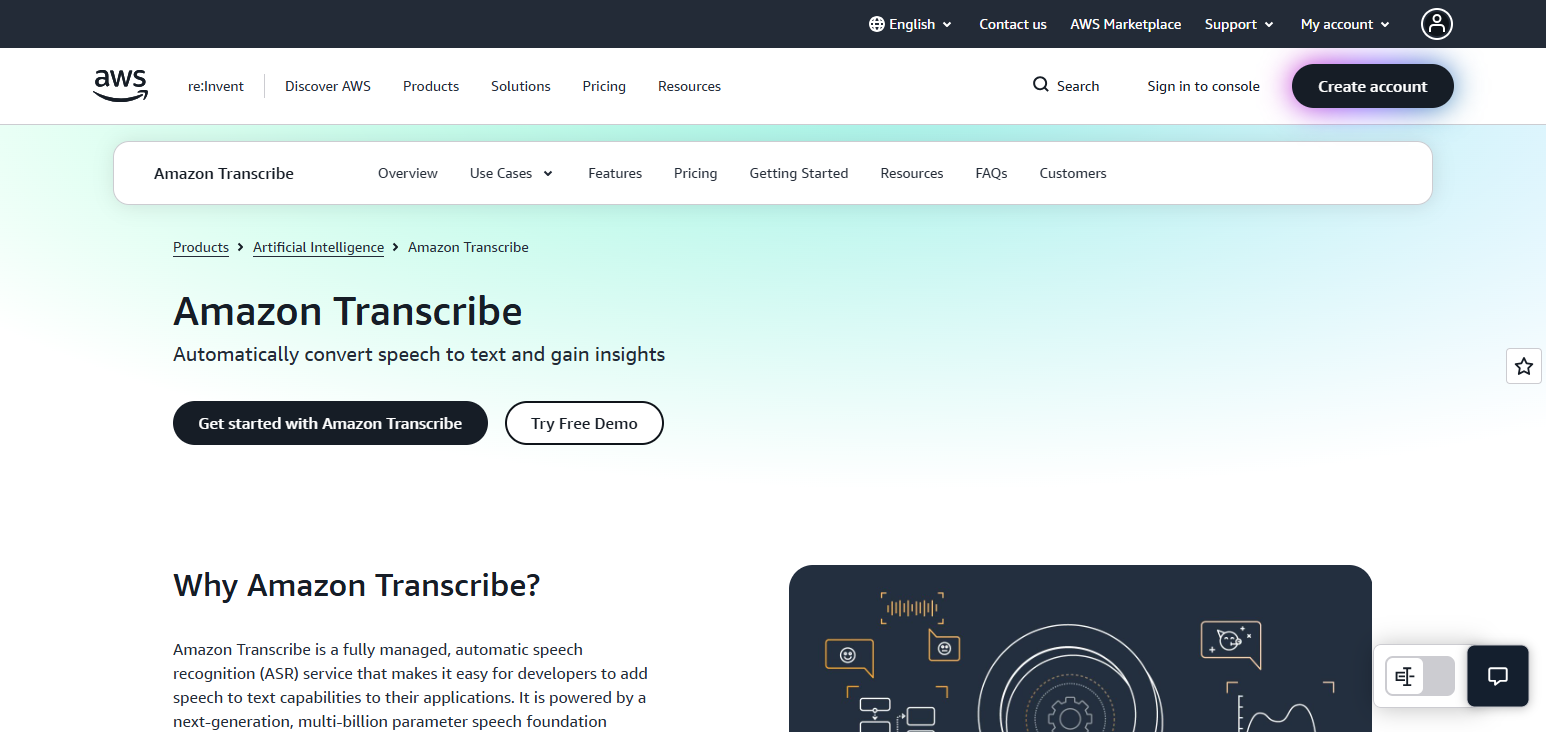
Amazon Transcribe offers features such as speaker identification, custom vocabulary, medical transcription, and call analytics. Businesses use it to enhance customer service operations, analyze conversations, and construct applications that are voice-enabled.
Its integration with AWS services provides developers with flexible and scalable infrastructure for processing large volumes of voice data.
Features of OpenAI Voice API
- Natural Voice Conversations: AI enables life-like interactions.
- Real-Time Voice Processing: AI allows real-time speech processing.
- Advanced Speech Understanding: AI offers voice recognition integrated with intelligent language processing.
- AI Voice Generation: AI produces realistic responses using advanced voice models.
- Flexible API Access: AI offers developers the ability to integrate voice capabilities into applications.
| Pros | Cons |
|---|---|
| Provides reliable automatic speech recognition services. | Mostly focused on transcription rather than voice creation. |
| Supports real-time transcription for business applications. | AWS pricing structure can be difficult to understand. |
| Offers speaker identification and custom vocabulary features. | Requires AWS technical experience for optimization. |
| Scales efficiently with Amazon cloud infrastructure. | Accuracy may vary with accents and background noise. |
| Integrates with other AWS AI services. | Beginners may find configuration challenging. |
7. OpenAI Voice API
OpenAI Voice API is a complex, advanced AI voice generation toolkit with a wide range of open source and integration options. It allows developers to design and build conversational AI chatbots and assistants that have the ability to listen, respond and interact like regular people.

The API supports true, seamless real time voice interactions, and therefore can be used with many other types of AI assistants, chatbots, and voice bots. OpenAI Voice API’s technology addresses all of the underlying speech, voice, text to speech and speech to text conversion technologies.
Features of OpenAI Voice API
- Natural Voice Conversations: AI enables life-like interactions.
- Real-Time Voice Processing: AI allows real-time speech processing.
- Advanced Speech Understanding: AI offers voice recognition integrated with intelligent language processing.
- AI Voice Generation: AI produces realistic responses using advanced voice models.
- Flexible API Access: AI offers developers the ability to integrate voice capabilities into applications.
| Pros | Cons |
|---|---|
| Creates natural conversational AI voice experiences. | Availability and features may change with updates. |
| Combines speech recognition and language intelligence. | Requires API development knowledge for implementation. |
| Enables real-time voice interactions with AI systems. | High usage applications may increase costs. |
| Provides powerful AI-driven conversation capabilities. | Custom voice options may be limited compared with specialists. |
| Supports flexible integration for developers. | Requires careful management of AI responses. |
8. PlayHT
PlayHT is an advanced, complex AI voice generation toolkit that offers open source and integration/custom options. It provides a large collection of AI voices for multiple languages, accents, and styles, and it helps companies create AI powered embedded voice technologies.

The technology allows developers and businesses to build AI voice cloning tools to create their own AI based personalized voices. The tool allows developers to use flexible, developer APIs with advanced, scalable and flexible infrastructure.
Features of PlayHT
- Natural AI Voices: AI will create natural sounding voices.
- Voice Cloning Technology: AI will create personalized AI voices with lifelike expressions.
- Large Voice Library: AI will have a large library of voices, accents, and speaking styles.
- Developer Voice APIs: AI will provide developers the ability to integrate voice capabilities directly into their applications.
| Pros | Cons |
|---|---|
| Generates realistic AI voices for professional applications. | Premium features require paid subscription plans. |
| Provides advanced voice cloning capabilities. | Voice cloning requires responsible usage practices. |
| Offers a large library of AI voices. | Some voices may sound less natural in complex situations. |
| Supports developer APIs for applications. | API pricing may increase for high-volume usage. |
| Useful for content creators and businesses. | Limited advanced conversational AI capabilities. |
9. Murf AI
Murf AI is one of the most well-known AI Voice Infrastructure Provider offering professional AI voice generation services for businesses, creators, and developers, amongst others. Users can create voiceovers in a realistic manner by the application of advanced and sophisticated text-to-speech technology.
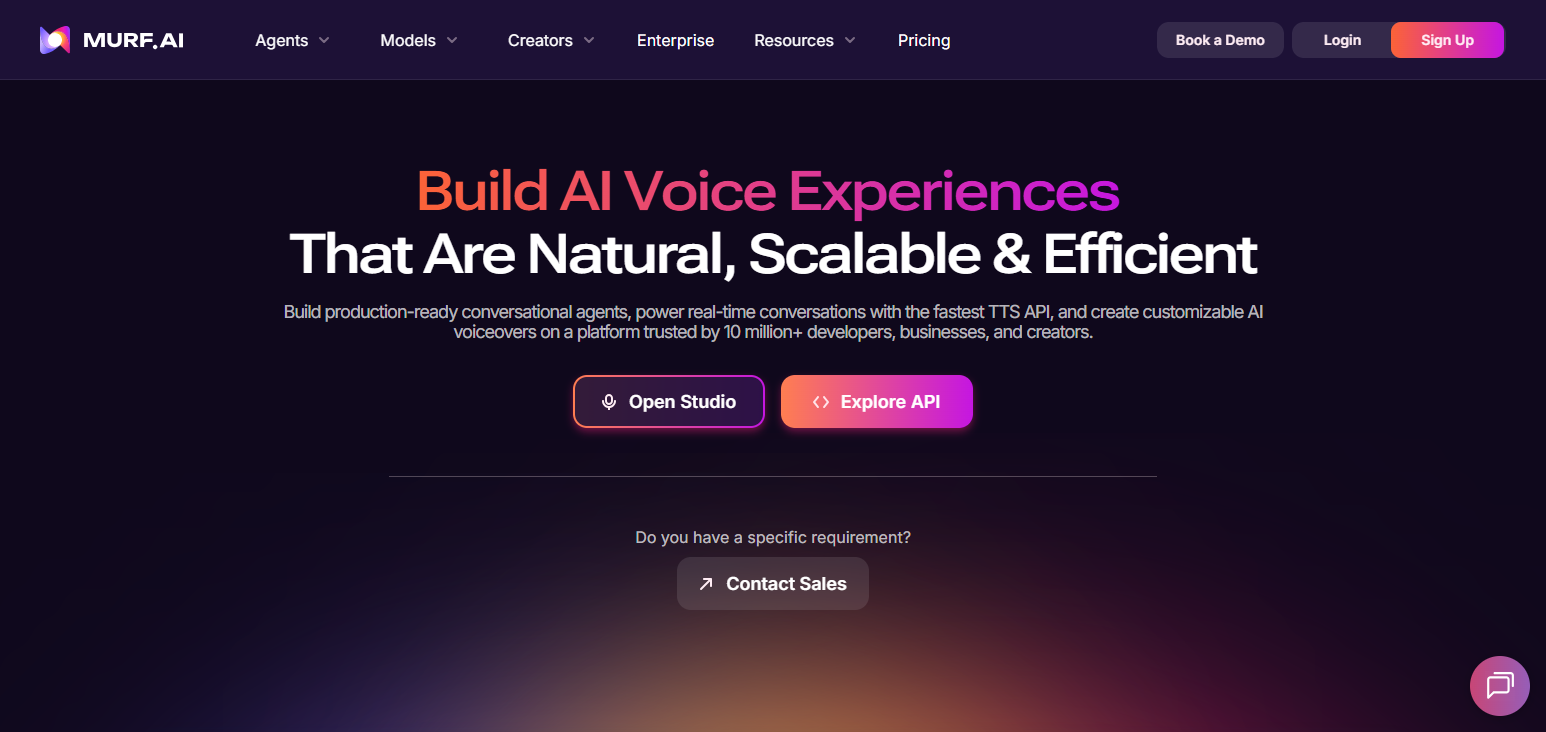
There are many styles of voice, languages and personalization options for recording marketing materials, training presentations, lectures, and other forms of digital content.
Channels for Murf AI are utilized by businesses to achieve high-quality audio productions without the frustrating and time-consuming processes of traditional recording methods.
Features in Murf AI
- Professional Voice Generator: High-quality AI audio for business.
- Voice Styles and Variants: Different tones, accents, formats, and styles.
- Text-To-Speech Technology: Written content to realistic audio output.
- Voice Customization: Change the speed, tone, and style of the audio output.
- Business Content Solutions: Training, marketing, and media production.
| Pros | Cons |
|---|---|
| Creates professional-quality AI voiceovers easily. | Mainly designed for content creation purposes. |
| Offers multiple voice styles and customization options. | Advanced features require premium plans. |
| Provides simple tools for non-technical users. | Less suitable for complex AI assistant development. |
| Supports business presentations and media production. | Voice realism varies across different voice models. |
| Saves time compared with traditional recording methods. | Limited developer-focused infrastructure compared with API providers. |
10. Cartesia
Cartesia is an emergingservices AI Voice Infrastructure Provider offering advanced voice AI models with ultra-high speed computations for real-time conversation applications.
The platform focuses on low-latency speech generation, and is therefore ideal for building AI agents, virtual assistants, and other interactive voice systems. Cartesia provides developers with advanced APIs for natural, interactive, and context-aware conversations.

Its technology is built for applications requiring immediate voice responses, real-time conversational AI, virtual acoustic interaction, voice assistant systems, gaming interface and interaction
Silent operation, zero-click interference, low latency, conversation AI applications. Cartesia helps organizations achieve seamless voice interactions through advanced and scalable AI voice infrastructure.
Features in Cartesia
- Ultra-Fast Voice Models: AI voice responses designed for interactivity and real-time connection.
- Low-Latency Speech Generation: Suitable for real-time conversation.
- Voice Customization: Adjust speech rate, tone, and style.
- Business Content Solutions: Training, marketing, and media production.
- Scalable Voice Technology: Efficient voice communication systems for businesses.
| Pros | Cons |
|---|---|
| Provides ultra-fast AI voice responses for real-time applications. | Newer platform with smaller ecosystem compared with competitors. |
| Offers low-latency voice generation technology. | Limited public resources and community support. |
| Suitable for conversational AI agents and assistants. | Advanced features may require developer expertise. |
| Provides efficient voice APIs for applications. | Voice library options may be more limited. |
| Supports scalable voice infrastructure for businesses. | Less proven for large enterprise deployments. |
Conclsuion
In short, the Best AI Voice Infrastructure Providers allow companies to develop sophisticated voice applications with sophisticated speech recognition, AI-generated voices, and interactive voice applications that enable real-time communication.
Programs such as ElevenLabs, Deepgram, Google Cloud Speech-to-Text, OpenAI Voice API, and Azure AI Speech offer flexible solutions to different industries.
Making the right choice largely depends on your specific needs, such as, but not limited to, accuracy, customization, integration, and the nature of your business.
FAQ
Why are AI Voice Infrastructure Providers important?
They help businesses create conversational AI systems, automate communication, and deliver realistic voice experiences across different applications.
Which is the best AI Voice Infrastructure Provider?
The best provider depends on requirements. ElevenLabs, Deepgram, Google Cloud Speech-to-Text, and OpenAI Voice API are popular choices.
What features should AI Voice Infrastructure Providers offer?
Key features include speech recognition, voice cloning, multilingual support, real-time processing, APIs, and scalable cloud infrastructure.
Can AI Voice Infrastructure Providers create human-like voices?
Yes, platforms like ElevenLabs and PlayHT use advanced AI models to generate realistic human-like voices.