This article will discuss Best Banking APIs, noting the most useful features for Fintech App Development, such as securely navigating transactions and integrating innovative financial solutions.
The APIs are changing the operational structure of fintech applications for developers, with account information, payment, compliance, and worldwide service solutions, allowing for the creation of sophisticated, flexible, and customer-centric financial products.
Key Points & Best Banking APIs For Fintech App Development
- Plaid: Widely used for account aggregation, enabling apps to securely connect with users’ bank accounts.
- Yodlee: Provides financial data aggregation and analytics, powering personal finance and wealth management apps.
- Stripe Treasury: Offers embedded banking services like issuing cards, holding funds, and managing accounts.
- TrueLayer: Focuses on open banking in Europe, enabling secure access to bank data and payments.
- Finicity: A Mastercard company specializing in credit decisioning, financial insights, and open banking APIs.
- Marqeta: Known for card issuing and payment processing APIs, ideal for fintechs offering debit/credit solutions.
- Banking Circle: Provides cross-border payment APIs and banking infrastructure for fintechs and PSPs.
- Solarisbank: A German-based banking-as-a-service platform offering APIs for KYC, payments, and lending.
- Railsbank: Enables fintechs to build financial products with APIs for issuing cards, accounts, and compliance.
- Currencycloud: Specializes in cross-border payments and FX APIs, helping fintechs handle international transactions.
10 Best Banking APIs For Fintech App Development
1. Plaid
Plaid is a top banking API used by many fintech applications to link to users bank accounts securely. It allows retrieval of bank account balances, transaction history, and offers bank account authentication.
This features are great for any personal finance, lending, and payments applications. Plaid offers great security and is easy to connect to many banks across the globe.
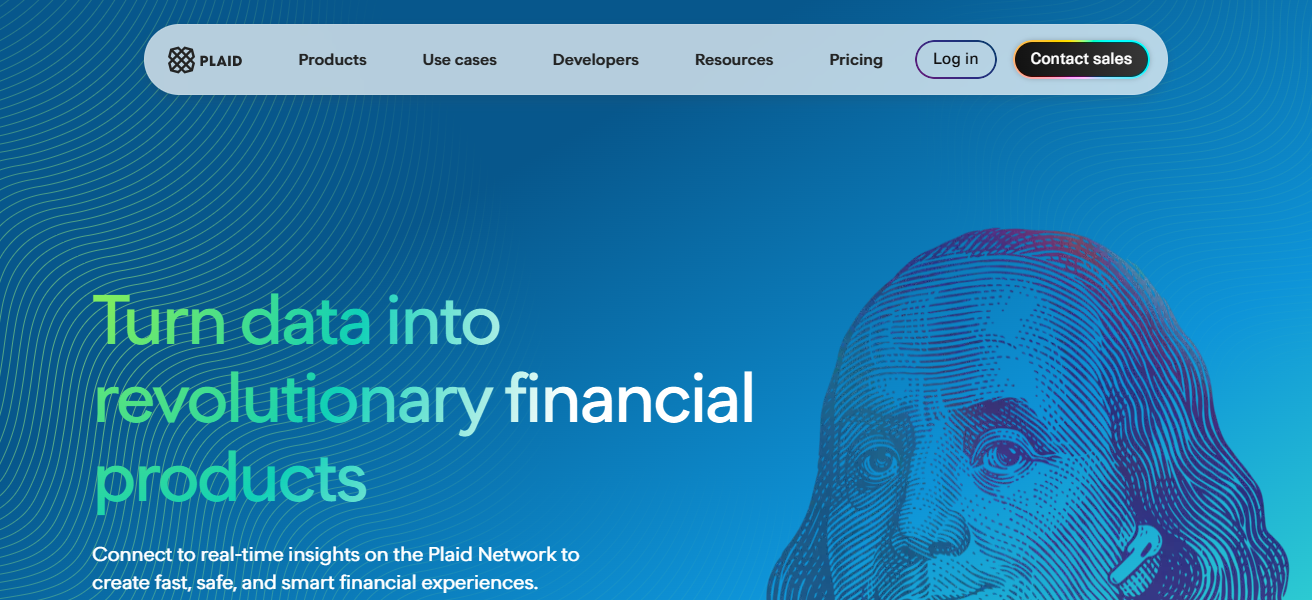
Developers are able to create features like instant account verification, budgeting, and fraud detection.
Its ability to scale and comply with open banking standards makes it a top choice among Plaid’s competitors for any startup and large scale fintech companies.
| Pros | Cons |
|---|---|
| Easy integration with thousands of banks worldwide | Limited coverage in some regions outside the US/EU |
| Strong security and compliance with open banking standards | Pricing can be high for startups |
| Supports account verification, transactions, and fraud detection | Occasional delays in data refresh |
2. Yodlee
Yodlee is a leader in providing aggregated financial data, applying industry leading APIs that analyze consumer spending habits.
Through partnerships with numerous financial institutions, Yodlee helps fintech applications offer tailored services in financial management, credit scoring, and wealth management.
Yodlee’s analytics capabilities empower app developers to assist users in monitoring expenditure, managing investments, and achieving future financial goals.
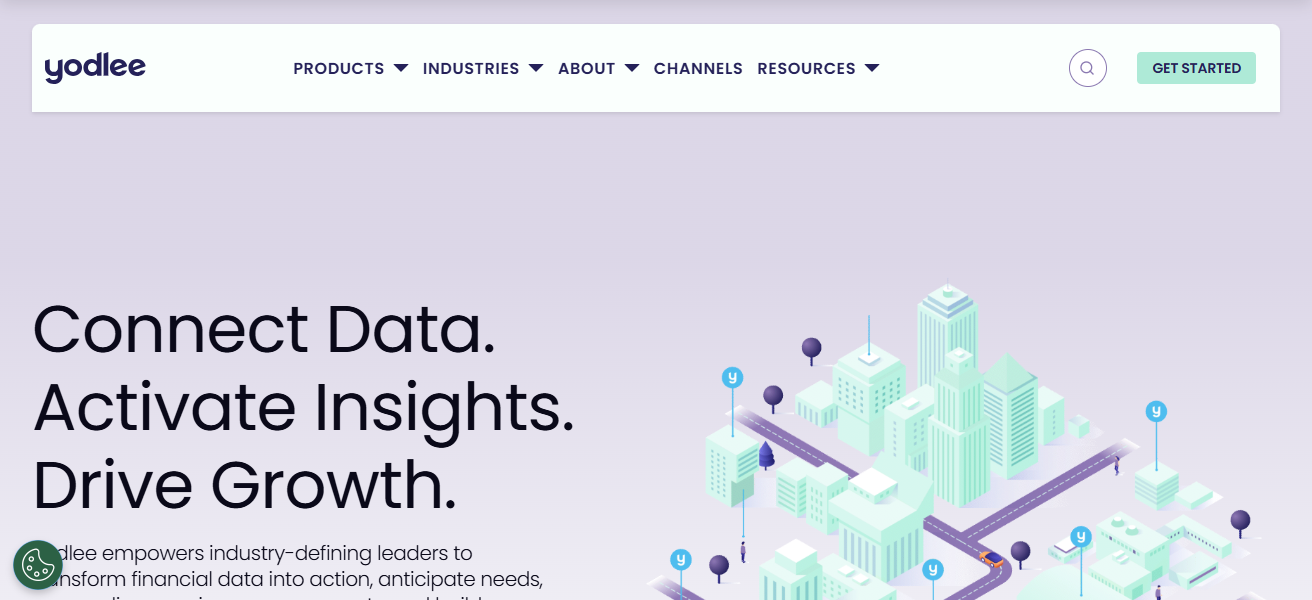
Yodlee’s adherence to GDPR and PSD2 means they prioritize the security and privacy of their customers data.
For fintechs concentrating on financial wellness, Yodlee integrates actionable customer insights to increase engagement.
| Pros | Cons |
|---|---|
| Extensive financial data aggregation and analytics | Complex setup compared to newer APIs |
| Strong compliance with GDPR and PSD2 | Some developers report slower API responses |
| Useful for credit scoring and wealth management apps | Higher costs for advanced features |
3. Stripe Treasury
Fintechs can now embed financial services into their apps thanks to Banking-as-a-Service by Stripe Treasury, which broadens Stripe’s payment ecosystem.
Developers can use this API to manage accounts, store and transfer money, and even issue cards, all on a single platform.
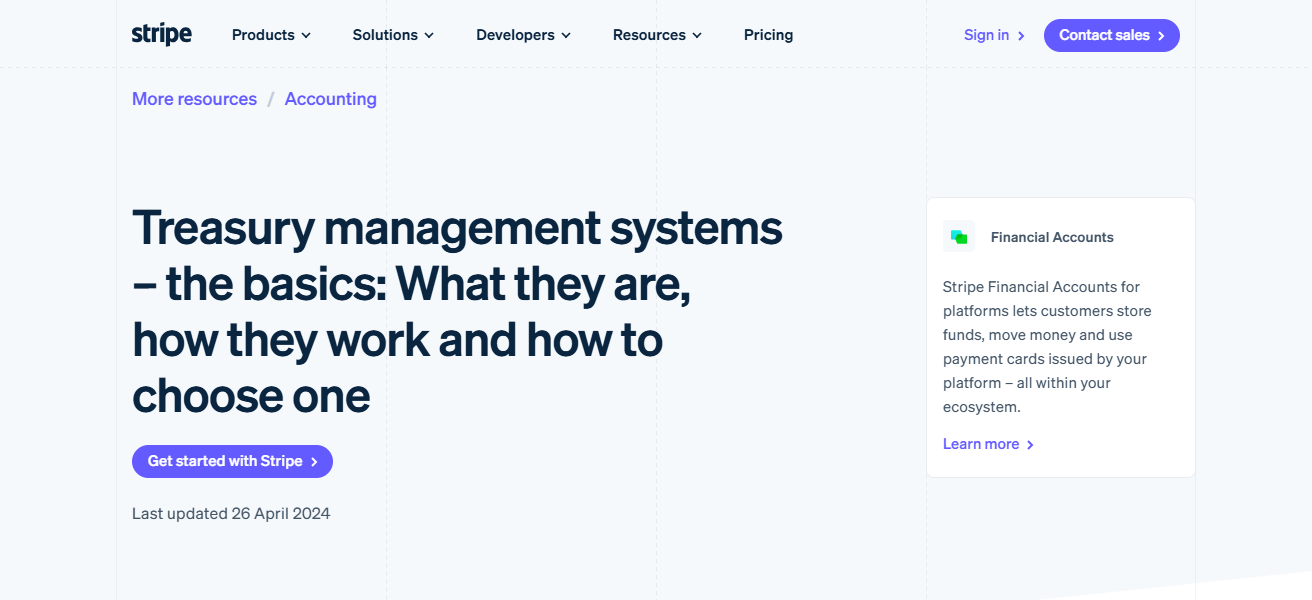
Stripe Treasury’s embedded financial product offering is invaluable to companies operating as marketplaces, neobanks, and SaaS. Because of its unique payment infrastructure, Stripe Treasury is reliable and scalable.
Since Stripe Treasury is a combination of payments and banking, fintechs can now provide customers with current financial services, which improves innovation and decreases operational complexity.
| Pros | Cons |
|---|---|
| Seamless integration with Stripe’s payment ecosystem | Limited availability outside certain regions |
| Enables embedded banking services like accounts and cards | Requires reliance on Stripe’s infrastructure |
| Scalable and developer-friendly | May not suit fintechs needing full banking independence |
4. TrueLayer
Providing secure banking data and payment processing, TrueLayer was the first open banking provider in Europe. It allows users of fintech applications to authenticate, access account details, and make direct payments from their bank accounts.
TrueLayer’s strongest competetive advantage is compliance with the PSD2 regulations and the ability to ease the integration of complicated banking systems.

Developers leverage TrueLayer’s APIs to create solutions for immediate payment processing, ID verification, and data analysis.
Transparency and security make TrueLayer a trusted partner to many fintechs looking to scale in Europe. TrueLayer is instrumental in augmenting the services of fresh digital applications with the resources of legacy banks.
| Pros | Cons |
|---|---|
| Strong focus on open banking in Europe | Limited global reach beyond EU/UK |
| PSD2-compliant and highly secure | Smaller bank coverage compared to Plaid/Yodlee |
| Enables instant payments and identity verification | May require additional APIs for broader functionality |
5. Finicity
Finicity, a Mastercard subsidiary, focuses on open banking API solutions, particularly for financial data related to credit decisioning, personal finance, and lending.
Finicity’s embedded APIs help fintech apps to access accounts in real-time, income verification, and credit risk assessment.
Because of this, Finicity helps lenders, mortgage lenders, and financial advisors. Finicity helps fintechs improve trust, decrease fraud, and streamline processes.

Because of fraud trust streams Strong regulatory compliance and partnerships with top financial institutions provide peace of mind.
Finicity enables fintechs to provide customers and institutions with innovative financial solutions to banking data.
| Pros | Cons |
|---|---|
| Real-time financial data for credit decisioning | Primarily focused on US market |
| Backed by Mastercard, ensuring reliability | Less coverage in international markets |
| Useful for lenders and mortgage providers | Integration can be complex for small fintechs |
6. Marqeta
Since its founding, Marqeta has distinguished itself as a pioneer in modern card-issuing platforms, providing seamless APIs for the creation, management, and processing of payment cards.
Fintechs partner with Marqeta to implement customizable features and launch programable debit, credit, and prepaid card products with spending control, transaction monitoring, real-time tokenization, and unique features.
This custom API flexibility adds immense value to neobanks, Buy Now Pay Later (BNPL) companies, and gig economy app developers.
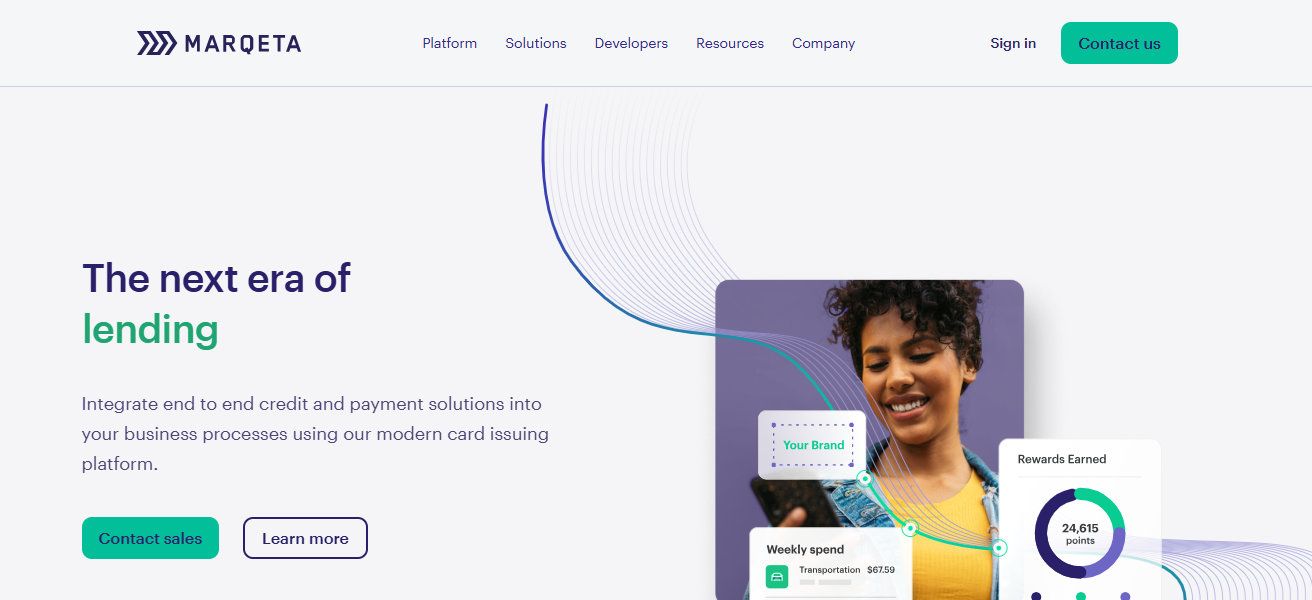
Marqeta is the only card-issuing partner that developers can rely on to simplify the complexity of global card-issuing across the fraud prevention spectrum, allowing them to offer global payment innovations.
This unique combination empowers fintechs to innovate in payment solutions, simplifying compliance and providing scalable solutions across multiple global markets.
| Pros | Cons |
|---|---|
| Flexible card issuing and management APIs | Focused mainly on card-based solutions |
| Real-time transaction monitoring and fraud prevention | Limited beyond payments ecosystem |
| Global reach with customizable features | Costs can scale quickly with usage |
7. Banking Circle
APIs offered by Banking Circle have cross-border payment solutions and banking infrastructure tailored for fintechs, PSPs, and banks.
Banking Circle’s platform provides fintechs the ability to access international payment systems, manage multi-currency accounts and optimize transaction expenses.
For businesses that are or wish to expand globally, Banking Circle simplifies and streamline international banking.
Developers are able to use the APIs to provide cross-border payment services to customers that are faster, cheaper, and more transparent.
Thanks to their solid compliance and regulatory support, Banking Circle secure transactions. Banking Circle offers fintechs the competitive advantage against traditional banks by providing affordable dominant global financial services infrastructure without the burden of outdated systems.
| Pros | Cons |
|---|---|
| Strong cross-border payment infrastructure | Less suited for domestic-only fintechs |
| Multi-currency accounts and reduced transaction costs | Requires regulatory navigation for global expansion |
| Scalable for international businesses | May be complex for small startups to adopt |
8. Solarisbank
Based in Germany, Solarisbank is a banking-as-a-service platform that offers APIs for digital banking, payments, lending, and KYC.
It offers modular solutions for fintechs, helping them build financial products rapidly and in a secure manner.
APIs from Solarisbank encompass all elements of the account creation and identity verification process, which allows fintechs to streamline their operations and prioritize innovation instead of infrastructure.
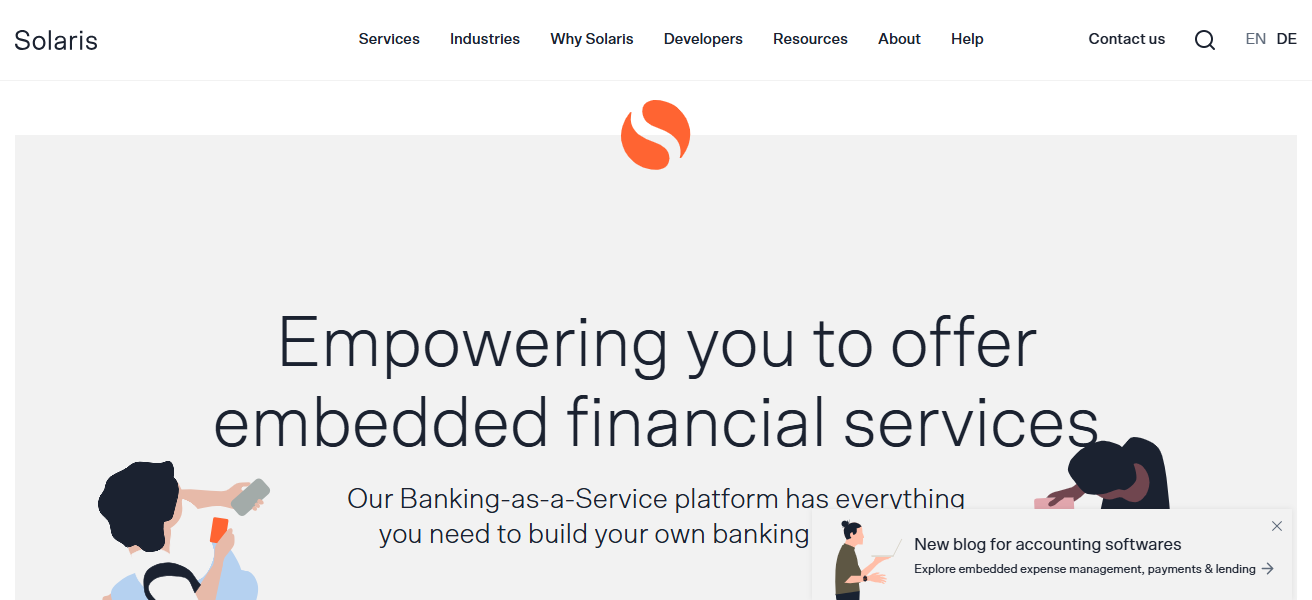
The company’s regulatory strength as a licensed bank fosters trust and ensures compliance. Developers choose Solarisbank to easily build digital wallets, lending platforms, and neobanks.
Solarisbank provides the fintech ecosystem with the ability to offer complete, modern banking services, allowing them to create tailored banking experiences.
| Pros | Cons |
|---|---|
| Licensed bank offering full suite of APIs | Primarily focused on European market |
| Covers payments, lending, and KYC | Expansion outside EU can be challenging |
| Modular solutions for neobanks and wallets | Regulatory compliance adds complexity |
9. Railsbank
Railsbank provides banking-as-a-service internationally to FinTech companies and allows them to integrate financial services into their products using APIs.
The company provides services ranging from card issuance, account creation, payment management, and compliance.
The company’s primary strengths include flexibility and scalability. Developers are able to use the platform to create and deploy financial services without developing their own core banking systems.
For new FinTech companies, the APIs created by Railsbank are essential for them to enter the market faster while avoiding operational complexities.
Compliance and a focus on the needs of customers makes Railsbank a trusted partner for FinTech companies looking to provide disruptive services to the banking industry.
| Pros | Cons |
|---|---|
| Flexible banking-as-a-service platform | Still growing global coverage |
| Supports cards, accounts, and compliance | May lack advanced analytics compared to Yodlee/Plaid |
| Fast time-to-market for fintech startups | Costs may rise with scaling |
10. Currencycloud
Currencycloud offers foreign exchange and cross-border payment APIs to fintechs to help them manage international payments with greater efficiency.
Developers can use its platform to add multi-currency wallet capabilities, global payments, and real-time foreign exchange (FX) processing to their applications.
Currencycloud is especially useful for fintechs that offer and serve consumers and businesses with global use cases, such as cross-border payments, remittance services, and global e-commerce.
Currencycloud improves and clarifies payment processes and foreign exchange (FX) services to lower overall costs.
Its comprehensive international regulatory coverage provides safe and secure payments. With Currencycloud, fintechs can build reliable cross-border payment solutions to support their international growth.
| Pros | Cons |
|---|---|
| Specializes in cross-border payments and FX | Focused mainly on international transactions |
| Real-time FX rates and multi-currency wallets | Less useful for domestic-only fintechs |
| Strong compliance with global regulations | Integration complexity for small teams |
Cocnlsuion
To summarize, the most effective banking APIs for fintech app development enable innovators to create financial solutions that are secure, scalable, and focused on the needs of the customers.
These APIs, from account aggregation to issuing cards and making cross-border payments, help to streamline complicated banking systems.
Fintechs simplify growth, compliance, and the provision of cutting-edge digital services that reshape finance by using these banking APIs.
FAQ
They enable secure transactions, account verification, compliance, and innovative financial features without building core banking systems.
Plaid and Yodlee are widely used for connecting user accounts and aggregating financial data.
Marqeta provides powerful APIs for creating and managing debit, credit, and prepaid cards.
Currencycloud and Banking Circle specialize in international payments and multi-currency solutions.