
The Best BNPL APIs for Merchants – They Enable Businesses to Provide Flexible Payment Options. Merchants are able to convert more sales, enhance customer satisfaction, and increase the overall value of orders with Buy Now Pay Later solutions.
With the right BNPL API, merchants can streamline the checkout process, lower cart abandonment, and maintain an advantage in the highly competitive digital commerce arena.
Key Points & Best BNPL APIs For Merchants
| BNPL API | Key Point |
|---|---|
| Klarna | Global reach with strong fashion & luxury partnerships |
| Affirm | Popular on Amazon, transparent installment terms |
| Afterpay | Simple 4‑installment model, strong in US & Australia |
| Zip | Flexible repayment options, wide merchant integrations |
| Sezzle | Focus on younger shoppers, credit‑building features |
| Splitit | Uses existing credit cards, no new loans required |
| PayPal Pay Later | Trusted brand, seamless integration with PayPal ecosystem |
| Perpay | Payroll‑linked BNPL, ideal for employee purchases |
| ViaBill | Strong presence in Europe, easy merchant onboarding |
| Humm | Supports both small and large purchases, flexible terms |
10 Best BNPL APIs For Merchants
1. Klarna
Klarna is a leading provider for “Buy Now, Pay Later” options. Customers are allowed to pick payment plans to buy things in 3 or 4 installments, pay later in 30 days, or choose longer financing options.
Using Klarna’s REST APIs and SDKs, merchants can integrate BNPL to their checkout process, order and refund management, customer session and webhook management, and fraud management.
This order management integration is designed to increase average order value and conversion rates by offering more flexible payment options to customers.
Klarna Features
- Custom Payment Solutions: Klarna lets merchants offer flexible buying options to customers such as: pay in 3 or 4 installments, monthly financing, and pay later!
- Seamless Integration: Robust APIs and SDKs make integrations simple and straightforward, as well as detailed documentation for checkout and backend integrations.
- Global Merchant Support: Klarna helps merchants grow their service area to include international countries and currencies.
- Optimized Risk Management: Klarna helps protect merchants from risk and fraud with insights dashboards, and merchant tools to analyze customer behavior, and fraud.
| Pros | Cons |
|---|---|
| 1. Well-known global brand that instills customer trust. | 1. Merchant fees are relatively high. |
| 2. Offers multiple pay-later and instalment options. | 2. Integration can be complex for custom systems. |
| 3. Advanced merchant dashboard with analytics. | 3. Settlement times can vary. |
| 4. Helps increase conversions and average order value. | 4. Returns and disputes add operational work. |
| 5. Fraud and risk management tools included. | 5. Approval criteria controlled by Klarna, not merchant. |
2. Affirm
Affirm supports customers’ flexible installment payment options while offering merchants API and SDKs that integrate with major ecommerce platforms. It offers various financing options, clear and simple pricing, and rapid funding for merchants.
Merchants appreciat the fact that Affirm takes on customer credit risk, pays merchants in a timely manner, and improves checkout options with extended payment plans.
Affirm is very popular among large retailers because it increases sales by allowing customers to make responsible higher-priced purchases without incurring hidden or compounding interest.
Affirm Features
- No Secrets: Customers appreciate transparency, and with Affirm, merchants provide customers with simple terms.
- Payment for the Merchant: Affirm pays the merchant immediately to optimize cash flow, even when customers haven’t completed payment.
- Flexible Repayment Options: Affirm allows merchants to customize repayment plans to align with varying product price points.
- Rapid Integration: Affirm allows merchants to easily customize their offerings with numerous e-commerce platforms.
| Pros | Cons |
|---|---|
| 1. Clear and transparent payment plans. | 1. Merchant fees can be higher than basic payment gateways. |
| 2. Ideal for larger purchases. | 2. Some customers may get financing declines. |
| 3. Pays merchants quickly after purchase. | 3. Setup requires careful configuration. |
| 4. Boosts customer trust and basket size. | 4. Not as flexible for very short-term payments. |
| 5. Supports multiple e-commerce platforms. | 5. Some underwriting conditions are rigid. |
3. Afterpay
Afterpay’s business model appeals to fashion and lifestyle retailers as customers can make 4 interest-free payments over 6 weeks on their purchases.
Afterpay can be embedded into checkouts via direct APIs or through platform plugins like Shopify or WooCommerce.
Afterpay Fronts the payment to the merchants and takes credit and collection risk. Afterpay’s easy integration and popularity with younger consumers help merchants increase conversion rates and average order values while minimizing business risks.
AfterPay Features
- No Interest – Ever: Customers can make a purchase and then subsequently split their payments into a predetermined number of equal installments, and no interest will be charged.
- Paid Upfront, Always: Merchants do not need to wait for customers to pay their installments to receive payment.
- Marketing towards Gen Z: Rapidly growing popularity with Gen Z and Millennials with interest in fashion and lifestyle brands.
| Pros | Cons |
|---|---|
| 1. Interest-free instalments popular with youth. | 1. Limited to short repayment cycles. |
| 2. Pays merchants upfront. | 2. Fees can reduce margins. |
| 3. Easy to integrate with major platforms. | 3. Not ideal for high-value items. |
| 4. Reduces cart abandonment. | 4. Return handling timing differences. |
| 5. Encourages repeat customers. | 5. Core features focus on small-ticket orders. |
4. Zip
Zip provides merchants with flexible BNPL solutions online and in store and flexible integrations with plugins and APIs.
Customers can make interest-free installments on payments and can use virtual cards for even broader payment solutions.
Merchants appreciate Zip’s cross-border multi-currency, omnichannel flexibility, and international sales channel Zip’s cross-border multi-currency.
Quick merchant onboarding, omnichannel flexibility, and global cross-border multi-currency capabilities enhance the checkout experience and increase average order values.
Zip Features
- Support for all channels: Works for all online and in-person transactions with virtual cards.
- International payments: Supports payments in various currencies, which allows international merchants to receive payments in local currency.
- Individualized payment plans: Customers can choose how to adjust to the dividable payments.
- Digital payment methods: Supports the use of digital wallets and virtual cards.
| Pros | Cons |
|---|---|
| 1. Works online and in-store seamlessly. | 1. Merchant fees can be a constraint. |
| 2. Virtual card options improve flexibility. | 2. Variable customer fees may affect perception. |
| 3. Supports multi-currency usage. | 3. Settlement reconciliation can be complex. |
| 4. Boosts cart totals. | 4. Approval depends on credit factors. |
| 5. Good omnichannel buyer reach. | 5. Customer defaults can influence acceptance. |
5. Sezzle
Sezzle customers can split payment into as low as four interest-free installments and have the flexibility to postpone any of the payments.
Through REST APIs or ready-made plugins for e-commerce platforms, merchants can use Sezzle. Sezzle takes on the repayment risk, lessening the financial risk for the merchant, as Sezzle pays the merchants in advance.
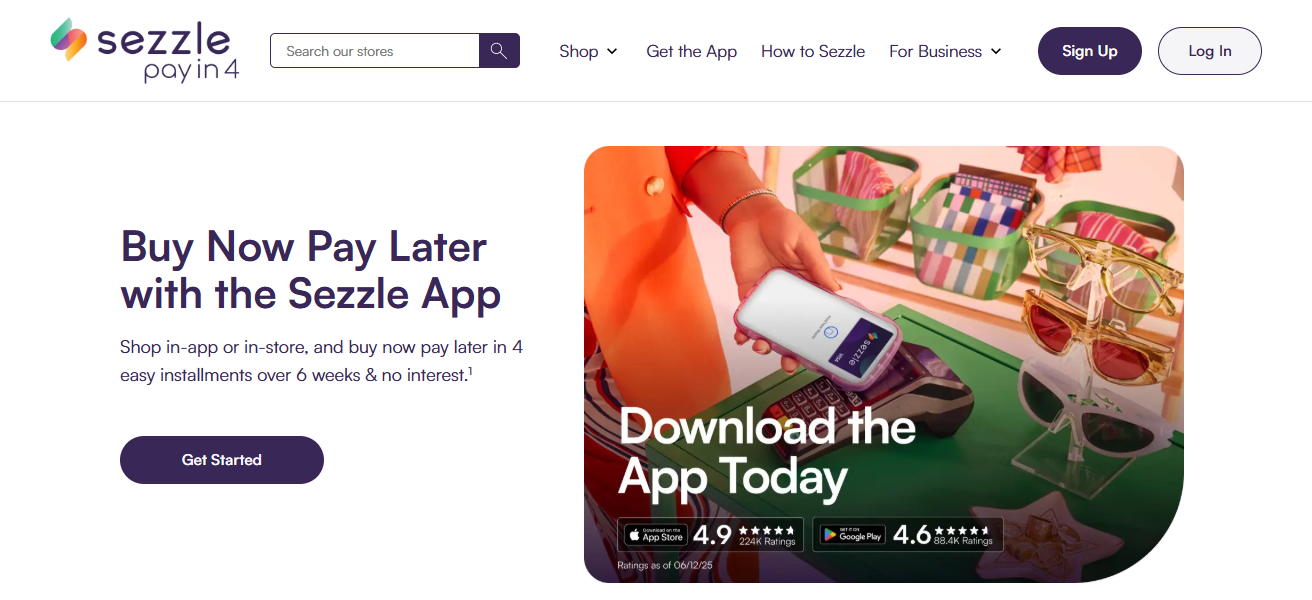
Because of the soft credit check policy, Sezzle entice customers who are young and are on a budget and interested in a payment plan without interest.
Sezzle helps merchants increase sales and lower cart abandonment. It also helps merchants reach customers who like the plan of payments being settled in a definable way.
Sezzle Features
- Interest-free installment payments: Customers can make purchase in increments and not be charged interest, which incentivizes purchases.
- Non-invasive credit checks: Easy to get approved with no significant impact on credit scores.
- Instant payment to merchants: Merchants get paid which helps to mitigate the risk of not getting paid.
- Easy to implement: E-commerce businesses can easily integrate with their checkout process using APIs or plug-ins.
| Pros | Cons |
|---|---|
| 1. Interest-free instalments increase appeal. | 1. Smaller brand reach than bigger players. |
| 2. Soft credit checks for customers. | 2. Fewer plan variations. |
| 3. Pays merchants upfront. | 3. Fees can accumulate for merchants. |
| 4. Easy integration with e-commerce platforms. | 4. Rescheduled payments complicate tracking. |
| 5. Appeals to budget-focused shoppers. | 5. Less awareness outside core markets. |
6. Splitit
Splitit provides a distinct Buy Now, Pay Later (BNPL) service that uses customers’ current credit card limits and does not provide any additional credit.
By using APIs to integrate with Splitit, merchants can allow customers to divide payments over time, keeping credit relationships with customers and avoiding interest.
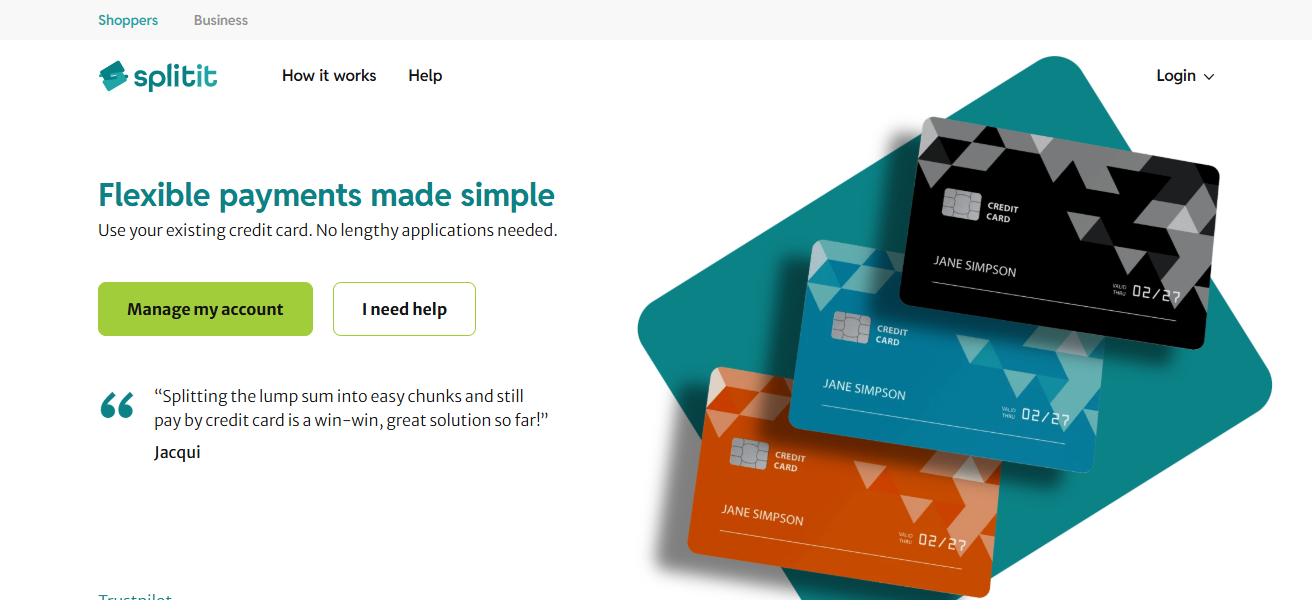
Since no new loans are made and credit checks are less involved, the risk is lower for both customers and merchants.
Splitit helps stores worldwide and enhances flexibility when checking out, especially for purchases that are mid to high value and don’t require debt financing.
Splitit Features
- Use current credit limits: Customers can make installment payments using their credit cards.
- No additional credit lines: Lowers the risk of using too much credit by not adding any more debt.
- Less risk for merchants: Predictable revenue without comprehensive loan underwriting.
- Less credit checks: Fewer barriers for customer approval and easier onboarding.
| Pros | Cons |
|---|---|
| 1. Uses existing credit card limits. | 1. Not all customers have sufficient limits. |
| 2. No new credit lines required. | 2. Approval rate can be lower. |
| 3. Low risk for merchants and buyers. | 3. Customer experience depends on credit card. |
| 4. Minimal credit checks. | 4. UX must clearly explain lock-in of limits. |
| 5. Predictable settlements. | 5. Not a true loan product. |
7. PayPal Pay Later
PayPal Pay Later offers seamless integration for merchants already using PayPal Checkout to manage BNPL, as it is already a part of the PayPal ecosystem.
Customers can select either an installment or a pay later option during checkout as merchants receive immediate payment to their account.
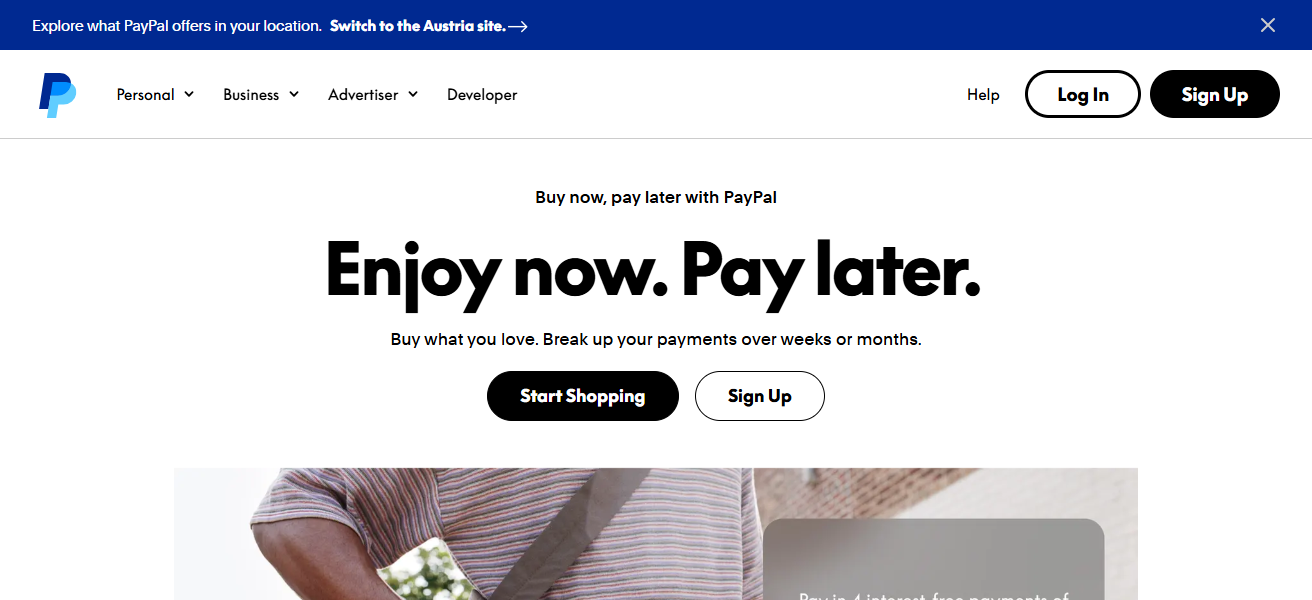
Because of PayPal’s global reach and established user trust, merchants are able to expand their customer base and improve conversion rates, particularly for cross-border transactions.
Additionally, due to automated API features, merchants can often implement this with little extra development effort.
PayPal Pay Later
- Integrated with PayPal: BNPL service is integrated with PayPal Checkout, allowing for seamless workflow integration.
- Recognition: Customers are more likely to utilize Pay Later because they are familiar with PayPal as a trusted brand.
- International Companies: Flexible international coverage that supports geography extensive clientele.
- Multiple Options: Customers will have multiple possibilities to pay through PayPal’s wallet options.
| Pros | Cons |
|---|---|
| 1. Uses PayPal’s massive user base. | 1. Higher fees than standard PayPal transactions. |
| 2. Easy for merchants already on PayPal Checkout. | 2. Limited to PayPal’s BNPL rules. |
| 3. Builds customer trust through PayPal brand. | 3. Less flexibility in customization. |
| 4. Speeds up purchase decisions. | 4. Approval controlled by PayPal. |
| 5. Good for international reach. | 5. BNPL visibility tied to PayPal wallet. |
8. Perpay
Perpay’s payment plans are linked to customers’ individual paychecks, and they have API integrations with payroll and income platforms.
It is designed for consumers without traditional credit; however, merchants also benefit because they can serve more underbanked customers.
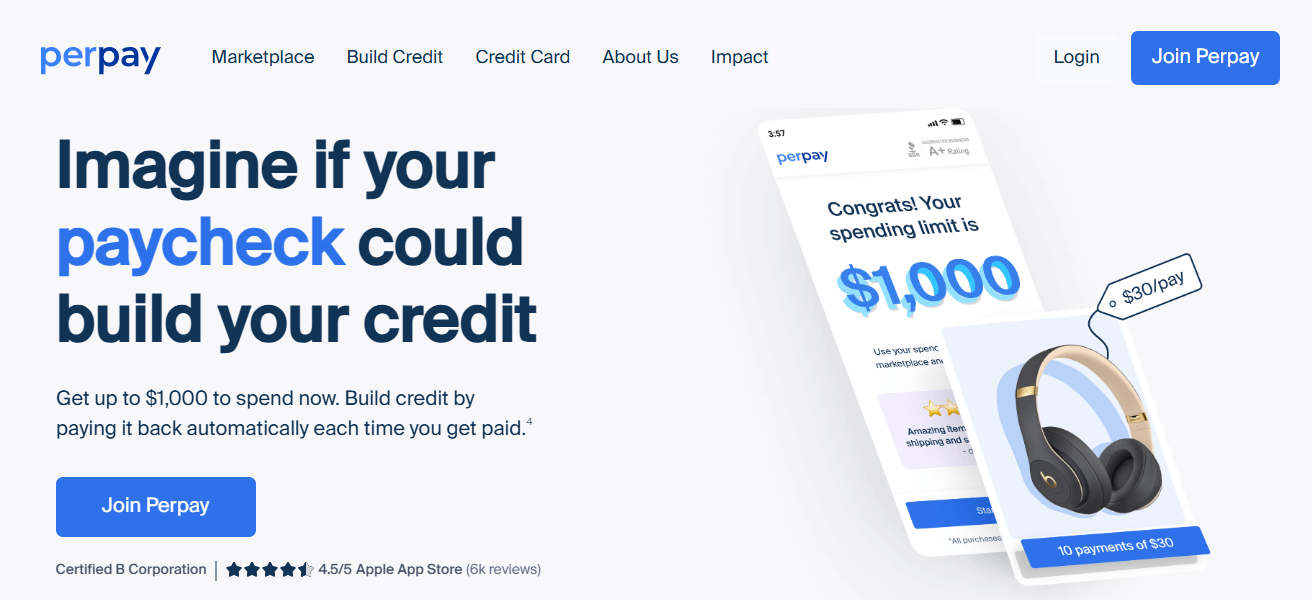
By automatically scheduling repayments, Perpay encourages repeat purchases and increases sales from customers who want to make purchases using segmented payment plans from their income.
Perpay Features
- Income-based installments: Customers pay based on their earnings which help affordability.
- Cycle-based payment: Payments are set to operate on the pay cycle, which lowers the default rate.
- Financing for the underbanked: Offers funding options for customers with no or limited credit access.
- Expanded merchant segmentation: Generates sales to customers that do not conform to standard credit criteria.
| Pros | Cons |
|---|---|
| 1. Targets underbanked or payroll-linked shoppers. | 1. Lower brand recognition. |
| 2. Automatic repayment from income cycles. | 2. Limited for very large purchases. |
| 3. Opens access to new customer segments. | 3. Merchant onboarding support needed. |
| 4. Simplifies approval process. | 4. Fewer repayment term options. |
| 5. Encourages repeat engagement. | 5. Smaller ecosystem than big BNPL names. |
9. ViaBill
ViaBill provides businesses with a buy now pay later option where customers can divide their payments into interest-free or low-fee installments.
Businesses can add ViaBill as a payment option at checkout and integrate them using their API or ecommerce plugins. ViaBill keeps the credit risk and pays the businesses right away, making cash flow more predictable.

Because of the simple integrations and clear structure of fees, businesses are likely to see increased conversions and average order values, as they will simplify checkout financing for shoppers.
ViaBill Features
- Enhanced Customer Experience: Customers can better manage their budget by paying in instalments.
- Risk-Free for merchants: ViaBill take on customer payment risk, enabling merchants to get Paid in full Upfront.
- Ecommerce Capabilities: Offers the easiest integration into multiple ecommerce platforms through APIs or plug-ins.
- Improved Conversion rate: Reduces checkout abandonment and encourages customers to complete their purchase.
| Pros | Cons |
|---|---|
| 1. Simple instalments, often interest-free. | 1. Limited regional availability. |
| 2. Pays merchants upfront. | 2. Basic repayment options. |
| 3. Easy ecommerce plugin integration. | 3. Fewer advanced analytics tools. |
| 4. Attractive to value-oriented shoppers. | 4. Less well-known globally. |
| 5. Reduces checkout friction. | 5. Reconciliation needs careful handling. |
10. Humm
Humm is a buy now pay later service that offers flexible installment plans for both smaller purchases and larger ones that require financing with extended repayment terms.
Humm partners with merchants to provide Humm as an option for checkout, either through integrations or digital payment cards.
For merchants, Humm pays upfront and takes on repayment risk, which can increase sales for larger items and improve accessibility for customers.
Product availability and terms may vary by region and change as offerings from providers are updated.
Humm Features
- Diverse Financing Options: customers can select pay-over-time options based on their purchase preference.
- Large ticket items: customers can purchase larger items that regular BNPL offerings do not cover.
- Installment Financing for merchants: Merchants get paid in full Upfront while customers pay in Installments.
- Consumer choice: Offers various term lengths for different buyer needs.
| Pros | Cons |
|---|---|
| 1. Flexible terms ranging to longer plans. | 1. Fees for extended terms are higher. |
| 2. Enables big-ticket purchasing options. | 2. More complex user decision experience. |
| 3. Pays merchants upfront. | 3. Availability varies by region. |
| 4. Strong for durable goods retailers. | 4. Requires clear UX for terms. |
| 5. Encourages higher average cart value. | 5. Terminology and repayment plans can confuse buyers. |
How To Choose Best BNPL APIs for Merchants
Evaluate fees vs revenue increase: Analyze expenses against improvements in conversion and average order value.
Assess global reach: Check if BNPL provider covers your target countries and accept the currencies.
Assess integration simplicity: Choose APIs with better documentation, SDKs, and platform plugins to lessen dev work.
Fraud & risk: Look for built-in tools to protect merchants from chargebacks and write-offs.
User experience: Prioritize BNPL with seamless, clear, and reliable checkout for customers.
Settlement speed: Cash flow and operation predictability improve with faster payments.
Repayment variety: cater to customers with different payment preferences.
Brand visibility: BNPLs that are popular increase shopper trust and likelihood to convert.
Reliability & support: Good merchant support makes it easier to troubleshoot and ensures uptime.
Flexibility features: The ability to customize payment experience to fit your brand.
Conclusion
To sum up, the merchant BNPL APIs are best when they allow for flexible payments that improve customer experience and increase conversion rates.
With more payment flexibility, merchants can further reduce cart abandonment, improve average order value, and increase audience reach.
Considering factors like cost, ease of integration, and customer reach when selecting a BNPL API helps merchants sustain their growth and remain competitive in the ever-evolving ecommerce landscape.
FAQ
A BNPL API allows merchants to offer installment-based payments at checkout.
They increase conversions, reduce cart abandonment, and boost average order value.
Yes, most BNPL APIs pay merchants immediately after purchase confirmation.
Most providers offer developer-friendly APIs and ready-made ecommerce plugins.