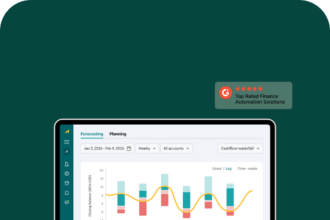
This article will focus on the tools that help CFOs manage and allocate capital the best. I will focus on tools that help financial leaders manage and allocate capital, manage and improve forecasts, and facilitate strategic growth. Financial planning is becoming more and more complicated.
For this reason, CFOs need these types of platforms so that the decision-making process is quick and straightforward. The goal is to help make sure the capital is being allocated to the areas that will help improve the organization and create value over time.
Key Points & Best Capital Allocation Software For CFOs
- Board — Integrated business planning across finance, operations, and strategy
- Wise — Best for infrastructure project management and capital allocation
- OpenGov — Tailored for public sector budgeting and transparency
- FMX — Strong in facility management and resource allocation
- Brightly — Focused on predictive analytics for smarter capital planning
- Gordian — Specialized in construction planning and cost optimization
- Anaplan — Powerful connected planning platform for enterprise‑wide capital allocation
- Workday Adaptive Planning — Known for flexible forecasting and scenario modeling
- Oracle Hyperion — Robust enterprise performance management with deep financial controls
- SAP BPC — Comprehensive budgeting and consolidation solution for large organizations
10 Best Capital Allocation Software For CFOs
1. Board
Board is a seamless integrated business planning solution that encompasses budgeting, forecasting, and performance management.
CFOs get an all-encompassing view of the financial and operational drivers of the business and helps them make informed decisions about the allocation of operational and financial resources.
With its user-friendly platform, executives can craft models, monitor scenario planners, and manage the alignment of strategic resources with the distribution of tactical goals.

The Board platform eliminates the use of spreadsheets to enhance the precision and agility of planning throughout the organization.
CFOs gain the ability to forecast returns on investments, manage the financial and operational risks associated with them, and streamline the allocation of funds to other business verticals.
Its flexibility and configurability make it the ideal solution for mid-sized and large companies wanting enhanced visibility and management over their financial planning.
| Pros | Cons |
|---|---|
| Integrated planning across finance, operations, and strategy | Can be complex to implement for smaller firms |
| Strong scenario modeling and forecasting | Requires training for full utilization |
| Scalable for mid-sized and large enterprises | Higher cost compared to simpler tools |
2. Wise
Wise streamlines the management of infrastructure projects and the allocation of funds, particularly aiding firms absorbing investments of considerable magnitude.
It facilitates cost monitoring, budget management, and long-term impact forecasting, which serves the CFOs well.
While Wise eliminates the spending and resource wastage on projects of little return, offering the best to the firm, it operationalizes the financial plan.

For top Executives, guiding the firm on the best resource allocation, Wise enhances operational efficiency and data-driven decision-making.
It is the best option for CFOs overseeing intricate elements of financially demanding projects, owing to the consolidation of financial and project data.
| Pros | Cons |
|---|---|
| Excellent for infrastructure project management | Limited appeal outside project-heavy industries |
| Strong budgeting and resource tracking | May lack advanced enterprise-wide planning features |
| Helps CFOs manage capital-intensive initiatives | Reporting customization can be challenging |
3. OpenGov
OpenGov, designed specifically for the public sector, provides transparency and accountability on budgeting and capital allocation.
Government and nonprofit CFOs use OpenGov for budget management, expenditure tracking, and financial plan communication.
With online collaborative budget management, OpenGov allows all departments to strategically align resources with goals.

OpenGov’s transparency builds trust and credibility, showcasing funding allocation to citizens and governing boards.
For CFOs, it eases the burden of regulatory compliance with actionable analytics on the investment. The OpenGov platform is particularly constructed for organizations that require public accountability.
| Pros | Cons |
|---|---|
| Tailored for public sector transparency | Less suited for private corporations |
| Cloud-based collaboration across departments | May require cultural adoption for openness |
| Simplifies compliance and regulatory reporting | Limited advanced financial modeling |
4. FMX
FMX offers facility management and resource distribution assistance, which is valuable when managing physical assets. It guides organizations on capital expense planning related to maintenance and upgrades and new project additions.
CFOs utilize FMX for asset life cycle management, preventive maintenance scheduling, and critical breakdown fund avoidance.

FMX integrates operational planning with financial management to allocate resources to sustain productivity and minimize risks.
Its reporting features aid in understanding the costs and facility investment ROI in the long term. It proves most beneficial to infrastructure-heavy sectors like education, healthcare, and manufacturing.
| Pros | Cons |
|---|---|
| Strong facility and asset management | Focused mainly on infrastructure-heavy organizations |
| Preventive maintenance planning reduces costs | Not ideal for broader financial planning |
| Clear ROI tracking for capital expenditures | May require integration with other finance tools |
5. Brightly
Brightly assists CFOs in preparing and managing capital more intelligently through predictive analytics for more effective capital planning.
Using predictive analytics and insights from data, Brightly helps organizations anticipate asset performance, risk, and investment opportunities.
CFOs particularly appreciate the ability to predict the outcome of alternative capital approaches and to assess the different costs from a given capital plan.

In addition to promoting constructive planning, Brightly helps organizations to identify areas in which constructive, cost-avoiding future expenditures can be made.
Organizations focused on sustainable performance and operational agility will appreciate the balance found in Brightly. It helps CFOs to make smart, forward-thinking decisions about how to allocate capital.
| Pros | Cons |
|---|---|
| Predictive analytics for proactive capital planning | May be data-intensive to set up |
| Supports sustainability and efficiency goals | Limited customization for niche industries |
| Helps CFOs anticipate future needs | Best suited for organizations with large asset bases |
6. Gordian
Gordian is a construction cost management firm that CFOs managing capital programs in infrastructure and facilities turn to for construction planning and cost management.
Gordian provides cost data, planning tools, and analytics to help create and maintain a budget. CFOs leverage Gordian to assess a construction project, budget and spend, and manage construction spending.
Gordian is data-driven, which improves transparency, and provides less risk of construction cost overrun and construction schedule delays.
Gordian connects financial construction cost management and capital construction spending for effective and valuable construction project outcomes.
Gordian aligns financial capital and construction cost management to the organization’s most important goals.
| Pros | Cons |
|---|---|
| Specialized in construction cost planning | Narrow focus on construction and facilities |
| Detailed cost benchmarking and project feasibility | May not cover broader enterprise planning |
| Reduces risks of overspending and delays | Implementation can be resource-heavy |
7. Anaplan
Anaplan excels in Connected Planning via best-in-the-industry support for CFOs in synchronizing capital allocations with enterprise level goals in all dimensions.
It brings together financial, operational, and strategic planning into one environment for frictionless cross collaboration in real time.
With Anaplan, CFOs are able to conduct sophisticated scenario planning, netting forecasts and planning for optimal distribution of resources.

Organizations are able to market position flexibly as Anaplan allows a rapid, in-the-moment, strategic insertion of capital to be most return productive.
Anaplan is built for the global enterprise market with its scalable cloud based architecture. Unlike most systems, Anaplan closes the gap for the CFO in integrated, cross functional, and holistic capital allocation and organizational performance planning.
| Pros | Cons |
|---|---|
| Enterprise-wide connected planning | Can be expensive for smaller firms |
| Real-time collaboration across departments | Steep learning curve for new users |
| Flexible scenario analysis and forecasting | Requires strong data governance |
8. Workday Adaptive Planning
Workday Adaptive Planning is especially appreciated by CFOs for its scenario modeling and forecasting abilities. It empowers organizations to build adaptive financial plans.
Workday Adaptive Planning lets CFOs use its simple design to model and strategize budget adjustments, allocate capital, and assess and manage budget risks.

It provides a united view of financial and operational data, as it integrates easily with other Workday solutions. Its cloud-based structure promotes accessibility and cross-team collaboration.
Workday Adaptive Planning helps CFOs go beyond restless, time-bound budgets, fostering improved decision-making and capital optimization in ever-evolving environments.
| Pros | Cons |
|---|---|
| Flexible forecasting and scenario modeling | May lack deep industry-specific features |
| Cloud-based and highly collaborative | Integration outside Workday ecosystem can be complex |
| Easy-to-use interface for CFOs | Pricing may be high for smaller organizations |
9. Oracle Hyperion
Oracle Hyperion is an enterprise performance management solution that provides CFOs with powerful financial controls and sophisticated planning tools.
Hyperion is capable of budgeting, forecasting, and consolidation, and helps in accurate capital allocation.
Hyperion is geared toward large organizations with complex financial structures and diverse portfolios.

Hyperion is integrated into Oracles broader ecosystem which enhances its scalability and efficiency. For CFOs that require a solution that provides accuracy and consistency in financial planning, Hyperion is the solution for managing capital allocation.
| Pros | Cons |
|---|---|
| Robust enterprise performance management | Complex setup and maintenance |
| Strong financial controls and consolidation | Best suited for large enterprises |
| Advanced analytics and reporting | Can be costly and resource-intensive |
10. SAP BPC
SAP Business Planning and Consolidation (BPC) is valuable for budgeting, forecasting, and financial consolidation.
Managing capital allocation is one of the primary roles of a CFO, and SAP BPC helps accomplish this by merging the enterprise’s financial data.
It also provides support for scenario modeling in order to assess the consequences and benefits of varying levels of financial investment.

SAP BPC’s unique feature is merging planning and reporting, which increases visibility and decreases error rates.
SAP’s ERP systems provide integrations that promote efficient data flows, which improves the overall decision-making process.
CFOs in large companies rely on SAP BPC to make effective resource allocations to meet strategic objectives, and sustain growth.
| Pros | Cons |
|---|---|
| Comprehensive budgeting and consolidation | Requires SAP ecosystem for full benefits |
| Seamless integration with ERP systems | Implementation can be time-consuming |
| Strong scenario modeling and transparency | May be overkill for smaller companies |
How To Choose Best Capital Allocation Software For CFOs
- Assess Business Needs. Establish organizational priorities so software supports the desired strategic financial outcomes.
- Evaluate Scalability. Select solutions that accommodate the company’s size, complexity, and future funding growth.
- Check Integration Capabilities. Look for seamless links to ERP and other accounting and operations systems.
- Prioritize Usability. Look for easy to use systems to streamline the training for better CFO decision-making.
- Review Analytics Strength. Examine capabilities in forecasting, scenario modeling, and reporting for optimal capital allocation.
- Consider Industry Fit. Align sector-specific software needs in construction, public sector, manufacturing with system features.
- Examine Compliance Features. Assess the financial reporting and capital allocation processes for transparency and regulatory compliance.
- Analyze Cost Efficiency. Weigh the planning benefits against implementation, licensing, and maintenance costs.
- Test Collaboration Tools. Opt for systems that allow inputs from different departments for complete capital allocation.
- Check Vendor Support. Good customer service and regular updates support easier system adoption and software success.