
In this article, I discuss the best alternatives for automating software development pipelines. One from powerful, enterprise-ready platforms like Jenkins and Azure DevOps
- What Is Circle API?
- Key Points & Best Circle API Alternatives
- 10 Best Circle API Alternatives
- 1. GitHub Actions
- GitHub Actions
- 2. GitLab CI/CD
- GitLab CI/CD
- 3. Jenkins
- Jenkins
- 4. Travis CI
- Travis CI
- 5. Buddy
- Buddy
- 6. Codeship
- Codeship
- 7. Spacelift
- Spacelift
- 8. Northflank
- Northflank
- 9. Azure DevOps
- Azure DevOps
- 10. Bitbucket Pipelines
- Bitbucket Pipelines
- How We Choose Best Circle API Alternatives
- Conclsuion
- FAQ
To user-friendly tools like Buddy and Codeship, to flexible, self-hosted CI/CD options with container support Rapid Deployment Workflows – includes Infrastructure Automation. This guide covers the best options for every development team.
What Is Circle API?
Circle offers developers a system that integrates and automates financial management tools like payments, banking, and other financial digital assets.
With the Circle API, developers can customize and streamline payments and receive automated and instantaneous information on financial workflows.
From banking and account management to the handling of USDC and other cryptocurrencies, Circle provides companies, developers, and fintech platforms the tools to automate their financial workflows.
With its secure, automated, and real-time digital processing, the Circle API provides flexibility and dependability to meet the needs of the current digital economy.
Key Points & Best Circle API Alternatives
| Alternative | Key Strength |
|---|---|
| GitHub Actions | Native GitHub integration with workflows, marketplace actions, and strong community support |
| GitLab CI/CD | End-to-end DevOps platform with built-in CI/CD, SCM, and security features |
| Jenkins | Highly customizable open-source automation server with thousands of plugins |
| Travis CI | Simple GitHub/Bitbucket integration, popular for open-source projects |
| Buddy | Fast pipelines with visual workflow editor and Docker/Kubernetes support |
| Codeship | Cloud-based CI/CD with parallel test pipelines and easy setup |
| Spacelift | Infrastructure-as-Code automation tailored for Terraform, Pulumi, and Kubernetes |
| Northflank | Kubernetes-native CI/CD with GitOps-driven workflows |
| Azure DevOps | Enterprise-grade CI/CD with Azure cloud integration and project management tools |
| Bitbucket Pipelines | Integrated with Atlassian ecosystem, ideal for teams using Jira/Confluence |
10 Best Circle API Alternatives
1. GitHub Actions
GitHub Actions is one of the best Circle CI alternatives due to its complete integration with the GitHub ecosystem, offering automated workflows within the repositories themselves.
Unlike Circle CI, there is no need for external CI/CD platform, simplifying maintenance, setup complexities, and maintenance overhead.
Actions let devs build, test, and deploy easily to multiple environments. There’s also a marketplace containing a plethora of prebuilt actions.
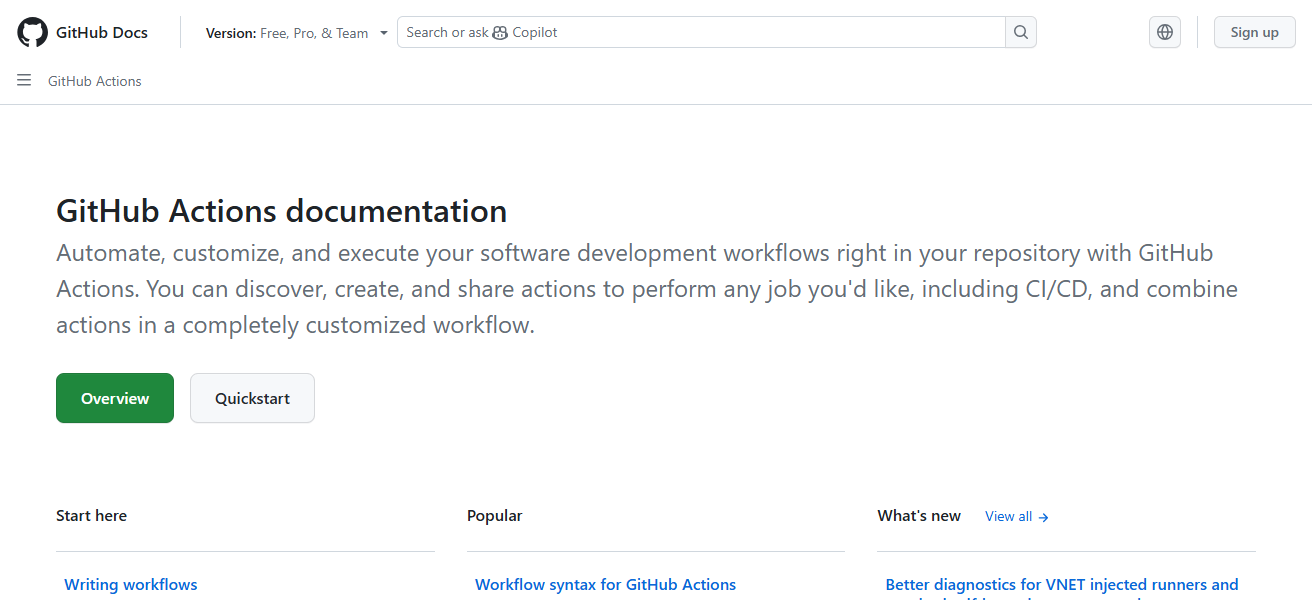
To top it off, Github Actions also allows matrix builds, custom workflows, and boasts several embedded features ensuring the automation pipeline is both highly customizable and secure.
Because of the integration and the features offered, GitHub Actions is a highly versatile and efficient alternative to Circle CI.
| Feature | Description |
|---|---|
| Native GitHub Integration | Workflows run directly in repositories without external CI/CD setup. |
| Marketplace of Actions | Thousands of prebuilt actions for testing, building, and deployment. |
| Matrix Builds | Run multiple job combinations in parallel across different environments. |
| Custom Workflows | Create complex workflows using YAML configuration. |
| Secrets Management | Securely store credentials and sensitive data for use in workflows. |
GitHub Actions
Pros:
- Flexible GitHub integration: You can run workflows directly from your repository without additional configurations.
- Action marketplace: You can automate almost anything by using or combining different actions from the marketplace.
- Advanced workflows: You can create complex workflows with matrix builds, parallel jobs, and other features.
- Intergrations with other tools: You can access many tools integrated with GitHub such as Slack.
Cons:
- Less free minutes for private repositories: If your private repository exceeds the monthly limits, it can get pricey.
- Moderate learning curve for advanced workflows: Custom configurations can get complex with the YAML files.
- Performance by runners varies: If using the shared runners, you may incur some latency vs. using self-hosted runners.
- Less advanced configurations are more difficult: You may hit edge cases in workflows that are not handled well.
2. GitLab CI/CD
GitLab CI/CD is one of the best choices of Circle CI alternatives as it provides an integrated platform for DevOps technology as a single tool for source code management, CI/CD and monitoring.
In contrast to Circle CI, GitLab removes the issues and headaches of tool sprawl and multiple integration as it provides a single pipeline, which is also easy to configure and maintain.
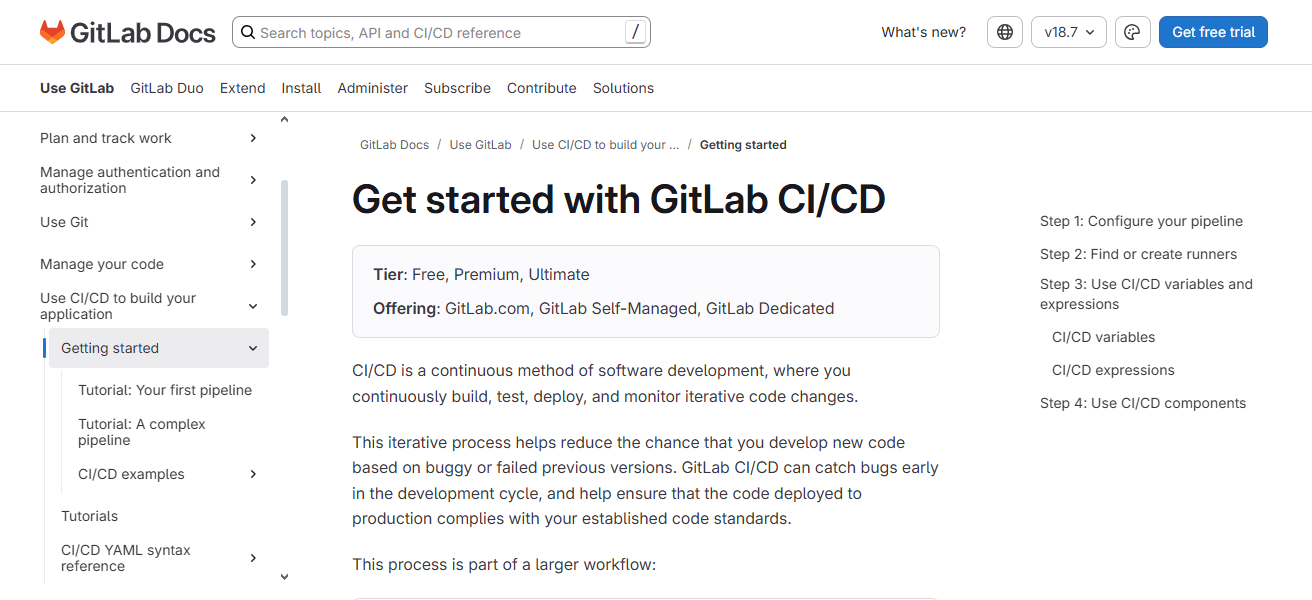
GitLab’s DevOps is especially strong and fully automated for type-detection on projects and working with very little setup to run tests and deploy applications.
GitLab CI/CD also has built in rapid parallel execution, container native pipelines, and complete secuirty scanning to foster complete, reliable and rapid deployments while allowing teams total control of their backend workflows and infrastructure.
| Feature | Description |
|---|---|
| Auto DevOps | Automatically detects project type and sets up CI/CD pipelines. |
| Pipeline Visualization | Graphical view of pipeline stages and job dependencies. |
| Security & Compliance | Built-in security scanning, vulnerability detection, and audit tools. |
| Flexible Runners | Cloud or self-hosted runners for scaling pipeline execution. |
| Multi-Cloud Deployment | Supports hybrid and multi-cloud deployment strategies. |
GitLab CI/CD
Pros:
- All-in-one DevOps platform: Source control, CI/CD, and monitoring are all in one place.
- Auto setup with Auto DevOps: GitLab automatically detects your project type and sets up a pipeline for you.
- Security scanning: Security scanning for your deployments has been integrated.
- Flexible runner options: You can self-host the runners or use cloud-hosted options for more flexibility.
Cons:
- Can be a resource hog: Large and complex pipelines can slow self-hosted runners, and may require more direct resource management.
- Advanced interface for new users: New users may find it overwhelming with complex settings and a more feature ab жастар.
3. Jenkins
As a result of its unparalleled flexibility and extensibility in automating software development pipelines, Jenkins stands out as the strongest alternative to CircleCI.
Being an open-source tool, it gives developers the freedom to tailor every piece of their CI/CD workflows through a comprehensive plugin library that accommodates virtually any programming language, platform, or deployment target.
Unlike CircleCI, Jenkins can be entirely self-hosted, empowering teams with the autonomy to dictate infrastructure, security, and scaling.

Its singular dominance lies in supporting intricate, enterprise-grade pipelines that interface with even the oldest of legacy systems along with container orchestration and various cloud services.
This flexibility positions Jenkins as the most suitable automation tool for teams that desire uncompromised control and customization.
| Feature | Description |
|---|---|
| Extensive Plugin Ecosystem | Thousands of plugins for integrations, notifications, and automation. |
| Highly Customizable Pipelines | Supports scripted and declarative pipelines for complex workflows. |
| Self-Hosted Control | Full control over server infrastructure and security. |
| Community & Enterprise Support | Large user base with extensive documentation and guides. |
| Automation Flexibility | Compatible with almost any language, platform, or deployment environment. |
Jenkins
Pros:
- Easy to customize: Thousands of compatible plugins and integrations are available and supporting.
- Self-hosted: Open-sourced and completely free of license fees.
- Ideal for enterprise level automation: Handles more complicated pipelines with ease and little frustration.
- Extensive documentation: An active community to troubleshoot with.
Cons:
- Highly maintained: Requires constant upkeep of plugins to be updated and checked for issues regarding compatibility.
- Difficult for newbies: Learning the ropes to configuration and the tools may be taxing.
- UI is outdated: Lacks the fresh look and feel that newer and more developed CI/CD tools have.
- Large infrastructure is required: Resource heavy.
4. Travis CI
Although having very different features, Travis CI is an alternative to CircleCI, integrating very deeply with GitHub, is very reliable, and has a sleek and simple interface.
Getting a CI/CD for an application is very simple, and takes minimal time and configuration to build, test, and deploy.
In contrast to CircleCI, Travis CI supports an even wider array of programming languages and environments, giving it a significant versatility boost.
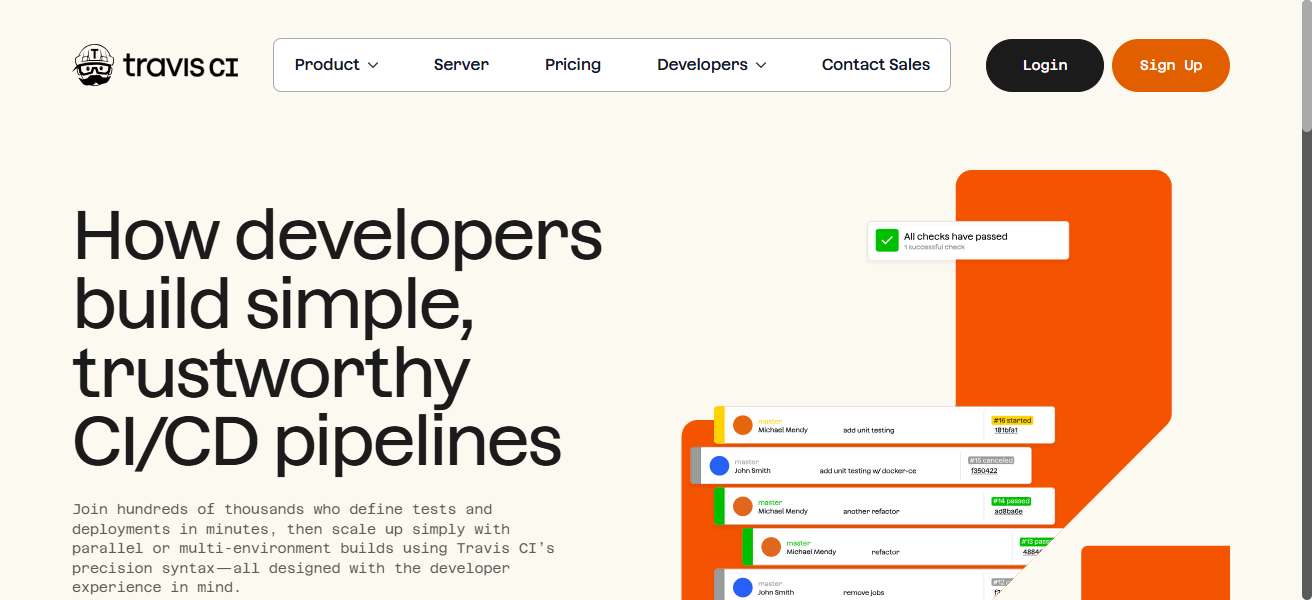
One of Travis CI’s best options is to run builds in different isolated VMs or containers, providing consistent outcomes across build stages.
Travis CI is a great option for teams wanting efficiency and flexibility in very little time, with great community support backing it up.
| Feature | Description |
|---|---|
| GitHub Integration | Automatic builds triggered by commits, pull requests, or tags. |
| Multi-Language Support | Supports a wide variety of programming languages and frameworks. |
| YAML-Based Configuration | Simple, readable, and version-controlled pipeline setup. |
| Isolated Build Environments | Ensures consistent and reproducible build results. |
| Deployment Automation | Supports deployments to various cloud providers and services. |
Travis CI
Pros:
- Easy to use automation: Integrates with GitHub to automate builds, triggering them with every commit and PR.
- Supports multiple programming languages: Great benefit for polyglot projects.
- Fast initial and configured: Minimal configuration with yaml is required to begin utilizing the service.
- Consistent and reproducible results: Environmental builds are isolated.
Cons:
- Free plan is limited: GitHub private repos require payment and other restrictions may be active.
- Sustained free usage results in slower builds: The available computing resources to pipelines from the project repository may be delayed.
- Less flexible for complicated setups: Jenkins is more popular for highly custom setups.
- Support may lack for older projects: Legacy projects may see updates less frequently and older tech is often abandoned for newer paths.
5. Buddy
Buddy is an excellent alternative to CircleCI because of its simplicity, powerful automation, and ability to make CI/CD approachable to teams with little to no DevOps experience.
Buddy’s visual pipeline editor is the most distinguishing feature. It enables developers to construct, manipulate, and deploy workflows, drag and drop workflows, efficient in reducing costly configuration errors and lowering the time required to set up the system.

Unlike CircleCI, Buddy integrates with several cloud services, Git providers, and deployment destinations, ranging from containers to serverless.
The user-centered design, fast response, and flexibility set the systems automation pipelines apart from the others allowing teams to more automation pipelines with no trade off on control and performance.
| Feature | Description |
|---|---|
| Visual Pipeline Editor | Drag-and-drop interface simplifies workflow creation. |
| Fast Deployment Pipelines | Optimized for speed, reducing build and release time. |
| Cloud & Git Integration | Works with multiple cloud providers and Git repositories. |
| Prebuilt Actions Library | Ready-to-use actions for building, testing, and deploying code. |
| User-Friendly Interface | Accessible for teams without deep DevOps knowledge. |
Buddy
Pros
- **Visual pipeline editor: What you see is what you configure.**
- **Fast deployment pipelines: Designed to run at high speeds.**
- Integrates with many platforms: + Cloud services, Git repos and deployment targets.
- **User friendly for users without a solid devops background.**
Cons
- Limited Free tier
- Less community support ot open-source alternative
- More advanced features can be hidden, some automation made get a bit tedious
- **Not fit for extremely complex pipelines.**
6. Codeship
Codeship stands out among CircleCI alternatives for its uncomplicated and rapid approach to integration and continuous deployments.
What makes Codeship unique are the two separate tiers: Basic for simpler projects and Pro for complex implementations with advanced Docker workflows.
Customization is minimal, and users can quickly set up Codeship and start automating the building and deploying processes.
With automated cloud infrastructure, parallel testing, integration with cloud providers and major version control systems
Codeship is a powerful, flexible, and efficient solution that improves the development pipeline for teams of any size.
| Feature | Description |
|---|---|
| Two-Tiered CI/CD | Basic mode for simple projects, Pro mode for Docker and advanced workflows. |
| Parallel Testing | Run multiple tests simultaneously to reduce build time. |
| Cloud-Based Infrastructure | No need to manage servers or resources. |
| Quick Setup | Minimal configuration required to start pipelines. |
| Docker Support | Full support for containerized build and deployment workflows. |
Codeship
Pros
- **Two tiered approach: Basic for a simple project, Pro for a more advanced docker pipeline.**
- **Minimal configuration: Allows for a quick setup to automated build.**
- **Parallel testing: Allows for a quicker build time if testing is done in parallel.**
- Doesn\’t Require Server management **Cloud based infrastructure.**
Cons
- Pricing is high
- **Less flexible than jenkins.**
- Less community
- More dependence on the cloud service
7. Spacelift
Spacelift is an excellent alternative to CircleCI, with a niche focus of providing Infrastructure as Code Automation Service with excellent support for Terraform, Pulumi, and other IaC tools.
Spacelift manages complex infrastructure workflows with policy-as-code, drift detection, and secure approvals, unlike CircleCI, which is a broad application of CI/CD.

Spacelift is able to visualize and exert control over changes to the infrastructure across environments, taking compliance risk and production deployment errors to a minimum.
Spacelift is well-suited for automated collaboration, dependency management, controlled resource governance, and infrastructure scaling. Ultimately, Spacelift gives teams the tools to manage, govern, and scale infrastructure.
| Feature | Description |
|---|---|
| Infrastructure-as-Code Focused | Supports Terraform, Pulumi, and other IaC tools. |
| Policy-as-Code | Automates compliance checks and approvals for infrastructure changes. |
| Drift Detection | Monitors infrastructure state to prevent unintended changes. |
| Collaboration Tools | Enables review and approval workflows within teams. |
| Secure Automation | Provides controlled and secure automation for infrastructure deployment. |
Spacelift
Pros:
- Specialized for infrastructure-as-code: Works with Terraform, Pulumi, etc.
- Policy-as-code: Automatically enforces compliance and approvals.
- Drift detection: Helps avoid mismatches in configuration for infrastructure.
Cons:
- Niche application: Less applicable for generic use in CI/CD.
- Requires IaC knowledge: Most suitable for teams who use Terraform/Pulumi.
- Paid tiers unlock additional functionality: The free tier limits what you can access.
- Limited ecosystem: Not a many integrations compared to generic CI/CD tools.
8. Northflank
Unlike CircleCi, Northflank is a terrific substitute because it helps users build, deploy, and scale containerized applications on one robust platform and is incredibly easy to use.
Northflank is unique because it combines container orchestration and cloud infrastructure management with CI/CD all into one platform
Wnabling teams to keep control of their workflows and pipelines instead of using multiple different applications to complete each step of their workflows.
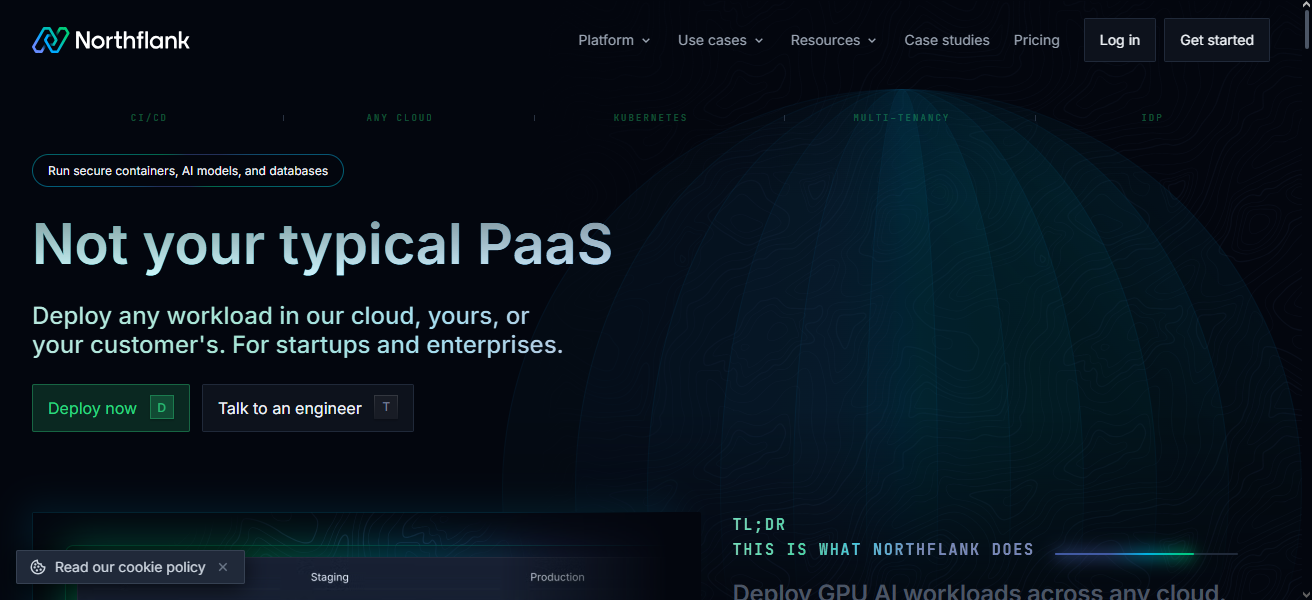
With microservices, integrated Git, and tailored environment design, users have a constant and complete view of their deploys, and Northflank’s automated secrets management, real-time logging, and deploy monitoring improve the security and reliability of applications
All while managing to keep the operational complexity to a minimum and shortening the timelines of workflows.
Northflank combines all of the best features to help developers retain control of their applications while also simplifying workflows.
| Feature | Description |
|---|---|
| Unified Platform | Combines CI/CD, container orchestration, and cloud management. |
| Secrets Management | Secure storage and usage of credentials across pipelines. |
| Real-Time Logs | Monitor build and deployment processes live. |
| Microservices & Containers | Optimized for containerized applications and microservices architecture. |
| Environment Previews | Spin up temporary environments for testing before production. |
Northflank
Pros:
- Consolidated CI/CD and container orchestration: Complete workflow.
- Integrated secrets management and scaling: Performance and security are heightened.
- Microservices and containerized applications: Great for modern architectures.
- Immediate log access and live previews: Accelerated debugging and testing.
Cons:
- Younger solution: Smaller community and fewer integrations compared to other CI/CD tools.
- Usage-based pricing: Costs can add up for pipelines in heavy use.
- More advanced features will require some experience: There is a steep learning curve.
- Limited self-hosted or offline use: Generally cloud-focused.
9. Azure DevOps
Azure DevOps stands out as one of the best alternatives to CircleCI as it provides a comprehensive DevOps facility for enterprise clients, encompassing source control, CI/CD, project management, and testing tools.
Its differentiating feature is complete traceability, as it allows all players to follow the changes made from code commit to deployment.
Unlike CircleCI, Azure DevOps integrates more deeply with the rest of Microsoft’s ecosystem, especially with Azure’s cloud services, though it supports multi-cloud and hybrid implementations as well.
Azure DevOps allows for the automation of complex software development and delivery while retaining complete control with custom pipelines, integrated security and compliance, and development acceleration.
| Feature | Description |
|---|---|
| Complete DevOps Suite | Includes CI/CD pipelines, repos, boards, and testing tools. |
| End-to-End Traceability | Track every change from code commit to deployment. |
| Multi-Cloud & Hybrid Support | Deploy to Azure, AWS, or on-premises infrastructure. |
| Security & Compliance | Enterprise-grade security, auditing, and governance tools. |
| Custom YAML Pipelines | Supports highly customizable pipelines with advanced features. |
Azure DevOps
Pros:
- All-in-one enterprise DevOps suite: This covers CI/CD, repos, boards, and testing.
- Complete traceability: From code commit to deployment, every alteration is tracked.
- Supports multi-cloud and hybrid setups: Not restricted to Azure.
- Strong security and compliance features: Great for any regulated industry.
Cons:
- More complex setup for smaller teams: There can be a lot of overhead for simple tasks or projects.
- Pricing can be high for large teams: Especially with advanced features.
- Learning curve for pipelines: YAML pipelines can be intricate.
- Heavier UI and tools: May feel overwhelming compared to lightweight alternatives.
10. Bitbucket Pipelines
Given Bitbucket’s integration of Ci/CD functionalities, Bitbucket Pipelines is a strong alternative to CircleCI, providing effective Ci/CD automation, unlike CircleCI, which lacks integrated automation features.
Bitbucket’s integration with its repositories is in a league of its own, allowing for buildings, testing, and deployments to occur with minimal set up.
CircleCI requires integration, and is, therefore, a less effective automation pipelines tool, especially for smaller organizations.
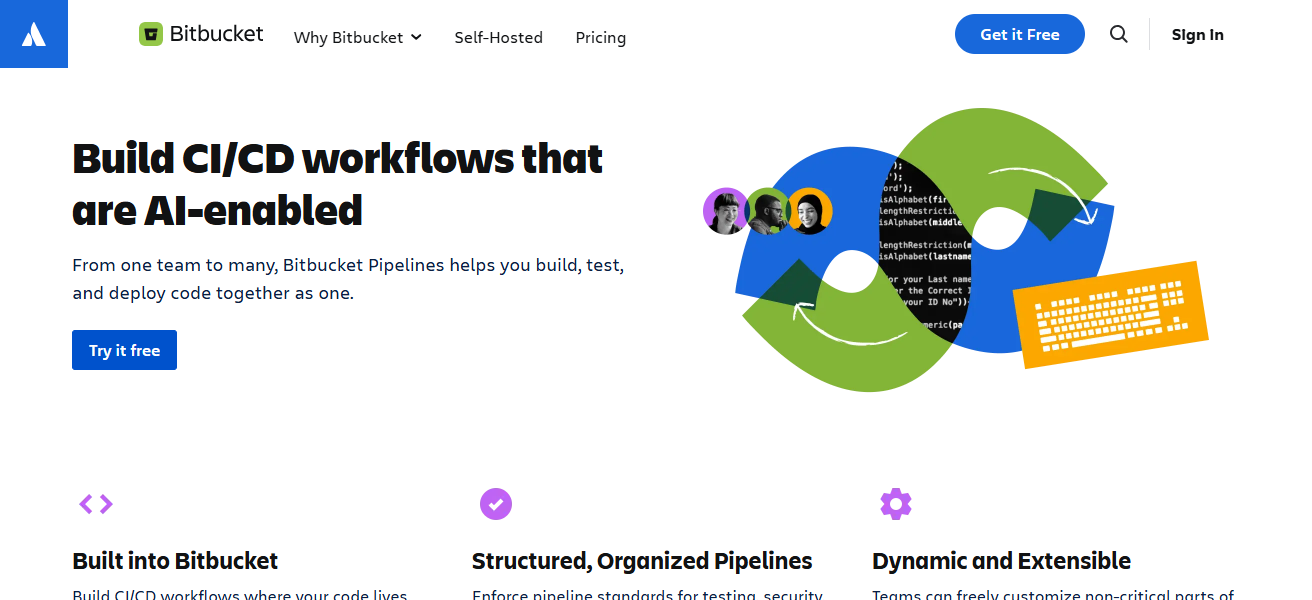
In addition to quick set up and efficient automation, Bitbucket Pipelines is more efficient with its seamless automation, built-in cache, and parallel step executions.
In collaboration with its orginial Docker support, Bitbucket Pipelines is a more robust, collaborative tool.
It gives organizations tailored, reliable software solutions while leveraging and remaining tightly connected to their source code.
| Feature | Description |
|---|---|
| Native Bitbucket Integration | Runs CI/CD directly within Bitbucket repositories. |
| YAML-Based Pipelines | Simple configuration for pipeline jobs and steps. |
| Parallel Steps | Run multiple tasks simultaneously to reduce build time. |
| Docker Support | Full compatibility with containerized applications. |
| Branch-Specific Pipelines | Configure pipelines based on branches, tags, or pull requests. |
Bitbucket Pipelines
Pros:
- Direct integration with Bitbucket repos: No extra tools needed for Git-based workflows.
- Simple YAML configuration: Quick to start pipelines.
- Parallel steps and caching: Speeds up builds and tests.
- Native Docker support: Ideal for containerized applications.
Cons:
- Limited free build minutes: Large projects may need paid plans.
- Less feature-rich than GitLab or Jenkins: Fewer advanced automation options.
- Dependent on Bitbucket ecosystem: Integrations outside Bitbucket may require extra effort.
- Debugging and logs can be basic: Less detail compared to other CI/CD tools.
How We Choose Best Circle API Alternatives
Synchronization with Source Control: The CI/CD tool spyder, sync,ship, and serves your code repository, be it GitHub, Git Lab, or Bit Bucket. Having default integrations can help reduce the time, and makes the management of workflows more efficient.
Flexibility of the Pipeline and Personalization: Assess the degree of ease with which you can craft and personalize pipelines based on your project demands.
Supported Languages and Frameworks: Ensure the tool backed your project’s programming languages and frameworks. Certain tools (Travis CI, or GitHub Actions) work best for polyglot projects, while others have finer customizations for specialized environments.
Hosting and Architecture: Choose between cloud-hosted, self-hosted, or hybrid solutions based on your security, performance, and cost needs.
Build Speed and Parallelization: The faster the builds and the greater the parallel execution, the less time needed to deploy. Features such as matrix builds, parallel steps, or caching mechanisms help optimize the speed of the pipeline.
Conclsuion
In closing, there are numerous good CircleCI alternatives, ranging from fully customizable to more user-friendly options like Buddy.
CircleCI alternatives like GitHub, GitLab, and Azure DevOps offer integrated enterprise options. For workflow optimization, alternatives focused on infrastructure and containers, like Spacelift and Northflank, are also great options.
FAQ
GitHub Actions, GitLab CI/CD, Jenkins, Travis CI, Buddy, Codeship, Spacelift, Northflank, Azure DevOps, and Bitbucket Pipelines are top alternatives.
GitHub Actions is ideal because of its native integration, seamless workflow automation, and prebuilt marketplace actions.
Jenkins and Azure DevOps are well-suited for large teams with complex pipelines and strict security requirements.
Yes, GitHub Actions, GitLab CI/CD, Travis CI, and Bitbucket Pipelines offer free tiers with limited build minutes.
Spacelift specializes in infrastructure-as-code workflows with policy enforcement and drift detection.