In this article, I will discuss top-performing, scalable, secure, and cost-effective cloud hosting providers for businesses.
- Key Points & Best Cloud Hosting Providers For Businesses
- 10 Best Cloud Hosting Providers For Businesses
- 1. Amazon Web Services (AWS)
- 2. Microsoft Azure
- 3. Google Cloud Platform (GCP)
- 4. IBM Cloud
- 5. Oracle Cloud
- 6. Alibaba Cloud
- 7. DigitalOcean
- 8. Linode (Akamai)
- 9. Cloudways
- 10. Hostinger Cloud
- How To Choose Best Cloud Hosting Providers for Businesses
- Conclsuion
- FAQ
It is critical for companies to select the right cloud hosting solution to foster growth, stability, and effective workload management in today’s digital competitive environment.
Key Points & Best Cloud Hosting Providers For Businesses
| Provider | Key Point |
|---|---|
| Amazon Web Services (AWS) | Scalable infrastructure with global reach |
| Microsoft Azure | Strong enterprise integration with Microsoft tools |
| Google Cloud Platform (GCP) | Advanced AI and machine learning services |
| IBM Cloud | Hybrid cloud solutions with strong security |
| Oracle Cloud | Optimized for enterprise databases and ERP |
| Alibaba Cloud | Leading provider in Asia with cost-effective options |
| DigitalOcean | Developer-friendly with simple pricing |
| Linode (Akamai) | Affordable cloud hosting for SMEs |
| Cloudways | Managed hosting with multiple cloud integrations |
| Hostinger Cloud | Budget-friendly cloud hosting with easy setup |
10 Best Cloud Hosting Providers For Businesses
1. Amazon Web Services (AWS)
Amazon Web Services (AWS) IS THE most used cloud service worldwide. It offers multi-layered compute, storage, database, analytics, and AI services for all types of companies.
AWS has low latency and high availability. It has a reputation for being scalable, secure, and compliant, which is best suited for small or even large enterprises.
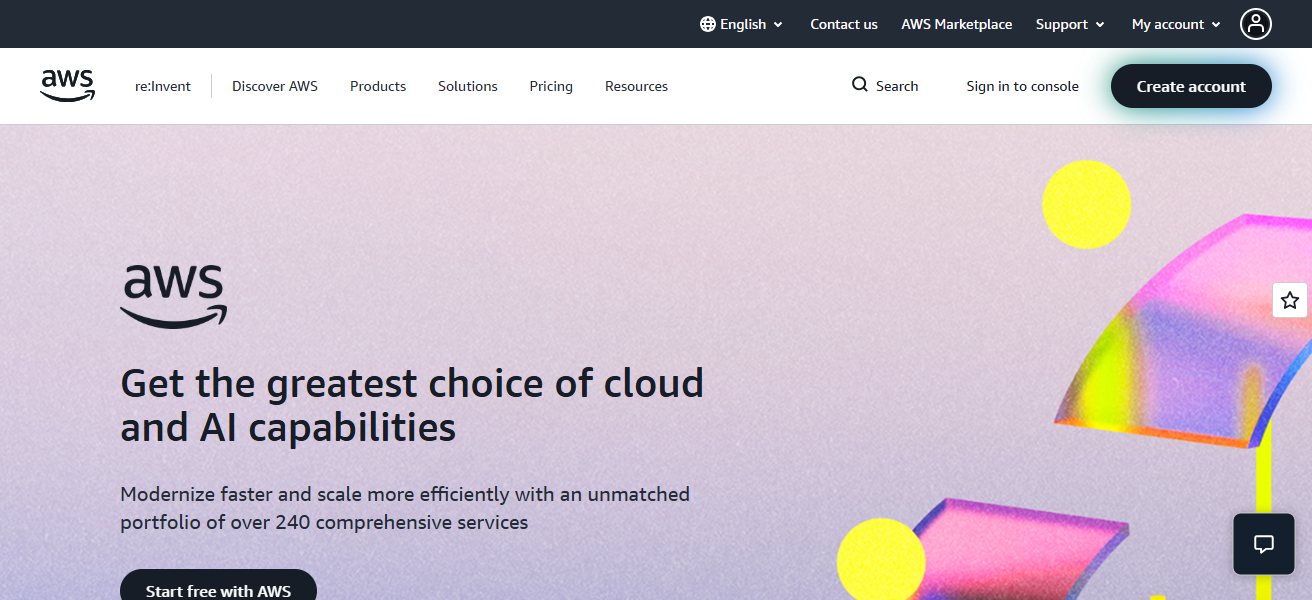
Thanks to AWS’s Lambda and EC2 services, customers can manage their costs better, and manage their innovative pro.ideed rapidly.
The pay-as-you-go pricing is better than most competitors. AWS is the best option for cloud hosting.
Features Amazon Web Services (AWS)
- Diverse offerings in the AWS family such as computing (EC2), storage (S3), and DB management (RDS, DynamoDB) for any tasks.
- Continues ecosystem in the globe with several regions and availability zones for optimal performance and fault tolerance.
- Sophisticated computing analytics, artificial intelligence and machine learning (SageMaker), serverless computing (Lambda).
- Strong security, compliance responsibilities, and access management (IAM).
| Pros | Cons |
|---|---|
| Market leader with the largest global infrastructure and ecosystem | Pricing can be complex and high for heavy usage |
| Extremely wide range of services (compute, storage, AI, analytics) | Steep learning curve for beginners and smaller teams |
| Highly scalable, reliable, and secure | Requires expertise to optimize costs and architecture |
| Strong compliance and enterprise support | Pricing model can be confusing for new users |
2. Microsoft Azure
Microsoft Azure is a strong cloud service that has connections to a variety of Microsoft products such as Windows Server, Active Directory, Office 365, and SQL Server.
It best attracts large companies already utilizing Microsoft products due to its hybrid capabilities that bridge the gap between cloud and on-premises. Azure gives its users the ability to scale computation, storage, networking, and AI.
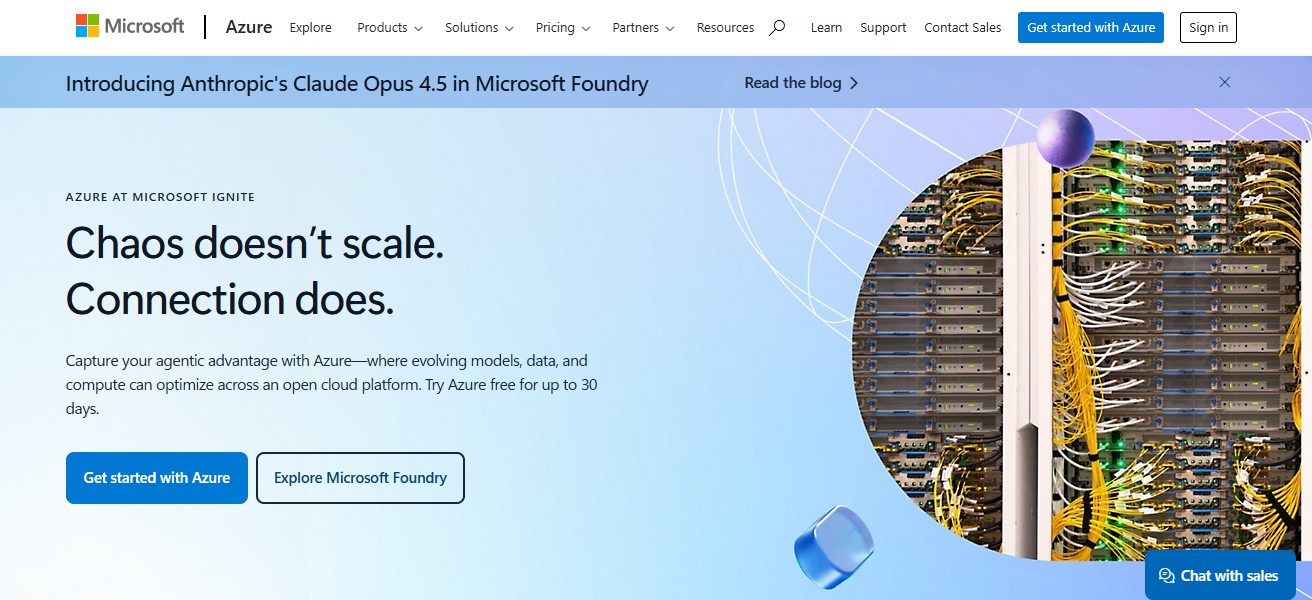
It has high security compliance as well Azure has a big range of data center all over the world. Azure has a variety of tools that give companies the flexibility that they want when using the service.
Features Microsoft Azure
- Integrated system with Microsoft services such as Windows Server, Office 365, and Active Directory.
- Hybrid cloud abilities with Azure technologies (Arc and Stack) for flexible on-prem cloud usage.
- All-inclusive service with computing, storage, analytics, artificial intelligence, and Internet of Things (IoT).
- Top of the class safety, compliance certifications, and role-based access controls.
| Pros | Cons |
|---|---|
| Deep integration with Microsoft products (Office 365, Windows Server) | Can be expensive without proper management |
| Strong hybrid cloud support | Complex pricing and licensing |
| Enterprise-grade security and compliance | Some services not as mature as competitors |
| Large global data center footprint | Requires Azure-specific expertise |
3. Google Cloud Platform (GCP)
Google Cloud Platform (GCP)\, is well known for its brilliant infrastructure, smart data analytical techniques, and machine learning abilities among competitors.
GCP covers all your computing\, databasing and networking needs. GCP also offers BigQuery for data analysis and Vertex AI for machine learning.
They work with open source tools and containers like Kubernetes making them very attractive for developers and businesses wanting flexible modern applications.
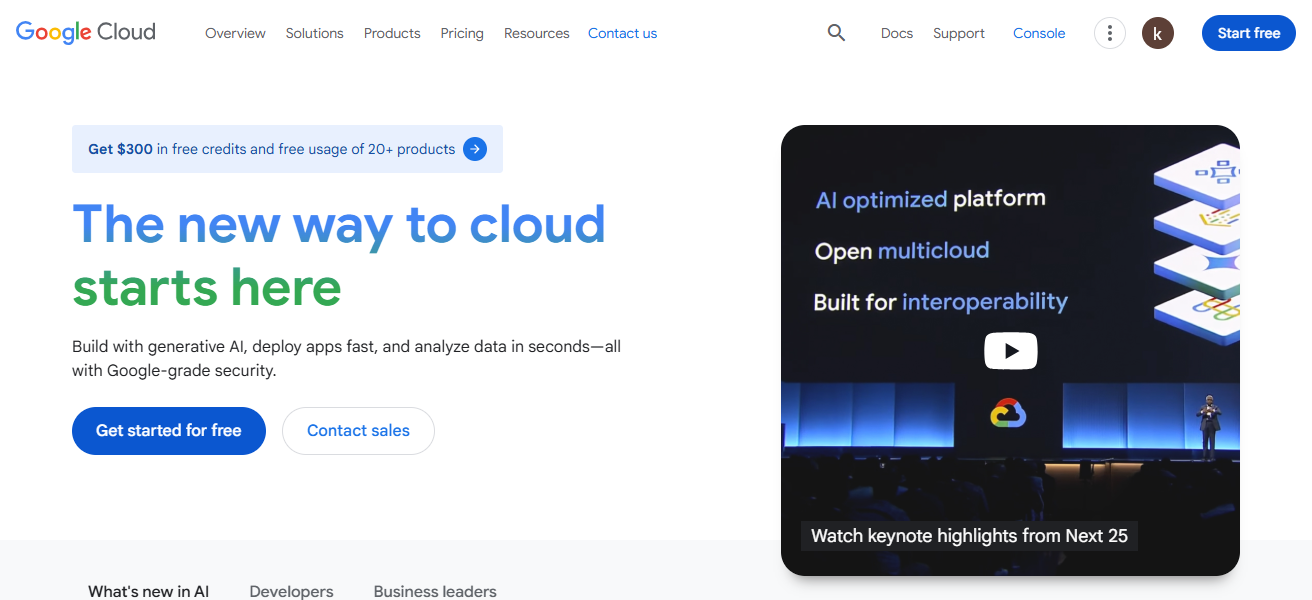
Offering data-driven enterprises and startups to advanced analytical tools, efficient resource management and cloud computing at very solicited security.
Features Google Cloud Platform (GCP)
- Highly evolved global grid and compute services with scalable virtual machines (VMs) along with serverless options (Cloud Run).
- Top performer in the analyst world with BigQuery as well as machine learning (ML) with Vertex AI.
- Provider of Kubernetes services (GKE) with new technologies in open source.
- Good rates coupled with discounts for sustained use and clear billing.
| Pros | Cons |
|---|---|
| Powerful data analytics & AI tools (BigQuery, Vertex AI) | Smaller market share vs AWS/Azure |
| Excellent performance and global networking | Fewer enterprise-ready integrations |
| Strong open-source and Kubernetes support | Documentation sometimes less extensive |
| Competitive pricing and transparent costs | Enterprise ecosystem perceived as less mature |
4. IBM Cloud
IBM Cloud has IaaS, PaaS, and SaaS solutions, including a strong focus on hybrid cloud and enterprise workloads. It integrates with legacy systems, and offers Watson’s AI.
IBM Cloud’s robust security, and enterprise networking, coupled with compliance and certification, in addition, support for industries with high regulatory requirements like finance and healthcare.
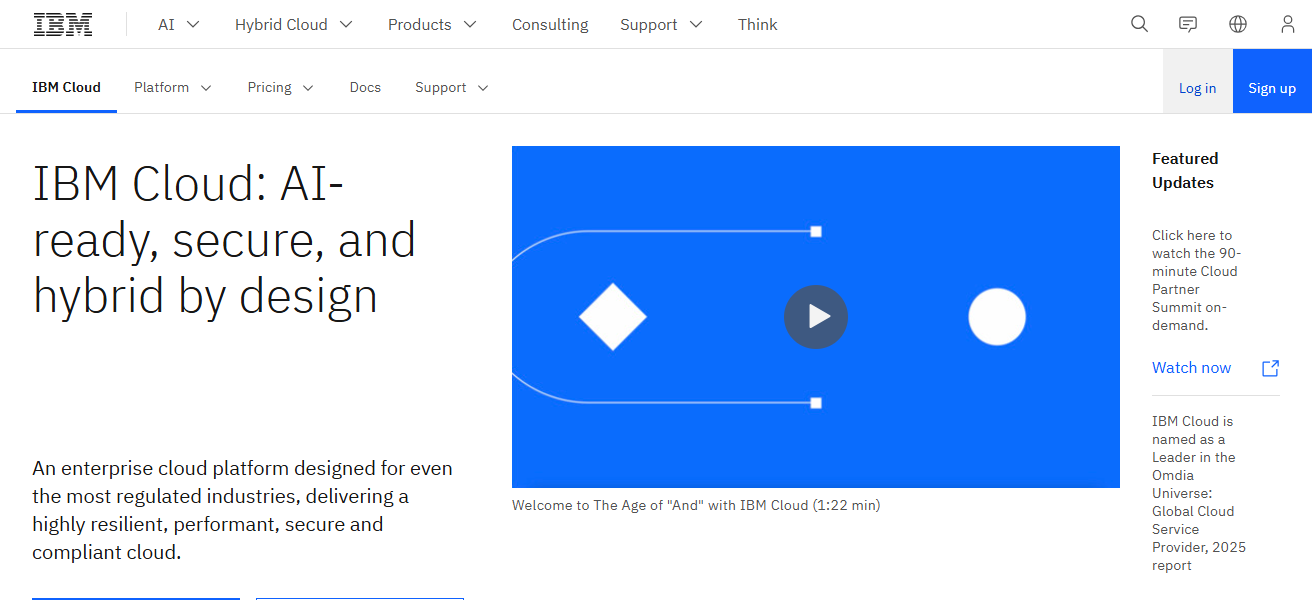
IBM Cloud has container services, and tools for cloud automation developed for more elaborate enterprise applications, and supports Kubernetes. Enterprises are able to effortlessly distributes workloads with IBM’s hybrid.
Features IBM Cloud
- Outstanding hybrid cloud (all-in-one). Has Cloud Satellite for consistent infrastructure
- Business Artificial Intelligence and Analytics Using IBM Watson.
- Customized Secure Infrastructure for Regulated Sectors Such as Healthcare and Finance.
- Cloud-Based Solutions for Enterprise Applications, Kubernetes, and Automation.
| Pros | Cons |
|---|---|
| Strong hybrid cloud and enterprise focus | Smaller service portfolio than hyperscalers |
| Trusted by regulated industries (finance, healthcare) | Can be pricier for certain workloads |
| Integrated IBM Watson AI and analytics | Less community support and third-party ecosystem |
| High security and compliance standards | Limited global reach compared to top clouds |
5. Oracle Cloud
Oracle Cloud is configured to accommodate business functions with top-tier efficiency, more so with applications that are database-driven.
It provides computing, storage, and networking, plus tailored industry offerings, particularly with Oracle’s Autonomous Database and applications for EPR, HCM, and SCM.
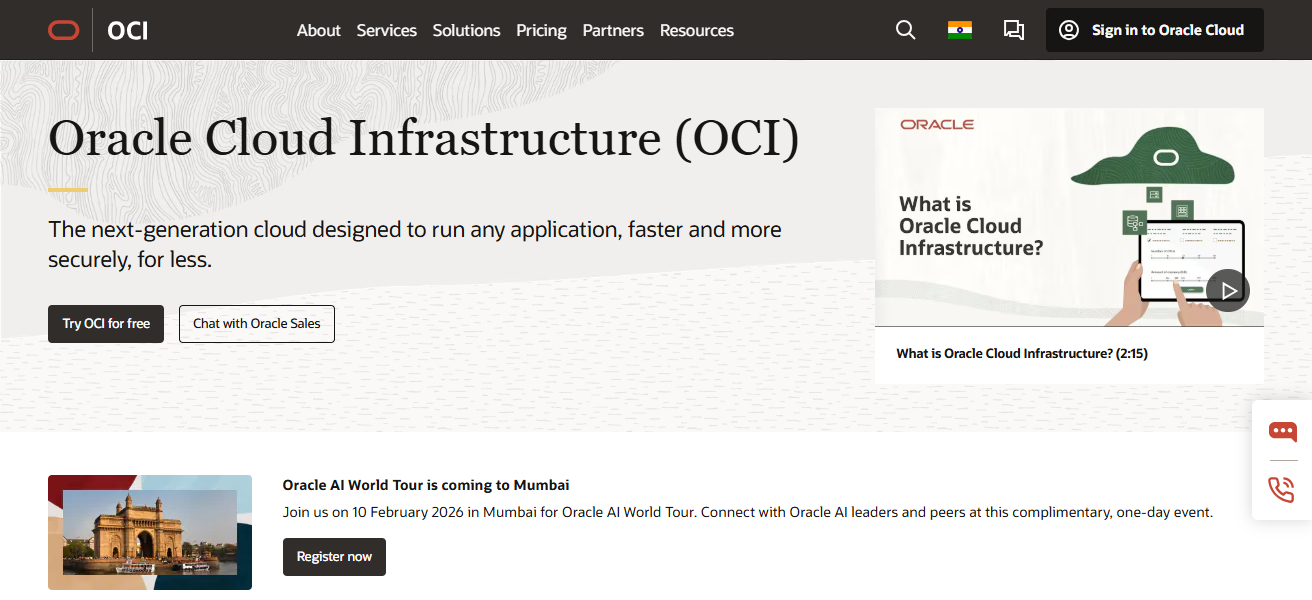
With solid SLAs and engineered systems, Oracle Cloud provides consistent accessibility, security, and optimized computing for business processes.
Its cloud regions are globally distributed to deliver scalability and resilience. Oracle’s focus on automation and high output ranks them best for companies already heavily invested in Oracle tech or those looking for high output, efficient cloud database systems.
Features Oracle Cloud
- Outstanding Cloud Infrastructure Performance for Oracle DBs.
- Business Process Management With Integrated Applications (ERP, HCM, SCM).
- Autonomous Databases That Automatically Tune and Patch Themselves.
- Excellent Security, Compliance, and SLA Commitment.
| Pros | Cons |
|---|---|
| Excellent for Oracle databases and enterprise apps | Best suited for Oracle-centric workloads |
| High reliability and strong SLAs | Smaller service catalog vs AWS/Azure/GCP |
| Integrated enterprise solutions (ERP, HCM, SCM) | Not ideal for general-purpose cloud needs |
| Competitive performance for database workloads | Pricing can be high for non-Oracle users |
6. Alibaba Cloud
Alibaba has developed as a market leader in the Asia Cloud market with service offerings that include computing, storage, networking, and data analytical tools.
Providing high level of infrastructure and securitization tools, theservice has seen expand to other emerging nations with a the Chinese market.
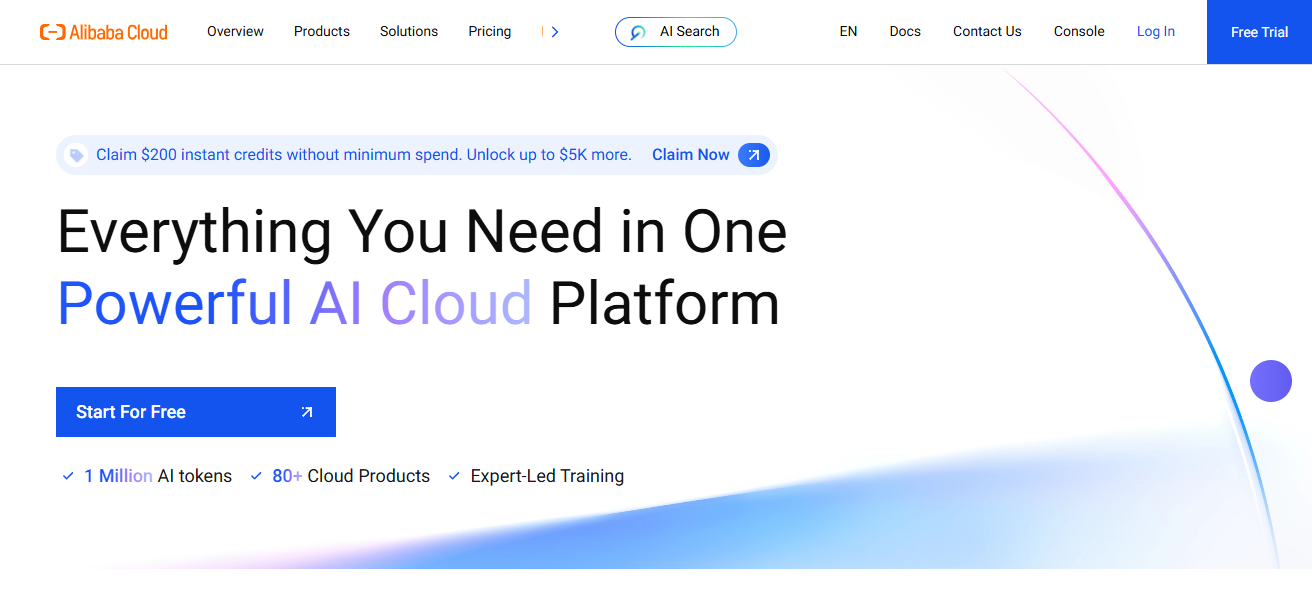
Other performant features of the service include DDoS protection, system monitoring, compliance and other monitoring features.
Other that the competitively priced tools and other features in the elastic computing and big data, the expertise that Alibaba has in the region is undoubtedly the best in the market.
Features Alibaba Cloud
- Elastic compute services and scalable storage solutions for global workloads.
- Data analytics, AI, and big data tools tailored for enterprise use.
- Strong presence in Asia with market-specific compliance and support.
- Network acceleration, anti-DDoS protection, and cloud security services.
| Pros | Cons |
|---|---|
| Strong presence in China and Asia | Support/documentation quality can vary by region |
| Scalable compute, storage, AI, and networking | Compliance and legal complexity in some markets |
| Competitive pricing | Ecosystem and certifications less mature outside Asia |
| Good option for businesses expanding to Asian markets | Fewer global data centers than hyperscalers |
7. DigitalOcean
October 2021 will see the services provided by Digital Ocean as being cloud based and parallel to its competitors. Digital Ocean cloud is quite developer friendly.
In as much as providing hosting services, Digital Ocean, is also known for its simplicity, competitive, and strong performance.
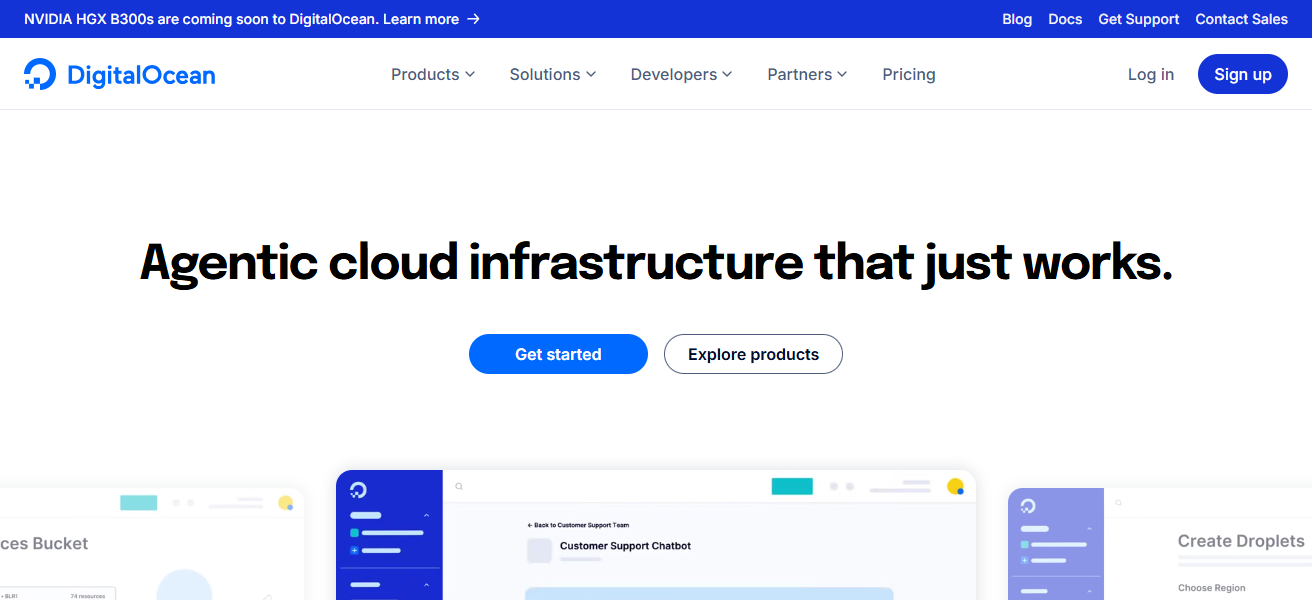
With the simplicity in strength and performance, it saves time and Digital Ocean is able to satisfy its customers. Digital Oceand services includes managed and unmaged vps services as well as cloud based storage services
Digital Ocean’s services is able to satisfy the e-commerce and the small and medium sized workloads that need reliable cloud hosting and simple complexity.
Features DigitalOcean
- Simple and developer-friendly cloud platform with easy provisioning.
- Scalable virtual servers (Droplets), managed databases, and Kubernetes.
- Predictable flat-rate pricing and intuitive control panel.
- Pre-configured apps and API-first design for rapid development.
| Pros | Cons |
|---|---|
| Simple and developer-friendly interface | Lacks advanced enterprise features |
| Predictable flat pricing | Smaller global footprint |
| Quick and easy deployment | Not suitable for large scale or AI workloads |
| Great for SMBs, startups, web apps | Limited analytics and ML tools |
8. Linode (Akamai)
Now part of Akamai, Linode focuses on simplicity, dependability, strong developer tools, and of course, affordability.
Linode offers virtually hosted servers, Kubernetes, and object storage along with networking solutions tailored to small businesses and startups.
Linode’s control panel, customer support, and predictable pricing are beneficial to teams looking for uncomplicated cloud hosting.
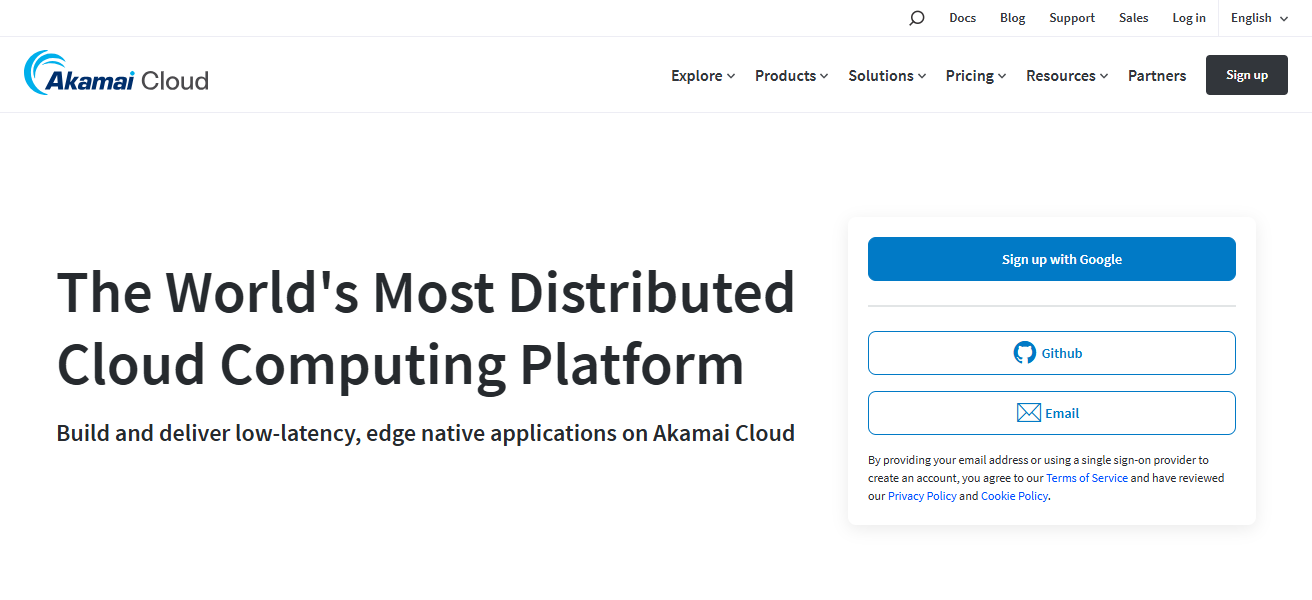
With Akamai’s edge network and Linode’s global data centers, customers get low latency and scalable performance.
Linode’s functionality combined with affordability makes them a great choice for developing businesses.
Features Linode (Akamai)
- Cost-effective virtual servers and cloud compute resources.
- Developer-focused tools and APIs for straightforward deployment.
- Backed by Akamai’s edge network for improved performance and low latency.
- Managed services, backups, and load balancing for scalable apps.
| Pros | Cons |
|---|---|
| Affordable and straightforward cloud infrastructure | Smaller service range vs major cloud providers |
| Developer-friendly tools and APIs | Not ideal for large enterprise applications |
| Backed by Akamai edge network | Limited advanced services (AI, data lakes) |
| Good performance for basic workloads | Smaller ecosystem and community support |
9. Cloudways
Cloudways was established to provide a managed hosting solution where users can easily deploy apps on various cloud providers like Google Cloud and DigitalOcean.
Rather than dealing with infrastructure management, organizations can concentrate on app development while Cloudways takes care of server optimization and security, backup implementation, and performance adjustments.
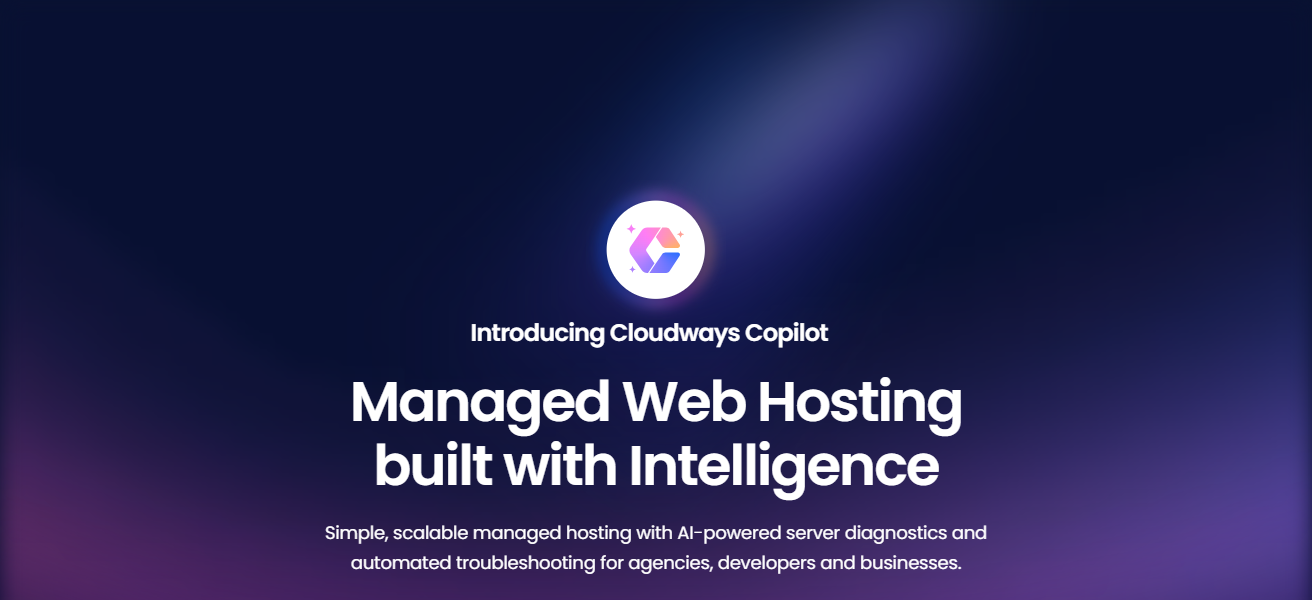
Cloudways works with a number of the most widely used CMSs and frameworks like WordPress. For developers and micro, small, and medium enterprises with constant hosting requirements and little maintenance
Cloudways Incorporates a number of handy services like dashboards, staging, and resource scaling. Cloudways is the perfect amalgamation of management services and flexibility.
Features Cloudways
- simplified server setup and maintenance managed hosting service
- multi-cloud infrastructure support (AWS, GCP, DigitalOcean, Vultr).
- includes server customization, automated backups and other helpful security provisions
- Deployment applications via a simple dashboard (WordPress, Laravel, Magento).
| Pros | Cons |
|---|---|
| Managed cloud hosting (automated maintenance & security) | Additional management cost above base cloud fees |
| Easy deployment for WordPress, Laravel, Magento | Less granular infrastructure control |
| Supports multiple cloud providers (DO, AWS, GCP, Vultr) | Not ideal for custom enterprise apps |
| Great UI for non-technical users | Some advanced features may require add-ons |
10. Hostinger Cloud
Hostinger Cloud makes custom, budget-friendly, and simple cloud hosting that is great for bloggers, small businesses, and growing websites.
Increased cloud scalability, SSD storage, and auto-integrated caching work well for fast performance.
Hostinger simplifies cloud computing for beginners with helpful management tools, free SSL certificates, and auto backups.
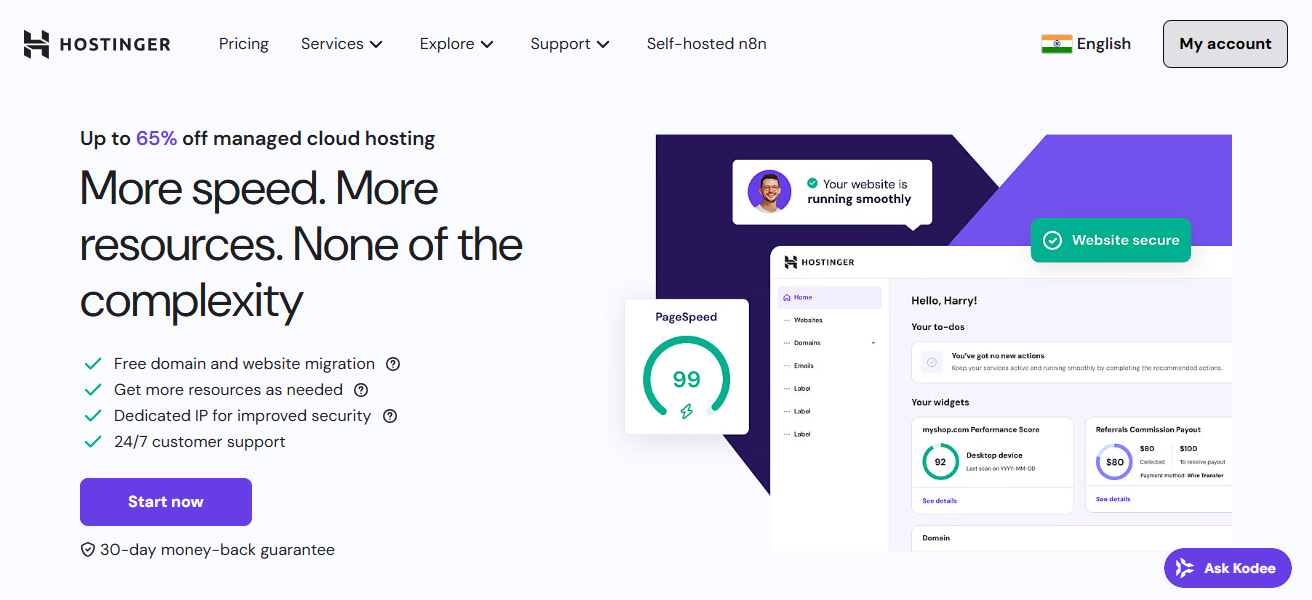
Its easy control panel and low pricing is perfect for new businesses or content-heavy sites that need dependable and low-maintenance hosting.
Hostinger makes cloud computing easy with great support and optimally structured technology. This helps businesses deploy and scale quickly in the cloud.
Features Hostinger Cloud
- Affordable cloud hosting with SSD storage and performance caching.
- Easy website and resource management with our intuitive control panel.
- automated backups, free SSL, and resources that can be adjusted upwards
- Optimized stack for websites and ecommerce systems that do have a significant user base.
| Pros | Cons |
|---|---|
| Very budget-friendly cloud hosting | Less scalable than major cloud platforms |
| Intuitive management panel | Limited advanced enterprise features |
| Fast performance with SSD & caching | Smaller global data center presence |
| Good choice for small business sites and startups | Not suitable for complex, large-scale workloads |
How To Choose Best Cloud Hosting Providers for Businesses
Reliability: Consistent uptime and guaranteed redundancy with a recovery plan in place.
Scalability: Having the means to add CPU, memory, and storage with ease as the company develops.
Security: Certifications and advancements in firewalls for proper encryption and compliance (ISO, GDPR, HIPAA).
Performance: Having data centers worldwide to ensure latency is low and infrastructure is fast and optimized for load times.
Prices: Having a budget that fits with the flexibility and transparency of their pricing, with a model based on the needs of the customer (pay-as-you-go or reserved instances).
Support: Availability for customer service all day, with skills in the technical areas required to support the customer.
Integration: Able to work with other platforms that are tools and applications in addition to hybrid clouds.
Compliance: Availability for other regulated industries or industries with specific compliance requirements (finance, healthcare, government).
Conclsuion
All in all, assessing factors such as performance, scalability, security, and budget is key when selecting the best cloud hosting provider for businesses.
Top services like AWS, Azure, Google Cloud, and other trustworthy vendors provide adaptable options to accommodate the needs of growing businesses.
With the right cloud hosting, businesses will have higher uptime, greater efficiency, and sustainable success in the competitive digital world.
FAQ
It offers flexibility, high uptime, cost efficiency, and easy scalability as business needs grow.
DigitalOcean, Hostinger Cloud, and Cloudways are popular for affordability and ease of use.
AWS, Microsoft Azure, and Google Cloud are ideal due to advanced services and global infrastructure.
Yes, top providers offer encryption, firewalls, backups, and compliance with security standards.
Costs vary by usage, but most providers follow pay-as-you-go or monthly pricing models.