
In this post I will discuss the most effective wallets for integrating crypto accounting for businesses, highlighting the most secure, compliant, and trouble-free financial reporting solutions.
- Key Points & Best Wallets for corporate crypto accounting integration
- 10 Best Wallets for corporate crypto accounting integration
- 1. Fireblocks
- 2. Qredo
- 3. Ledger Enterprise
- 4. Coinbase Wallet (Business)
- 5. MetaMask Institutional
- 6. Crypto.com DeFi Wallet
- 7. Tangem Wallet
- 8. BitGo
- 9. Trust Wallet (Enterprise Use)
- 10. Zengo Business
- Cocnlsuion
- FAQ
The extensive use of digital assets by businesses makes the choice of a wallet critical to managing the digital asset’s movement, protecting the digital asset, and accounting for the digital asset’s integration throughout the entire business ecosystem.
Key Points & Best Wallets for corporate crypto accounting integration
Fireblocks Offers enterprise-grade security, transaction approvals, and automated accounting integrations for corporate treasury management.
Qredo Decentralized custody solution enabling multi-party computation, compliance features, and seamless integration with accounting platforms.
Ledger Enterprise Hardware-based cold storage wallet with governance controls, audit trails, and compatibility with corporate accounting systems.
Coinbase Wallet (Business) Provides institutional-grade custody, compliance reporting, and integration with ERP systems for streamlined crypto accounting.
MetaMask Institutional Enhanced version of MetaMask offering compliance workflows, multi-user governance, and accounting-friendly transaction tracking.
Crypto.com DeFi Wallet Supports corporate treasury operations, multi-chain assets, and accounting integration for decentralized finance transactions.
Tangem Wallet Smartcard-based wallet offering portability, strong security, and compatibility with enterprise accounting software solutions.
BitGo Institutional wallet with multi-signature security, compliance features, and accounting integrations for corporate crypto management.
Trust Wallet (Enterprise Use) Multi-chain wallet supporting corporate governance, transaction tracking, and integration with crypto accounting platforms.
Zengo Business Keyless wallet using MPC technology, offering compliance support and seamless integration with accounting systems.
10 Best Wallets for corporate crypto accounting integration
1. Fireblocks
Fireblocks provides an institutional crypto management wallet solution that offers secure custody through multi-party computation (MPC) so that critical private keys remain secure.
The platform enables corporate automated transaction approvals, treasury and accounting system integrations, and corporate treasury management system integrations.
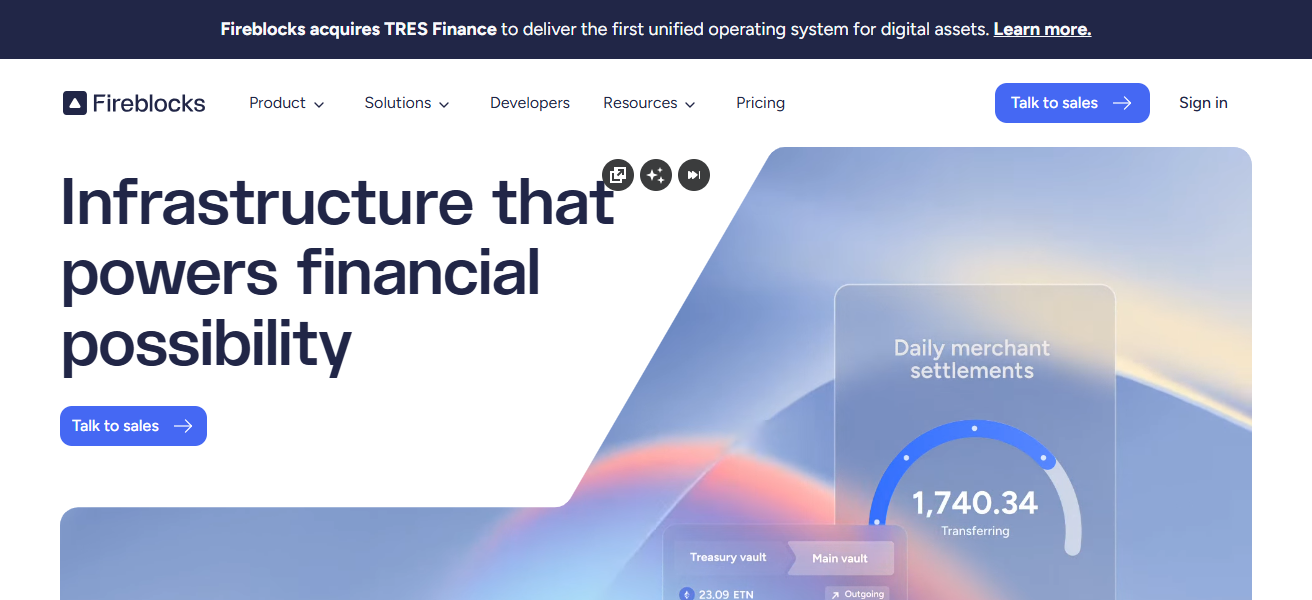
For businesses dealing with considerable digital asset volumes, Fireblocks provides audit trail, compliance, and digital asset insurance coverage features.
Fireblocks optimizes SAP, ERPs, and accounting software streamlining reconciliation and reporting through its proprietary API, making it an invaluable service for corporate crypto accounting integrations.
Fireblocks Features
- Provides automated management of treasury and transactions for enterprises.
- Offers seamless integration for instance reconciliation with ERP and accounting systems.
- Provides insurance coverage for compliance features, audit trails, and corporate protection.
- Uses MPC technology, keeping private keys secure and never exposed.
| Pros | Cons |
|---|---|
| Enterprise-grade MPC security ensures private keys are never exposed. | High cost compared to smaller wallet solutions. |
| Automated transaction approvals streamline corporate treasury operations. | Requires technical expertise for full integration. |
| Seamless ERP and accounting system integration. | Limited flexibility for smaller businesses with basic needs. |
| Compliance features and insurance coverage add trust. | Primarily designed for large institutions, not startups. |
2. Qredo
The enterprise-level custody and settlement network, Qredo, is built on decentralization. With the means of MPC technology, it secures the storage and transfer of assets by removing single points of failure.
Because of Qredo’s built-in governance capabilities, companies can customize multi-user approval processes, making it appropriate for corporate treasury functions.
Its compliance-ready construction, coupled with seamless integration with accounting software, allows for the precise tracking and reporting of transactions.
Qredo also provides interoperability across multiple blockchain networks. This helps businesses effectively and seamlessly handle a variety of cryptocurrency assets.
With the combination of decentralized security and accounting integration, Qredo allows companies to manage their cryptocurrencies with transparency, compliance, and efficiency.
Qredo Features
- Uses decentralized custody with MPC to remove single points of failure.
- Helps in corporate governance through multi-user approval workflows.
- Enhances management of diverse crypto portfolios with cross-chain interoperability.
- Tracks transactions accurately with integration into accounting systems.
| Pros | Cons |
|---|---|
| Decentralized custody eliminates single points of failure. | Relatively new compared to established custodians. |
| Multi-user approval workflows enhance governance. | Integration options may require customization. |
| Compliance-ready infrastructure supports accounting integration. | Adoption still growing among enterprises. |
| Cross-chain interoperability supports diverse portfolios. | May be complex for businesses new to crypto. |
3. Ledger Enterprise
Ledger Enterprise tailors the proven Ledger hardware wallet technology into a corporate-grade solution. Ledger Enterprise combines cold storage with governance controls to ensure only designated approvers can authorize transactions.
Its audit trails and compliance features address the needs of businesses bound by regulation. Ledger Enterprise plugs into ERP and accounting systems to ease the crypto transaction reconciliation and reporting process.
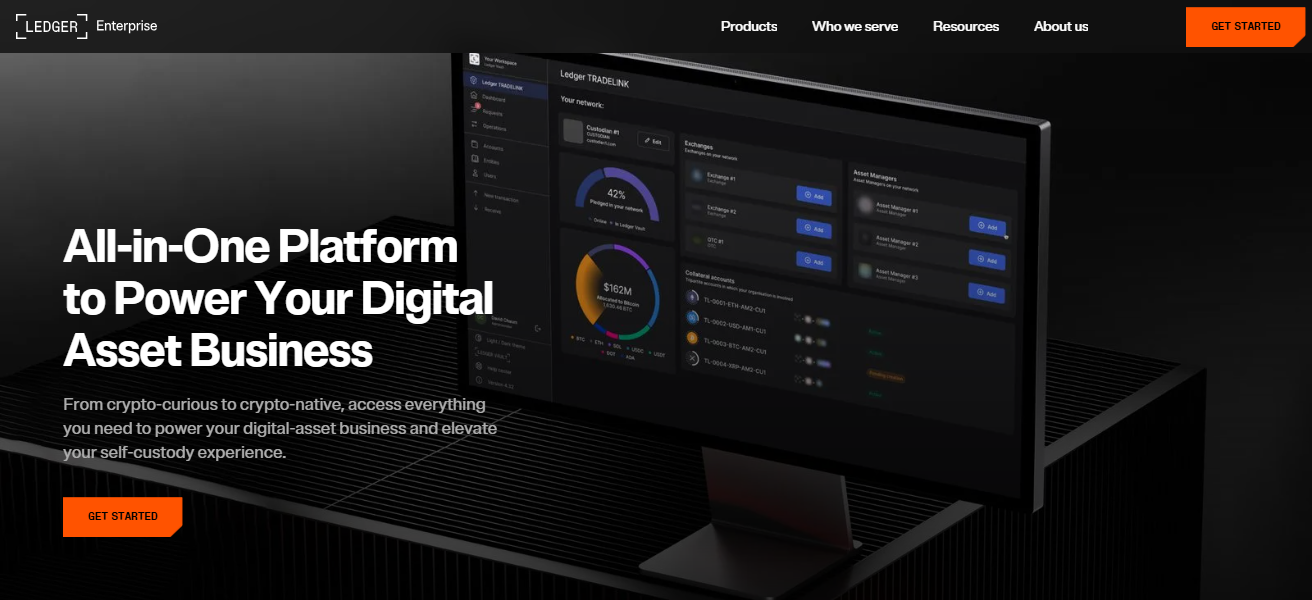
Ledger Enterprise’ s hardware-based approach is also great for cyber threat protection, while the enterprise dashboard provides multi-user controls.
For Corporations needing a flexible and seamless accounting integration solution, Ledger Enterprise is ideal for integrating hardware level security with accounting systems.
Ledger Enterprise Features
- Incorporates audit trails and compliance features for regulated businesses.
- Empowers multi-user management and control through an enterprise dashboard.
- Simplifies crypto transaction reporting with integration into ERP systems.
- Supplies governance control with hardware-based cold storage.
| Pros | Cons |
|---|---|
| Hardware-based cold storage offers strong security. | Requires physical devices for all users. |
| Governance controls ensure authorized access only. | Less flexible for fast-moving DeFi transactions. |
| Audit trails support compliance and regulation. | Higher setup costs for enterprises. |
| ERP integration simplifies reconciliation. | Limited scalability for very large organizations. |
4. Coinbase Wallet (Business)
Coinbase Wallet for Business may be the first cryptocurrency wallet developed for corporate custody and compliance, facilitating secure management of corporate crypto.
It features flexible storage, approval of transactions, and integrated ERP systems for easy accounting reconciliation.
Coinbase’s trust as a compliant exchange wallet further solidifies the wallet’s compliance with the regulatory financial standards.
It also features corporate accounting tools, including multi-user corporate governance, audit reports, and compliance reporting.
The wallet’s API features a plug-and-play with accounting systems for crypto transactions, enabling effortless compliance and operational tracking.
The Coinbase Wallet (Business) is ideal for companies that need a compliant business accounting solution and effective integration.
Coinbase Wallet (Business) Features
- Incorporates compliance focused infrastructure with institutional-grade custody.
- Offers secure transactions and custody for corporate approvals.
- Enables seamless reporting, audits, and governance for multi-users.
- Streams reconciliation with accounting and ERP system integration.
| Pros | Cons |
|---|---|
| Institutional-grade custody backed by regulated exchange. | Custody is centralized, reducing decentralization benefits. |
| ERP and accounting integration available. | Limited DeFi access compared to decentralized wallets. |
| Multi-user governance and audit trails. | Fees may be higher than competitors. |
| Strong compliance and reporting tools. | Regional availability restrictions in some countries. |
5. MetaMask Institutional
MetaMask Institutional offers a unique version of the widely used MetaMask wallet for corporations. Due to its compliance workflows, governance controls, and multi-user functionalities, MetaMask Institutional is designed for enterprise treasury management.
With seamless integration to accounting systems, MetaMask Institutional provides accurate reporting and transaction tracking.
Furthermore, MetaMask Institutional offers access to decentralized finance (DeFi) to allow corporations to safely enter the DeFi market.
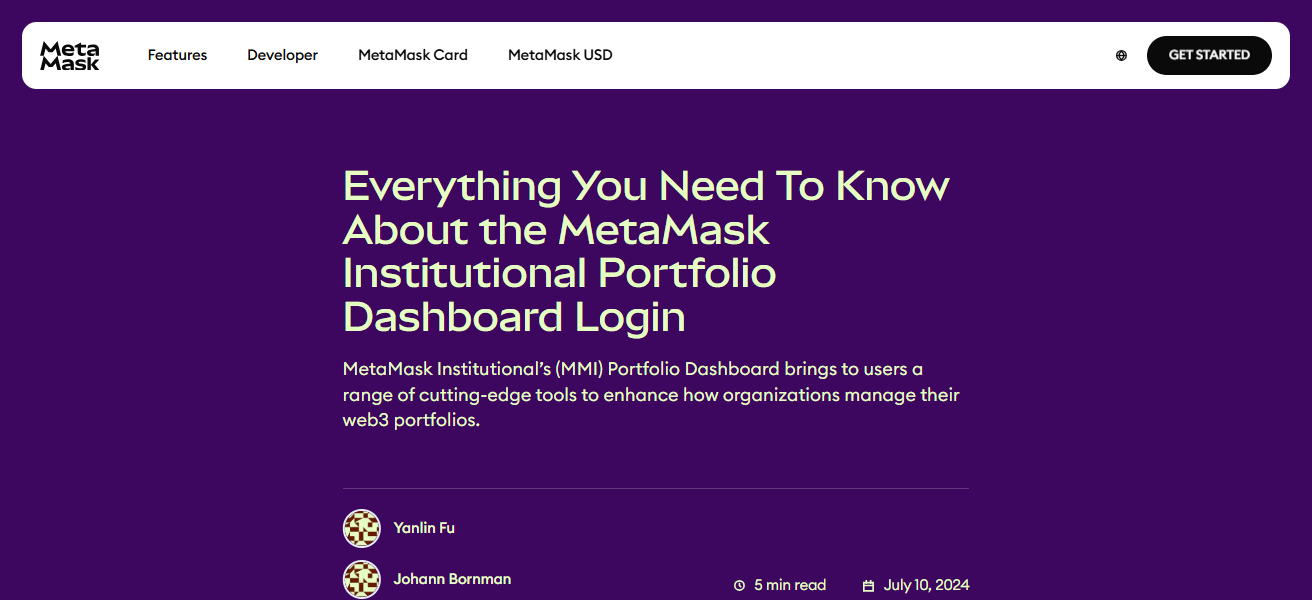
With workflows that allow customization, transactions can be tailored to fit the specific governance policies of a corporation.
MetaMask Institutional provides a much-needed solution that combines the accessibility of DeFi, high-end enterprise compliance, and accounting integration.
MetaMask Institutional Features
- Incorporates compliance workflows and governance controls for enterprises.
- Enables corporate treasury management with multi-user access.
- Enhances integration with accounting systems for better transaction tracking.
- Offers secure entry into decentralized finance (DeFi) markets.
| Pros | Cons |
|---|---|
| Provides compliance workflows and governance controls. | Still evolving compared to traditional custodians. |
| Multi-user access supports corporate treasury. | Requires training for teams unfamiliar with DeFi. |
| Integrates with accounting platforms for tracking. | Security depends on proper configuration. |
| Enables secure DeFi participation. | May expose corporations to DeFi risks. |
6. Crypto.com DeFi Wallet
Crypto.com DeFi Wallet provides businesses with efficient, safe, and compliantly customizable access to accounting-integrated decentralized finance, as well as multi-chain crypto wallet and portfolio management.
With governance, certain enterprise-grade features such as transaction tracking, and reconciliation tools (that accompany integrated accounting platforms to DeFi transactions), it’s enterprise-grade compliant.
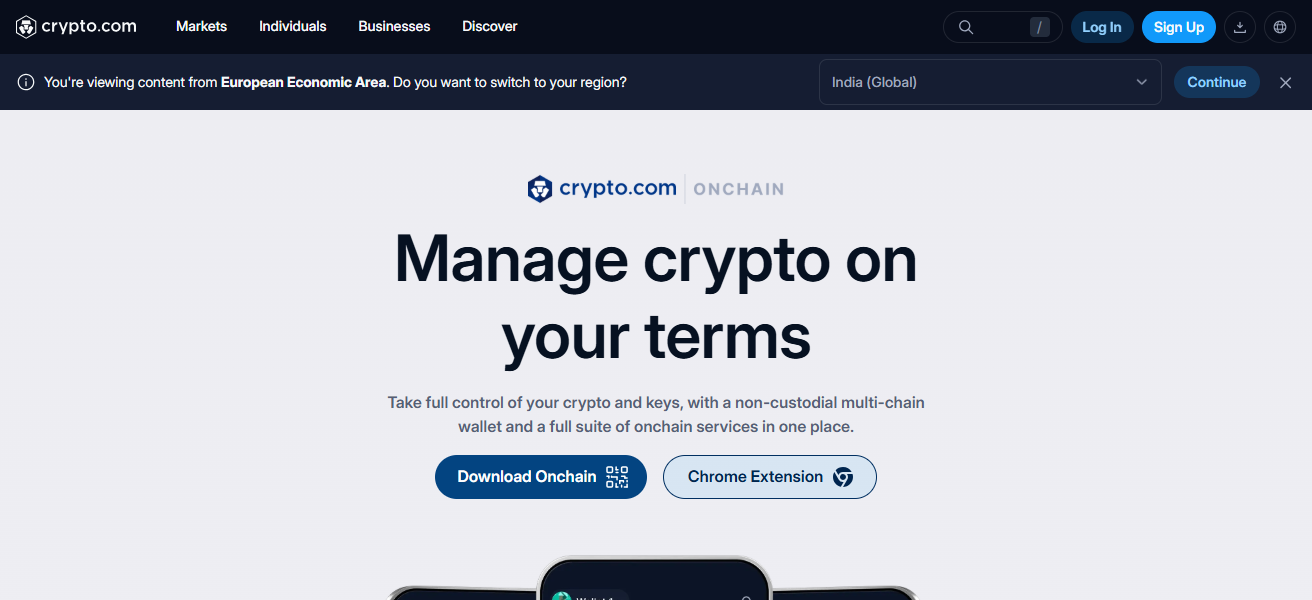
The entire ecosystem also provides yield and liquidity management. It is integrated with the crypto.com’s treasury services (providing liquidity and yield management) to maintain the closure with DeFi on liquidity and yield services.
For businesses that have to keep the exposure to DeFi limited but want to maintain the accounting accuracy along with the integrated treasury services, Crypto.com DeFi Wallet is balanced and enterprise-grade compliant.
Crypto.com DeFi Wallet Features
- Value management across different chains.
- Offers governance and enterprise compliance.
- DeFi reconciliations partnerships.
- Yield and liquidity DeFi services via Crypto.com.
| Pros | Cons |
|---|---|
| Multi-chain asset management supports diverse portfolios. | DeFi transactions can be complex for accounting. |
| Governance features and compliance tools included. | Risk exposure to volatile DeFi markets. |
| Accounting integration for reconciliation. | Less suited for highly regulated institutions. |
| Access to liquidity and yield opportunities. | Requires strong internal controls to manage risks. |
7. Tangem Wallet
Tangem Wallet is a versatile option that also offers portability and high-end protection. Each wallet is a physical card that stores private cryptographic keys and is impenetrable by cyberattacks.
Tangem also offers multi-user governance which allows using the wallet for a corporate treasury. Tangem Wallet integrates with enterprise accounting tools for easy transaction tracking and reporting.
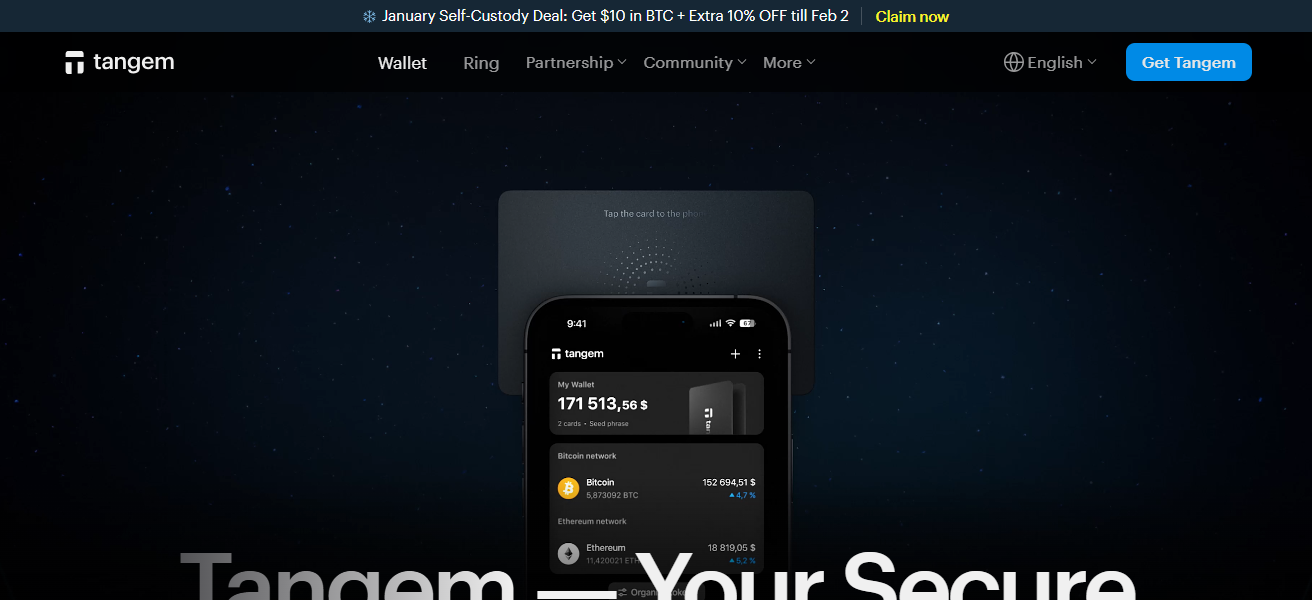
The wallet is also practical for businesses that have multiple teams managing crypto assets, as its simplicity and ruggedness, will allow the wallet to endure heavy use.
A combination of accounting integration and hardware-level security gives corporations a practical and efficient system for managing digital assets.
Tangem Wallet Features
- Private keys are stored offline in smartcard wallets.
- Protection at the hardware level lowers the chance of cyberattacks.
- Treasury corporate operations multi-user management.
- Transaction reporting features enterprise accounting integration.
| Pros | Cons |
|---|---|
| Smartcard-based hardware wallet ensures offline security. | Physical cards can be lost or damaged. |
| Reduces cyberattack risks significantly. | Limited advanced governance features. |
| Supports multi-user corporate treasury operations. | Less integration depth with ERP systems. |
| Compatible with enterprise accounting software. | May not scale well for large institutions. |
8. BitGo
BitGo has a long track record as a respected institutional wallet provider with multi-signature and compliance features.
It accommodates corporate governance processes so that transactions can be set to require several approvals. BitGo’s partnerships with accounting firms facilitate proper crypto transaction reconciliation and reporting.
The wallet’s insurance coverage adds another business protection layer. Its API simplifies ERP’S corporate treasury process integration.
As a trusted custodian, BitGo is sought after for secure custody, compliance, and accounting crypto asset integration.
BitGo Features
- Custody for institutional-grade multi-signature compliance.
- Governance with complex approvals across several transactions.
- Plug-and-play accounting and reconciliation integration.
- Insurance and ERP connectivity.
| Pros | Cons |
|---|---|
| Multi-signature security enhances protection. | Costs may be high for smaller firms. |
| Governance workflows require multiple approvals. | Centralized custody reduces decentralization benefits. |
| Accounting integration supports reconciliation. | Limited DeFi access compared to decentralized wallets. |
| Insurance coverage adds corporate confidence. | Integration may require technical expertise. |
9. Trust Wallet (Enterprise Use)
While Trust Wallet is well-known in the industry for retail applications, it also provides enterprise applications, including governance and compliance.
It also provides multi-chain asset support, which is ideal for businesses dealing with multiple cryptocurrencies.
Trust Wallet syncs with accounting tools to provide businesses with accurate reporting and tracking of all their transactions.
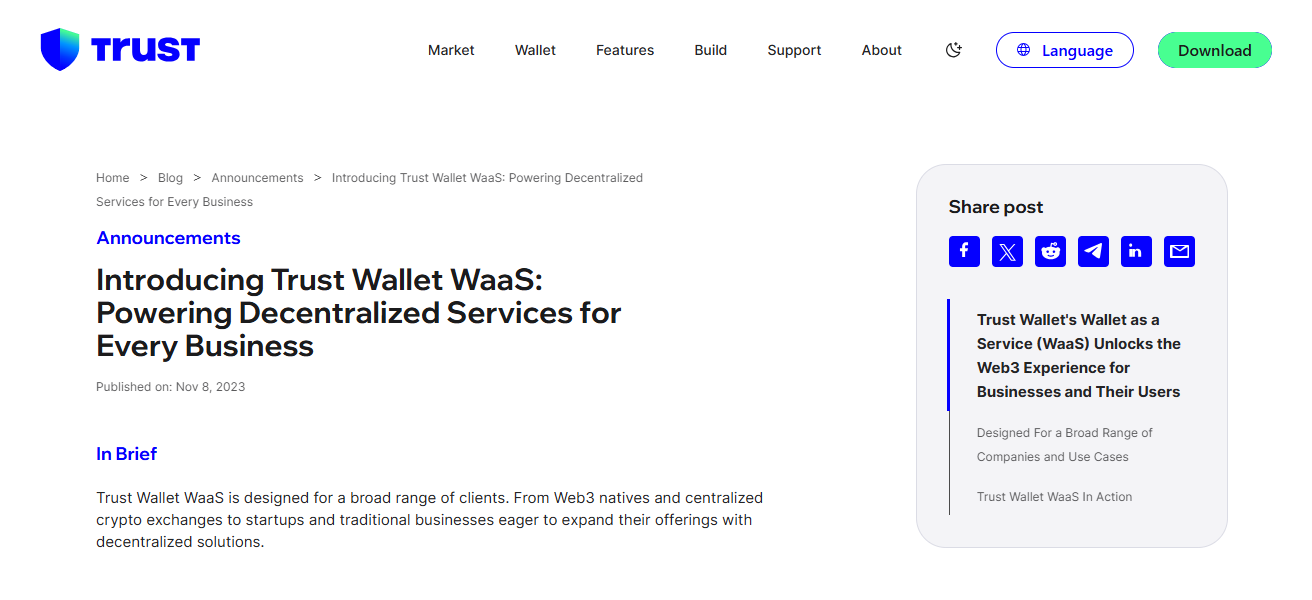
Additionally, the software simplifies corporate treasury processes and is streamlined for governance compliance to help with internal policy restrictions.
The wallet’s open-source software also enhances transparency for businesses. With the broad spectrum of enterprise-grade accounting tools and retail functionalities, businesses can use Trust Wallet to manage their crypto assets with security and efficiency.
Trust Wallet (Enterprise Use) Features
- Multi-chain asset management for corporate portfolio management.
- Governance compliance with the internal policies of the enterprise.
- Correct accounting tracking via integrated accounting systems.
- Enterprise trust and transparency via open-source software.
| Pros | Cons |
|---|---|
| Supports multi-chain assets for diverse portfolios. | Primarily designed for retail, enterprise features limited. |
| Governance controls ensure compliance. | Lacks advanced institutional-grade security. |
| Integrates with accounting platforms. | May not meet strict regulatory requirements. |
| Open-source nature adds transparency. | Requires customization for enterprise use. |
10. Zengo Business
Zengo Business employs keyless wallet technology on MPC which eliminates private key vulnerabilities.
With compliance support, governance workflows, and multi-user access, it is fit for business use. Zengo integrates with accounting tools for seamless transaction reconciliation and reporting.
It simplifies treasury management with its intuitive interface and safeguards against cyber threats with its advanced security models.
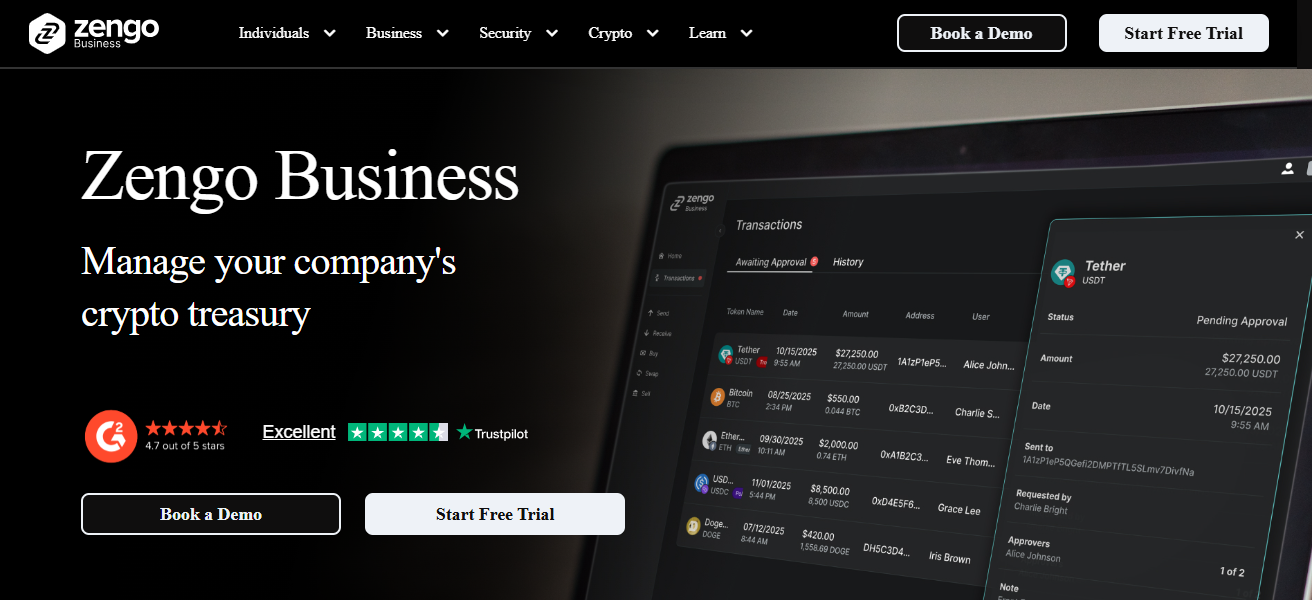
Zengo Business also provides cross-chain asset management, allowing large-scale corporations to diversify their portfolios.
With cutting-edge security and business-grade accounting, Zengo Business is a trustworthy modern solution for corporations to manage their crypto assets.
Zengo Business Features
- Enhanced Security via MPC technology and wallet with no keys.
- Complex governance and compliance for corporate Divisions.
- Plug-and-play accounting reconciliation integrations.
- Cross-chain management with a friendly interface.
| Pros | Cons |
|---|---|
| Keyless MPC wallet eliminates private key risks. | Relatively new in enterprise adoption. |
| Compliance support and governance workflows included. | Limited insurance coverage compared to custodians. |
| Accounting integration ensures accurate reconciliation. | May lack advanced ERP connectivity. |
| Supports cross-chain asset management. | Higher learning curve for traditional finance teams. |
Cocnlsuion
In cocnlsuion Selecting optimal wallets for corporate crypto accounting integration provides safe custody, compliance, and smooth financial reporting.
Fireblocks, Qredo, Ledger Enterprise, and BitGo provide enterprise-level solutions, while MetaMask Institutional and Crypto.com DeFi Wallets provide DeFi access.
These wallets integrated with ERP systems to simplify reconciliation and equip firms with the transparent and seamless digital asset management capability.
FAQ
Integration ensures accurate transaction tracking, reconciliation, and reporting directly into enterprise accounting systems.
Fireblocks and BitGo are widely recognized for their advanced institutional-grade security features.
Yes, wallets like Qredo, MetaMask Institutional, and Ledger Enterprise provide multi-user approval workflows.
Most enterprise wallets, including Fireblocks and Coinbase Wallet (Business), offer ERP and accounting connectivity.