
In this article, I will discuss the Best Cross-Border Business Loan Providers that help companies expand internationally with confidence.
- Key Points & Best Cross-Border Business Loan Providers
- 10 Best Cross-Border Business Loan Providers
- 1. HSBC Global Banking
- 2. Citibank International
- 3. Standard Chartered Bank
- 4. BNP Paribas
- 5. Barclays International
- 6. Deutsche Bank
- 7. J.P. Morgan Chase
- 8. Wells Fargo International
- 9. ICICI Bank Global
- 10. Bank of China
- How To Choose Best Cross-Border Business Loan Providers
- Cocnsluion
- FAQ
Cross-border business loans help global trade, overseas expansion, and financing in multiple currencies.
With the appropriate provider, you can obtain interest rates, funding options, and support that is flexible and compliant to help you with international business operations.
Key Points & Best Cross-Border Business Loan Providers
| Provider | Key Point |
|---|---|
| HSBC Global Banking | Wide international presence with tailored SME financing |
| Citibank International | Strong trade finance and cross-border credit solutions |
| Standard Chartered Bank | Focus on emerging markets and global expansion loans |
| BNP Paribas | Comprehensive corporate lending with global reach |
| Barclays International | Flexible loan structures for multinational businesses |
| Deutsche Bank | Expertise in structured cross-border financing |
| J.P. Morgan Chase | Robust capital support for global corporations |
| Wells Fargo International | Cross-border lending with strong U.S. trade links |
| ICICI Bank Global | Specialized loans for Indian companies expanding abroad |
| Bank of China | Strong support for Asia-focused cross-border trade |
10 Best Cross-Border Business Loan Providers
1. HSBC Global Banking
HSBC Global Banking, due to its footprint in Europe, Asia, the Americas, and the Middle East, is globally acknowledged as one of the most successful cross-border business loan facilitators.
HSBC provides Customized financial solutions to companies involved in international trade, including loans in multiple currencies, trade financing, and working capital.
HSBC creates and supports its clients as businesses Handle complicated international regulations through digital solutions and cross-border financial relationships.
With the assistance of sophisticated digital tools and global relationship managers, multinational corporations can manage their cash more efficiently and confidently.
HSBC Global Banking Features
- Global Reach: Tracks cross-border lending in over 60 countries and handles multiple currency accounts.
- Trade Finance Expertise: Strong solutions for import/export financing and letter of credit financing, as well as for peripheral financing in supply chain financing.
- Digital Cash Management: Highly advanced digital platforms for liquidity and cross-market payment and treasury management.
- Risk & Compliance Support: International regulation management is aided through the use of customized risk analytics and regulation management in the compliance framework.
| Pros | Cons |
|---|---|
| Very strong global footprint in 60+ countries supporting international operations | Can be relatively expensive compared to regional banks |
| Comprehensive multicurrency loan & trade finance solutions | Complex documentation requirements |
| Deep expertise in regulatory environments across jurisdictions | Small businesses may receive less personalized support |
| Excellent digital platforms for cross-border cash management | May have slower approval timelines |
| Strong risk management and liquidity optimization tools | Not always the best for niche industry financing |
2. Citibank International
Citibank International has an unmatched ability to blend global presence and local understanding for cross-border business lending.
Multicurrency loan arrangements and treasury services are offered to businesses of all sizes. Citi provides cross-border lending services such as syndicated loans, structured financing
Trade credit, and supply chain financing, which assist businesses in addressing funding gaps when entering new markets.
Sophisticated risk assessment tools, robust compliance frameworks, and Citi’s reputation for innovation provide added assurance for international borrowers, as does Citi’s strong correspondent banking network.
Citibank International Features
- Worldwide Network: Presence in over 100 countries with a complete range of banking with non-financial intermediaries.
- Integrated Treasury Services: Cash and loan integration with foreign exchange, trade finance, and risk solutions.
- Syndicated & Structured Lending: Provides customized financing for complicated cross-national lending at multiple levels.
- Multiple Currency Management: Seamless management of cash flows and debt in multiple currencies.
| Pros | Cons |
|---|---|
| One of the largest global banking networks | Higher minimum borrowing requirements |
| Excellent treasury and cash-management integration | Fees can be complex to understand |
| Strong correspondent banking partnerships | Not ideal for micro-enterprises |
| Advanced risk mitigation and hedging tools | Customer service varies by region |
| Robust syndicated loan and structured finance options | Middle-market focus can be limited |
3. Standard Chartered Bank
Standard Chartered Bank is among the top providers of cross-border business loans, particularly in Asia, Africa and the Middle East.
The bank offers cross-border lending solutions that meet the needs of international trade, project financing, and working capital for businesses in both emerging and developed markets.
Since he bank has strong knowledge of the various regions, he businesses can access the global financing systems.
Unlike the other banks, Standard Chartered offers relationship banking, providing personalized credit structures and advisory support.
The bank’s robust digital solutions streamline the loan application and management processes, enabling businesses to efficiently and easily cross borders to access funds and manage their cash flows.
Standard Chartered Bank Features
- Emerging Markets Focus: Strong cross-border growth presence in the growing markets of Asia, Africa, and the Middle East.
- Trade & Working Capital Solutions: Financing tailored to the global trade cycles and supply chain of trade sponsors.
- Relationship-Driven Service: Client-specific dedicated teams with regional position expertise and advocacy.
- Competitive Loan Options: Financial solutions with the best price-value ratio tailored to specific corridors and industries.
| Pros | Cons |
|---|---|
| Extensive presence in Asia, Africa & MENA | Less coverage in Latin America |
| Focus on emerging market cross-border finance | Smaller global capital base than top U.S./EU banks |
| Tailored relationship management & advisory | May limit large multinational borrowing limits |
| Trade finance and working capital expertise | Digital platforms not as advanced as top peers |
| Competitive pricing in select corridors | Slower product innovation** |
4. BNP Paribas
BNP Paribas ranks highly for cross-border business loans, particularly for firms with footprints in Europe and further afield.
The bank is a reputed provider of corporate banking services and international loans, including syndicated loans, export credit financing, and trade and commodity finance.
With strong presence in Europe and all major financial centers, A BNP Paribas client can service a global business and hedge multiple risks and optimize financing.
BNP Paribas advisors assist clients in customizing loans to achieve specific business milestones. Sustainable financing and other innovative solutions further attract discerning clients.
BNP Paribas Features
- Presence in Europe and Beyond: Strong coverage in Europe and key global markets.
- Structured Trade Finance: Comprehensive solutions in export, import, and commodity trading financing.
- Sustainability Financing: Green financing and sustainability-linked loans to support responsible businesses.
- Advisory Services: Cross-border capital solutions and risk management advisory.
| Pros | Cons |
|---|---|
| Strong European banking network | Limited presence in some Asian/African markets |
| Excellent export & structured trade financing | Can be conservative in risk acceptance |
| Competitive multicurrency lending | Less personalized for small business clients |
| Solid advisory on cross-border strategy | Complex compliance processes |
| Sustainability-linked financing options | Niche products may be hard to qualify for |
5. Barclays International
Barclays International offers cross-border business loans, particularly to mid-sized and large businesses that require flexible financing.
Barclays has a large footprint in Europe, the U.S. and Africa. It supports cross-border operations with multi-currency loans, acquisition financing, and trade financing.
With the bank’s extensive experience in cross-border regulatory frameworks, Barclays is able to customize loans that satisfy local compliance requirements and achieve global strategic goals.
By integrating digital solutions with relationship management, efficient loan origination and monitoring is possible.
Its partnership approach with tailored support establishes the bank as a preferred lender to businesses with cross-border operations.
Barclays International Features
- Personalized Loan Options: Specialized credit facilities, including tailored acquisition and working capital loans.
- Digital Solutions: Platforms for cross-border financing system for online origination and management.
- Focus on the Middle Market: Services for developing businesses with international growth.
- Cross-Border Financing: International business financing through multi-currency loans and account structures.
| Pros | Cons |
|---|---|
| Good reach across Europe, U.S., Africa | Smaller global network than HSBC/Citi |
| Flexible loan structuring | Higher cost in certain corridors |
| Strong mid-market support | International trade products can be limited |
| Digital loan origination tools | Less expertise in emerging market regulation |
| Competitive working capital and acquisition loans | Relationship service varies regionally |
6. Deutsche Bank
Deutsche Bank is prominent for providing comprehensive cross-border lending services to corporate and institutional clients.
With a global banking network spanning all the major financial hubs, the bank’s clients have access to multicurrency loans, syndicate financing, and trade finance services.
The bank’s specialists also support funding of international growth, refinancing of global operations, managing cross-border cash positions, and others.
Furthermore, Deutsche Bank’s clients also receive strategic management services to help with the complex regulations of different countries and align the financing
with the clients’ long-term growth objectives and international competitiveness with managed risks in foreign exchange and interest rates.
Deutsche Bank Features
- Comprehensive Corporate Solutions: Strong global presence in corporate financing and syndicated loans.
- Global Foreign Exchange and Risk Solutions: Foreign currency and risk management products.
- Cross-Border Liquidity Management: Global integrated systems for managing liquidity.
- Advisory Services: Structuring cross-border financing and international debt advisory.
| Pros | Cons |
|---|---|
| Deep global corporate finance expertise | Reputation affected by past scandals |
| Strong in Europe-Asia corridors | Higher requirements for multinational borrowers |
| Excellent FX and risk-management tools | Service experience varies by office |
| Solid syndicated and structured financing | Slower digital adoption in some regions |
| Advisory for international expansion | Not ideal for very small businesses |
7. J.P. Morgan Chase
J.P. Morgan Chase is one of the biggest providers of cross border business loans for multinationals and rapidly growing businesses.
It has a great network in North America, Europe, Asia and Latin America and offers a wide range of financing solutions, including syndicate loans, acquisition financing, and working capital.
Because of the banks great expertise in capital markets and great reputation, they help support large scale global transactions and complicated financing structures.

J.P. Morgan Chase also offers great risk management hedging tools and helps businesses cope with interest and currency rate problems.
Because of its strong balance sheet and reputation for reliability, cross border lending is a great option for them.
J.P. Morgan Chase Features
- Extensive Global Network: Coverage across all key economic zones.
- Capital Market Integration: Strong connectivity to the bond market, M&A, and wholesale banking.
- Sophisticated Risk Management Tools: Hedging, FX, and interest rate protection instruments.
- Large-Scale Financing: Ability to support significant multinational borrowing programs.
| Pros | Cons |
|---|---|
| Extremely strong global presence | Typically serves larger corporates |
| Large loan capacity for big international deals | Higher pricing due to premium services |
| Top capital markets & hedging solutions | Minimum credit thresholds are high |
| Excellent integrated banking tech | Limited focus on small enterprise needs |
| Strong regulatory compliance framework | Bureaucratic loan processing |
8. Wells Fargo International
Wells Fargo’s International department specializes in providing cross-border business loans to United States companies looking to expand abroad and foreign companies establishing businesses in the United States.
Its services include acquisition financing, export loans, trade finance, and financing in multiple currencies.
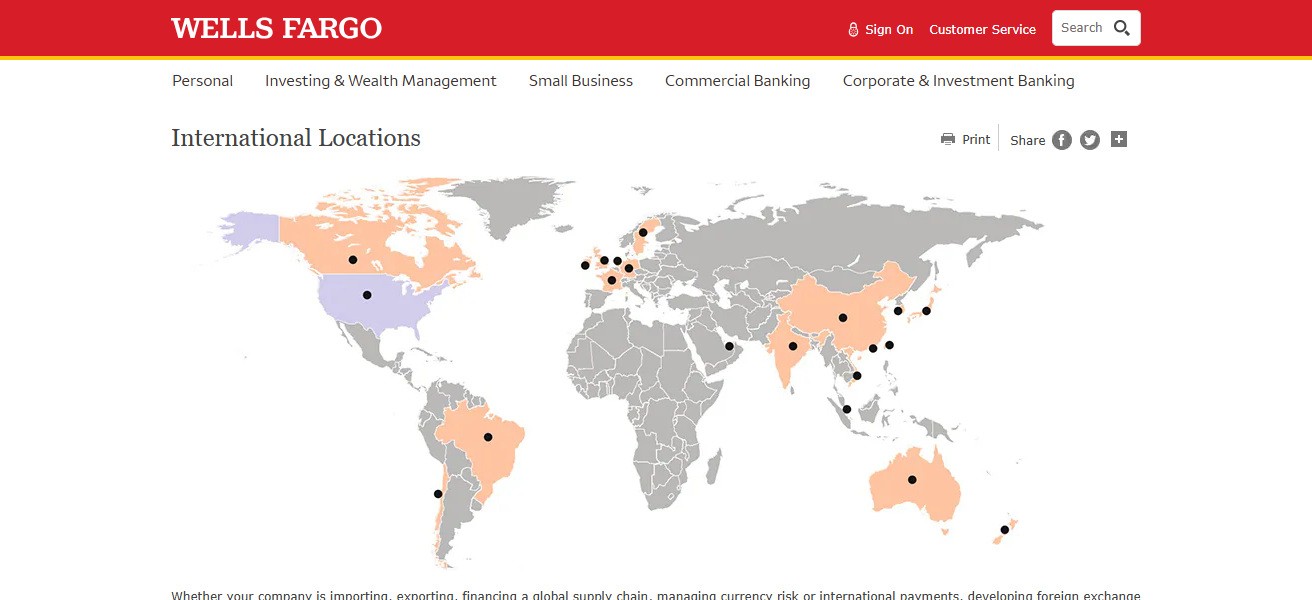
Specialists in International Banking help customers refine their cash management and financing strategies in a cross-border context.
The bank’s correspondent banking relationships around the globe help meet the needs of clients with local solutions to their financing needs.
The combination of strong client focus and digital banking services optimizes the management and access of cross-border loans for customers.
Wells Fargo International Features
- Export & Import Financing: Available for U.S. firms engaged in global trade and foreign businesses located in the U.S.
- Cash & Liquidity Management: Tools for the management of efficient payment and receipt streams across borders.
- Global Trade Support: Trade finance solutions, including guarantees and documentary credits.
- U.S. Banking Strength: Seamless integration of international services with domestic services for clients based in the U.S.
| Pros | Cons |
|---|---|
| Strong support for U.S.–international trade | Less global presence than major global banks |
| Practical export & import loan products | Limited services in some regions |
| Deep U.S. banking integration | Technology not as advanced as peers |
| Good for U.S. SMEs expanding abroad | Smaller syndicated loan platform |
| Reliable cash management solutions | Limited multicurrency ratios |
9. ICICI Bank Global
ICICI Bank Global is the most trusted cross-border business lender in supporting the India-International business lending. It has earned this reputation as an international division of one of the largest private banks in India.
It has a realiable and diverse financing solution such as, import and export financing, working capital financing, and structured trade financing.
Its global presence in major business centers and ICICI Bank Global Additionally offers the flexibility and assistance necessary for businesses to cope with altering regulatory frameworks and currency changes.
ICICI Bank Global is highly appreciated for its technology integrated customized service that enables businesses to obtain working capital financing, trade financing and to enhance their flexibility in the import export financing.
ICICI Bank Global Features
- India-Global Corridor Expertise: Robust support for businesses dealing with India and the international markets.
- Working Capital Financing: Financing and credit lines for cross-border trade operations.
- Relationship Approach: Emphasis on personalized service for small and mid-sized enterprises.
- Technology-Led Services: Digital solutions for loan application, tracking, and cash management.
| Pros | Cons |
|---|---|
| Strong link between India & global markets | Less presence outside Asia / Africa |
| Good export, import & working capital finance | Not as extensive global network |
| Relationship-driven service | Smaller capital capacity for large loans |
| Technology-enabled platforms | Limited structured finance options |
| Competitive pricing for India-focused companies | May lack global risk tools of larger banks |
10. Bank of China
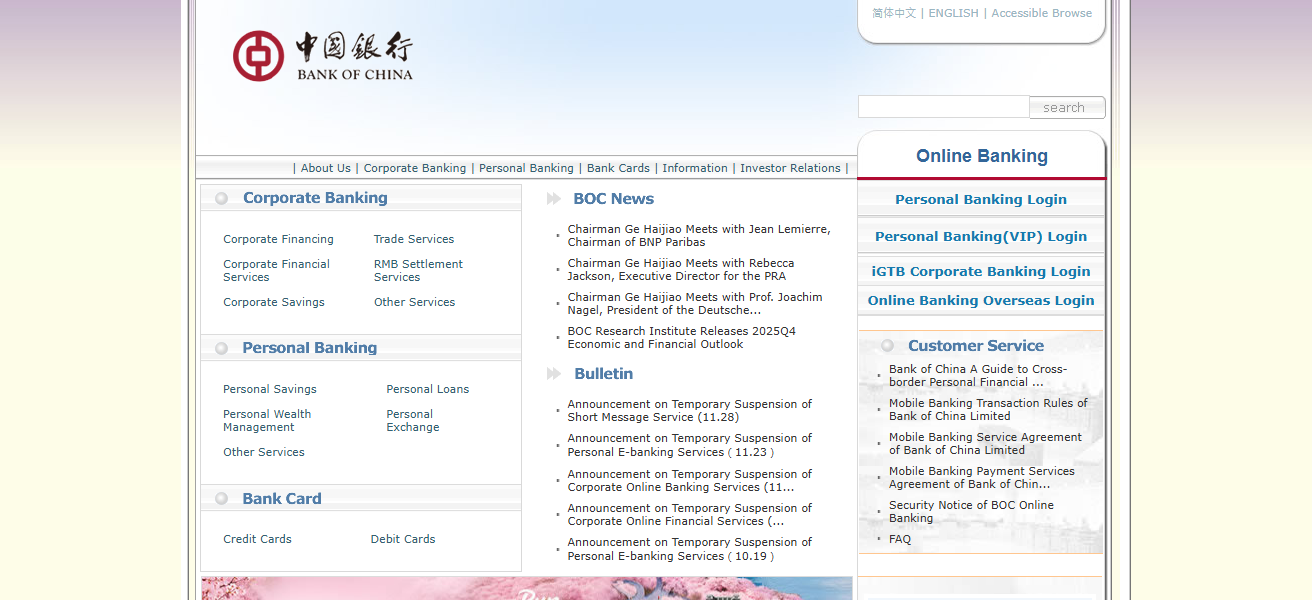
The Bank of China (BOC) is one of the largest international business lenders, particularly for companies doing cross border business with China.
BOC has branch offices and subsidiaries in Asia, Europe and the Americas and offers international clients multi-currency financing, import-export credit financing, and project financing.
Because of BOC’s understanding of the global and Chinese market, it is one of the most preferred banks for companies that are doing business in the cross border projects of the Belt and Road Initiative.
BOC’s clients also appreciate it for the integrated risk management and compliance consultancy that assists in navigating through complex business regulations. Lastly, BOC’s clients are provided with a variety of products for their short and long term financing needs.
Bank of China Features
- China Integration: Strong capabilities in financing trade (outbound and inbound) with China.
- Multinational Support: Cross-border financing in multiple currencies at competitive rates.
- Project & Infrastructure Finance: Financing of large, cross-border projects.
- Regulatory Navigation: Client support in managing complex jurisdictional slippage.
| Pros | Cons |
|---|---|
| Strong China-global trade financing | Complex compliance / documentation |
| Extensive support for Belt and Road corridors | Limited advisory services |
| Solid multicurrency and export import credit | Service experience varies regionally |
| Deep understanding of Asian regulatory needs | Smaller presence in Americas/EU |
| Competitive pricing | Less innovative digital tools |
How To Choose Best Cross-Border Business Loan Providers
- Global Presence: Select banks with strong global networks for seamless cross-border operations.
- Multicurrency Support: Availability of accounts and loans in different currencies reduces conversion costs.
- Regulatory Expertise: The provider understands the varying laws, cross-border taxes and compliance.
- Loan Flexibility: Customizable loan terms, repayment periods, and financing options cater to global requirements.
- Trade Finance Options: Balanced trade finance services simplify the management of cross-border supply chains.
- Interest Rates & Fees: Rate comparison, pricing transparency, and region-specific hidden fees are of utmost importance.
- Risk Management Tools: Effective cross-border payment solutions reduce exposure to currency and interest volatility.
- Digital Banking Capabilities: Cross-border payment solutions are enhanced through advanced online loan management systems.
- Customer Support: Relationship management facilitates cross-border communications and issue resolution.
- Reputation & Stability: Select banks with proven expertise in the international business lending space.
Cocnsluion
In conclusion, selecting cross-border business loan providers is critical for international expansion and the growth of global trade.
Top-tier banks provide multi-currency financing, robust regulatory framework, and adaptive loan structuring to address various business needs.
With global cross-border financing, banks regulatory financing, and loan structuring flexibility, the business cross-border financing provider is able to balance risks and support sustained success in cross-border trade.
FAQ
A loan provided by international banks to fund business activities across multiple countries.
SMEs, exporters, importers, and multinational companies with international operations or trade activities.
Global banks like HSBC, Citibank, Standard Chartered, J.P. Morgan, and BNP Paribas.
Yes, most providers offer multicurrency loans to reduce foreign exchange risks.
Rates vary by country, risk profile, currency, and loan structure.