This article covers the top CryptAPI alternatives suited to developers and businesses who wish to engage with blockchain networks, handle crypto assets, or develop trading and NFT apps.
These alternatives provide sophisticated features, top-notch security, multi-chain compatibility, and scalable solutions that enable easy and dependable integration of crypto features into a wide range of projects.
What is CryptAPI?
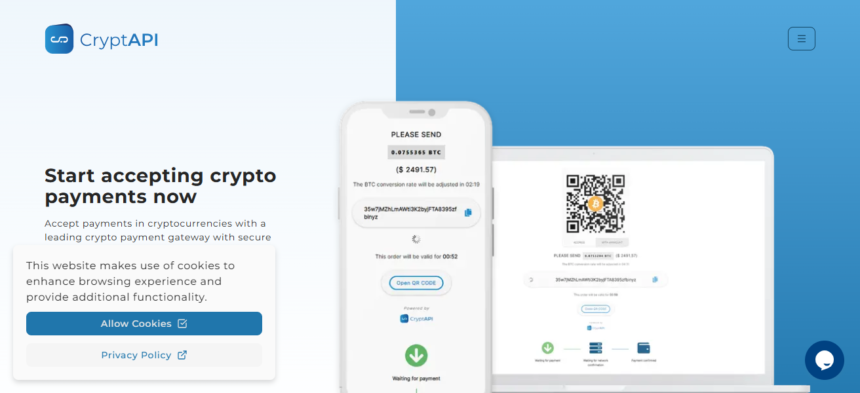
CryptAPI is a service aimed at developers and businesses that seek to integrate cryptocurrency and blockchain capabilities into their products, such as their websites and applications.
It offers API services that allow them to accept payments in various cryptocurrencies, create wallets, check transaction statuses, and perform other blockchain-related functions.
CryptAPI is easy to use, scalable, and supports instantaneous transaction processing. Thus, it is ideal for online shops, cryptocurrency exchange services, and other financial technology software
That need to facilitate cryptocurrency transactions without creating their blockchain systems from the ground up. CryptAPI is also able to receive, a payments for sellers, and perform transactions and other functions in a fraction of a second.
Key Points & Best CryptAPI Alternatives
| Alternative | Key Point |
|---|---|
| Kaleido | Enterprise-grade blockchain platform with easy API integration and scalability |
| QuickNode | Fast blockchain infrastructure for developers, offering speed and reliability |
| Ethereum API | Smart contract and dApp support with robust developer tools |
| Venly | NFT and wallet services for businesses and developers |
| Chainstack | Multi-chain support with managed blockchain services |
| Coinbase Pro API | Trading and market data from a leading crypto exchange |
| KuCoin API | Global crypto trading platform with extensive market coverage |
| Huobi API | Exchange and liquidity services with strong Asian market presence |
| OKEx API | Advanced trading features including derivatives and spot trading |
| dYdX API | Decentralized exchange focused on derivatives and DeFi |
10 Best CryptAPI Alternatives
1. Kaleido
Kaleido is a leading CryptAPI alternative due to its unique blend of blockchain technology and top-tier enterprise tools. Unlike many other crypto APIs, Kaleido serves an integrated platform that creates, manages, and scales blockchain networks with a low level of technical effort.
The company’s key ares of specialization, and the reason many companies find blockchain integration to be an easier task, are their customizable, plug-and-play offerings related to tokenization, smart contracts, and private networks.

Kaleido is well developed and well positioned to offer a managed solution that permits the company’s many clients in the markets of devops and enterprise to rapidly innovate without the heavy lifting on their side.
| Feature | Description |
|---|---|
| Enterprise Blockchain | Full infrastructure for private & consortium blockchains |
| Tokenization Tools | Built‑in support for digital asset token creation |
| Smart Contract Management | Easy deployment and monitoring |
| API Integrations | Connects with existing business systems |
Pros And Cons Kaleido
Pros:
- Enterprise-Grade Infrastructure. Helps businesses optimize the deployment and management of a blockchain.
- Customizable Solutions. Tokenization, private networks, and smart contracts are customizable.
- High Security. Transactions and data can be highly secured using enterprise-grade protective technology.
- Scalability. Easily expands blockchain networks, and will not require extensive technical overhead.
Cons:
- Cost. Enterprise solutions are not affordable for smaller projects.
- Complexity for Beginners. Learning may be required for smaller dev teams, which can add to project complexity.
- Limited Consumer Facing Features. There is a primary focus on business integrations.
- Dependent on Platform. If specific blockchain customization is warranted, there is less flexibility.
2. QuickNode
QuickNode is among the top alternatives for CryptAPI because of its rapid and dependable network access across many blockchains and its all-in-one interface.
Its top characteristic is high-performance node infrastructure with low latency and high uptime, essential for developers crafting crypto applications. QuickNode’s diverse blockchains support projects such as NFT, DeFi, and smart contracts.

QuickNode’s dependable backend creates the perfect environment for teams concentrating on innovation as the software offers flexible scaling, real-time insights, and developer-centric features.
| Feature | Description |
|---|---|
| High‑Speed Node Access | Fast connections to multiple blockchains |
| Multi‑Chain Support | One API for Ethereum, Bitcoin, Optimism, etc |
| Developer Dashboard | Tools to monitor requests & usage |
| Scalability | Handles high traffic for apps & bots |
Pros And Cons QuickNode
Pros:
- Fast Node Access. The API is extremely responsive, which limits latency during on-the-fly blockchain activities.
- Multi-Chain Support. Multiple blockchains are available from a single platform provider.
- Developer Friendly Tools. Simple integrations of wallets, smart contracts, and applications are available.
- Scalable Infrastructure. Increasing volumes of traffic and transactions can be supported.
Cons:
- Pricing. For smaller devs, the advanced pricing plans can be extremely expensive.
- Limited Analytics. The analytics offered may not be adequate for enterprises.
- Support. There may be a lack of customer support for users on the free tier.
- Feature Overlap. There are many APIs on the market which provide the same features.
3. Ethereum API
One of the most outstanding CryptAPI alternative is the Ethereum API since it is able to provide fully unrestrained access to the Ethereum Blockchain thereby allowing developers to engage with smart contracts, perform wallet operations, and complete transactions.
Also, most of its advantages stem from the Ethereum ecosystem thereby seamless embedded with DeFi, NFTs, and DApps.
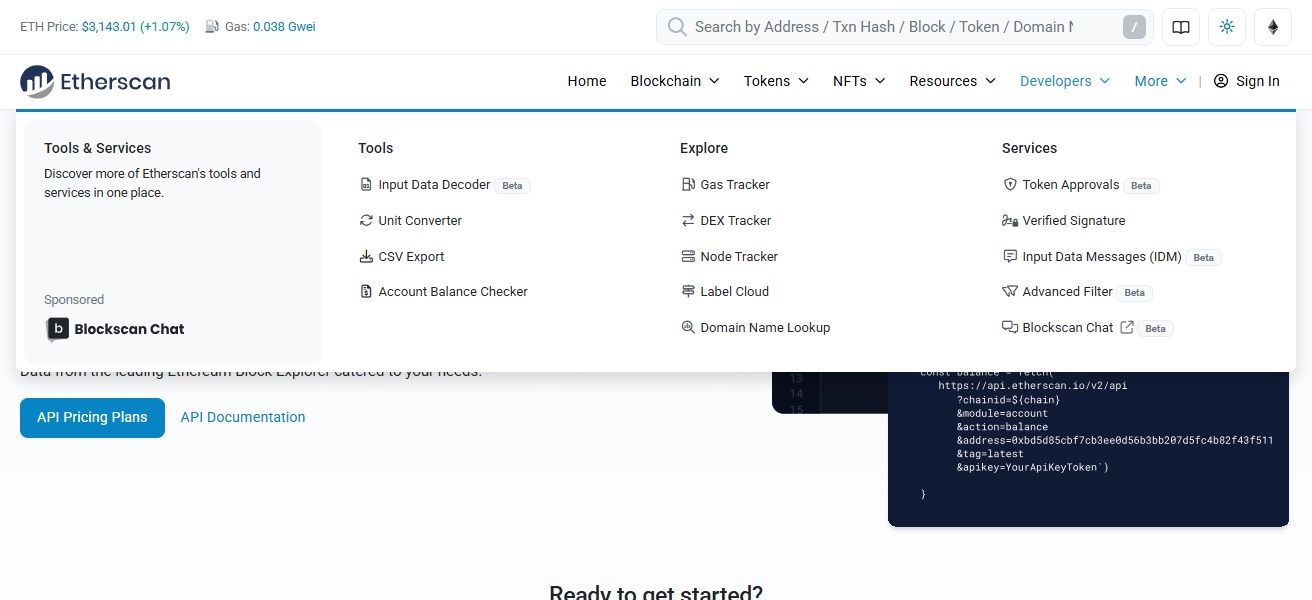
With concrete and reliable endpoints along with documentation and access to flowing real-time data, the Ethereum API allows developers to create robust and scalable blockchain solutions.
With its unparalleled Ethereum-based speed, security and features focused on Ethereum, the Ethereum API is a better option to consider for numerous crypto projects.
| Feature | Description |
|---|---|
| Smart Contract Interaction | Deploy & call contracts directly |
| Real‑Time Blockchain Data | Blocks, transactions, events |
| Wallet Integration | Send/receive ETH & tokens |
| Event Logs & Filters | Track on‑chain activity efficiently |
Pros And Cons Ethereum API
Pros:
- Direct Ethereum Access: Interact with Ethereum smart contracts with ease.
- DeFi and NFT Integration: Additional features to make it better suited for DeFi and NFT applications.
- Reliable Endpoints: Uptime gives access to data in real-time.
- Secure Transactions: Transactions remain secure with the Eth subnet.
Cons:
- Limited to Ethereum: Cannot support multi-chain projects.
- Gas Fees Dependence: Users are affected by the congestion on the Eth network.
- Complexity for Beginners: Interactions with smart contracts are difficult to grasp.
- Scalability Issues: High Eth network traffic affects speed.
4. Venly
Venly can be found near the top of the list of the best CryptAPI alternatives, and that is due to how the company focuses blockchain interactions for businesses and developers.
Their all-in-one offerings in wallet management, the minting of NFTs, and the ability to perform safe transactions across a multitude of blockchains is where they excel the most.
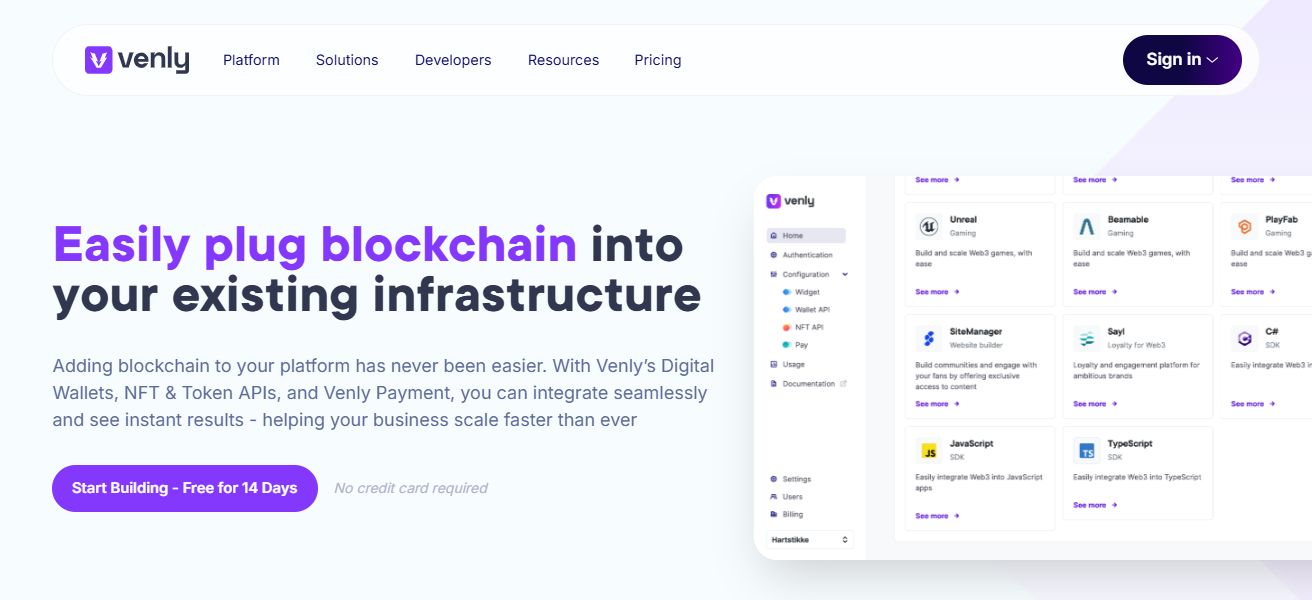
When it comes to platforms that let businesses integrate blockchains into their offerings, Venly is one of the best, and with its emphasis on the ability to seamlessly integrate them into the platforms.
Their systems are safe and and Powered fully by the users for innovation. Venly is fully capable of streamlining accessible crypto solutions to customers.
| Feature | Description |
|---|---|
| Wallet Management | Create/manage multi‑chain wallets |
| NFT Tools | Mint, sell, transfer NFTs |
| Cross‑Chain Support | Work with different blockchains |
| Secure Key Storage | Protects private keys & assets |
Pros And Cons Venly
Pros:
- All-in-One Platform: Includes wallets, NFTs and cross-chain transactions.
- User-Friendly: No in-depth knowledge of the blockchain is required for easy integration.
- Customizable APIs: APIs can be tailored around specific business needs.
- Strong Security: Transactions are encrypted and remain secure.
Cons:
- Limited Advanced Trading Tools: Not the best for those looking to trade professionally.
- Pricing Model: If the APIs are used frequently, costs can escalate.
- Smaller Ecosystem: Less adoption than large blockchain APIs.
- Feature Limitation: More complex features of a blockchain may be absent.
5. Chainstack
Chainstack also provides clients alternatives to CryptAPI due to it’s exceptional and unparalleled equipment. Being partially cloud-based, clients can implement, utilize, and expand incorporated decentralized devices.
They have differentiated themselves by providing customers incomparable unhindered access to multiple networked blockchain tech which removes the difficulty of interfacing with several different chains.
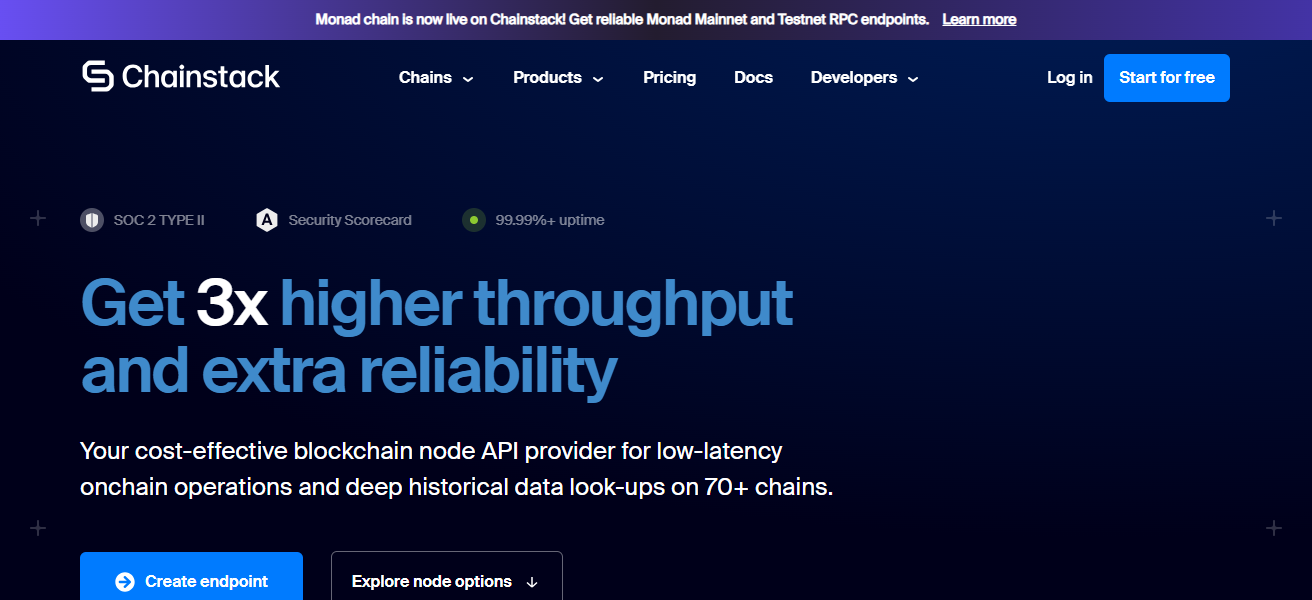
Enterprise and devs alike benefit from the speed of the nodes and the quality of analytics. Their clients get to workplace innovation seamlessly as they utilize the chainstack tools.
| Feature | Description |
|---|---|
| Multi‑Protocol Support | Access Ethereum, Polygon, BNB Chain, etc |
| Managed Nodes | One interface for node hosting & scaling |
| Unified Dashboard | Monitor multiple chains in one place |
| Analytics | Metrics on performance, traffic, usage |
Pros And Cons Chainstack
Pros:
- Multi-Cloud Blockchain: Combine multiple protocols through a single interface.
- Managed Infrastructure: Lowers the burden on developers in terms of operational management.
- High Reliability: Minimal downtime and quick access to nodes.
- Scalable Solutions: Accommodates enterprise, DApps, and other applications.
Cons:
- Learning Curve: Some features are more complicated and require greater technical knowledge.
- Pricing: Solutions for enterprise are not cheap and deter some small developers.
- Limited Consumer Tools: Targeting enterprise means less retail applications.
- Customization Limits: Some configurations that are specific to blockchain may not be adjustable.
6. Coinbase Pro API
Among the most significant alternatives to CryptAPI, Coinbase Pro API stands out for its responsiveness, security, and seamless access to one of the most prominent players in the cryptocurrency exchange sphere.
The most advanced feature of Coinbase Pro API is the ability to understand real-time trading insights, manage orders, and integrate wallets. Hence, building advanced trading applications becomes a seamless experience.
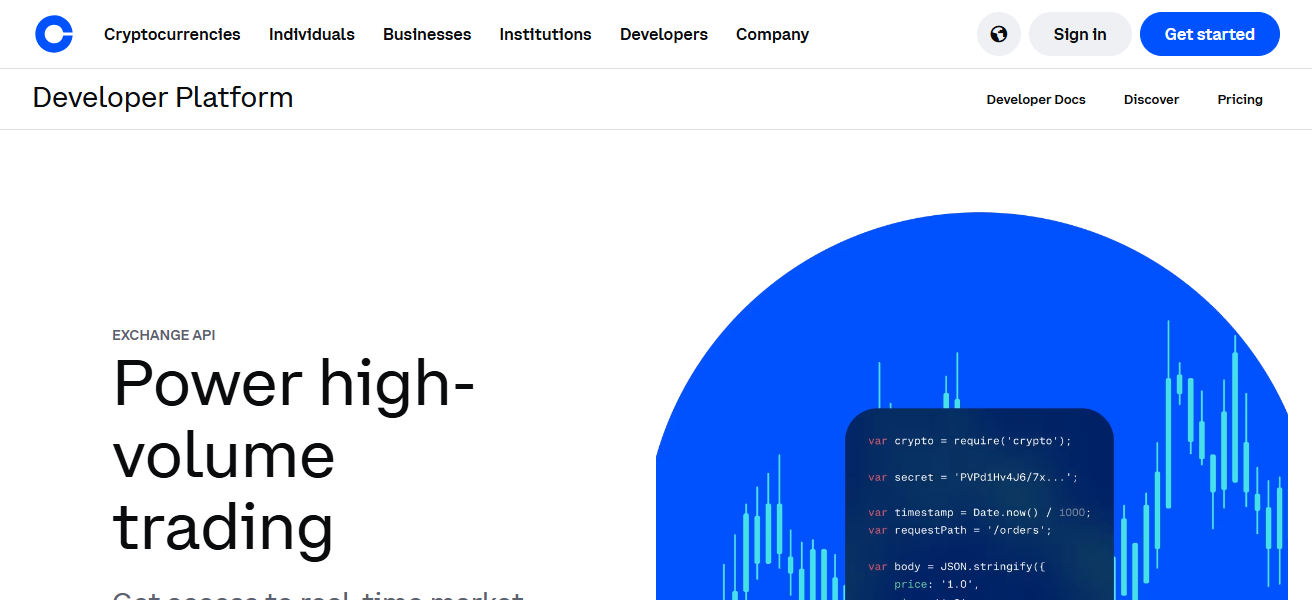
Supporting a plethora of cryptocurrencies, Coinbase Pro API also prides itself on strong security, enthusiasm for two-factor authentication, and encrypted endpoints.
Overall, Coinbase Pro API is one of the most reliable and documented APIs, helping traders and developers execute their strategies, trading automation, and crypto portfolio management with ease.
| Feature | Description |
|---|---|
| Real‑Time Market Data | Live price & trade feeds |
| Advanced Order Types | Limit, market, stop orders |
| Trading Engine Access | Execute trades programmatically |
| Account Management | Wallet balance & transaction controls |
Pros And Cons Coinbase Pro API
Pros:
- Secure Trading: Robust trading and access protections.
- Comprehensive Market Data: Active trades and orders on the market.
- Advanced Order Management: Market, limit, and stop orders supported.
- Integration Friendly: Compatible with many trading bots and portfolio applications.
Cons:
- Limited to Coinbase Ecosystem: Trade only in the Coinbase market.
- API Rate Limits: Trading in high frequencies may be limited.
- Not Multi-Chain: Dedicated to only the supported cryptocurrencies.
- Complex for Beginners: More advanced features require greater learning to understand.
7. KuCoin API
The KuCoin API is ranked among the top CryptAPI alternatives due to the speed, safety, and reliability developers have when using KuCoin’s vast array of cryptocurrency exchange offerings.
The API’s unique advantage is providing extensive trading options, even real-time updated trading for margin and futures accounts and all other account management capabilities.
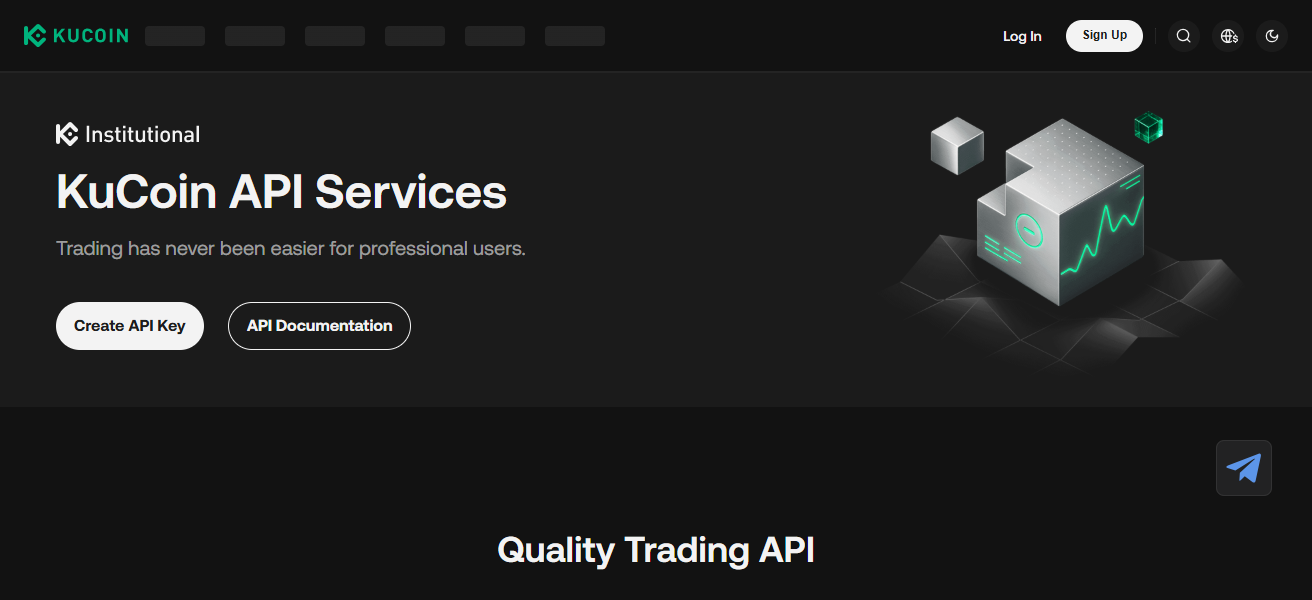
The API is also compatible with numerous programming languages and offers easy integration with trading bots and portfolio management systems.
KuCoin API offers traders and developers the ability to execute complex strategies due to the high uptime, security protocols, and flexible endpoints, making it a strong choice for scalable applications.
| Feature | Description |
|---|---|
| Spot Trading Support | Buy/sell crypto markets |
| Margin & Futures | Trade with leverage |
| Market Data Streams | Live price charts & depth |
| Order Execution | Trade automation for bots |
Pros And Cons KuCoin API
Pros:
- Multiple Trading Options: Spot, margin, and futures trading available.
- Real-Time Data: Market prices and trading data can be accessed quickly.
- Flexible Integration: Can be used with trading bots and other analytic tools.
- High Reliability: Minimal downtime and strong server performance.
Cons:
- Platform Dependent: Trade only KuCoin exchange assets.
- Security Responsibility API keys must be managed by customers securely.
- Complex for New Users Advanced trading features need experience.
- Rate Limits There are limits for API calls which restricts trading.
8. Huobi API
One of the best alternative of CryptAPI is Huobi API because of providing accessible fast and secure API of one of the world biggest cryptocurrency exchange.
Huobi API strength lies in providing diversified trading services like spot, futures and margin trading with real-time market information and account info.
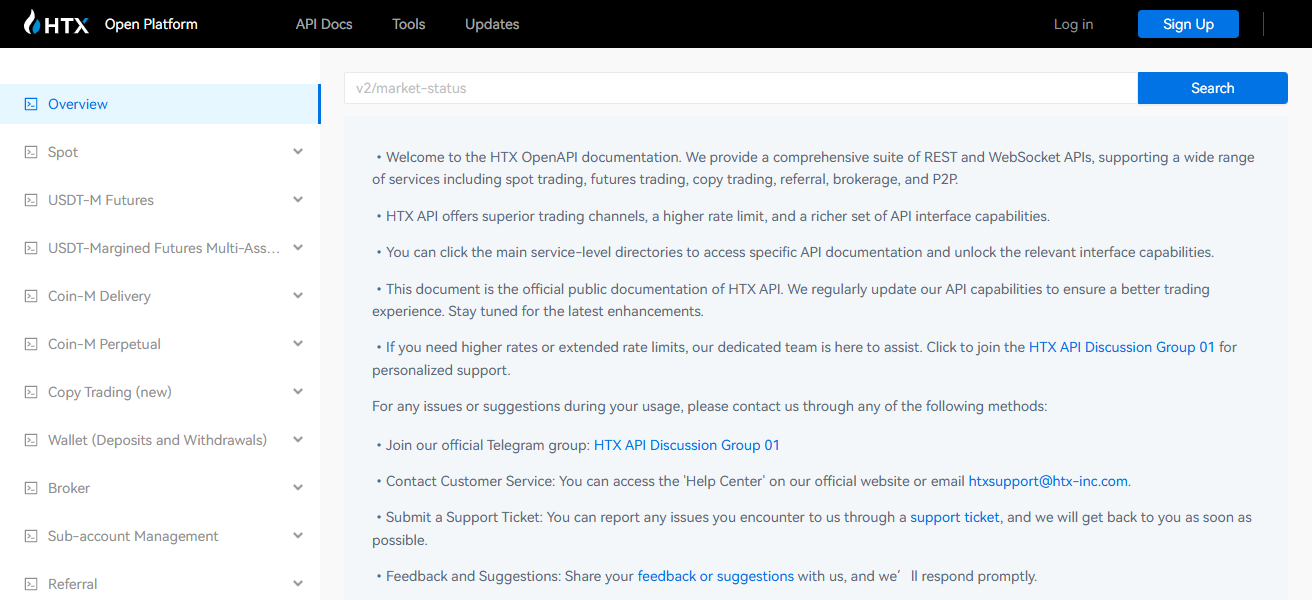
The API’s easily accessible to make plugins integration with trading bots and analytic devices. Huobi API is one of the best because of the low latency, great documentation of building and management, and the security of the system original.
As a result of this all, people will be able to make cryptocurrency trading management system and trading system more efficient.
| Feature | Description |
|---|---|
| Multi‑Market Support | Spot, margin, futures access |
| Realtime Price Feeds | Market updates & analytics |
| Wallet Operations | Deposits, withdrawals, balances |
| Trading Automation | Connect bots and strategies |
Pros And Cons Huobi API
Pros:
- Wide Trading Range Supports spot and margin and futures.
- Real-Time Market Data Offers real-time updates quickly and accurately.
- Secure Platform Has account security and encryptions.
- Automation Ready Platform can be integrated with bots and analytic tools.
Cons:
- Exchange-Limited Only works with assets on Huobi.
- API Call Restrictions Limits can be an issue for large amounts of trading.
- Documentation Complexity May be more complex for beginners.
- Regional Restrictions Some features may be unavailable in certain countries.
9. OKEx API
Flexibility, speed, and security make OKEx API one of the best alternatives to CryptAPI. It has the best features, including access to spot, margin, and options trading, along with real-time data and updates and asset tracking. Trading bots and analytical tools can also be integrated.
Developers can access customizable options and detailed documentation to tailor their applications to customer workflows.
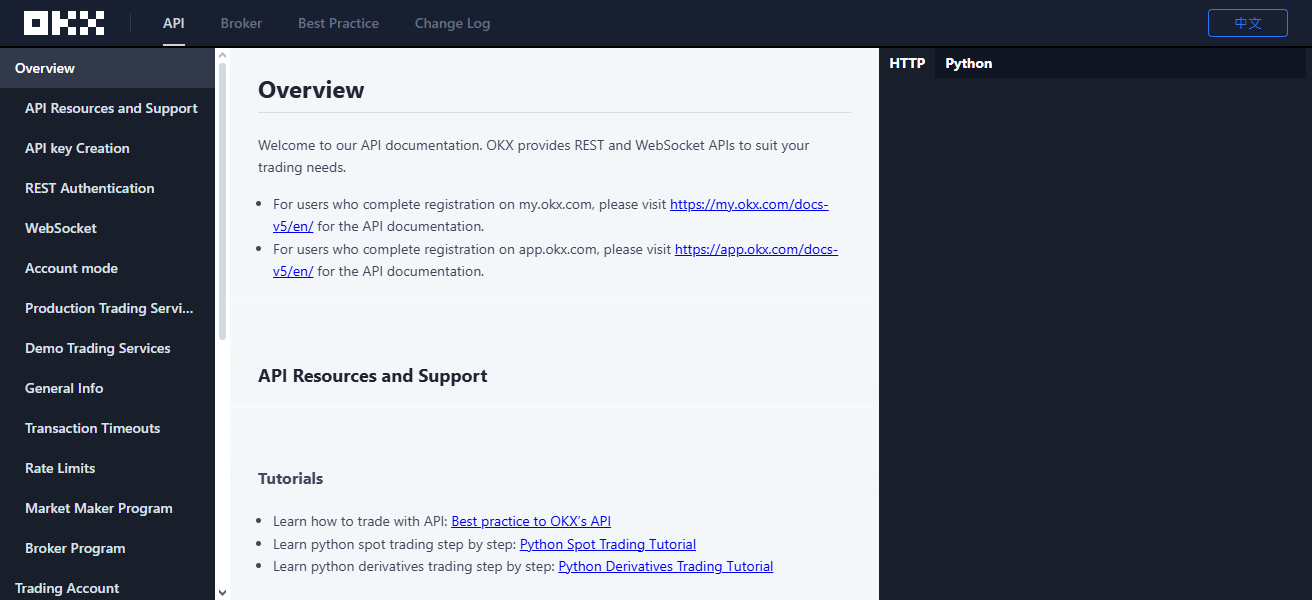
The OKEx API has a solid reputation for reliability and security. Developers and traders alike can use the tools to build and manage robust applications.
| Feature | Description |
|---|---|
| Diverse Trading Products | Spot, futures, options |
| High‑Performance Orders | Low latency execution |
| Market Depth Data | Order book info in real time |
| Portfolio Endpoints | Asset tracking & balances |
Pros And Cons OKEx API
Pros:
- Diverse Trading Services Supports spot, margin, futures, and options.
- Developer-Friendly Simple to connect with trading tools and strategies.
- Reliable Performance Guarantees availability with high uptime.
- Secure Has strong security and encryption.
Cons:
- Platform-Locked Only works in the OKEx markets.
- API Rate Limits Restrictions can be an issue for automated trading.
- Learning Curve Advanced order types may be complex for new users.
- Limited Multi-Chain Support Mainly focused on assets outside the exchange.
10. dYdX API
dYdX API is one of the best alternatives to CryptAPI for decentralized trading and derivatives markets. Its specialization is in granting the ability to execute on-chain blockchain trading margin trades, perpetual contracts, and decentralized orders with minimal counterparty risk and transparency.
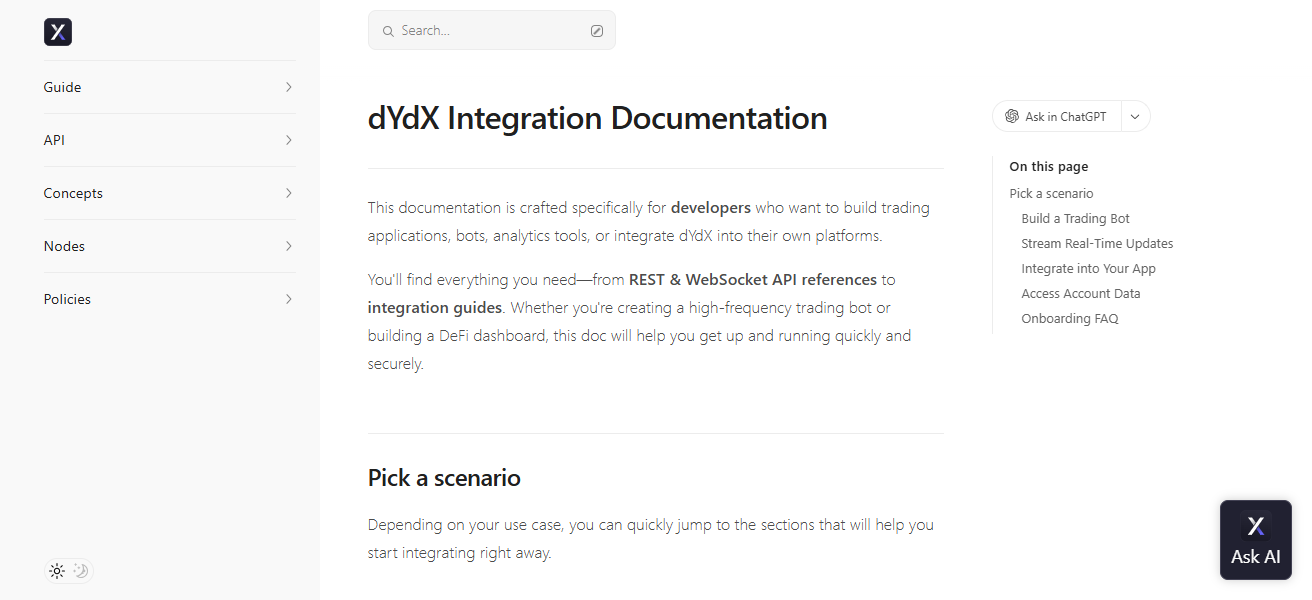
The API services real-time data, and facilitates the opening of automated trades on accounts, making it desirable for advanced traders and developers.
With premier marketplace infrastructure, ease of assimilation, and robust safety, dYdX API is one of the best in crypto APIs because it enables users to execute trustless scalable decentralized trading strategies.
| Feature | Description |
|---|---|
| Decentralized Derivatives | Trade perpetuals on chain |
| Margin Trading | Increase exposure with collateral |
| Smart Contract Trading | Trustless execution |
| Real‑Time Orderbook | Live decentralized market data |
Pros And Cons dYdX API
Pros:
- DyDX API – dYdX is one of the few exchange platforms for derivative trading. Get to trade on various trading pairs with margin options while avoiding middlemen.
- Trustless Execution – Mainly relying on Smart Contracts as the primary form of issue escrow for trustless trading on dYdX.
- Real Time Data – Get info on trade data, on-going orders, market data and account details in actual time.
- Automation Friendly – Excellent compatibility with your strategy across various DeFi trading bots.
Cons:
- Multi-chain Ecosystem – dYdX offers trading only from the dYdX exchange.
- Steep Learning Curve – Newcomers to DeFi trading may find it as an obstacle, as it is not easy to pick up.
- Low liquidity – Certain markets on the dYdX may be present with reduced liquidity.
- Gas Fees – While trading and withdrawing ETH, expect to pay variable gas prices as is the case on Ethereum based networks.
Why Consider CryptAPI Alternatives?
Wider Variety of Cryptocurrencies Some other options might support a wider variety of cryptos. Coins and tokens are supported by other options like CoinPayments and NOWPayments, which are also flexible for crypto-savvy customers.
Lowest Costs and Adaptable Fee Structures Different options will have different costs for transactions or withdrawals. Different options will have lower or even no fees for certain coins, adaptable prices for smaller companies, and even free options.
Improved Protection Protection is paramount for any crypto application. Alternatives offer multi-signature wallets and non custodial solutions which greatly reduce the vulnerability to theft and hacking.
Greater Capacity to Scale Scalability is important for apps anticipating high transaction volumes. Platforms like BitPay are built for enterprises and offer systems to handle lots of transactions at once without lag or downtime.
Why Choose Best CryptAPI Alternatives?
Multi-Chain Support: Alternatives such as QuickNode, Chainstack, and Venly offer access to different blockchains with a single API, which makes it easier and saves time in development for cross-network projects.
Advanced Trading Availabilities: Trading APIs such as KuCoin, Coinbase Pro, Huobi, OKEx, and dYdX offer more sophisticated trading features such as margin, futures, options. This is ideal for automated and advanced trading strategies.
Enterprise Grade Infrastructure: Snapshots provide fully managed blockchain networks with scalable, secure, and high-performance nodes which is perfect for enterprises with the demand for tough and reliable infrastructures.
NFTs & Wallets: APIs such as Venly provide tools designed for the easy creation, management and transferring of NFTs and multi-chain wallets which allow developers to launch Web3 applications with more ease.
Performance & Consistency: Alternatives such as QuickNode and Ethereum API offer high speed and low latency access to the blockchain which improves the real time performance of transactions and provides up to date information for the applications.
Security & Compliance: Most of these APIs have mitigating encryption, critical management, authentication, and other protocols that lessen the chances and enable safe dealings with crypto assets.
Developer Friendly: APIs have dashboards, analysis, documentation, and SDKs to ease integration, supervision, and upkeep maintenance regardless of the developers’ experience.
Cost Effectiveness: Picking the appropriate option provides the required flexibility in pricing, whether you require pay-per-use for smaller projects or enterprise-level solutions.
Conclusion
In summary, the best alternatives to CryptAPI, including Kaleido, QuickNode, Ethereum API, Venly, Chainstack, and major exchange APIs, provide developers and businesses with consistent, safe, and flexible options.
Whether you’re trading, developing on the blockchain, or managing NFTs, these alternatives are high-performing, offer multi-chain capabilities, and come with advanced features that make these alternatives outstanding options for building efficient and innovative cryptocurrency applications.
FAQ
Venly, QuickNode, and Coinbase Pro API are more beginner-friendly; enterprise APIs may require technical knowledge.
Varies by platform: enterprise plans, pay-per-request, or free with rate limits.
Yes, exchange APIs like Coinbase Pro, KuCoin, Huobi, OKEx, and dYdX support trading and automation.
QuickNode, Chainstack, Kaleido, and Venly offer multi-chain support; some are single-chain focused.
They offer multi-chain support, high performance, security, advanced trading, and scalability for crypto applications.