In this article, I will be identifying some of the best crypto exchanges for AI trading bots with powerful APIs, speedy executions, low trading fees, and sophisticated automation.
If you’re just starting out or have been trading for a while, these exchanges will give you the necessary tools to create, test, and improve AI crypto trading strategies.
Key Points & Best Crypto Exchanges For AI Trading Bots
| Crypto Exchange | Explanation |
|---|---|
| Binance | Offers extensive API support, low fees, and advanced automated trading tools. |
| Bybit | Provides fast execution speeds and reliable APIs for AI trading bots. |
| Kraken | Features strong security measures and supports sophisticated algorithmic trading integrations. |
| OKX | Delivers powerful APIs, diverse markets, and seamless bot trading capabilities. |
| KuCoin | Supports numerous cryptocurrencies and easy integration with automated trading platforms. |
| Bitget | Offers copy trading, competitive fees, and robust bot-friendly API access. |
| Coinbase Advanced | Provides regulated trading environment and secure API connectivity for AI strategies. |
| Gate.io | Features extensive token listings and advanced tools for automated trading systems. |
| Phemex | Delivers high-speed order execution and customizable APIs for AI traders. |
| MEXC | Supports diverse crypto assets and efficient APIs for algorithmic trading automation. |
10 Best Crypto Exchanges For AI Trading Bots
1. Binance
Comprehensiveness in its API and liquidity contribute to making Binance one of the most popular exchanges among AI trading bots. With the ability to trade in the spot, futures, and margin markets, Binance enables algorithms to design and implement even more complex trading strategies.

Developers that use Binance API have the benefit of fast market data and order execution through its WebSocket API and a REST API. Advanced order types and low trading fees are also offered, along with high volumes that minimize slippage, making Binance an optimal exchange for high-frequency trading.
Bot developers love its extensive documentation. Also, third party bots that are not developed on the exchange are easily integrated to automate trading and manage portfolios. With all of these advantages, Binance is the best exchange for complex and high-frequency machine learning trading strategies.
Binance Pros & Cons
| Pros | Cons |
|---|---|
| Deep liquidity reduces slippage for AI trading strategies. | Faces regulatory challenges in certain countries. |
| Advanced REST and WebSocket APIs for developers. | Complex interface for beginner traders. |
| Supports spot, margin, and futures automation. | Some advanced features are restricted regionally. |
| Low trading fees improve bot profitability. | High competition can reduce arbitrage opportunities. |
| Integrates with numerous third-party trading bots. | Customer support response times can vary. |
2. Bybit
Bybit’s robust API and impressive trading engine have made it extremely popular among algorithmic traders. Bybit’s trades millions of times a day with low latency making it one of the best exchanges for AI trading systems.
With good API documentation, Bybit makes algorithmic trading easy for both spot and derivatives trading. Bybit is also equipped with excellent charting and risk assessment and management tools.
Bybit’s infrastructure is also very reliable, making it a good exchange for ML, arbitrage, and quantitative trading among other strategies.
Bybit Pros & Cons
| Pros | Cons |
|---|---|
| Fast execution engine ideal for high-frequency bots. | Limited availability in certain jurisdictions. |
| Reliable and well-documented APIs. | Fewer cryptocurrencies than some competitors. |
| Competitive derivatives trading fees. | Advanced features may overwhelm beginners. |
| Strong liquidity in futures markets. | Regulatory changes may impact services. |
| Supports sophisticated algorithmic strategies. | Primarily focused on derivatives trading. |
3. Kraken
Kraken is known for creating a secure environment to trade and for focused protecting sensitive data. Kraken’s extensive API allows traders to create automated bots to trade on Kraken. Cold wallet storage and a strict adherence to compliance makes Kraken a popular choice for institutional traders.

Kraken’s API supports data and automated order requests in both the Spot and Futures markets. Kraken’s transparent fees and consistency in operation are beneficial for algorithm traders, and for those looking to use trading bots on an exchange known for security and reliability, Kraken is among the most trusted exchanges.
Kraken Pros & Cons
| Pros | Cons |
|---|---|
| Industry-leading security standards and compliance. | Higher trading fees than some exchanges. |
| Trusted by institutional investors worldwide. | User interface can feel outdated. |
| Stable API infrastructure for automated trading. | Smaller selection of cryptocurrencies. |
| Supports spot and futures trading. | Verification process can take time. |
| Strong reputation and operational transparency. | Lower liquidity in certain altcoins. |
4. OKX
The quality of OKX’s offerings has made it the preferred exchange for automated trading. Excellent APIs and a broad spectrum of crypto products supported on the exchange have attracted a multitude of automated trading bots.
OKX supports Spot trading, Futures, Options, and Perpetual trading, making the exchange an ideal choice for implementing bots that deal with multiple markets.

The exchange’s high throughput and the availability of API developer tools and documentation lowers the friction for bot traders.
OKX is a pioneer in automated trading, offering advanced features for bot traders. OKX is a great choice for traders who wish to develop intelligent trading systems.
OKX Pros & Cons
| Pros | Cons |
|---|---|
| Offers spot, futures, and options markets. | Certain features unavailable in some regions. |
| Powerful APIs with extensive documentation. | Interface can be complex for new users. |
| High liquidity supports automated execution. | Regulatory environment remains uncertain globally. |
| Provides advanced trading and analytics tools. | Customer support quality may vary. |
| Suitable for sophisticated multi-market strategies. | Some products have steep learning curves. |
5. KuCoin
KuCoin offers appealing features for AI traders, most notably a large variety of cryptocurrency options, plus a good API design. The number of digital assets listed on KuCoin means that trading bots have access to more trading opportunities.
KuCoin’s APIs have a built in support for automated trading, portfolio management, and analysis of the markets. KuCoin has affordable fees and a good token circulation for faster listings.
KuCoin also allows for more sophisticated orders and has many developer resources available. If your AI systems aim to see and exploit market opportunities through a wider asset view, KuCoin is a good choice.
KuCoin Pros & Cons
| Pros | Cons |
|---|---|
| Huge variety of cryptocurrencies and tokens. | Regulatory status differs by country. |
| Easy API integration for trading bots. | Lower liquidity for some smaller assets. |
| Competitive trading fees and promotions. | Customer support can experience delays. |
| Frequent listing of emerging cryptocurrencies. | Security concerns have occurred historically. |
| Supports multiple automated trading strategies. | Advanced features may confuse beginners. |
6. Bitget
Bitget is one of the first exchanges to marry copy trading with superior API and algorithmic trading features. Bitget has a low-latency API design that allows AI bots to trade in both the spot and futures markets.
Coupled with Bitget’s expanding liquidity, this makes it a good choice for both novice and experienced quants.
AI Developers can also use Bitget’s market and trading data for the design of automated systems with more sophisticated trading models. The social and algorithmic trading fusion of Bitget’s systems is also one of the first in the market.
Bitget Pros & Cons
| Pros | Cons |
|---|---|
| Combines copy trading with automation tools. | Smaller ecosystem compared with major exchanges. |
| Competitive trading fees and incentives. | Limited educational resources for developers. |
| Reliable APIs for algorithmic trading. | Fewer spot trading pairs than competitors. |
| Growing liquidity and global user base. | Availability varies by region. |
| Supports futures and derivatives automation. | Some advanced features require experience. |
7. Coinbase Advanced
Coinbase Advanced provides a secure and regulated space to implement AI trading strategies. The platform’s Advanced Trading Interface offers professional traders the ability to utilize advanced charting and real-time market data. Advanced Trading also provides complete API integration.
With such strong regulatory compliance and transparency with their operations, Coinbase gains the trust of institutional investors and algorithmic traders.

Coinbase’s Advanced Trading offers a secure and stable trading infrastructure with optimal execution and supports AI systems, automated portfolio management, and advanced trading algorithms.
With the security and trust from the regulatory compliance and operational consistency, Coinbase Advanced is an optimal platform to use for sophisticated automated trading systems.
Coinbase Advanced Pros & Cons
| Pros | Cons |
|---|---|
| Highly regulated and trusted exchange platform. | Trading fees are relatively higher. |
| Strong security and compliance standards. | Supports fewer cryptocurrencies than competitors. |
| Reliable API connectivity for trading bots. | Advanced features vary by location. |
| User-friendly professional trading interface. | Limited derivatives trading options. |
| Popular among institutional investors. | Lower leverage opportunities for traders. |
8. Gate.io
Gate.io is a great exchange for AI trading bots because it has a great trading selection of cryptocurrencies along with advanced trading features. Many of the APIs on the Gate.io trading platform support automated trading for spot, futures, and margin trading.
The considerable variety of assets on Gate.io allows AI trading systems the ability to develop more trading algorithms and take advantage of under-utilized strategies. Gate.io is rapidly investing in upgrading their infrastructure to decrease latency and increase reliability.
Also, the platform provides quantitative trading modules and an extensive amount of market data. These modules and data are easily integrated with machine-learning models, making Gate.io a great choice for traders who want to develop flexible trading systems.
Gate.io Pros & Cons
| Pros | Cons |
|---|---|
| Extensive selection of digital assets. | Interface can appear overwhelming initially. |
| Supports advanced automated trading features. | Regulatory restrictions exist in some countries. |
| Frequent listings of emerging tokens. | Lower liquidity for niche assets. |
| APIs support quantitative trading strategies. | Customer support experiences occasional delays. |
| Offers spot, margin, and futures markets. | Security reputation is not as strong as leaders. |
9. Phemex
For excellent reasons, algorithmic traders have become particularly drawn to Phemex. Phemex provides a high-speed trading engine and customizable APIs. Also, Phemex is very good at dealing with a large volume of demanding trading bots and Phemex supports both spot and derivatives trading.
Phemex’s APIs and documentation were made with developers in mind. Phemex has low fees which, along with reliable system performance, are a big plus for high frequency trading. This makes Phemex an appealing trading platform for quantitative and AI-based trades.
Phemex Pros & Cons
| Pros | Cons |
|---|---|
| High-speed execution suitable for trading bots. | Smaller cryptocurrency selection than competitors. |
| Customizable APIs for developers and institutions. | Lower global recognition and liquidity. |
| Competitive fees for active traders. | Fewer educational resources for beginners. |
| Stable infrastructure during volatile markets. | Limited fiat currency support. |
| Supports both spot and derivatives trading. | Regional restrictions affect accessibility. |
10. MEXC
MEXC is appealing to AI traders because it supports a complex bot infrastructure while performing a large volume of trades and offers one of the fastest APIs on the market. MEXC lists a large variety of emerging tokens which helps AI models trade based on algorithms that predict early market movement.
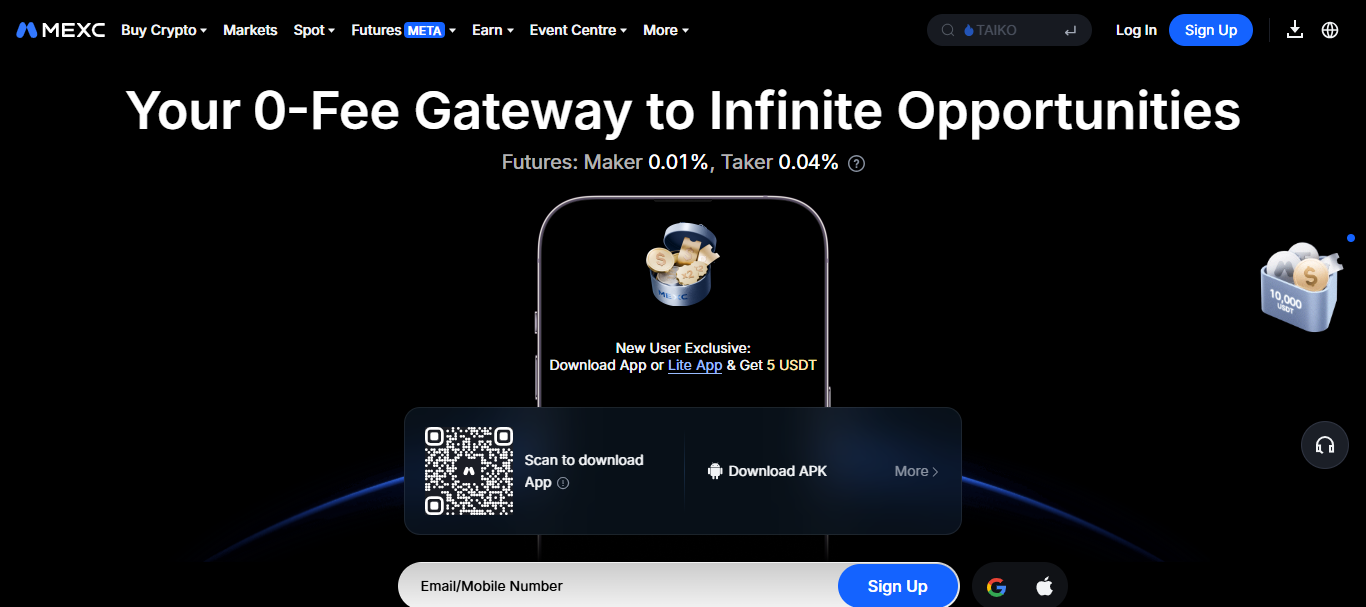
Bot integration is made easy with the extensive developer resources MEXC distributes. Trading fees are low. With its large variety of trading options, MEXC is one of the best platforms for trading bots that rely on Machine Learning, due to its rapidly changing crypto market.
MEXC Pros & Cons
| Pros | Cons |
|---|---|
| Large number of cryptocurrencies and new listings. | Regulatory status differs across jurisdictions. |
| Efficient APIs for automated trading systems. | User interface may seem complex. |
| Competitive fees and promotional events. | Lower liquidity in certain trading pairs. |
| Excellent for discovering emerging tokens. | Customer support response can be inconsistent. |
| Suitable for diversified AI trading strategies. | Some advanced features have limited documentation. |
Conclusion
In conclusion Selecting the most appropriate cryptocurrency exchange for AI trading bots is determined by your trading preferences, the digital assets you wish to trade, and the level of automation you desire.
Binance, Bybit, Kraken, and OKX all provide robust APIs, ample liquidity, and sophisticated tools for traders who automate their trading systems.
Balancing security with fees and execution times, as well as evaluating the most compatible bots, crypto traders can select an exchange that is most efficient and that improves their AI bot trading systems.
FAQ
Which crypto exchange is best for AI trading bots?
Binance is considered one of the best due to its deep liquidity, low fees, and robust API support.
What features should I look for in an AI bot-friendly exchange?
Look for reliable APIs, low latency, high liquidity, strong security, and competitive trading fees.
Can beginners use AI trading bots on crypto exchanges?
Yes, many exchanges offer beginner-friendly integrations with third-party trading bot platforms.
Which exchange has the fastest execution speed for trading bots?
Bybit and Phemex are known for their high-speed trading engines and low-latency execution.