In this article, I will examine the Best Crypto Payment Gateways in South Korea—how Crypto.com Pay, Paycoin, and Oobit are changing the landscape of digital payments.
- Key Points & Best Crypto Payment Gateways In South Korea
- 10 Best Crypto Payment Gateways In South Korea
- 1. Crypto.com Pay (via KSNET)
- 2. UPay Card
- 3. Paycoin (PCI) via Danal Fintech
- 4. Oobit Crypto Card
- 5. RedotPay Crypto Card
- 6. Merchant crypto payment acceptance (via Paycoin/ICO)
- 7. Global visitor crypto acceptance (via Crypto.com Pay)
- 8. Crypto-card + wallet solutions (general)
- 9. Crypto payments embedded in existing Korean PG/infrastructure
- 10. Cross-border / tourist oriented crypto payments
- Conclusion
- FAQ
While South Korea’s regulation-heavy environment slowly opens up to blockchain innovations, these payment gateways allow users and tourists alike to safely and conveniently spend cryptocurrencies throughout the country.
Key Points & Best Crypto Payment Gateways In South Korea
| Platform | Key Points |
|---|---|
| Crypto.com Pay (via KSNET) | Supports crypto payments in South Korea, especially aimed at foreign visitors via KSNET’s merchant network (330k+ merchants) including fashion, beauty, duty-free. |
| UPay Card | Crypto-card solution with low fees (~1%), supports KRW conversion and use in South Korea & globally, interface localised for Korea. |
| Paycoin (PCI) via Danal Fintech | A Korean-domestic crypto payment protocol supporting many merchants (60k+), aiming to integrate BTC/ETH/PCI, lower merchant fees. |
| Oobit Crypto Card | Lets users spend crypto (BTC/ETH/USDT) at Visa-accepting stores in Korea; connects wallet, converts to KRW at checkout. |
| RedotPay Crypto Card | Intended to launch crypto-cards in Korea (Visa-powered) supporting major cryptos + stablecoins—but firm denied actual launch in Korea (so status uncertain). |
| Merchant crypto payment acceptance (via Paycoin/ICO) | Paycoin app supports payment via PCI/ICX at merchant chains including 7-Eleven, KFC, Domino’s in Korea. |
| Global visitor crypto acceptance (via Crypto.com Pay) | Through Crypto.com & KSNET partnership: foreign travellers use crypto to pay in Korean retail/transport. |
| Crypto-card + wallet solutions (general) | Many solutions aim to convert crypto to KRW at payment time, link to Apple Pay/Google Pay, focus on mobility & convenience (e.g., Oobit). |
| Crypto payments embedded in existing Korean PG/infrastructure | Example: Danal Fintech (via Paycoin) claims ~½ of mobile billing market in Korea ($5.5 bn annually) and leveraging blockchain payments. |
| Cross-border / tourist oriented crypto payments | Because Korean regulation is strict, many solutions focus on foreign users/visitors rather than full domestic fiat crypto flows. For example Crypto.com Pay for tourists. |
10 Best Crypto Payment Gateways In South Korea
1. Crypto.com Pay (via KSNET)
Since the announcement of the partnership in May 2025, Crypto.com Pay and KSNET enable foreign visitors to South Korea to use cryptocurrencies to pay for purchases at primary retail outlets (fashion, beauty, duty-free) integrated with KSNET’s payment merchant network.
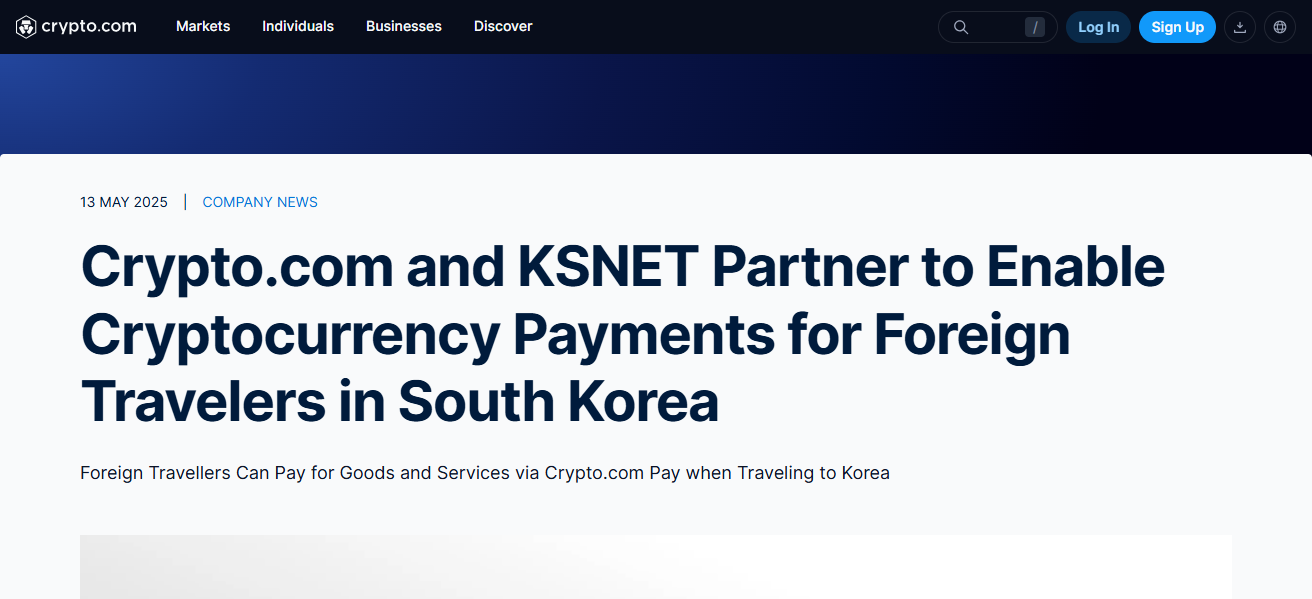
KSNET is South Korea’s largest value-added payment networks with over 330,000 supported merchants and 130M transactions in a month.
This offer is of great value to tourists compared to domestic Koreans, where the regulated fiat/crypto switch is much less versatile. It is a great link for international crypto wallets to Korea’s retail market.
| Feature | Details |
|---|---|
| Partnership | Crypto.com partnered with KSNET in 2025 |
| Merchant Network | 330,000+ merchants including beauty, fashion, and duty-free outlets |
| User Target | Foreign travelers in South Korea |
| Supported Currencies | Major cryptocurrencies (BTC, ETH, USDC, etc.) |
| Conversion | Instant crypto-to-KRW settlement via KSNET |
| Main Benefit | Enables real crypto spending at large-scale Korean retail outlets |
| Regulation Note | Primarily for tourists; limited domestic crypto-fiat support |
2. UPay Card
UPay currently offers a crypto-card solution targeting South Korean clients. Users can now convert their crypto assets into KRW seamlessly, facilitating everyday transactional spending at various South Korean retail merchants.
According to UPay blog, the card attracts only about 1% transaction fees while allowing annual zero fees, as well as international transactions.
Highlights include an intuitive Korea-centric interface, a seamless linkage with Apple Pay and Google Pay, and the most attractive feature—trading and spending crypto assets as fiat currency without intermediaries.
Local rules and regulations compliance, as well as the scale of merchant crypto acceptance, is a potential challenge, but the firm crypto payment positioning offers UPay a fighting chance to compete in South Korea.
| Feature | Details |
|---|---|
| Type | Crypto card and payment app |
| Supported Assets | BTC, ETH, and major stablecoins |
| Conversion | Instant crypto-to-KRW conversion |
| Fees | ~1% transaction fee, zero annual fee |
| Payment Methods | Integrated with Apple Pay and Google Pay |
| Coverage | Accepted at Korean and international merchants |
| Unique Benefit | Smooth fiat-like experience for crypto holders |
3. Paycoin (PCI) via Danal Fintech
Kaon Danal Fintech runs Paycoin (PCI) Korea crypto payment system. It is the world’s first crypto payment system.
It launched in 2018 and now runs integrated payment systems in more than 60,000 South Korean merchant networks.
It offers payment services at major fast-food restaurant chains like KFC and Domino’s, as well as convenience stores in the country .
Users can load crypto assets such as BTC, which is then converted to PCI through the Paycoin app. PCI can then be used in merchant stores integrated with the system.
Paycoin operates private Hyperledger Fabric Blockchain which increases transaction through puts and lowers transactional costs .
Although Paycoin PCI has faced negative developments such as compliance and practically closing all user accounts, their vast merchant network offers unique advantages to sustain and grow rapidly.
| Feature | Details |
|---|---|
| Issuer | Danal Fintech (Korean fintech company) |
| Native Token | PCI (Paycoin) |
| Merchant Network | 60,000+ stores (7-Eleven, KFC, Domino’s, etc.) |
| Blockchain | Hyperledger Fabric for fast transactions |
| Usage | Crypto-to-PCI conversion for merchant payments |
| Advantages | Wide merchant coverage, low fees |
| Regulatory Status | Facing compliance and banking challenges |
4. Oobit Crypto Card
Oobit provides a crypto card in South Korea that allows spending Bitcoin, Ethereum, USDT (and other stablecoins), and making purchases at any store with Visa in South Korea.
To use the service, customers link their wallet to the Oobit app, then tap to pay with crypto, and it is instantly converted to KRW for the seller.
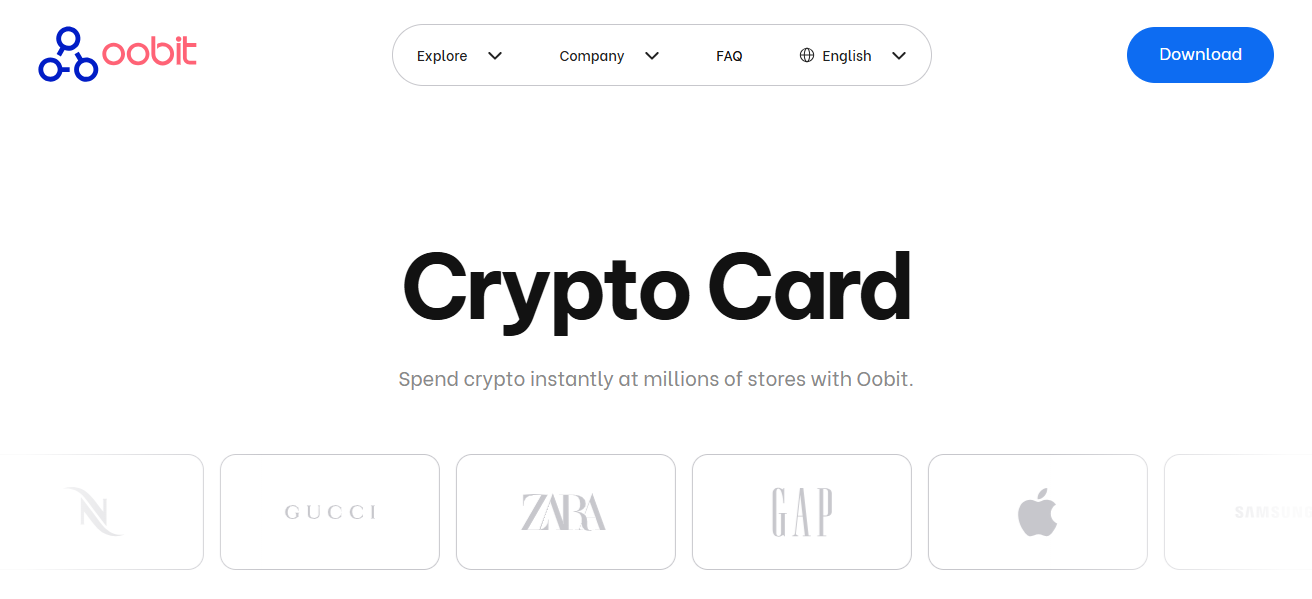
No bank account is involved. The friction is significantly reduced since crypto-holders can spend their wallet assets with immediate access to a wide range of merchants.
For Oobit customers, Korea provides one of the more immediate links between a “digital asset” and an “everyday purchase”.
| Feature | Details |
|---|---|
| Supported Assets | Bitcoin, Ethereum, USDT, and other stablecoins |
| Network | Visa-supported payment system |
| Conversion | Crypto instantly converted to KRW at checkout |
| Bank Requirement | No local bank account needed |
| Integration | Wallet connection through Oobit App |
| Main Advantage | Real-time crypto payments across Korea |
| Target Audience | Crypto holders wanting direct spending options |
5. RedotPay Crypto Card
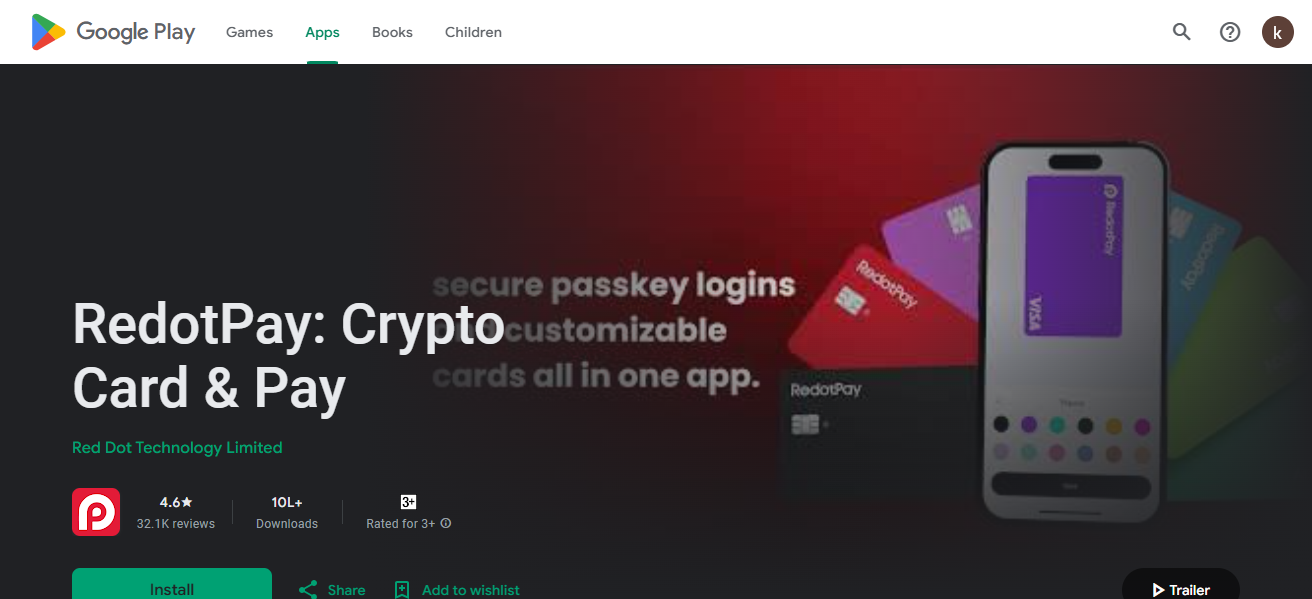
As of 2023, RedotPay is a fintech company based in Hong Kong, and it is reported to have launched South Korea-issues crypto payment cards (virtual & physical)
That are accepted at Visa-merchants, and that support payment in BTC, ETH, USDC, USDT, and more.
It is reported that the cards allow the customer to pay and receive payment instantly using stablecoins. Still, there is some ambiguity since another article cites RedotPay as having denied entry into Korea.
As a result, it is interesting to watch the potential RedotPay’s crypto payment systems provide for South Korea retail
But it is important to maintain control assuming complete alignment with local regulations and wide acceptance from merchants.
| Feature | Details |
|---|---|
| Origin | Hong Kong-based fintech (founded 2023) |
| Card Types | Physical and virtual Visa cards |
| Supported Assets | BTC, ETH, USDC, USDT |
| Main Function | Real-time stablecoin payments and refunds |
| Availability in Korea | Unconfirmed (regulatory ambiguity) |
| Key Benefit | Global crypto spending integration |
| Caution | Not yet fully verified in Korean market |
6. Merchant crypto payment acceptance (via Paycoin/ICO)
Exchanging Paycoin (PCI) for services offers real-world crypto-merchant payment options, and Danal Fintech was integral to this development.
Consequently, over 60,000 Korean merchants, including 7-Eleven, KFC, and Domino’s, accept Paycoin as payment.
This type of payment is particularly notable as the converted crypto-assets, or actual cryptocurrency, exchanged for these services is valid for offline retail purchases.
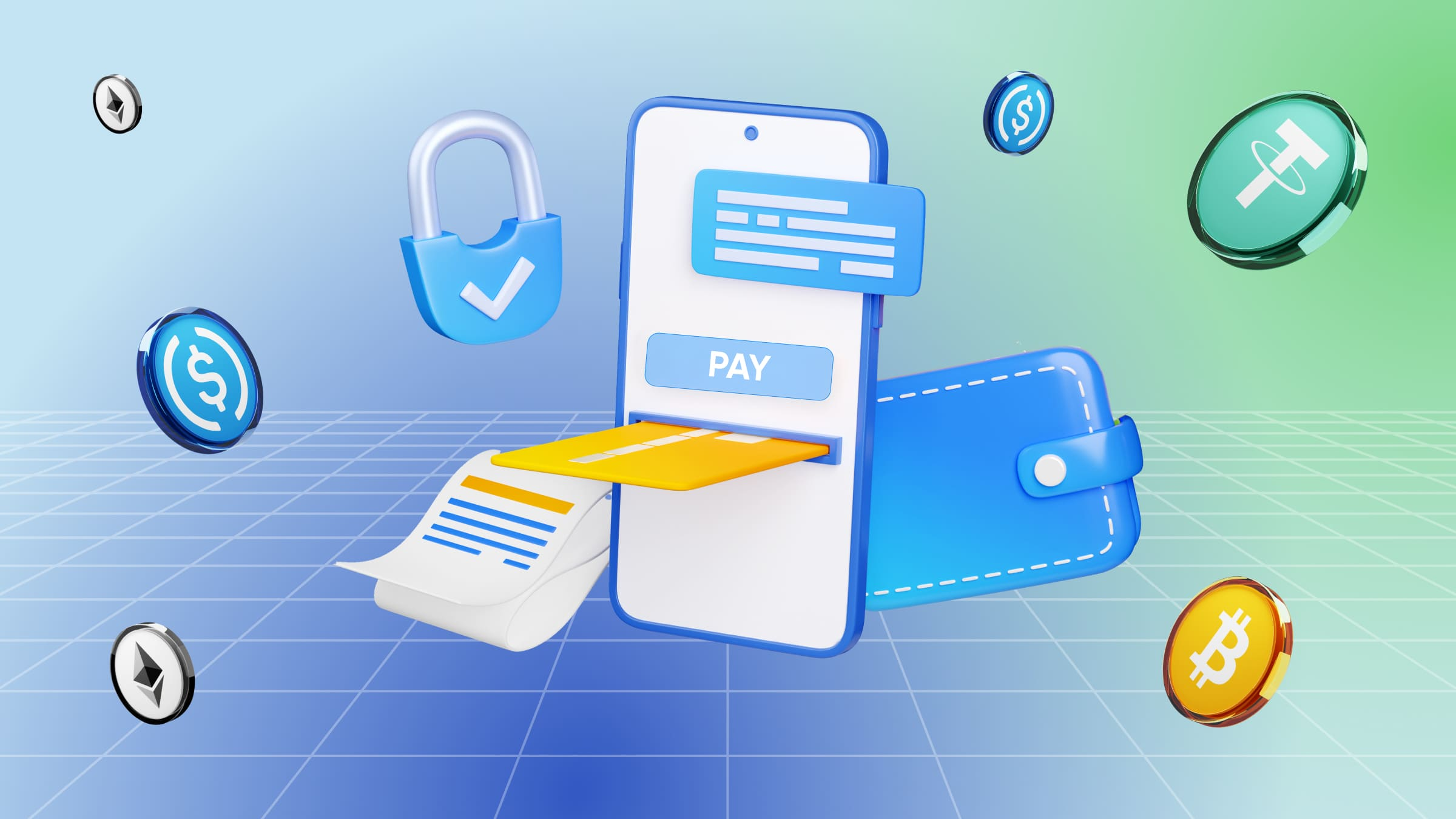
Rarely is crypto readily convertible and usable for day-to-day purchases in most parts of the globe.
The main advantage in this situation is that a merchant network is already in place. The main drawback remains the complexity surrounding regulations and the banking realm
As well as the limitation of the fiat-crypto-fiat payment systems. Consequently, usage volumes are likely to be limited in comparison to traditional debit and credit transactions.
| Feature | Details |
|---|---|
| Network | 60,000+ Korean merchants |
| Partner | Danal Fintech |
| Supported Cryptos | PCI, BTC (converted through Paycoin app) |
| Major Retailers | 7-Eleven, KFC, Domino’s |
| Payment Model | Crypto-to-KRW via Paycoin network |
| Advantages | Real-world usability of crypto in retail |
| Limitations | Ongoing fiat-crypto regulatory evolution |
7. Global visitor crypto acceptance (via Crypto.com Pay)
This point connects to the previous one and deals with foreign visitors to South Korea. International visitors are allowed to use crypto to transact at Korean retail, and even for transit in Jeju, through Crypto.com Pay/KSNET.
Specifically targeting cross-border visitors and foreign digital currencies allows this service to skirt some of Korea’s domestic regulations surrounding crypto-denominated transactions.
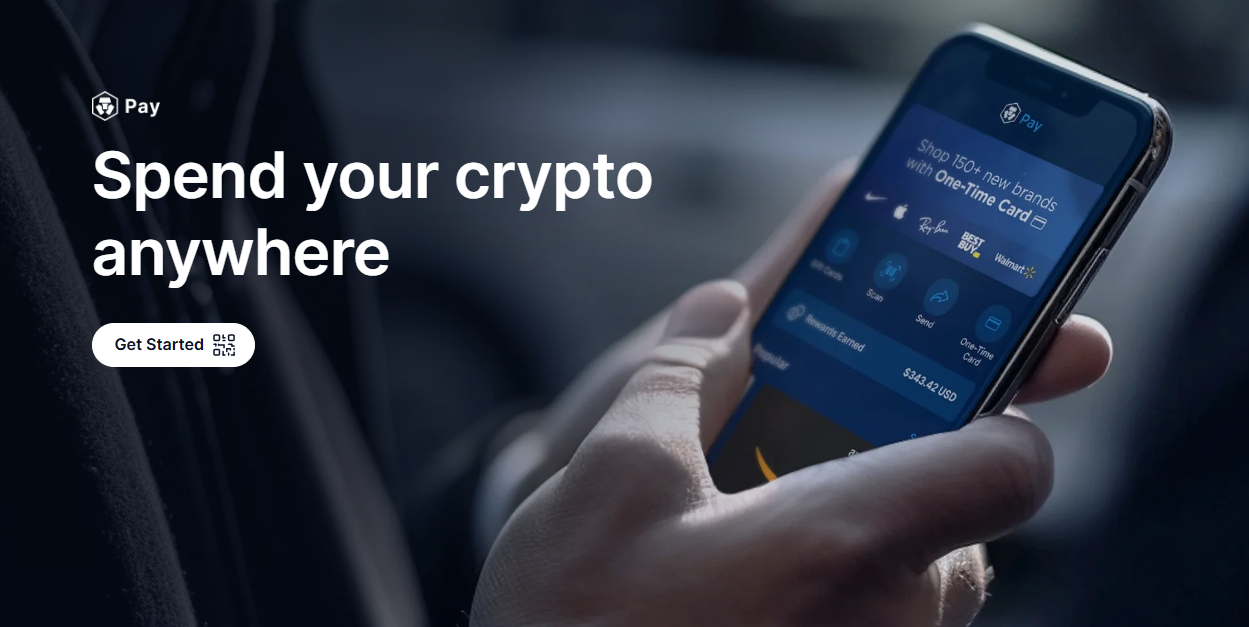
Given the country’s reputation as a tourist hub, especially with its fashion and beauty products, this is a strategic service for crypto-enabled visitors.
Ultimately, merchants gain a unique payment option, while tourist-crypto users gain ease of access. It also gives Korean residents a basic precedent of the innovative services surrounding crypto transactions.
| Feature | Details |
|---|---|
| Focus | International travelers in Korea |
| Partner | KSNET |
| Usability | Retail outlets, transport, Jeju region |
| Crypto Support | BTC, ETH, USDC, USDT |
| Conversion | Crypto-to-KRW at merchant POS |
| Key Benefit | Enables foreign tourists to spend crypto easily |
| Local Limitation | Not primarily designed for Korean residents |
8. Crypto-card + wallet solutions (general)
Apart from specific brands, South Korea has begun to offer broader crypto card and wallet solutions, allowing customers
To link self-custody wallets like MetaMask and TrustWallet, exchange crypto to KRW, and spend it with cards at local merchants.
Oobit is one of such solutions. Such solutions attempt to merge crypto assets with everyday fiat transactions.
The advantages are flexibility, low-friction transactional processes, and payment methods customers are already used to, such as cards and wallet applications.
The disadvantages are local regulatory compliance, AML/KYC laws, variability of conversion rates, and issues within the merchant fee and settlement frameworks.
Within all crypto payment solutions, these are the most important to local merchants and customers.
| Feature | Details |
|---|---|
| Examples | Oobit, UPay, and similar wallet-card systems |
| Wallet Integration | Supports MetaMask, TrustWallet, etc. |
| Function | Spend crypto via card or mobile wallet |
| Conversion | Instant swap to KRW or fiat equivalent |
| Ease of Use | Low friction; fast checkout |
| Challenges | KYC/AML compliance, exchange rates |
| Importance | Expands crypto’s usability in daily payments |
9. Crypto payments embedded in existing Korean PG/infrastructure
The Korean payments business is primarily managed through vertically integrated and value-added networks (VANs) as well as payment gateways (PGs).
Without integration of these gateways, the domestically scalable crypto payments will not come to fruition.
Companies such as Alchemy Pay, for instance, have invested into Korean infrastructure and received electronic financial business registration in Korea specifically to provide crypto-to-fiat and PG services.
This type of embedding allows for crypto payments to be one of the many channels within the payment infrastructure
As opposed to a standalone system, improving the likelihood of merchant acceptance, settlement in KRW, and compliance with existing regulations.
| Feature | Details |
|---|---|
| Integration Example | Alchemy Pay investing in EZPG Co., Ltd |
| Function | Crypto-to-fiat gateway services |
| Certification | Electronic financial business registration (Korea) |
| Target | Local merchants and fintech infrastructure |
| Benefit | Crypto becomes part of the regulated payment ecosystem |
| Settlement | Payments settled in KRW |
| Impact | Improves legitimacy and merchant adoption rates |
10. Cross-border / tourist oriented crypto payments
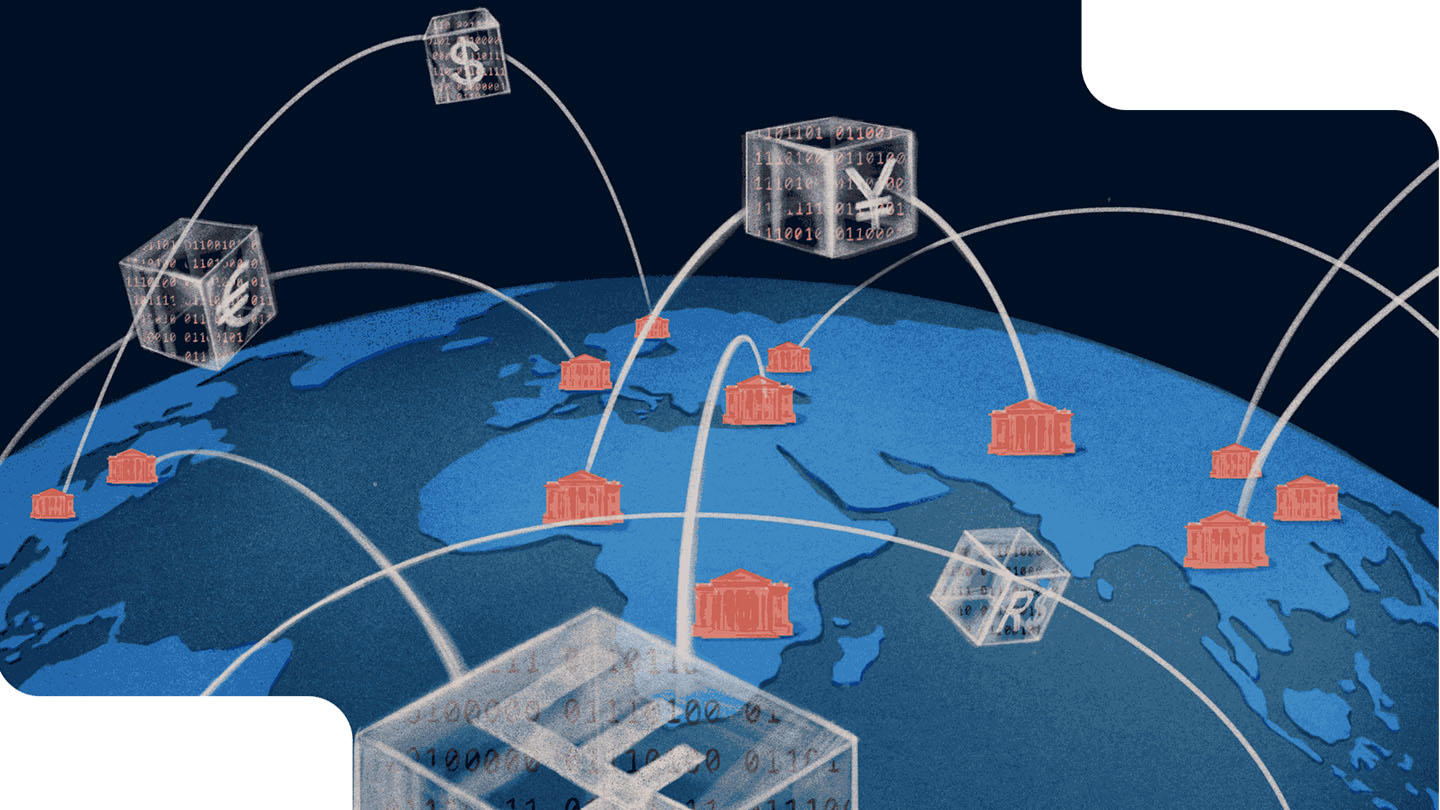
Since South Korea regulates domestic crypto-fiat flows very strictly, an opportunity exists with cross-border or tourist-oriented crypto payments.
Crypto wallet holders arriving in Korea, e.g. those from the US, can spend cryptos here and digital ATMs in tourist hotspots allow the conversion of stablecoins USDT to KRW.
Within the country, the restrictions are even tougher with regulatory burdens and local banking rules, but this applies more to inbound tourists, particularly crypto-natives.
Therefore, inbound tourism, duty-free, and transit cards. These can serve as an entry point for crypto payments in Korea.
| Feature | Details |
|---|---|
| Use Case | Foreign tourists spending crypto in Korea |
| Key Platforms | Crypto.com Pay, RedotPay, DTMs |
| Conversion Option | USDT-to-KRW via crypto ATMs (DTMs) |
| Merchants | Duty-free, retail, hospitality sectors |
| Regulatory Benefit | Easier operation under cross-border rules |
| Value Proposition | Attracts global crypto users to Korean tourism |
| Trend | Rapidly growing niche for travel-related crypto use |
Conclusion
In conclusion, there is a great deal of evolution in South Korea’s crypto payment environment, combining innovation with regulation.
Tourists and residents alike can find value in digital assets through services like Crypto.com Pay, Paycoin, and Oobit.
As connections with conventional payment systems increase, the crypto payment system in Korea will become more integrated, and safe, and will provide broader use.
FAQ
Top options include Crypto.com Pay, Paycoin, UPay, and Oobit.
Yes, especially via Crypto.com Pay and KSNET’s merchant network.
Yes, but under strict financial regulations.
BTC, ETH, USDT, USDC, and PCI are commonly supported.
Many use gateways like Paycoin for conversion to KRW.