
In this article, I will discuss the Best Crypto Transfer Tools for Low Fee Cross Border Payments. These tools help the users to send money internationally, at a lower cost, far quicker, and with greater security.
Cryptocurrencies such as Ripple, Stellar, USDT, USDC and Nano, facilitates the individuals and businesses to save on expensive banking charges, enjoy transactions in a matter of seconds and take advantage of the blockchain technology to effect secure and dependable cross border money transfers.
Key Points & Best Crypto Transfer Tools For Low-Fee Cross-Border Payments
| Crypto Tool / Platform | Key Features & Benefits |
|---|---|
| Ripple (XRP) | Fast settlement (3–5 seconds), low fees, widely used by banks and financial institutions. |
| Stellar (XLM) | Designed for cross-border payments, minimal fees, supports tokenized assets. |
| USDT (Tether) | Stablecoin with wide adoption, low volatility, available on multiple blockchains. |
| USDC (USD Coin) | Regulated stablecoin, low transaction costs, ideal for business payments. |
| Nano (XNO) | Zero-fee transactions, instant transfers, energy-efficient protocol. |
| Dash | Focused on speed and low fees, popular in Latin America for remittances. |
| Litecoin (LTC) | Faster block generation than Bitcoin, low fees, good liquidity. |
| Algorand (ALGO) | High throughput, low transaction costs, used in financial applications. |
| Celo | Mobile-first platform, optimized for developing markets, low fees. |
| Tron (TRX) | High-speed network, low transaction fees, supports USDT and other stablecoins. |
10 Best Crypto Transfer Tools For Low-Fee Cross-Border Payments
1. Ripple (XRP)
Ripple (XRP) is made for low-cost, quick payments anywhere in the world. With RippleNet, banks and other financial institutions can meet their cross-border transaction needs is seconds, rather than the typical 4-5 days.
By using XRP as a bridge currency, liquidity and conversion fees are reduced. XRP’s unique consensus algorithm avoids the need for crypto mining while still securing the network and validating transactions.
Ripple is the go-to for global money transfers because all the major banks endorse the system. With XRP, low-cost, quick payments across border are possible for individuals and businesses.
| Feature | Description |
|---|---|
| Transaction Speed | Settles in 3–5 seconds, much faster than traditional banking. |
| Transaction Fees | Extremely low, often fractions of a cent. |
| Use Case | International remittances, bank-to-bank transfers. |
| Liquidity | Acts as a bridge currency for multiple fiat pairs. |
| Network Type | RippleNet – permissioned network for financial institutions. |
| Consensus Mechanism | Ripple Protocol Consensus Algorithm (RPCA), not mining-based. |
| Adoption | Used by major banks and payment providers globally. |
2. Stellar (XLM)
Stellar (XLM) was created for low-cost and rapid cross-border transactions and seeks to integrate blockchain technology into the operations of financial institutions.
Stellar network processes and supports tokenized assets and transfers different currencies at very minimal costs.
With Stellar’s unique consensus protocol, transactions are settled and finalized in 3 to 5 seconds, which is perfect for micro-payments and remittances.
Its decentralized network guarantees security while fast, low-cost efficiency is maintained. A variety of financial institutions utilize Stellar to modernize the global bridging of fiat currencies.
For users of XLM, cross-border payments become fast, low-cost and reliable and Stellar is therefore recommended for low-fee payments to cross the borders.
| Feature | Description |
|---|---|
| Transaction Speed | 3–5 seconds per transaction. |
| Transaction Fees | Very low (typically 0.00001 XLM per transaction). |
| Use Case | Micro-payments, remittances, tokenized assets transfer. |
| Liquidity | Supports multiple fiat and crypto bridges. |
| Network Type | Decentralized ledger for payments and token issuance. |
| Consensus Mechanism | Stellar Consensus Protocol (SCP). |
| Adoption | Used by IBM and other financial institutions. |
3. USDT (Tether)
USDT (Tether) stablecoin is pegged to the US dollar and is widely used for cross-border payments. Compared to other cryptocurrencies, USDT is less volatile.
While using USDT to cross pay, the user does not have to worry about the risk of changing currency. USDT works on different blockchains, for example Ethereum, Tron, and Solana.
This helps the user choose a network that is less expensive to transfer to. It is also one of the faster payment networks, completing transactions in a matter of minutes.

Due to these characteristics, USDT is more favored for cross-border payments, remittances, and payments for merchandises.
Tether is a good option to use for cross-border payments because it is inexpensive, predictable and efficient.
| Feature | Description |
|---|---|
| Transaction Speed | Minutes depending on blockchain (Ethereum, Tron, Solana, etc.). |
| Transaction Fees | Low, varies by network; Tron and Solana offer near-zero fees. |
| Use Case | Stable-value cross-border payments, remittances, merchant payments. |
| Liquidity | Extremely high; widely supported across exchanges and wallets. |
| Network Type | Multi-chain stablecoin (ERC-20, TRC-20, etc.). |
| Consensus Mechanism | Depends on the underlying blockchain (PoS/PoW). |
| Adoption | Popular among businesses and traders for global settlements. |
4. USDC (USD Coin)
Like other US-backed stablecoins, USDC (USD Coin) was also designed to facilitate safe, low-cost cross-border payment services.
Since its value remains stable, USDC minimizes the risks connected to the volatility of crypto when conducting cross-border payments.
This makes USDC perfect for cross-border payment services for businesses and cross-border remittances. USDC can also be moved and transferred with little to no cost and quickly on the Ethereum and Solana blockchains.
Being the first fully regulated and audited stablecoin, USDC offers its users confidence in compliance, accountability, and risk transparency.

USDC is also being activated for US cross-border payroll, US cross-border e-commerce, and US cross-border payment transfers.
USDC is also being activated for US cross-border payroll, US cross-border e-commerce, and US cross-border payment transfers.
USDC has a US compliant stable regulatory position as well as efficient crypto stability. This makes USDC one of the best options for affordable transfers of US cross-border payments.
| Feature | Description |
|---|---|
| Transaction Speed | Few minutes, depending on blockchain. |
| Transaction Fees | Low; minimal compared to traditional banking. |
| Use Case | Cross-border payments, payroll, e-commerce settlements. |
| Liquidity | High; supported on multiple chains and exchanges. |
| Network Type | Multi-chain stablecoin (Ethereum, Solana, Algorand). |
| Consensus Mechanism | Based on underlying blockchain (PoS/PoW). |
| Adoption | Regulated, audited, widely used in crypto finance. |
5. Nano (XNO)
Nano (XNO) is a cryptocurrency developed for instant and feeless transactions, suitable for cross-border payments.
Unlike Bitcoin or Ethereum, Nano utilizes a block-lattice structure, where each account can manage their own miniature blockchains, and transactions are confirmed almost instantaneously.
It is also the most eco-friendly crypto since it does not spend excess energy on mining. Because of this, Nano is virtually free.
Sending and receiving money, regardless of the amount, is cost-free and hassle-free. Nano is perfect for high-frequency and high-volume transfers, and can sustain multiple high-volume transfers without the need for additional resources.
For individuals or businesses looking to move money globally without fees or delays, Nano is a highly practical choice.
| Feature | Description |
|---|---|
| Transaction Speed | Instant (under 1 second). |
| Transaction Fees | Zero fees for all transactions. |
| Use Case | Peer-to-peer payments, global money transfers. |
| Liquidity | Moderate; growing support on exchanges. |
| Network Type | Block-lattice structure, each account has its own chain. |
| Consensus Mechanism | Open Representative Voting (ORV), energy-efficient. |
| Adoption | Ideal for feeless micropayments and cross-border transfers. |
6. Dash
Dash has designed cryptocurrency to make rapid, safe, and inexpensive payments possible anywhere in the world. It facilitates transactions to be confirmed in a matter of a few seconds.
Thus, Dash is optimal for cross-border payments. There are two tiers to a Dash network. Miners ensure security while masternodes guarantee speed.
Compared to bank transfers, Dash’s transaction fees are very low and it facilitates peer-to-peer payments directly. There is no need for a payment intermediary.
Dash has widespread acceptance for merchant payments and is very popular for remittances in numerous countries.
All these factors make Dash very reliable and popular for money transfers worldwide. It safe to say Dash facilitates international payments efficiently and at the lowest possible fees.
| Feature | Description |
|---|---|
| Transaction Speed | InstantSend confirms in 1–2 seconds. |
| Transaction Fees | Low; typically $0.01 per transaction. |
| Use Case | Cross-border payments, merchant payments, remittances. |
| Liquidity | Moderate to high; widely available in Latin America. |
| Network Type | Two-tier: miners and masternodes for security & speed. |
| Consensus Mechanism | Proof-of-Stake + Masternode network. |
| Adoption | Popular in regions with high remittance activity. |
7. Litecoin (LTC)
Being one of the first cryptos available, Litecoin (LTC) was adapted for fast and low cost transactions.
Litecoin offers faster confirmation compared to Bitcoin due to its block generation of just 2.5 minutes. Lower transaction fees increase practicality for cross-border payments.
Litecoin is very popular, and for this reason it is very liquid across many exchanges, over which it is very easy to convert Litecoin to other fiat currencies or other cryptos.
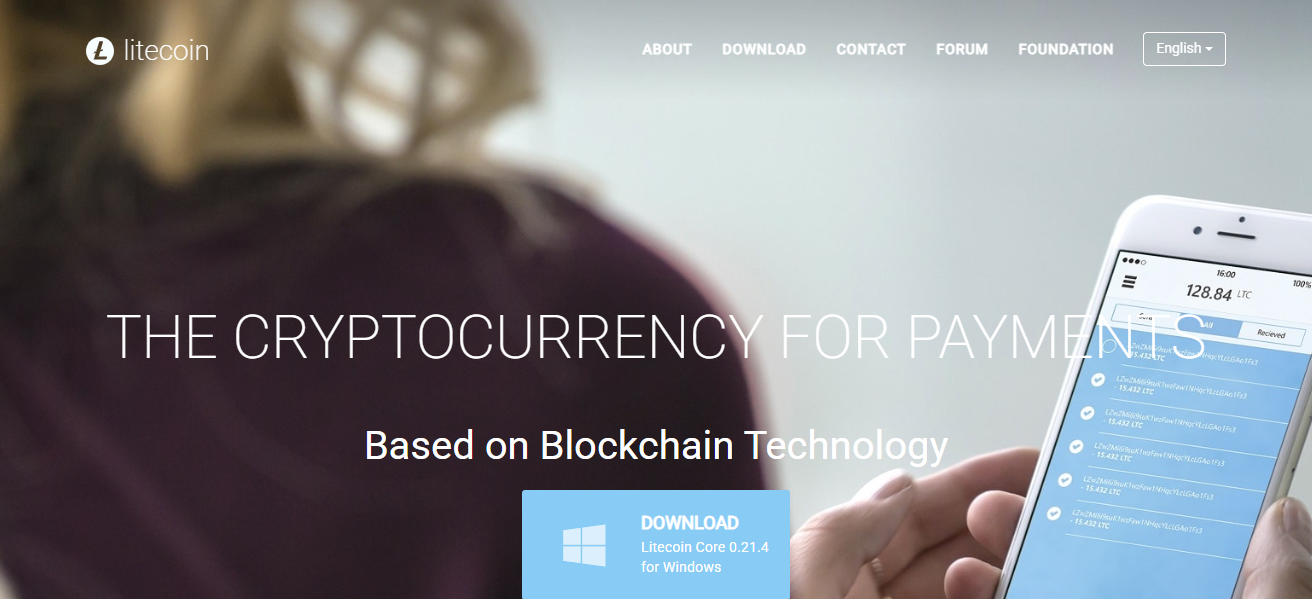
Litecoin also offers atomic swaps and the Lightning Network which offer low cost and instant transactions worldwide.
Both businesses and individuals can use it to cross international borders and avoid the high fees of traditional banking systems.
Its reliability and efficiency make it easy to trust Litecoin for international payments in the fastest and cheapest possible way.
| Feature | Description |
|---|---|
| Transaction Speed | ~2.5 minutes per block; Lightning Network offers instant payments. |
| Transaction Fees | Very low compared to Bitcoin. |
| Use Case | Cross-border transfers, retail payments. |
| Liquidity | High; widely supported globally. |
| Network Type | Public blockchain, similar to Bitcoin. |
| Consensus Mechanism | Proof-of-Work (PoW), faster block times than BTC. |
| Adoption | Established cryptocurrency with high trust and adoption. |
8. Algorand (ALGO)
Algorand (ALGO) is a high-speed blockchain focused on quick, affordable, and international payments.
Its Pure Proof-of-Stake consensus algorithm facilitates transaction finality in less than five seconds, making it a reliable option for international payments.
Algorand is capable of supporting smart contracts and tokenized assets. Cross border businesses automate payments using Algorand in a secured and Efficent manner.
Its blockchain is eco-friendly and cost-effective for high-frequency payments making it reliable for daily payments.
Algorand is acquired by financial institutions and remittance services in transferring money globally and instantaneously.
The ALGO token is low cost international payments and remittance services on cross border payments.
| Feature | Description |
|---|---|
| Transaction Speed | 4–5 seconds per transaction. |
| Transaction Fees | Extremely low (fractions of a cent). |
| Use Case | International payments, tokenized asset transfers, DeFi. |
| Liquidity | Moderate to high; supported by multiple exchanges. |
| Network Type | Public, scalable blockchain. |
| Consensus Mechanism | Pure Proof-of-Stake (PPoS). |
| Adoption | Growing adoption in finance and enterprise solutions. |
9. Celo
Celo is a mobile-first blockchain platform and it is focused on financial inclusion and cross border payments.
Celo lightweight protocols make it possible for Samsung devices to transfer money and Celo remittance lite stable coin cUSD makes cross border remittance feasible with near instant settlement.
Celo blockchain supports mobile and direct bank payments, making it possible for unbanked individuals to transfer money.
Celo mobile application ecosystem allows developers to build apps with integrated global payments, used to transfer money and Celo remittance lite stable coin cUSD.
Celo is a reliable payment option for individuals and business using new banking services and seeking low cost remittance.
| Feature | Description |
|---|---|
| Transaction Speed | Seconds for mobile transfers. |
| Transaction Fees | Very low; optimized for mobile micro-transactions. |
| Use Case | Mobile-first cross-border payments, remittances. |
| Liquidity | Moderate; supports stablecoins like cUSD. |
| Network Type | Mobile-friendly blockchain. |
| Consensus Mechanism | Proof-of-Stake (PoS). |
| Adoption | Focus on underbanked regions; apps integrated for global payments. |
10. Tron (TRX)
Tron (TRX) is built to facilitate fast and cheap transactions, thus, being ideal for global payments. Thanks to its delegated Proof-of-Stake network, transactions are confirmed in seconds with almost no fees.
TRX works with stablecoins and other tokenized assets to allow cross-border transfers at predictable values. Tron is used for remittances, payments for decentralized games, and other DeFi services because of its routed efficiency in cross-border payments.
Tron’s transactions are confirmed in seconds, providing users with a perfect substitute for cross-border payments instead of traditional banking systems, which take days to process.
Tron’s network has no limits to the volume of transactions, which offers users fast and cost-effective cross-border payments without risking network failures.
| Feature | Description |
|---|---|
| Transaction Speed | 1–3 seconds per transaction. |
| Transaction Fees | Extremely low; fractions of a cent. |
| Use Case | Cross-border payments, stablecoin transfers, DeFi apps. |
| Liquidity | High; widely available on exchanges. |
| Network Type | Public blockchain supporting smart contracts. |
| Consensus Mechanism | Delegated Proof-of-Stake (DPoS). |
| Adoption | Popular for remittances, gaming, and fast global transfers. |
Cocnlsuion
To sum up, some of the most effective tools for low-fee cross-border payments, including Ripple, Stellar, USDT, USDC, Nano, Dash, Litecoin, Algorand, Celo, and Tron, provide safe, rapid, and affordable options.
These cryptocurrencies have low fees, instant transfer, and worldwide availability, allowing people and companies to transfer money across the globe and efficiently eliminate the delays and exorbitant fees of traditional banking.
FAQ
Ripple enables fast, low-cost cross-border payments and acts as a bridge currency for banks.
Stellar offers instant, cheap transactions and supports tokenized assets for global payments.
USDT is a stablecoin that preserves value and ensures low-fee, fast international transfers.
USDC is regulated, stable, and works on multiple blockchains for affordable cross-border transactions.
Nano provides feeless, instant transactions, perfect for peer-to-peer international money transfers.