In this article, I’ll cover the Best Wallets for Crypto Payment Processors in respect to security, efficiency, and user friendliness for both businesses and individuals.
- Key Poinst & Best Wallets for Crypto Payment Processors
- 10 Best Wallets for Crypto Payment Processors
- 1. Binance Pay
- 2. Coinbase Commerce
- 3. Crypto.com Pay
- 4. BitPay Wallet
- 5. Trust Wallet
- 6. Ledger Business Wallet
- 7. Metamask Institutional
- 8. BconGlobal
- 9. NOWPayments Wallet
- 10. PayPal Crypto Wallet
- Cocnlsuion
- FAQ
The growth in cryptocurrency usage means the most optimal wallets must be used for transactions in order to avoid high volatility and transact on a global scale.
They give merchants the ability to accept and manage digital payments, and offer a range of flexibility, transparency, and reliability for the long haul.
Key Poinst & Best Wallets for Crypto Payment Processors
Binance Pay Supports instant crypto payments globally, low fees, multi-currency support, and seamless integration for merchants worldwide.
Coinbase Commerce Allows businesses to accept crypto directly, secure transactions, easy integration, and automatic conversion to stablecoins.
Crypto.com Pay Offers cashback rewards, supports multiple cryptocurrencies, low settlement fees, and integrates smoothly with e-commerce platforms.
BitPay Wallet Trusted processor, supports Bitcoin and stablecoins, provides invoices, settlement options, and strong merchant security features.
Trust Wallet Decentralized wallet, supports thousands of tokens, integrates with Binance Pay, and offers strong mobile payment flexibility.
Ledger Business Wallet Hardware-based enterprise-grade security, multi-signature support, regulatory compliance, and insurance coverage for corporate crypto transactions.
Metamask Institutional Supports DeFi payments, customizable compliance controls, secure custody, and integration with decentralized applications for businesses.
BconGlobal Decentralized payment gateway, eliminates custodianship, supports direct wallet-to-wallet transfers, ensuring complete control over merchant funds.
NOWPayments Wallet Non-custodial, supports 100+ cryptocurrencies, automatic conversion, recurring billing, and easy API integration for online businesses.
PayPal Crypto Wallet Mainstream adoption, supports Bitcoin and Ethereum payments, easy fiat conversion, and trusted global payment infrastructure.
10 Best Wallets for Crypto Payment Processors
1. Binance Pay
Binance Pay is a worldwide solution for payments in crypto that is tailored for a quick and easy payment experience for both customers and sellers.
It provides a simple way for merchants to set up payment systems for different cryptocurrencies with no fees and easy integration to online stores.
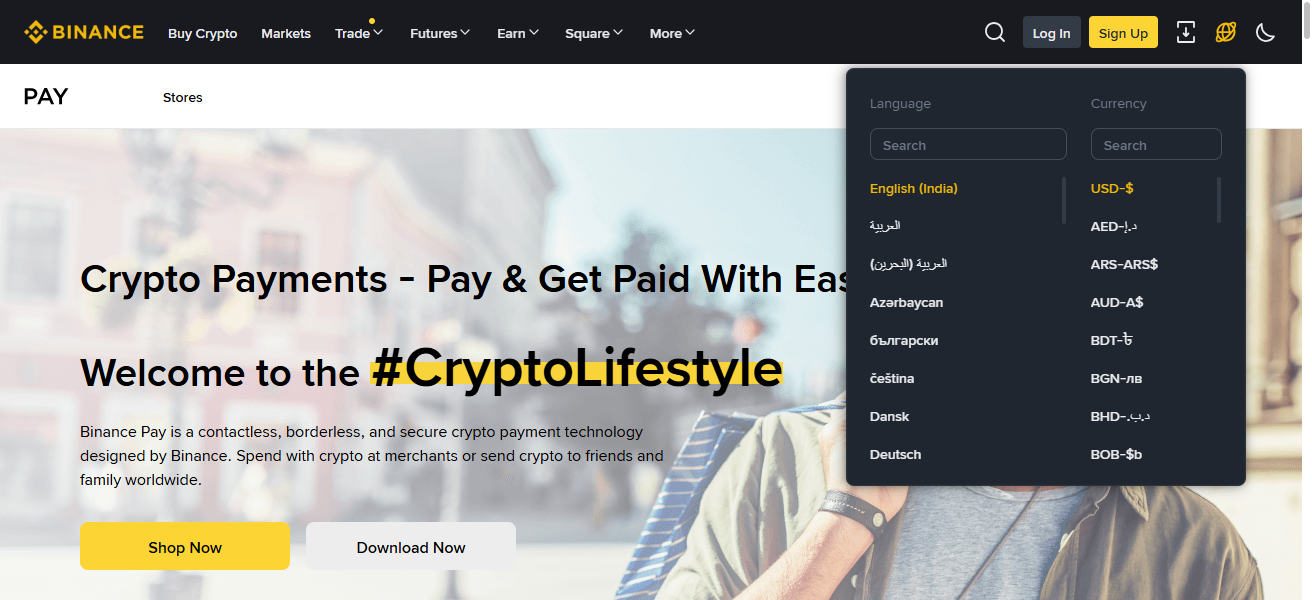
Merchants get payment settlement immediately and buyers get a secure and touchless payment experience which is integrated to the Binance exchange to help merchants easily convert their digital currencies to stable coins or fiat currencies at any given moment which lowers the risks of volatility.
Binance Pay is a good option for businesses to get scalable payment processing in cryptocurrencies and provides a large global reach. It is also easy to use and customers get loyalty rewards which adds to the overall experience.
Binance Pay Features
- No fees for both customers and merchants on transactions. Supports multiple cryptocurrencies.
- Settlement is instantaneous with the ability to change crypto to stablecoins or fiat on Binance Exchange.
- Supports global reach and e-commerce scalability with smooth e-commerce platform integration.
- Users receive loyalty rewards and a secure, contactless payment experience.
| Pros | Cons |
|---|---|
| Zero transaction fees for merchants and customers. | Limited adoption outside Binance ecosystem. |
| Supports multiple cryptocurrencies with instant settlement. | Requires Binance account for full functionality. |
| Easy integration with e-commerce platforms globally. | Regulatory restrictions in certain regions. |
| Offers loyalty rewards and secure, contactless payments. | Dependent on Binance Exchange stability. |
2. Coinbase Commerce
Businesses can use Coinbase Commerce to receive cryptocurrency payments and have them sent straight to their crypto wallets.
Merchants have control and flexibility as they can use Bitcoin, Ethereum, and other top cryptos. The platform works for both large companies and small businesses, as it provides seamless integrations with websites and e-commerce platforms.
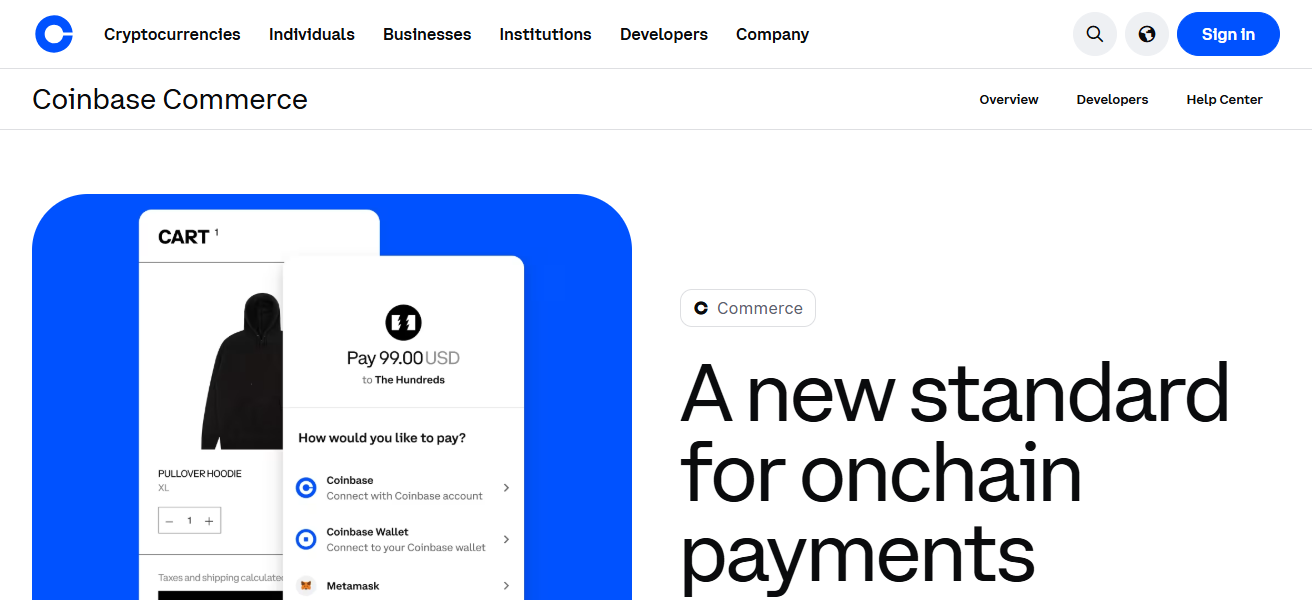
Merchants can avoid volatility with automatic conversions to stablecoins, and with the dependable Coinbase Commerce brand, they can maintain security.
Merchants wanting a simple and reputable crypto processor have a straightforward option with Coinbase Commerce.
Coinbase Commerce Features
- Direct crypto payment (Bitcoin, Ethereum, etc…) into the merchants’ wallets.
- To mitigate volatility, stablecoins are used for automatic conversion.
- Website integration is effortless, accommodating e-commerce businesses of all sizes.
- A transaction management Simple dashboard and transparent reporting.
| Pros | Cons |
|---|---|
| Accepts major cryptocurrencies directly into merchant wallets. | Limited coin support compared to decentralized wallets. |
| Automatic conversion to stablecoins reduces volatility risks. | Transaction fees can be higher than competitors. |
| Easy integration with websites and e-commerce platforms. | Requires Coinbase ecosystem reliance. |
| Transparent reporting tools and simple dashboard. | Settlement speed may vary depending on network congestion. |
3. Crypto.com Pay
Crypto.com Pay works as a payment processor for merchants that want to accept crypto while providing cashback rewards to customers.
It supports various cryptocurrencies along with low settlement fees to help merchants save costs. Since it integrates with Shopify and other services, merchants that sell online can easily implement it.
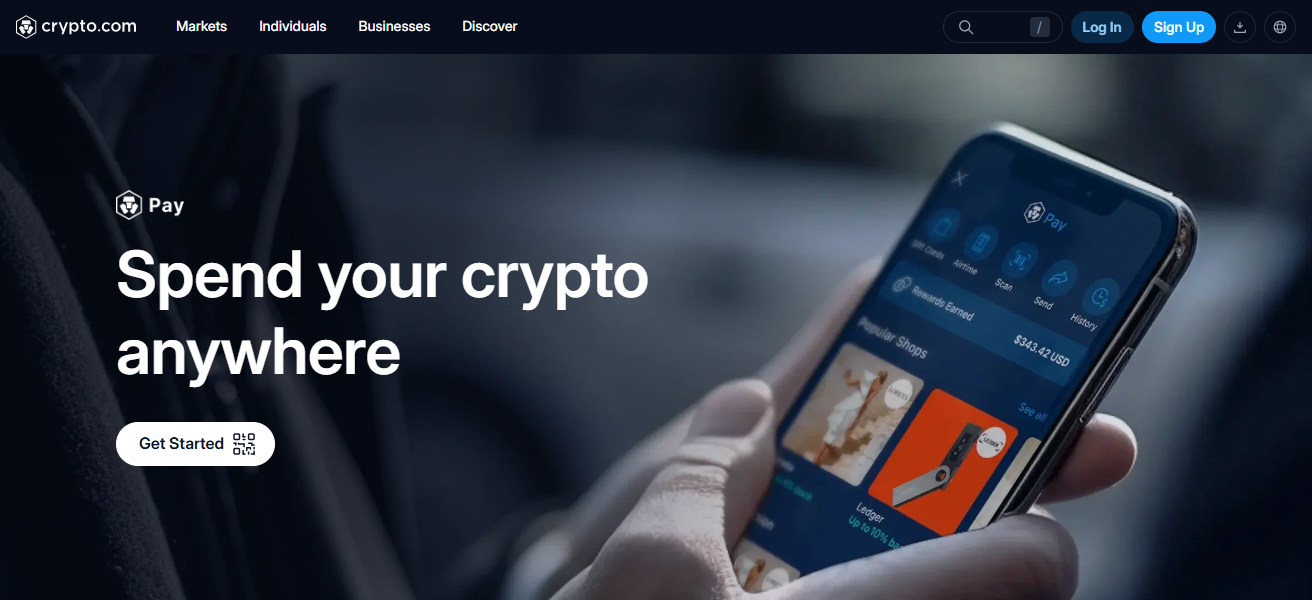
Solving the volatility problem, merchants can choose to settle in crypto or fiat. Customers receive discounts and rewards which incentivizes them to use the service.
With the Visa card and exchange, the Crypto.com ecosystem supports this wallet for businesses that want payments and engagement from customers.
Crypto.com Pay Features
- Supports a variety of cryptocurrencies with minimal settlement fees for cost-efficient processing.
- Crypto rewards, discounts, and cashback customers.
- Seamless integration with other e-commerce sites and Shopify.
- Merchants’ volatility exposure is reduced when they settle in crypto or fiat.
| Pros | Cons |
|---|---|
| Supports multiple cryptocurrencies with low settlement fees. | Cashback rewards limited to Crypto.com ecosystem. |
| Offers customer discounts and incentives. | Requires Crypto.com account for full benefits. |
| Integrates smoothly with Shopify and other platforms. | Limited merchant adoption compared to larger processors. |
| Merchants can settle in crypto or fiat. | Exposure to Crypto.com’s platform risks. |
4. BitPay Wallet
BitPay Wallet has built a reputation as a trustworthy crypto payment processor amongst merchants. Thousands of merchants worldwide accept crypto payments through BitPay Wallet.
BitPay Wallet has a web, as well as Android & iOS, payment system that allows merchants to send invoices, receive payments, and settle payments in Bitcoin and stablecoins.
Customers can make payments in Bitcoin and stablecoins, and to avoid price volatility, merchants can have payments automatically converted to fiat currency.
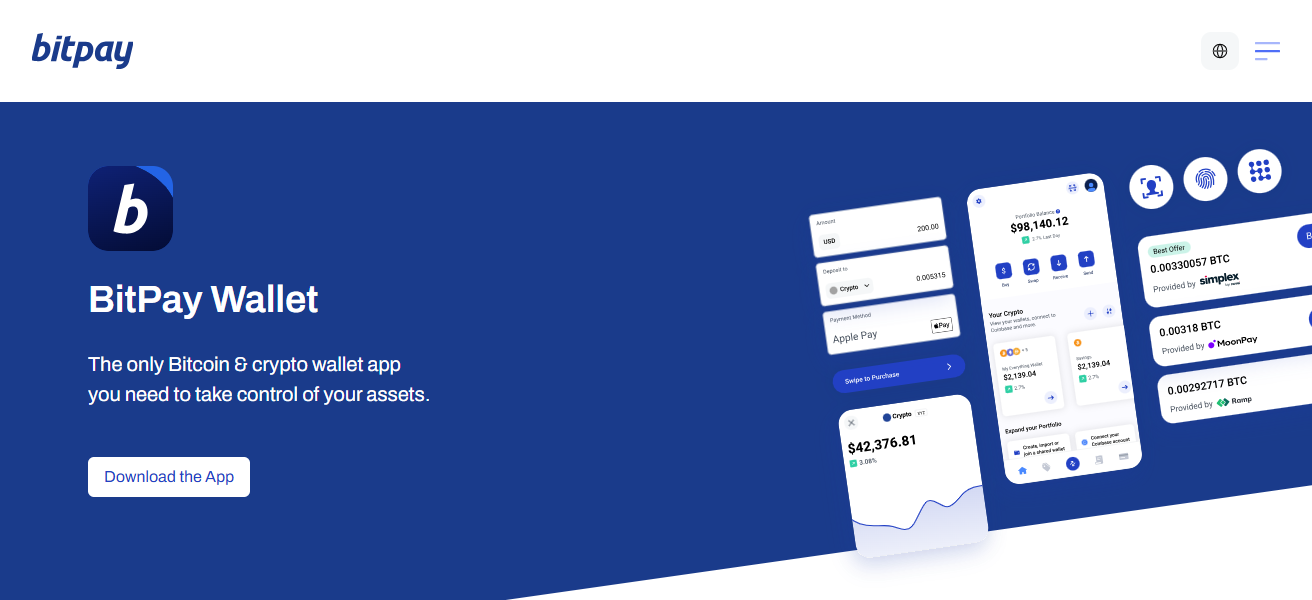
In addition, BitPay Wallet issues prepaid debit cards which allow both customers and businesses to spend crypto more easily.
All merchants can rely on BitPay Wallet as a transparent and compliant payment service provider. With years of crypto payment experience, BitPay Wallet is a leader in crypto and traditional finance integration.
BitPay Wallet Features
- Invoice and settlement options for stablecoins and Bitcoin.
- Merchants volatility is eliminated through automated fiat conversion.
- Crypto spending is made simple with prepaid debit cards.
- Strong compliance, security features, and transparent fee structure.
| Pros | Cons |
|---|---|
| Established processor trusted by thousands of merchants. | Primarily supports Bitcoin and stablecoins only. |
| Automatic conversion to fiat avoids volatility risks. | Fees may be higher for small transactions. |
| Provides prepaid debit cards for spending crypto. | Limited DeFi or Web3 integration. |
| Strong compliance and transparent fee structure. | Centralized model reduces user control. |
5. Trust Wallet
Trust Wallet is a decentralized mobile wallet. It can store throusands of crypto and tokens. It is integrated with Binance Pay which lets customers pay merchants directly from their wallets.
Because of the non-custodial nature of Trust Wallet, customers have more security and control over their money. Trust Wallet is integrated with many tokens which is beneficial for businesses that have a lot of crypto.
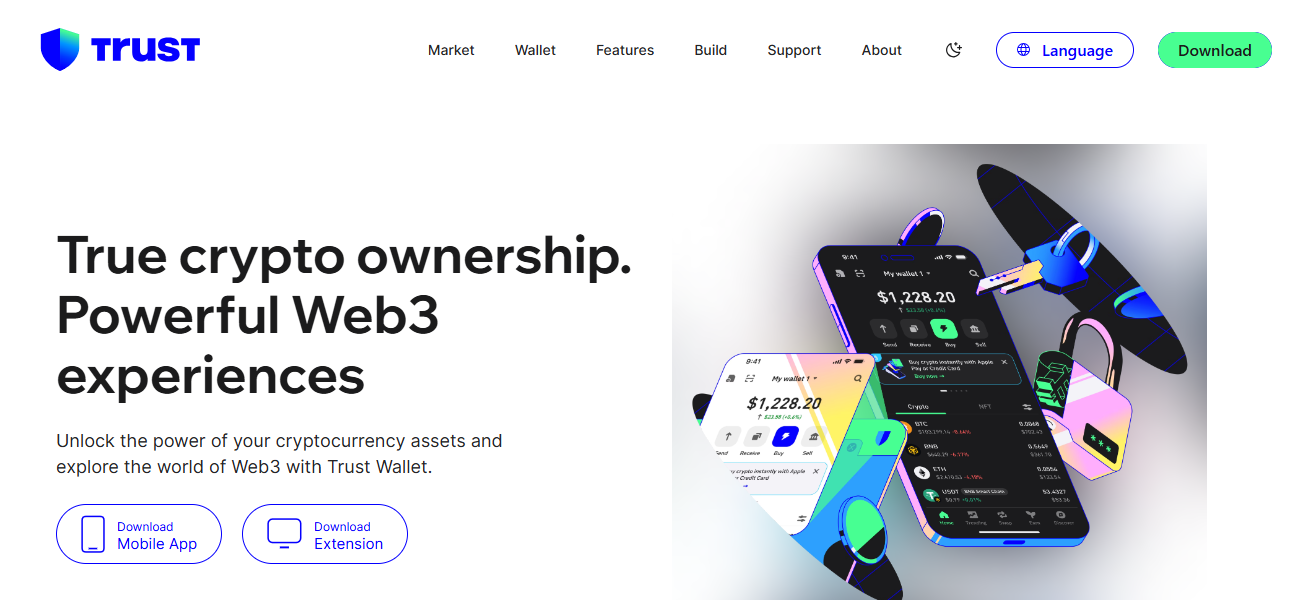
Merchants can pay and customers can transact seamlessly and securely. Trust Wallet has a web browser which can access decentralized apps and gives businesses more options than just payments.
Trust Wallet Features
- Integrates with Binance Pay for direct merchant payments.
- a decentralized, custodial wallet with thousands of tokens and cryptocurrencies.
- Empowers users to have absolute control over their funds with improved protection.
- Integrated Web3 browser links users with decentralized apps.
| Pros | Cons |
|---|---|
| Decentralized, non-custodial wallet with full user control. | Lacks built-in fiat conversion options. |
| Supports thousands of cryptocurrencies and tokens. | Security depends on user’s device management. |
| Integrates with Binance Pay for merchant payments. | Not ideal for large-scale enterprise use. |
| Built-in Web3 browser connects to decentralized apps. | Customer support is limited compared to custodial wallets. |
6. Ledger Business Wallet
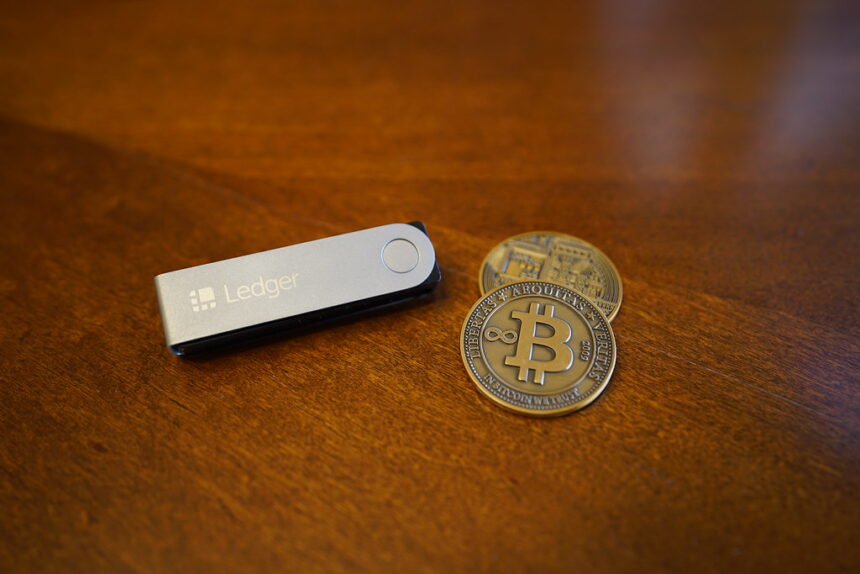
The Ledger Business Wallet is a hardware solution that offers enterprise level protection for crypto transactions.
It offers multi signature support as well as compliance with regulations and added insurance, making it highly suited for companies that deal with a large amount of crypto transactions.
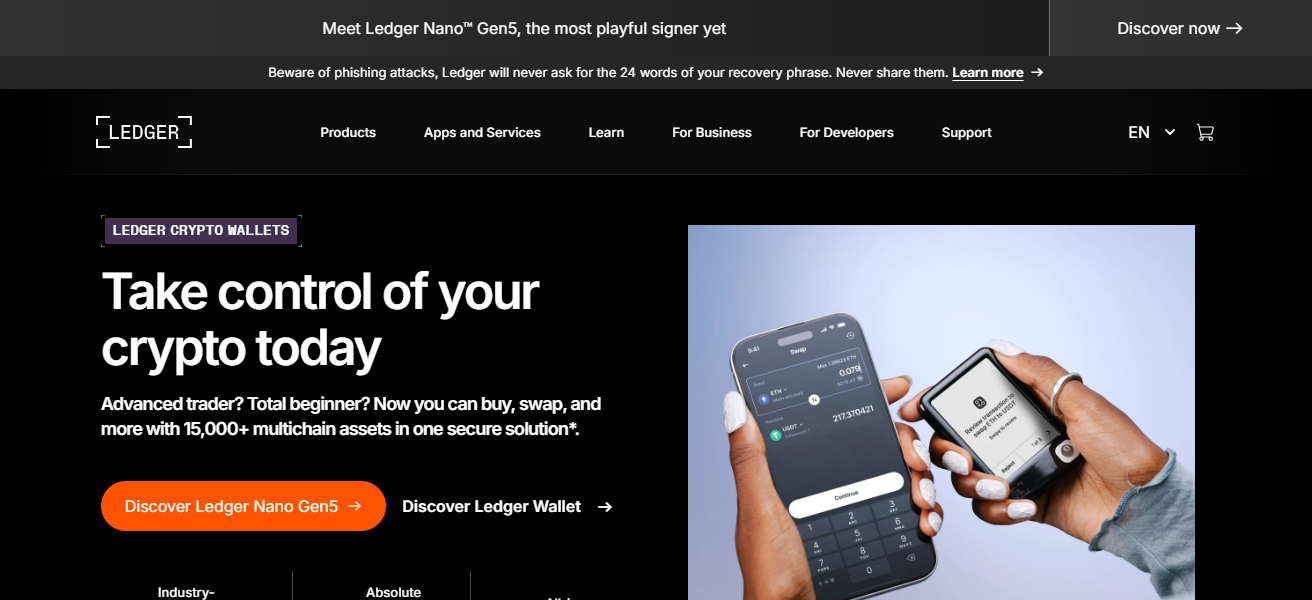
With Ledger, Merchants are able to have cold storage protection, eliminating the risk of hacks and theft. Payment gateways are integrated with Ledger, so that companies can securely process transactions and have custody of their funds.
With a legacy of being the most trusted hardware wallet manufacturer, companies that value high level protection and compliance will find Ledger Business Wallet to be the best offering for processing crypto payments.
Ledger Business Wallet Features
- Provides hardware wallet with cold storage security at enterprise level.
- Business regulatory compliance and multi-signature control are supported.
- Offers insurance to cover losses due to theft or hacking.
- Custody of funds is maintained while integrating with payment gateways.
| Pros | Cons |
|---|---|
| Hardware-based cold storage ensures maximum security. | Requires physical device management. |
| Supports multi-signature and regulatory compliance. | Higher upfront cost for businesses. |
| Provides insurance coverage against hacks or theft. | Less convenient for frequent transactions. |
| Integrates with payment gateways securely. | Limited coin support compared to software wallets. |
7. Metamask Institutional
Metamask has customized services for corporations and other entities focused on decentralized finance (DeFi) and cryptocurrency payment solutions.
They provide adaptable compliance controls, custody solutions, and the ability to integrate with decentralized applications.
Payment processing through smart contracts provides merchants with payment automation and full transparency.

Due to its sophisticated features, Metamask is appropriate for large organizations that require more complex governance and risk management.
Because Metamask provides access to DeFi liquidity, organizations are able to more fully utilize crypto assets in addition to payment processing.
With its unique ability to integrate decentralized ecosystems with corporate worlds, Metamask Institutional serves as an exceptional digital wallet for companies seeking to innovate in blockchain commerce.
Metamask Institutional Features
- Custom built for businesses using DeFi and crypto payments.
- Secure custody solutions and regulation compliance are customizable.
- Payments via smart contracts are supported for automation and transparency.
- Beyond payment processing, access to DeFi liquidity is available.
| Pros | Cons |
|---|---|
| Tailored for businesses engaging in DeFi payments. | Complex setup for non-technical merchants. |
| Offers customizable compliance and governance controls. | Higher costs for institutional-grade services. |
| Enables smart contract-based transparent payments. | Limited fiat conversion options. |
| Provides access to DeFi liquidity beyond payments. | Regulatory uncertainty around DeFi usage. |
8. BconGlobal
BconGlobal is a decentralized payment gateway with no custodianship, allowing wallet-to-wallet transfers.
Merchants keep full ownership of their funds which means less dependency on third parties. They support several cryptocurrencies and guarantee secure and fast transactions.

It being a fully decentralized system improves transparency and lowers the chances of being censored or restricted. Businesses experience more control and privacy while customers have the freedom to transact directly.
It is easy to see why BconGlobal is centered on decentralization. Merchants and customers can use crypto payments freely and fully control their digital assets.
BconGlobal Features
- Payment gateways are decentralized and support direct transfers from wallet to wallet.
- Merchants have total fund control with no custody.
- Transactions are fast and secure, supporting various cryptocurrencies.
- Offers transparency, privacy, and lower the risk of censorship.
| Pros | Cons |
|---|---|
| Decentralized gateway with direct wallet-to-wallet transfers. | Limited mainstream adoption. |
| Merchants retain complete control of funds. | Lack of fiat settlement options. |
| Supports multiple cryptocurrencies with fast transactions. | May face scalability issues with high volume. |
| Enhances transparency and privacy for users. | Minimal customer support infrastructure. |
9. NOWPayments Wallet
NOWPayments Wallet is a non-custodial wallet solution that supports more than 100 cryptocurrencies.
It has features like recurring billing, automatic conversion, and neat API integrations. This helps online businesses a lot.
Merchants are able to accept payments and customers to have more crypto payment flexibility. With reports and settlements, the platform is excellent for e-commerce and subscriptions.
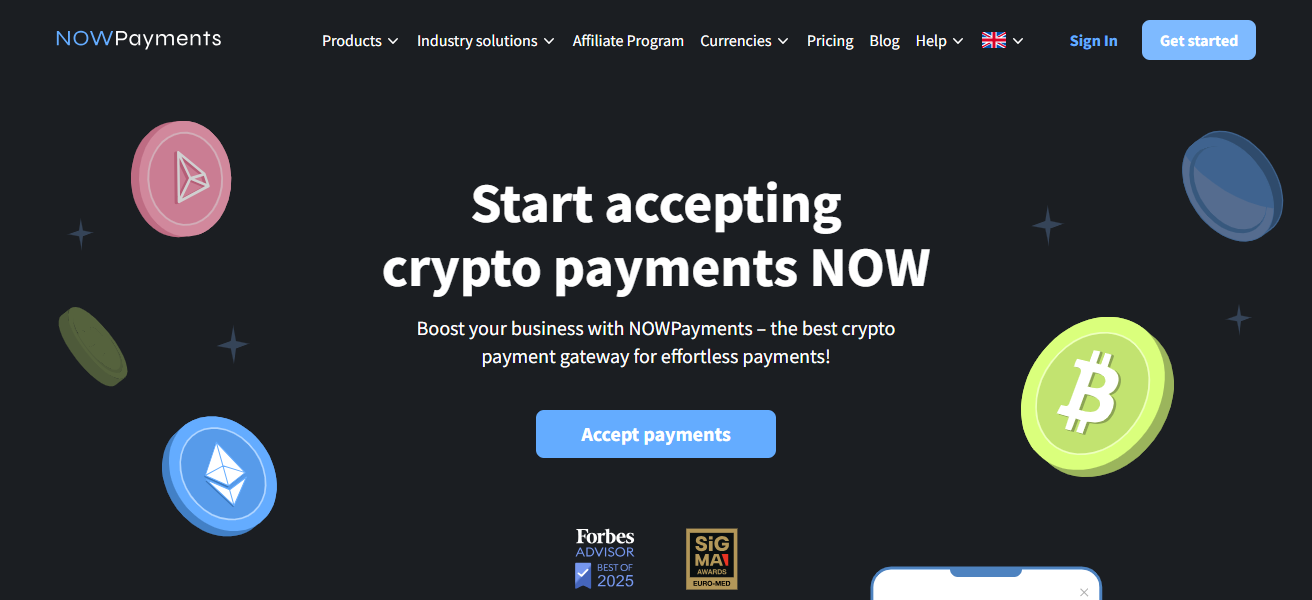
It is also non-custodial meaning that merchants have more control over their funds, making it more secure.
With a great variety of coins and integrations, payment tools and crypto wallets, NOWPayments Wallet is great for businesses that need scalable payment solutions.
NOWPayments Wallet Features
- Supports over 100 cryptocurrencies and provides a non-custodial wallet.
- For businesses, recurring billing and automatic conversion are available.
- For global e-commerce and subscription services, simple API integration is available.
- Merchants are offered various settlement and reporting options.
| Pros | Cons |
|---|---|
| Non-custodial wallet supporting over 100 cryptocurrencies. | Requires technical setup for API integration. |
| Offers automatic conversion and recurring billing. | Settlement times depend on blockchain speed. |
| Easy integration for e-commerce and subscriptions. | Limited offline merchant support. |
| Provides detailed reporting and flexible settlement options. | Fees may vary depending on coin used. |
10. PayPal Crypto Wallet
Supported by major coins like Bitcoin and Ethereum, PayPal allowing consumers Crypto Wallet will furthering mainstream adoption of crypto payments.
Merchants enjoy the ease of integrating into existing payment systems and PayPal’s global trust infrastructure.
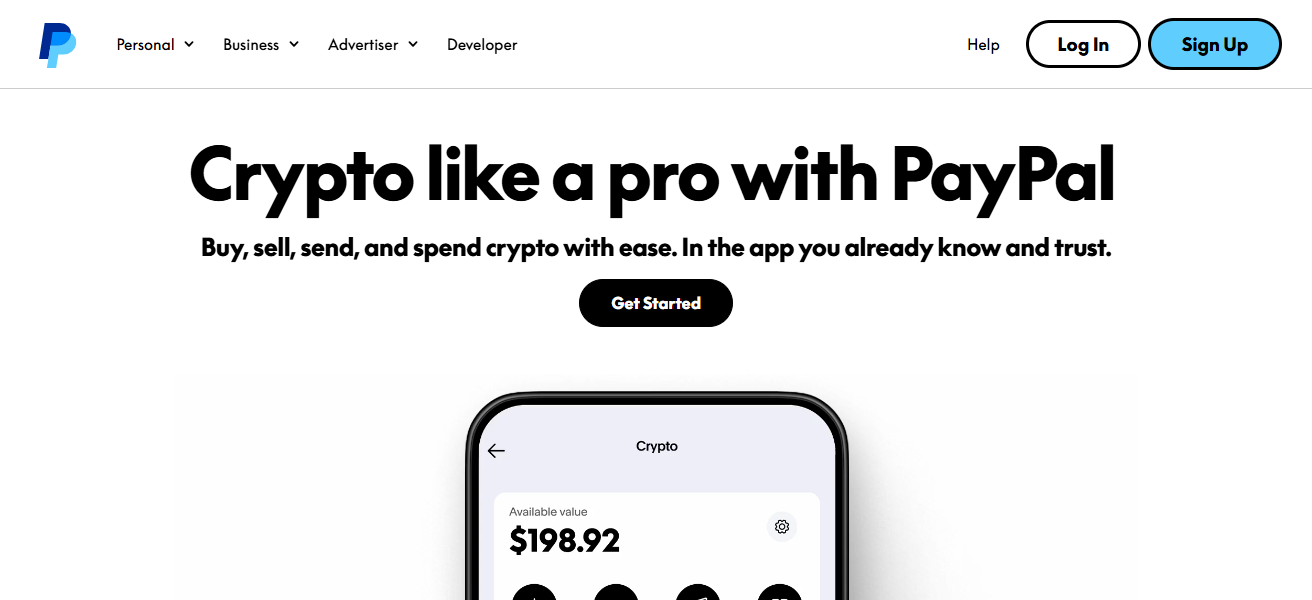
Businesses receive crypto and consumers settle in fiat, which mitigates the risks of volatility in crypto payments. The solution’s ubiquity makes it suitable for mainstream-focused businesses.
Given their established reputation for compliance and security, PayPal facilitates the adoption of conservative merchants.
With PayPal Crypto Wallet, the combination of crypto and traditional payment systems makes operational the use of digital currencies in day-to-day commerce.
PayPal Crypto Wallet Features
- Available for major cryptocurrencies, including Ethereum and Bitcoin.
- Provides easy conversion of fiat currencies using PayPal’s trusted systems.
- Best for mainstream businesses and audiences due to its wide acceptance.
- An established reputation for compliance and security fosters adoption.
| Pros | Cons |
|---|---|
| Supports Bitcoin, Ethereum, and other major coins. | Limited crypto selection compared to specialized wallets. |
| Easy fiat conversion with PayPal infrastructure. | Custodial model reduces user control. |
| Widely accepted by mainstream businesses globally. | Higher transaction fees than crypto-native solutions. |
| Strong compliance and security reputation. | Restricted availability in certain countries. |
Cocnlsuion
In cocnsluion The best wallets for crypto payment processors combine security, flexibility, and ease of integration.
Options like Binance Pay, Coinbase Commerce, and BitPay offer mainstream reliability, while Trust Wallet and NOWPayments provide decentralized control.
Ledger ensures enterprise-grade protection, and PayPal bridges traditional finance with crypto. Choosing the right wallet depends on business size, security needs, and customer adoption goals.
FAQ
Binance Pay provides zero transaction fees, making it cost-effective for merchants and customers.
Yes, wallets like Binance Pay, BitPay, and PayPal allow instant conversion to fiat currencies.
Coinbase Commerce is ideal for small businesses due to its simple setup and trusted brand.
Crypto.com Pay provides cashback rewards and discounts to encourage customer adoption.