This article will focus on the best crypto wallets for Web3 SaaS platforms that are secure, scalable, and easy to use.
- Key Points & Best Crypto Wallets For Web3 SaaS Platforms
- 10 Best Crypto Wallets For Web3 SaaS Platforms
- 1. MetaMask
- 2. Trust Wallet
- 3. Coinbase Wallet
- 4. Rainbow Wallet
- 5. Exodus
- Exodus
- 6. Zerion
- 7. Phantom
- 8. Gnosis Safe
- 9. MyEtherWallet (MEW)
- 10. Ledger Live + Ledger Nano
- How To Choose Best Crypto Wallets for Web3 SaaS Platforms
- Cocnlsuion
- FAQ
Web3 applications are expanding, and crypto wallets are critical for smooth dApp integration, management of assets, and trust of the users.
This guide will focus on the best wallets that offer decentralized engagements, cross-chain support, and optimized Web3 SaaS services.
Key Points & Best Crypto Wallets For Web3 SaaS Platforms
| Wallet | Key Point |
|---|---|
| MetaMask | Most popular Web3 wallet with browser extension |
| Trust Wallet | Multi-chain support and NFT integration |
| Coinbase Wallet | Easy fiat-to-crypto onboarding and SaaS-friendly APIs |
| Rainbow Wallet | User-friendly interface with strong NFT focus |
| Exodus | Multi-chain desktop wallet with SaaS-ready APIs |
| Zerion | Portfolio management and SaaS-friendly DeFi dashboard |
| Phantom | Best for Solana ecosystem SaaS platforms |
| Gnosis Safe | Multi-signature wallet ideal for SaaS teams and DAOs |
| MyEtherWallet (MEW) | Ethereum-focused wallet with SaaS integration potential |
| Ledger Live + Ledger Nano | Hardware + software suite, DeFi integrations |
10 Best Crypto Wallets For Web3 SaaS Platforms
1. MetaMask
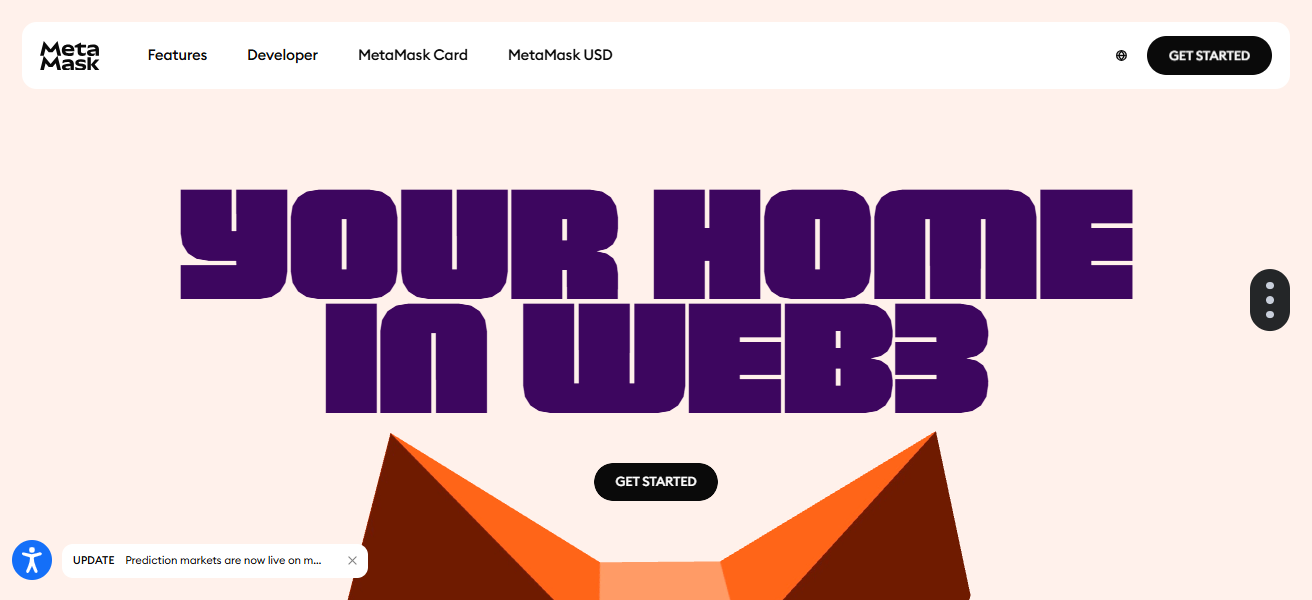
MetaMask stands tall among the crypto wallets available for different Web3 platforms. It has no competition in seamless integration with the Ethereum chain and other EVM-compatible blockchains.
Web3 SaaS platforms can let their users connect their wallets to dApps using MetaMask’s browser extension and mobile app.
It’s versatile Web3 functionality and support for token management, in-wallet token swaps, and NFT storage makes it perfect for dApps.
Asset management is secured by seed phrase protection and optional hardware wallet integration.
Its great adoption and extensive developer support makes it a great pick for SaaS platforms to provide users with easy blockchain access.
MetaMask Features
- Web3 & dApp Integration: Connects to dApps easily with Web3 browser extension and supports mobile WalletConnect.
- Multi-Network Support: Compatible with Ethereum and all EVM supported blockchains like Polygon, BNB Chain, etc.
- In-Wallet Tools: NFT management and display, token swaps, and other features.
- Security Controls: Hardware wallet compatibility and custodial wallet with seed phrase storage.
| Pros | Cons |
|---|---|
| – Widely adopted, ensuring compatibility with most dApps. | – Can be complex for beginners. |
| – Supports Ethereum and EVM-compatible blockchains. | – Browser extension can be targeted by phishing attacks. |
| – In-wallet swaps and NFT support. | – Limited support for non-EVM chains. |
| – Browser extension + mobile app for easy Web3 integration. | – Some advanced features may require developer knowledge. |
2. Trust Wallet
Trust Wallet is a mobile crypto wallet brand that is known for its simple design as well as its support for a plethora of different blockchains.
With its dApp browser, users of Web3 SaaS platforms can easily access and use apps that provide DeFi solutions and NFT marketplaces directly through the application.
It has the potential to be a great option for SaaS wallets targeting a variety of ecosystems as Trust Wallet is compatible with a variety of assets across coins and tokens on Ethereum, Binance Smart Chain, Solana, and more.
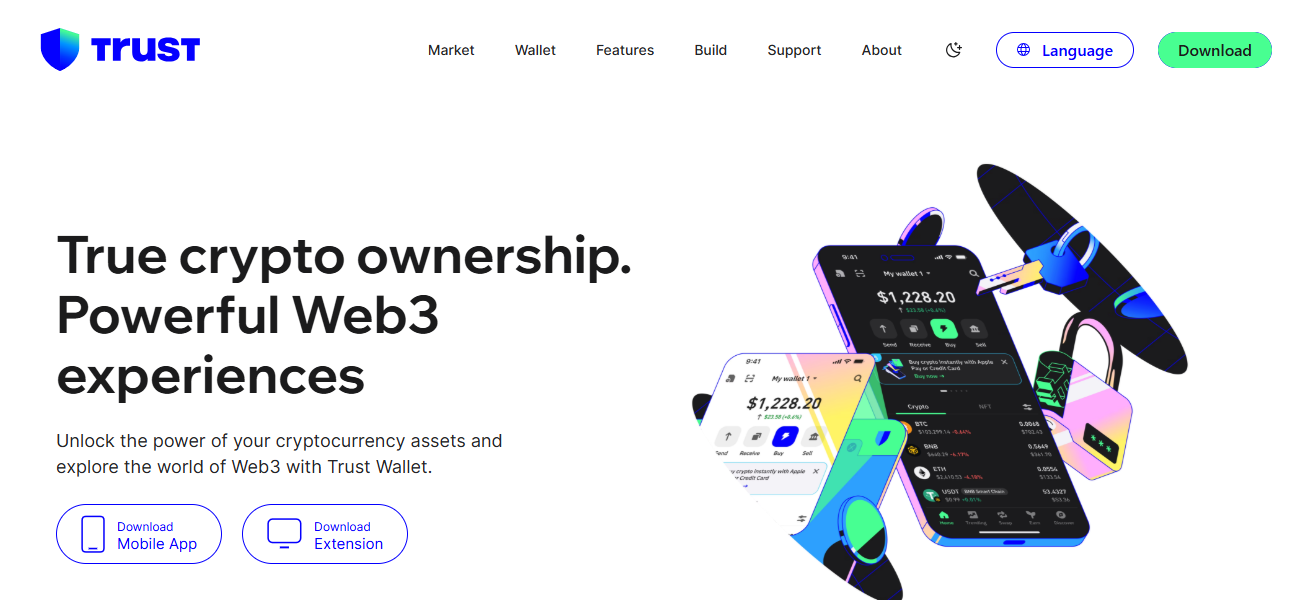
Trust Wallet is known for its security, with private keys being stored only on the user’s device and with the option for fingerprint scanning to users.
With its combined simplicity and support for nearly all coins and tokens, it is great for SaaS platforms that want to provide support for a variety of blockchains.
Trust Wallet Features
- Multi-chain Support: Ethereum, BNB Chain, Solana, Avalanche and more.
- Built-in dApp Browser: Interacts with Web3 SaaS products in-app.
- Secure Key Management: Private keys live on-device and for added security, users can enable biometrics.
- User Friendly UI: Easy to structure, setup, and navigate the app for mainstream users.
| Pros | Cons |
|---|---|
| – Multi-chain support: Ethereum, BSC, Solana, and more. | – No desktop version, mobile-only. |
| – Built-in dApp browser for Web3 SaaS integration. | – Limited advanced DeFi analytics. |
| – User-friendly interface, ideal for beginners. | – Reliant on mobile device for all interactions. |
| – Private keys stored securely on-device. | – Some token swaps may have higher fees than exchanges. |
3. Coinbase Wallet
Coinbase Wallet is a simple interface, non-custodial wallet where you can manage your digital currency and use Web3 apps. Unlike the Coinbase exchange, this wallet allows users to gain full ownership of their private keys.
Coinbase Wallet supports Ethereum, Polygon, and other EVM-compatible chain wallets. For Web3 SaaS platforms, the integrated dApp browser enables users to interact directly with smart contracts, and access DeFi and NFT marketplaces.
Coinbase Wallet is secured with biometric log in and offers encrypted key storage. Users can also make fiat to crypto transactions to strengthen their position in the market as a SaaS provider targeting crypto novices and experienced users.
Coinbase Wallet Features
- Non-Custodial Control: Key access is strictly on the user and is separate from the Coinbase exchange.
- dApp Browser: Access to dApps, smart contract interactions.
- EVM Chain Support: Polygon, Ethereum and all other EVM compatible layer 1 and layer 2 networks.
- Easy Funding: Onramp access to Coinbase central bank for fiat-crypto funding is a supported option.
| Pros | Cons |
|---|---|
| – Non-custodial wallet with full private key control. | – Supports fewer blockchains than Trust Wallet. |
| – Easy integration with dApps via in-app browser. | – NFT management is basic compared to Rainbow or MetaMask. |
| – Supports Ethereum, Polygon, and EVM-compatible chains. | – Mobile interface may feel simplistic for advanced users. |
| – Integration with Coinbase ecosystem allows easy fiat-to-crypto. | – Limited customization and portfolio analytics. |
4. Rainbow Wallet
Rainbow Wallet is a mobile wallet for Ethereum and other related tokens. It focuses on emphasizing a design that is easy to use.
It is a specifically designed wallet for Web3 SaaS platforms because of its easy NFT management, access to DeFi, and integrated ENS support.
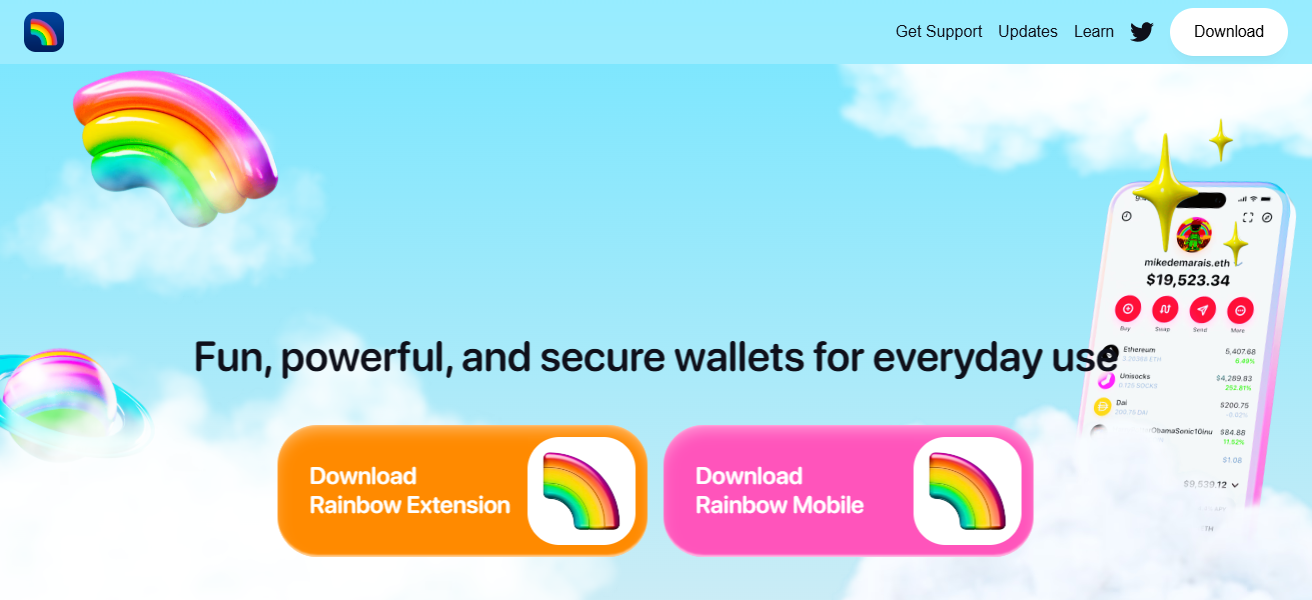
Rainbow also has WalletConnect, which lets users access and use Dapps. Users are also provided security because Rainbow focuses on private key storage on the device.
Rainbow Wallet is designed for SaaS platforms that serve creative communities, NFT marketplaces, and others that need a visually simple Web3 onboarding experience.
Rainbow Wallet Features
- Ethereum Specialization: Supports ETH and ERC-20 tokens with straightforward visual management.
- User Interface: One of the best and most optimized mobile interfaces in the market.
- NFTs: User-friendly management of NFTs and ENS domains.
- WalletConnect: Seamless connection to external Web3 SaaS tools.
| Pros | Cons |
|---|---|
| – Sleek and visually appealing interface. | – Ethereum-focused; limited multi-chain support. |
| – Excellent NFT management and gallery view. | – Mobile-only; no desktop support. |
| – ENS integration for human-readable addresses. | – Advanced DeFi features are limited. |
| – WalletConnect support for seamless SaaS integration. | – Not ideal for managing large, multi-chain portfolios. |
5. Exodus
Exodus offers a mobile and desktop wallet that prioritizes user experience and supports hundreds of cryptocurrencies.
For Web3 SaaS providers, Exodus supports integrated portfolio management, staking, and in-app swaps, so users can manage their assets without leaving the service.
Exodus’s cross-chain functionality and user-friendly design are great for those who may be using multiple chains and tokens.
Users’ private keys remain on their devices for full non-custodial security. Exodus may not be designed for easy dApp access
But given its compatibility with hardware wallets and Web3 services, it is a strong option for SaaS providers needing a secure, multi-asset wallet that offers users seamless holistic asset management.
Exodus
- Support for Multiple Assets: Manage over 100 cryptocurrencies across multiple blockchains.
- Mobile and Desktop Accessibility: Use on mobile and desktop with portfolio syncing.
- Integrated Crypto Exchange: Swap cryptos without leaving the wallet.
- Trezor Support: Add security with Trezor to make it a hardware wallet.
| Pros | Cons |
|---|---|
| – Multi-asset wallet supporting hundreds of cryptocurrencies. | – Limited dApp browser integration for Web3 SaaS. |
| – Desktop and mobile versions available. | – Not specialized for NFT or DeFi interactions. |
| – Integrated portfolio tracker and staking features. | – May lack advanced security features like multisig. |
| – Compatible with hardware wallets for added security. | – Some in-wallet exchanges have higher fees than centralized platforms. |
6. Zerion
Zerion is a De-Fi-centric portfolio tracker and wallet optimized specifically for Web3 interactions. SaaS platforms can take advantage of Zerion’s capacity to consolidate users’ portfolio holdings on Ethereum, Polygon, and other primary blockchains to facilitate streamlined token, NFT, and De-Fi asset management.
Users can swap, provide liquidity, and borrow/lend all within the app, which makes Zerion a great fit for FIs and crypto De-Fi services.
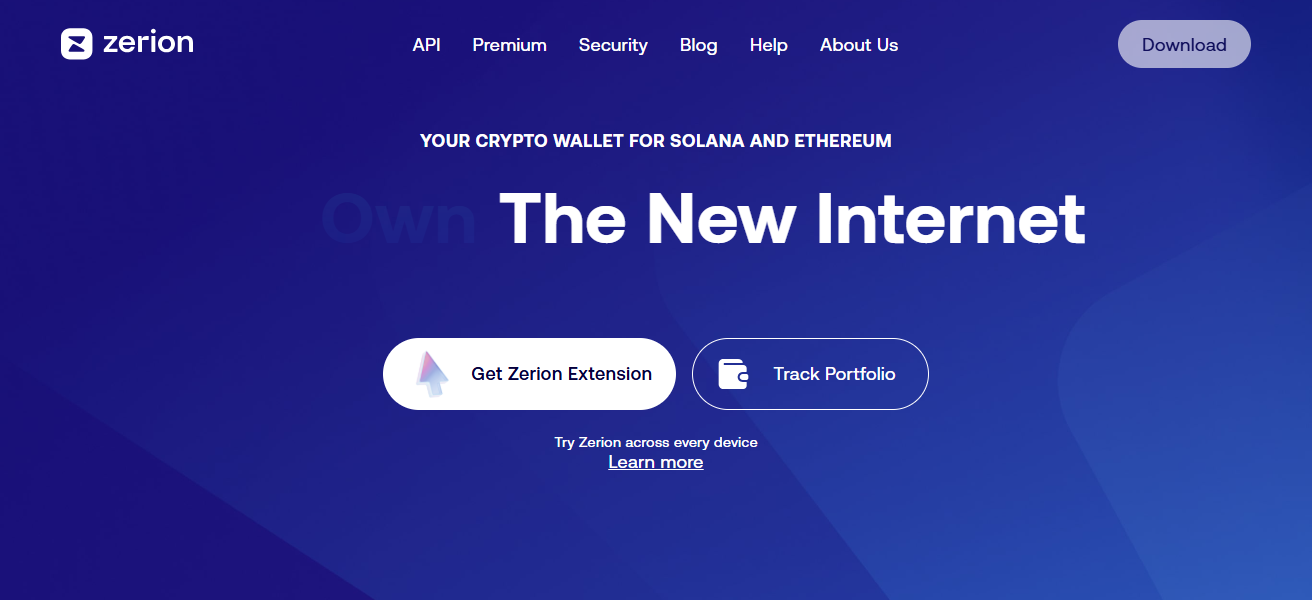
Zerion incorporates a powerful analytics engine, a non-custodial key management service (KMS) for user asset safety, and a streamlined interface that allows users to sidestep the intricacies of De-Fi while offering Zerion greater multichain De-Fi capabilities.
Zerion Features
- Decentralized Finance Consolidation: Manage several wallets, DeFi services, and liquidity positions in one dashboard.
- DeFi Access and In-App Swaps: Use the interface to perform swaps and provide liquidity and lend.
- Dashboard Analytics: Collate and visualize blockchain performance and assets across multiple chains.
- Non-Custodial: Direct Web3 interactions while keeping private key control.
| Pros | Cons |
|---|---|
| – DeFi-focused wallet and portfolio tracker. | – Primarily Ethereum and EVM chains; limited multi-chain support. |
| – Aggregates assets across multiple protocols and networks. | – May be overwhelming for beginner users. |
| – In-app swaps, lending, and liquidity provision. | – Mobile app is required for full functionality. |
| – Non-custodial with private key control. | – Less NFT-focused compared to Rainbow or Phantom. |
7. Phantom
Phantom is the top wallet for the Solana blockchain that prioritizes speed and simplicity. SaaS businesses utilizing Solana can take advantage of Phantom’s rapid transactions, and low fees, along with optimized NFT support.
Users can perform one-click authenticaiton with WalletConnect, stake SOL, and participate in token bridging.
Phantom offers a customer-centric design with a user-friendly transaction interface, transaction histories, and NFT collections.
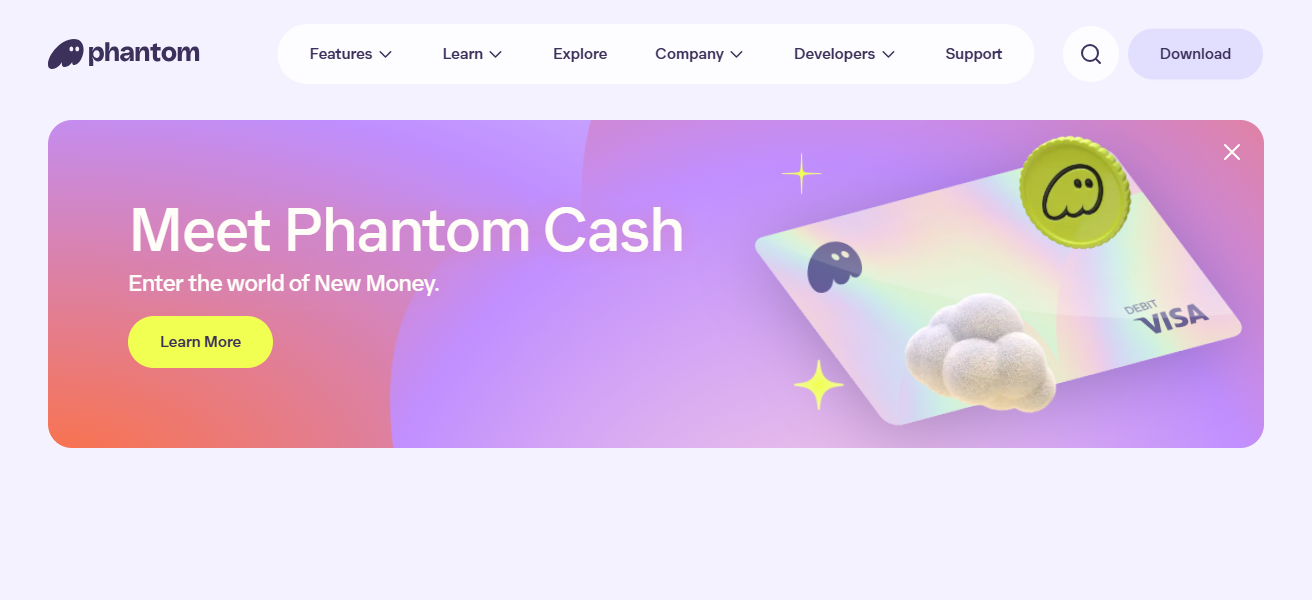
Users can also have peace of mind knowing their private keys are secured with local storage and optional passwords.
Phantom is a wallet that is fast, secure, and easy for customers to use, making it ideal for SaaS platforms on Solana, especially those in gaming, NFTs, and DeFi, to increase customer satisfaction and retention.
Phantom Features
- Focused on the Solana Ecosystem: Built for the Solana fast and economical network.
- Token and NFT Management: Manage collections of Solana tokens and NFTs.
- Ready for Staking: Users can stake SOL in the app.
- WalletConnect & Extensions: Links with Web3 SaaS services through browser extension and mobile.
| Pros | Cons |
|---|---|
| – Leading wallet for Solana blockchain with fast transaction speeds. | – Limited to Solana ecosystem; not multi-chain. |
| – Low fees and high-performance blockchain interactions. | – Mobile and browser extensions only; no desktop app. |
| – Supports staking, NFTs, and dApp integration. | – Advanced DeFi analytics are minimal. |
| – User-friendly and visually intuitive interface. | – Not ideal for SaaS platforms requiring Ethereum compatibility. |
8. Gnosis Safe
Gnosis Safe is a multi-signature wallet for organizations and advanced Web3 applications. This is excellent for SaaS applications that need to deal with pooled funds or treasury management.
Users can also set transactions to require a given number of approvals, lowering overall risk. It also supports Ethereum and EVM-compatible chains and works with dApps for Defi, NFT, and DAO tools.
SaaS applications can use Gnosis Safe to manage funds, billing, and coordination of decentralized projects. Its defining feature is security, as private keys stay on users’ devices and can integrate with hardware wallets.
With Gnosis Safe, SaaS applications that require collaborative financial processes can have enterprise-grade security and the flexibility that Web3 provides.
Gnosis Safe Features
- Multi-Signature Security: Obtains several approvals for high-value or multi-user transactions.
- Treasury & Team Tool: Excellent for SaaS firms dealing with pod monies or shared accounts.
- dApp Compatibility: Works with Web3 tools while keeping approval flows.
- Hardware Wallet Support: Extra protection via external signing devices.
| Pros | Cons |
|---|---|
| – Multi-signature wallet for enhanced security. | – Complex setup, not beginner-friendly. |
| – Ideal for organizations, treasuries, and collaborative platforms. | – Primarily Ethereum/EVM-focused; limited cross-chain support. |
| – Integrates with dApps for DeFi and NFT management. | – Less suitable for individual casual users. |
| – Supports hardware wallet integration. | – Transactions require multiple approvals, which can slow workflows. |
9. MyEtherWallet (MEW)
MyEtherWallet (MEW) is among the first and longest-standing Ethereum wallet providers with a reputation for quality service.
The wallet gives users the autonomy to manage and control their keys and core crypto assets. Web3 SaaS services have the liberty to transact and interact with smart contracts via MEW’s integration with hardware wallets.
MEW’s support for Ethereum and ERC-20 tokens means that SaaS applications can support payment tokens, DeFi services, and/or manage NFTs.
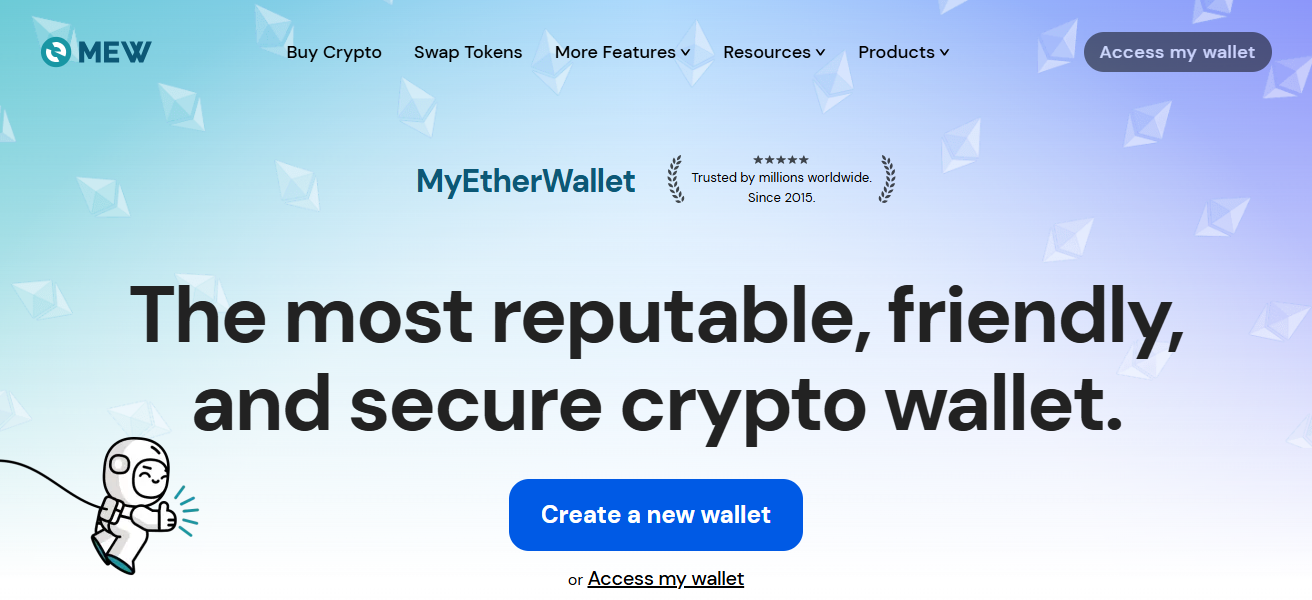
The wallet’s user interface applications, both on the Web and on the mobile, are easy to navigate, with swap tools and connectors to dApps.
MEW’s focus on transparency and security is proof of its main philosophy, which is to create a trustworthy service for SaaS applications without custodial services to control users’ access to the full web of Ethereum.
MyEtherWallet (MEW) Features
- Ethereum Native: Centers on ETH and ERC-20 tokens tailored for Ethereum clients.
- Smart Contract Interactions: Permits direct engagement with agreements, assets, and DeFi solutions.
- Hardware Wallet Compatibility: Functions with Ledger and Trezor for safekeeping.
- Swap & Bridge Tools: Integrated token swap and cross-chain bridge functionality.
| Pros | Cons |
|---|---|
| – One of the oldest, most trusted Ethereum wallets. | – Limited to Ethereum and ERC-20 tokens. |
| – Full control over private keys; non-custodial. | – Web interface can feel outdated. |
| – Hardware wallet compatibility for enhanced security. | – Less beginner-friendly; requires some blockchain knowledge. |
| – Supports smart contract interactions and token swaps. | – Minimal NFT management features compared to Rainbow or Phantom. |
10. Ledger Live + Ledger Nano
For Web3 SaaS platforms needing secure crypto management, Ledger Live and Ledger Nano wallets provide the best crypto management solution.
Web3 developers and Nano Live Wallet customers enjoy staking and seamless management of transactions, while Live Nano Wallet partners stick to the Web3 Wallet ecosystem.
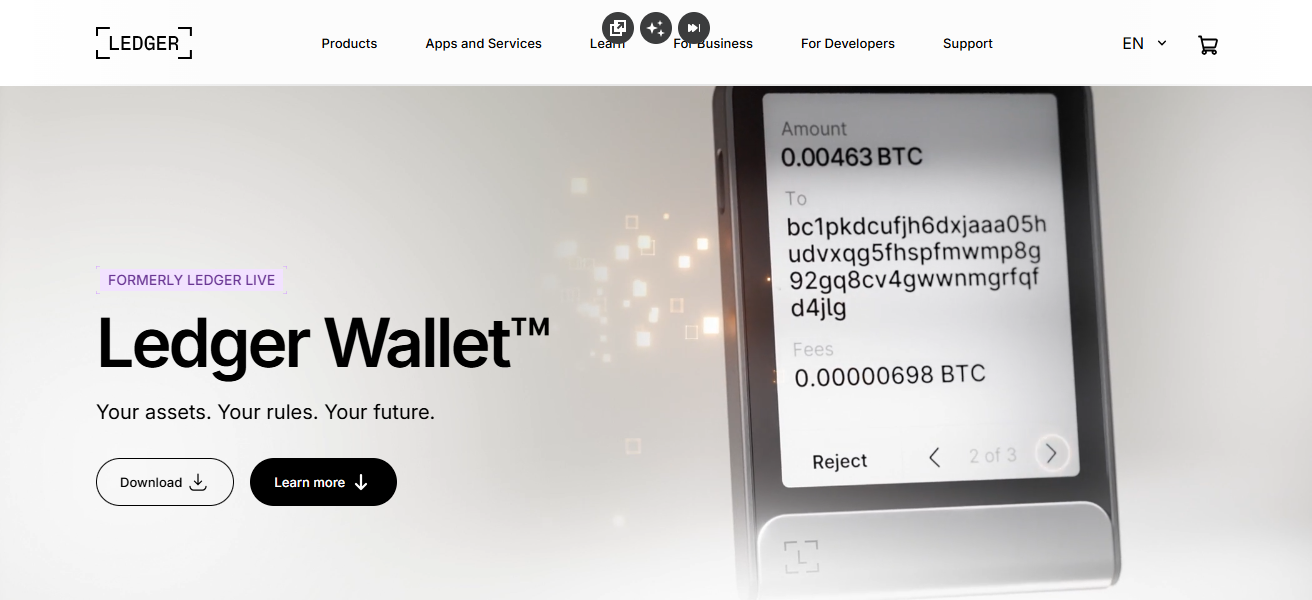
Ledger Live and Nano support multiple currencies and provide transactions for decentralized applications. Web3 platforms will benefit from the security and ease of use, as well as the protection of digital assets.
Ledger Live + Ledger Nano Features
- Hardware-level protection: Private keys stored securely inside the Ledger Nano device.
- Secure Element chip: Certified chip designed to resist physical and software attacks.
- PIN code & passphrase support: Extra layers of authentication for wallet access.
- Recovery phrase backup: Ensures funds can be restored if the device is lost.
| Pros | Cons |
|---|---|
| Hardware-level protection; private keys never leave the device | Not fully open-source, limiting transparency |
| Ledger Live app offers intuitive interface, portfolio tracking, and integrated trading | Initial setup can be complex for beginners |
| Supports 5,500+ cryptocurrencies and NFTs; connects to DeFi and Web3 dApps | Some niche tokens require third-party apps |
| Nano X has Bluetooth for mobile use with smartphones | Bluetooth adds a minor attack surface compared to wired-only devices |
How To Choose Best Crypto Wallets for Web3 SaaS Platforms
- Blockchain Compatibility: Check that the wallet supports the blockchain your SaaS platform is built on.
- Integration with dApps: Select wallets that easily support WalletConnect and/or have a built-in dApp browser.
- Non-Custodial Security: Choose wallets that allow users to have complete control of their private keys and assets.
- Support for Multiple Chains: Choose wallets that allow users to interact with several different blockchain networks.
- User Experience: A streamlined onboarding process accompanied by a simple interface will lead to better user adoption.
- NFT Compatibility: If necessary, the wallet should allow for the storing, displaying, and transferring of NFTs.
- Developer Support: Favor wallets that offer better, more complete SDKs, APIs, and documentation for seamless integration.
- Scalability: The wallet should be able to accommodate the addition of more users and an increase in transactions and process them seamlessly.
- Security Features: Support for hardware wallets, multisig, and encryption should be present.
- Cross-Platform Access: The wallet should be available on mobile devices, browsers, and desktops to allow for more users.
Cocnlsuion
In cocnlsuion Selecting crypto wallets for Web3 SaaS platforms should help with the security, scalability, and ease of use of decentralized applications.
MetaMask, Trust Wallet, and Coinbase Wallet support dApps and are widely used, while Rainbow and Phantom are better for NFT.
Zerion and Exodus offer better portfolio and asset management, and Gnosis Safe offers enterprise security for team treasuries. Overall, the right wallet depends on your platform’s blockchain, user experience, and security.
FAQ
A Web3 crypto wallet enables users to interact with decentralized apps and manage blockchain assets securely.
They enable authentication, transactions, asset storage, and seamless dApp connectivity.
MetaMask and MyEtherWallet are popular choices for Ethereum-based platforms.
Yes, they give users full control over private keys, improving security and trust.