In this article, I will review the best crypto wallets with security features such as transaction limits. These wallets avoid large transfers falling into the hands of unauthorized users or getting sent by mistake.
- Key Points & Best Crypto Wallets With Enforced Transaction Limits
- 10 Best Crypto Wallets With Enforced Transaction Limits
- 1. Ledger Nano X
- 2. Trezor Model T
- 3. Coinbase Wallet
- 4. MetaMask Institutional
- 5. SafePal S1
- 6. Trust Wallet
- 7. Exodus Wallet
- 8. Ellipal Titan
- 9. ZenGo Wallet
- 10. BitGo Wallet
- How We Choose Best Crypto Wallets with Enforced Transaction Limits
- Conclusion
- FAQ
They have spend limits, require approvals from multiple signatures, and/or ask for confirmation before each transaction.
Picking the right wallet is a must for safe and effective crypto management, regardless of whether you are a beginner or a pro.
Key Points & Best Crypto Wallets With Enforced Transaction Limits
| Wallet | Key Point |
|---|---|
| Ledger Nano X | Hardware wallet with customizable daily transaction caps |
| Trezor Model T | Advanced security with enforced spending limits |
| Coinbase Wallet | Integrated with exchange, supports withdrawal limits |
| MetaMask Institutional | Enterprise-grade controls including transaction thresholds |
| SafePal S1 | Mobile + hardware hybrid with enforced transfer restrictions |
| Trust Wallet | Supports customizable transaction ceilings for added safety |
| Exodus Wallet | User-friendly interface with optional transaction limits |
| Ellipal Titan | Air-gapped hardware wallet with enforced transaction rules |
| ZenGo Wallet | MPC technology with enforced daily transfer limits |
| BitGo Wallet | Institutional-grade wallet with policy-based transaction restrictions |
10 Best Crypto Wallets With Enforced Transaction Limits
1. Ledger Nano X
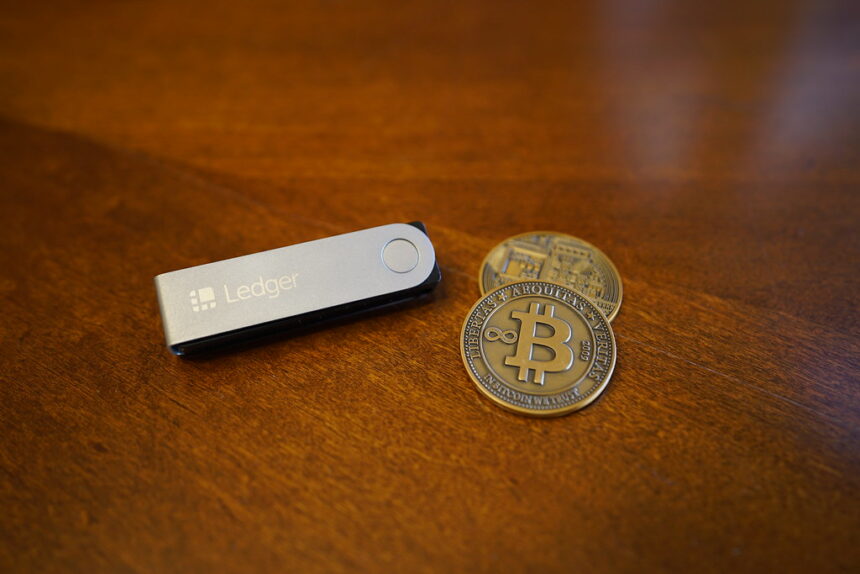
The Ledger Nano X is a high-end hardware wallet that offers top-notch security features as well as Bluetooth functionality. It keeps private keys offline in a secure element chip which protects against online hacking.
Through Ledger Live, users can implement transaction limits and approval policies, which means that large transfers can only go through with intentional approval.
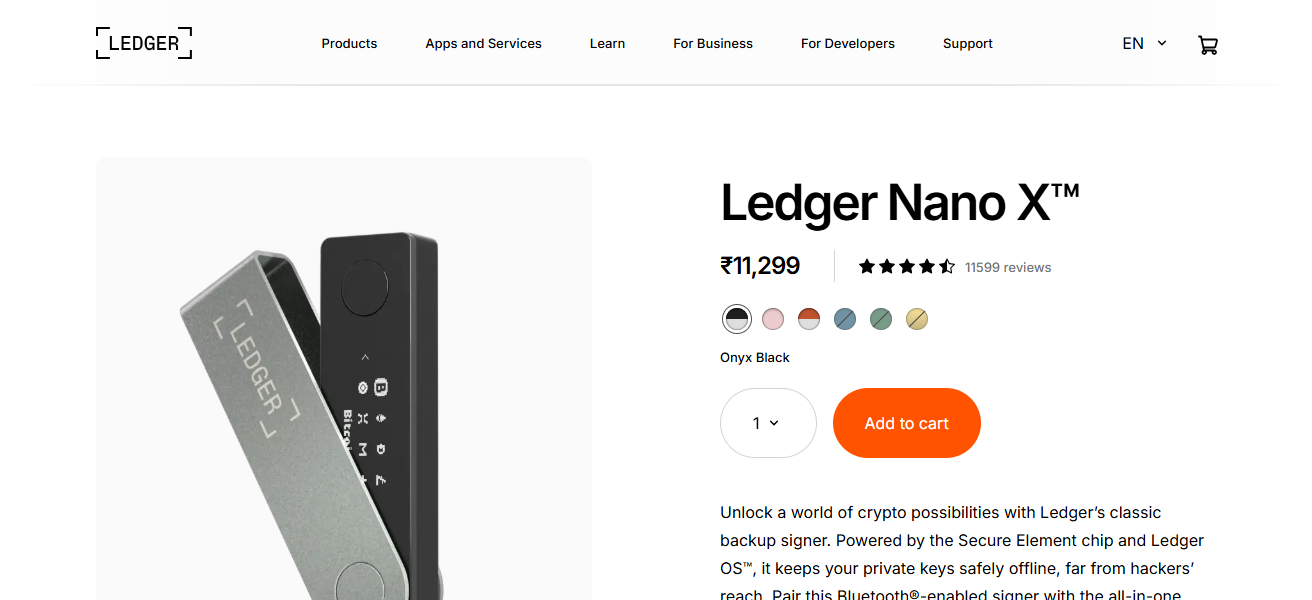
Ledger’s firmware also features an address manager where maximum send amounts can be set, an added feature for cautious traders or businesses.
With its multi-currency support and mobile functionality, the Nano X is perfect for beginners and advanced traders alike who require the flexibility to set transaction limits.
Ledger Nano X Features
- Secure Element Chip: Uses an isolated hardware chip to save private keys offline. This protects the keys from various online threats.
- Customizable Spend Limits: Users can set optional transaction constraints and can review the transaction before approving it through Ledger Live.
- Bluetooth Connectivity: Provides a way to connect to mobile devices without risking any of the security of the device.
- Multi‑Currency Support: Users can store hundreds of coins and tokens in the device. Users can also switch between different assets really easily.
| Pros | Cons |
|---|---|
| Secure element chip stores keys offline, reducing hack risk. | Bluetooth introduces a small attack surface vs. fully offline devices. |
| Transaction review and optional spend limits through Ledger Live. | Requires a companion app — extra step for simple transfers. |
| Supports hundreds of cryptocurrencies. | Firmware updates can be slow for new assets. |
| Mobile + desktop support adds flexibility. | Requires manual confirmation for every significant transfer — can slow workflow. |
2. Trezor Model T
The Trezor Model T sits at the top of the hardware wallet market. Making it secure yet easy to use. It’s protection of your private keys offline, and with an additional layer of protection with multiple confirmation steps to prevent unauthorized transactions, it really is the shining star of protecting sign ins.
It really does secure one of the more important features of a wallet, signing. Additionally, users can set transaction limits and review policies before confirming via the touchscreen
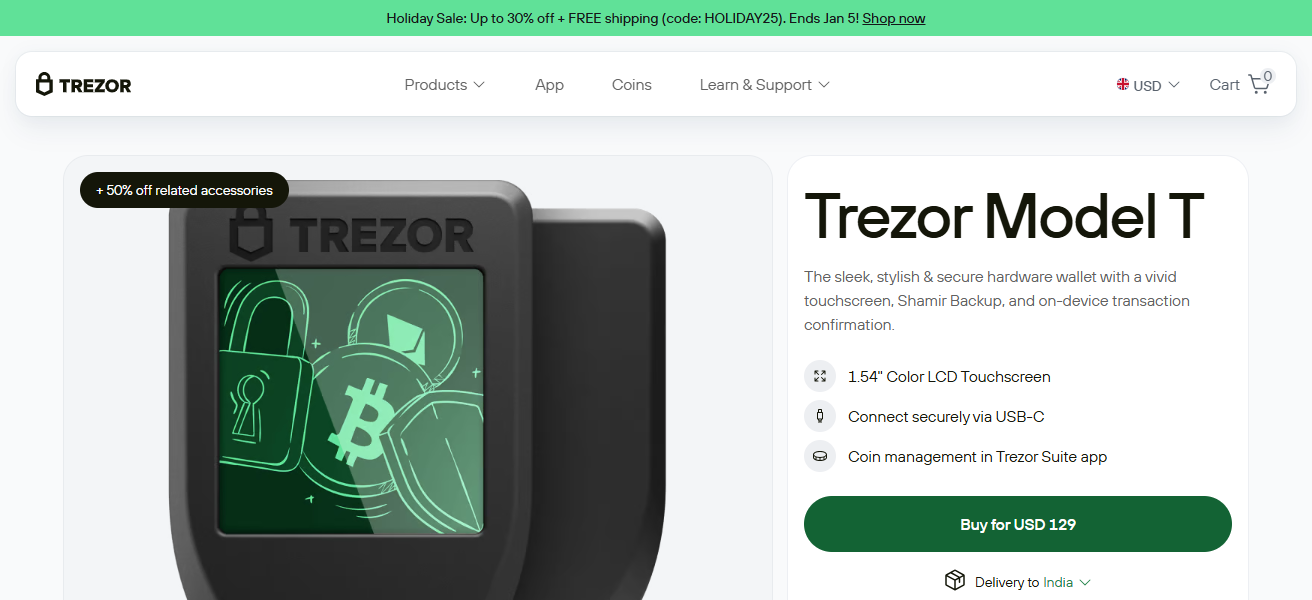
longer and more drawn out transactions can be avoided, it’s an additional layer of protection. The Model T is perfect and especially suited for security-conscious investors.
Trezor Model T Features
- Interactive Touchscreen: Touchscreen on the device that allows users to verify the transaction before approving it.
- Open‑Source Firmware: Available code encourages the community to audit it, helping improve trust in the security.
- Detailed Transaction Review: Breaks down the details of a transfer to help prevent sending large amounts of tokens accidentally.
| Pros | Cons |
|---|---|
| Large touchscreen means easier on‑device verification. | Not as compact or travel‑friendly as some wallets. |
| Open‑source firmware allows transparency and auditability. | No dedicated secure element chip like Ledger — slightly less resistant to physical attacks. |
| Detailed transaction preview helps enforce mindful limits. | Limited Bluetooth or mobile convenience. |
| Supports many tokens through third‑party integrations. | Touchscreen is less responsive than physical buttons for some users. |
3. Coinbase Wallet
Coinbase Wallet is a self-custody wallet that you can use on your phone and computer. You get to keep control of your private keys, and you can customize your security settings.
The wallet allows you to review transactions before they are finalized and allows you to set daily transfer limits. This makes sure that there are no high value or unwanted transfers.
Since Coinbase Wallet is integrated with other Coinbase services, it is easier to use than other options, and you can protect your wallet with a fingerprint. This is great for people that want a simple interface, but still want to customize their safety settings.
Coinbase Wallet Features
- Self‑Custody Keys: Users have complete control of the private keys with protected local storage.
- In App Confirmation Controls: Withdrawals of higher value and large amounts are prevented/controlled by multiple approval layers and transaction prompts.
- DeFi and Web3 Integration: Users can conveniently access dApps and smart contracts straight from the browser.
- Integrated Biometric and PIN Protection: Biometric options on mobile devices enhance security for initiating transactions.
| Pros | Cons |
|---|---|
| Integrated alerts and confirmation prompts improve transfer safety. | Not a hardware wallet — keys remain software‑based. |
| Good UX with optional customizable limits. | Reliant on device security (phone/browser). |
| Easy access to DeFi and Web3 apps. | No built‑in hardware signing for offline scenario. |
| Seamless with Coinbase ecosystem (optional). | Can feel centralized compared to pure self‑custody wallets. |
4. MetaMask Institutional
MetaMask Institutional is MetaMask’s upgraded version meant for business customers and institutional crypto professionals. MetaMask’s user experience is enhanced with additional security layers, such as spend limits, permissions, and multi-party approvals.
Companies can set limits on spending and mandate multiple approvals before any payments can go through. This lowers operational risk and meets regulatory standards.

MetaMask Institutional is built on the same wallet infrastructure as MetaMask and is compatible with Ethereum and EVM networks.
As powerful admin controls and integration with custody providers are available, Institutional is an excellent option for businesses that need strict governance over their transactions and access to DeFi.
MetaMask Institutional Features
- Enterprise Spend Controls: Admins can enforce strict limits on the value of transactions to mitigate organizational risk.
- Multi‑Party Approvals: Transfers over a certain value require sign-off from multiple designated authorities.
- Policy Enforcement Dashboard: A consolidation point for activity oversight, permission management, and policy enforcement.
- Extensive Network Compatibility: Available on Ethereum and other EVM-compatible networks.
| Pros | Cons |
|---|---|
| Enterprise‑grade controls: approved spend limits & workflows. | Can be complex to set up for individual users. |
| Multi‑party approval and policy enforcement. | Premium features targeted at institutions — not cheap. |
| Supports Ethereum & EVM chains widely used in DeFi. | Not ideal for users who want simple solo transactions. |
| Administrative dashboards for risk tracking. | Requires training for effective governance use. |
5. SafePal S1
The SafePal S1 is a budget option in the hardware wallet sector having a mobile app, and an air gapped wallet which means it will protect your private keys from internet exposure by signing transactions with a manual QR code.
While not openly advertised, the SafePal S1 has a transaction approval workflow, as users will have to verify all the details of a transaction which offers an additional security check.
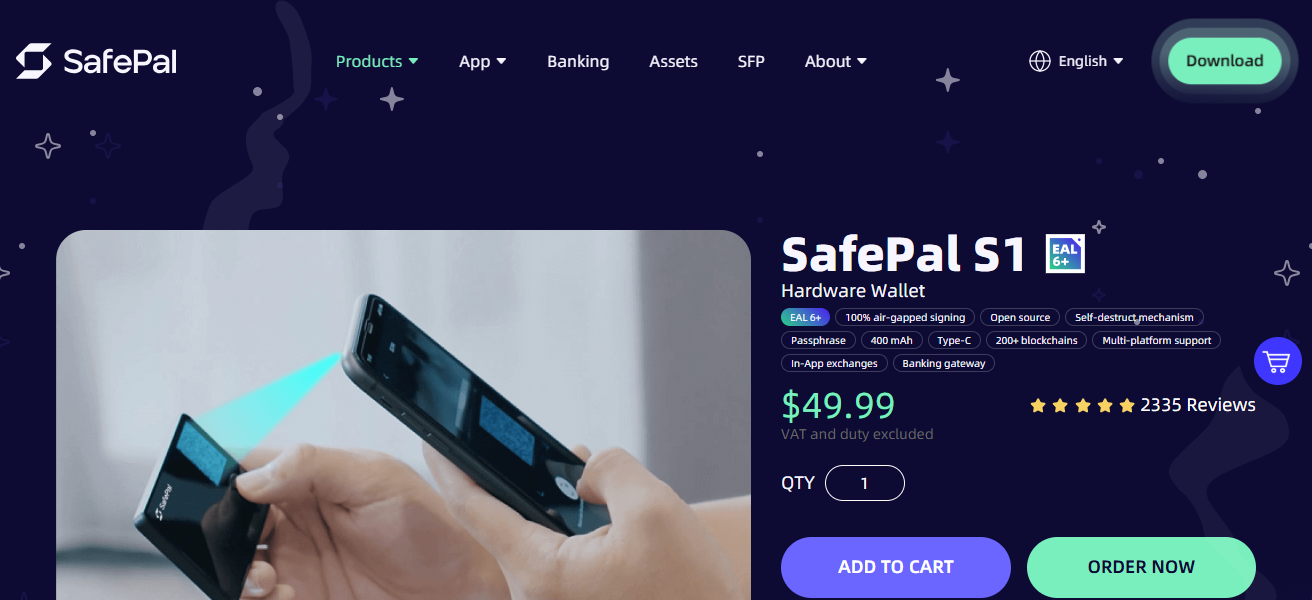
Users have control of the transactions, as the app allows review and restriction of transfers, which eliminates the risk of large transaction losing control. SafePal S1 is a good wallet option considering it’s price sensitive and offers a good level of transaction control.
SafePal S1 Features
- Air-Gapped Signing: Increased security via transaction signing occurring completely offline through a QR code.
- Visual Transaction Approval: Users review and confirm the transaction on their device.
- Wide Asset Support: A variety of coins and tokens are supported.
- Affordable Hardware Option: Secure budget-friendly options for users
| Pros | Cons |
|---|---|
| Air‑gapped USB/QR signing protects private keys offline. | No enforced numeric spend limits by default — relies on manual review. |
| Affordable hardware wallet option. | Heavily dependent on user diligence to avoid big saves. |
| Broad coin support. | No Bluetooth or wireless convenience. |
| Visual confirmations reduce accidental large sends. | Companion app UI occasionally laggy. |
6. Trust Wallet
Trust Wallet is simple and effective. The software is widely known for its ease of use and wide asset support. Trust Wallet is a self custody wallet which means users keep their private keys.
This wallet interacts with DApps. Users can set transaction limits as there are no hard limits to transactions. Users are warned with gas fee warnings and multiple stages of confirmation.
This acts as a sort of protection for the users. Users can also use other wallets that they can set transaction limits and alerts. Portfolio managers. The design is simple and makes it easy to access DeFi.
Trust Wallet Features
- Easy Transaction Approvals: Users confirm transaction details and values before signing.
- Integrated dApp browser: Users can interact with DeFi and Web3 applications.
- Support for Multiple Assets: Wallets numerous cryptocurrencies and token standards.
- Biometric Controls: Unlock the wallet with a biometric scan.
| Pros | Cons |
|---|---|
| Intuitive interface with clear transaction confirmations. | No built‑in hard numeric limits — dependent on user review. |
| Excellent DeFi integration and token support. | Security primarily depends on the mobile device itself. |
| Biometric unlock adds a subtle safety layer. | Doesn’t include enterprise‑grade spend controls. |
| Lightweight and beginner‑friendly. | Lacks advanced transaction governance tools. |
7. Exodus Wallet
Exodus is a crypto wallet that is available for mobile and desktop devices. The wallet’s design is simple and easy to use.
It works with many different cryptocurrencies and has a built-in exchange. Users can set customized features like security settings and optional reminders to confirm sends which help users to double-check transactions before signing.
While Exodus doesn’t have traditional transfer safeguards, these customizable reminders help mitigate the risks of large and unintentional transfer accidents.
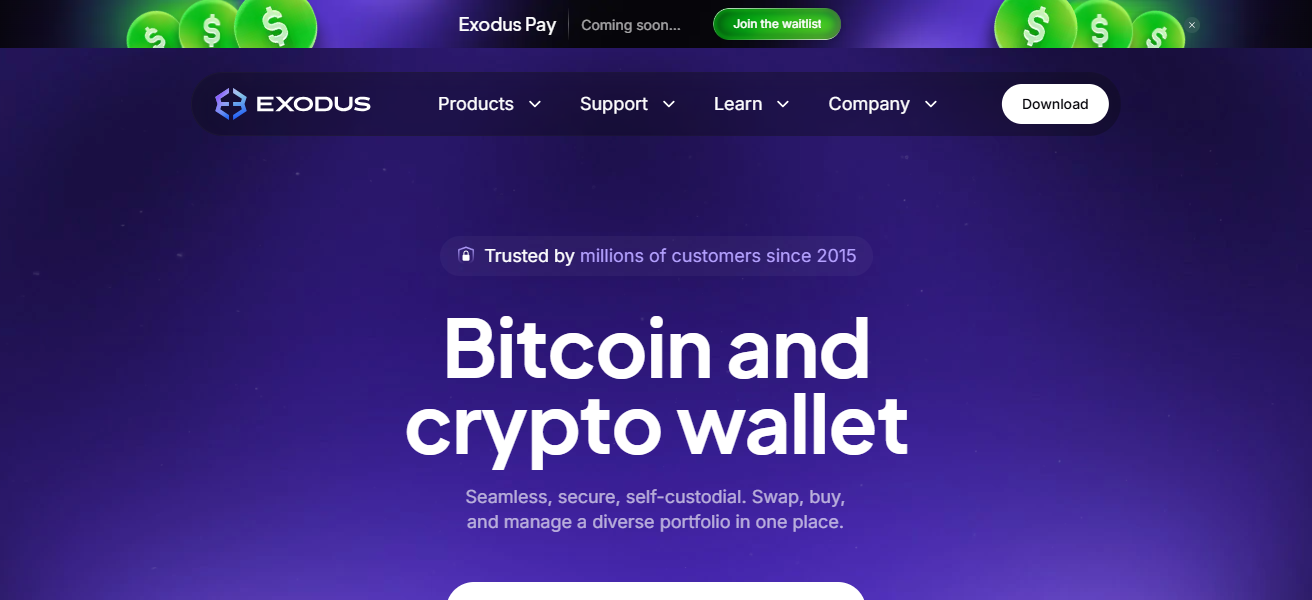
Exodus has strong encryption, frequent updates, and a simple design. It fits the description of a crypto wallet that is easy to use and safe to guide users to make correct transactions.
The wallet also has the ability to integrate with other hardware wallets like Trezor for users who want more security.
Exodus Wallet Features
- Easy to Use Interface: A simple layout makes it easy to manage and review transactions before sending.
- Custom Fee Controls: Users can select preferred fee options to manage the speed and security of a transaction.
- Trezor Hardware Integration: Users can pair wallets with Trezor devices to remove the keys to wallets from the online environment.
- Built-In Portfolio Overview: Users can see their digital asset portfolio and its history.
| Pros | Cons |
|---|---|
| User prompts and reminders encourage thoughtful review. | Limited native enforcement of hard limits. |
| Elegant UI — great for portfolio overview. | Software custody only — keys not offline. |
| Can connect to Trezor for hardware protection. | Third‑party connect required for full offline security. |
| Wide coin support with built‑in exchange. | Not focused on strict business‑style controls. |
8. Ellipal Titan
The Ellipal Titan is air-gapped hardware wallet where the body of the wallet is entirely made of metal, has no network connections, and thus no online attack vectors.
To complete transactions, users must scan a QR code between their wallet and the companion app. Every part of the transaction must be verified on the wallet’s screen, making the process of signing transactions quite tedious.
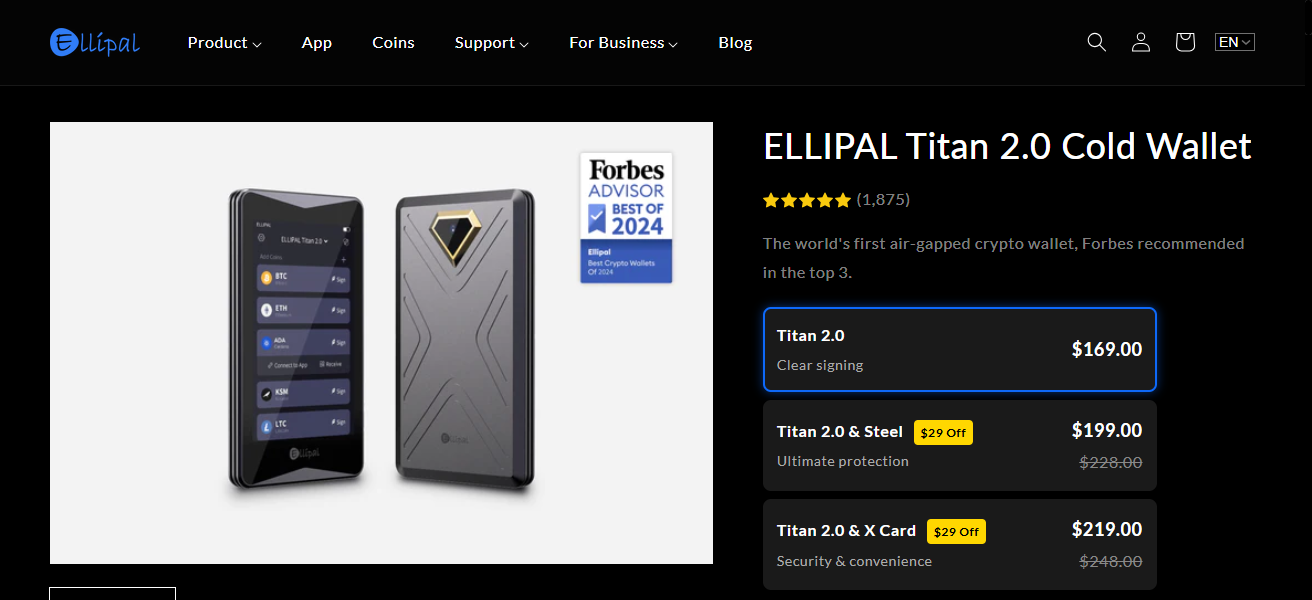
The Titan, through sending and whitelisting addresses, allows users to exert more control over the funds. The Titan’s broad coin support and rugged design makes this ideal for long-term holders and high-net-worth individuals.
It also provides peace of mind to users with intentional transaction controls to prevent unauthorized or large transfers.
Ellipal Titan Features
- Full Air-Gapped Security: Titan does not use any wires or networks and relies on QR-based signing to allow users to stay safe from digital attacks.
- Large On-Device Display: Users can see and verify all transaction details.
- Whitelisting Support: Users can whitelist addresses to which they wish to send and block all other addresses.
- Rugged Build: Designed to be tamper resistant and to withstand some rough handling.
| Pros | Cons |
|---|---|
| Fully air‑gapped (no connectivity) — robust against network attacks. | No Bluetooth/wireless convenience at all. |
| Large on‑device review screen for transactions. | Bulkier than small hardware wallets. |
| Manual QR signing enforces deliberate review. | No easy mobile integration without companion app steps. |
| Rugged, tamper‑resistant build. | Hard limits require manual setup processes. |
9. ZenGo Wallet
ZenGo Wallet provides multi-party computation (MPC)-based self-custody without keys, as opposed to private keys.
Signatures are split among different nodes, enhancing security, as opposed to a single signer. Users can use the safety features of the app to avoid making large accidental transactions.
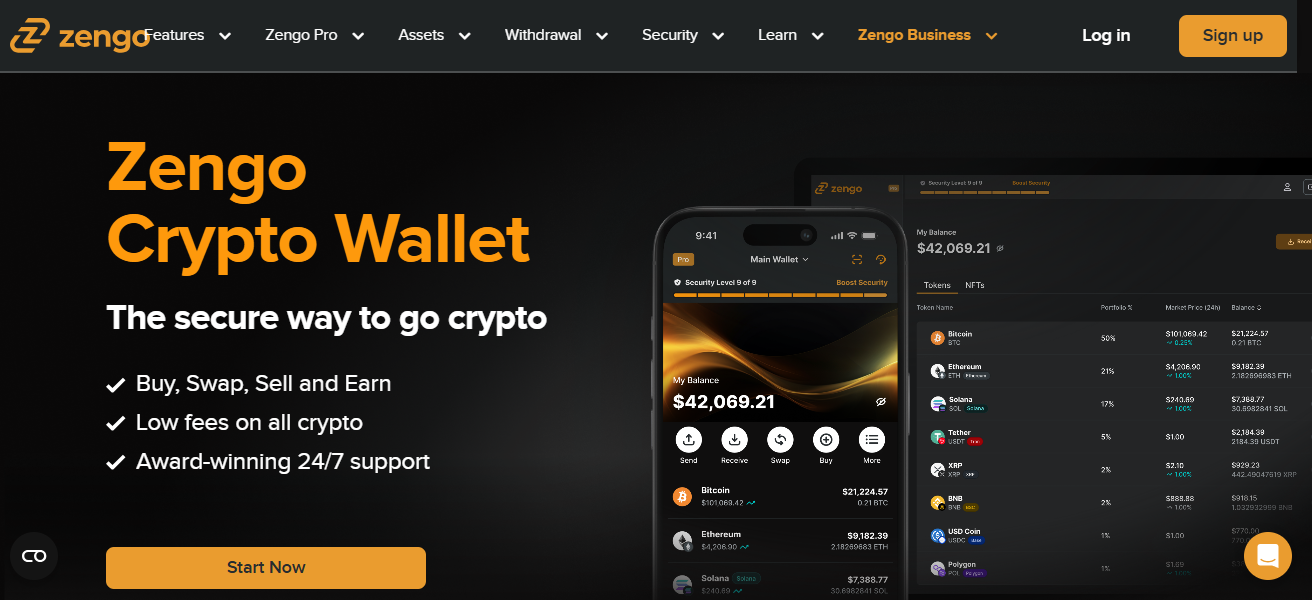
Users can set security features such as transaction limits, a weekly sending cap, and recovery constraints. ZenGo provides a user-friendly interface, along with a DeFi access built right into the app.
Spending limits and biometric security are features that add to ZenGo’s user-friendly transactional safety features. It is built for people who want to use the cryptography features without needing to manage keys.
ZenGo Wallet Features
- MPC Keyless System: Instead of using the traditional model of private keys, ZenGo puts together a private key using multiple parties, allowing ZenGo to eliminate multiple single points of failure.
- Configurable Spending Thresholds: Users can customize soft limits and set prompts.
- Biometric Login: Users can access the app using facial recognition or fingerprint scanning.
- Built-In Alerts: Users receive notifications and see transaction previews to protect against loss.
| Pros | Cons |
|---|---|
| MPC keyless design spreads risk, reducing single‑point failure. | Not as “cold” as hardware wallets — still online. |
| Configurable spend thresholds. | Some advanced controls feel less transparent to users. |
| Biometric security + recovery protections. | Limited advanced enterprise features vs. BitGo or MetaMask Institutional. |
| Simple UX and real‑time safety checks. | Trade‑off between security and convenience. |
10. BitGo Wallet
BitGo Wallet is a wallet and custody service designed for enterprises that especially caters to financial institutions and businesses.
They provide a variety of customizable options, like dual approval workflows and multi-sig wallets, for businesses to control outflow of spendable funds.
Administrators have the option to customize spend controls, which can include daily limits, secondary approvals for larger transfers, and compliance integrations.
For asset custody, compliance, and liquidity, coupled with control, service APIs, and institutional-grade enterprise treasury, crypto wallet, and hedge fund services, BitGo is the leading service for corporate service wallet providers that need stringent transaction controls.
BitGo Wallet Features
- Enterprise Multisig Security: Each transaction requires multiple different signatures to be executed.
- Configurable Daily Limits: By default, send limits can be implemented from an admin account on a particular set of accounts.
- Role-Based Permissions: Users can define how much of the wallet they control and what part each user can access.
- API and Custody Services: Integrated workflow tools for institutions and optional custody with insurance from a third party.
| Pros | Cons |
|---|---|
| Enterprise‑grade multisig and approval policies. | Designed for institutions — not intuitive for casual users. |
| Configurable daily spend limits and roles. | Higher cost than consumer wallets. |
| Custody services with optional insurance. | Setup and management require technical expertise. |
| API integration for corporate workflows. | Overkill for small self‑custody portfolios. |
How We Choose Best Crypto Wallets with Enforced Transaction Limits
- Security: Safeguard with cold signing keys, hardware, and multisig so others cannot access them.
- Transaction Limits: Use wallets that have daily limits, spending caps, or approvals from multiple parties.
- User Interface: User friendly wallets that show confirmations help you avoid costly mistakes.
- Asset Support: Make sure the wallet supports the coins and token standards you need.
- Backup & Recovery: Check for the ability to restore assets via recovery phrases and MPC.
- Integration: Use wallets that allow access to DeFi, DApps, and other apps with no loss of privacy.
- Cost & Accessibility: Measure convenience and cost of hardware and software wallets with the purpose you need.
- Reputation & Community: Use wallets with a reputation, a community, and done audits.
Conclusion
In closing, selecting the top crypto wallets with set transaction limits protects your digital assets. Wallets with spend cap features, multi-signature approvals, and transaction confirmations give peace of mind and reduce risk.
For Beginners and Institutions, wallets like these provide the security, control, and convenience that responsible crypto management requires.
FAQ
Rules or caps that restrict how much crypto can be sent in a period or per transaction.
They reduce risk of unauthorized large transfers and strengthen operational security.
Institutional or advanced wallets like MetaMask Institutional, BitGo, and some hardware wallets via app settings.
Not always — many provide confirmation controls; some allow optional spend thresholds via companion apps.