This article will go over the Best Crypto Wallets With On-Chain Risk Controls to assist users with the protection of their digital assets while engaging with blockchains.
- Key Points & Best Crypto Wallets With On-Chain Risk Controls
- 10 Best Crypto Wallets With On-Chain Risk Controls
- 1. MetaMask
- 2. Ledger Nano X
- 3. Trezor Model T
- 4. Exodus
- 5. Phantom
- 6. Tangem
- 7. Trust Wallet
- 8. SafePal S1
- 9. Coinbase Wallet
- 10. Zengo
- How To Choose Best Crypto Wallets With On-Chain Risk Controls
- Cocnsluion
- FAQ
Wallets with sophisticated protection features are needed because smart contract exploits and phishing attacks are on the rise.
These wallets provide enhanced transaction transparency, management control, and risk alerts, making crypto management safer for beginners and more experienced users.
Key Points & Best Crypto Wallets With On-Chain Risk Controls
| Wallet | Key Point |
|---|---|
| MetaMask | DeFi integration with customizable risk alerts |
| Ledger Nano X | Hardware-level security with transaction verification |
| Trezor Model T | Open-source firmware and phishing-resistant confirmations |
| Exodus | Built-in portfolio monitoring and multi-chain support |
| Phantom | Solana-focused wallet with scam detection tools |
| Tangem | Card-based cold storage with risk-free offline signing |
| Trust Wallet | Multi-chain access with dApp safety filters |
| SafePal S1 | QR-code transaction signing to avoid malware risks |
| Coinbase Wallet | Institutional-grade custody with fraud monitoring |
| Zengo | MPC cryptography eliminating single points of failure |
10 Best Crypto Wallets With On-Chain Risk Controls
1. MetaMask
MetaMask is one of the most popular non-custodial Web3 wallets and can be used to interact with the Ethereum blockchain and other blockchain networks with EVM compatibility.
A user’s private keys are stored locally on the user’s device and are encrypted with a password, so the user has self-custody of their assets.

MetaMask has dApps and DeFi integrations. Additionally, MetaMask is compatible with hardware wallets, such as Ledger and Trezor, for added security.
While using MetaMask, the built-in phishing detection, safe transaction, and contract signing prompts lower the user’s on-chain risks and help avoid the signing of malicious contracts.
MetaMask – Key Features
- The wallet is non-custodial, meaning users have full control over and can keep their local private keys.
- Users can view and control access to the contract with the help of sophisticated approval permission requests.
- Users of dApps can take advantage of built-in phishing and harmful site detection.
- The wallet can be integrated with hardware wallets, which lowers the dangers of on-chain signing.
| Pros | Cons |
|---|---|
| Widely used for Ethereum and EVM chains | Browser hot wallet exposed to malware risks |
| Strong dApp and DeFi compatibility | Users can still approve malicious contracts |
| Supports hardware wallets for extra security | No built-in transaction simulation by default |
| Phishing warnings and permission prompts | Requires good user knowledge for safe use |
2. Ledger Nano X
The Ledger Nano X is pretty much the best hardware wallet on the market. It holds private keys in a Secure Element, a certified chip built to protect sensitive information from cyber attacks, that is offline.
Any malicious person trying to compromise your keys won’t be able to be sign any transactions remotely, since they do to approve transactions by clicking buttons on the device.
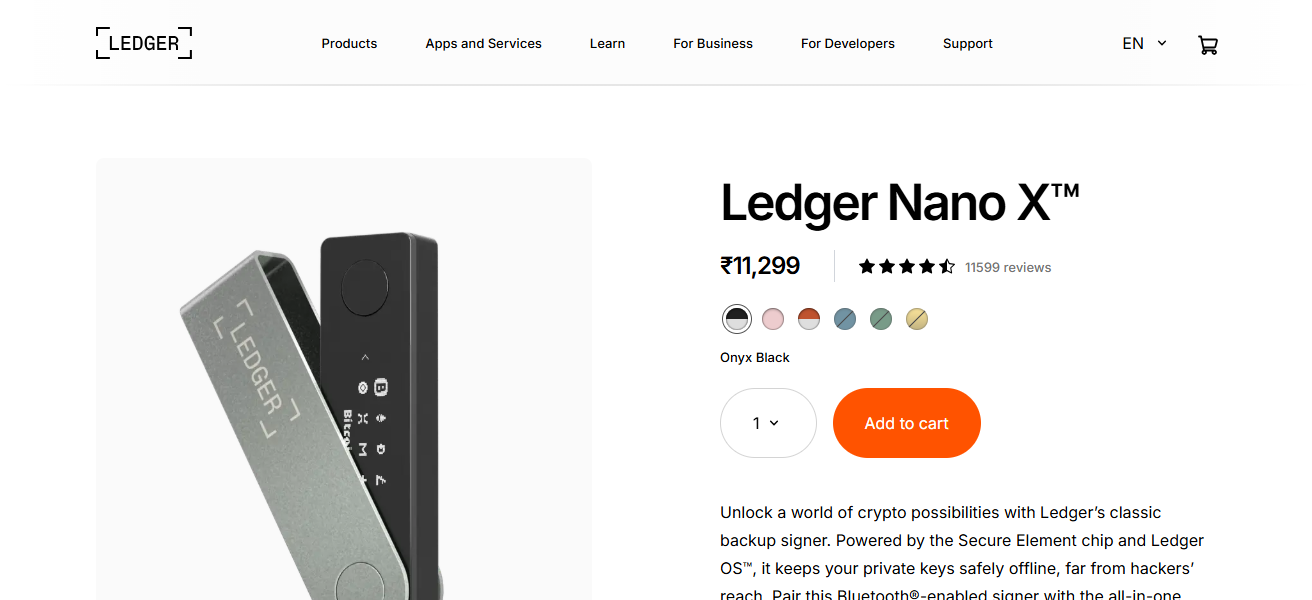
It pairs with mobile devices and the Ledger Live app to manage your wallet on the go and works with thousands of tokens from different chains.
Because it does all of the signing of the keys in an offline environment, it eliminates the risk of any on chain hacks while using your wallet.
Ledger Nano X – Key Features
- Private keys are stored offline within the secure element chip.
- Remote attack approvals are not possible due to the physical transaction confirmations.
- Users are able to store and manage assets across numerous blockchains for thousands of coins and tokens.
- The wallet offers secure mobile control of assets thanks to Bluetooth.
| Pros | Cons |
|---|---|
| Private keys stored fully offline | Paid hardware device |
| Physical confirmation for every transaction | Bluetooth feature may worry conservative users |
| Supports thousands of cryptocurrencies | Small screen for complex transactions |
| Strong protection against on-chain exploits | Requires companion app for management |
3. Trezor Model T
Trezor Model T is a high-end hardware wallet with best in class offline protections for your digital assets. It has a fully open-source firmware and the user verification via touchscreen before any on-device transactions can be approved.
This feature locks out remote malicious commands. It has support for more than a thousand cryptocurrencies, and protects users from malware and phishing on the connected devices.
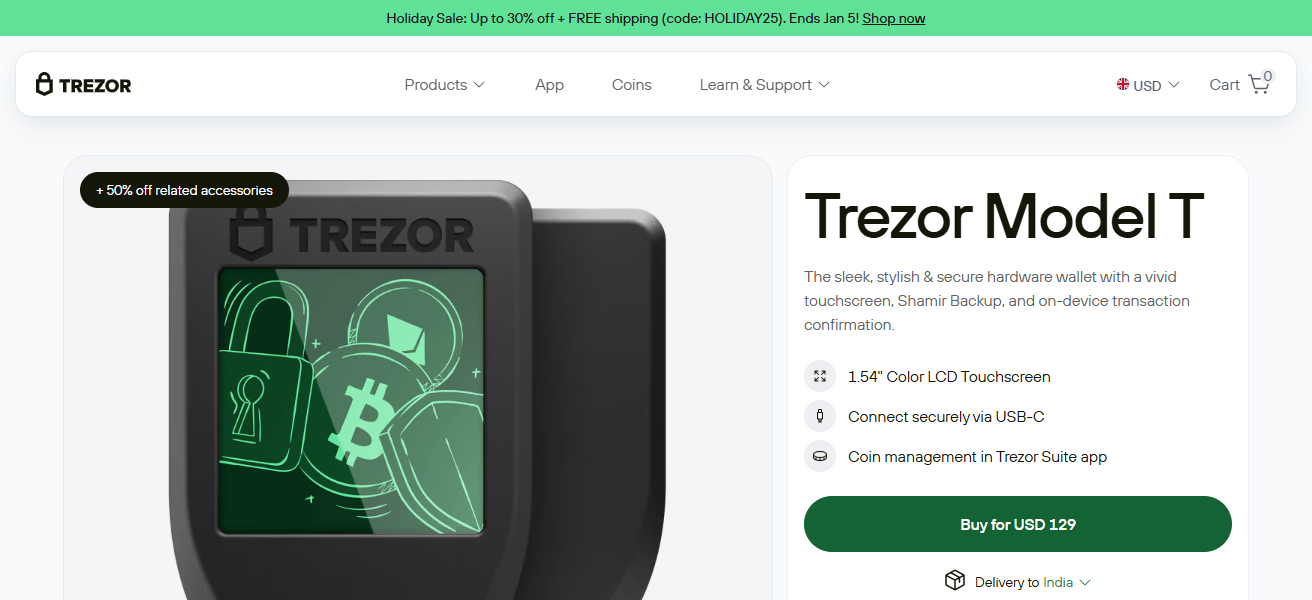
It allows for high levels of user discretion with its transparency and adjustable security features, which is especially valued by wary self-custody investors.
Trezor Model T – Key Features
- Users can customize their wallets, meaning they can choose their own wallet settings.
- Users can sign transactions digitally, which adds a layer of security.
- Users can sign transactions and take their wallets offline to protect against cyber attacks.
- Adding more protection to the wallet is permitting users to customize their wallets.
| Pros | Cons |
|---|---|
| Open-source firmware for transparency | Higher price compared to basic wallets |
| Touchscreen reduces blind signing risk | Plastic body less tamper-resistant than metal |
| Offline key storage | No native mobile app |
| Excellent for long-term cold storage | Limited built-in DeFi tools |
4. Exodus
Exodus is designed to be a simple software wallet to use on mobile and desktop. It allows users to swap, stake, and track portfolios with hundreds of crypto assets, all in one wallet.
While Exodus is a hot wallet (connected to the internet), it can integrate with Trezor’s hardware wallet, which provides better security by keeping private keys offline.
The combination of Trezor and Exodus gives users the ability to manage a large variety of tokens in a simple and secure manner.
Exodus – Key Features
- Users can customize their wallets, meaning they can choose their own wallet settings.
- Users can sign transactions digitally, which adds a layer of security.
- Users can sign transactions and take their wallets offline to protect against cyber attacks.
- Adding more protection to the wallet is permitting users to customize their wallets.
| Pros | Cons |
|---|---|
| Very beginner-friendly interface | Hot wallet connected to the internet |
| Built-in swaps and portfolio tracking | Closed-source software |
| Hardware wallet integration available | Limited advanced on-chain risk alerts |
| Supports many assets | Not ideal for high-risk DeFi activity |
5. Phantom
Phantom started as Solana’s main wallet but has now developed into a smooth multi-chain wallet supporting Ethereum, Polygon, Base, etc. Phantom has a simple and clean user interface which includes built-in swaps and staking.
Phantom also has a good, real-time scam detector that flags questionable transactions or contracts before the user signs.
For additional key-security, Phantom integrates with Ledger hardware wallets. Because of Phantom’s on-chain risk filters and alerts, it is especially popular among DeFi users and NFT collectors.
Phantom – Key Features
- Instant alerts for scam detection on suspicious transactions.
- Transaction previews help clear risks before approving.
- Strong support for DeFi and NFTs, especially Solana.
- Protection of keys is enhanced with hardware wallet support.
| Pros | Cons |
|---|---|
| Excellent scam and NFT risk detection | Limited support beyond major chains |
| Clear transaction previews | Browser wallet still vulnerable to malware |
| Strong Solana ecosystem support | Less suitable for long-term cold storage |
| Hardware wallet compatibility | Advanced features mainly Solana-focused |
6. Tangem
Tangem is one of the first technologically advanced hardware wallets, which keeps it’s users private keys offline, embedded in a secure chip.
It’s wallets come in unique, credit card like, battery-less designs and users only need to tap their card with a smartphone to sign transactions via the Tangem app.
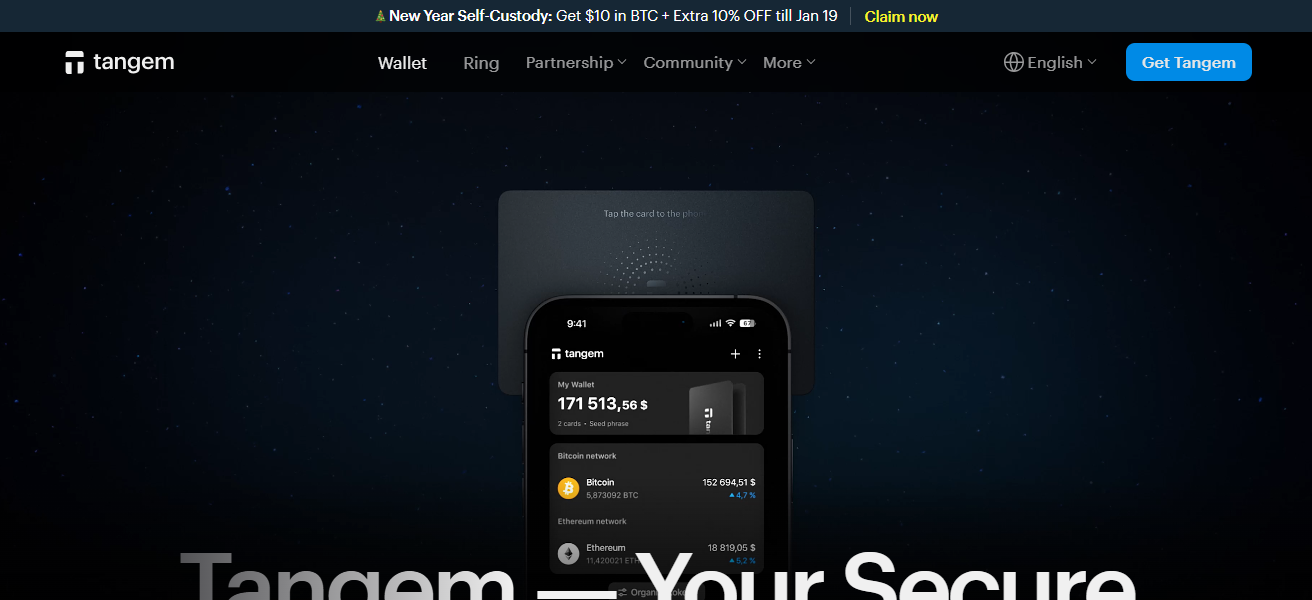
The wallet stores thousands of assets across numerous blockchains and have additional cards as backups, with physically redundant cards
So users don’t have to worry about seed phrases. The wallets offline key storage, also reduces the risks of online threats.
Tangem – Key Features
- Secure chip is stored offline with NFC-based hardware wallet.
- No seed phrase design reduces theft risk and user error.
- Transactions are sign via tap to keep keys off the internet.
- An extra card in the multi-card system guarantees asset recovery.
| Pros | Cons |
|---|---|
| No seed phrase reduces human error | Requires physical card access |
| Keys stored in secure chip offline | Limited DeFi interaction options |
| Simple tap-to-sign transactions | Less control for advanced users |
| Strong protection against online attacks | Dependent on mobile device NFC |
7. Trust Wallet
Trust Wallet is a well-known mobile wallet that is non-custodial and supports over 100 blockchains and millions of tokens.
Your private keys are encrypted and stored on your device which are also protected by a biometric login and a PIN.
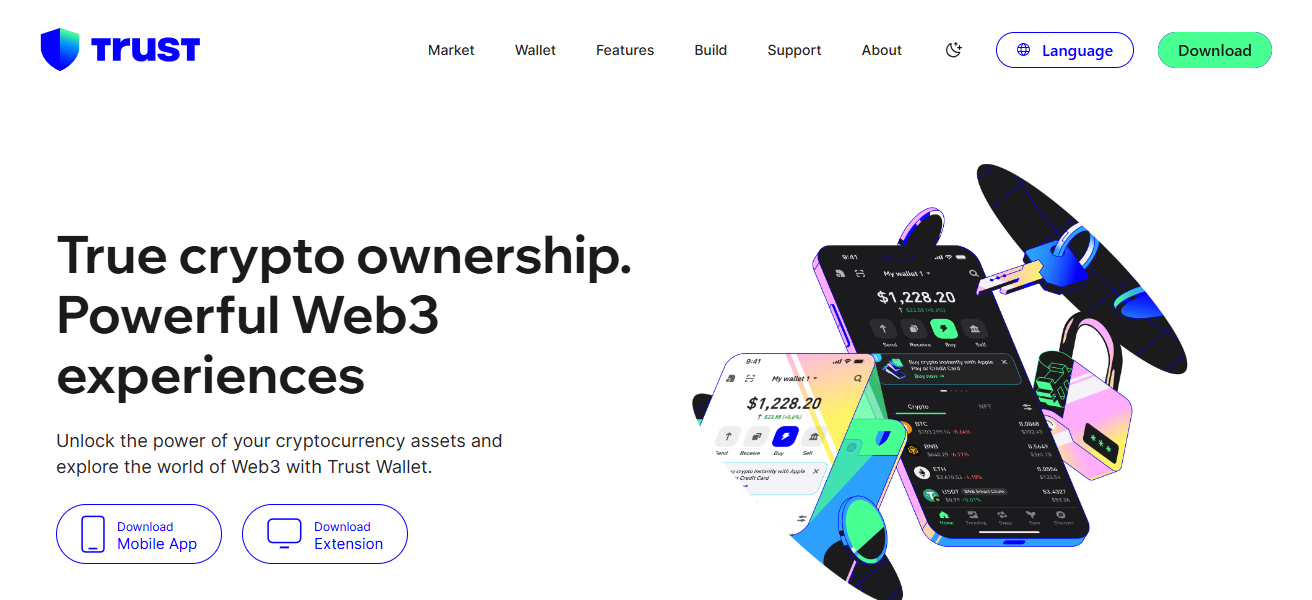
Trust Wallet also provides DeFi access, staking, and NFT services, and it provides integration for WalletConnect to interact with dApps.
While it is technically a hot wallet, Trust Wallet is reinforced by local encryption and login controls to help prevent unauthorized access and make on-chain operations safer for users.
Trust Wallet – Key Features
- Millions of tokens are supported on hundreds of blockchains.
- Keys are stored locally and encrypted. Protect with a pin and biometrics.
- dApps can be used safely with the Web3 browser.
- NFTs and staking can be managed in one mobile app.
| Pros | Cons |
|---|---|
| Supports a very large number of blockchains | Hot wallet risk remains |
| Biometric and PIN protection | No native hardware wallet integration |
| Easy access to DeFi and NFTs | Limited transaction risk simulation |
| Good for everyday mobile use | User mistakes can still cause losses |
8. SafePal S1
SafePal S1 is a budget-friendly hardware wallet featuring air-gapped security, signing transactions via QR codes without USB or Bluetooth connections.
It has a secure element chip and a tamper-resistant build, ensuring private keys never touch internet-connected devices.
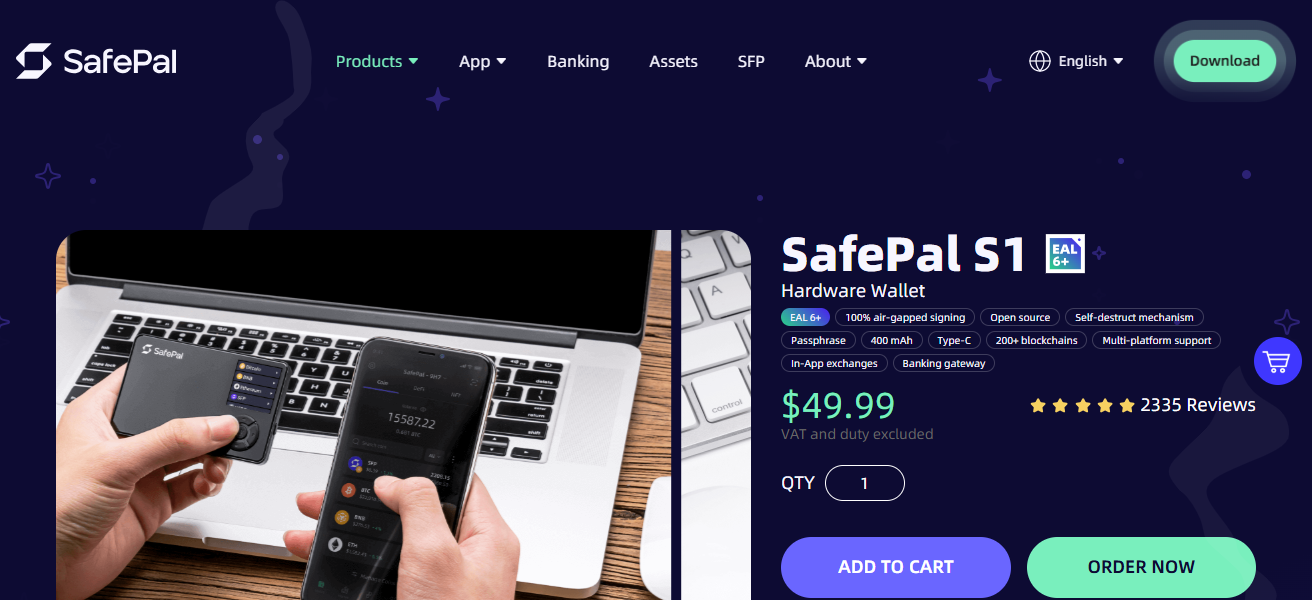
Through its mobile app, users can manage assets across blockchains with strong offline signing processes.
This air-gapped design protects against malware and network attacks, making it a strong choice for secure on-chain asset management.
SafePal S1 – Key Features
- Sign via QR-code on a completely air-gapped hardware wallet.
- Secure element chip protects against extractions of the keys.
- No Bluetooth, USB, or Wi-Fi lowers the attack surface.
- Safe swaps and portfolio tracking is offered via the mobile app.
| Pros | Cons |
|---|---|
| Fully air-gapped via QR code signing | Small screen limits readability |
| No USB or Bluetooth connection | Slower transaction process |
| Secure element chip protection | Plastic build |
| Affordable hardware wallet | App required for full functionality |
9. Coinbase Wallet
Coinbase Wallet is self-custodial and separate from the coinbase wallet. Users can fully manage private keys that are stored locally. The wallet is able to manage 100+ assets and NFTs, plus Web3 dAPPS.
With the coinbase wallet being a hot-wallet, the extra features from the coinbase ecosystem make portfolio management simple.
Users low to locally stored keys and the simple UX which reduces coin management risks. An extra layer of coin management safety can be achieved with the use of pairing hardware wallets or using offline backups.
Coinbase Wallet – Key Features
- Private keys are stored locally in a self-custodial wallet.
- Access to Web3 and NFTs is easy via a simple interface.
- dApps can be used safely with the support of WalletConnect.
- Supports multiple chains for different crypto portfolios.
| Pros | Cons |
|---|---|
| Simple onboarding for beginners | Hot wallet exposure |
| Local key storage with user control | Limited advanced risk controls |
| Supports NFTs and Web3 apps | Can encourage unsafe dApp interactions |
| Works well with popular blockchains | Best security requires extra precautions |
10. Zengo
Zengo’s latest mobile wallet splitting key material across independent parties using secure biometric access and encrypted backups.
No longer do users have to deal with traditional private keys and seed phrases. Zengo’s model using Multi-Party Computation (MPC) technology along with three-factor authentication and optional Web3 firewall features
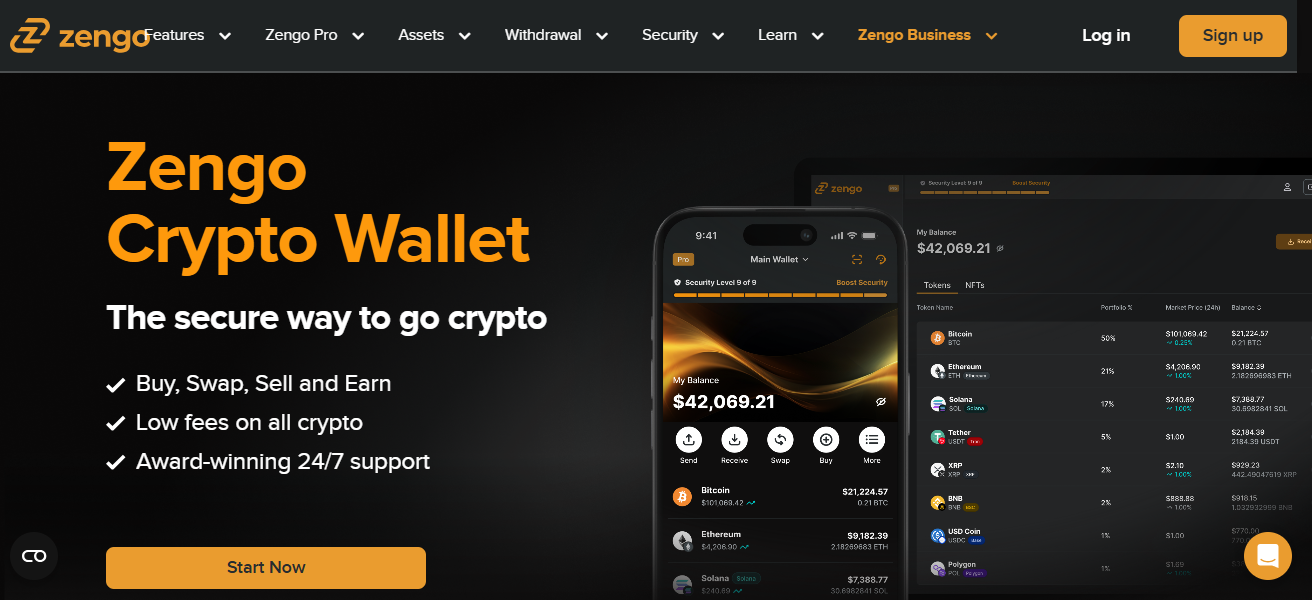
Significantly lowers the chances of key theft or phishing. Without the hassle of raw private keys, wallet users can experience top security and simplicity across multiple chains and hundreds of assets.
ZenGo – Key Features
- Multi-Party Computation cancels conventional private keys.
- Biometric security adds another layer on the account level.
- Web3 firewall that is integrated blocks dangerous contract deals.
- Cloud-Encryption eliminates the risks of seed phrases.
| Pros | Cons |
|---|---|
| No seed phrase eliminates major risk | Relies heavily on mobile device security |
| MPC technology reduces key theft | Less control for advanced users |
| Biometric and multi-layer authentication | Not ideal for cold storage purists |
| Built-in Web3 firewall features | Some features locked behind premium plans |
How To Choose Best Crypto Wallets With On-Chain Risk Controls
- Non-Custodial Control – Use wallets where the private keys are solely in your possession and not with a custodian.
- Transaction Preview & Alerts – Platforms that show contract terms are better than the alternative, as they help with avoidance of blind signing.
- Tail Phishing & Scam Detection – Less risk in fraudulent tokens and bad websites not on your wallet.
- Hardware Wallet Support – Integration with hardware wallets provides better on-chain security.
- Cold Storage – Air-gapped or cold wallets are better to store keys than online.
- Contract Permission Control – Being able to see and manage the revocation of smart-contract permissions is a must.
- Multi-Factor Authentication – Extra security access features like a PIN, biometrics, or MPC.
- Applicable Blockchains – Make sure the wallet is compatible with the chains you use.
- Consistent Security Updates – Updates help defend prior to you being hit with new exploits.
Cocnsluion
In conclusion, it is important to choose the Best Crypto Wallets With On-Chain Risk Controls to safeguard digital assets in the ever-changing world of cryptocurrency.
DeFi and Web3 applications are less risky with the use of wallets with strong security, transaction tracking, and scam detection.
You can manage, store, and interact with cryptocurrency to your own safety by choosing the right wallet for your needs.
FAQ
They are security features that help users detect and prevent risky transactions, malicious smart contracts, and phishing attacks before approval.
They reduce losses caused by smart-contract exploits, fake tokens, and unauthorized approvals.
Yes, hardware wallets store private keys offline, greatly reducing on-chain and online attack risks.
Yes, if they include transaction previews, scam alerts, and permission management features.
Advanced wallets display contract details, helping users avoid blindly approving harmful transactions.