In this article, I’d like to go over the leading customer intelligence platforms helping B2B companies gather, analyze, and integrate data to make better data-driven decisions.
- Key Points & Best Customer Intelligence Platforms For B2B
- 10 Best Customer Intelligence Platforms For B2B
- 1. Salesforce Customer 360
- 2. HubSpot CRM
- 3. Zoho CRM Plus
- 4. Microsoft Dynamics 365 Customer Insights
- 5. SAP Customer Data Cloud
- 6. Oracle CX Unity
- 7. Freshworks CRM
- 8. SugarCRM
- 9. Convin
- 10. D&B Hoovers
- How To Choose Best Customer Intelligence Platforms For B2B
- Conclusion
- FAQ
These platforms provide sales, marketing, and customer support teams with insights to improve personalization and strengthen customer relationships.
This allows B2B businesses to grow, improve engagement, and remain competitive in the automated marketplace.
Key Points & Best Customer Intelligence Platforms For B2B
| Platform | Key Point |
|---|---|
| Salesforce Customer 360 | Unified view of customer data across sales, service, and marketing |
| HubSpot CRM | Strong integration with inbound marketing and lead nurturing |
| Zoho CRM Plus | Affordable suite with AI-driven analytics for SMBs |
| Microsoft Dynamics 365 Customer Insights | Advanced segmentation and predictive scoring powered by AI |
| SAP Customer Data Cloud | Enterprise-grade identity management and consent tracking |
| Oracle CX Unity | Real-time customer profile enrichment with enterprise scalability |
| Freshworks CRM | User-friendly interface with strong automation for mid-market firms |
| SugarCRM | Focus on predictive analytics and pipeline forecasting |
| Convin | Conversation intelligence for call centers and sales teams |
| D&B Hoovers | Comprehensive B2B firmographic and market intelligence database |
10 Best Customer Intelligence Platforms For B2B
1. Salesforce Customer 360
Salesforce Customer 360 blends customer sales, marketing, support, and commerce data together into one account and contact record, allowing teams to view all data in one place.
This flexible platform removes silos, allowing for engagement and personal experience across data to provide deeper analytics.
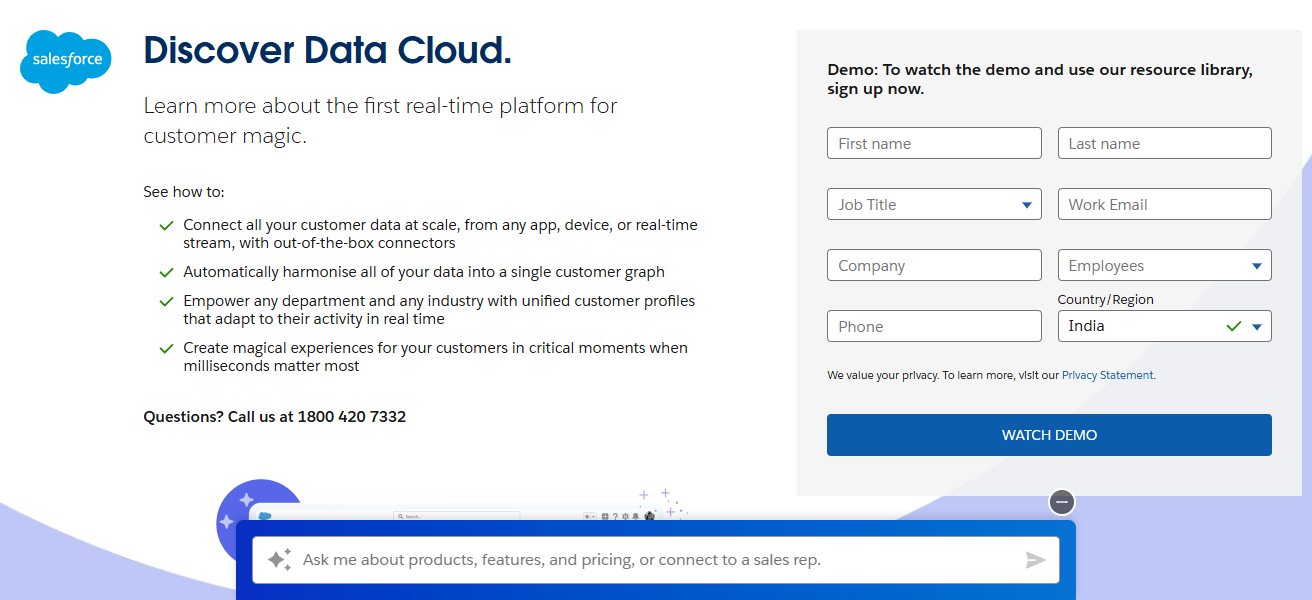
By consolidating customer behavior data across multiple interactions, B2B firms can optimize lead scoring, improve forecasts, and enhance experience across the customer journey.
Features Salesforce Customer 360
- Unified Customer Profile – Cross functions of sales, service, marketing, commerce, and support into one view for full 360 degree account and contact overview.
- AI-Driven Insights – Uses Salesforce Einstein for predictive scoring with trend analysis and recommended actions to best optimize engagement.
- Cross-Cloud Integration – Customer 360 is easily integrated with all other Salesforce clouds and available third-party applications through API connections.
- Real Time Dashboards – Analytics and reporting are customizable to provide a snapshot of current and historical KPIs throughout the customer journey.
| Pros | Cons |
|---|---|
| Unifies data across all Salesforce clouds for a true 360° view. | Can be expensive, especially for small businesses. |
| Strong AI and analytics with Einstein for predictive insights. | Requires ongoing admin and configuration. |
| Deep ecosystem & integrations across apps. | Complexity can be overwhelming for new users. |
| Excellent scalability for large B2B enterprises. | Customization may require consulting support. |
2. HubSpot CRM
HubSpot software tracks all B2B activity from prospect to deal. Contact management and pipeline visibility ease along with integrated sales and marketing tools.
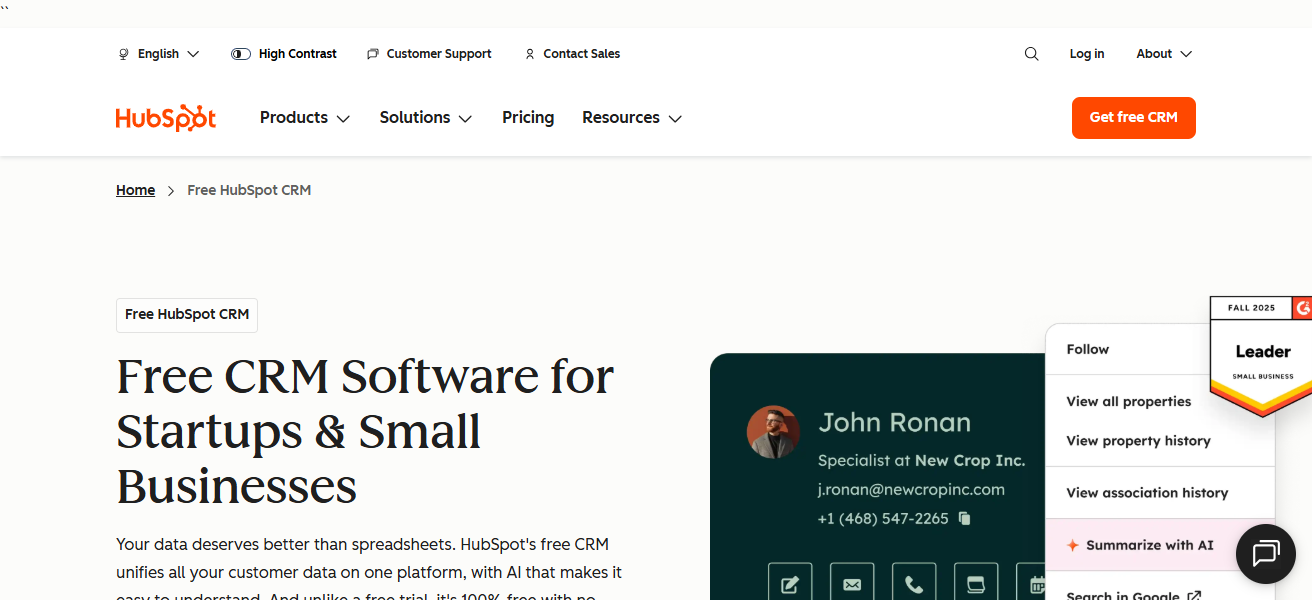
Users can automate workflows to better nurture and personalize outreach to customers. Understanding of behaviors and campaign engagements can drive overall conversion up while keeping sales and marketing aligned to goals.
Features HubSpot CRM
- Contact and Deal Management – Record of all interactions, deals, and company information are kept in a single hub which is managed in a single interface.
- Marketing and Sales Automation – Outreach is simplified with built-in email sequences, lead scoring, and workflow automations.
- Action Tracking – For the purposes of smart segmentation, actions including website visits, email engagement, and interactions with the prospect are all tracked.
- Pipeline Reporting and Dashboards – User-friendly reporting visualizes marketing ROI, pipeline performance, and other key metrics.
| Pros | Cons |
|---|---|
| User-friendly with fast onboarding and clean UI. | Advanced features require paid tiers. |
| Free tier available with core CRM capabilities. | Limited deep analytics compared to enterprise platforms. |
| Strong inbound marketing integration. | Custom reporting can be basic unless upgraded. |
| Good automation for sales & marketing alignment. | Less suited for complex enterprise processes. |
3. Zoho CRM Plus
Zoho CRM Plus integrates sales automation, marketing campaigns, support, and analytics, making it a comprehensive customer engagement platform.
The continued integration of customer profile enrichment with activity, interaction, and sentiment data allows B2B teams to segment audiences for personalized targeting and communications.
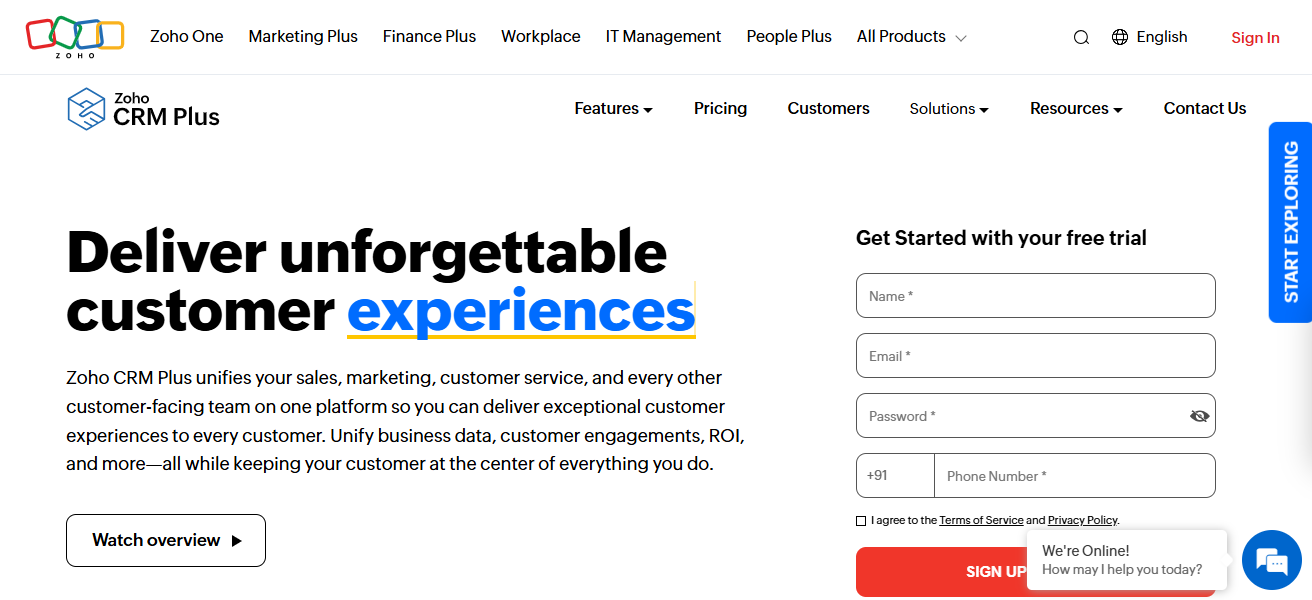
The AI capabilities for lead scoring, and workflow automation provide businesses with data customer intelligence to make retention and growth easier, while also allowing teams to prioritize value customers and streamline further communications.
Features Zoho CRM Plus
- 360 Degree Customer Engagement – For a joined customer view, sales, marketing, support, and social channel engagement are integrated.
- AI Assistant (Zia) – Predictive and anomaly detection with recommendations for optimal high-value actions are features of the assistant.
- Omnichannel Communication – You can use email, phone, chat, and social media messages all at the same time.
- Advanced Analytics – Custom reports and dashboards that help find patterns and other specific information.
| Pros | Cons |
|---|---|
| All-in-one suite covering sales, marketing & support. | UI isn’t as polished as some competitors. |
| Affordable pricing with broad capabilities. | Some advanced analytics are limited. |
| AI assistant (Zia) for predictions and insights. | Integration ecosystem smaller than Salesforce/Microsoft. |
| Strong workflow automation. | Steeper learning curve for full suite usage. |
4. Microsoft Dynamics 365 Customer Insights
Customer Insights in Microsoft Dynamics 365 compiles and synthesizes information available on customers within multiple data silos and creates consolidated customer profiles that illustrate preferences, behaviors, and buying patterns.
This analytic and CDP-style solution employs AI to examine data to identify patterns and trends, as well as predict requirements, and provide customized engagement on a determined basis across numerous touchpoints.
Valuable integration with Dynamics 365’s extensive range of applications, Teams, Power Platform, and Azure streamlines the Microsoft ecosystem enabling organizations to implement focused metrics within valuable campaigns to customized customer interactions.
Features Microsoft Dynamics 365 Customer Insights
- Unified Customer Profiles – Customer records that are complete and joined together from all the apps, products, and channels.
- AI and Machine Learning – Provides forecasting of market tendencies and improvements, retention of customers during risk of leaving and gives suggestions for actions.
- Power Platform Integration – Integrates with Power BI, Power Apps, and Power Automate for tailored analytics and workflow processes.
- Cross-Channel Insights – Measures engagement across web, email, purchases and support.
| Pros | Cons |
|---|---|
| Powerful customer data platform with AI insights. | Can be costly with multiple add-ons. |
| Excellent integration with Microsoft ecosystem (Azure, Teams, Power BI). | Implementation complexity for non-Microsoft environments. |
| Great for enterprise B2B analytics & segmentation. | Requires technical expertise for advanced setups. |
| Scales well for global companies. | Support model can be inconsistent. |
5. SAP Customer Data Cloud
SAP Customer Data Cloud allows B2B companies to manage customer identity, consent, and preferences while building a trustworthy single source of truth for profiles.
It employs AI and ML to enrich the data with insights for behavioral data and segmentation, allowing companies to customize experiences across digital touchpoints.
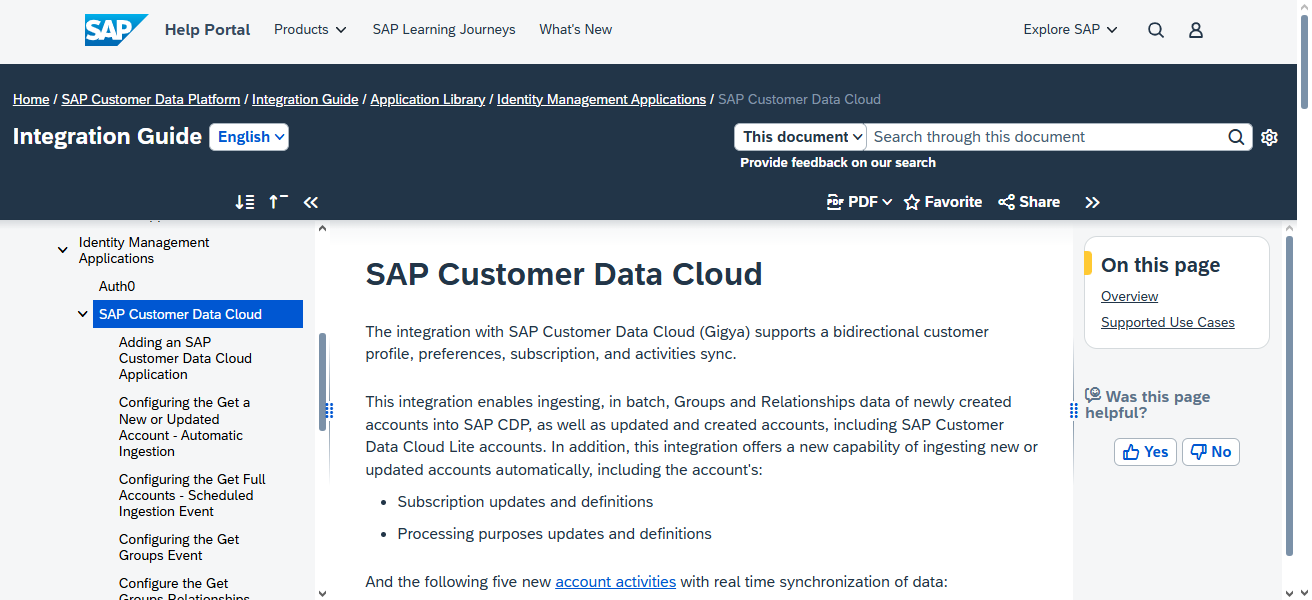
It ensures compliance and data governance while enhancing personalization, decreasing churn, and allowing marketers and product teams to gain better intelligence from customer interactions.
Features SAP Customer Data Cloud
- Identity and Consent Management – Securely captures and stores customers’ identities, consent, and preferences.
- Unified Profiles – Closes the gap between online and offline data sources to build complete and enriched customer records.
- Privacy-First Approach – Compliance with data protective legislations (i.e. GDPR) is built in.
- Behavioral Insights – Personalization efforts are improved by analyzing user interaction for tailored messages.
| Pros | Cons |
|---|---|
| Strong identity & consent management. | Higher cost & complexity. |
| Secure and enterprise-grade data governance. | Requires SAP ecosystem knowledge. |
| Good for compliance and data privacy needs. | Not as intuitive for beginners. |
| Centralized unified customer profiles. | Customization can be resource-intensive. |
6. Oracle CX Unity
Oracle CX Unity (as part of Oracle’s CX e-business suite) integrates and unifies customer data across sales, marketing, commerce, and service into blended personas, allowing B2B teams to gain actionable insights in real time.
With its smart segmentation and behavioral analytics, this application assists firms in developing tailored customer journeys and achieving consistent engagement across all their touchpoints.
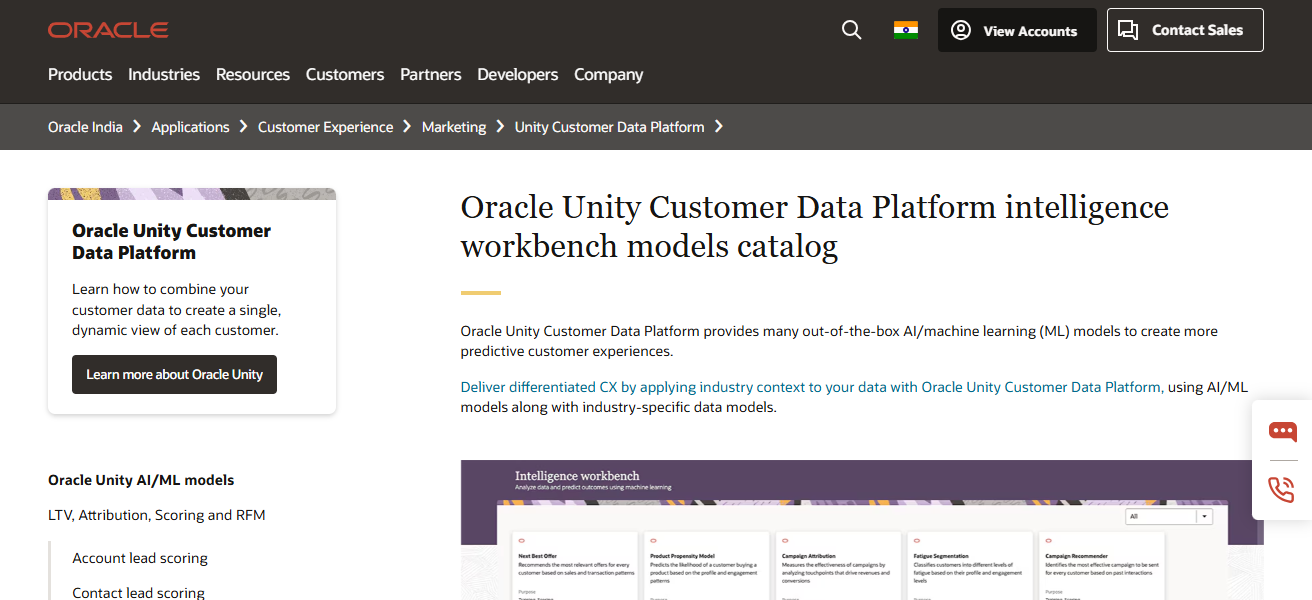
The application’s seamless fintegration across Oracle’s CX and data management tools translate insights at multiple levels of teh customer value management funnel in terms profit and customer loyalty.
Features Oracle CX Unity
- Real-Time Customer Profiles: Combines intelligence and insights for unified visibility from customer data across marketing, service, commerce, and sales.
- Segmentation Engine: Automatically creates groups of audience segments by behaviors and preferences.
- AI-Powered Predictions: Defective mode for the purchase intent, churn, and churn next best action recommendations.
- Cross-Channel Orchestration: Presents consistent experience across web, email, social, and support channels.
| Pros | Cons |
|---|---|
| Real-time unified customer profiles from multiple sources. | Often expensive with modular pricing. |
| Deep analytics and segmentation capabilities. | Complexity makes onboarding longer. |
| Seamless integration with Oracle CX suite. | Requires strong technical team. |
| AI-driven recommendations and insights. | Less ideal for small teams. |
7. Freshworks CRM
Freshworks has contact management, lead management, integrated communication tools, and pipeline analytics to help B2B teams understand customer signals.
Because it is easy to use with real-time insights track engagement and deal progression, teams can prioritize high-value opportunities.
With Freshworks’ automated enterprise workflows and dashboards, manual data entry is eliminated and process automation increases to provide better visibility for customer and sales analytics.
Features Freshworks CRM
- Lead and Contact Scoring: Autonomously scores and prioritizes leads for sales concentration.
- Unified Conversation Inbox: Retains emails, calls, and chats across one platform for contextual follow-up.
- AI assistant (Freddy): Provides insights related to the deal, tasks, and performance suggestions.
- Pipeline Visualization: User-friendly drag-and-drop pipeline boards with deal stage tracking.
| Pros | Cons |
|---|---|
| Simple UI and quick setup. | Less robust analytics vs enterprise CRMs. |
| Affordable pricing with native automation. | Limited advanced customization. |
| Built-in communication (email, chat, phone). | Integrations smaller than major competitors. |
| Good AI lead scoring capabilities. | Not ideal for very large B2B datasets. |
8. SugarCRM
SugarCRM allows for flexibility and customizability of their work to best fit B2B companies as they model data, work flows and dashboards.
Interactions related to sales, support and marketing are compiled to build complete customer profiles and predict forthcoming customer behaviors.
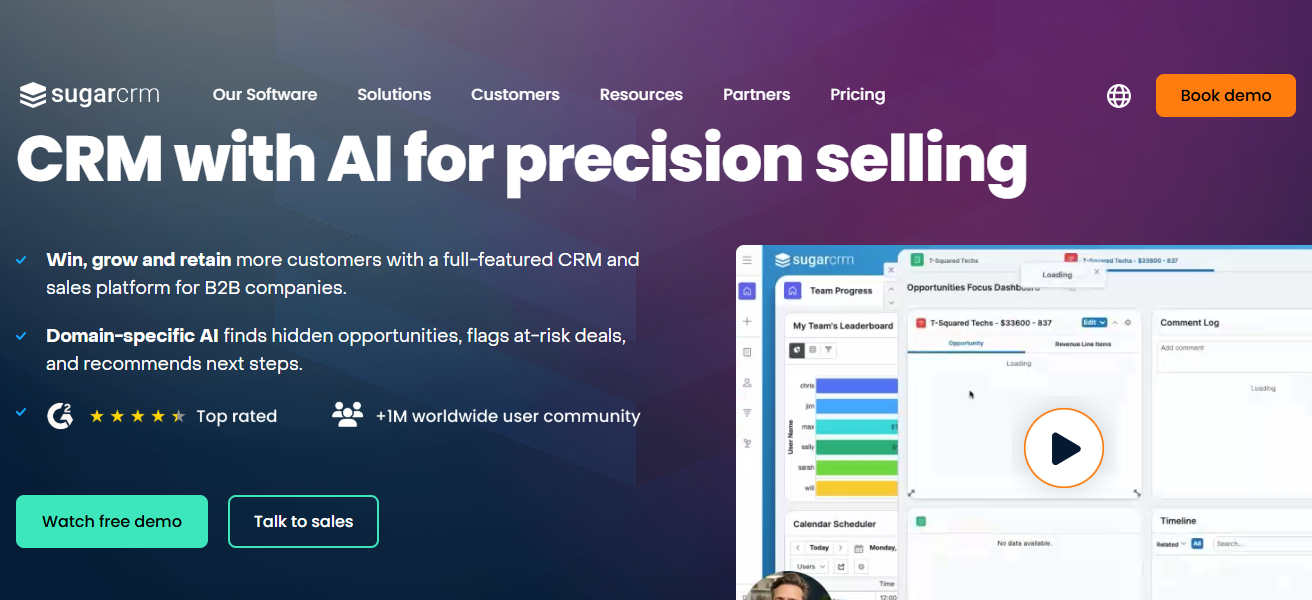
Automated analytics helps businesses to discover trends in the data, score customer leads and tailor outreach to the customer.
This is particularly beneficial to mid-level and big businesses that are in need of some customizability.
Features SugarCRM
- Customizable Workflows: Modifies processes and fields to align with distinct business models and sales motions.
- Predictive Analytics: Employs SugarPredict to determine and recommend actions for future results.
- Multi-Channel Engagement: Records email, phone, campaigns, and touchpoints with one system.
- Deployment Flexibility: Provides cloud or on-premise hosting to accommodate security and infrastructure.
| Pros | Cons |
|---|---|
| Highly customizable to unique workflows. | UI feels dated compared to newer CRMs. |
| Good predictive insights with SugarPredict. | Implementation can be complex. |
| Strong workflow automation. | Smaller partner ecosystem than Salesforce or Microsoft. |
| Flexible deployment (cloud/on-premise). | Reporting can require advanced configuration. |
9. Convin
Convin is an AI-powered conversation intelligence platform that analyzes all calls, emails, and chats and brings to the surface valuable insights regarding customers’ intents, sentiments, objections, and agents’ performances.
Having processed real conversations into organized data points, B2B teams can know the reasons behind customers’ engagements and what strategies can be used to eliminate gaps in customer journeys and better tailor trainings, messages, and support.
This intelligence derived from customer interactions improves the customer experience and the effectiveness of sales while giving teams better visibility to their operations.
Features Convin
- Conversation Intelligence: Examines and processes sales calls, chats, and emails to discover insights.
- Sentiment and Objection Detection: Recognizes sentiment transitions and identifies prevailing objections for coaching.
- Performance Analytics: Evaluates reps and content style and effectiveness to streamline training.
- Actionable Insights: Turns interaction history into summarized searchable data along with keywords and structured responses.
| Pros | Cons |
|---|---|
| AI-driven analysis of calls, chats & emails. | Focused on conversation intelligence — not full CRM. |
| Helps identify sentiment, objections, and trends. | May require integration with CRM for full value. |
| Improves coaching, sales performance & messaging. | Dependent on quality of call/chat data. |
| Actionable insights for training & engagement. | Smaller feature set outside conversational analytics. |
10. D&B Hoovers
Dandy is a sales intelligence solution developed from Dun & Bradstreet’s commercial database. It catalogs everyone’s line B2B contact, firmographic and technographic attributes, and sales activity.
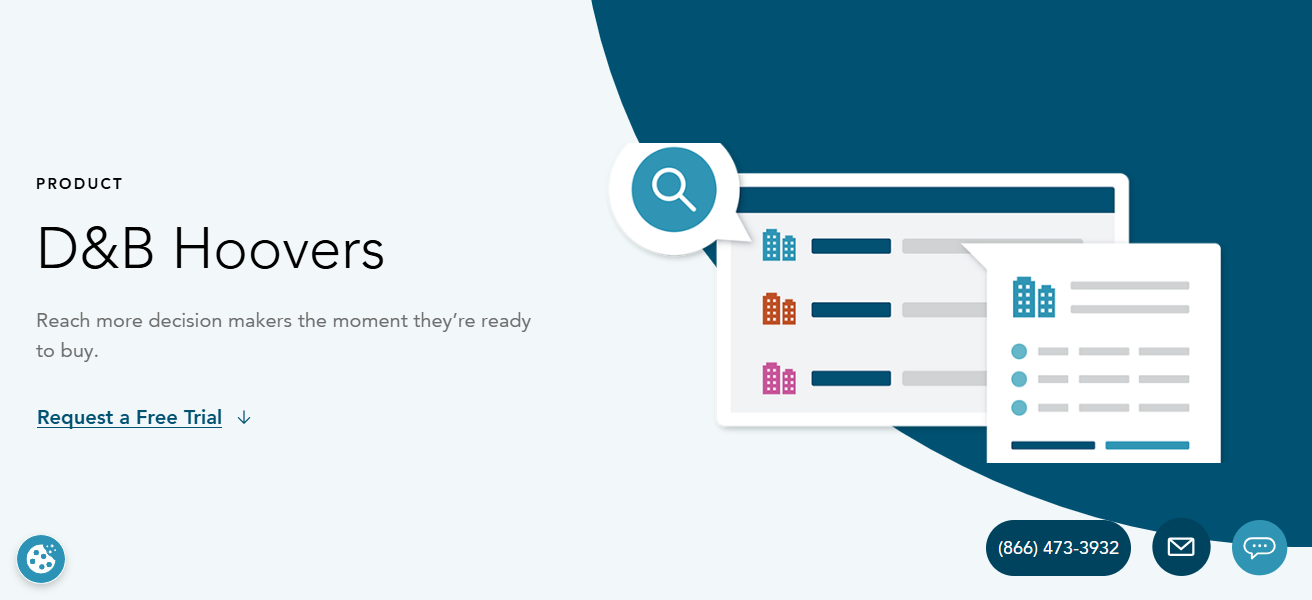
It allows users to querry the prospects and sales to score and rank the leads. The firm’s solution provides predictive, firmographic, technographic attributes and signals to help prioritize sales. It helps sales to streamline the close.
Features D&B Hoovers
- B2B Company database: Huge, constantly updated collection of data on companies, their executives, and their firmographics.
- Advanced Search & Lists: Filters prospective clients based on multiple fields such as industry, revenue, and geography.
- Predictive Indicators: Signals useful for spotting opportunities and potential risks.
- Integrations with CRMs: Synchronizes contacts, accounts, and insights for less friction in workflows.
| Pros | Cons |
|---|---|
| Extensive B2B company & contact database. | Data accuracy varies by region/industry. |
| Strong firmographic & technographic insights. | Best value when combined with CRM. |
| Helps target accounts with predictive indicators. | Pricing may be high for smaller teams. |
| Up-to-date business insights & alerts. | Limited automation features within platform. |
How To Choose Best Customer Intelligence Platforms For B2B
Identify Your Objectives Determine the specifics for which you require to obtain enhanced customer understanding, pipeline analytics, conversational intelligence, or systematized data across various platforms.
Capability to Integrate Data Make sure that the platform for data aggregation and integrated to provide a consolidated view from all sources (CRM, marketing, support, web, calls).
Features of Analytics and Artificial Intelligence Determine if the solution includes analytics that is predictive, feature segmentation as well as suggestions that are driven by AI to facilitate enhanced decision-making processes.
User-friendliness and Adoption by Consumers Look for solutions and systems that have clear, simple and quick interfaces so that your team is able to adopt them with ease.
Customization and Ability to Scale Up Look for solutions and platforms that can adjust to your business, processes, and workflows, and which can grow in size.
Integration with Other Tools Look for platforms that support connections with your current tools (CRM, ERP, email, data warehouses) for a seamless integration.
Security and Compliance Look for platforms that provide end-to-end data protection, identity, and compliance management for data that is private (e.g. GDPR).
Assistance and Education Review assistance, data, onboarding, and community resources that are available for the vendor.
Conclusion
In closing, the top Customer Intelligence Platforms designed for B2B allow firms to consolidate data, understand their customers’ behavior on a deeper level, and optimize the decisions made for sales, marketing, and support.
Selecting the analytics, integration, automation, and scalability functionalities you need in a platform will allow the right choice to be made.
The right customer relationship management software will increase the level of personalization, improve customer conversion, and increase the ability to maintain customer relationships, which will all add to the profitability of the firm due to a better developing customer relationship.
FAQ
It is a tool that collects, unifies, and analyzes customer data to help B2B companies understand behavior and improve decision-making.
They help identify buyer intent, personalize engagement, and optimize sales and marketing strategies.
CRM stores customer data, while customer intelligence analyzes data to generate insights and predictions.
SaaS, manufacturing, IT services, finance, and enterprise sales benefit the most.
Yes, most platforms integrate with CRMs, marketing tools, support systems, and third-party data sources.