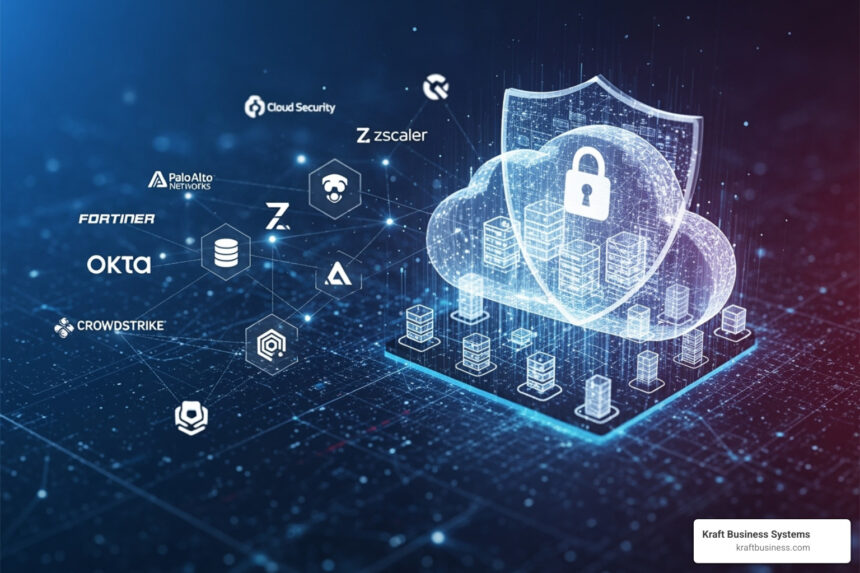
This article presents the Optimal Cybersecurity Posture Management Platforms that assist companies in safeguarding their cloud, SaaS, and hybrid environments.
- Key Poinst & Best Cybersecurity Posture Management Platforms
- 10 Best Cybersecurity Posture Management Platforms
- 1. Prisma Cloud (Palo Alto Networks)
- 2. Wiz
- 3. Check Point CloudGuard
- 4. SentinelOne Singularity
- 5. Orca Security
- 6. Trend Micro Cloud One
- 7. Microsoft Defender for Cloud
- 8. Zscaler SSPM
- 9. AppOmni
- 10. Adaptive Shield
- How We Choose Best Cybersecurity Posture Management Platforms
- Cocnlsuion
- FAQ
Profiled vendors continuously review and monitor configurations, identify gaps, provide compliance enforcement, and deliver insights to improve the organization’s overall security posture.
In today’s sophisticated digital environment, choosing a Cybersecurity Posture Management platform is crucial to ensure that sensitive data is protected, breaches are averted, and compliance with digital regulations is sustained.
Key Poinst & Best Cybersecurity Posture Management Platforms
| Platform | Key Point |
|---|---|
| Prisma Cloud (Palo Alto Networks) | Comprehensive multi-cloud visibility with advanced threat detection and compliance automation |
| Wiz | Agentless scanning across cloud workloads, containers, and Kubernetes with deep risk prioritization |
| Check Point CloudGuard | Unified security posture management with strong compliance and threat prevention features |
| SentinelOne Singularity | AI-driven CSPM that automates misconfiguration fixes and integrates with endpoint security |
| Orca Security | Side-scanning technology for agentless visibility and contextual risk prioritization |
| Trend Micro Cloud One | Integrated workload protection with compliance monitoring and automated remediation |
| Microsoft Defender for Cloud | Native Azure integration plus multi-cloud support with strong compliance dashboards |
| Zscaler SSPM | SaaS posture management focusing on shadow IT, misconfigured permissions, and SaaS risk reduction |
| AppOmni | SSPM leader specializing in SaaS security, continuous monitoring, and least-privilege enforcement |
| Adaptive Shield | Multi-SaaS security posture with automated policy enforcement and compliance reporting |
10 Best Cybersecurity Posture Management Platforms
1. Prisma Cloud (Palo Alto Networks)
The Palo Alto Networks Prisma Cloud platform seamlessly integrates cloud security posture management, workload protection, compliance, and DevSecOps integration. The platform also incorporates vulnerabilities and threat intelligence.
Prisma Cloud has the ability to pinpoint misconfigurations, automate compliance management, and integrate compliance with various frameworks utility.
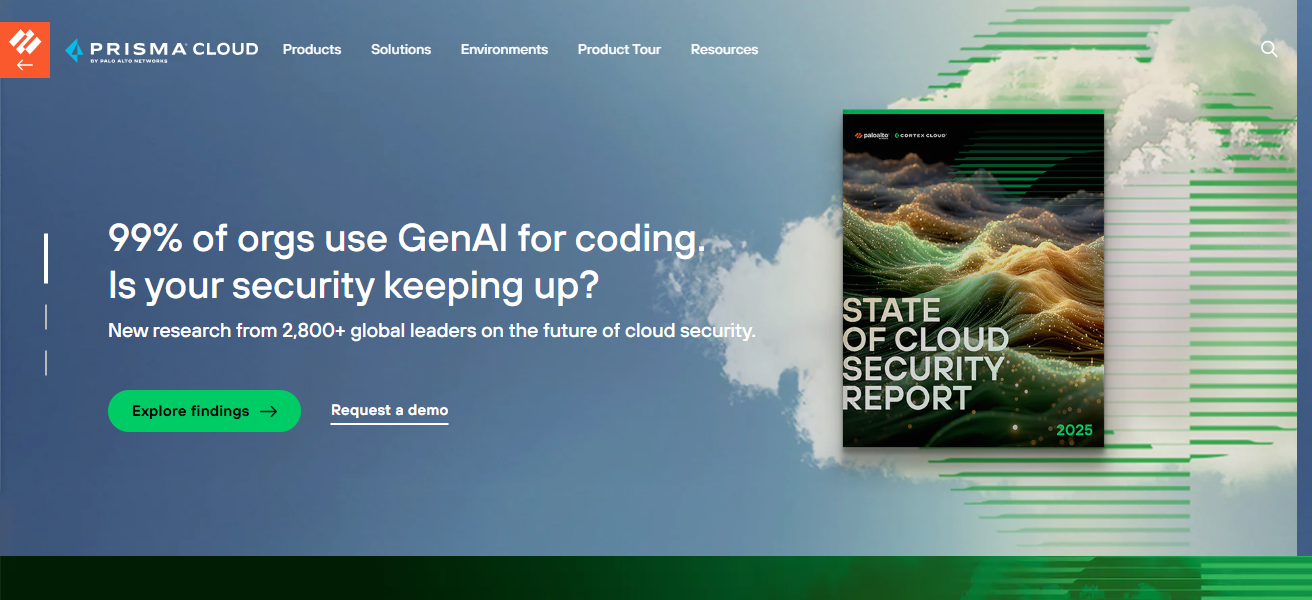
Prisma Cloud mitigates and addresses security concerns within the hybrid cloud. Overall, Prisma Cloud manages and protects cloud-native applications while maintaining compliance.
Features Prisma Cloud (Palo Alto Networks)
CSPM & CNAPP Integration – It combines cloud security posture management and application protection so you gain visibility into the threats and vulnerabilities across your workloads and which workloads are misconfigured.
Multi‑Cloud Coverage – There is policy and risk management across AWS, Azure, GCP, and hybrid environments.
Compliance & Governance – It helps you practice and maintain compliance with guidelines including CIS, GDPR, PCI DSS, etc. by generating the compliance audit reports and practice enforcement.
DevSecOps Integration – It scans Infrastructure as Code (IaC) and CI/CD pipelines so you can identify and mitigate risks pre-deployment.
Runtime Protection – A running workload is protected from threats with posture-aware threat detection and response.
| Pros | Cons |
|---|---|
| Comprehensive CNAPP with CSPM, vulnerability management, compliance, and runtime protection in one platform. | Can be complex to configure and onboard for smaller teams. |
| Strong support for multi‑cloud environments (AWS, Azure, GCP). | Pricing can be high compared to focused CSPM tools. |
| Deep integration with DevOps pipelines and IaC scanning. | Noise from extensive findings unless fine‑tuned. |
| Excellent compliance reporting and regulatory alignment. | Requires skilled staff for maximum value. |
2. Wiz
Wiz is a contemporary CSPM and CNAPP platform with an agentless architecture boasting rapid implementation and an unmatched ability to conceive cloud risk throughout the deployment.
Wiz continuously analyzes workloads, containers, identities, and data stores to identify the AWS, Azure, and GCP misconfigurations, vulnerabilities, and risks that matter most.
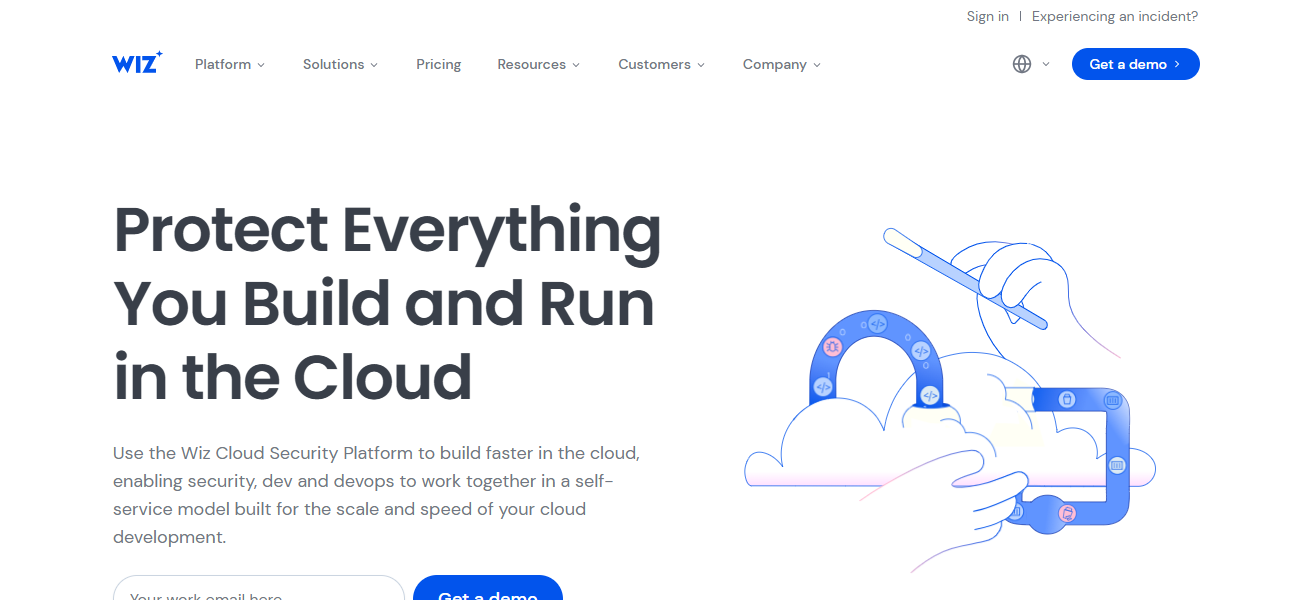
Wiz’s user-friendly solution, Security Graph, crosses correlations between assets and threats to help security teams narrow their focus and make a difference without overwhelming manual configuration.
Its straightforwardness and the ability to provide a complete context have positioned it as a leader in the field.
Features Wiz
Agentless Deployment – It cuts down and simplifies operational overhead by providing rapid onboarding without having to install agents.
Cloud Security Graph – It makes asset and risk data relationship correlation actionable by enabling risk prioritization.
Contextual Risk Prioritization – It combines threat misconfiguration, threat vulnerability, and threat identity contexts to narrow the risk focus to only the most critical threats.
Multi‑Cloud Visibility – Unified risk dashboards provide coverage across AWS, Azure, and GCP.
DevOps Friendly – Seamless integration for continuous posture and vulnerability assessments within DevOps frameworks.
| Pros | Cons |
|---|---|
| Agentless architecture enables rapid deployment and low maintenance. | Some advanced modules may require additional costs. |
| Strong contextual risk prioritization and actionable insights. | Newer platform compared to legacy vendors—less historical deployment data. |
| Excellent cloud visibility across workloads, identities, and data. | Integrations with niche tools may be limited. |
| Easy onboarding and user‑friendly interface. | Heavy reliance on API access—needs proper permissions. |
3. Check Point CloudGuard
Check Point CloudGuard has the functionality to assist organizations in actively safeguarding the cloud and receiving monitoring without action alerts.
They supect real-time and sustained risk analysis to provide the organizations with alerts to determine the risk.
It provides detailed recognition and threat recognition in the cloud while guiding the formation of required rules on hybrid and multi cloud anchored infrastructures.
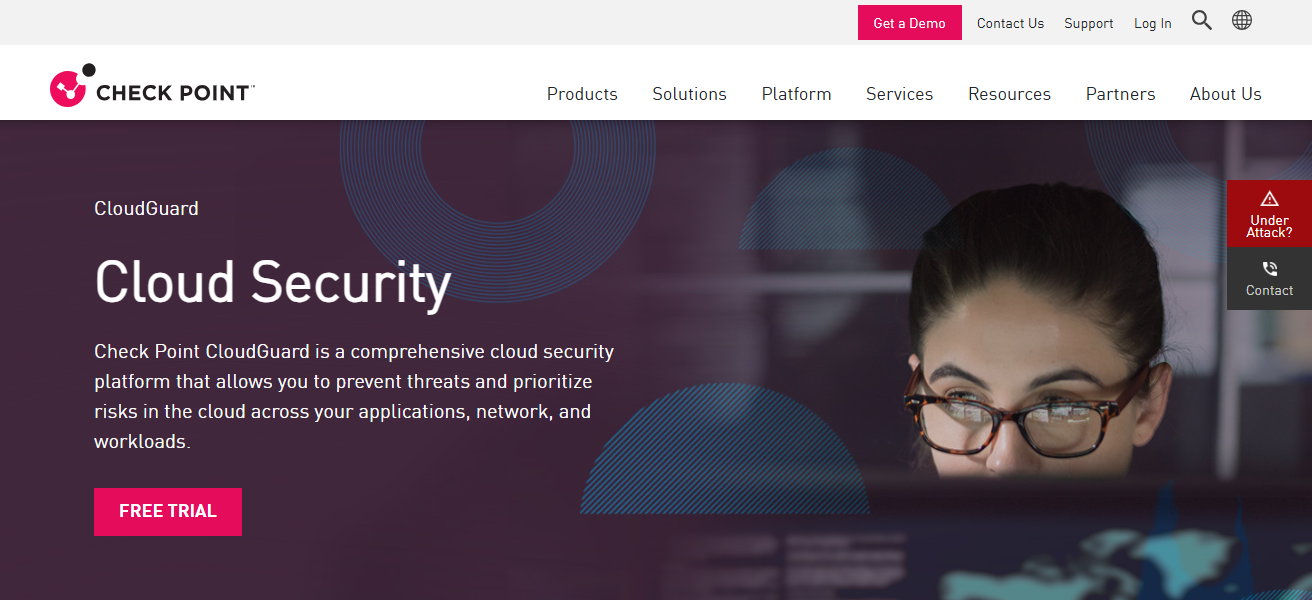
CloudGuard is better to misidentifaction of the controls of the network of the security access trust controls and the cloud disposable resources and firewall controls.
It allows teams to detect controls above and triggers the reduction of real risks and in turn allows the resources to improve the risk exposure and improve the cloud security risk controls overall.
Features Check Point CloudGuard
Continuous Posture Monitoring – Real-time detection of risky network policies and cloud misconfigurations.
Network Security Focus – Cloud network controls such as security groups and firewalls are meticulously evaluated.
Automated Compliance Checks – Monitoring and alerting on standards such as CIS benchmarks are automated with suggested remedial actions.
Hybrid Cloud Support – Security governance is unified across on-premises and cloud deployments.
Policy Enforcement Automation – Infrastructure changes trigger the automatic application of security policies to avert policy drift.
| Pros | Cons |
|---|---|
| Deep network‑centric posture and firewall rule risk analysis. | Interface and reporting may feel outdated versus newer rivals. |
| Integrates well with Check Point security ecosystem. | Can be heavy for smaller teams with simple cloud needs. |
| Strong compliance and misconfiguration detection. | Setup and tuning may require professional services. |
| Good for hybrid cloud + on‑premise consistency. | Some features can overlap with existing network security tools. |
4. SentinelOne Singularity
SentinelOne Singularity Cloud Security has AI-powered CSPM and advanced CNAPP functionalities to identify and resolve cloud misconfigurations, manage compliance, and secure workloads.
It offers agentless installations and with its extensive policy repo ensures continuous monitoring and automated self-healing in multi-cloud settings.
Singularity integrates identity and vulnerability management to provide complete visibility and streamlined remediation workflows.
In rapidly changing cloud environments, it equips teams with the ability to manage and secure the cloud posture with optimised real-time threat detection and risk management.
Features SentinelOne Singularity (Cloud Security)
AI-Driven Threat Detection – Machine learning is deployed to identify anomalous behaviors and threats to posture.
Unified Risk Dashboard – Consolidated view of posture, identity, and workload risks across the enterprise.
Automated Remediation – Speedy resolution of problems through proactive workflows and playbooks.
Multi-Cloud Support – Providing security and visibility across AWS, Azure, and GCP effortlessly.
Integration with XDR – Cloud posture is bolstered with advanced insights from extended detection and response.
| Pros | Cons |
|---|---|
| AI‑driven detection and automated remediation workflows. | Pricing may be high for smaller organizations. |
| Unified view of posture, identity, and workload risks. | Requires expertise to fully tune machine‑learning alerts. |
| Strong contextual risk prioritization with automation. | Cloud‑native developer adoption still growing. |
| Broad CNAPP capabilities beyond basic CSPM. | Occasional false positives without tuning. |
5. Orca Security
CSPM agentless Orca Security incorporates cloud metadata and storage snapshots to gain visibility into misconfigurations, vulnerabilities, identities, and risks to obtain agentless contextual visibility.
Orca achieves deep contextual, unparalleled compliance validation, risk prioritization, and remediation while reducing operational overhead by not deploying agents.
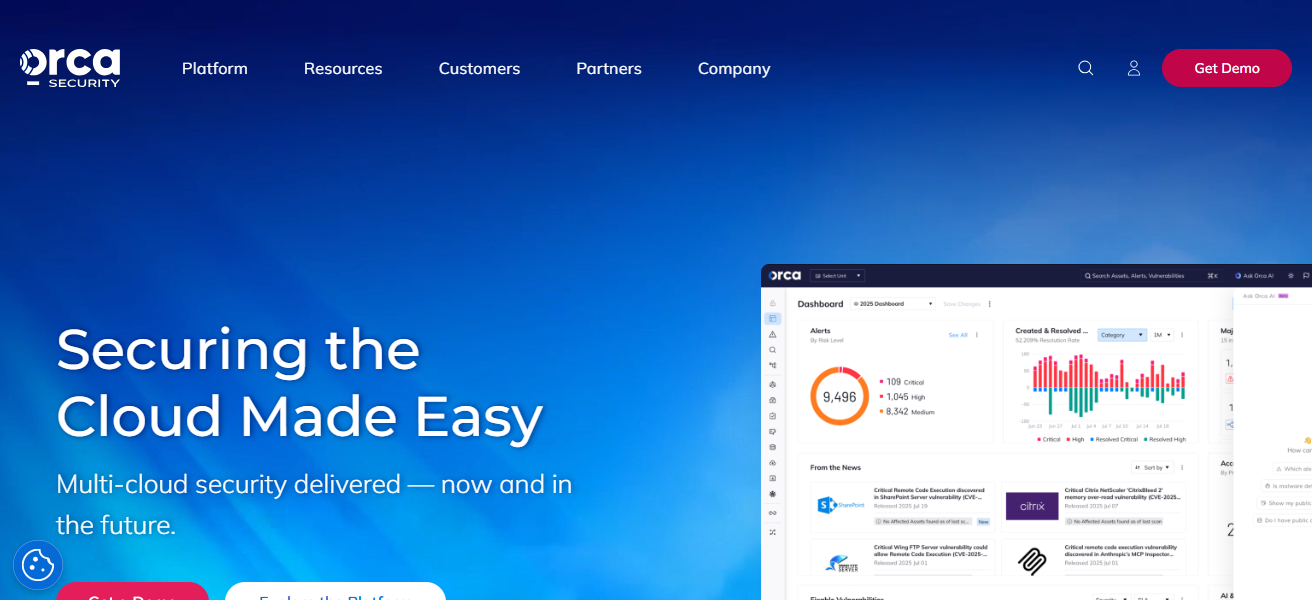
Orca’s unique comprehensive cloud asset visibility is especially valuable for organizations with posture management and rapid time to value across AWS, Azure and Google Cloud.
Features Orca Security
Agentless Discovery – Asset mapping is achieved through cloud APIs and snapshots of storage for discovery without agent installation.
Mathematical models of risk/prioritization – Integrates together potential threats, potential risk-inducing modifications, identity and access management, and malware as core prioritization threats.
High Level Cognitive Cloud Targeting – Discovers and distinguishes workload blind spots, containerization, and serverless functions.
Automated Compliance Monitoring – Pre-configured standards help to manage and automated status of compliance monitoring.
Low to Minimal Operational Overhead – Accelerated time-to-value realisation with minimal configuration requirements and opened simple licensing options.
| Pros | Cons |
|---|---|
| Agentless comprehensive risk detection with minimal overhead. | Can produce large data volumes if not scoped carefully. |
| Excellent contextual risk scoring and prioritization. | Pricing based on coverage can escalate in large environments. |
| Rapid deployment with deep cloud visibility. | Not as strong in non‑cloud/legacy workloads. |
| Good coverage across AWS, Azure, GCP. | Some advanced compliance automation still evolving. |
6. Trend Micro Cloud One
Cloud One from Trend Micro provides a variety of security services, such as, but not limited to, posture management, compliance auditing, and workload protection in multi-cloud and container environments.
Spotting drift and completing Infrastructure as Code (IaC) Scans as well as policy enforcement for Kubernetes and VMs makes it easier for organizations to find misconfigurations and compliance issues early on.
With a unified dashboard, it combines posture data and runtime security to help security and DevOps teams address issues quickly while ensuring that security policies are consistently applied across hybrid cloud workloads.
Features Trend Micro Cloud One
Security as a Service Redefined – In statutory functions, permits, complements, collates and integrates together cloud service Polygon and cloud service platform (CSPM), workload, container, and more assets protection.
Scanning of Infrastructure as Code – Predefined templates of Infrastructure as Code (IaC) for potential risk validation monitored prior to risk.
Drift Detection – Notifies when infrastructure modifications result in deviations of static baseline security.
| Pros | Cons |
|---|---|
| Broad security services that extend beyond CSPM (e.g., workload, container security). | Platform breadth can make the UI complex. |
| Strong workload and runtime security integration. | Lower specialization in SaaS‑centric posture. |
| Automated policy enforcement and compliance checks. | May require professional services for best deployment. |
| IaC scanning and drift detection included. | Learning curve for teams new to Trend Micro ecosystem. |
7. Microsoft Defender for Cloud
Microsoft Defender for Cloud offers valuable cloud workload protection and has multi cloud CSPM capabilities which assess and enhance the security posture of AWS, Azure and Google Cloud environments.
This platform calculates a secure score, by evaluating the cloud against best practices and compliance frameworks. It then highlights the gaps and offers recommendations and automated workflows for remediation.

Microsoft Defender for Cloud integrates tightly with Azure and allows hybrid enterprises to central cloud posture management evenly and consistently across security policies.
Features Microsoft Defender for Cloud
Secure Score Framework – Converts security posture and threat incidence risk for prioritization of recommendations to enhance posture.
Native Azure Integration – Serves as a command center along Azure cloud infrastructure service for cohesive control visibility.
Multi Cloud Support – integrates and monitors security posture of AWS and GCP along Azure.
| Pros | Cons |
|---|---|
| Native integration with Azure plus multi‑cloud support. | Best features often tied to Azure subscriptions. |
| Secure Score concept helps prioritize improvements. | Can generate a high number of alerts without tuning. |
| Strong compliance frameworks and automation playbooks. | UI can be overwhelming for new users. |
| Good pricing for existing Microsoft customers. | Cross‑cloud signal depth varies by provider. |
8. Zscaler SSPM
Zscaler has recognized the need for effective cloud-based security management to monitor the security posture of a business’s SaaS applications.
In order to mitigate the security risks of SaaS applications, Zscaler focuses on monitoring SaaS configurations, user permissions, and the security of third-party integrations for potential compliance gaps.
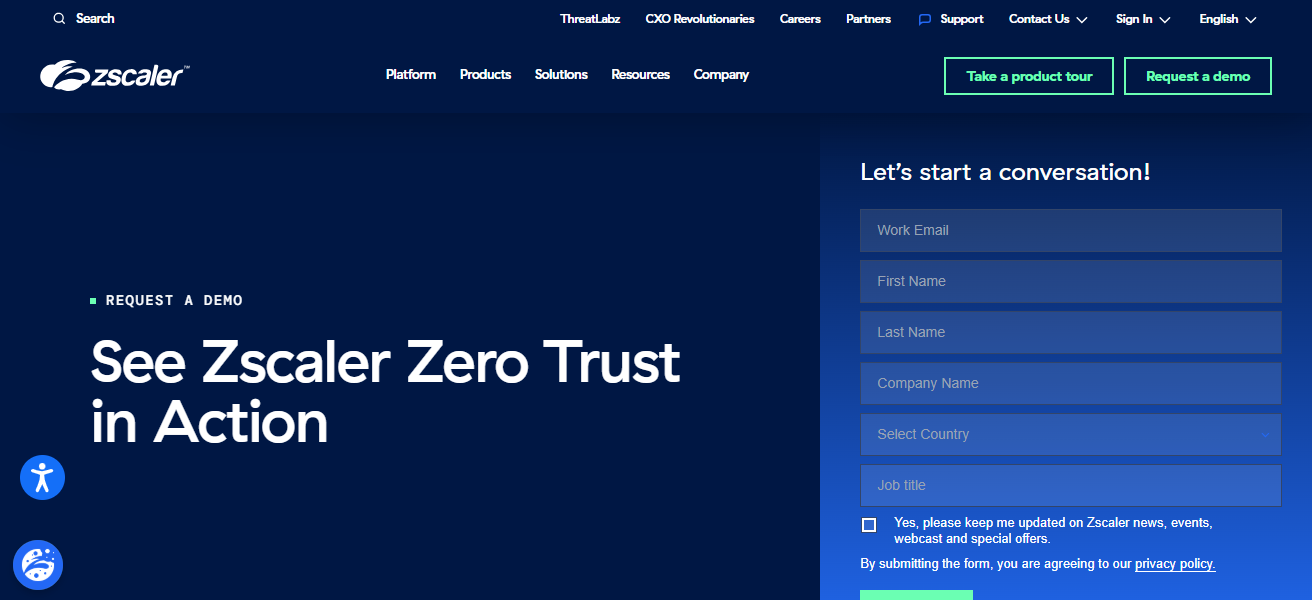
SSPM applications make it possible to go beyond the minimum levels of compliance by identifying poor security configurations and unprotected sensitive information in SaaS systems, and by allowing the automated implementations of corrective actions to restore compliance and eliminate the risks.
For businesses that heavily rely on critical cloud-based applications, Zscaler SaaS Security Posture Management provides security monitoring and posture visibility across various critical SaaS applications.
Features Zscaler SSPM SaaS Security Posture Management
SaaS Application Configuration Monitoring – Constantly reviews SaaS applications and checks for potential misconfigurations and dangerous settings.
Permission and Identity Risk – Identifies and highlights users who have excessive permission and/or have high-risk access.
Zero Trust Integration – Collaborates with Zscaler Zero Trust policies to minimize exposure.
Risk Prioritization – Identifies and ranks potential risks according to their impact to critical business data and processes.
Automated Notification and Remediation – Issues automated and proactive warning notifications with recommended remediation.
| Pros | Cons |
|---|---|
| SaaS‑centric posture monitoring perfect for cloud app security. | Focused primarily on SaaS—less on infrastructure posture. |
| Continuous monitoring of access permissions and configurations. | May need additional tools for deep CSPM. |
| Integration with Zscaler Zero Trust services. | Limited native compliance reporting versus full CSPM tools. |
| Strong identity and permissions risk visibility. | May overlap with other SaaS security stacks. |
9. AppOmni
AppOmni is the only SSPM ((SaaS Security Posture Management) service in the world that constantly keep track of changes in configuration, permissions and compliance of deployed applications in the cloud and in SaaS offerings.
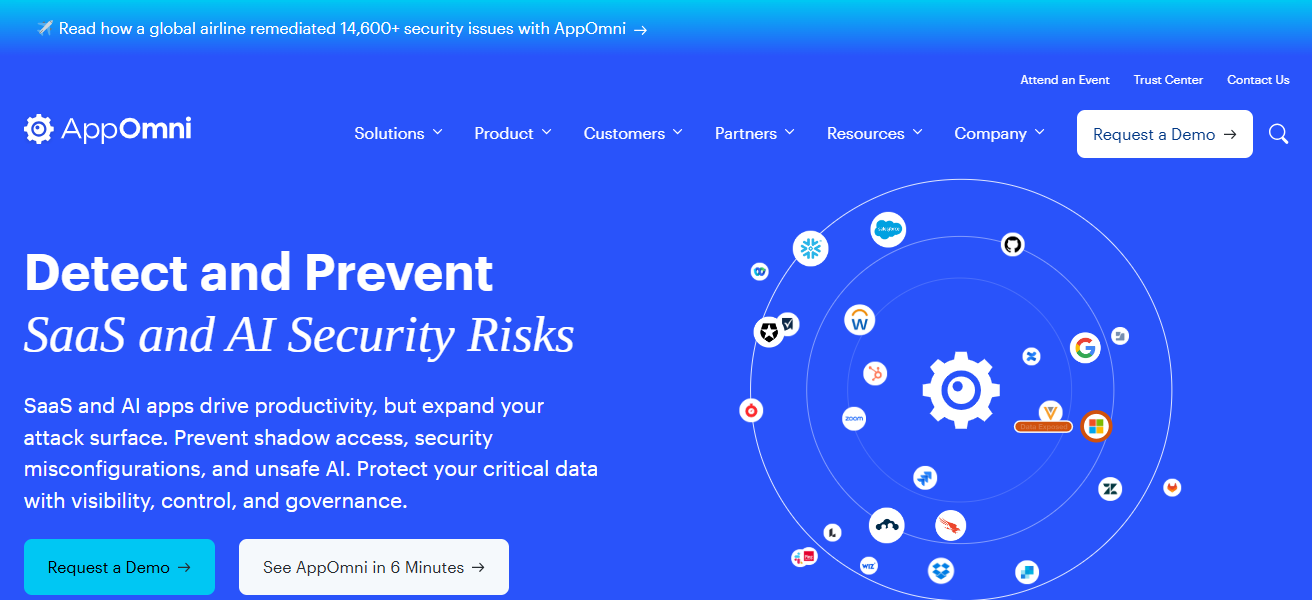
Using best practices in cloud security and company security policies, AppOmni provides solutions that alert companies of security drifts and guide them in remediation.
With SaaS ecosystem governance, companies can manage their applications and reduce the risk and exposure of over and underconfigured access controls and achieve compliance with their key collaboration and productivity applications.
Features AppOmni
SaaS Posture Monitoring – Identifies dangerous settings and detects configuration drift within the cloud business applications.
Permission and Identity Entitlement Governance – Identifies excessive permissions and highlights identity risks.
Policy Validation – Performs real-time comparisons of settings to security policies, benchmarks, and internal policies.
Guidance for Remediation – Provides the remediation steps and encourages the adoption of best practices.
Compliance Work – Facilitates regulatory compliance by integrating and mapping controls to regulations.
| Pros | Cons |
|---|---|
| Specialized SSPM with deep SaaS configuration and permission insights. | Narrower scope on infrastructure posture compared to full CSPM. |
| Good at tracking permission drift and risky entitlements. | May need other tools for full cloud workload security. |
| Strong compliance and monitoring for enterprise SaaS. | Complexity increases with many SaaS apps. |
| Clear remediation guidance focused on SaaS apps. | Smaller ecosystem integrations compared to big cloud vendors. |
10. Adaptive Shield
Adaptive Shield is one of the foremost SSPM tools that removes security blind spots for SaaS environments by performing continuous scans of application configurations, user entitlements, and integrations for security weaknesses.
It aims to minimize identity‑centric threats by unearthing over‑permissioned accounts, dormant apps, and insecure configurations.
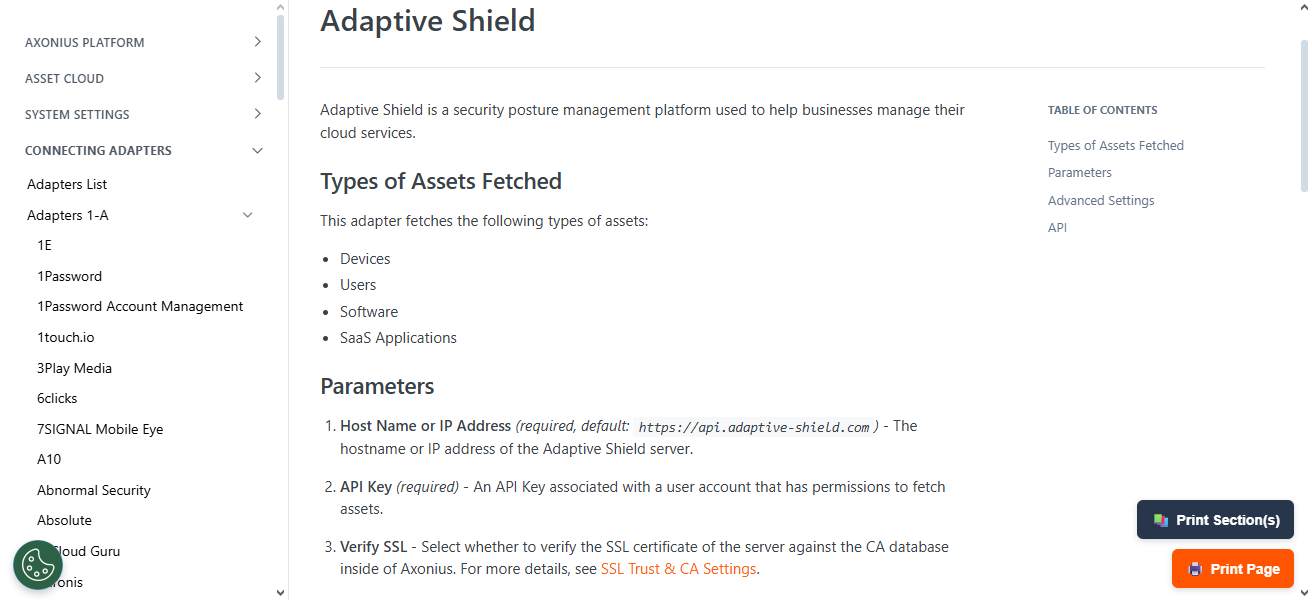
Adaptive Shield pairs contextual risk insights with posture data so that organizations can prioritize mitigations with the greatest risk impact.
Automated monitoring and compliance reporting facilitate SaaS governance and enhance security of all cloud application assets.
Features Adaptive Shield
Continuous SaaS Scanning – Monitors SaaS platforms to identify configuration changes at risk.
Identity-Driven Risk – Identifies account sprawl and other risky behaviors, including excessive permissions and access control gaps.
Guided Policy & Compliance Automation – As part of the frameworks, there is policy compliance._
| Pros | Cons |
|---|---|
| Excellent SaaS posture and identity risk focus. | Similar to AppOmni, mostly SaaS‑focused. |
| Continuous scanning and automated policy validation. | Limited infrastructure CSPM capabilities. |
| Strong visibility into over‑permissioned users/apps. | Built‑in remediation may need orchestration tools. |
| Clear risk scoring and prioritization. | Requires careful configuration for large SaaS portfolios. |
How We Choose Best Cybersecurity Posture Management Platforms
Coverage of all Clouds – Determine if it covers all your clouds (AWS, Azure, GCP) and SaaS applications.
Agent and Agentless – Determine if you want the simplicity of agentless or if you need the deeper detail of agent-based.
Support of Compliance – Determine if your frameworks are covered (CIS, PCI DSS, GDPR, ISO).
Prioritization of Risk – Determine if the platform gives you contextual, actionable risk scoring.
Remediation & Automation – Determine if auto-remediation, alerts, and policy determination exist.
Integration – Determine if it can integrate with your DevOps, SIEM, and other security tools.
Usability and Scalability – Determine if it can scale with your environment and if it is user friendly.
Value vs Cost – Determine the licensing and implementation costs vs the security coverage.
Cocnlsuion
To summarize, choosing the right Cybersecurity Posture Management Platforms is vital in ensuring the security gained in cloud, SaaS, and hybrid is sustained.
The platforms enable enterprises to understand where they have security misconfigurations, where enforcement and compliance gaps exist, and where risk needs to be addressed.
Using the appropriate CSPM or SSPM solution, enterprises can close risk gaps, decrease the potential for breaches, and ensure active risk management, thus enhancing the effectiveness in the security management process.
FAQ
It’s a security solution that continuously evaluates and improves an organization’s cloud, infrastructure, or SaaS security posture by detecting misconfigurations, risks, and compliance gaps.
To prevent cloud breaches, ensure compliance, reduce misconfigurations, and maintain consistent security policies across cloud and SaaS environments.
CSPM focuses on cloud infrastructure (cloud providers, workloads), while SSPM focuses on SaaS application configurations and permissions.
Agentless platforms reduce operational overhead and deploy faster, but agent‑based tools may offer deeper data for certain workloads.
Common standards include CIS Benchmarks, PCI DSS, GDPR, HIPAA, ISO/IEC, and NIST frameworks