
This article focuses on D2C Brand Enablement Platforms that allow companies to sell directly to their customers more effectively.
- Key Points & Best D2C Brand Enablement Platforms
- 10 Best D2C Brand Enablement Platforms
- 1. Shopify
- 2. BigCommerce
- 3. Magento (Adobe Commerce)
- 4. WooCommerce
- 5. Webflow eCommerce
- 6. OpenCart
- 7. Squarespace Commerce
- 8. Wix eCommerce
- 9. QPe
- 10. Salesforce Commerce Cloud
- How To Choose Best D2C Brand Enablement Platforms
- Cocnsluion
- FAQ
They allow brands to handle product and marketing management, payment processing, and customer experience management.
Whether you are a startup or an established brand, selecting an appropriate platform can accelerate growth, streamline processes, and improve customer engagement within the competitive landscape of eCommerce.
Key Points & Best D2C Brand Enablement Platforms
| Platform | Key Point |
|---|---|
| Shopify | Scalable all-in-one solution with strong app ecosystem and omnichannel support |
| BigCommerce | Robust enterprise features including multi-storefront and advanced SEO tools |
| Magento (Adobe Commerce) | Highly customizable open-source platform with strong developer community |
| WooCommerce | Flexible WordPress integration ideal for content-driven commerce |
| Webflow eCommerce | Design flexibility with visual-first customization for creative brands |
| OpenCart | Lightweight solution best for small retailers needing simplicity |
| Squarespace Commerce | Beautiful templates with easy setup for lifestyle and creative brands |
| Wix eCommerce | Beginner-friendly drag-and-drop with integrated marketing tools |
| QPe | India-focused D2C platform offering localized payments and marketing features |
| Salesforce Commerce Cloud | Enterprise-grade scalability with AI-driven personalization and CRM integration |
10 Best D2C Brand Enablement Platforms
1. Shopify
Shopify has built its reputation as an easy-to-use, scalable, and flexible D2C platform. Users can build their own online stores and are not required to have programming skills.
For new and well-established companies, Shopify is a good fit as it has built-in payment processing, marketing, and analytics tools.

There is also an extensive app marketplace that can add features such as inventory tracking, social media integration, and subscriptions.
Users can also sell on multiple sales channels such as social media, online marketplaces, and brick-and-mortar stores.
Shopify is extremely popular because its high performance stores are fast and reliable, boosting the user experience.
Shopify Features
- Effortless Store Setup: Users can easily navigate the setup wizards and select from multiple themes.
- Marketplace for Adds: Shopify allows users to enhance their store’s functionality, with apps for every aspect of commerce, marketing, and more.
- Sell Across Multiple Channels: Users can sell their products through different marketplaces, social media, and even at physical stores through POS.
- Dashboards with Built‑In Analytic Insights: Users can track their sales, and promotional emails, and gain insights with built-in features.
| Pros | Cons |
|---|---|
| Easy to set up and use with minimal technical knowledge. | Monthly fees can become high with apps and plugins. |
| Extensive app store for added functionality. | Limited customization for very complex workflows without coding. |
| Multi-channel selling (social, marketplaces, physical stores). | Transaction fees if not using Shopify Payments. |
| Reliable hosting and fast-loading stores. | Some advanced features require paid plans. |
| Built-in analytics, marketing, and SEO tools. | Large stores may need additional apps to scale efficiently. |
2. BigCommerce
BigCommerce is an effective D2C platform aimed at highly customizable and performing brands. It has enterprise-grade features like multi-channel selling, advanced SEO, and flexible APIs, making it a good fit for mid-sized to large companies.
The platform has a secure payment processing system, and a seamless checkout flow, as well as customer acquisition built in marketing tool.

Besides, BigCommerce lets brands handle complex product catalogs, subscriptions, and wholesale. Its scalability means businesses can grow without needing to migrate to a different platform.
BigCommerce’s responsive design templates and analytics-driven insights enable D2C brands to optimize shopping experiences while increasing operational efficiency and customer retention.
BigCommerce Features
- Adjustable Catalog Control: BigCommerce excels at customizing the handling of products and variants within collections.
- SEO Improvement Tools: Users gain access to built-in SEO tools to enhance and establish a presence in search.
- Integration and Custom API: Users can access and integrate with CRMs, ERPs, and can create custom applications.
- No Transaction Fees: Avoid additional charges when using external payment gateways.
| Pros | Cons |
|---|---|
| Highly customizable and scalable for growing brands. | Can be complex for beginners due to advanced features. |
| Supports multi-channel selling and marketplaces. | Design templates are less modern compared to competitors. |
| Strong SEO and marketing tools built-in. | Some integrations may require developer assistance. |
| Handles complex catalogs and wholesale operations. | Pricing tiers may be high for small businesses. |
| No transaction fees for third-party payment gateways. | Customization options can be overwhelming for small teams. |
3. Magento (Adobe Commerce)
Magento (now Adobe Commerce) offers a variety of features that make it an ideal D2C platform for brands that have a complicated set of eCommerce needs. Custom solutions, strong third-party integrations, and flexibility of product management provide plenty of options for brands.
Adobe Commerce enables D2C sellers to support international operations across multiple storefronts, currencies, and languages. Advanced solutions such as marketing, customer analytics, and segmentation tools provide actionable insights.
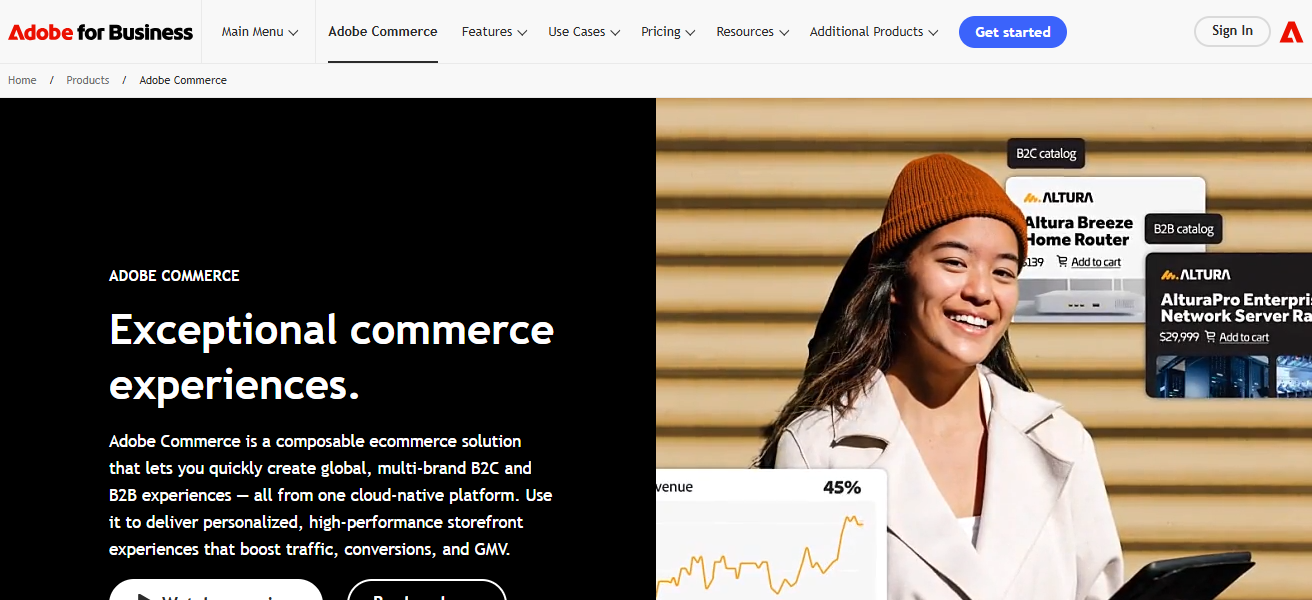
Adobe Commerce’s architecture ensures that brands can scale and efficiently manage catalogs. The Adobe marketing suite, integrated into Commerce, offers customization on campaigns and personalized recommendations driven by artificial intelligence.
Adobe Commerce needs a certain skill level to manage some of its features. However, because of a complicated scheme and dire need for customization, Adobe Commerce remains a strong choice for many D2C brands.
Magento (Adobe Commerce) Features
- Customizable Enterprise-Level Flexibility: Users can have full control over design, functionality, and code.
- Support for Multiple Stores and Global Functionality: Users can optimize multiple stores at once with different currencies and languages.
- Segmentation and Personalization: Users can create different experiences and tailor them to meet specific demands for individuals or groups.
- Integration of Other Tools: Magento can connect with CRMs, ERPs, marketing, and logistics tools.
| Pros | Cons |
|---|---|
| Fully customizable and highly flexible. | Requires technical expertise to set up and maintain. |
| Supports multiple stores, languages, and currencies. | High implementation and maintenance costs. |
| Enterprise-grade features for large D2C operations. | Complexity can slow down deployment time. |
| Scalable architecture suitable for large catalogs. | May require a dedicated development team. |
| Integrates with Adobe Marketing Suite for personalization. | Not ideal for small or beginner brands. |
4. WooCommerce
WooCommerce represents one of the most flexible D2C solutions on the market. Built on WordPress, it allows brands to implement content-driven eCommerce solutions.
The platform is completely open-source which means full control of customization, themes, and plugins.
For D2C brands, WooCommerce is suitable as it integrates with a number of payment gateways, subscription models, and shipping solutions.
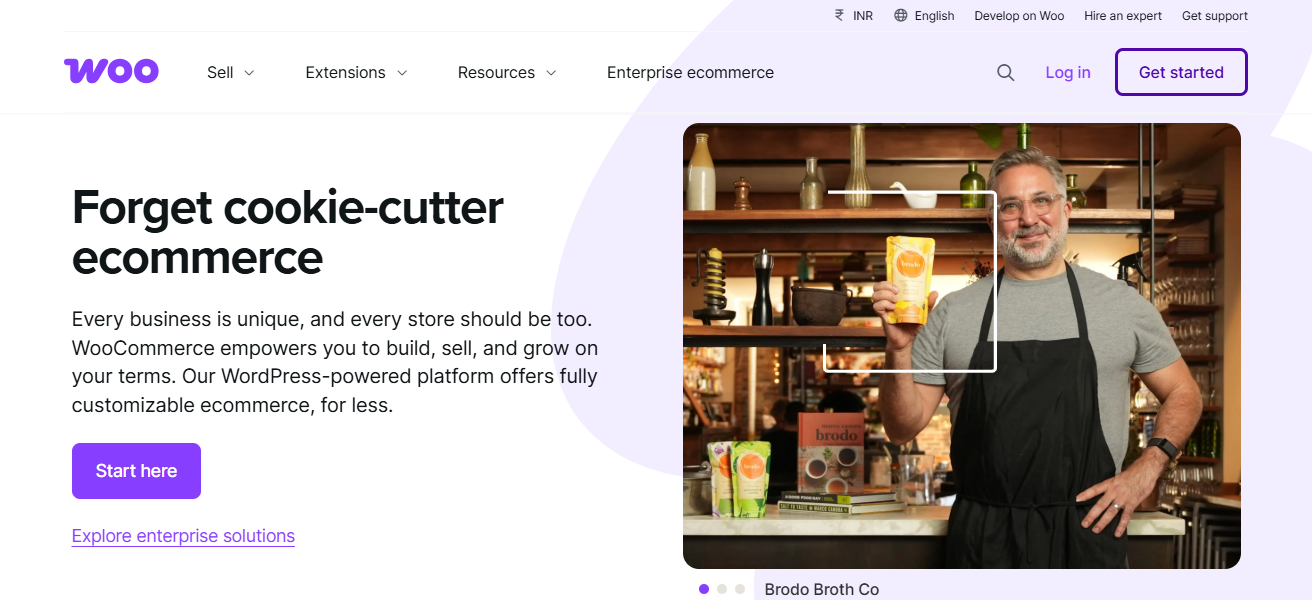
Combined with WordPress, the platform offers robust content marketing and SEO capabilities which are essential for driving organic traffic.
Furthermore, WooCommerce has extensive community support and resources to help brands grow and scale.
Although it can be more cost-effective and flexible versus other platforms, advanced features may require more technical expertise besides a content-driven strategy that needs to be supported with commerce.
WooCommerce Features
- WordPress Integration: Drive traffic and conversions using integrated content and commerce features.
- Plugin Marketplace: Enhance functionality with thousands of plugins for payments, shipping, bookings, and more.
- Open-Source Control: Full flexibility to modify templates, features, and processes.
- SEO-Driven: Leverage WordPress’s dedicated SEO plugins to improve site visibility.
| Pros | Cons |
|---|---|
| Built on WordPress, ideal for content-driven brands. | Advanced customizations require coding knowledge. |
| Open-source and highly flexible. | Performance can be slow without optimization. |
| Large community and plugin ecosystem. | Security and updates must be managed by the user. |
| Cost-effective for small to medium businesses. | Not as feature-rich out-of-the-box as some competitors. |
| Excellent SEO capabilities via WordPress integration. | Scaling large stores may require server upgrades. |
5. Webflow eCommerce
Flexible design and strong D2C features make Webflow eCommerce ideal for brands needing design freedom. Stunning fully responsive websites can be created without the need for complicated coding.
Advanced animations and interactions can be added to the user experience while Webflow handles product management, secure checkout, and payment processing.
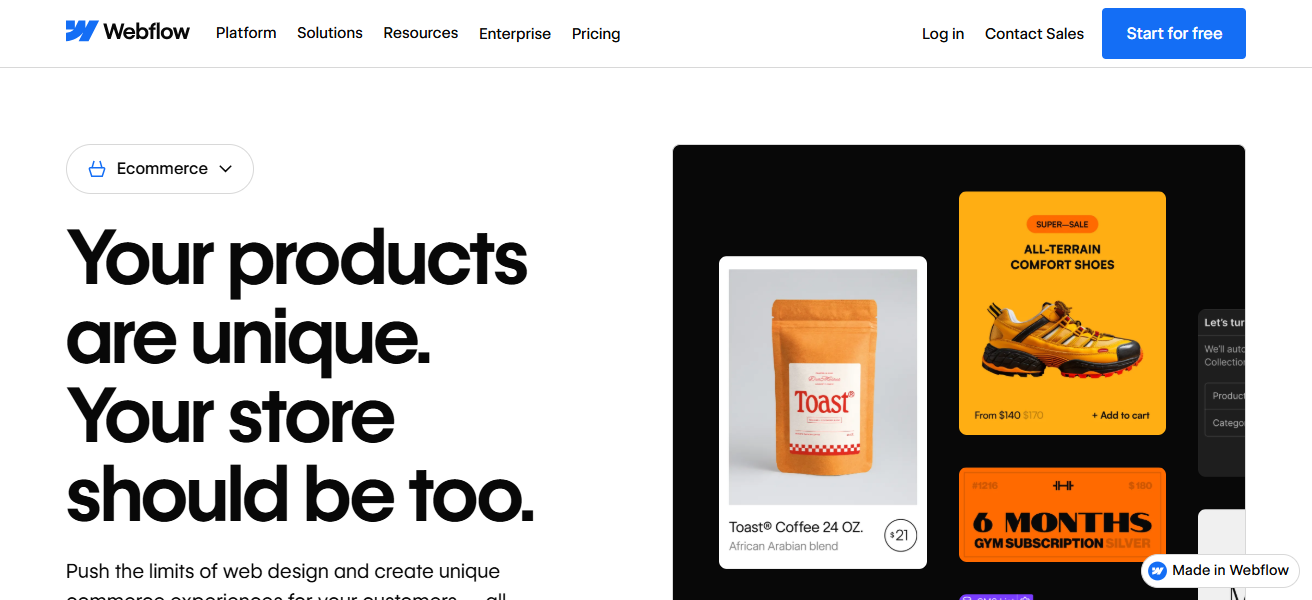
Integrated marketing, analytics, and SEO tools can be added. Made for lifestyle and luxury D2C brands, Webflow’s CMS driven style means content-heavy product pages and rich storytelling.
Webflow may not have as many add ons as Shopify, but their design first approach enables brands to stand out while offering eCommerce.
Webflow eCommerce Features
- Design Freedom: Use the visual editor to create layouts and interactions with pixel-perfect precision.
- CMS + Commerce Fusion: Combine rich content pages and product listings.
- Responsive Animations: Craft engaging user interfaces with built-in interactions and responsiveness.
- SEO & Hosting: Reliable hosting and built-in tools for SEO and site performance.
| Pros | Cons |
|---|---|
| Full design flexibility without heavy coding. | Smaller app ecosystem compared to Shopify. |
| CMS-driven for content-rich product pages. | Advanced eCommerce features require learning curve. |
| Responsive and visually appealing templates. | Limited built-in marketing tools. |
| Integrated analytics and SEO capabilities. | Payment gateways are fewer than competitors. |
| Ideal for lifestyle and luxury D2C brands. | May not suit high-volume stores. |
6. OpenCart
OpenCart is a well-known D2C and easily affordable open source platform. Brands can handle multiple store, currency, and language setups from the same dashboard.
OpenCart includes a wide selection of shipping methods, payment gateways, and operational extensions. Because of its lightweight structure, users benefit from fast page loads and a smooth overall experience.
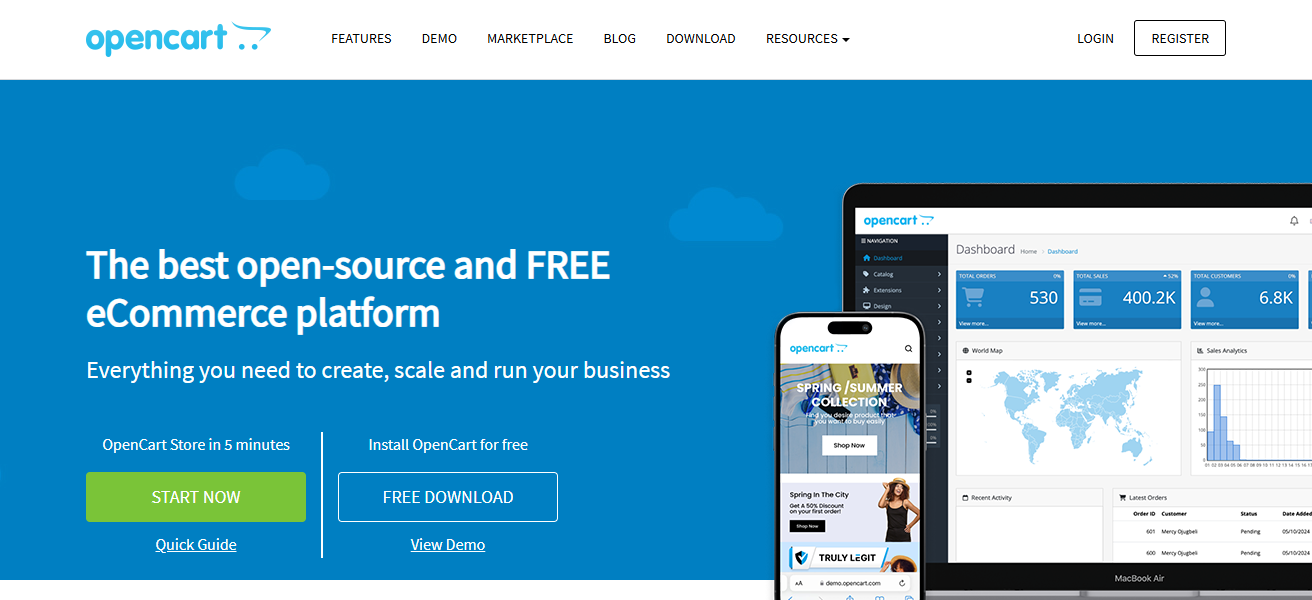
OpenCart’s collaboration tools can feel lacking compared to premium platform options, yet the platform serves best D2C brands of all sizes.
The platform is infinitely flexible developer support. OpenCart is excellent when a budget-friendly, scalable option is needed. Community support also serves to enhance usability through plugins, templates, and shared directions.
OpenCart Features
- Lightweight Architecture: Simple and quick to load, the platform is ideal for small to medium stores.
- Multi-Store Dashboard: Control multiple stores from a single admin panel.
- Multi-Currency & Multi-Language: Flexible features to assist in global selling
| Pros | Cons |
|---|---|
| Free, open-source, and cost-effective. | Limited built-in marketing and analytics tools. |
| Supports multiple stores, currencies, and languages. | Requires technical knowledge for setup and maintenance. |
| Lightweight and fast-loading. | Add-ons can become expensive. |
| Highly customizable with developer support. | Security depends on user and developer updates. |
| Active community for support and extensions. | Not as beginner-friendly as SaaS platforms. |
7. Squarespace Commerce
Commerce is another simple D2C platform that many creative brands use; it provides templates that customers can edit with simple drag-and-drop features.
Additionally, customers can integrate various payment options, along with inventory management, email campaigns, and SEO tuning.

As with other services, it offers mobile responsive designs for easy shopping. Also, customers can manage subscriptions through their site.
High customization options are usually offered with open source platforms, but for many small brands that are less focused on adjusting templates and designs, and mainly on other features, it tends to be effective. Finally, it also offered social media management and analytics.
Squarespace Commerce Features
- Beautiful Templates: Professionally designed, visually focused layouts.
- Drag-and-Drop Builder: Design pages easily without writing code.
- Marketing Suite: Integrated SEO, email campaigns, and analytics.
- Inventory & Subscription Support: Manage recurring payments and inventory from a single location.
| Pros | Cons |
|---|---|
| Easy drag-and-drop website building. | Limited customization for advanced eCommerce needs. |
| Beautiful, mobile-responsive templates. | Less suitable for large product catalogs. |
| Integrated payment gateways and subscriptions. | Fewer third-party integrations. |
| Built-in analytics and SEO tools. | Lacks flexibility for enterprise-level brands. |
| Ideal for creative and lifestyle brands. | Some advanced features require higher-tier plans. |
8. Wix eCommerce
Wix eCommerce gives users a very simple way to build an online store and has a very simple drag and drop builder. There are tons of SEO, email marketing, and social selling tools.
These tools help small D2C brands reach their customers. These tools are mostly catered towards small businesses but larger businesses are still able to benefit from their growing D2C services.
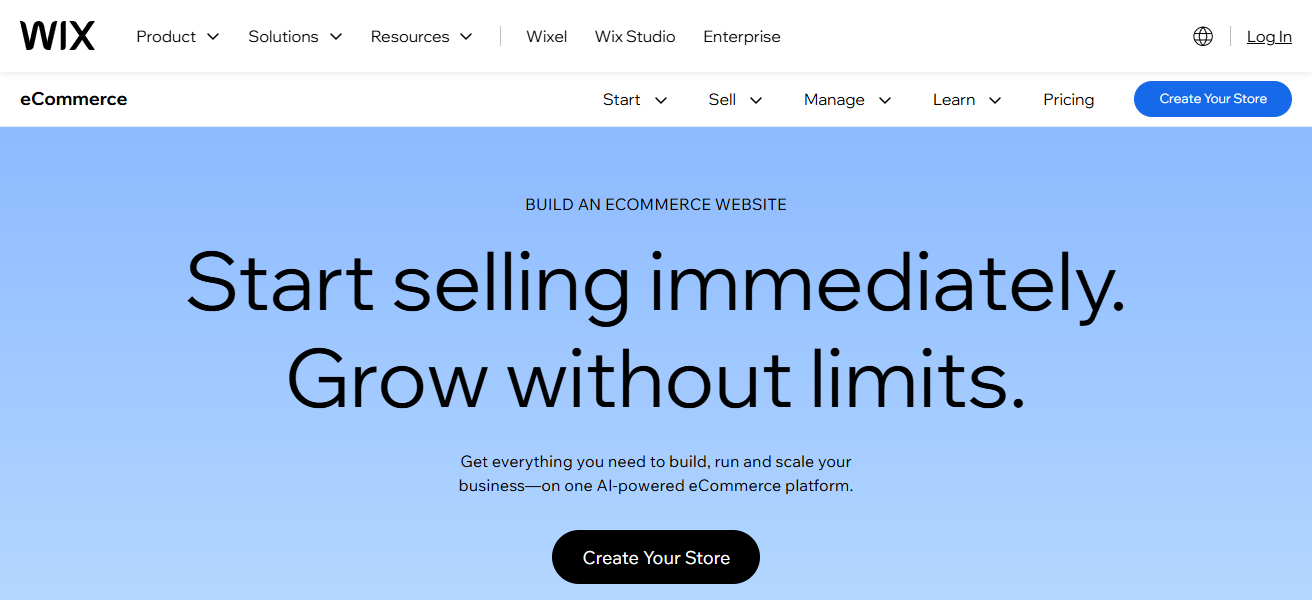
Wix eCommerce also enables brands to manage products, promotions, and provides analytic tools to better understand their customers.
D2C brands are able to quickly launch their store without the use of any coding skills and the integrated payment options are extremely helpful. The flexible design is nice to see as many platforms have very rigid structures.
Wix eCommerce Features
- Easy to Use: Offers a simple drag-and-drop website creation with eCommerce capabilities.
- Business Tools: Payment processing, bookings, and customer management are embedded.
- App Store: Enhance your store with features like advanced shipping, customer loyalty, and reviews.
- Promotional Tools: Helps you create SEO and marketing campaigns to boost your store’s visibility.
| Pros | Cons |
|---|---|
| Beginner-friendly with drag-and-drop design. | Limited scalability for very large stores. |
| Affordable pricing for small businesses. | Fewer advanced eCommerce features than competitors. |
| Integrated payments, SEO, and marketing tools. | Apps may be required for full functionality. |
| Quick setup for emerging D2C brands. | Not ideal for enterprise-level customization. |
| Visually flexible templates and editor. | Transaction fees apply in some payment setups. |
9. QPe
QPe is a new D2C platform easy brand enablement and digital storefront creation. It offers brand inventory management, payment processing, and customer engagement tools.
QPe focuses on speed, usability, and scalability so that SMBs can quickly and easily set up online storefronts.
Its marketing integrations enable brands to manage and run promotional marketing, loyalty programs, and campaigns driven by customer engagement analytics.
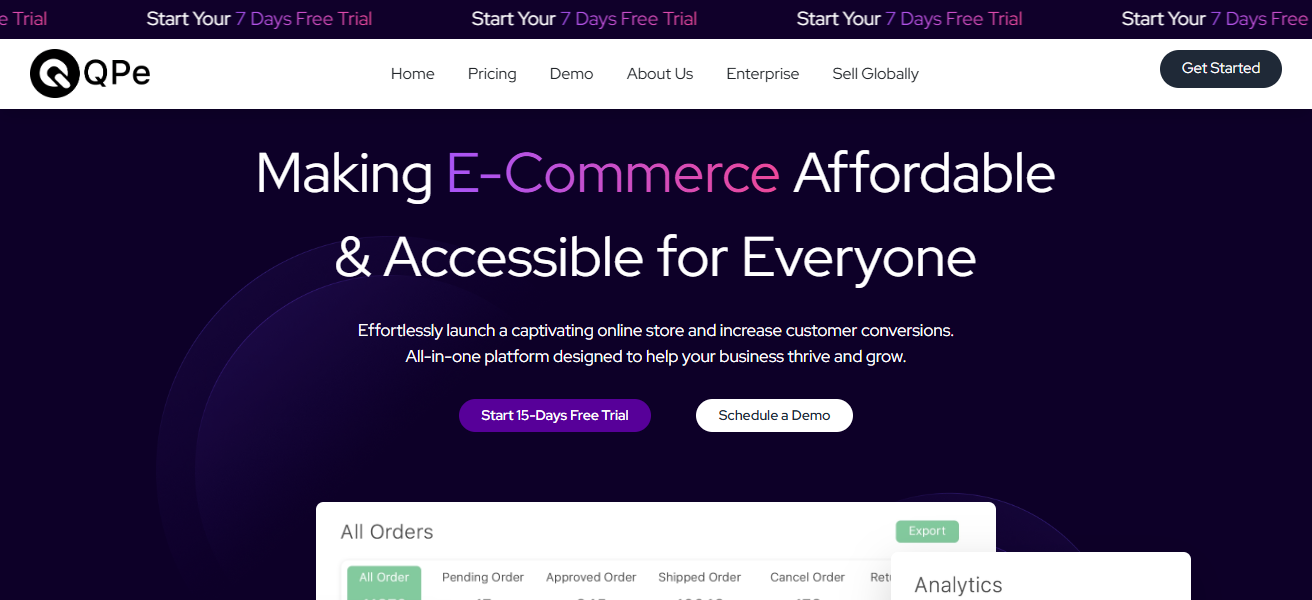
While less known than Shopify and Magento, QPe is becoming a more popular option because of its modern, user-friendly interface and reasonable prices.
It is a good option for D2C brands that want their first eCommerce platform to be easy to use and full of features.
QPe Features
- Quick Store Creation: Rapid store setup using customizable templates and workflows.
- Merged Dashboard: Consolidate your orders, inventory, and customer data.
- Promotions and Loyalty: Built-in reward, promotion, and campaign tools.
- Payment Security: Integrated payment processing and checkout.
| Pros | Cons |
|---|---|
| Modern, intuitive interface for quick setup. | Less known, smaller community and resources. |
| All-in-one platform for payments, inventory, and marketing. | Limited integrations compared to mature platforms. |
| Scalable for small and medium businesses. | Fewer advanced features for large brands. |
| Flexible pricing and usability. | Learning curve for complex campaigns. |
| Supports promotions, loyalty programs, and analytics. | May not suit global or multi-currency operations. |
10. Salesforce Commerce Cloud
Salesforce Commerce Cloud is an enterprise-grade D2C platform geared toward large players in the market looking for sophisticated tools.
It provides users with AI-driven personalization, multi-channel commerce, and scalability in the cloud. It provides product management tools paired with segmentation, predictive analytics, marketing automation, and customer analytics.
It is integrated with Salesforce, which offers seamless management of CRM, customer support, and loyalty programs.
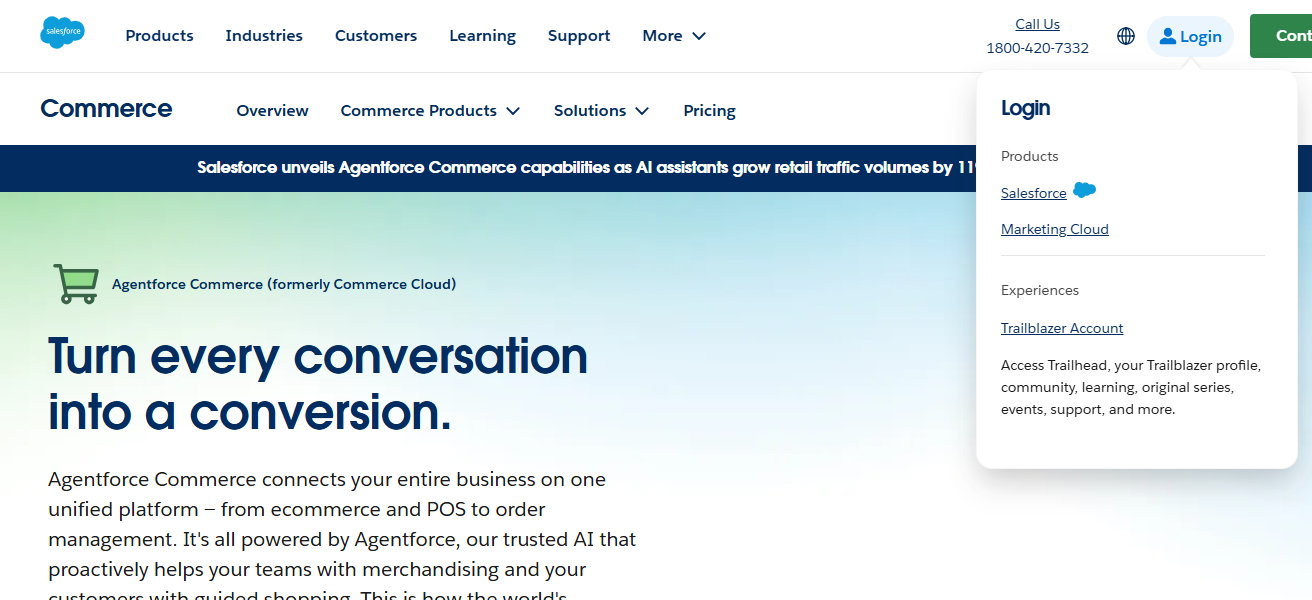
It is the ideal eCommerce solution for global operations, multi-currency and multi-language support, and offers global security and compliance.
Salesforce Commerce Cloud is considered the best option for D2C brands looking to create tailored shopping experiences through data-driven customer interactions. It also builds the best solution for obtaining long-lasting customer loyalty and engagement.
Salesforce Commerce Cloud Features
- AI-Fueled Personalization: Smart suggestions and personalized shopping journeys.
- CRM Integration: Complete connection with Salesforce CRM for a unified view of customer data.
- Cross-Channel Commerce: Integrated experiences across web, mobile, and physical stores.
- Cloud Scalability: Trusted cloud infrastructure for worldwide scale.
| Pros | Cons |
|---|---|
| Enterprise-grade, highly scalable platform. | High cost and investment required. |
| AI-driven personalization and predictive analytics. | Technical expertise needed for implementation. |
| Multi-channel commerce with CRM integration. | Overkill for small or medium brands. |
| Strong global support with multi-language/currency. | Customization can be expensive and time-consuming. |
| Excellent for long-term customer engagement and loyalty. | Limited flexibility in front-end design compared to design-first platforms. |
How To Choose Best D2C Brand Enablement Platforms
Business Size & Growth Plans Identify a platform suitable for your business size and growth potential.
Budget & Total Cost Analyze all relevant costs, including initial setup, subscriptions, and transactions.
Customization & Design Freedom Determine how much room you have for branding, design, and customer experience variations.
Ease of Use Choose a platform that is intuitive and simple for your team to implement.
Multi-Channel Selling Support Choose one that allows sales integrations with marketplaces, socials, and offline locations.
Marketing & SEO Tools Examine options that include marketing and SEO to boost visibility and engagement.
Integration Capabilities Use combinations of platforms that allow seamless integrations with your CRM, ERP, and analytics.
Performance & Reliability Look for a platform that loads quickly, is consistently available, and is securely hosted.
Cocnsluion
In cocnsluion Selecting the most suitable D2C Brand enablement platform is one of the most important aspects of driving your business and elevating customer experience.
Shopify, BigCommerce, Magento, and Salesforce Commerce Cloud, for example, provide varying functionalities for different circumstances.
Consider their scalability, customizability, operational simplicity versus budget tradeoff, and you may very well increase your operational efficiency, sales, and direct consumer relationships.
FAQ
A platform that helps brands sell directly to customers online efficiently.
It simplifies store management, marketing, payments, and customer engagement.
Shopify and Wix are beginner-friendly with drag-and-drop setup.
Salesforce Commerce Cloud and Magento (Adobe Commerce) suit enterprise-level operations.