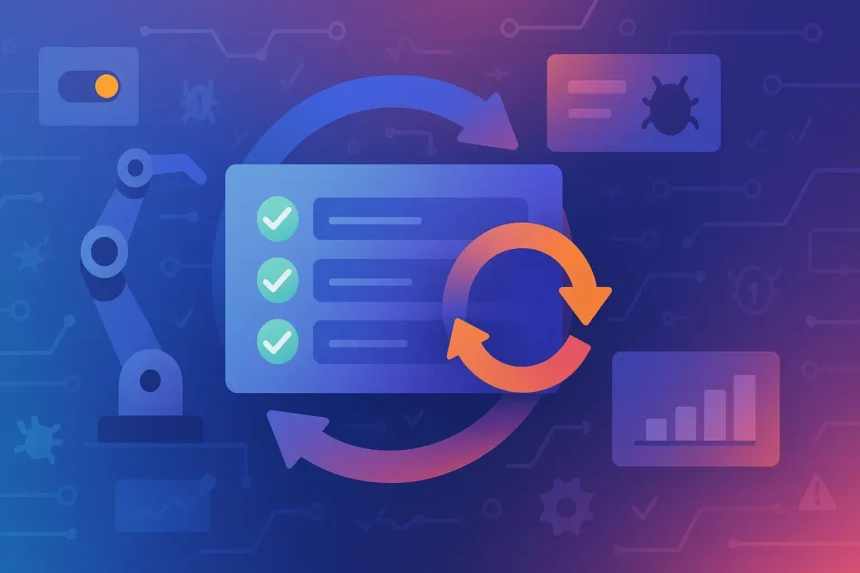
This article will review the Best Data Governance Software for Enterprises. Review and discussion will focus on top enterprise solutions for managing, securing, and optimizing enterprise data.
- Key Points & Best Data Governance Software For Enterprises
- 10 Best Data Governance Software For Enterprises
- 1. Collibra
- 2. Informatica Axon
- 3. Alation
- 4. IBM Watson Knowledge Catalog
- 5. SAP Data Intelligence
- 6. Talend Data Fabric
- 7. Microsoft Purview
- 8. Ataccama ONE
- 9. erwin Data Intelligence
- 10. Immuta
- Cocnlsuion
- FAQ
From metadata management to compliance and data quality, these tools empower enterprises to make smart and compliant decisions while collaborating business and IT teams to govern and trust the data.
Key Points & Best Data Governance Software For Enterprises
| Software | Key Point |
|---|---|
| Collibra | Enterprise-wide governance workflows |
| Informatica Axon | Deep metadata integration |
| Alation | Crowdsourced data stewardship |
| IBM Watson Knowledge Catalog | AI-driven catalog automation |
| SAP Data Intelligence | Native SAP ecosystem alignment |
| Talend Data Fabric | Open-source extensibility |
| Microsoft Purview | Cloud-native compliance monitoring |
| Ataccama ONE | Unified quality + governance |
| erwin Data Intelligence | Centralized business glossary |
| Immuta | Dynamic policy enforcement |
10 Best Data Governance Software For Enterprises
1. Collibra
Collibra is one of the most established platforms for managing enterprise data governance. It provides a central hub for governing, cataloging, and overseeing data for large organizations.
It provides exceptional support for cross-domain teamwork, enforcement of data policies, and full tracking of data lineage to help teams comprehend the movement of data through complex systems.
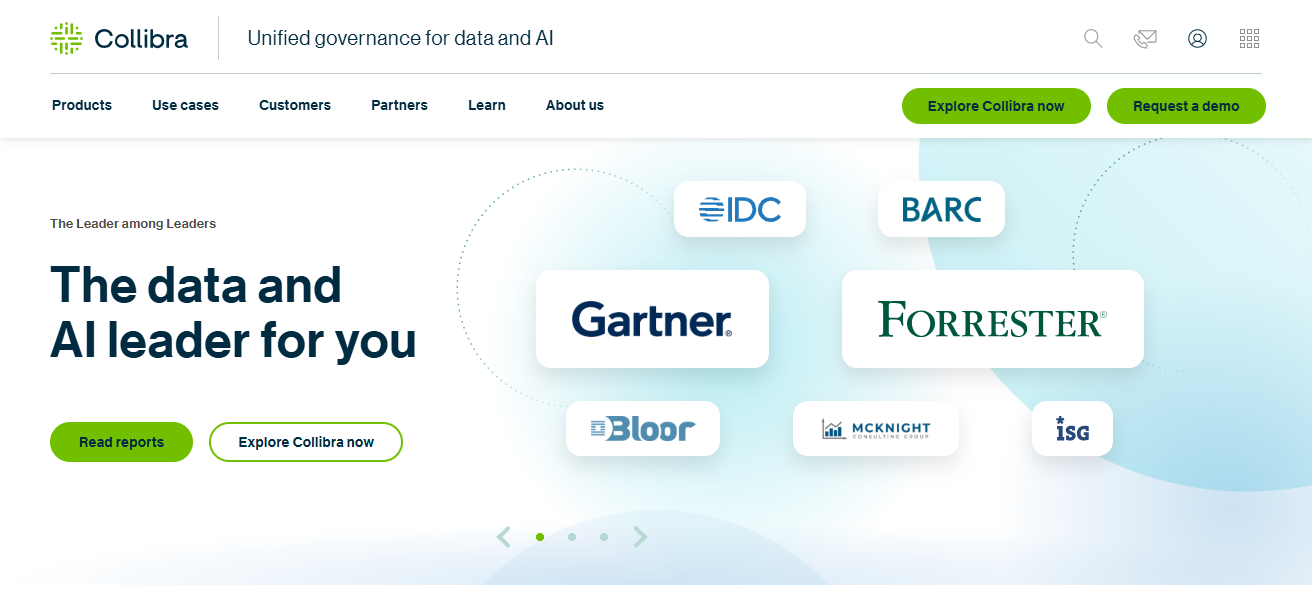
Collibra’s workflows ensure compliance, regulatory audit preparedness, and the enforcement of uniform governance standards across disparate systems.
This is particularly useful for highly regulated industries like finance and healthcare. Its flexible architecture and automated governance processes help enterprises minimize manual effort and increase transparency and trust in their data.
Features Collibra
- Enterprise Data Catalog: A data asset repository for discovering and organizing various data assets across systems.
- Data Lineage & Impact Analysis: Enables visualization of the transformation and dependencies of data through the tracking of data flows.
- Policy & Workflow Automation: Automates governance process policy, approval, and stewardship assignment.
- Business Glossary & Collaboration: Shared definitional glossaries as well as collaboration tools for the alignment of divergent business and IT vocabularies.
| Pros | Cons |
|---|---|
| Highly scalable for large enterprises with complex governance needs. | Can be expensive for smaller organizations. |
| Strong business glossary, cataloging, and stewardship features. | Steep learning curve for new users and admins. |
| Excellent workflow automation and compliance support. | Implementation and customization may require expert consulting. |
| Great collaboration between business and technical teams. | Performance can slow with extremely large metadata volumes. |
2. Informatica Axon
Informatica Axon comes with an adaptable enterprise data governance solution for time zone alignment of business and IT stakeholders on trusted data practices.
Included in the Intelligent Data Management Cloud suite, Axon features a business glossary, metadata management collection automated data lineage, and stewardship workflow automation. It focuses on cross data governance and rapid iteration in data term usage.
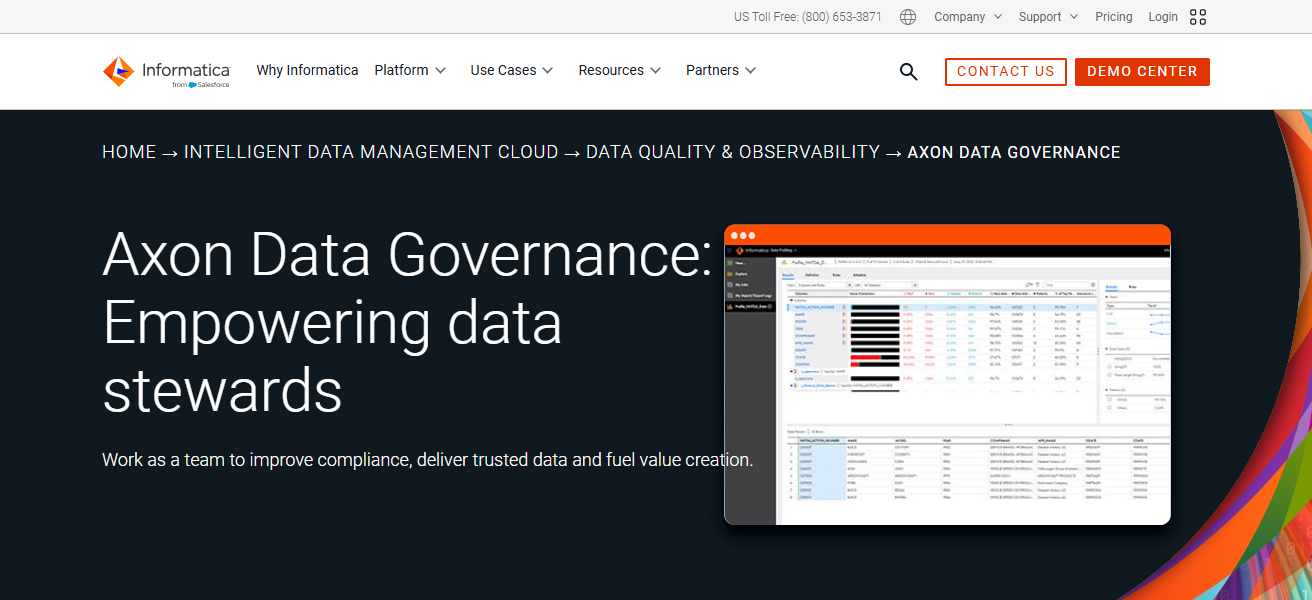
Axon cultivating governance with other data quality and integration tools from Informatica helps users streamline governance with other data management practices on a unified level
for regulatory compliance and data quality improvement at a high velocity in hybrid and multi-cloud systems.
Features Informatica Axon
- Business Glossary Management: Elimination of definitional siloes through the standardization of terms, metrics, and definitional explanations across the enterprise.
- Automated Lineage & Metadata: Data tracking and reporting across systems for metadata enrichment.
- Stewardship Workflows: Governance task assignment, approval tracking, and issue resolution workflow.
- Integration With Informatica Platform: Seamless link with data quality, integration, and Master Data Management (MDM) tools.
| Pros | Cons |
|---|---|
| Tight integration with Informatica ecosystem (data quality, MDM). | Licenses and total cost can be high. |
| Robust metadata management and lineage visualization. | Interface can feel complex for non‑technical users. |
| Strong business term management and stewardship workflows. | Requires skilled governance roles for best results. |
| Good for hybrid and multi‑cloud environments. | Setup and configuration time may be lengthy. |
3. Alation
Alation is the first company to introduce a data cataloging and governance solution that incorporates collaborative data discovery and active metadata use.
Alation’s platform automates the processes of making metadata recommendations, classifying, and helping users find trusted data using machine learning.
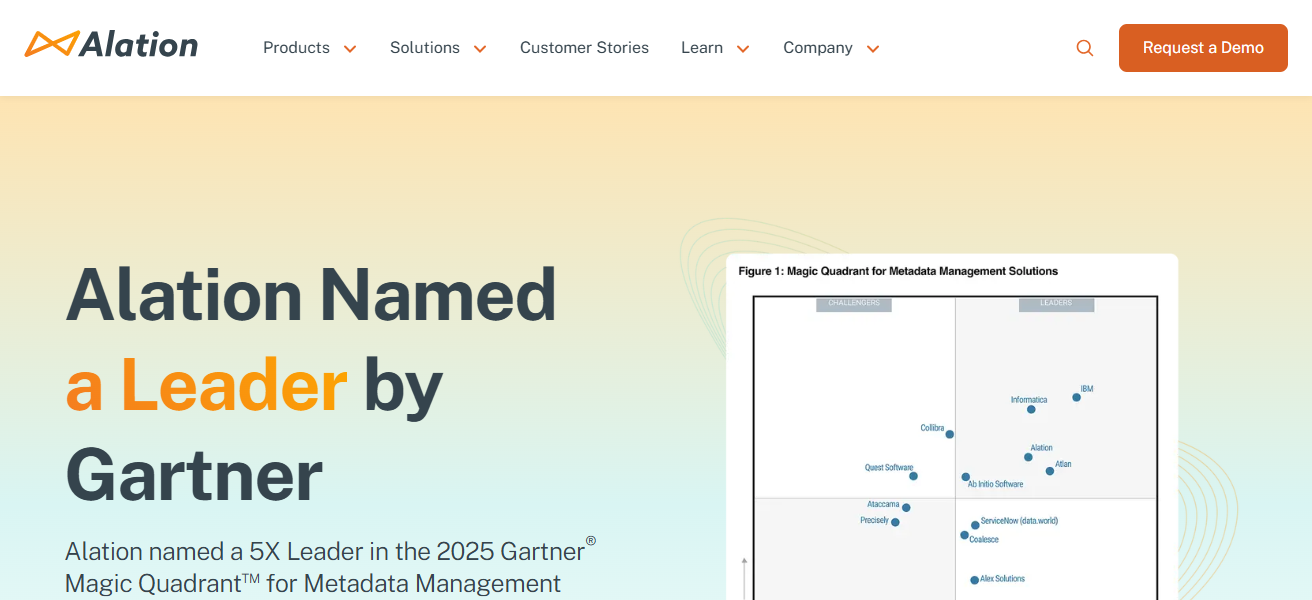
Alation’s governance features provide organizations with the ability to foster a data-driven culture through the construction of stewardship workflows, the enforcement of policies and governance, and tracking of data usage.
Alation’s intuitive interface and search capabilities empower both technical and business users to better understand and manage data.
Alation is ideal for enterprises that want to enhance data literacy, democratize data, and build governance into analytics workflows.
Features Alation
- Active Data Catalog: Facilitates ML-aided cataloging and recommendation for enhanced data discoverability.
- Collaborative Data Governance: Offers comments, tags, and contextualization for both business and technical users.
- Query & Usage Tracking: Collected data asset usage is analyzed to adjust for relevance and trustworthiness.
- Glossary & Stewardship Tools: A unified stewardship workflow with a centralized business glossary.
| Pros | Cons |
|---|---|
| Excellent search and discovery with ML recommendations. | Pricing may be a barrier for mid‑market companies. |
| Improves data literacy and self‑service analytics. | Requires configuration to fully realize ML benefits. |
| Great user experience for both business & data teams. | Some advanced features need additional training. |
| Strong collaboration and usage tracking. | Can be challenging to integrate with legacy systems. |
4. IBM Watson Knowledge Catalog
IBM Watson Knowledge Catalog (along with watsonx.data intelligence) is part of an automated AI-driven governance and cataloging solution that helps enterprises uncover, organize, and safeguard data in hybrid and cloud systems.
It streamlines processes to enrich, classify, and assess data quality, allowing users to monitor data governance and lineage.
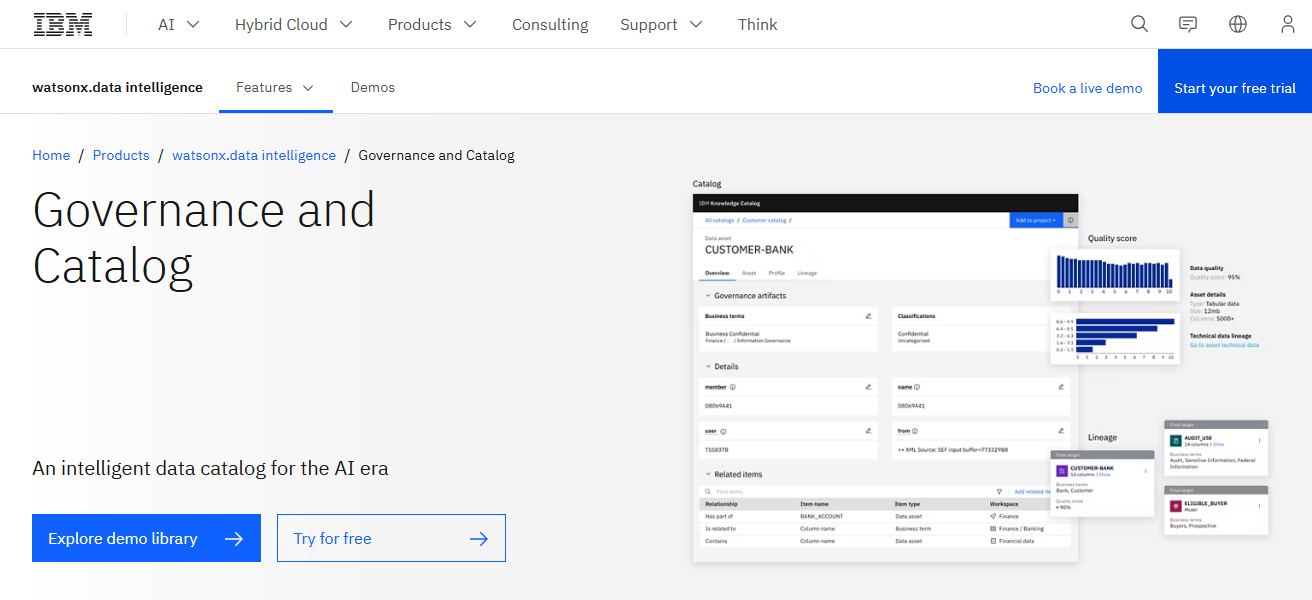
Watson also helps businesses meet data privacy and compliance control regulatory requirements while ensuring data findability and usability.
It is also integrated with IBM’s analytics and AI stack, making it a good fit for large enterprises with AI and advanced analytics projects on diverse datasets.
Features IBM Watson Knowledge Catalog
- AI Gauging Metadata Enrichment: Automatic classification and tagging of metadata for efficient data retrieval.
- Timelines for Data Lineage: Illustrate end-to-end timelines across different hybrid data landscape combinations.
- Policy Enforcement & Security Controls: Integrated access, security, compliance, and policy governance.
- Multi-cloud Support: Catalogs and governs data across private, public, and hybrid clouds.
| Pros | Cons |
|---|---|
| AI‑driven metadata enrichment and classification. | Can be complex to configure and govern effectively. |
| Strong lineage and hybrid cloud support. | Higher total cost and licensing complexity. |
| Built‑in governance and compliance controls. | Not always intuitive for business users. |
| Integrates well with IBM analytics and data tools. | Some integrations outside IBM stack are harder. |
5. SAP Data Intelligence
SAP Data Intelligence is an example of a complete solution for data orchestration and governance focused on integrating, managing, and governing data across both SAP and non-SAP environments.
With features such as metadata management, data lineage visualization, and policy governance, SAP Data Intelligence enables enterprise data unification across complex hybrid environments.
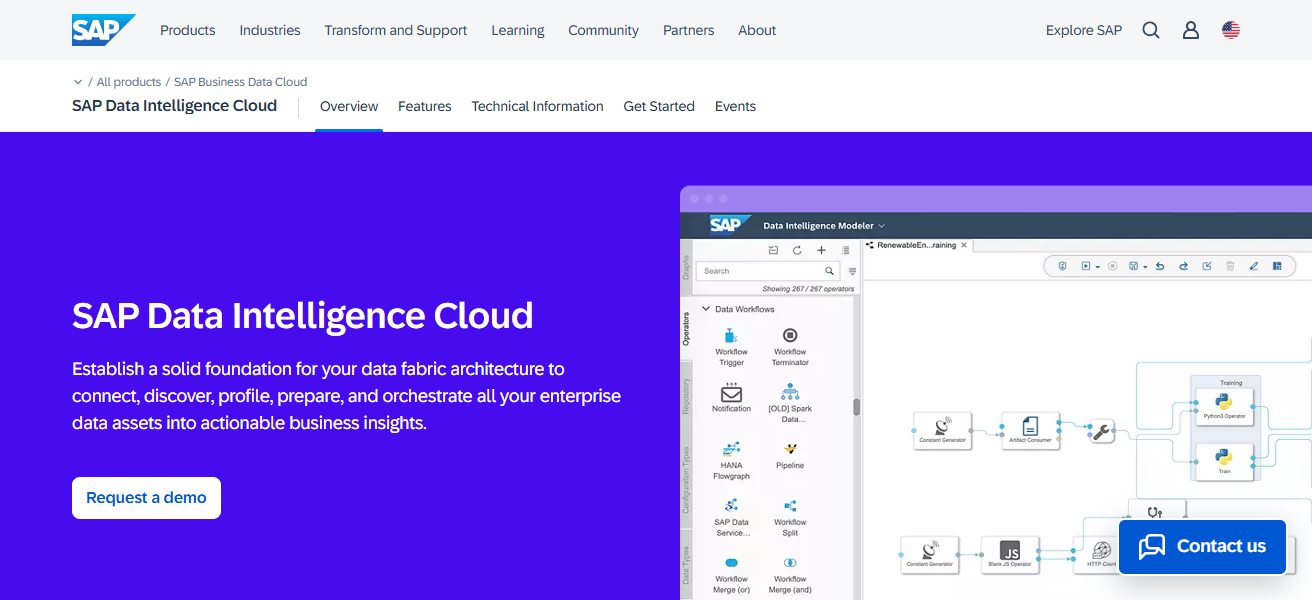
In addition, SAP Data Intelligence operationalizes data governance within machine learning and AI workflows, integrating the practice with analytics and data integration strategies.
For enterprises that have made significant investments in SAP technologies, Data Intelligence’s close alignment with the SAP ecosystem is a key differentiator for end-to-end governance and data operations.
Features SAP Data Intelligence
- Traceability of Metadata Management & Lineage: Metadata and data lineage tracking across different systems.
- Integration & Orchestration: A cohesive tool for elastic data integration and the construction of data pipeline in the cloud.
- Governance & Policy Controls: Data policies and enterprise requirements alignment.
- AI/ML Enablement: The construction and governance of machine learning pipelines.
| Pros | Cons |
|---|---|
| Unified governance + data orchestration. | Best value is within SAP ecosystems only. |
| Supports complex hybrid landscapes. | Steep learning curve and architectural complexity. |
| Strong lineage and metadata capabilities. | Initial deployment can be challenging. |
| Works well with ML workflows and pipelines. | Can be overkill for simple governance needs. |
6. Talend Data Fabric
Talend Data Fabric unifies data integration with data quality and governance so companies have clean, compliant and governed data flows.
Its data automation tools include pipeline governance (for cleansing and metadata management) and policy enforcement.
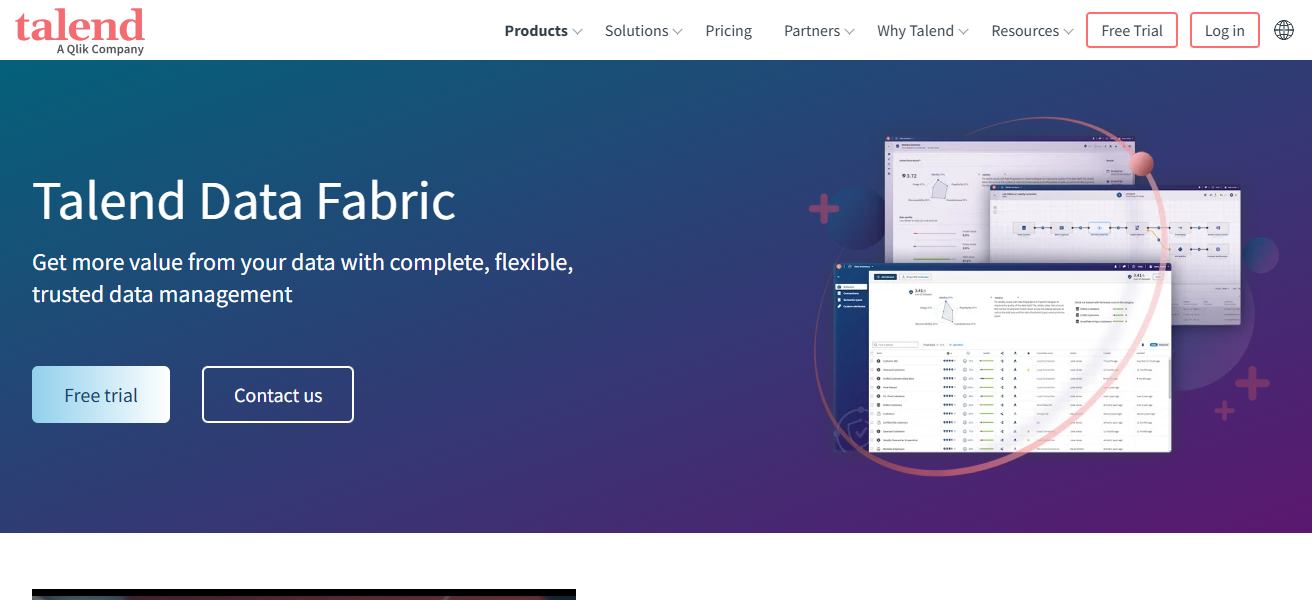
With Integrated Monitoring, users can Continuously Govern data (from ingestion, through transforms, to consumption).
For companies like Retail and Manufacturing with Complex Data Structures, Talend meets high-value business needs by integrating Data Governance and Quality with Analytics.
Features Talend Data Fabric
- Unified Data Integration: ETL, ELT, and real-time integration in one platform.
- Data Quality & Standardization: Ensured data trust through cleansing, matching, and validation.
- Governance & Compliance: Datasets policy centralization.
- Real-Time Monitoring: Continuous tracking of data quality and pipeline health.
| Pros | Cons |
|---|---|
| Combines governance with data quality and integration. | Some advanced governance features are less mature. |
| Real‑time monitoring and quality dashboards. | UI can feel dated compared to competitors. |
| Good value for integrated data management. | Curated workflows may need customization. |
| Strong open‑source foundation and flexibility. | Learning curve for connecting all modules. |
7. Microsoft Purview
Microsoft Purview offers a solution for data governance and compliance that helps organizations in hybrid and multicloud environments automate data scanning, cataloging, and management.
Data Map and Unified Catalog allow organizations to facilitate asset discovery, sensitive data classification, and data lineage tracking, providing visibility throughout their data estate.
Purview integrates with Azure, Microsoft 365, and other clouds, providing organizations already used to the Microsoft ecosystem a seamless experience.
Additionally, it provides enterprises with the ability to unlock business insights while responsibly managing data and adhering to governance standards, supporting privacy, (reputational) risk, and compliance workflows.
Features Microsoft Purview
- A Whole Mapper: Autonomously scans and catalogs cloud and on-prem data assets and their sources.
- Sensitive Data Classification: In the end, the data estate classifies and labels information, sensitive data.
- Lineage Across Tools: End-to-end visualization of data flow in analytics and storage tools.
- Compliance & Risk Insights: Integrated compliance evaluations and reporting dashboards.
| Pros | Cons |
|---|---|
| Auto‑discovery and classification across Azure & hybrid data. | Best suited for Microsoft‑centric environments. |
| Unified data map and comprehensive lineage. | Some advanced analytics governance features are evolving. |
| Good governance + compliance reporting. | Integration outside Microsoft stack can be limited. |
| Strong sensitivity labeling and risk insights. | UI can be overwhelming for new users. |
8. Ataccama ONE
Ataccama ONE is an all-in-one data governance and quality platform powered by artificial intelligence, integrating data profiling, data cleansing, data cataloging, and data governance.
Its automated workflows help organizations achieve high data quality and compliance, while reducing manual processes.
With Ataccama, enterprises can manage and govern metadata to visualize and monitor data health and policies in real time.
Its ability to function in both cloud and on-premises environments makes Ataccama ONE ideal for large enterprises that need scalable governance, master data management, and AI-driven data insights.
Features Ataccama ONE
- AI Powered Data Quality: Automated data profiling, cleansing, and anomaly detection.
- Management of Metadata and Lineage: Identifying and visualizing connections among data assets.
- Self-Service Governance: Business users can analyze and comprehend governed data.
- Flexible Deployment: Functions in cloud, hybrid, and on-premises environments.
| Pros | Cons |
|---|---|
| AI‑powered data quality and governance automation. | Licensing and module complexity can be confusing. |
| Flexible deployment across cloud/on‑prem. | Enterprise training often required. |
| Self‑service data stewardship support. | Fewer community resources than larger vendors. |
| Good metadata management and lineage tools. | Smaller ecosystem than big enterprise incumbents. |
9. erwin Data Intelligence
Quest Software’s Erwin Data Intelligence provides enterprises with tools for managing, governing, and understanding the complex landscapes of their data, including data lineage and metadata management.
It is particularly strong in automating the data cataloging process, managing metadata, and visualizing data lineage, establishing a solid foundation for organizations to build data literacy and compliance.
Erwin’s platform accommodates connections with ETL and BI tools, simplifying the process of embedding governance into pre-existing data workflows.
Organizations are able to work with data more effectively, enforce policies, and automated visualization while ensuring that data definitions are consistent and trustworthy across departments.
Features Erwin Data Intelligence
- Automated metadata harvesting: For governance, it collects metadata from various sources.
- Visual Lineage Maps: Unambiguous depiction of transformations and lineage of data.
- Data Catalog and Glossary: Defined and contextualized business assets around data.
- Integration With BI/ETL Tools: Operates alongside widely used analytics and integration tools.
| Pros | Cons |
|---|---|
| Strong lineage and automated metadata harvesting. | UI/UX has lagged behind newer competitors. |
| Integrates with many BI/ETL tools. | Feature set can feel too technical for business users. |
| Clear business glossary and catalog. | Governance automation is less advanced than others. |
| Good for traditional enterprise environments. | Not as cloud‑native as some rivals. |
10. Immuta
Immuta specializes in data governance as it pertains to secure data access, policy automation, and enterprise-scale compliance.
Immuta helps businesses manage and maintain dynamic access policies across various cloud environments so that only approved users have access to sensitive information.
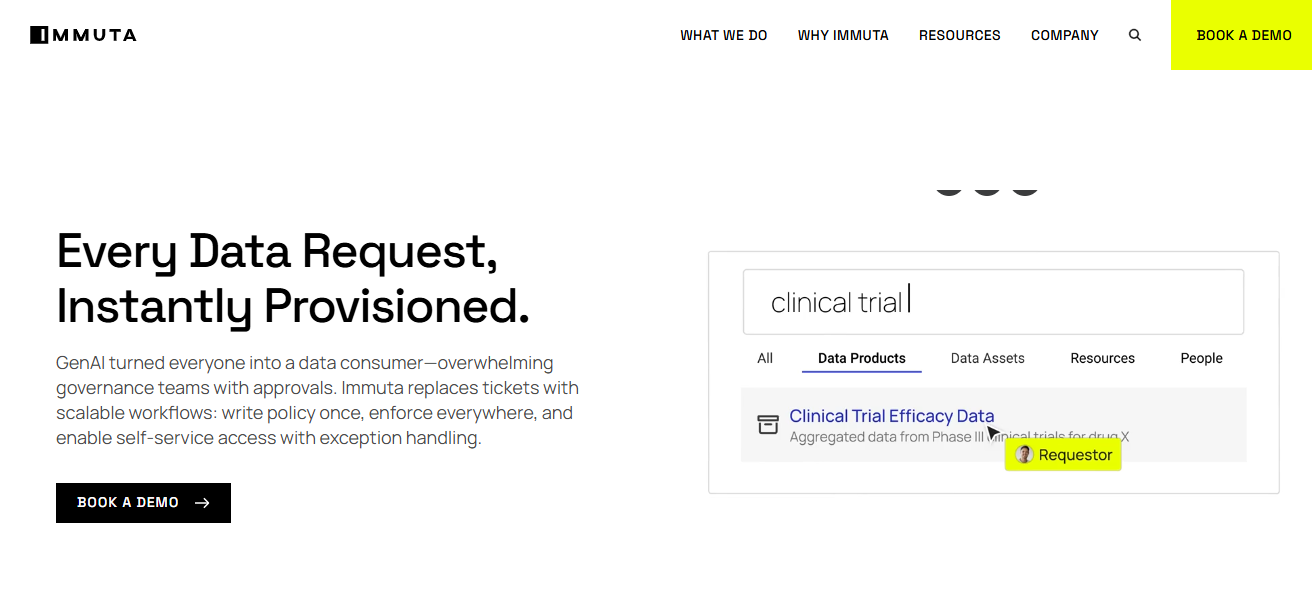
Furthermore, Immuta offers automated classification, as well as automated compliance monitoring, and privacy regulation remediation.
Immuta’s data marketplace model enables the publishing, discovering, and safe consumption of governed data products, integrating self-service analytics with data governance.
Immuta is especially used in some of the most highly regulated industries: finance, healthcare, and the public sector.
Features Immuta
- Dynamic Access Control: Control policy-based access that changes according to user context.
- Data Access Governance: A centralized framework of policy for safe and responsible data consumption.
- Automated Classification: Identifying sensitive information and supervision of governance rules.
- Self-Service Data Marketplace: Users can browse and apply to access controlled datasets.
| Pros | Cons |
|---|---|
| Excellent dynamic access control and security policies. | Focused more narrowly on access governance. |
| Strong data privacy and compliance support. | Limited broader data catalog features. |
| Automated classification and policy enforcement. | May require pairing with other tools for full governance. |
| Data marketplace simplifies access & self‑service. | Pricing can be high for full feature set. |
Cocnlsuion
To sum up, enterprise data governance applications help manage data quality, compliance, and data security. They assist organizations in managing metadata, policy enforcement, and data traceability, in order to make more accurate business decisions.
The right data governance applications will help enterprises enhance collaboration and analytics, and provide data that is governed and trusted throughout business processes.
FAQ
Data governance software helps organizations manage, secure, and standardize data with policies, catalogs, and compliance tools.
To ensure data quality, compliance, lineage visibility, and secure access across large systems.
Look for data catalog, lineage, metadata management, policy enforcement, and compliance reporting.
Yes — cloud and hybrid support ensures governance across modern data environments.
Many enterprise tools have higher costs, but pricing varies by vendor and scale.