In this article, I will examine the best alternatives to DeFiPay and evaluate the best decentralized payment platforms that support cryptocurrency payments, trading, lending, and borrowing without the involvement of banks.
These alternatives offer support and access to the DeFi ecosystem, and their payment technology facilitates the safe, transparent, and efficient management of digital assets in the payment system while earning interest and accessing lquidity. Learning these platforms will help users make informed and automated financial decisions.
What Are DeFiPay Alternatives?
Decentralized platforms are systems based on blockchains that allow users to execute crypto transactions, trading, lending, and borrowing without banks and financial institutions.
They use smart contracts that automatically and safely execute transactions within a transparent framework.
Users retain full control of their global assets and, use financial services that are cheaper and more efficient than traditional systems.
These platforms allow users to access savings and leverage their crypto holdings and are therefore an attractive alternative to managing assets within the confines of traditional finance systems.
Key Points & Best Defipay Alternatives
| Platform | Key Point |
|---|---|
| Aave | Leading lending protocol with flash loans and competitive APY |
| Uniswap | Top decentralized exchange (DEX) for token swaps |
| Compound | Algorithmic interest rates for lending and borrowing |
| MakerDAO | Stablecoin DAI backed by collateralized debt positions |
| Curve Finance | Specialized in stablecoin trading with low slippage |
| SushiSwap | DEX with yield farming and community governance |
| Yearn Finance | Automated yield optimization strategies |
| Balancer | Customizable liquidity pools with multi-token support |
| PancakeSwap | Popular DEX on Binance Smart Chain with low fees |
| dYdX | Decentralized derivatives and margin trading |
10 Best Defipay Alternatives
1. Aave
One of the best alternatives to DefiPay is a decentralized system of liquidity and no longer relies on third-party payment systems.
Aave now enables users to lend, earn, and borrow interest directly from smart contracts without being tied to inflexible payment rails, allowing them total control over their assets.
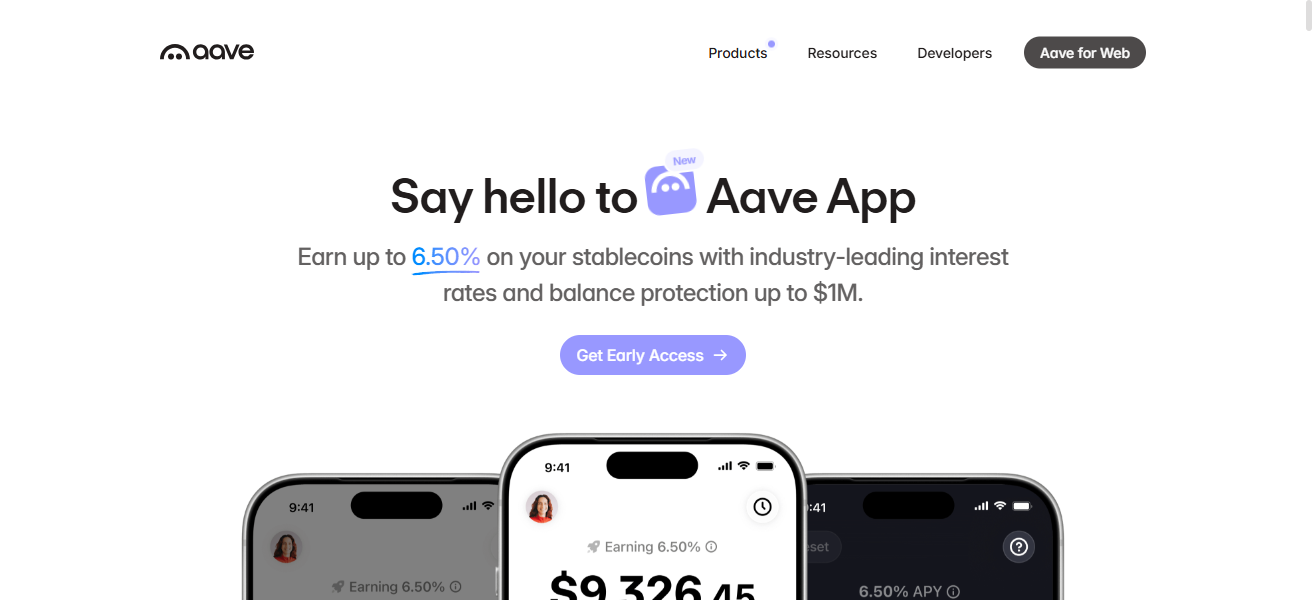
Unique to Aave is the ability to access liquidity without needing to sell your crypto. This is why Aave is best suited for users who need a seamless combination of payment, savings, and credit services, all within a permissionless DeFi environment.
| Feature | Description |
|---|---|
| Decentralized Lending & Borrowing | Users can lend or borrow crypto without intermediaries. |
| Flexible Liquidity | Access funds without selling assets. |
| Variable & Stable Interest Rates | Choose between predictable or market-driven rates. |
| Flash Loans | Instant, uncollateralized loans for advanced DeFi strategies. |
| Collateralized Loans | Borrowers must lock crypto as collateral. |
Pros And Cons Aave
Pros
- No intermediaries when lending and borrowing.
- Liquidity can be obtained anytime without selling.
- Option of a stable or variable interest rate.
- Able to obtain flash loans to execute more complex strategies.
Cons
- It can be overly complex to understand rate systems and collateral for new users.
- Potential smart contract vulnerabilities.
- Transactions incur high fees during times of high congestion on Ethereum.
- To borrow funds, significant over collateralization is needed.
2. Uniswap
Uniswap is one of the top options for DeFiPay alternative services because it is one of the first services to eliminate the need for payment processors and order books.
What is unique about Uniswap is the ability to withdraw any amount of tokens from automatically replenished liquidity pools.
This means any user can bypass the need for middle-people, get approvals, and withdraw any amount of tokens directly from their wallets themselves.
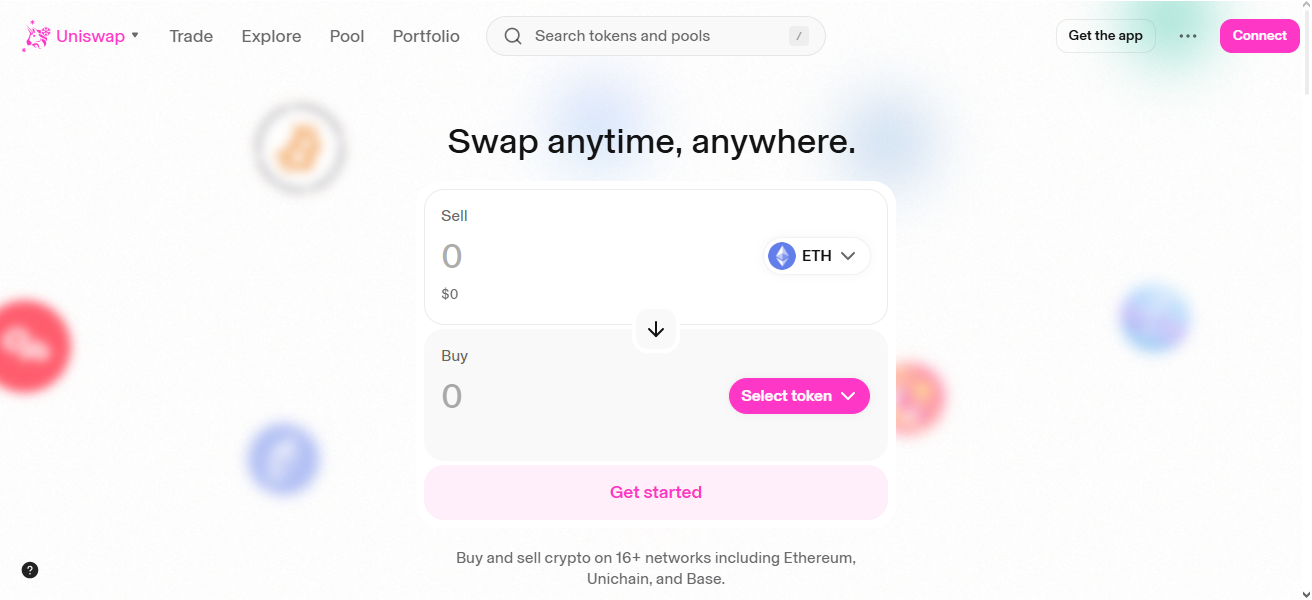
Such a structure gets rid of the bottlenecks of payment systems and allows for a quick and seamless transfer of value.
Because Uniswap directly taps into the liquidity of users, they have built a unique, transparent, and operationally perfect mechanism to offer payment and trading services within other DeFi protocols.
| Feature | Description |
|---|---|
| Decentralized Exchange | Swap tokens directly without intermediaries. |
| Liquidity Pools | Users earn fees by providing liquidity. |
| Permissionless Trading | Anyone can trade ERC-20 tokens freely. |
| On-Chain Execution | Transparent and fully auditable trades. |
| Wide Token Support | Supports almost all Ethereum-based tokens. |
Pros And Cons Uniswap
Pros
- Token swaps that are permissionless.
- Every trade, liquidity providers gain a share of the fees.
- Transactions are transparent and executed on-chain.
- A large selection of ERC-20 tokens are supported.
Cons
- Liquidity providers can suffer from impermanent loss.
- Significant slippage can result from large trades.
- No swaps for fiat, only crypto.
- Transactions have high fees on the Ethereum network.
3. Compound
Compound is among the best DeFiPay alternatives given its ability to change the automatized interest earning payment layer for idle crypto assets.
It allows users instant access to decentralized payment services. Users can supply assets to Compound and obtain liquidity. Borrowing is also available.
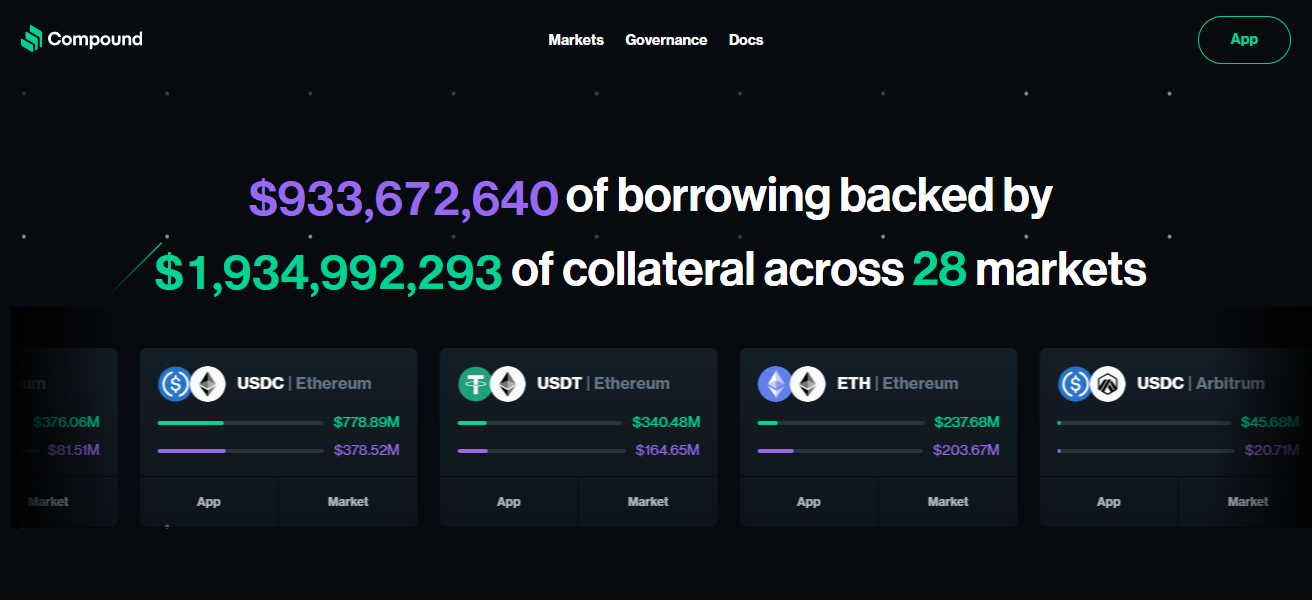
Compound’s primary unique feature is its changing interest rates. They adjust according to the algorithm in real time responding to the market’s supply and demand.
This ensures capital is used efficiently. Users can seamlessly pay or reinvest in the system, excluding the need for intermediaries. Hence, Compound is an excellent option to manage and spend value through decentralized finance.
| Feature | Description |
|---|---|
| Decentralized Lending & Borrowing | Borrow or lend crypto without a bank. |
| Algorithmic Interest Rates | Rates adjust automatically based on supply/demand. |
| cTokens | Earn interest in real-time through tokenized representation. |
| Open-Source & Transparent | Protocol code is publicly auditable. |
| Over-Collateralization | Borrowers must supply collateral above loan value. |
Pros And Cons Compound
Pros
- Rates are determined by an algorithm that measures the supply and demand.
- A decentralized platform for borrowing and lending.
- Interest is accrued in real-time by holding cTokens.
- Clear and publicly accessible on an open-source protocol.
Cons
- For users to borrow, over-collateralization is necessary.
- There are smart contract vulnerabilities.
- There are not many supported crypto assets.
- Some interest rates can be unanticipated and vary greatly.
4. MakerDAO
MakerDAO, considering the balance between the advantages and disadvantages, is one of the best alternatives to DefiPay because of the ability to perform decentralized payments through a stable, crypto-backed system instead of pre established financial rails.
The generation of DAI, a stable crypto, is one of the most notable aspects of the company. DAI is created by collateralizing crypto and locking them into a smart contract which allows users to obtain liquidity without having to sell their crypto.
The crypto markets are extremely volatile which allows the provider to have a completely decentralized, transparent approach to solving the liquidity problem.
Mimicking on-chain governance, self custody, and stable value, the Defi ecosystem within MakerDAO allows seamless value transfer and payments.
| Feature | Description |
|---|---|
| Stablecoin (DAI) | Crypto-backed stablecoin for payments and transfers. |
| Collateralized Debt Positions | Borrow DAI by locking assets as collateral. |
| Decentralized Governance | MKR holders vote on protocol changes. |
| Transparent & Auditable | Fully on-chain and public operations. |
| Stability Fees | Interest fees for borrowing DAI. |
Pros And Cons MakerDAO
Pros:
- Payments can be done through the relatively stable DAI stablecoin.
- Decentralized governance through the MKR token.
- Users can borrow while staking assets.
- Operations are court-authenticated and completely visible on-chain.
Cons:
- Having a collateralized debt position can be difficult to manage.
- Collateral can be liquidated.
- Few other kinds of collateral are accepted.
- Stability fee may be higher than expected
5. Curve Finance
Curve Finance is among the best alternatives to DeFiPay as its focus is on value transfers at a lower cost as long as they are within the same asset class and not dependent on centralized payment networks.
Its unique strength is the ultra-low slippage trading of stablecoins and wrapped tokens; this is ideal for large and payment-type transactions.
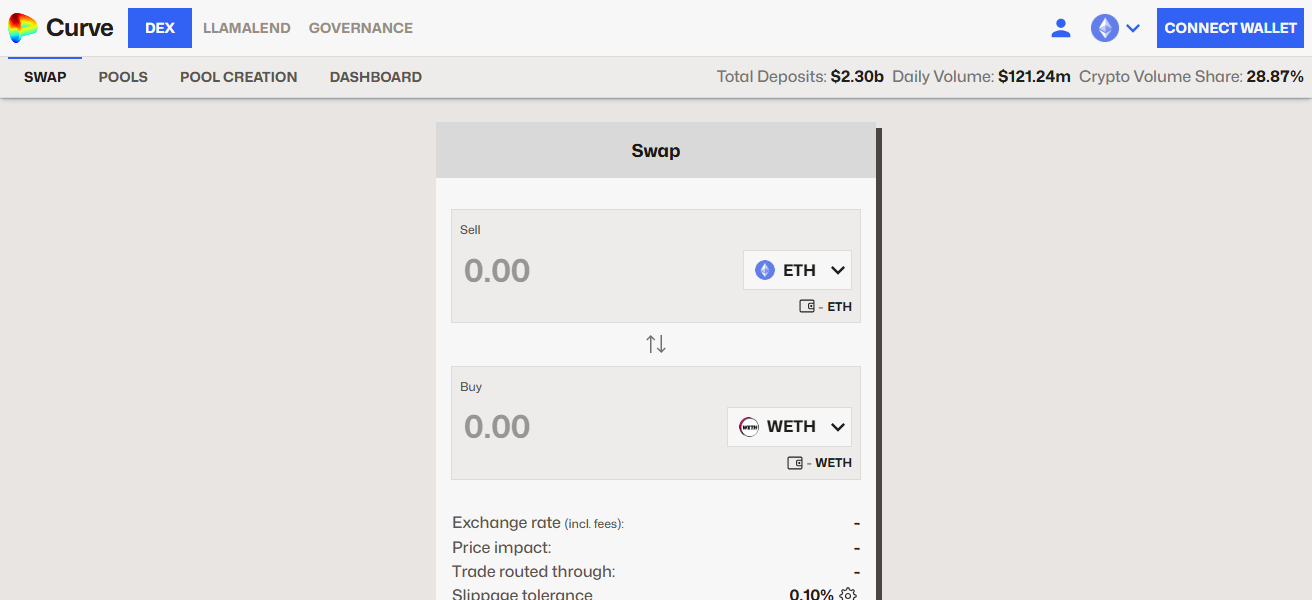
With a custom built auto market maker, Curve is able to offer low fees while preserving very low liquidity and enabling cost-free funds movement, making Curve a fully decentralized solution for cost-efficient on-chain payments.
| Feature | Description |
|---|---|
| Low Slippage Trading | Optimized for stablecoins and wrapped assets. |
| Deep Liquidity Pools | Handles large trades efficiently. |
| Low Fees | Cost-effective swaps and transfers. |
| Yield Farming | Users earn rewards from providing liquidity. |
| Stablecoin Focus | Primarily supports low-volatility assets. |
Pros And Cons Curve Finance
Pros:
- Stablecoin trades have very low slippage when using this platform.
- There is enough liquidity to allow for deep pools.
- Efficient trades incur very low fees.
- Users can earn rewards from stable pools.
Cons:
- Primarily low-wrapped assets are allowed.
- Though it is less than other AMMs, impermanent loss can happen.
- Novices may find it difficult to use.
- The destination of trading pools is unknown.
6. SushiSwap
SushiSwap has gained widespread recognition as one of the top contenders for DeFiPay’s alternative options due to the unique way of combining decentralized payment trading and community payment switching from traditional payment facilitators.
Offering liquidity to the platform allows customers to earn ongoing passive rewards from platform activity due to the revenue-sharing model.
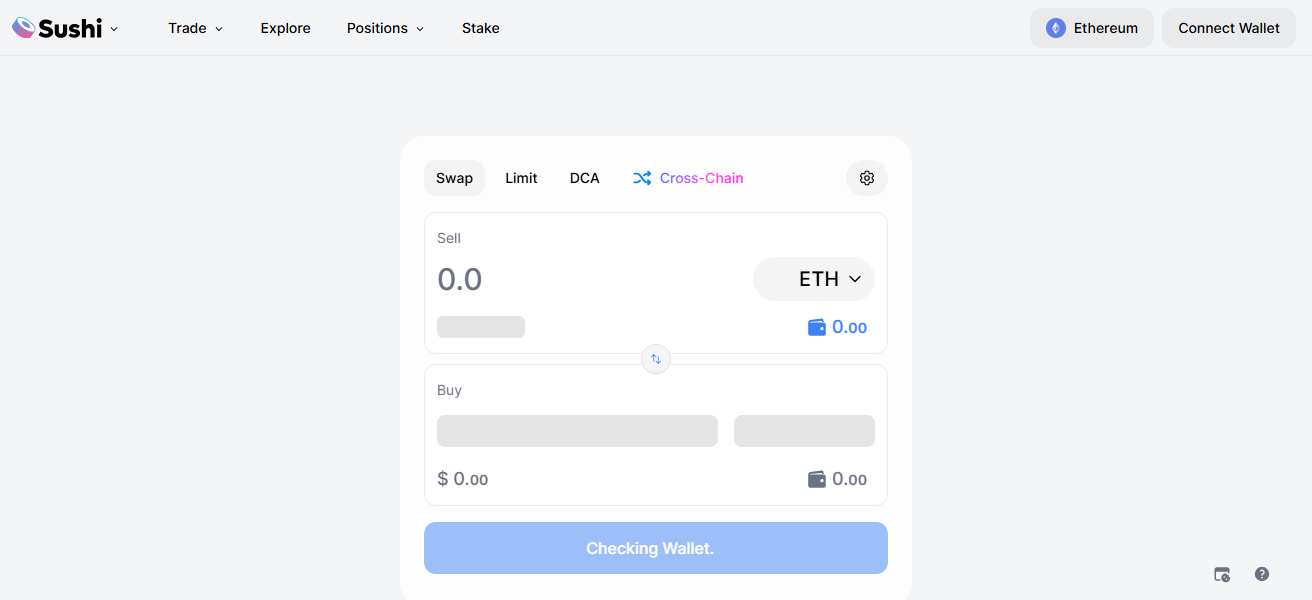
All of this creates a self-sustaining ecosystem where one can swap assets, earn liquidity, and retrieve their earnings directly from the protocol.
Being flexible and decentralized with a payment and value exchange, SushiSwap is self-controlled by the users.
| Feature | Description |
|---|---|
| Decentralized Exchange | Trade assets without intermediaries. |
| Revenue Sharing | Users earn a portion of platform fees. |
| Yield Farming & Staking | Incentivizes liquidity provision with rewards. |
| Community Governance | Token holders vote on protocol decisions. |
| Wide Token Support | Multiple tokens available across liquidity pools. |
Pros And Cons SushiSwap
Pros:
- The decentralized exchange can be used by anyone.
- Users may earn a share of the fees through revenue sharing.
- Users have the option of yield farming and staking.
- Governance is done by the community through the SUSHI token.
Cons:
- liquidity providers experience impermanent loss.
- Large trades incur a slippage fee.
- The platform is vulnerable to smart contract exploits.
- High Ethereum transaction fees.
7. Yearn Finance
Yearn Finance is an exceptional DeFiPay alternative as it offers automated yield farming and liquidity management without any centralized financial institutions.
What sets them apart is their smart vaults. They automatically allocate funds to different DeFi protocols and stay in those protocols until yield farming is profitable to optimize liquidity management.
This means users can access their liquidity at any time while their funds stay in the DeFi protocols.
Yearn Finance stands out among the competition and is able to manage funds efficiently using a user-friendly interface.
This makes it a fully decentralized finance option for those seeking payment and capital efficiency flexibility.
| Feature | Description |
|---|---|
| Automated Yield Optimization | Smart vaults move funds for best returns. |
| Simplified DeFi | Users don’t need to manually shift assets. |
| Accessible Liquidity | Funds remain available while earning yield. |
| Transparent & Open-Source | Strategies and code fully auditable. |
| Vault Strategies | Specialized investment strategies for users. |
Pros And Cons Yearn Finance
Pros:
- Yield is optimized automatically using smart vaults.
- Eases DeFi by managing sophisticated strategies automatically.
- While earning yields, liquidity continues to be accessible.
- Completely open-source and transparent.
Cons:
- Vault strategies can be quite challenging for newcomers.
- Automation carries smart contract risks.
- Vaults support a limited number of assets.
- Returns are highly variable and depend on the markets
8. Balancer
What makes Balancer foremost among DeFiPay alternatives is that it retools liquidity pools from basic exchange modules to customizable financial instrument system.
Most distinct is its flexible pool configurations, where multiple tokens of varying weights can be set for automated portfolio rebalancing, exchangeable at will.

This allows Balancer to serve not only decentralized trading, but also for value routing and payments seamlessly and without third party interference.
With self-balancing pools and user liquidity, Balancer then decentralizes the intermediation for funds exchange and management into a single permissionless protocol.
| Feature | Description |
|---|---|
| Customizable Liquidity Pools | Multiple tokens with adjustable weights. |
| Automated Portfolio Rebalancing | Pools self-balance over time. |
| Liquidity Provider Rewards | Earn fees for participating in pools. |
| Permissionless & Decentralized | Anyone can create or join pools. |
| Multi-Token Support | Pools can include several tokens with different weights. |
Pros And Cons Balancer
Pros:
- Customizable liquidity pools containing a mix of tokens and varying weights.
- Pools automatically rebalance.
- Liquidity providers make money off of the fees from swaps.
- Permissionless and trustless.
Cons:
- Risk of impermanent loss.
- Creating pools and managing weights can be complicated.
- Gas fees on Ethereum are relatively high.
- Adoption is not as high as some other DEXs.
9. PancakeSwap
PancakeSwap is among the top choices for DeFiPay alternatives as it offers rapid and inexpensive token swapping on the Binance Smart Chain and doesn’t rely on conventional payment networks.
Its distinct asset is the gamified yield farming and lottery features that let users earn rewards. Taking part in the platform, they earn money and engage the platform.
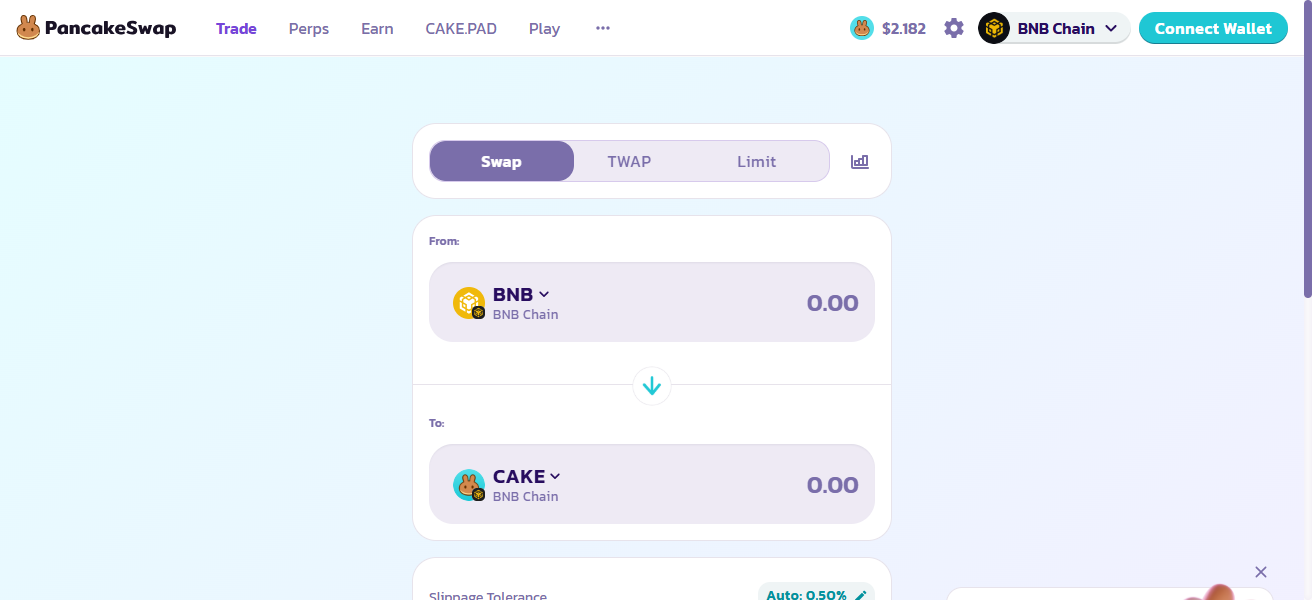
It allows the effortless transfer of assets and payments, as it combines liquidity provision and staking in the decentralized exchange.
Its fast execution, accessibility, and community incentives outstanding decentralized solve crypto value storage and transfer.
| Feature | Description |
|---|---|
| Low Fees & Fast Transactions | Built on Binance Smart Chain. |
| Decentralized Exchange | Swap tokens without intermediaries. |
| Gamified Rewards | Lotteries, staking, and yield farming. |
| Wide Token Support | Large selection of BSC tokens. |
| Liquidity Pools | Earn rewards for providing liquidity. |
Pros And Cons PancakeSwap
Pros:
- Quickly and cheaply executes transactions on the Binance Smart Chain.
- Incentives like staking, yield farming, and lotteries gamify the experience.
- Swaps tokens in a decentralized manner.
- Many tokens on BSC are available for trading.
Cons:
- It’s not possible to support Ethereum tokens as it’s limited to Binance Smart Chain.
- Liquidity providers face a risk of impermanent loss.
- There are vulnerabilities in the smart contract.
- Tokens that are less popular suffer from decreased liquidity.
10. dYdX
dYdX is also among the best alternatives to DeFiPay. Most other DeFi platforms, such as dYdX, facilitate decentralized payments and trades buildings advanced financial services platforms without the need for banks.
Within the sector, trades and payments are unique as dYdX is the only player to offer decentrally-perpetual contracts and margin trades on a gateway.
dYdX is highly dependable in the trades and payments services they offer, as value can easily be transferred and altered from wallets non-custodially through on-chain speeds.
This value generation makes dYdX the best option to both facilitates payments, but also offers decentrally advanced financial services in a payment ecosystem.
| Feature | Description |
|---|---|
| Decentralized Margin Trading | Trade with leverage on-chain. |
| Perpetual Contracts | Advanced financial instruments for traders. |
| Non-Custodial Wallets | Users retain full control of funds. |
| High-Speed On-Chain Execution | Fast, trustless trading without intermediaries. |
| Leveraged Positions | Users can take long or short positions. |
Pros And Cons dYdX
Pros:
- Margin trading and leveraged positions are decentralized.
- Users use non-custodial wallets, so they maintain control over their assets.
- Transactions are fast due to quick execution on-chain execution and there are no middlemen.
Cons:
- Some beginner users may find the complexities of features daunting.
- There are risks that come with smart contracts.
- There are fewer assets available, mainly the large cap coins.
- The use of leverage amplifies the risks due to market conditions in contracts.
Are These Platforms Safe To Use?
Most alternatives to DeFiPay use automated decentralized smart contracts to facilitate transactions, which allows them to remove intermediaries, minimizing transactional friction. Once deployed to the blockchain, smart contracts can be inspected by anyone, paving the way for transparency in the platform.
Almost all blockchain-based services undergo professional audits by specialized companies to detect and rectify smart contract exploits, providing additional assurance to the users. Nevertheless, audits, inlining smart contracts, and blockchain technology do not make a system completely secure.
Unavoidable bugs can lead to smart contracts being exploited, and users can lose funds. Users conducting their own research into the platform and how the protocol functions to only use the funds they can afford to lose will help mitigate the risks, especially for larger amounts. Users will need to be especially cautious to mitigate risks for large amount transactions.
Why Choose Best Defipay Alternatives
- Dynamic Lending & Other Options: Borrow money while keeping your crypto.
- Additional Options: Take out a flash loan or choose stable/variable rates.
- Decentralized & Open: Operating entirely on the blockchain.
- Best for DeFi Users: Designed for most effectively utilizing capital.
- Instant Token Swaps: Trade ERC-20 tokens directly from wallets.
- Permissionless Trading: No KYC or central authority required.
- Liquidity Incentives: Earn fees by providing liquidity.
- High Accessibility: Supports a wide range of Ethereum tokens.
Conclusion
To sum up, the most competitive and reliable DeFiPay alternatives have safeguards, decentralization, and efficiency, i.e. the ability to manage, trade, and send digital assets and currency without the predatory elements of the financial system.
Aave, Uniswap, MakerDAO, and dYdX all have their unique offerings, and their versatility increases with the ability to lend currency, make payments, and automate yield optimizations. These offerings are great for users looking for independence and global access to the evolving DeFi system.
FAQ
Yes, through interest, staking, liquidity provision, or yield farming.
Basic knowledge is enough for simple swaps; advanced features require some DeFi understanding.
MakerDAO and Curve Finance, as they focus on stablecoins like DAI.
Most operate decentralized and are not regulated like banks.
Yes, platforms like Uniswap, SushiSwap, and dYdX allow both.