In this article we will look at some leading Edge Computing Platforms that support faster data processing and real-time decision-making at the edge of the network while at the same time helping reduce latency.
- Key Points & Best Edge Computing Platforms
- 10 Best Edge Computing Platforms
- 1. Microsoft Azure IoT Edge
- 2. Google Distributed Cloud Edge
- 3. IBM Edge Application Manager
- 4. Cisco Edge Intelligence
- 5. HPE Edgeline
- 6. Dell Edge Gateway
- 7. FogHorn Lightning Edge AI
- 8. ClearBlade Edge Platform
- 9. EdgeIQ
- 10. Litmus Edge
- How We Choose Best Edge Computing Platforms
- Cocnlsuion
- FAQ
These platforms allow for efficient IoT device management, local running of AI workloads and operational improvement in a range of industries such as manufacturing, healthcare, and smart infrastructure.
Key Points & Best Edge Computing Platforms
| Platform | Key Point |
|---|---|
| Microsoft Azure IoT Edge | Runs AI and analytics directly on IoT devices |
| Google Distributed Cloud Edge | Optimized for 5G and telecom edge deployments |
| IBM Edge Application Manager | Autonomous management of edge applications at scale |
| Cisco Edge Intelligence | Focuses on secure data flow from devices to applications |
| HPE Edgeline | Industrial-grade hardware for rugged edge environments |
| Dell Edge Gateway | Designed for IoT data aggregation and local processing |
| FogHorn Lightning Edge AI | Real-time machine learning at the edge |
| ClearBlade Edge Platform | Low-code environment for rapid IoT edge solutions |
| EdgeIQ | Device orchestration and lifecycle management |
| Litmus Edge | Unified data collection and integration for industrial IoT |
10 Best Edge Computing Platforms
1. Microsoft Azure IoT Edge
Microsoft Azure IoT Edge is a focus of Azure Edge Computing Services, allowing customers the ability to run Azure services on their local devices and perform local data processing tasks.
Moreover, Azure IoT Edge customers can deploy customer containerized workloads, including AI models, analytics, and logic.
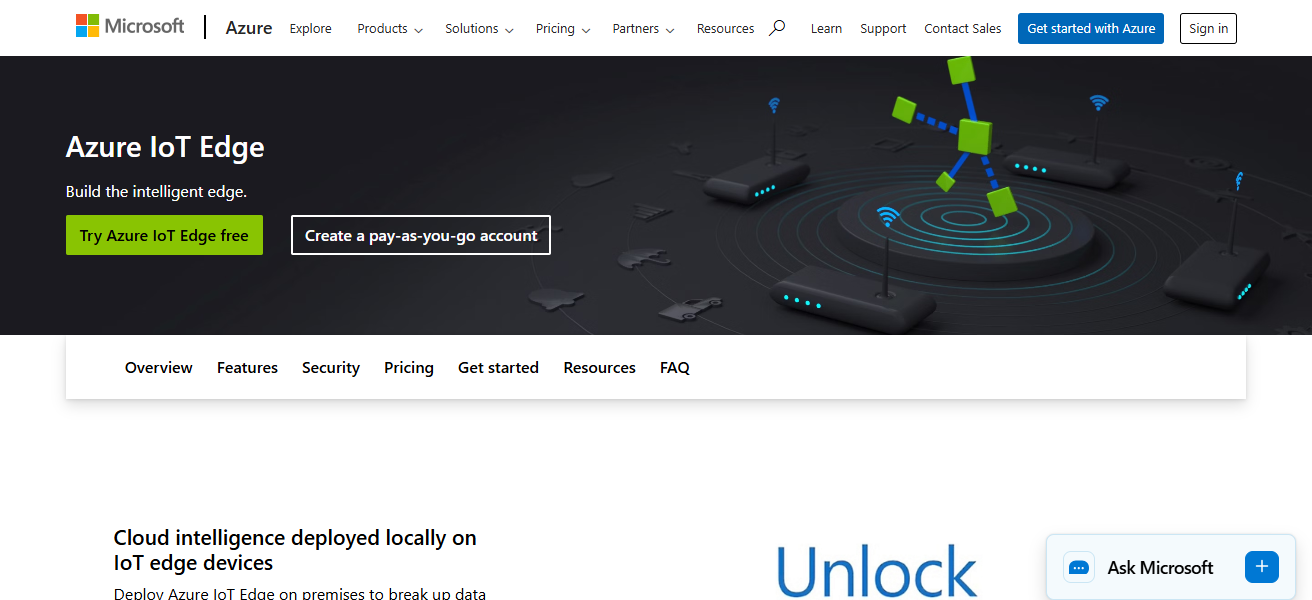
Azure IoT Edge also runs offline, is integrated within the cloud, and performs edge analytics on the devices. Thanks to its cybersecurity, device management, and IoT Edge Hub users
It is also a good bet for automating processes in industries and smart cities. Azure IoT Edge is also beneficial for large-scale IoT projects.
Key Features of Microsoft Azure IoT Edge
Containerized Workloads – Edge devices can directly run docker-based modules like AI models, analytics, and custom logic.
Offline Edge Processing – Processing of data continues, even when the system is disconnected from the cloud. Once the connection is restored, the data will be processed.
Azure Integration – Direct and seamless connections can be made to Azure IoT Hub and other Azure AI and cloud analytic services.
Enterprise Security – Authentication of devices, secure communication, and the management of modules are done through an encrypted system.
| Pros | Cons |
|---|---|
| Deep integration with Azure cloud services and tools | Strong dependency on Azure ecosystem |
| Supports AI, analytics, and containerized workloads | Can be complex for small deployments |
| Enterprise-grade security and device management | Pricing may increase with scale |
| Works well for large IoT and industrial projects | Requires cloud expertise |
2. Google Distributed Cloud Edge
Google Distributed Cloud Edge provides Google Cloud infrastructure and services to various locations which is great because it offers low-latency processing as well as consistent cloud operations.
It is great for telecom, retail and smart infrastructure use cases as it supports containerized and Kubernetes-based workloads.
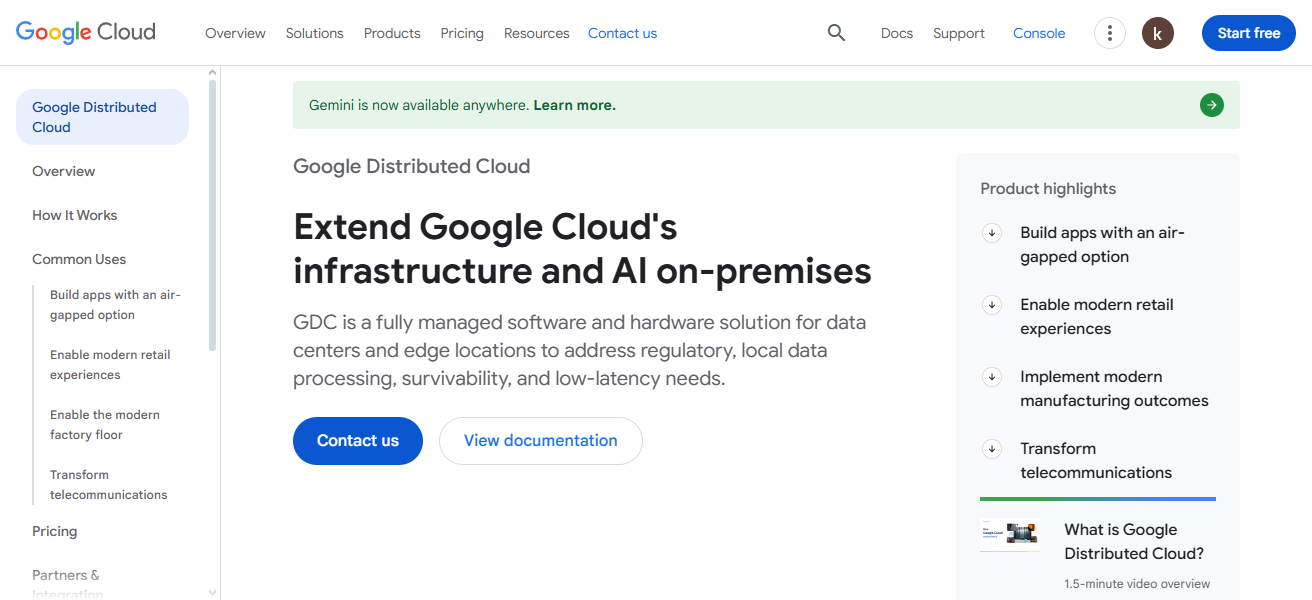
The platform is powered by Google Cloud providing AI, analytics, and networking capabilities. It is very good for enterprises as it allows real-time and reliable insights to be achieved and it hybrid a cloud flexibility.
It is best known for its scalability and high performance for processing which can be advantageous for many businesses.
Key Features of Google Distributed Cloud Edge
Kubernetes-Native Platform – Provides support for container orchestration using Kubernetes. This results in a more uniform and consistent application deployment.
Low-Latency Processing – Processing of data in real-time.
Hybrid Cloud Support – Workloads can be run on premises without the aisi of Google Cloud.
Built-in AI and Analytics – Integrates with Google AI, ML, and data services for processing on the edge.
| Advantages | Limitations |
|---|---|
| Kubernetes-native and cloud-consistent architecture | Limited support outside Google Cloud |
| Excellent low-latency and networking performance | Less mature edge ecosystem |
| Strong AI and data analytics integration | Complex setup for non-technical teams |
| Ideal for telecom and large-scale edge workloads | Higher infrastructure costs |
3. IBM Edge Application Manager
In distributed environments, IBM Edge Application Manager provides management, deployment, and monitoring of edge workloads on a large scale.
It is built on open-source technologies, such as Kubernetes and Red Hat OpenShift, which allow for automated lifecycle management of AI, analytics, and IoT applications.
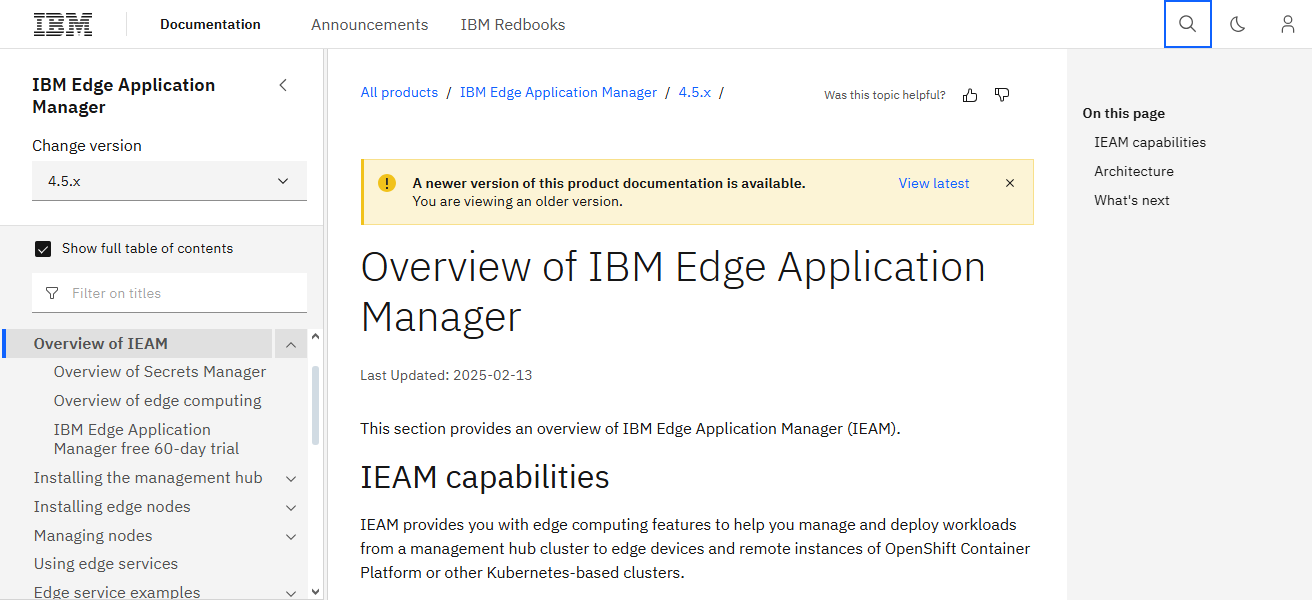
IBM Edge Application Manager practices policy-based deployment supporting secure updates and offline functionality.
This is beneficial to such sectors as manufacturing, energy, and transportation. With a focus on enterprise security, hybrid cloud integration, and AI-driven automation, IBM improves operational efficiency at the edge.
Key Features of IBM Edge Application Manager
Automated Workload Deployment – IBM Edge Application Manager supports the automation of the deployment of applications to edge nodes through the use of policy driven rules.
Open-Source Foundation – Utilizes Kubernetes and Red Hat OpenShift for modularity and portability.
Secure Lifecycle Management – Controls the updating, monitoring, and rollbacks in a secure manner at scale.
Offline Operations – Enables self-governing edge operations when there’s no cloud access.
| Strengths | Weaknesses |
|---|---|
| Built on open-source and Red Hat OpenShift | Requires Kubernetes knowledge |
| Automated lifecycle and policy-based deployment | Setup can be time-consuming |
| Strong hybrid cloud and AI capabilities | Higher enterprise pricing |
| Suitable for regulated industries | Steeper learning curve |
4. Cisco Edge Intelligence
Cisco Edge Intelligence is dedicated to the collection, processing, and transfer of data pertaining to IoT devices and edge assets to business applications.
It streamlines real-time data normalization, filtering, and enrichment at the edge to save on bandwidth and reduce latency.
It is purpose-built for industrial IoT environments and is compatible with Cisco networking and security. The platform streamlines operational data to provide organizations with actionable insights
While maintaining data in motion security, proving especially beneficial in manufacturing, utilities, and large-scale infrastructure surveillance.
Cisco Edge Intelligence – Key Features
Data Normalization – Cleans and enriches the raw IoT data at the edge.
Real-Time Data Streaming – Stream data to enterprise and cloud systems in real time.
Edge Data Filtering – Saves bandwidth by transmitting only pertinent data to the cloud.
Cisco Ecosystem Integration – Integrates easily with Cisco’s networking and cybersecurity products.
| Benefits | Drawbacks |
|---|---|
| Excellent data normalization and filtering at edge | Limited advanced AI capabilities |
| Strong integration with Cisco networking products | Best suited only for Cisco ecosystems |
| Reduces bandwidth and cloud dependency | Not ideal for small IoT projects |
| High reliability and security | Licensing costs can be high |
5. HPE Edgeline
HPE Edgeline gives you the capacity to analyze in real time, use AI inference, and manage edge control systems. This helps industries such as manufacturing, oil and gas, and transportation to work more efficiently.
All the while, Edgeline integrates on the supple with HPE cloud and data management and offers control and vertical scalability.
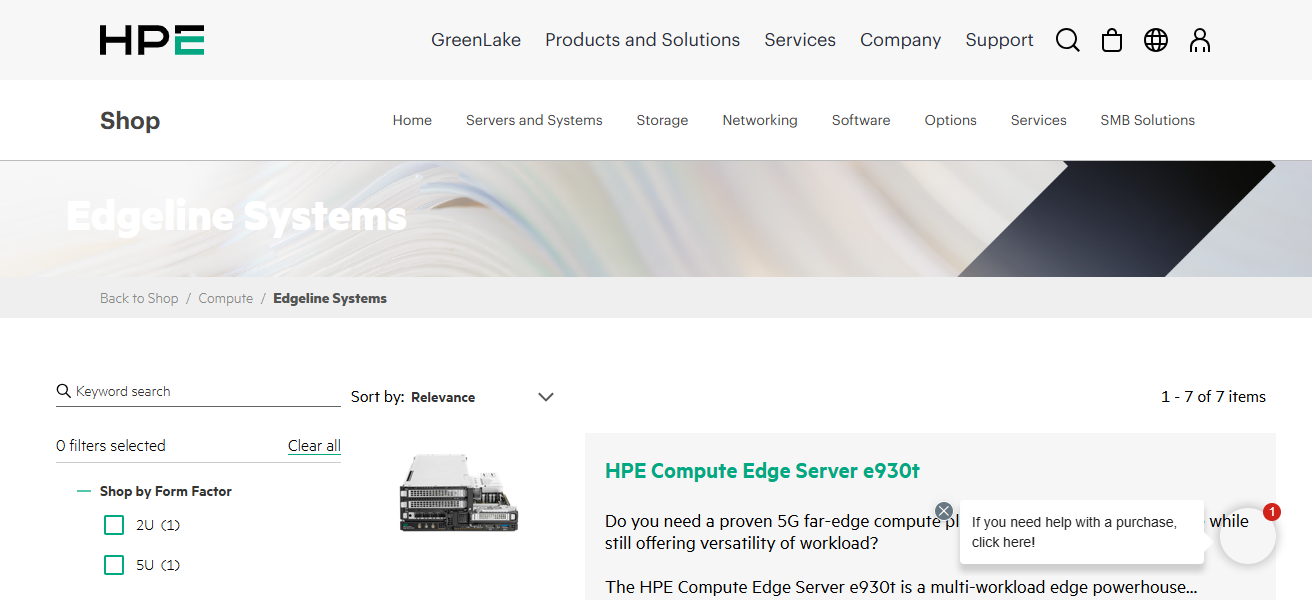
HPE Edgeline’s greatest value is real time edge computing with low latency, and considering it supports many varied industrial protocols, it is a great fit even for the most demanding edge computing.
HPE Edgeline – Key Features
Industrial-Grade Hardware – Built to function in tough, isolated locations.
High-Performance Edge Computing – Local AI inference and real-time analytics are effective.
Integrated IT and OT – Merges computing, storage, and networking into one edge system.
Centralized Management – Works with HPE cloud and data services for cohesive management.
| Key Pros | Key Cons |
|---|---|
| Rugged, industrial-grade hardware design | Higher upfront hardware cost |
| High-performance computing at the edge | Hardware-centric solution |
| Supports real-time analytics and control systems | Less flexible for lightweight use cases |
| Ideal for harsh environments | Requires physical maintenance |
6. Dell Edge Gateway
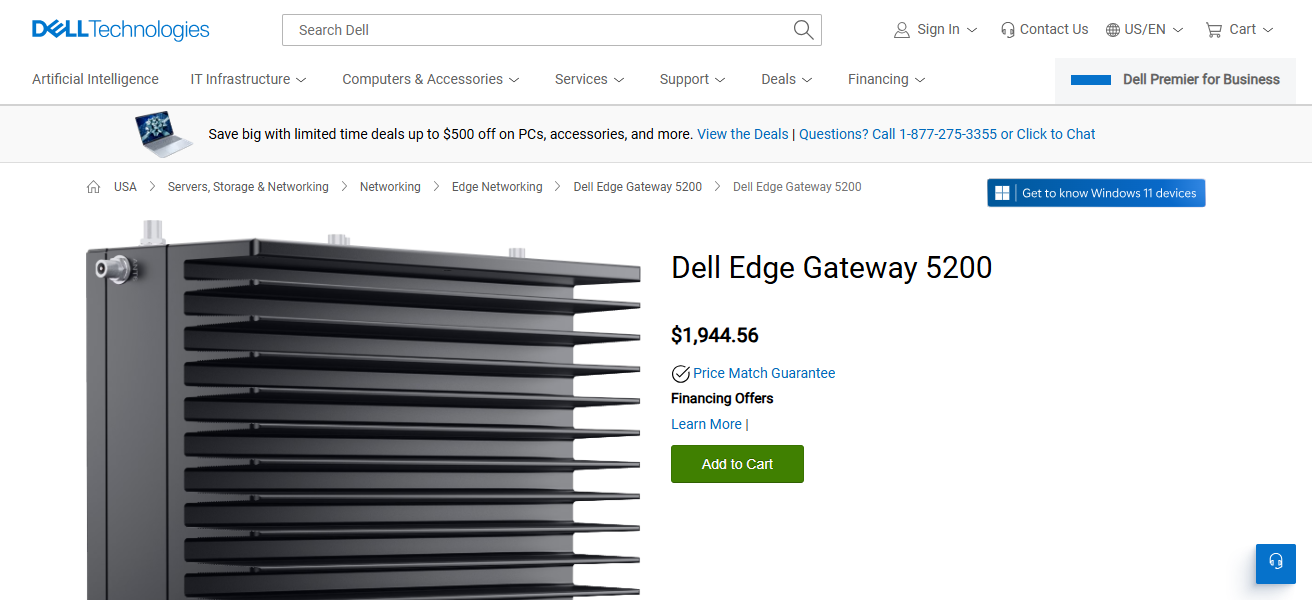
Dell Gateways offer protection on remote edge computing solutions for IoT data ingestion, processing and analytics.
Built for functioning within industrial and remote settings and with the ability to run on various operating systems and edge geo-frameworks.
Dell Gateways provide the ability for quick and efficient data processing on location to lower latency and diminish the costs on bandwidth.
While having remote edge computing solutions, spethrics for smart industrial and transportation
As well as energy systems provide ideal functionality for the analytics Dell Gateways configure. For businesses seeking to use remote edge computing, Del Gateways provide the perfect solutions.
Dell Edge Gateway – Key Features
Secure Edge Hardware – Offers trusted platform modules and secure boot functionality.
Multi-OS Support – Capable of running several edge operating systems such as Linux, Windows IoT.
Local Data Processing – Local data processing enables decision making in real-time without relying on the cloud.
Scalable Deployment – Capable of supporting edge expansion in various industrial and remote environments and locations.
| Positive Aspects | Negative Aspects |
|---|---|
| Reliable hardware with multiple OS support | Limited built-in analytics |
| Secure and scalable edge deployment | Often requires third-party software |
| Good integration with Dell ecosystem | Not cloud-agnostic by default |
| Suitable for industrial and remote use | Moderate customization options |
7. FogHorn Lightning Edge AI
FogHorn is the distinct leader when it pertains to high velocity analytics and AI at the fringe for industrial IoT use cases.
It does this through the processing of time series sensor data to give real time insights and anomaly detection and predictive maintenance while being very cloud indifferent.
It is purpose built for environments that require minimal latency as well as systems that have limited resources.
The ability of the company to support proprietary and adaptive machine learning, along streaming analytics coupled with edge industrial protocols is ideal for the manufacturing, transportation, and energy verticals that all require rapid decision making driven by data.
FogHorn Lightning Edge AI – Key Features
Real-Time AI Analytics – Analyses data from high-velocity sensors and responds in real-time.
Edge-Based Machine Learning – ML models are executed at the edge of the network and are able to provide valuable insight instantaneously.
Streaming Data Processing – At the edge of the network, continuous data streams are handled with efficiency.
Industrial Protocol Support – Tailored to fit seamlessly into the frameworks of the energy and manufacturing sectors.
| Pros | Cons |
|---|---|
| Real-time AI and machine learning at edge | Focused mainly on industrial use cases |
| Low-latency streaming analytics | Limited general-purpose edge support |
| Works well with resource-constrained devices | Smaller ecosystem compared to hyperscalers |
| Excellent for predictive maintenance | Premium pricing |
8. ClearBlade Edge Platform
The ClearBlade Edge Platform provides a distinct set of agile edge computing and IoT services focused on control and real-time data processing.
The platform provides organizations the ability to maintain centralized control while deploying edge applications for data filtering, analytics, and automation.
The platform provides offline capabilities, secure message orchestration, and distributed scalable device management.
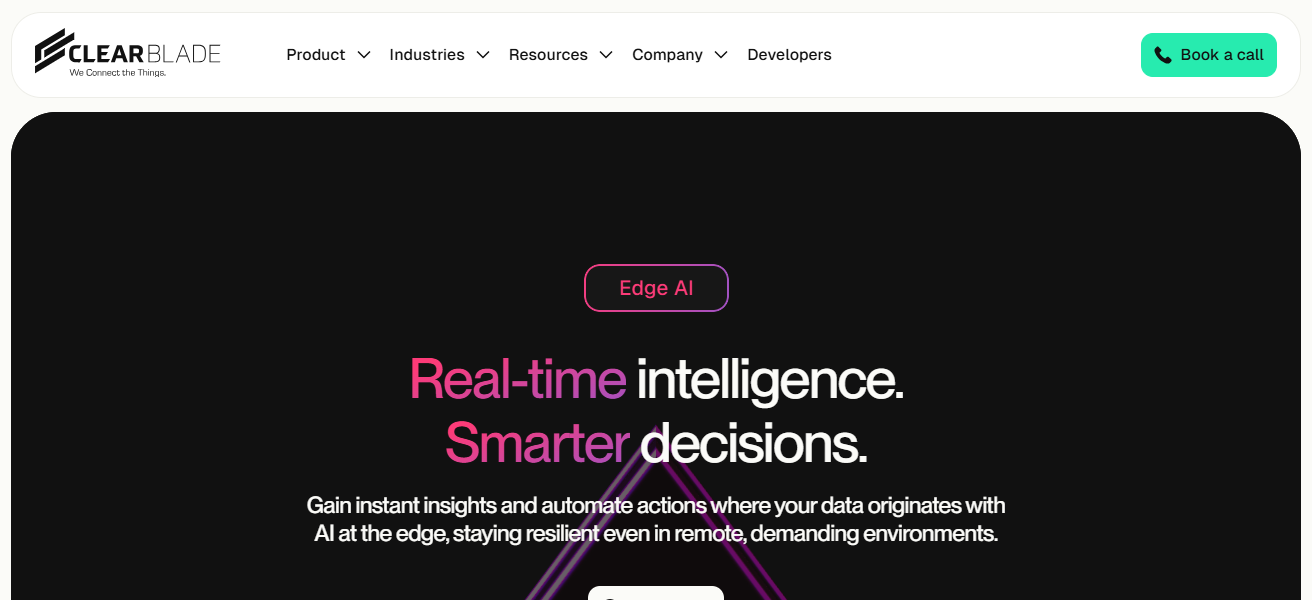
ClearBlade is used extensively for smart infrastructure, logistics, and industrial applications demanding low latency and high reliability.
For seamless integration with enterprise systems and cloud services, the platform’s flexible architecture offers unrivaled interoperability.
ClearBlade Edge Platform – Key Features
Edge Application Deployment – Locally operates apps to provide data analytics and process automation.
Offline Functionality – Functionality is maintained in the absence of network connectivity.
Device and Data Management – Centralised management of connected devices and data streams.
Cloud Integration – Merges edge data with cloud systems, public or private.
| Advantages | Disadvantages |
|---|---|
| Strong offline and real-time processing | Requires technical setup |
| Scalable device and data orchestration | Smaller brand recognition |
| Flexible architecture and cloud integration | Limited pre-built AI models |
| Good for smart infrastructure projects | Documentation can be complex |
9. EdgeIQ
EdgeIQ does edge computing focusing on the management and deployment AI applications at the edge. EdgeIQ focuses on computer vision and robotics or smart devices ecosystems.
Users are able to onboard devices, manage apps through life cycles, and monitor systems. Seamless integration with major cloud providers, developers can work on the edge with AI apps faster, and with better security through the EdgeIQ system.
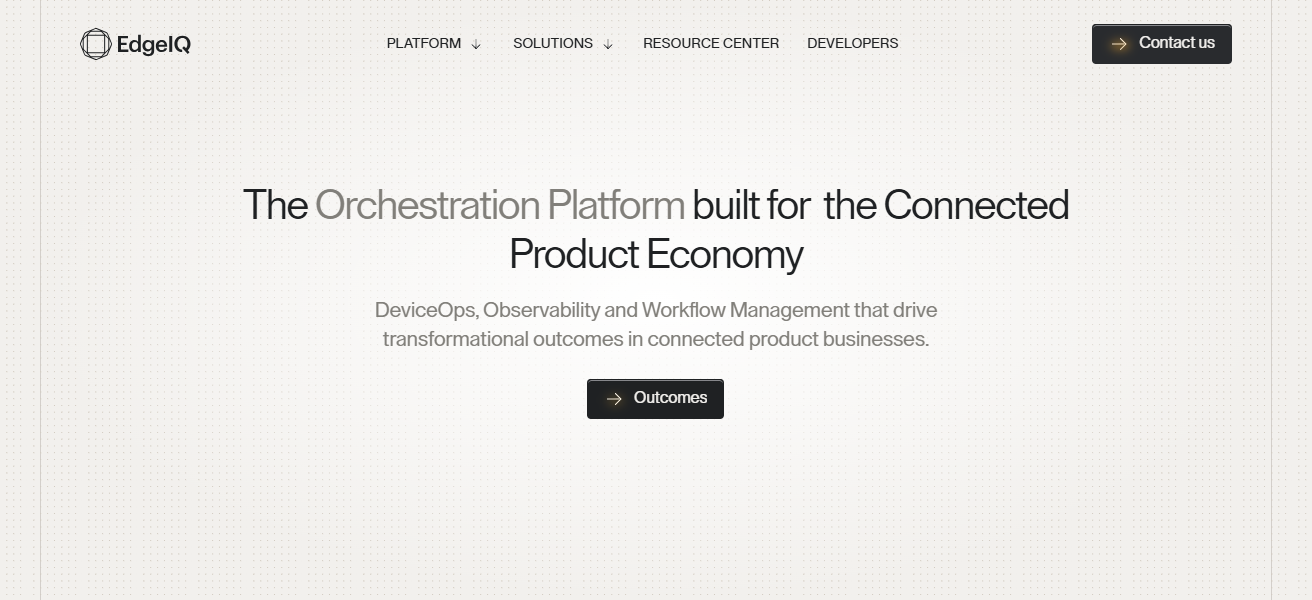
This system lets users run AI workloads at the edge. Users can run AI workloads at the Edge. Users are able to onboard devices, manage apps through life cycles, and monitor systems.
Knowledgeable users can onboard devices, manage apps through life cycles, and monitor systems.
EdgeIQ – Key Features
Edge AI Management – Deployment of AI models on edge devices is simplified.
Device Lifecycle Control – Seamless remote management of onboarding, monitoring, and updating of devices.
Real-Time Monitoring – Active monitoring of the device’s health and the performance of the application is possible.
Developer Friendly Tools – Provides both APIs and SDKs for quick and easy development of edge applications.
| Benefits | Limitations |
|---|---|
| Optimized for edge AI and computer vision | Not ideal for heavy industrial protocols |
| Simplifies device and app lifecycle management | Limited hardware options |
| Strong monitoring and observability tools | Smaller enterprise footprint |
| Developer-friendly platform | Cloud dependency for management |
10. Litmus Edge
Litmus Edge’s and operational environments is a state-of-the-art edge computing platform which allows near real-time harnessing of collected data and analysis across any factory ecosystem.
It has the functionality to work across 1000+ industrial protocol giving Litmus the ability to connect with any new or aged piece of hardware.
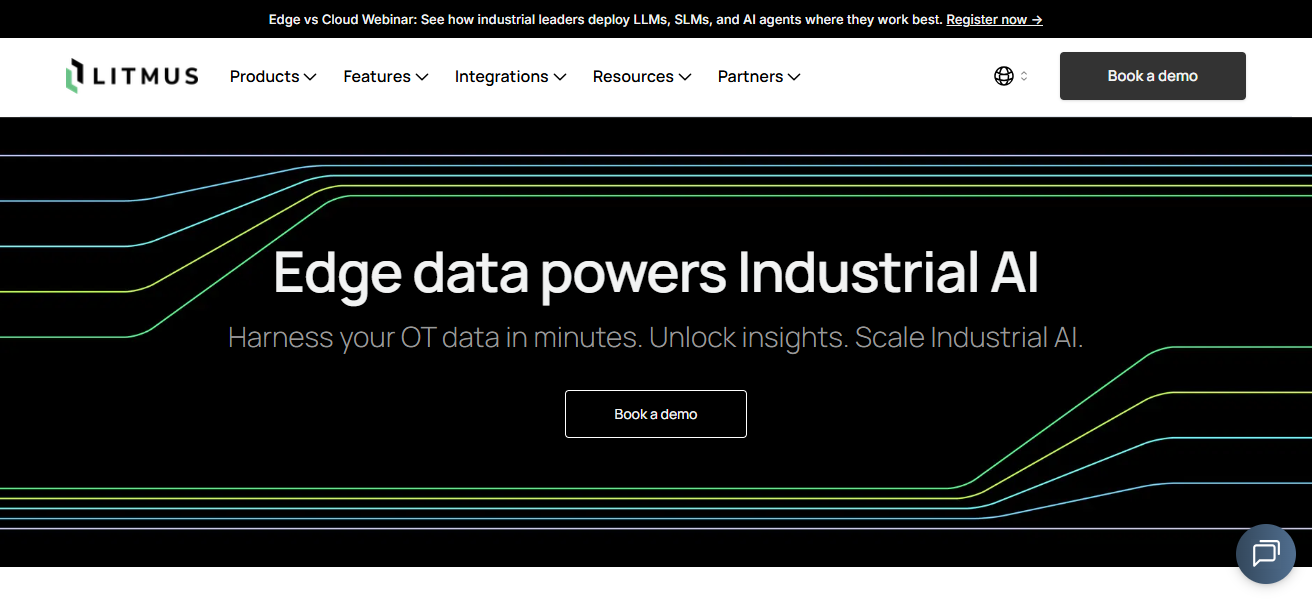
Edge processes data locally and updates on a synced cloud platform to facilitate improvements on analytics.
Litmus strength is in its rapid implementation of edge computing solutions and is ideally situated to facilitate solutions in smart manufacturing, Industry 4.0, and digital transformations.
Litmus Edge – Main Features
Industrial Protocol Connectivity – Thousands of PLCs, sensors, and machines supported.
Real-Time Edge Analytics – Operational data is processed on-site for immediate insights.
Rapid Deployment – Allows for faster configuration without extensive coding.
Cloud and Enterprise Integration – Merges edge data with analytics.
| Strengths | Weaknesses |
|---|---|
| Supports thousands of industrial protocols | Primarily focused on manufacturing |
| Fast deployment and low-latency processing | Limited non-industrial use cases |
| Excellent interoperability with legacy systems | Requires industrial domain knowledge |
| Strong Industry 4.0 capabilities | Advanced features can raise costs |
How We Choose Best Edge Computing Platforms
- Performance and Latency – The system can process data in real-time at the extreme edge with little to no delay.
- Scalability – The system can continue to grow in a multi edge device and multi site environment.
- Security – The system can provide device authentication, data encryption, and data secure handling.
- Deployment Flexibility – The system can be used in on-premise, cloud, and hybrid environments.
- Integration Capabilities – The system can easily integrate with various cloud and enterprise application services.
- Edge AI and Analytics Support – The system supports real-time analytics and AI inference.
- Reliability and Offline Support – The system can continue to function in the event of a network outage.
- Industry Compatibility – The system can accommodate the necessary protocols and use cases, such as with IoT or industrial ecosystems.
Cocnlsuion
To summarize, The Best Edge Computing Platforms offer rapid data processing, lower latency, and real-time data insights by functioning nearer to data origin points.
They offer scalable support for IoT deployments, Edge AI, and secure operations within various industries and sectors.
Selecting the most suitable platform entails weighing the performance, integration, security, and industry-specific factors to optimize operational efficiency and business value.
FAQ
An edge computing platform processes data closer to the source, reducing latency and bandwidth usage.
They enable real-time decision-making, faster response times, and improved reliability for IoT and AI applications.
Manufacturing, healthcare, retail, energy, transportation, and smart cities widely use edge computing solutions.
They process data locally at edge devices instead of sending everything to distant cloud servers.
Low latency, strong security, scalability, offline support, and cloud integration are essential features.