This article will highlight the Best Embedded Finance Platforms for Marketplaces and how they help businesses provide users with integrated payment, lending, and banking services.
These platforms are changing digital commerce by allowing marketplaces to embed financial services into their ecosystems, facilitating business growth, optimizing user experience, and streamlining safe and scalable financial operations.
Key Poinst & Best Embedded Finance Platforms for Marketplaces
Stripe: Powerful APIs enabling seamless payments, lending, and financial services integration.
PayPal: Global reach with trusted payment solutions and embedded checkout for marketplaces.
Adyen: Unified commerce platform offering payments, risk management, and financing tools.
Square: Merchant-focused embedded finance with POS, lending, and cash flow solutions.
Plaid: Data connectivity for secure linking of bank accounts and financial services.
Marqeta: Card issuing platform enabling custom payment cards for marketplaces.
Railsr: Banking-as-a-service provider with embedded accounts, payments, and loyalty features.
Solaris: European leader in embedded banking, offering compliance-ready APIs.
Unit: Fast integration of deposit accounts, cards, and lending into apps.
Mambu: Cloud-native banking platform supporting lending and embedded finance innovation.
10 Best Embedded Finance Platforms for Marketplaces
1. Stripe
Stripe is well-known in the embedded finance industry, offering powerful APIs that seamlessly integrate payments, lending, and financial services into marketplaces.
Its developer tools allow easy integration of subscription billing, fraud prevention, and checkout into applications.
Stripe also helps businesses expand internationally by handling global transactions and alleviating complex compliance concerns.
Marketplaces can onboard sellers and manage payouts and payment splitting with Stripe Connect. Stripe’s scalability and flexibility, along with great financial management
fosters customer confidence, making it a preferred embedded finance solution for both startups and large corporations.
| Pros | Cons |
|---|---|
| Developer-friendly APIs for easy integration | Complex pricing can be difficult to predict |
| Global reach with multi-currency support | Customer support delays reported by some users |
| Strong fraud prevention tools | Requires technical expertise for advanced setup |
| Scalable for startups and enterprises | Limited banking services compared to full BaaS providers |
2. PayPal
PayPal is an established firm that is respected and trusted by customers across the world, and is the industry leader in digital payments.
For marketplace businesses, PayPal embeds its checkout solutions to complete transactions while increasing customers’ trust.
PayPal’s acceptance is ideal for platforms needing an international presence. Apart from payments
PayPal offers seller protection and working capital loans to assist businesses in managing cash flow and outsmarting risk.
Integration is easy and streamlined, which allows PayPal to be embedded into systems quickly and efficiently.
PayPal’s reliable infrastructure, name brand recognition, and reputation make it an excellent choice for marketplace businesses to attract and retain customers and sellers worldwide.
| Pros | Cons |
|---|---|
| Trusted brand recognition worldwide | High transaction fees compared to competitors |
| Easy integration for marketplaces | Limited customization for embedded finance |
| Seller protection programs | Account freezes can disrupt business |
| Wide acceptance across regions | Less innovation in embedded finance compared to newer |
3. Adyen
Adyen is a unified commerce platform that empowers marketplaces with end-to-end payment solutions, risk management, and financing tools.
It supports multiple payment methods, including cards, wallets, and local options, ensuring flexibility for global customers.
Adyen’s strength lies in its ability to provide real-time insights and advanced fraud detection, helping marketplaces maintain secure transactions.
Its embedded finance capabilities extend to offering merchant accounts and lending services, making it a comprehensive solution.
With a single integration, marketplaces can manage payments across regions, streamline operations, and deliver consistent customer experiences. Adyen is particularly strong for enterprises with complex international needs.
| Pros | Cons |
|---|---|
| Unified commerce across channels | Complex onboarding for smaller businesses |
| Supports multiple payment methods globally | Premium pricing for advanced features |
| Advanced fraud detection | Requires larger transaction volumes to maximize value |
| Strong enterprise focus | Less suited for small startups |
4. Square
Merchants are priority at Square and Square’s embedded finance solutions beyond payments are crafted with them in mind.
Square’s point-of-sale (POS) systems, lending services, and cash flow management tools are integrated with ecosystem payroll, invoicing, and business banking.
Square becomes a holistic financial partner. Square Capital business loans are crafted for small sellers on marketplaces, fostering their business growth and operational sustainability.

Square’s diverse hardware and software solutions attract both physical and digital marketplaces. Integrated Square enables marketplaces to provide sellers financial services
As seamlessly as customers enjoy transactions, underpinned by Square’s customer-obsessed simplicity and innovation.
| Pros | Cons |
|---|---|
| Comprehensive ecosystem (POS, payroll, lending) | Limited global reach compared to Stripe/PayPal |
| Easy-to-use hardware and software | Not ideal for complex marketplaces |
| Accessible loans via Square Capital | Higher fees for certain services |
| Strong merchant focus | Less flexibility for customization |
5. Plaid
Plaid is a financial data integration service that allows users to provide data-secured banking app connections for their customers.
Users can provide their customers banking services such as payment processing, balance checking, and identity verification through the user’s services using payment processing APIs.
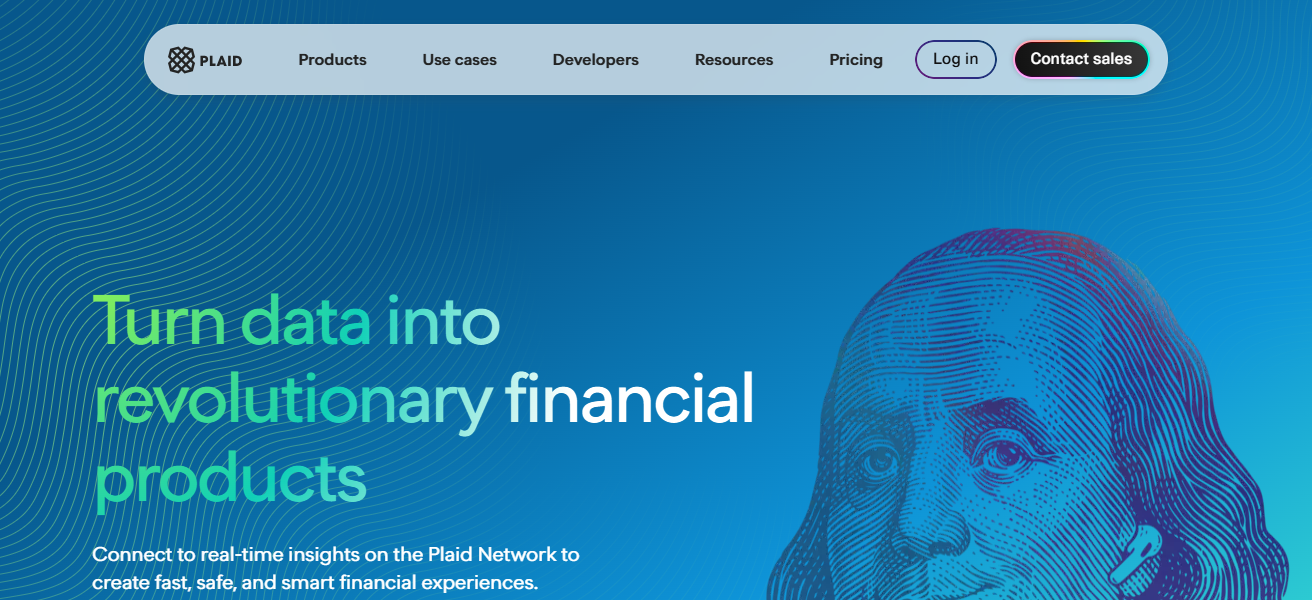
Users can also use financial data to provide features such as instant payment processing and in-app financing. Payment processing data will also help users to operate in more areas than before.
By using Plaid, users can offer banking services to their customers and use payment processing data to increase their customers’ trust in the banking services and reduce fraudulent activities.
| Pros | Cons |
|---|---|
| Secure bank connectivity | Limited direct payment processing |
| Wide network of integrations | Dependent on banks’ cooperation |
| Supports instant payouts and lending | Regulatory challenges in some regions |
| Enhances trust with authentication | Primarily backend service, not customer-facing |
6. Marqeta
Marqeta is a top design and issue card solution that allows marketplaces to provide payment cards to their sellers and customers.
Their Superior modern API’s allow businesses to build their own cards, manage their program spend, and provide cards.
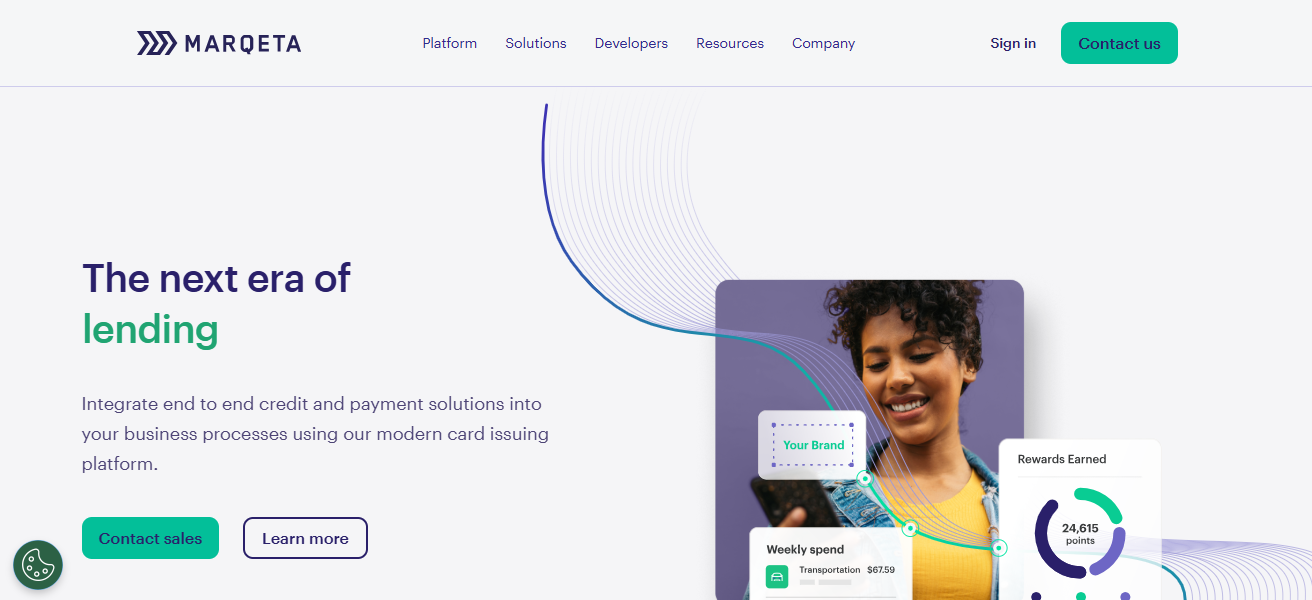
With instant payout and spend control features, Marqeta allows marketplaces to provide virtual and physical cards. Their Platform ensures security with features like advanced fraud detection and compliance monitoring.
For sellers on fast payment access, Marqeta is especially beneficial for marketplaces in the gig economy and those with complex payment requirements. With Marqeta, marketplaces add embedded finance to their offerings.
| Pros | Cons |
|---|---|
| Custom card issuing capabilities | Limited services beyond card programs |
| Real-time transaction controls | Requires strong compliance setup |
| Supports virtual and physical cards | Best suited for specific use cases |
| Strong fraud prevention | Not a full-stack finance solution |
7. Railsr
Established in 2014 and originally known as Railsbank, Railsr is a member of the Banking-as-a-Service companies that enable integrated accounts, payments, and loyalty functionalities in marketplace platforms.
With Railsr’s API, businesses can easily provide digital wallets, debit cards, and even embedded credit. Railsr also provides embedded loyalty solution whare marketplaces can give financial rewards to buyers and sellers.
Marketplaces that need to stick with compliance and scale in regulated industries can use the solution to maintain its focus.
With Railsr embedded, marketplaces can also position themselves as providers of financial services instead of just transactional services.
Overall, the flexibility and innovative solutions from Railsr positions them well to serve platforms that can differentiate themselves through embedded finance.
| Pros | Cons |
|---|---|
| Banking-as-a-service with accounts and payments | Still growing brand recognition |
| Supports loyalty and rewards programs | Limited presence outside Europe |
| Flexible APIs for wallets and credit | Complex compliance requirements |
| Scalable for marketplaces | Not as established as Stripe or PayPal |
8. Solaris
Solaris is a European market leader in embedded banking with compliance-ready APIs for marketplaces.
It offers digital banking, payments, and lending services, all with rigorous compliance. Marketplaces can leverage Solaris’s similarly sophisticated services without the headwinds of banking regulation.
Solaris’s modularity offers each business the ability to embed as many services as they differ from one another.

In addition to banking services, it also offers card issuing and KYC. For European marketplaces, Solaris is the optimal partner for compliance innovation and differentiated bleeding regulatory growth.
| Pros | Cons |
|---|---|
| Compliance-ready APIs | Primarily focused on Europe |
| Supports digital accounts and lending | Limited global expansion |
| Strong regulatory expertise | Complex integration for non-EU businesses |
| Modular services for flexibility | Less brand recognition globally |
9. Unit
Unit is an embedded finance platform that helps marketplaces integrate deposit accounts, cards, and lending services in a matter of weeks.
Markets can use Unit to provide instant payouts, working capital loans, and expense management tools to sellers. With an emphasis on compliance and security, Unit is able to operate in a variety of industries.
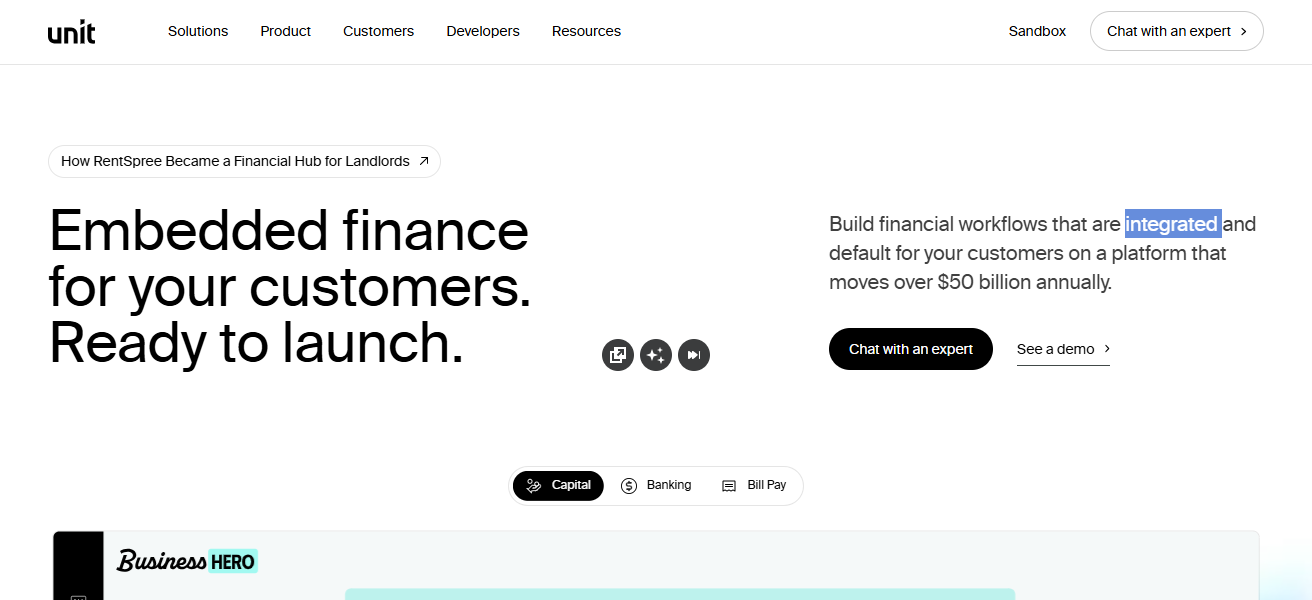
This flexibility makes Unit ideal for both new and established marketplaces, providing scalable solutions. By embedding Unit, marketplaces provide financial experiences that help to attract and retain sellers.
| Pros | Cons |
|---|---|
| Fast integration of accounts, cards, lending | Relatively new player in the market |
| Launch financial products quickly | Limited global reach |
| Strong compliance support | Best suited for startups, less for enterprises |
| Flexible APIs | Smaller ecosystem compared to Stripe/Adyen |
10. Mambu
Mambu offers a wide-range of cloud banking services including lending, deposits, and other financial innovations.
The composable (modular) architecture allows platforms and marketplaces to build customized financial products at a fraction of the cost of traditional embedded infrastructure.
Mambu’s composable (modular) architecture allows platforms and marketplaces to build customized financial products at a fraction of the cost of traditional embedded infrastructure.
The agility of the Mambu’s cloud technologies allows marketplaces to optimize their financial products to meet the demands of their customers.
Mambu prioritizes operational complexity and fast innovation, enabling marketplaces to provide their customers and sellers with modern financial services that support sustainable growth.
| Pros | Cons |
|---|---|
| Cloud-native banking platform | Requires technical expertise to leverage fully |
| Composable architecture for flexibility | Not as simple for small businesses |
| Supports lending, deposits, payments | Higher costs for enterprise-level use |
| Global reach with scalable solutions | Primarily backend, less customer-facing tools |
Conclsuion
To summarize, Embedded Finance Platforms for Marketplaces help businesses integrate loans, banking, and payment solutions into their ecosystems.
Stripe, PayPal, Adyen, and similar solutions enhance trust, scalability, and innovation. Marketplaces adopting these platforms can provide financial experiences that are secure and efficient while driving growth, supporting sellers, and delivering valued outcomes to customers globally.
FAQ
It’s the integration of financial services like payments, lending, or banking directly into marketplace platforms.
Stripe offers powerful APIs, global payments, and easy seller onboarding.
PayPal provides trusted checkout, global reach, and seller protection programs.
Adyen delivers unified commerce, multiple payment methods, and advanced fraud detection.