In This Post I Will Talk about Best Tools for Enterprise Financial Control Testing They bring automation, real-time insights and powerful integration capabilities
- 10 Best Tools for Enterprise Financial Control Testing
- 10 Best Tools for Enterprise Financial Control Testing
- 1. AuditBoard
- 2. Workiva
- 3. MetricStream
- 4. MindBridge
- 5. HighBond (Diligent)
- 6. SAP Audit Management
- 7. Archer
- 8. ServiceNow GRC
- 9. Pathlock
- 10. LogicGate
- What are the key Features To Look for in Enterprise Audit and GRC Tools?
- Why These Tools Are Best for Large Enterprises
- Conclusion
- FAQ
Which is crucial for large enterprises looking to either improve financial accuracy and strengthen internal controls or simplify governance processes in this complex business world today.
10 Best Tools for Enterprise Financial Control Testing
- AuditBoard – Cloud-based platform simplifying audit, risk, and compliance workflows with strong collaboration and real-time reporting capabilities.
- Workiva – Connected reporting platform enabling secure data linking, financial reporting, and compliance with automation and transparency features.
- MetricStream – Integrated GRC platform offering risk management, compliance tracking, and audit automation for enterprise financial control environments.
- MindBridge – AI-powered analytics tool detecting anomalies and risks in financial data using machine learning and advanced algorithms.
- HighBond – Comprehensive platform by Diligent for audit, risk, and compliance with analytics-driven insights and workflow automation.
- SAP Audit Management – SAP solution streamlining audit planning, execution, and reporting integrated with enterprise financial systems and controls.
- Archer – Flexible GRC platform enabling organizations to manage risk, compliance, and audit processes across complex enterprise environments.
- ServiceNow GRC – Governance, risk, and compliance solution automating workflows, improving visibility, and strengthening financial control frameworks organization-wide.
- Pathlock – Access governance platform ensuring segregation of duties, continuous monitoring, and compliance across ERP financial systems effectively.
- LogicGate – No-code risk management platform enabling teams to build, automate, and scale financial control and compliance workflows.
10 Best Tools for Enterprise Financial Control Testing
1. AuditBoard
AuditBoard is a transformative cloud-based platform that simplifies the audit, risk, and compliance process for the enterprise.
Centeric also allows organizations to centralize workflows and collaborate in real time to automate internal audits, SOX compliance, financial control testing. Intelligent dashboards, risk evaluation tools and integration capabilities with ERP systems are the platform keys.
AuditBoard is a next-generation audit management platform that helps improve efficiency with less manual work and increased visibility of the audits across various departments.
Designed for larger enterprises looking to seep financial governance into everyday processes, it has an easy-to-use interface and is highly scalable.
It allows for more informed decision-making, increased compliance accuracy, and continuous monitoring of financial controls.
AuditBoard Features
- Automate SOX compliance and internal audits and financial control testing workflows
- Real-time Audit tracking and risk visibility through centralized dashboards across teams
- Potent ERP integrations that provide smooth data synchronization and reporting accuracy
- Intuitive interface with scalable architecture for enterprise level governance
| Pros | Cons |
|---|---|
| Deep integration with SAP ERP | High implementation cost |
| Strong compliance automation | Complex setup and training required |
| Real-time monitoring | Limited flexibility outside SAP ecosystem |
2. Workiva
Workiva is an advanced connected reporting and compliance platform often used for financial control testing and regulatory reporting.
It enables organizations to connect data from various sources, including spreadsheets, documents, and presentations, providing consistency and accuracy in financial reporting.
By automating and providing real-time collaboration, teams can manage SOX compliance audits and internal controls effectively.
Workiva’s cloud-based architecture enables secure access and versioning, minimizing the risk of errors.
It also integrates tightly with various data sources, allowing faster reporting cycles. Improved workflow efficiency, greater transparency and robust financial data management across departments and stakeholders helps enterprises.
Workiva Features
- Linked data between spreadsheets, reports and presentations create feedback loops that ensure accuracy
- Version control and real-time collaboration accelerate compliance, reporting
- We are Allen: Secure cloud architecture with audit trails and role based access controls
- Aggregation of disparate data sources for accelerated Financial Reporting cycles
| Pros | Cons |
|---|---|
| AI-driven risk detection | Expensive subscription model |
| Seamless integration with Oracle ERP | May be overkill for mid-sized firms |
| Automated workflows for controls | Customization can be challenging |
3. MetricStream
MetricStream is an enterprise-level GRC tooling for financial control. It offers the complete suite of tools for assessing risk, conducting internal audits, managing policies and ensuring regulatory compliance.
The platform provides automation for each step of the financial control testing process allowing one to reduce manual errors while improving operational efficiency.
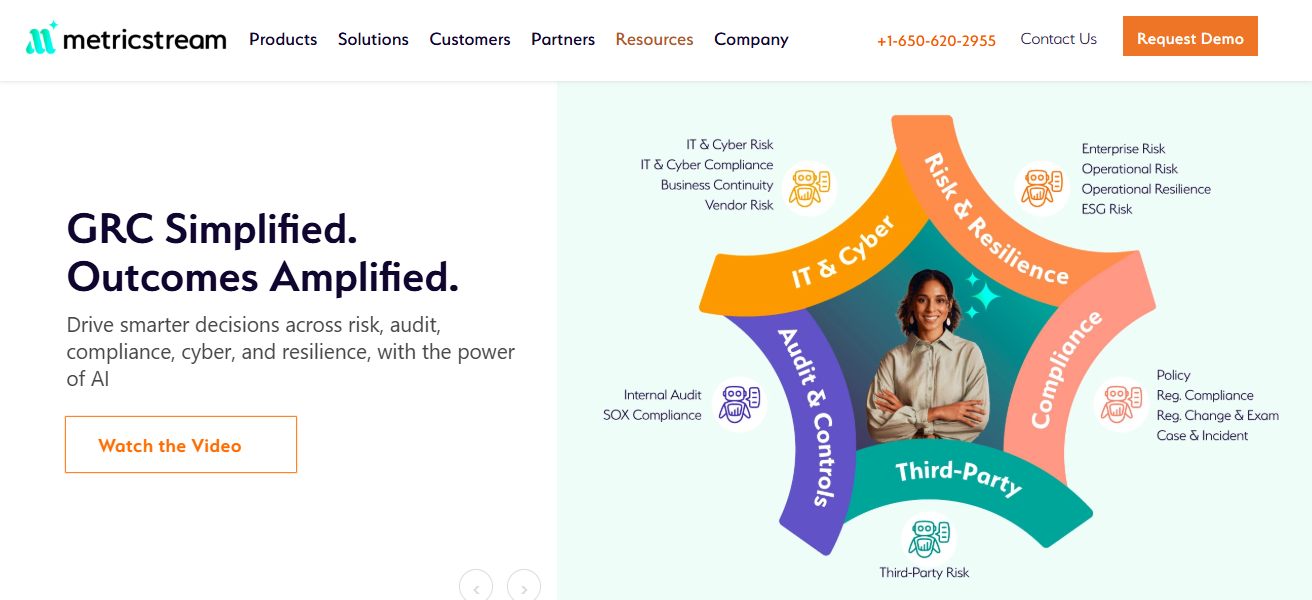
The platform features advanced analytics and reporting capabilities that help organizations detect risks and maintain compliance with regulatory standards.
Its architecture is scalable to accommodate the needs of large enterprises with complex regulatory requirements.
MetricStream centralizes risk and audit data to enable better decisions and an enhanced financial governance framework.
MetricStream Features
- Complete GRC capabilities — risk, audit and compliance management
- Automation of testing reduces manual controls errors and inefficiencies
- Enhanced analytics and reporting for a live view of existing risksshare this paragraph
- Enterprise ready, scalable solution created for complex regulatory and enterprise environments
| Pros | Cons |
|---|---|
| Cloud-based collaboration | Requires strong internet connectivity |
| Excellent reporting and audit trails | Learning curve for non-technical users |
| Strong SOX compliance support | Premium pricing |
4. MindBridge
MindBridge, using artificial intelligence and machine learning, is changing how we test for financial control and performing audits.
It uses advanced algorithms to process vast amounts of financial data, detecting anomalies, and suspicious transactions that traditional tools may overlook.
The platform offers risk assessment, visual data representations, and automatic insights to help auditors prioritize high-risk areas.
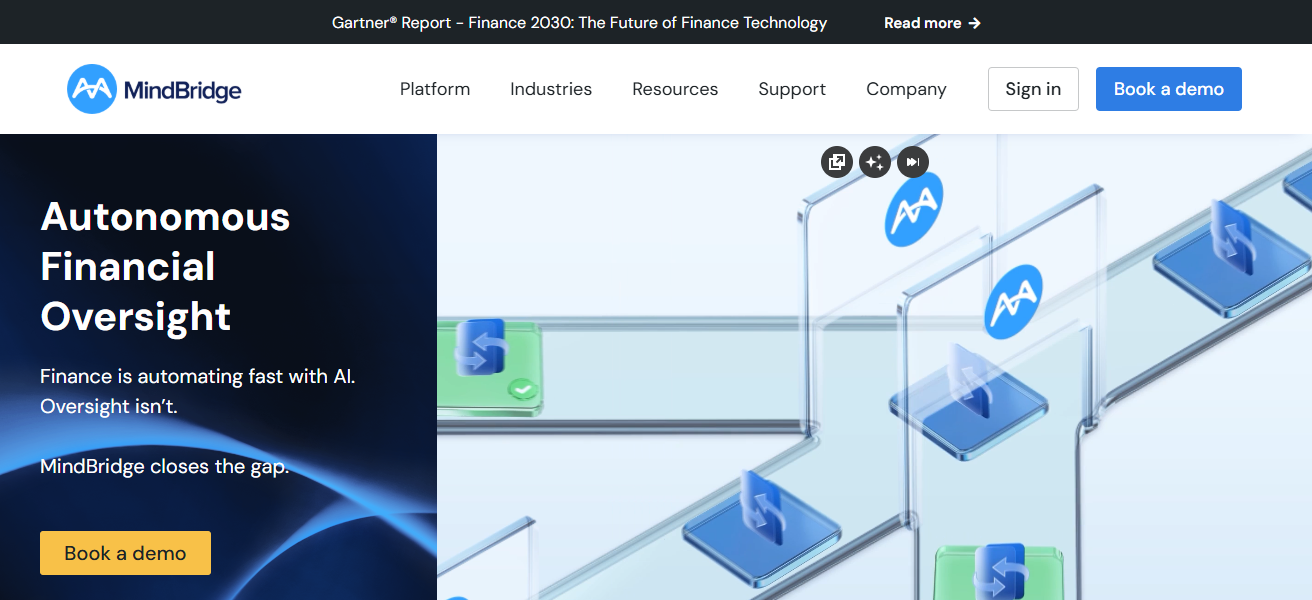
MindBridge improves the quality and accuracy of audits while reducing manual effort by a substantial amount.
The ability to process entire datasets (instead of samples) increases confidence in financial reporting.
Advanced analytics empower organizations with proactive risk detection, enhanced fraud prevention, and streamlined audit workflows.
MindBridge Features
- Anomaly and financial risk detection across massive datasets using AI-driven analytics
- Audit focus and data visualization enhances both scoring & decision-making
- Data analysis instead of sampling boosts audit fidelity and acceptance
- This, in turn, helps evolve their machine learning models to always improve the detection of fraud and gain new insights.
| Pros | Cons |
|---|---|
| Comprehensive GRC platform | Can feel overwhelming due to breadth |
| Strong regulatory compliance features | Implementation time is long |
| Scalable for large enterprises | UI less intuitive compared to peers |
5. HighBond (Diligent)
Diligent is the creator of HighBond, an end-to-end audit, risk and compliance management platform for organizations.
It amalgamates data analytics, workflow automation, and reporting tools to aid in financial control testing and governance processes.
HighBond provides organizations with visual dashboards to track compliance requirements, aggregate risk data, and manage audit operations.
The platform also offers actionable insights generated through data-driven analytics, enhancing decision-making processes.
It can connect with various enterprise systems thanks to its integration capabilities. HighBond assists organizations in upholding robust internal controls, improving transparency, and achieving regulatory adherence throughout financial operations and business functions.
HighBond Features
- Centralized audit and risk management with integrated compliance
- Article Summary: Data analytics tools reveal valuable insights that can be used to inform better governance decisions
- It simplifies audit processes and facilitates compliance tracking.
- Enterprise Systems Integration – Integrating operations seamlessly
| Pros | Cons |
|---|---|
| User-friendly interface | Limited outside North America |
| Strong audit and SOX testing features | Less customizable for niche needs |
| Cloud-native with easy deployment | Pricing may be high for smaller teams |
6. SAP Audit Management
SAP Audit Management is a feature-rich tool that aids in end-to-end audit processes inside enterprise landscapes.
It connects and integrates with SAP ERP systems for efficient management of financial control testing, audit planning, execution, and reporting.
This software offers actionable information on audit activities in real time, enabling teams to detect risks and adhere to regulatory standards.
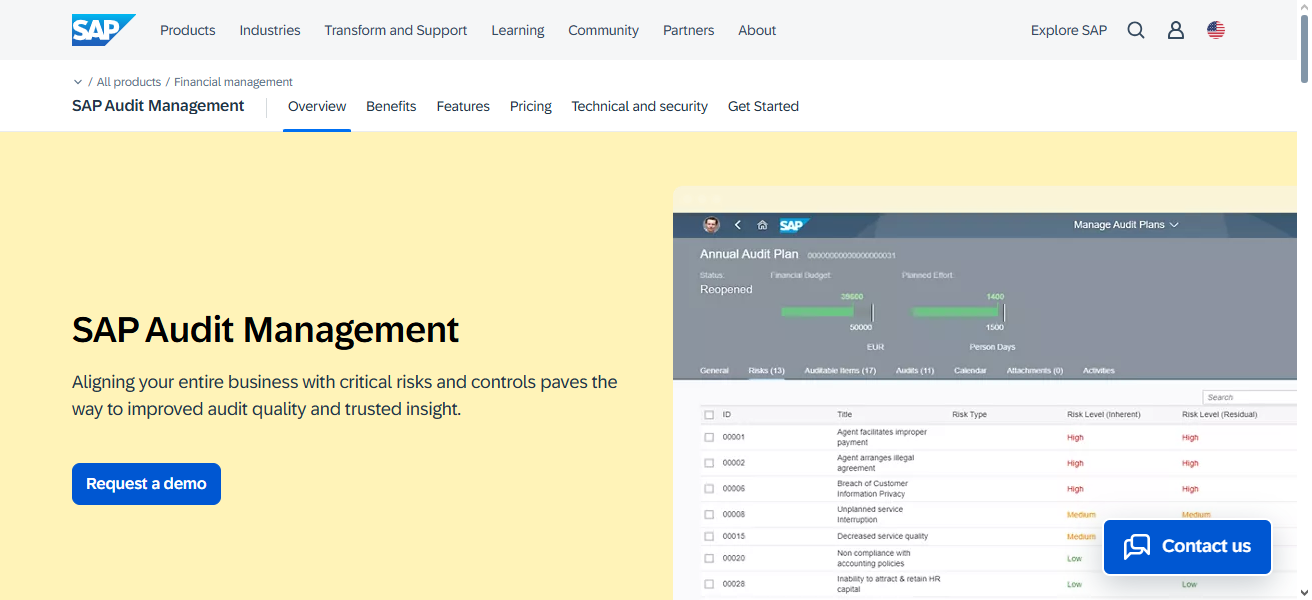
This increases auditing efficiency, and tamper-proof automation features minimize the need for manual effort. SAP Audit Management introduces improved ability for collaboration in between audit teams and stakeholders.
Its powerful data integration functions make it a natural fit for enterprises using SAP systems to manage complex financial operations already.
SAP Audit Management Features
- Management of audit lifecycle from planning to reporting
- Enhanced ERP System Integration For Immediate Access Accurate Financial Data
- Advancing & Automating the Audit Through Real-Time Insights
- Communication among audit teams and stakeholders becomes easier through collaboration tools
| Pros | Cons |
|---|---|
| Powerful analytics for control testing | Requires skilled analysts |
| Strong fraud detection capabilities | Interface can feel dated |
| Flexible reporting | May not scale as smoothly as competitors |
7. Archer
Archer, another member of the RSA GRC suite, is a governance, risk and compliance platform that allows organizations to plan and coordinate across any number of risk, compliance or audit activities.
The platform offers centralized tools for financial control testing, risk assessments and the management of policies. The Open AI based helper ability of this app can guide customers through customizations.
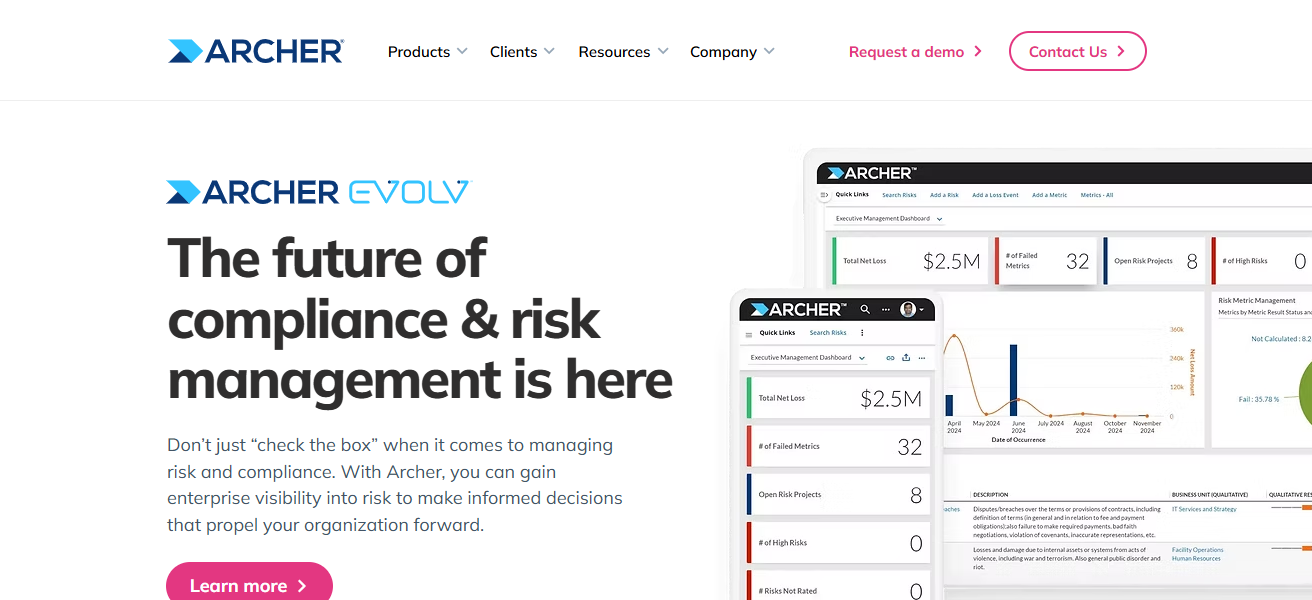
With advanced reporting and analytics, it also helps organizations recognize potential risks and maintain compliance with regulations.
Its scalability is useful for larger more complex enterprises. Archer adds better visibility with financial controls as well overall governance and risk management capabilities.
Archer Features
- Flexible platform for risk, compliance, and audit management
- Workflows tailored to the unique stat of an enterprise
- Sophisticated reporting and analytics for improved risk visibility and mitigation
- Build scalable architectures for large and complex enterprise organizations
| Pros | Cons |
|---|---|
| Strong incident and risk management | Less focused on financial controls alone |
| Easy integration with compliance workflows | Limited advanced analytics |
| Good for mid-sized enterprises | May lack depth for global corporations |
8. ServiceNow GRC
ServiceNow GRC is a system that connects governance, risk, and compliance processes into one platform. It also enables enterprises to automate financial control testing, track risks, and comply with regulatory requirements.
Dashboards and analytics provide real-time visibility into the risk and control environment on the platform. Being able to automate workflows through ServiceNow GRC reduces manual work, increases operational efficiency.
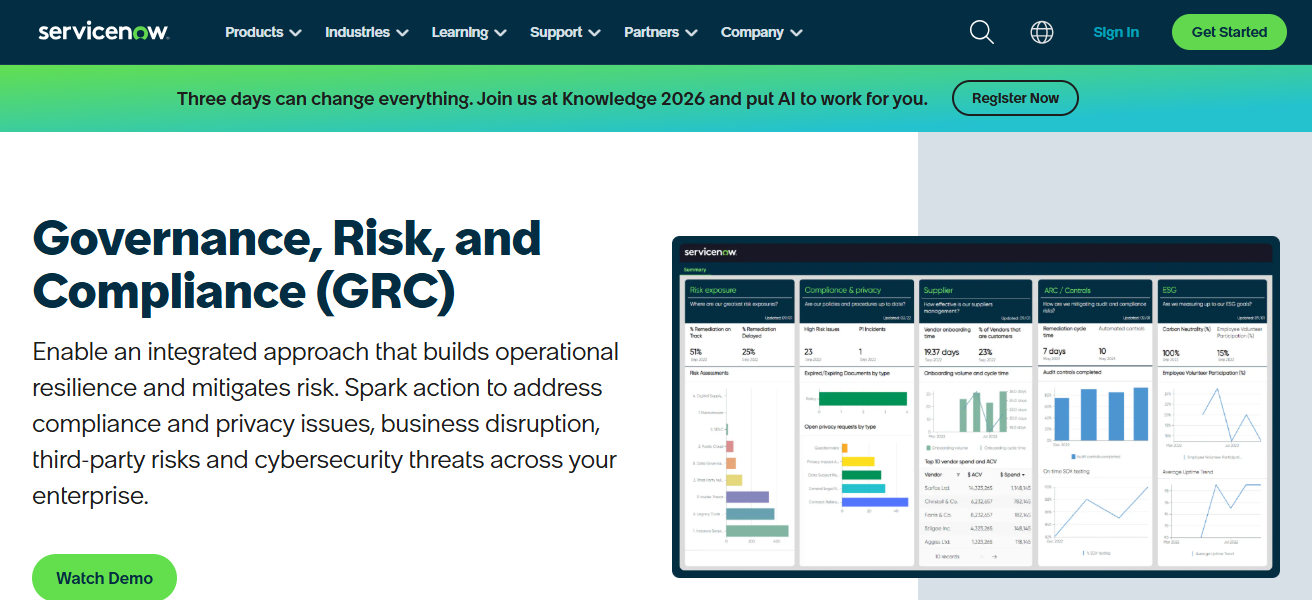
It also integrates well with other ServiceNow modules, promoting interdepartmental collaboration.
Overall, the article explains how Digital Ledger Technology provides organizations with enhanced risk management capabilities, automation of compliance processes and control of financial operations which makes it a pivotal tool for enterprise governance.
ServiceNow GRC Features
- Integrated governance, risk and compliance management platform
- Workflow automation minimizes manual work and boosts efficiency
- Risk and control visibility with real time dashboards
- Integration with ServiceNow ecosystem enhances collaboration between departments
| Pros | Cons |
|---|---|
| AI-powered risk insights | Complex deployment |
| Strong integration with IBM ecosystem | High cost of ownership |
| Scalable for global enterprises | Requires specialized expertise |
9. Pathlock
Pathlock is an identity governance and administration software specifically designed for access control and financial control monitoring in enterprise systems.
It is used by organizations to manage segregation of duties, track user access and prevent fraud or compliance violations.
Pathlock provides ongoing insight into system activities to detect risk and validate that financial controls work as designed.
It also minimizes manual audits via automation to improve compliance efficiency. Our integrated solution with major ERPs, including SAP, helps manage access risks while offering holistic visibility.
Pathlock helps organizations achieve greater accountability in their financial operations by enabling stronger internal controls and ensuring compliance with relevant regulations.
Pathlock Features
- Enforcement and monitoring of segregation of duties in access governance
- Ongoing risk and violation monitoring of user activities
- Comprehensive visibility by integrating with ERP systems like SAP
- Reducing manual audits increases compliance efficiency.
| Pros | Cons |
|---|---|
| Strong board-level reporting | Less technical depth for control testing |
| Easy-to-use dashboards | Limited customization |
| Good for governance-heavy firms | May not suit highly technical audits |
10. LogicGate
LogicGate is a no-code risk and compliance platform that empowers organizations to develop and automate processes for testing financial controls.
It enables teams to create tailored workflows, assess risks, and maintain compliance without requiring deep technical knowledge.
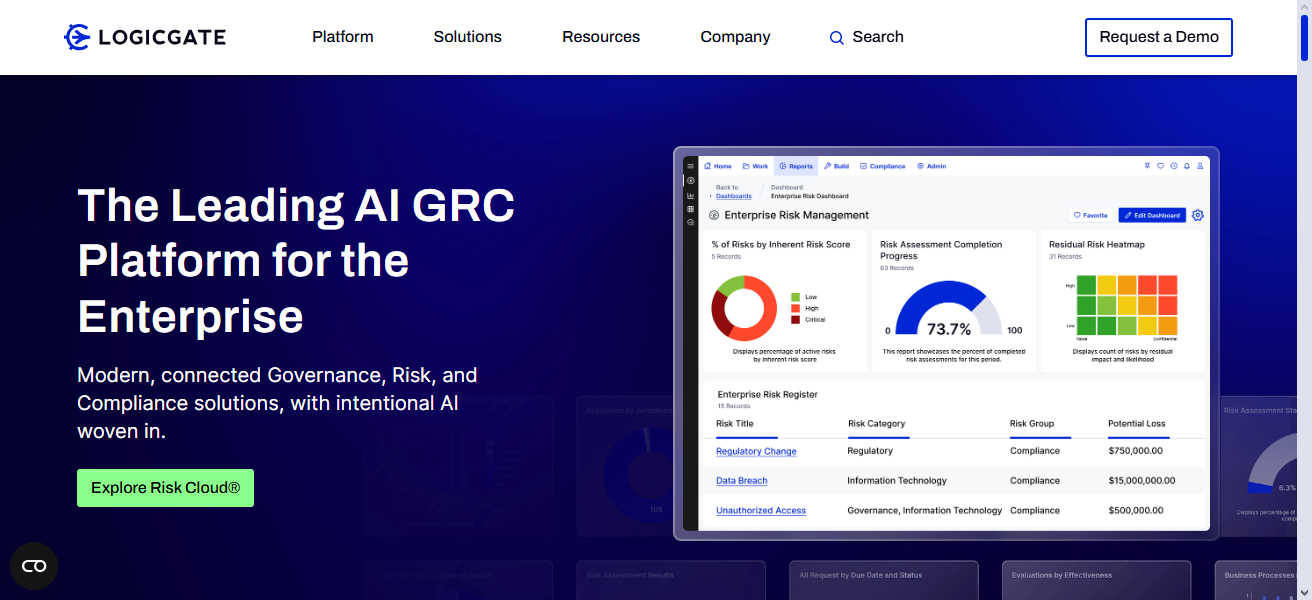
The platform simplifies the process of sending data to boards and producing reports while providing centralized dashboards, real-time reporting, and collaboration tools–better visibility into financial controls.
LogicGate is also suited for companies of all sizes to scale their governance processes, given its flexibility. Through the automation of repetitive tasks and customization capabilities
LogicGate increases efficiency, minimizes risks, and supports organizations in maintaining effective financial control frameworks.
LogicGate Features
- A no-code development platform for custom risk and compliance workflows
- Dashboards to monitor financial controls and risks in a centralized manner
- Using automation of repetitive tasks enhances efficiency and minimizes errors
- A solution which is flexibly scalable and fits the growing enterprise needs
| Pros | Cons |
|---|---|
| Strong access control testing | Narrower scope compared to full GRC suites |
| Easy integration with ERP systems | Limited advanced compliance features |
| Affordable compared to larger platforms | May not scale for very large enterprises |
What are the key Features To Look for in Enterprise Audit and GRC Tools?
Automation – Minimizes human effort within audits, compliance, and control testing
Real-time reporting – Offers immediate visibility of risks and financial controls
Risk management — Identify, evaluate and mitigate potential business risks
Compliance tracking – Facilitates compliance with regulations such as SOX and internal policies
Integration – Interfaces between ERP systems (SAP, Oracle), for a fluid transfer of information
Data analytics – Provides insights and dashboards to make informed decisions
Access control – Responsible for defining and assigning user roles, granting data access
Growability– Handle increasingly complex business requirements
Collaboration tools – For team communication and workflow
Audit trail – Retains full record for transparency and responsibility
Why These Tools Are Best for Large Enterprises
Deals with complex regulations – Makes it easier to comply with multiple global laws
Centralized system – Combines risk, audit, and compliance data into one platform for better control
Automation – Minimized workload on audits, reporting and controls testing (rismasystems. com)
Real-time risk visibility — Leaving no stone unturned to identify and fix the risks in real time
Scalability – Well-suited for sizable organizations with intricate structures and substantial records
Better decision-making – Provides analytics and dashboards for smarter business decisions
Increased efficiency – Removes duplication of work and streamlines workflows across the organization
Increased security & compliance – Aids in avoiding fraud, data breaches and regulatory fines
Conclusion
Essentially, the Best Tools for Enterprise Financial Control Testing play an integral part in making audits productive, managing risks more effectively and ensuring compliance to regulations.
These platforms provide automation, real-time insights and scalability to help enterprises deal with complex Financial Environment.
By selecting the appropriate tool, it allows for more detailed decision-making, increases accuracy and promotes strong internal control systems to secure a successful business in the long term.
FAQ
Yes, tools like Archer and HighBond are designed for complex enterprise environments.
LogicGate offers no-code customization for workflows and control testing.
Yes, platforms like Workiva enable real-time collaboration and data linking.
MindBridge uses AI to detect anomalies and financial risks in large datasets.
Pathlock focuses on access governance and segregation of duties.