In this article, I will discuss the Best Enterprise Liquidity Management Platforms that help organizations gain real-time visibility into cash flow, optimize liquidity planning, and reduce financial risk.
These platforms enable enterprises to automate forecasting, centralize cash management, and make data-driven financial decisions, replacing manual processes with smarter, more scalable liquidity management solutions.
Key Points & Best Enterprise Liquidity Management Platforms
| Platform | Key Point |
|---|---|
| Microsoft Excel | Flexible modeling widely used for custom liquidity planning in enterprises. |
| Tidely | Real-time cash flow monitoring with intuitive dashboards for SMEs and corporates. |
| Commitly | Scenario-based liquidity planning tailored for startups and growth companies. |
| Atlar | Automated treasury workflows connecting directly to banks and ERPs. |
| Finban | AI-driven forecasting that enhances liquidity risk detection. |
| Trovata | Bank API integrations for consolidated cash visibility across accounts. |
| Embat | Multi-entity liquidity consolidation for global organizations. |
| Helu | SME-focused liquidity analytics with simplified reporting tools. |
| Nomentia | Enterprise-grade treasury management with strong compliance and forecasting modules. |
| re:cap | Liquidity optimization insights designed for fintechs and subscription-based businesses |
10 Best Enterprise Liquidity Management Platforms
1. Microsoft Excel
Microsoft Excel is very popular as a softwer for building spreadsheets, especially for financial modeling and basic liquidity management, and that is due to flexibility and rowerful fijuring capabilitise.
Fiance teams with Excel track cashflow, forecast future position & build dashboards with a formulas and pivot table.
However, Excel is tiresome due to lots of manual data input and maintenance that it makes it difficult to get real-time and automated forecast for complex enterprises.
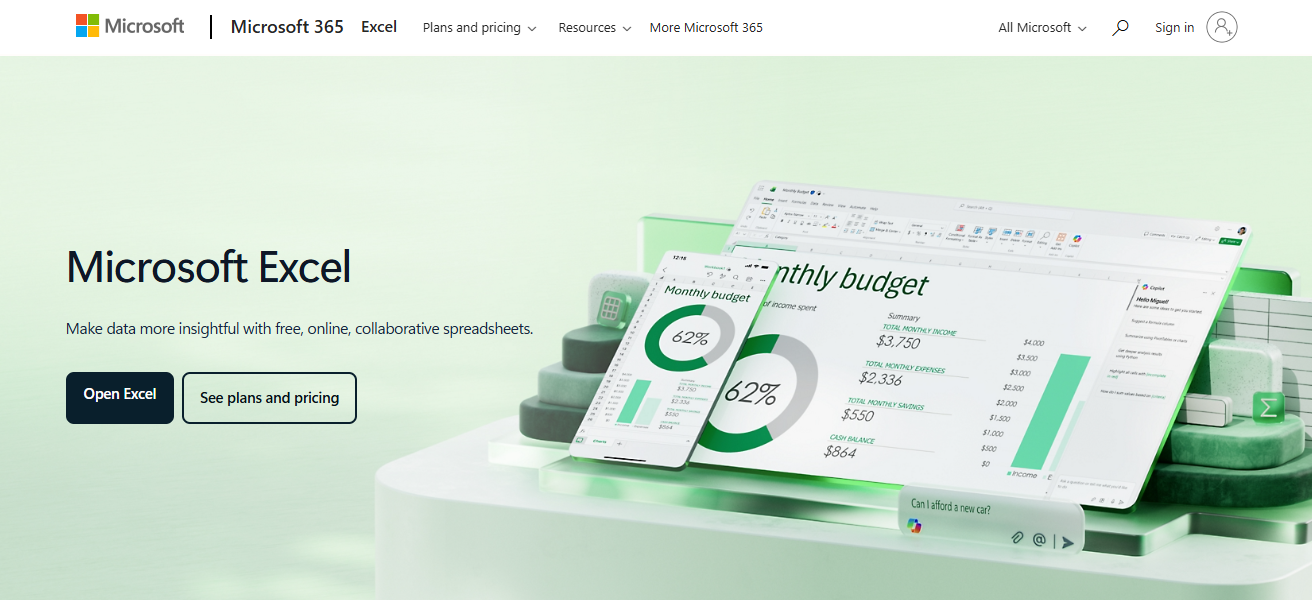
Excel does not come with bank connectivity & cash mademanagement tools. Because of that organizations surpass Excel.
They then choose dedicated liquidity platforms that automate forecasting and provide scenario planning unlike a static spreadsheet.
Features Microsoft Excel
Flexible Modeling: Creating bespoke simulations of cash flow along with several possible future scenarios is possible with the cash flow forecasting features, which include formulas, pivot tables, and graphs.
Wide Adoption: Training costs are decreased since Excel is commonly used in many finance departments.
Custom Reporting: Financial and liquidity reports can be customized however needed.
Manual Data Entry: There are no automatic uploads, and the system does not naturally link with your bank or ERP systems so your data is not current.
| Pros | Cons |
|---|---|
| Extremely flexible and widely understood by finance teams for modeling, cash flow analysis, and forecasting. | Manual processes are error-prone, causing inaccurate forecasts and inconsistencies. |
| No extra licensing required for most finance teams already using Office. | Lacks built-in connectivity to banks, ERP systems, or real-time data integration. |
| Powerful for detailed breakdowns, pivot tables, and customized reporting. | Collaboration is difficult — version control and audit trails are weak. |
| Users can build any logic they need (what-if scenarios, complex formulae). | Scaling to large multi-entity forecasting is slow and inefficient |
| Easy to get started for small business forecasting. | No automated alerts or predictive analytics. |
2. Tidely
Tidely is a specialized liquidity management software servicing enterprises to provide a balanced real-time view of their liquidity by automating the merging of bank account flows with ERP and accounting packages.
Tidely replaces manual spreadsheets with liquid dashboards and continuous liquidity forecasting and what-if model scenarios, bringing more transparency and proactivity to the financial decision-making process.

Automating data synchronization helps dive into complex corporate structures with ease, enabling corporate finance teams to pinpoint bottlenecks and cash flow strategies.
With customizable functionality for both SMEs and corporates, Tidely offers a modern, automated solution for liquidity monitoring and planning.
Features Tidely
Real-Time Cash Visibility: Automatically syncing and bank and accounting data is used to display the bank balance and liquidity position.
Automated Forecasting: Cash gaps and forecasting future cash flows are done using predictive technology.
Scenario Planning: Support is available to select the best option from a number of scenarios.
User-Friendly Dashboards: Understanding cash flows is simple using the graphics depicting cash flow patterns.
| Pros | Cons |
|---|---|
| Real-time liquidity overview from bank accounts and ERP systems. | Cost may be higher than Excel and require subscription investment. |
| Automated data sync and categorization save hours of manual work. | Best suited for small-to-mid enterprises; might lack deep treasury features of larger systems. |
| AI-supported forecasting and scenario planning. | Customization beyond standard dashboards may be limited. |
| Intuitive dashboards with KPIs and reporting. | Some advanced features may require onboarding support. |
| Integrates with thousands of banks and accounting tools. | Primarily designed for European markets (GDPR focus). |
3. Commitly
Commitly is a company that automates getting liquid cash forecasts and keeps businesses on their banking and accounting data Flow submit transactions and cash balances into a forecasting cash position and creates a real-time forecast and transactions into cash balances.
The spreadsheet is scenario forecasting and Commitly has automated forecasting and companies do not have to manually adjust their cash position to scenario result.
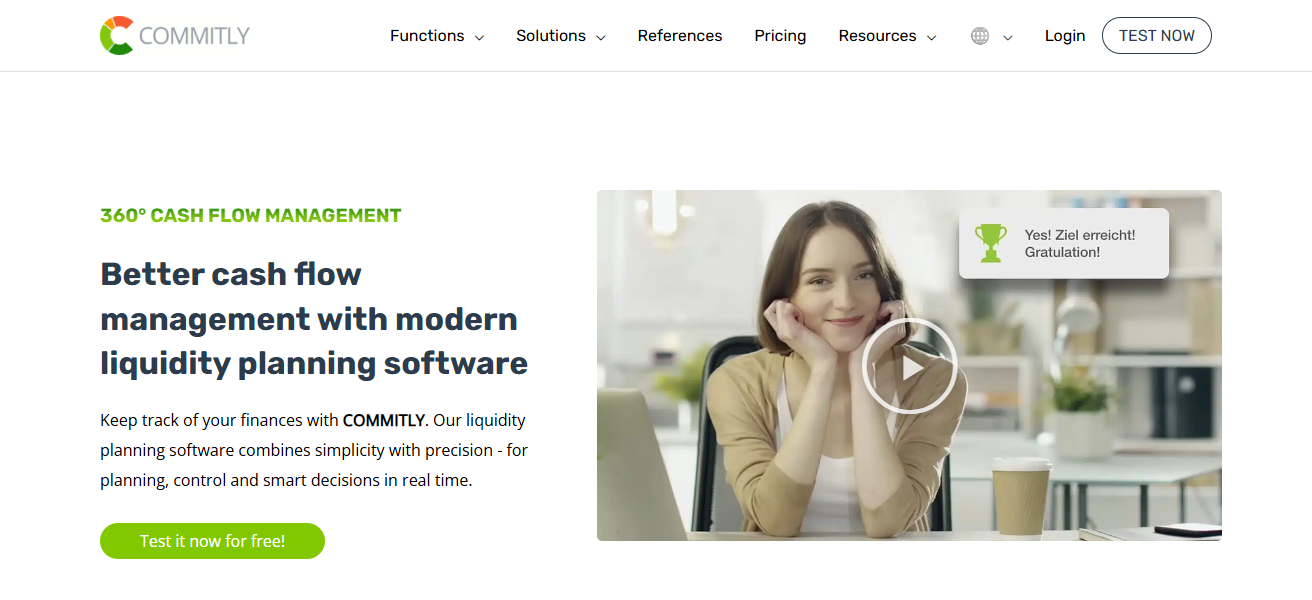
Commitly has a cash flow management dashboards and scenario comparison for the management of reserve funds.
Keeping planning and forecasting in one system improves visibility and planning and forecasting of cash flow balances in one system improves visibility and planning forecasting balances.
Features Commitly
Continuous Forecasting: Forecasting cash flow is updated.
Scenario Analysis: Quick calculations of scenarios can be done to assist in planning.
Bank & ERP Integrations: Manual processes are reduced by automatically integrating with multiple financial systems.
Variance Tracking: Planning can be improved by analyzing the difference if cash flows between what was forecast to what was actually received and spent.
| Pros | Cons |
|---|---|
| Real-time cash flow planning and monitoring. | May require more technical setup for API integrations. |
| Strong scenario management and variance analysis. | Fewer enterprise-level treasury features compared with larger platforms. |
| Good customer support and intuitive interface. | Pricing similar to peers but may lack advanced automation. |
| Integrates with banking and ERP systems. | Best suited for SMEs and finance teams rather than big global corporations. |
4. Atlar
Atlar provides a liquidity and cash management solution with real-time enterprise cash position visibility and automation of key treasury functions.
While there is little specific public information about Atlar, it is recognized for offering streamlined payments, scenario forecasting, and automation, which helps finance teams reduce manual reconciliation and errors.
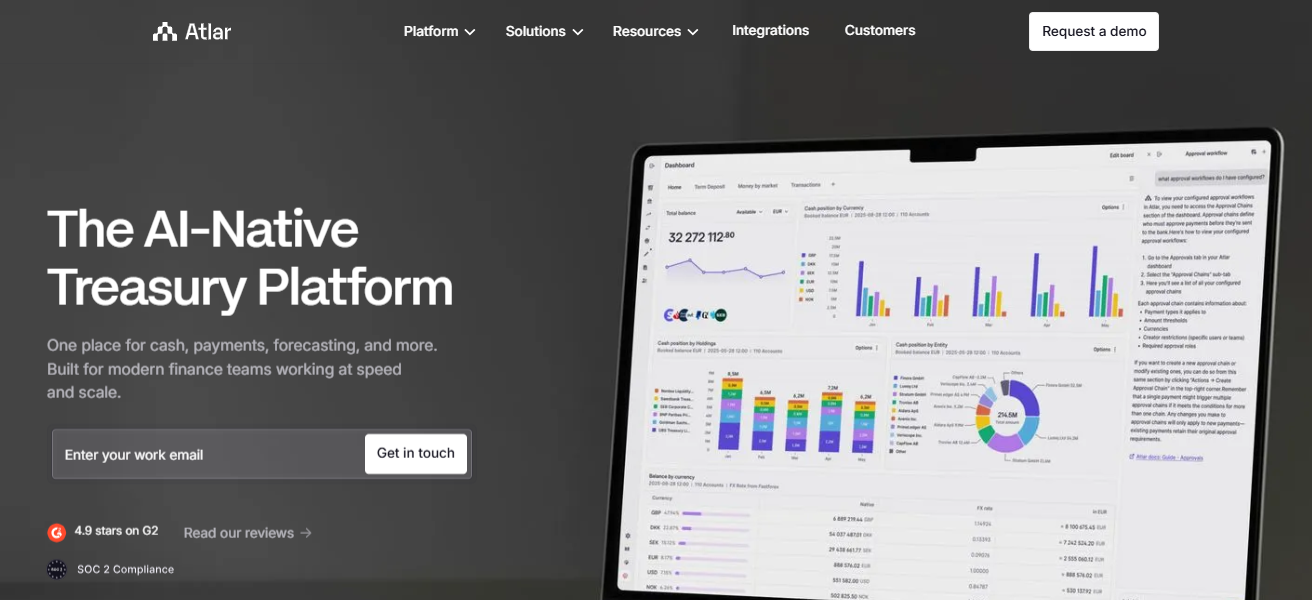
Atlar helps enterprises make accurate cash flow forecasts and centralized cash management for strategic planning and operational execution, which is critical.
It is a solution tailored for enterprises that need more control and automation of their liquidity and payment processes.
Features Atlar
Cash Flow Centralization: Combines multiple accounts into one cash position.
Automated Reconciliation: Cuts down on manual matching and justification errors.
Liquidity Forecasting: Predict future cash positions in order to plan ahead.
Payments Integration: Assists in streamlining payment scheduling directly in liquidity workflows.
| Pros | Cons |
|---|---|
| Provides real-time visibility into cash and cash flow. | Very limited public information on features and pricing. |
| Automation reduces manual reconciliation and errors. | Harder to evaluate vendor maturity and ecosystem. |
| Integrated payments controls and forecasting. | May not yet have a large customer base or established reviews. |
5. Finban
Finban predicts the financial liquidity that allows companies to see how healthy their cash flow is. It automatically integrates financial data and uses scenario forecasting to help companies predict and plan for liquidity gaps.
What Finban enables companies to see is greater liquidity visibility which lets companies see cash on hand and how budget limitations change after spending without having to update spreadsheets.
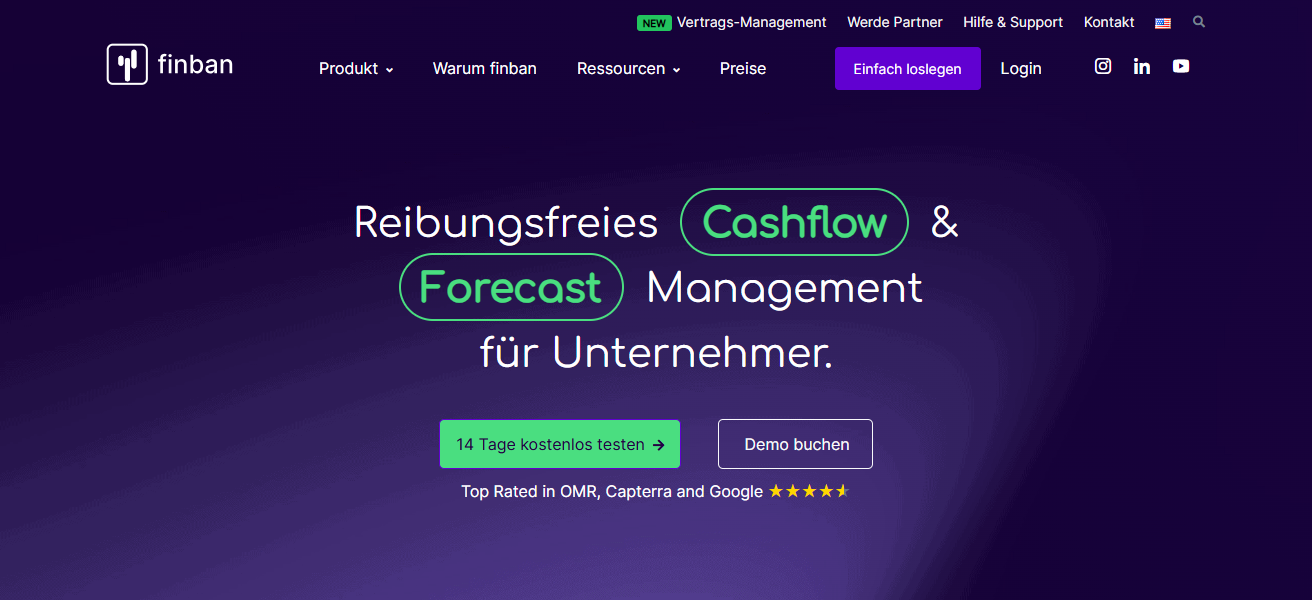
This lets companies integrate operational decisions with forecasting provided by tools Finban offers. Companies that want better control over cash flow forecasting without the need for tedious complexity will find Finban to have the best balance between forecasting and simplicity.
Features Finban
Live Liquidity Insights: Provides instant visibility on cash flow health.
Automatic Forecasting: Produces future cash predictions without manual input.
Scenario Modeling: Analyzing different financial outcomes becomes simpler.
Budget Integration: Supports the liquidity and budget alignment.
| Pros | Cons |
|---|---|
| Real-time liquidity insights and automatic forecasting. | Not as feature-rich as dedicated enterprise treasury systems. |
| Scenario modeling and budget control. | Best suited for startups and SME use cases. |
| Affordable starting pricing compared with larger platforms. | May offer limited advanced analytics or global features. |
6. Trovata
Trovata is a cloud-based liquidity and cash management platform built to meet the needs of contemporary enterprises that want to see multiple bank accounts and holdings in real time.
Trovata connects via API to financial institutions to automate cash reporting, forecasting, and cash management analytics to help eliminate the majority of the leg work that comes with traditional treasury processes.
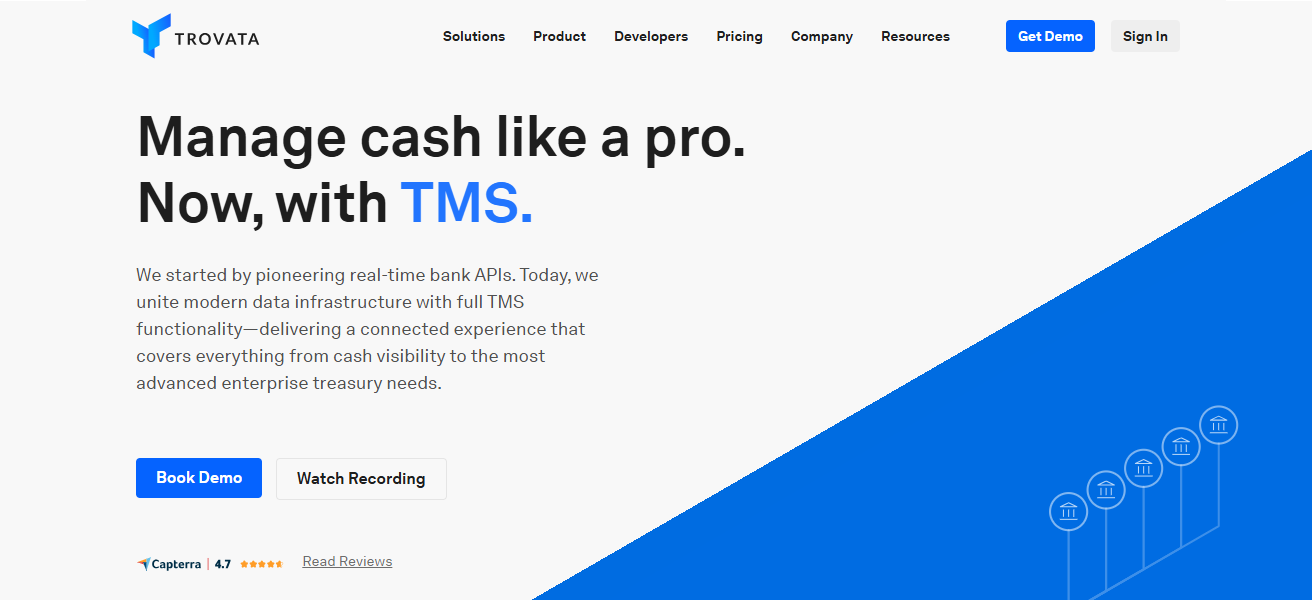
Trovata deploys advanced search and insight ml to help customers explore transactions and build better forecasts.
The platform is built for growing companies with big structures and centralized control over their cash positions, democratizing treasury teams and letting them focus on better strategy as opposed to data drudgery.
Features Trovata
API-Powered Bank Connectivity: Real-time banking information is provided through direct API connections.
Automated Cash Forecasting: Predicting cash movements is advanced through automation.
Central Cash Dashboard: Combines different bank accounts for a single treasury overview.
Advanced Search & Tags: Analyzing transaction patterns is simplified through smart tagging.
| Pros | Cons |
|---|---|
| API-based real-time cash visibility across multiple banks. | Enterprise pricing is relatively high (~€24,000/year). |
| Scalable cloud-native architecture. | May be over-powered for very small businesses. |
| Automated forecasting with tagging and scenario modeling. | User experience and onboarding may require training. |
| Consolidates cash and payments data centrally. | Some advanced treasury workflows might still need external tools. |
7. Embat
Embat provides a complete solution for cash management and liquidity forecasting. This process pulls data together from bank accounts and ERP systems. Embat gives organizations a cash position picture.
Its AI-enhanced forecasting and automation tools help organizations predict future liquidity needs and reduce the demands of manual reconciliations.

Embat helps finance departments better manage payments, analyze data, and create reports for better management and forecasting.
The platform’s strength in real-time data integration and analysis offers enterprises a solid starting point for transforming their treasury activities, visibility, and control over cash flows.
Features Embat
AI-Driven Forecasting: Cash forecasts are improved through Artificial Intelligence.
Real-Time Cash Tracking: Continuously tracks and updates the current liquidity position.
Payment & Accounting Integration: Cuts down on manual work by connecting essential systems.
Trend Analysis: Improved future planning through historic trend insights.
| Pros | Cons |
|---|---|
| AI-driven forecasting and automation. | Limited public product documentation makes evaluation harder. |
| Global treasury visibility and real-time cash management. | May require deeper implementation support. |
| Payment and accounting integration. | Feature maturity compared to large legacy TMS is unclear. |
8. Helu
Helu is a financial planning and reporting platform designed to assist finance teams with budgeting, forecasting, and collaboration.
Though particular uses of Helu for liquidity management are less documented, Helu’s ability to produce customized financial analytics, develop editable dashboards, and create interactive reports aimed at helping enterprises understand their cash flows with detailed financial analyses is unmatched.
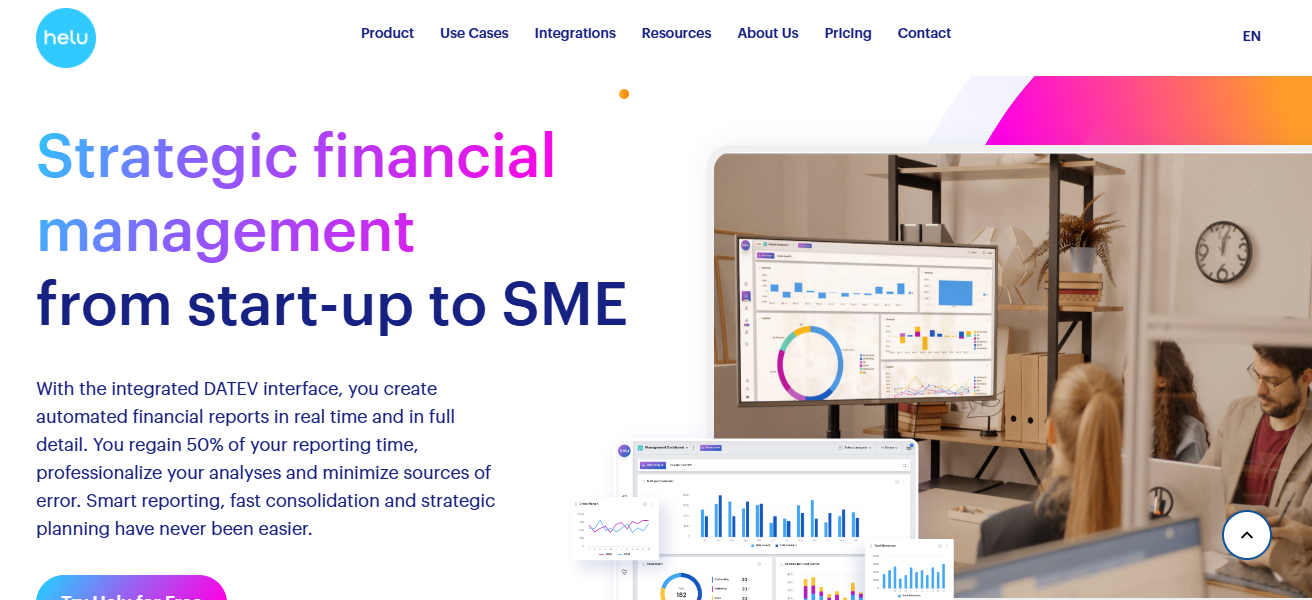
Helu’s integration of accounting data and scenario-driven planning make it a useful platform for companies seeking to streamline their financial reporting and liquidity planning. Helu is especially useful for collaborative mid-sized companies.
Features Helu
Integrated Financial Planning: Merges budgeting, forecasting, and reporting into a single tool.
Personalized Dashboards – Flexible dashboards to adapt KPIs and cash flow trends to your preference.
Co-Creation – Allows several users to simultaneously edit and create plans and models.
What If – Evaluate the various possible scenarios of cash and liquidity.
| Pros | Cons |
|---|---|
| Integrates financial planning, reporting, and collaboration. | Less focused purely on liquidity vs. full treasury systems. |
| Clean customizable dashboard. | Feature details publicly limited — harder to compare side-by-side. |
| Good for mid-size companies and teams. | May lack enterprise banking connectivity at scale. |
9. Nomentia
Nomentia has created tailor-made treasury and liquidity management solutions for big companies that want to manage their cash, payments, and forecasting all from one place.
The liquidity module working with multiple systems and bank accounts for cash flow forecasting, scenarios, and detailed forecasting analysis.
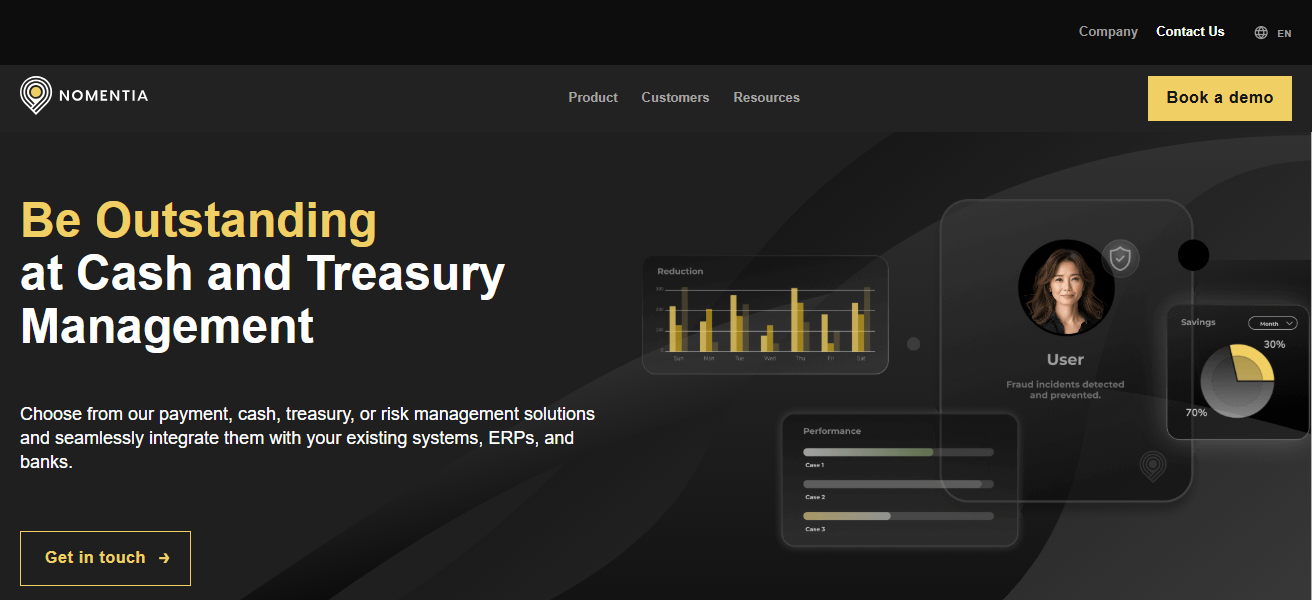
Nomentia also provides support for a more advanced treasury management activities such as setting up cash pools, monitoring FX positions, and implementing risk management, and so has a treasury management solution for large businesses.
Every finance team that uses Nomentia is able to improve visibility and transparency, real time liquidity position, and stragetic business planning from advanced data. It also provides finance teams with customizable dashboards and ease of complex business integrations.
Features Nomentia
Comprehensive Treasury – Covers cash management, payment, risk, and treasury management.
Multi-Entity – Designed for global and multi-currency environments.
Forecasting – Integrated short and long-term cashflow forecasts.
ERP and Banking Partnerships – Integrates smoothly with your banking and enterprise resource planning.
| Pros | Cons |
|---|---|
| Unified, modular treasury and liquidity management. | Pricing and exact features often require sales contact (not transparent). |
| Strong automation and real-time cash forecasting. | Implementation complexity may be higher in large enterprises. |
| Capable of handling multi-entity and global cash flows. | May be more than needed for smaller companies. |
10. re:cap
re:cap is an integrated liquidity management and cash flow software with real-time updates, forecasting, and accounting automation that improves visibility into an enterprise’s financial health.
It is able to keep track and report cash balances, do sophisticated tagging of movements, and run what-if scenarios for weekly and monthly financial planning.
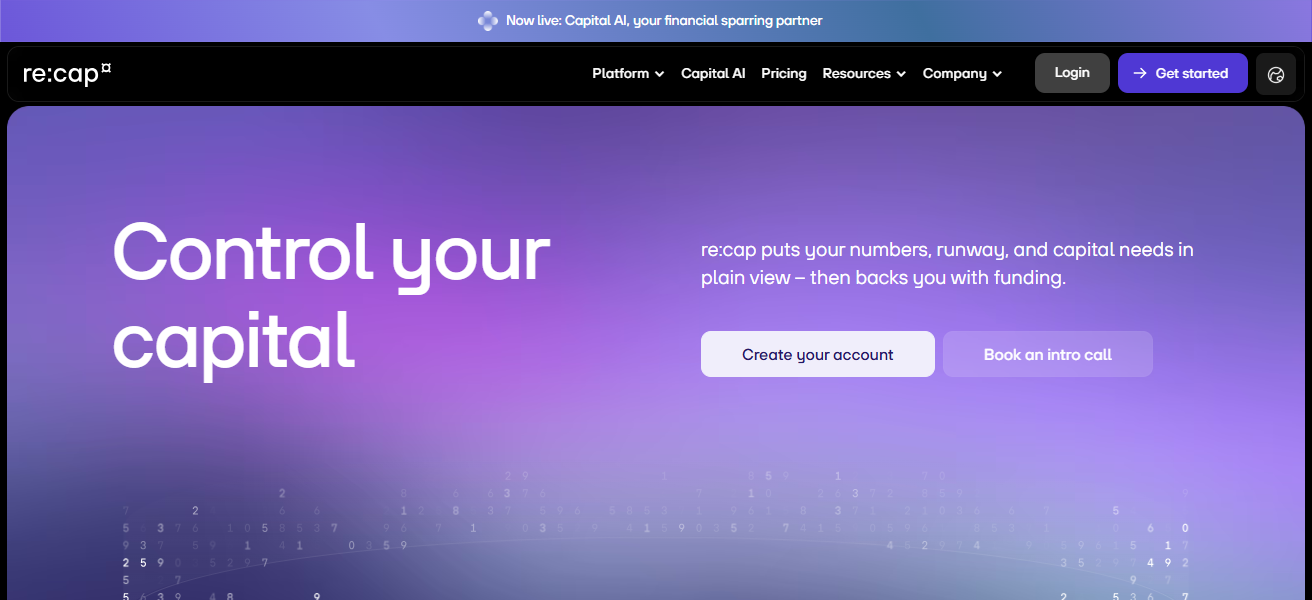
Re:cap is also very valuable to businesses that require liquidity in addition to planning for capital, as it provides funding insights. It automates cash management and helps finance teams forecast and plan using real-time data.
Features re:cap
Cash Position Insights – Regularly pulls and reports updates on cash positions across linked accounts.
What If – Determines possible weekly and monthly cash flow scenarios.
Unlimited Connections – Link as many banks and applications as you wish at no extra cost.
Designed for Users – Finance teams can easily interpret dashboards to analyze trends.
| Pros | Cons |
|---|---|
| Real-time automated updates and forecasting. | Less established than legacy treasury systems. |
| Free tier available with unlimited data connections. | Advanced treasury functions beyond forecasting are limited. |
| Intuitive UI and weekly/monthly forecasting. | Focused on startups and scaling companies, less on large corporate ERP integration. |
| Direct access to funding insights helps planning. | May not replace full treasury management systems. |
How To Choose Best Enterprise Liquidity Management Platforms
Data Connectivity Does it link to your banks, ERP, and accounting systems? Real-time data integrations cockpit removes manual workload.
Forecasting Accuracy: Automated predictive forecasting is a must (think AI, machine learning). Ability to slice and dice various scenarios (best vs worst).
Scalability Remaining within your present size and also your future growth is equally crucial, right? Necessary for multi-branch, multi-currency, and worldwide activities.
Automation Level Automated reconciliation, tagging, alerts, and report generation are all time-saving. Increasing automation → decrease in manual errors.
Ease of Use Adoption is influenced by simple and clear dashboards and seamless onboarding. Minimal training is required if the UI/UX is favorable.
Conclusion
Ultimately, the Best Enterprise Liquidity Management Platforms assist enterprises in keeping tight control over cash flow, enhancing prediction capabilities on cash flow, and improving operational efficiency in financial processes.
These platforms assist enterprises in building automated data integration and offer real-time updates to mitigate risk, improve analytics, and foster continuous advancement in a more complicated financial environment.
FAQ
A tool that helps businesses monitor, forecast, and optimize cash flow and liquidity in real time.
They improve visibility, reduce manual errors, and support better financial planning.
Treasury teams, CFOs, finance departments, and enterprise financial planners.
Yes, top platforms connect directly to banks and ERP/accounting systems.
Most offer automated forecasting with scenario modeling.