
This article will highlight the Best Wallets for enterprise access-control and permissions, emphasizing options that offer the best protection, compliance, security, and role-based governance.
- Key Points & Best Wallets for enterprise access-control and Permissions
- 10 Best Wallets for enterprise access-control and permissions
- 1. Safe {Wallet}
- 2. Circle Wallet (USDC/EURC)
- 3. MetaMask Institutional
- 4. Fireblocks Wallet
- 5. Coinbase Custody Wallet
- 6. BitGo Wallet
- 7. Ledger Enterprise Wallet
- 8. Anchorage Digital Wallet
- 9. Copper Wallet (ClearLoop)
- 10. Suisse Bank Wallet
- Coclsuion
- FAQ
Today’s enterprise wallets must protect digital assets, but also simplify processes with configurable policies, approvals, and access limitations.
Such wallets help enterprise customers to safely crypto manage operational and compliance processes.
Key Points & Best Wallets for enterprise access-control and Permissions
Safe {Wallet} Multisig wallet with programmable policies, spending limits, and role-based permissions for enterprise treasury management.
Circle Wallet (USDC/EURC) Supports stablecoin payments, enterprise-grade transparency, and programmable access controls for institutional financial operations.
MetaMask Institutional Enterprise-focused version offering compliance, custodial integrations, and granular permission controls for decentralized finance access.
Fireblocks Wallet Secure MPC-based wallet enabling role-based access, transaction approval workflows, and enterprise-grade asset protection.
Coinbase Custody Wallet Institutional-grade wallet with compliance features, permissioned access, and robust audit trails for enterprise crypto management.
BitGo Wallet Multisig wallet offering customizable policies, role-based permissions, and insurance-backed enterprise security for digital assets.
Ledger Enterprise Wallet Hardware-backed enterprise solution with hierarchical access controls, secure key management, and compliance-ready permission structures.
Anchorage Digital Wallet Regulated custodian wallet providing institutional access controls, compliance monitoring, and secure permissioned crypto asset management.
Copper Wallet (ClearLoop) Enterprise wallet with off-exchange settlement, permissioned access, and customizable approval workflows for institutional trading.
Suisse Bank Wallet Supports multi-currency enterprise transactions, cross-border payments, and permissioned access for global institutional financial operations.
10 Best Wallets for enterprise access-control and permissions
1. Safe {Wallet}
Safe {Wallet} is a multisignature wallet for businesses that offers the highest levels of access control and security.
With the ability to draft policy templates, organizations can set workflow approvals and assign transaction caps for team members based on differentiated roles.
Thanks to the multisig workflow, Safe secures against single point of failure threats. Enterprises customize their policy templates to meet their internal governance requirements.
The open-source nature of Safe Wallet means custom integrations to on-chain apps can be developed.
Safe Wallet is a top choice for DAOs, startups, and large enterprises to secure their treasury management and crypto asset management operations.
Safe {Wallet} Features
- Secure multisig architecture needing multiple approvals for enterprise transactions.
- Treasury management policies and spending limits are adjustable.
- Set, assign, and delegate permissions and responsibilities across teams.
- Integrations with decentralized applications and open-source transparency.
| Pros | Cons |
|---|---|
| Strong multisig security requiring multiple approvals. | Complex setup may challenge non-technical teams. |
| Customizable policies for treasury governance. | Slower transaction execution due to approvals. |
| Open-source transparency and integrations. | Limited direct customer support compared to custodians. |
| Role-based permissions for team management. | Requires careful configuration to avoid mismanagement. |
2. Circle Wallet (USDC/EURC)
Circle Wallet has been updated to enable businesses to manage stablecoin (USDC, EURC) transactions.
Wallet’s primary focus is on regulatory compliance, transparency, programmable access restrictions, and wanlded balance control. Thus, it can be used for regulated financial transactions.
USDC EURC manages wallets with tiered permissions for different teams and USD EURC maintains wallets so that only designated users can start or stop financial transactions.
Payment automation is made easy with USDC EURC automated wallets Circle’s API Calculate payments, cope, and balance control. Circle is regulated and is designed for institutions that require stability and regulation.
Circle Wallet (USDC/EURC) Features
- For enterprises, USD Coin (USDC) and Euro Coin (EURC) stablecoin payments are supported.
- Secure financial workflows are programmable with access controls.
- Infrastructure remains compliance-focused and aligned with regulations.
- Treasury and settlement automation are supported through API integrations.
| Pros | Cons |
|---|---|
| Stablecoin reliability with USDC/EURC. | Limited to Circle-supported assets. |
| Compliance-focused infrastructure. | Less flexibility in DeFi integrations. |
| Programmable access controls. | Dependence on Circle’s centralized framework. |
| API automation for workflows. | May not suit highly decentralized enterprises. |
3. MetaMask Institutional
MetaMask Institutional is tailoring the MetaMask wallet for enterprises by introducing compliance and permissioning features.
It works with custodians and compliance partners to help organizations gain decentralized finance access while staying within the regulatory framework.
Enterprises can set specific control rights/duties regarding who can initiate, approve, or supervise transactions. For organizations that want to explore DeFi, the wallet’s multi-chain functionality is an added bonus.
Transparency and accountability are also offered through audit trails. By integrating user experience with enterprise controls, MetaMask Institutional enables integration with decentralized ecosystems that meet the compliance and flexibility requirements of enterprises.
MetaMask Institutional Features
- Compliance features for enterprise-grade MetaMask.
- Transaction initiation and approval permissions are customizable at a granular level.
- Integration with custodians and compliance.
- Access to multiple chains for decentralized finance.
| Pros | Cons |
|---|---|
| Familiar MetaMask interface adapted for enterprises. | Requires custodial integrations for full compliance. |
| Granular permission controls. | Higher costs than standard MetaMask. |
| Multi-chain DeFi access. | Complex onboarding for institutions. |
| Audit trails for transparency. | Limited insurance coverage compared to custodians. |
4. Fireblocks Wallet
Fireblocks Wallet provides enterprise digital asset management solutions that are secure and compliant.
Their unique multi party computation (MPC) based technology protects and ensures that there are no breaches through single failure points.
Additional enterprise features include transaction monitoring, adjustable approval protocols, and role-based access controls.
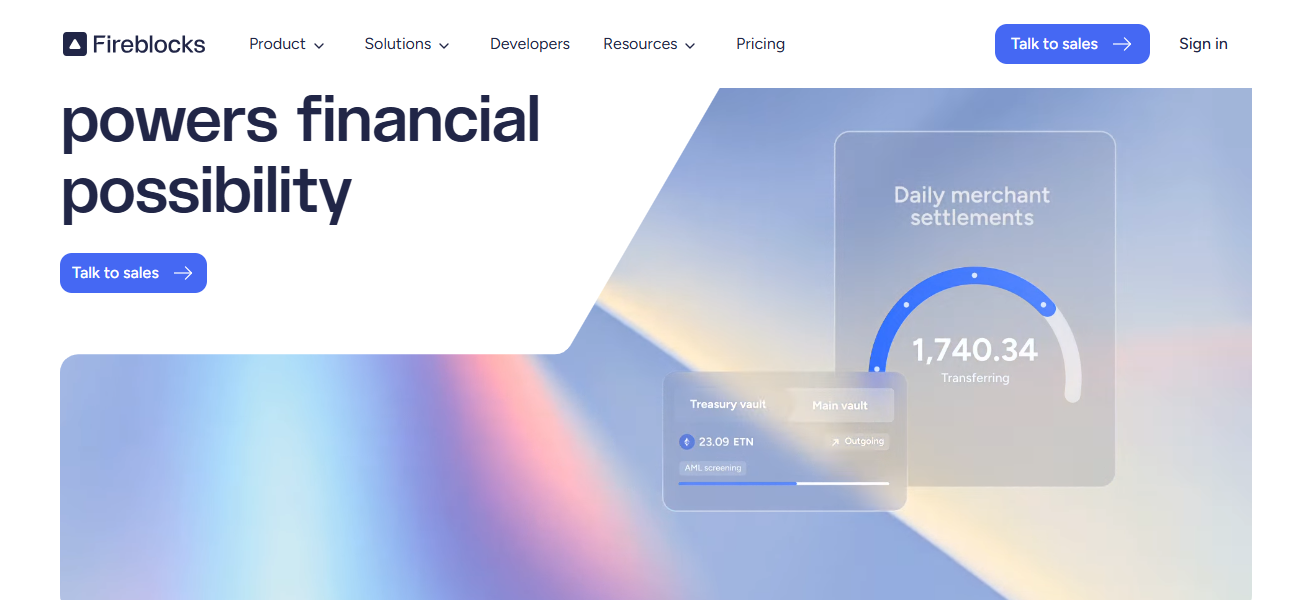
Exchanges, DeFi platforms, and custodians are integrated within the Fireblocks ecosystem, providing a wide range of options for institutional workflows.
They balance enterprise permission features and cryptography to streamline digital asset management at scale. Their infrastructure is embedded with compliance controls to assist in audits and regulatory reporting.
Fireblocks is the leading solution for security and operational efficiency among corporations, fintechs, and financial institutions.
Fireblocks Wallet Features
- Security with no single points of failure through MPC.
- Role-based enterprise governance access.
- Workflows for transactions are customizable with approvals.
- Decentralized finance, custodians, and exchange integrations.
| Pros | Cons |
|---|---|
| MPC-based cryptographic security. | Premium pricing for enterprise use. |
| Role-based access controls. | Requires training for workflow setup. |
| Customizable approval workflows. | Heavy reliance on Fireblocks infrastructure. |
| Integrations with exchanges and custodians. | May be overkill for smaller enterprises. |
5. Coinbase Custody Wallet
Coinbase Custody Wallet provides businesses with an institutional-grade, highly compliant crypto storage solution, which combines safe storage with restricted access.
It provides insurance baked, regulated, compliant custody services. Enterprises manage role assignments so that only particular staff members can responsible manage assets.
Balanced accountability and transparency are ensured with the wallet service’s audit trail support.
Coinbase Custody services are integrated with trading platforms so that assets can be governed and managed without losing integration services.
Coinbase Custody Wallet services are most valuable to institutions whose businesses require them to meet strict regulatory standards in the handling of customer’s digital currency.
With compliance and industry-grade protection, businesses can confidently manage significant digital assets.
Coinbase Custody Wallet Features
- Protection that is insurance-backed with institutional-grade custody.
- Governance and secure management of assets with role-based permissions.
- Infrastructure ready for compliance with audit trails.
- Platforms for trading easily integrate.
| Pros | Cons |
|---|---|
| Regulated, insured custody services. | Limited flexibility outside Coinbase ecosystem. |
| Role-based permissions for governance. | Higher fees than non-custodial wallets. |
| Compliance-ready infrastructure. | Slower innovation compared to open-source wallets. |
| Seamless trading platform integration. | Restricted to supported assets. |
6. BitGo Wallet
BitGo Wallet offers secure multisig options for enterprises, along with customizable policies and role-based access control.
Enterprises can design transaction approval processes to meet governance requirements. It offers transaction protection with insurance-backed security, shielding enterprises from breach issues.
BitGo’s versatility is evident in its support for a variety of digital assets and its compliance with governance features such as regulatory reporting and audit trails.
Combining enterprise permission systems with multisig, BitGo mitigates the dangers of unauthorized access.
This has earned BitGo Wallet the trust of multiple enterprises, custodians, and exchanges for secure, compliant, and scalable digital asset management.
BitGo Wallet Features
- Customizable transactions policies for multisig wallets.
- Enterprise governance through role-based permissions.
- Insurance-backed protection against breaches.
- Auditing and reporting are included for compliance.
| Pros | Cons |
|---|---|
| Trusted multisig technology. | Requires technical knowledge for setup. |
| Insurance-backed protection. | Limited DeFi integrations. |
| Customizable transaction policies. | Higher costs for enterprise features. |
| Compliance-ready audit trails. | Dependent on BitGo’s custodial framework. |
7. Ledger Enterprise Wallet
Ledger Enterprise Wallet integrates Ledger’s hardware protection systems with enterprise environments and adds hierarchical access management and secure key management.
Enterprises deploy permissions across teams, ensuring that only designated staff members execute transactions.
Its hardware-supported backbone defends businesses from a variety of cyber risks. Ledger Enterprise also provides protection matrixes for regulatory compliance, including audit trails and reports.
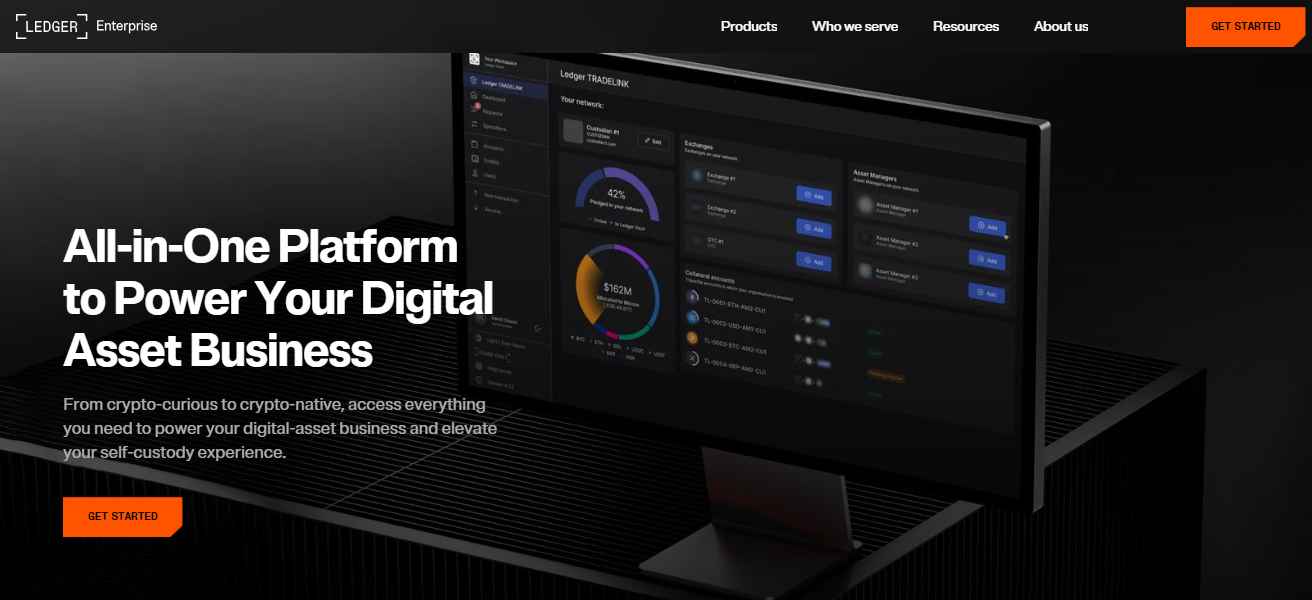
Enterprises can also customize the scalability of their operations, including the management of assorted assets over multiple blockchains.
Ledger Enterprise Wallet combines hardware-level protection with advanced enterprise access systems, assuring strong enterprise governance.
It fits institutions that need extensive physical and digital protection, offering enterprise level safe crypto management.
Ledger Enterprise Wallet Features
- Infrastructure backed by hardware for secure management of keys.
- Hierarchical access control for enterprise-wide teams.
- Ready for compliance with reports and audit trails.
- Supports scalability across multiple chains and assets.
| Pros | Cons |
|---|---|
| Hardware-backed security infrastructure. | Requires physical device management. |
| Hierarchical access controls. | Less flexible for remote teams. |
| Compliance-ready with audit trails. | Limited integrations with DeFi platforms. |
| Multi-chain scalability. | Higher upfront hardware costs. |
8. Anchorage Digital Wallet
Anchorage Digital Wallet combines regulated custody solutions, institutional-level access restrictions, and compliance monitoring.
Enterprises gain access to customized governance standards with permissioned asset management. For added breach protection, insured secure custody and reduced custody associated risk is provided.
Compliance is supported by custody structures that are aligned with regulatory frameworks, benefitting institutional clientele.
Enterprises are able to establish role-centric business structures, determining who can initiate and/or approve transactions. In addition, Anchorage integrates with trading solutions.
With the combination of regulated custody and enterprise permission systems, Anchorage Digital Wallet assures enterprises of the secure management of digital assets and the responsible management of digital assets within the parameters of compliance and the financial regulations.
Anchorage Digital Wallet Features
- Contains regulated custodians with institutional security.
- Permissioned by roles for compliance in governance.
- Custody insurance in breach risk reduction.
- Integrated effortlessly with various trading platforms.
| Pros | Cons |
|---|---|
| Regulated custodian with insurance. | Limited global availability. |
| Role-based permissions for governance. | Higher fees than non-custodial solutions. |
| Compliance monitoring and reporting. | Restricted asset support. |
| Seamless trading integrations. | Dependence on Anchorage infrastructure. |
9. Copper Wallet (ClearLoop)
ClearLoop’s Copper Wallet gives enterprises secure off-exchange settlement with permissioned access controls.
It allows institutions to trade on multiple exchanges without counterparty exposure. Enterprises have customizable approval workflows to meet their governance standards.
Copper Wallet’s infrastructure has role-based access control and defines who can initiate and approve transactions.
Its compliance features provide audit reporting, audit trails, and reporting. By integrating settlement systems with enterprise grade permissions, Copper Wallet improves safety and efficency in institutional trading.
It has gained widespread usage among hedge funds, asset managers, and enterprises in need of a compliant and scalable digital asset management solution.
Copper Wallet (ClearLoop) Features
- Reduction of counterparty risk with off-exchange settlement.
- Enterprise trading with controlled permissioned access.
- Governance in flexible customizable approval workflows.
- Ready for compliance with reports and audit trails.
| Pros | Cons |
|---|---|
| Off-exchange settlement reduces risks. | Limited to partnered exchanges. |
| Permissioned access controls. | Complex setup for new institutions. |
| Customizable approval workflows. | Higher costs for enterprise features. |
| Compliance-ready audit trails. | Less suited for small-scale enterprises. |
10. Suisse Bank Wallet
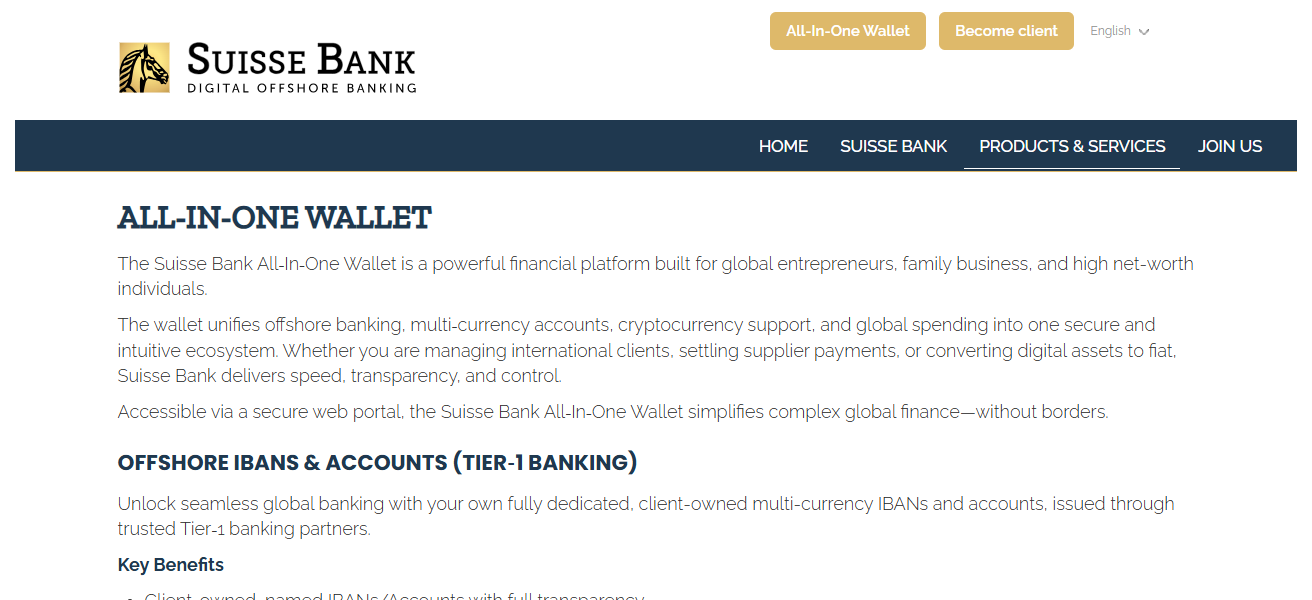
Global financial mobilization using multi-currency wallets is enabled for enterprises through Suisse Bank Wallet.
It is focused on security and controlled access; only designated employees can perform payment transactions. With borderless payment functionalities, enterprises can enhance their international operations.
The wallet has role-based access controls, which are important for team permissions and administrative oversight. The wallet is equipped with infrastructure compliance, which includes audit compliance and reporting.
Suisse Bank Wallet integrates world financial mobility and enterprise user access and permissions systems, making it easier for enterprises to safely and optimally managed diversified financial assets.
It is great for international organizations that need ample control and supervision on their digital assets, proving to be an essential asset for enterprises worldwide.
Suisse Bank Wallet Features
- Support for multiple currencies for global operations for enterprise.
- Secure management of transactions with permissioned access.
- Payment capabilities for cross-border transactions with global enterprises.
- Oversight and audit trails for compliance features.
| Pros | Cons |
|---|---|
| Multi-currency support for global operations. | Limited blockchain-native integrations. |
| Permissioned access for secure management. | Heavier reliance on centralized banking. |
| Cross-border payment capabilities. | Higher transaction fees internationally. |
| Compliance-ready infrastructure. | Less flexible for decentralized finance. |
Coclsuion
In closing, the Best Enterprise Wallets for Access-Control & Permissions provide organizations with safe, flexible, and regulation-friendly solutions.
Through a mix of multisig and MPC wallets, backed hardware custody, and regulatory wallets, these crypto wallets protect and govern digital assets with roles.
Enterprises utilize adjustable processes, logs of transactions, and support worldwide, making them vital for the ethical and streamlined management of crypto operations.
FAQ
They secure digital assets while enabling role-based permissions, compliance, and governance for organizations.
It offers multisig security, customizable policies, and transparent open-source integrations.
Circle Wallet provides stablecoin reliability with compliance-focused programmable access controls.
It adds compliance features, custodial integrations, and granular permission controls for enterprises.