
In this article, I’ll present the Best European Pension & Retirement Plans. Europe has some of the most secure, harmonized, and comprehensive retirement systems integrating state pensions, occupational schemes, and private savings.
Netherlands, Denmark, and Switzerland stand out with above average coverage, excellent financial capacities, and adaptable retirement policies that ensure the individual a pleasant and stress-free future.
Key Points & Best European Pension & Retirement Plans
| Country | Key Point |
|---|---|
| Netherlands | High pension adequacy and sustainability, ranked top globally by Mercer Index |
| Denmark | Strong funded occupational pensions with high replacement rates |
| Iceland | Universal coverage and mandatory contributions ensure broad retirement security |
| Finland | Flexible retirement age linked to life expectancy for system stability |
| Sweden | Notional defined contribution system balances fairness and sustainability |
| Norway | Oil fund-backed reserves provide long-term financial strength |
| Ireland | Improving adequacy with reforms to expand occupational pension coverage |
| Germany | Three-pillar system combining state, occupational, and private pensions |
| Switzerland | Mandatory occupational pensions supplement strong public benefits |
| Austria | Generous public pension replacement rates compared to EU average |
10 Best European Pension & Retirement Plans
1. Netherlands
The Netherlands has one of the most successful systems in Europe. They have a solid three pillar system: state pension (AOW), occupational pensions, private savings.
Most employees automatic opt into industry wide pension funds, which ensures high take up and ongoing security.
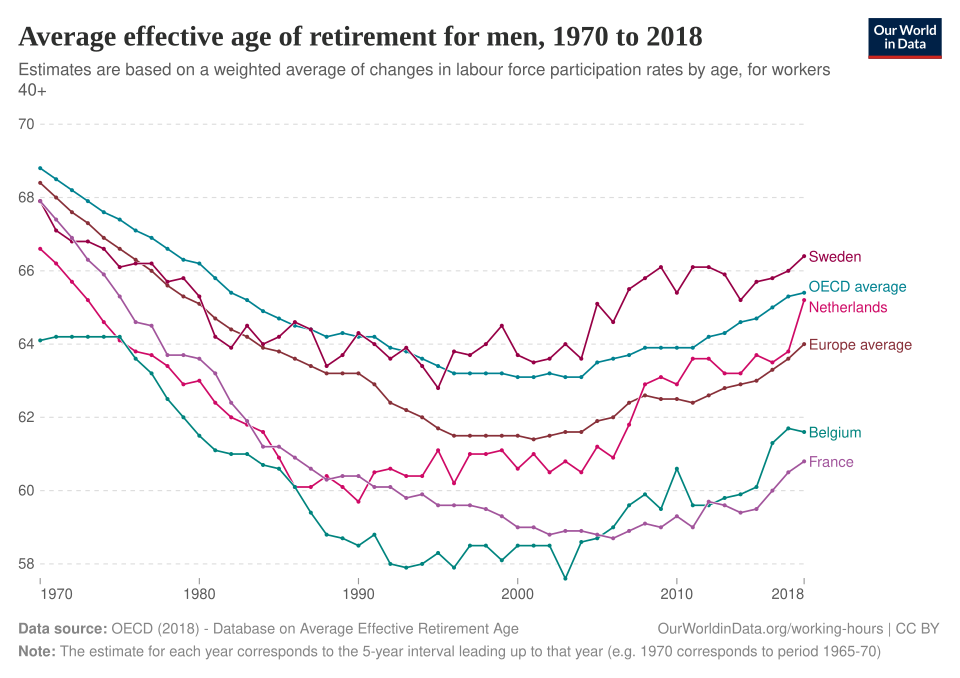
These occupational schemes are predominantly defined benefit or collective defined contribution, which guarantee reliable monthly income in retirement.
The system has a monopoly on transparency and strict regulation, and is the most sustainable system in the world, making it the standard for most systems in retirement and pension planning.
Netherlands – Key Pension & Retirement Plan Features
Three-Pillar Pension Structure In the Netherlands, the pension system consists of 4 parts: the State pension (AOW), compulsory occupational pensions, and, in case it is necessary, voluntary private savings.
Mandatory Occupational Participation Most of the employees are automatically registered into the industry-wide pension funds, which leads to one of the highest pension coverage rates in all of Europe.
Collective Risk Sharing Pension funds market the risks of their members on a cross generation basis, which reduces the effects of market volatility and income uncertainty.
Strong Regulation & Transparency The Reliability, transparency and respect of the pension systems in the Netherlands, is due to their strict supervision and, as a result, transparent documentation.
| Pros | Cons |
|---|---|
| One of the world’s strongest pension systems | Complex structure can be hard to understand |
| Mandatory occupational pensions ensure high coverage | Less flexibility for job-hoppers |
| Strong collective risk-sharing model | Contribution rates can be high |
| Well-regulated and transparent funds | Benefits depend on long-term fund performance |
| Inflation-adjusted benefits protect retirees | Limited individual investment control |
2. Denmark
Denmark’s pension system is one of the best internationally. It is a combination of a universal state pension, mandatory occupational schemes, and additional voluntary savings for private schemes.
Pension funds are negotiated at the emplyer-employee level [collective agreementsit]. It is built around the system of investing funds for long-term growth through a diversified network of global portfolios.
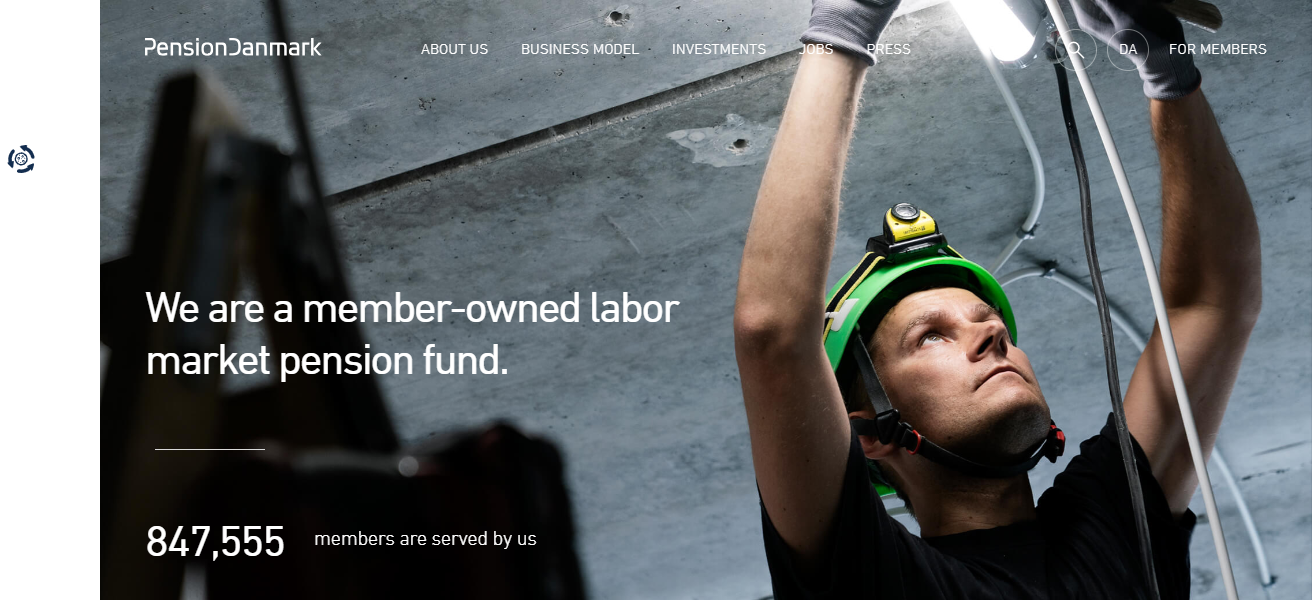
It is credible and effecient system that is built on transparency and governance. It also allows for flexible retirement by giving workers the opportunity of a secure retirement while slowly reducing their work hours.
Denmark – Key Pension & Retirement Plan Features
Universal State Pension Every single person who is a resident in the country is entitled to receive a basic state pension which guarantees the individual minimum income.
Labor-Market Pension Schemes There are schemes whereby both the employer and employee make contributions, which are agreed upon in collective agreements, in order to enhance the saving the employee will have for retirement.
High Investment Efficiency Denish Pension funds are directed to invest globally in various fields to achieve a stable and long term return on the investment.
Flexible Retirement Options Employees have the opportunity to select their retirement date and the manner in which they will retire. This gives the employees the chance to adjust their work gradually from full time to retirement.
| Pros | Cons |
|---|---|
| High retirement income replacement rates | Heavy reliance on labor-market agreements |
| Mandatory workplace pensions boost savings | Self-employed may need extra planning |
| Flexible retirement age options | High overall taxation |
| Strong investment returns over time | Complex pension products |
| Excellent digital pension tracking | Currency risk for foreign retirees |
3. Iceland
Iceland has an effective and compulsory pension system that has very high participation. There are employees and employers who have to put money into pension funds, so everyone has to be a part of it.
There are occupational pension funds, a government pension, and private savings that are not required. Icelandic pension funds are well-capitalized and have long-term returns on their investments, however, they need to invest in both domestic and foreign markets.

Iceland has a small population, however, they possess a solid and sustainable pension system that strong and resilient pension system that gives retirees a stable income and protects them against unpredictable market conditions.
🇮🇸 Iceland – Features of the Pension System
Mandatory Pension Contribution Employers and employees must contribute pension payments, securing almost universal coverage.
Strong Occupational Pension Funds Fully funded occupational pension schemes account for the bulk of retirement income.
Long-Term Financial Stability Funds are managed conservatively in order to sustain the effects of variances in the economy.
Supplementary Voluntary Savings Increased retirement income can be achieved through buying additional private pension plans.
| Pros | Cons |
|---|---|
| Mandatory contributions ensure full coverage | Small market limits diversification |
| Well-funded occupational pension schemes | Economic shocks impact returns |
| High long-term investment stability | Less flexibility in fund choice |
| Strong employer participation | Currency volatility risk |
| Sustainable contribution model | Limited international pension portability |
4. Finland
Pension arrangements in Finland are equitable and focus on social justice and income safety. They include both earnings and national pensions for below income retirees.
Employees and employers share responsibility for the mandatory pension contributions. The Finnish model adjusts retirement age based on life expectancy.
Finland also provides sustainability in the long-term; There is strong public management and supervision with protective and transparent policies.
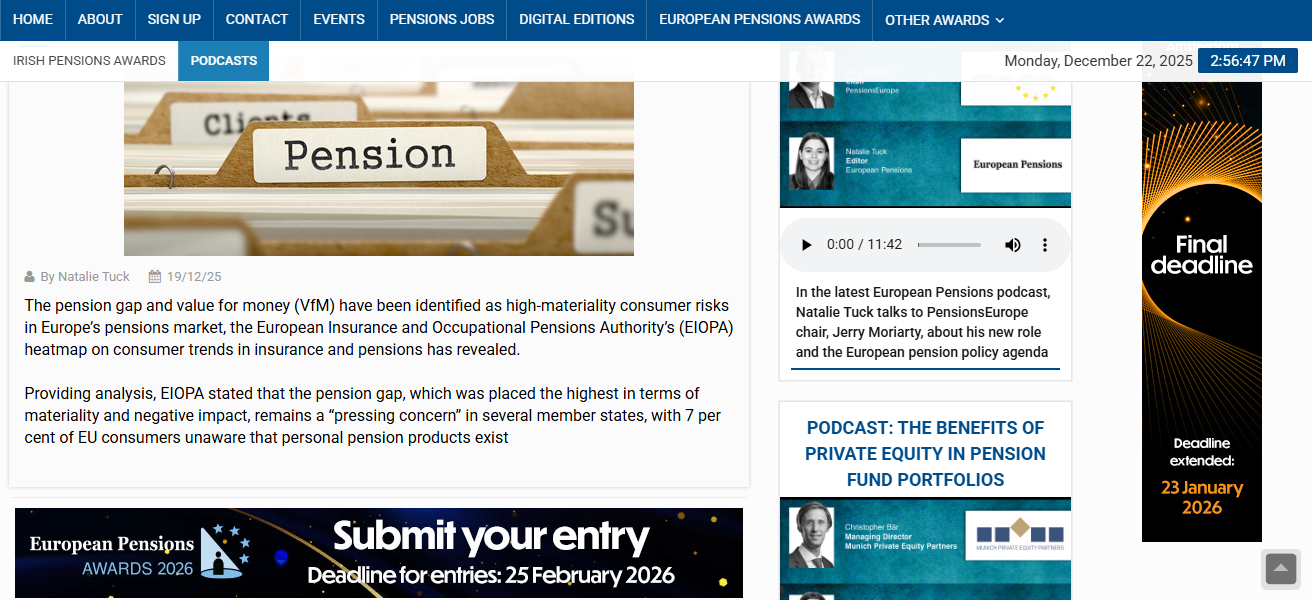
The pension system also provides benefits that are adjusted for inflation. Finland has offered future retirees a dependable retirement and has balanced pensions with social security.
Finland – Features of the Pension System
Earnings-Related Pension System Benefits accrued in the pension system are related, in a certain proportion, to lifetime earnings to ensure equity.
National Pension Safety Net Retired individuals of low income are provided with additional payments to avoid poverty in old age.
Life-Expectancy Adjustment Retirement ages are raised as the population ages to enhance the retirement system’s sustainability.
Inflation-Protected Benefits Pension benefits are adjusted to remain the same in value to the inflation cost so they do not lose purchasing power.
| Pros | Cons |
|---|---|
| Earnings-linked pensions provide fairness | Retirement age increases with life expectancy |
| Strong protection against old-age poverty | Moderate pension payouts |
| Inflation-linked benefits | Limited private pension incentives |
| Stable public oversight | Contributions can be costly |
| Long-term sustainability focus | Less individual control over funds |
5. Sweden
Sweden’s pension system is considered one of the most flexible and innovative in the world due to the notional defined contribution (NDC) system, a funded premium pension, and occupational pensions.
From the lifetime earnings, there are of course, defined earnings. There is a strong incentive to work longer. As a member of the Swedish system, you have a choice in how to fund the part of your pension fund.
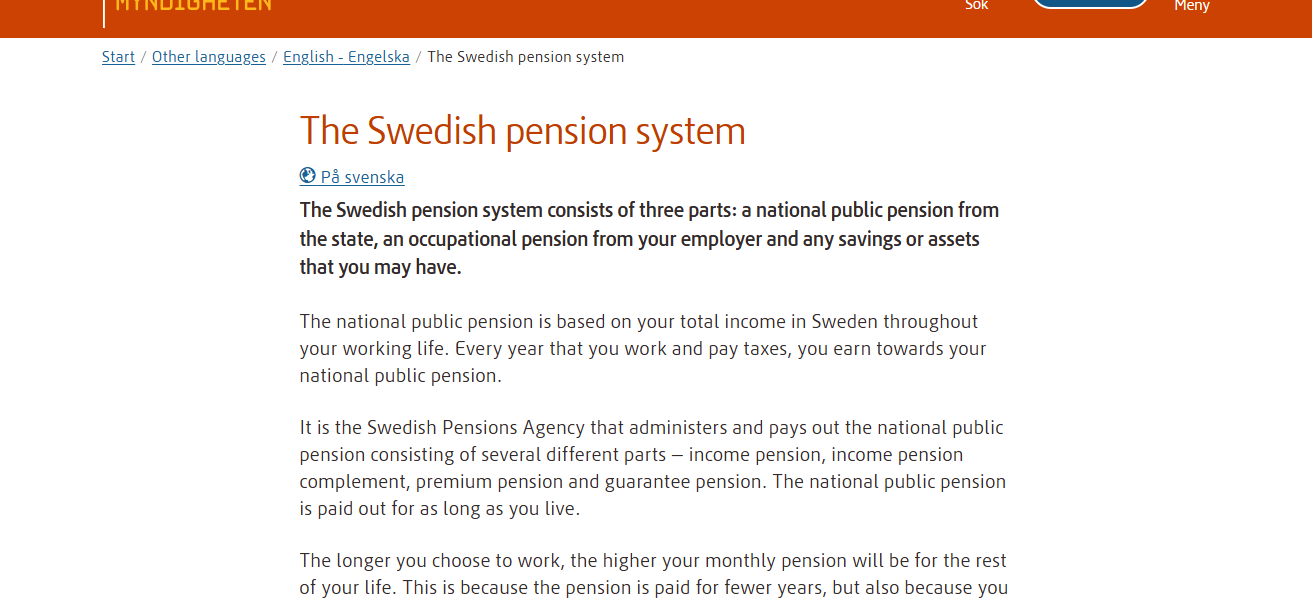
The system is sustaining and flexible because of its capacity to adjust to changing demographics. People have the benefit of strong digital tools and transparency, resulting in easier self-planning and predictability around retirement decision-making.
Sweden – Features of the Pension System
Notional Defined Contribution Model Benefits directly related to lifetime contributions greatly enhance equity.
Funded Premium Pension There is individual choice as members can choose to invest a portion of their contribution in certain funds.
Automatic System Balancing The system manages flow of benefits and other economic and demographic system variables.
Advanced Digital Access Users can make inquiries and access their pension and savings records digitally.
| Pros | Cons |
|---|---|
| Flexible pension investment choices | Market-linked pensions can fluctuate |
| Transparent digital pension system | Requires financial knowledge |
| Automatically adjusts to demographics | Lower benefits if retiring early |
| Encourages longer working lives | Investment risk borne by individuals |
| Strong occupational pension coverage | Complex system structure |
6. Norway
Pension systems in Norway receive strong public financial support and long-term planning. State pensions, mandatory work pensions, and private savings are all part of the systems.
A big advantage for Norway is a wealth fund that meets future pension obligations. Longer working lives are rewarded in the systems.

Most workers have mandatory occupational pensions, so there is little coverage. Norway’s retirees are given reliable and secure income in retirement due to high living standards, good governances, and sustainable funding.
Norway – Key Pension & Retirement Plan Features
Strong State Pension Framework Public pension schemes guarantee retirees a basic income.
Mandatory Occupational Pensions All employers are required to provide pension plans, increasing retirement coverage.
Sovereign Wealth Fund Support Revenues from oil ensure long-term viability of the pension.
Incentives for Delayed Retirement Encouraging longer working lives by rewarding longer retirement through increased benefits.
| Pros | Cons |
|---|---|
| Backed by sovereign wealth fund | High cost of living for retirees |
| Strong state pension support | High tax rates |
| Rewards delayed retirement | Limited private pension options |
| Mandatory occupational pensions | Benefits tied to work history |
| Financially sustainable system | Less generous early retirement |
7. Ireland
In Ireland the pension system includes the state pension and ones privately contracted and workplace pension schemes.
The state pension is a basic pension and the workplace and private retirement savings add to income security.

The country has instituted a system of auto- enrollment to raise pension participation of workers in the private sector.
The system encourages savings to promote private pensions through tax benefits. While the system is changing, reforms are aimed at improving equity, system adequacy, and system viability and sustainability in the future. This leaves Ireland in a better position for retirement in the future.
Ireland – Key Pension & Retirement Plan Features
State Pension Base Income Provides the minimum basic income for retirement to those who qualify.
Auto-Enrolment Reforms Encouraging pension saving amongst private-sector employees is the aim of new auto-enrolment policies.
Tax-Efficient Private Pensions Private pensions receive tax relief on contributions to encourage saving.
Flexible Personal Pension Options Pension plans are available to cater to a variety of income levels and retirement goals.
| Pros | Cons |
|---|---|
| Tax incentives for private pensions | Low state pension replacement rate |
| Auto-enrolment improves coverage | Pension adequacy concerns |
| Flexible private pension options | Voluntary participation limits savings |
| Growing occupational pension reforms | Investment risk on individuals |
| English-speaking financial market | Rising retirement age |
8. Germany
Germany has a distinct system for pensions involving a public pension and a social contribution pension. Within this system lies a public pension, an occupation pension, and a pension through Riester and Rurup.
Income replacement becomes more stable through this system, however, older demographics force changes in the public pension. Furthermore, Germany has an incentivized system in the form of employer emergency savings.

The system has strong structures in place making it one of the most dependable system overall. For those working for more than one other company and working in person, the system has dependable structures in place.
Germany – Key Pension & Retirement Plan Features
Statutory Public Pension System Provides a social pension on retirement, fully funded through social contributions.
Employer-Sponsored Pensions Workplace pension schemes are available to improve retirement benefits.
Private Pension Incentives Subsidies and tax benefits are offered for private pensions through government-supported plans.
Strong Regulatory Oversight Contributors are fully protected, and their benefits are safeguarded in the long-run, due to strict regulatory requirements.
| Pros | Cons |
|---|---|
| Strong statutory public pension | Aging population strains system |
| Broad workforce coverage | Lower replacement rates over time |
| Multiple supplementary pension options | Complex pension planning |
| Stable regulatory framework | Contributions increasing |
| Employer-supported pensions available | Dependence on lifetime employment |
8. Switzerland
Switzerland has one of the most trustworthy three-pillar pension systems since it guarantees retirees economic security.
The first pillar is basic state support, the second pillar is obligatory employer retirement plans, and the third pillar is optional private savings with tax benefits.

The pillars offer balance and predictability and the Switzerland pension plans are backed by strong financial and tight regulations.
The high contributions and prudent returns on investments on funds are what make retirees benefits generous. Switzerland is one of the most secure retirement destinations in Europe.
Switzerland – Key Pension & Retirement Plan Features
Three-Pillar Pension Model State support, compulsory occupational pensions, and private savings.
Mandatory Occupational Coverage Most employees need to be part of employer pension plans.
Tax-Advantaged Private Savings Voluntary payments diminish the taxable income.
High Retirement Income Security
Strong funding and governance guarantee reliable pension distributions.
| Pros | Cons |
|---|---|
| Balanced three-pillar system | High cost of living |
| Mandatory occupational pensions | High contribution requirements |
| Strong pension fund stability | Strict eligibility rules |
| Tax-efficient private savings | Complex compliance rules |
| High retirement income security | Currency risk for expats |
9. Austria
Austria has a public pension system that takes earnings into account and gives out replacement rates. Contributions must be made and are split between employers and employees.
Long contribution periods are rewarded with higher benefits, guaranteeing consistent earnings throughout retirement.

There are also employer and private pensions, but the public system still predominates. Great social protection systems results in low rates of poverty among the old in Austria. With all of the changes that are happening, there is a focus on keeping the benefits for the future retirees.
Austria – Key Pension & Retirement Plan Features
Public Earnings-Related Pension High income replacement rates are provided for retirees.
Mandatory Social Contributions Guarantees broad coverage of the service to the community.
Low Old-Age Poverty Levels Strong public support defends financially the elderly.
Predictable Pension Benefits Provisions of rules are stable provide predictable long-term retirement planning.
| Pros | Cons |
|---|---|
| Generous public pension benefits | Heavy reliance on public funding |
| Low old-age poverty rates | Long-term sustainability concerns |
| Strong income replacement ratios | Limited private pension culture |
| Stable social security system | High contribution rates |
| Predictable retirement income | Less flexibility in retirement planning |
How To Choose The Best European Pension & Retirement Plan
Pension Structure Better income security would be in the countries that have a strong three-pillar system comprising of state, occupation, and private pensions.
Coverage & Participation Go for systems that have mandatory or auto-enrolment workplace pensions, these provide a much higher guarantee of long term savings.
Retirement Income Adequacy: Check replacement rates to see how much of your working income the pension will replace after retirement.
Sustainability & Stability: Pension systems that are expected to have sustainability in the long term are the ones that are properly adapted to the life expectancy of the user and are in good financial shape.
Flexibility Is it possible to retire early, or partially and/or delay retirement? The more control you have over the timing of your retirement, the better.
Cocnlsuion
To conclude, the most effective European pensions and retirement systems have strong pillars of public support, compulsory occupational pensions, and voluntary private savings.
With systems that are portable and sustainable, and with high coverage and protection against inflation, the Netherlands, Denmark and Switzerland are the front leaders.
The most sustainable plan is the most effective concerning income security, long-term stability, tax advantages, and flexibility of withdrawal at retirement.
FAQ
The Netherlands, Denmark, and Switzerland consistently rank among the best due to strong funding and high coverage.
It includes a state pension, occupational pension, and private retirement savings.
In many countries, state and workplace pensions are mandatory or auto-enrolled.
Switzerland, Netherlands, and Ireland offer good portability and private options.
Yes, many systems adjust pensions based on inflation or wage growth.