This article will focus on the best European Wealth Management Platforms: the greatest solutions that assist family offices, private banks, and investment advisers streamtline the management of convoluted portfolios.
From these platforms, wealth managers will obtain automation, portfolio aggregation, client reporting and engagement reporting tools, and wealth managers will be enabled to improve decision making, enhance client experiences and manage diverse, secure, and compliantly managed wealth across Europe.
Key Points & Best European Wealth Management Platforms
| Platform | Key Point |
|---|---|
| Masttro | Comprehensive wealth data aggregation with advanced reporting and analytics |
| Addepar | Institutional-grade portfolio management offering transparency and scalability for complex assets |
| SS&C Black Diamond | Client engagement tools with sleek dashboards and mobile access |
| Altoo | Swiss-based secure platform focused on ultra-high-net-worth individuals |
| Landytech | Technology-driven investment oversight with strong risk monitoring features |
| Canoe | Automated document processing for alternative investments |
| Avaloq | Core banking integration widely adopted by European private banks |
| Temenos Wealth | Modular cloud-native solution enabling digital transformation for wealth managers |
| InvestCloud | Client communication and digital experience platform with customizable apps |
| Finantix | AI-powered advisory tools supporting relationship managers and compliance |
10 Best European Wealth Management Platforms
1. Masttro
Masttro is a modern wealth management platform designed to help ultra-high-net-worth individuals (UHNWIs), family offices, and their advisors obtain a single, integrated view of their total wealth—combining liquid and illiquid holdings across custodians, jurisdictions, and currencies.
It leverages automation to improve efficiency in portfolio analytics, reporting and insights, document management, and alternative investment processes to reduce busy work and improve decision quality.
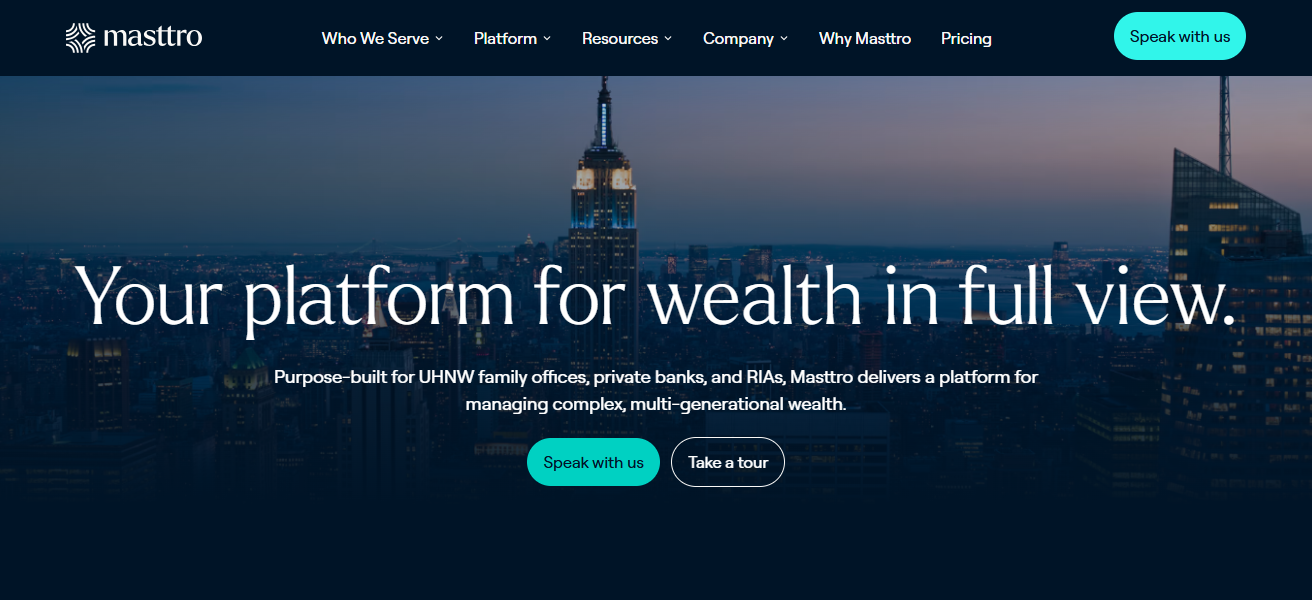
With pre-built connections to hundreds of custodians and industry-leading security, Masttro eases the management of complex multi-entity structures
Succession management, and real-time data access that allow advisors and families to work with the wealth with more clarity and confidence.
Features Masttro
Unified Wealth View — Displays all of a user’s financial wealth, including custodial, private, and alternative, in one dashboard.
Real-Time Data & Analytics — Keeps track of the values of portfolios and metrics of performance, and refreshes.
Document & Workflow Automation — Consolidates compliance documents and reports, along with statements, in one location, thereby minimizing manual effort.
Multi-Entity Support — Manages a family office with numerous accounts, currencies, and legal entities.
| Pros | Cons |
|---|---|
| Unified wealth view across custodians, currencies & asset types. | Can be costly for smaller firms or individual advisors. |
| Strong automation reduces manual reporting and reconciliation. | Implementation may require dedicated IT support. |
| Excellent for complex UHNW and family office structures. | Feature set may be more than needed for simpler portfolios. |
| Real‑time data and analytics improve decision quality. | Not as widely adopted — smaller community vs legacy players. |
| Secure infrastructure with enterprise‑grade protections. | Some advanced modules may require additional subscriptions. |
2. Addepar
Addepar serves RIAs, family offices, private banks, and institutional wealth managers as a cloud-based wealth management and analytics platform.
They manage a single platform and provide actionable insights by unifying data. It is excelled in collecting and aggregating investment data across various asset classes, custodians, and currencies to provide portfolio analytics and performance reporting.
Scenario analysis and strategic reporting workflows can be tailored to each firm and client with the reporting options.

Addepar is able to present insights in high-quality client-ready reporting and is particularly strong in managing complex alternative investments in a portfolio.
This gives wealth managers the power to present complex algortihmic data managed by Addepar with high transparency.
Features Addepar
Multi-Asset Aggregation — Aggregates data across all systems including stock, bond, private equity, and alternative asset classes.
Custom Reporting Engine — Customizes reports, including performance analysis, allocation, and risk, reports, file for clients.
Open API Integrations — Integrates with custodians, CRMs, and analytical tools.
Scenario & What-If Analysis — Assists wealth managers in modeling the forecasts of various different economic scenarios.
| Pros | Cons |
|---|---|
| Best‑in‑class portfolio aggregation and analytics. | Pricing can be premium relative to simpler tools. |
| Handles alternative and complex assets well. | Learning curve for new users. |
| Flexible reporting with client‑ready dashboards. | Customization may need professional services. |
| Scales from mid‑size RIAs to large family offices. | Integrations may need configuration work. |
| Open APIs support extensibility. | Not optimized as standalone CRM or trading platform. |
3. SS&C Black Diamond
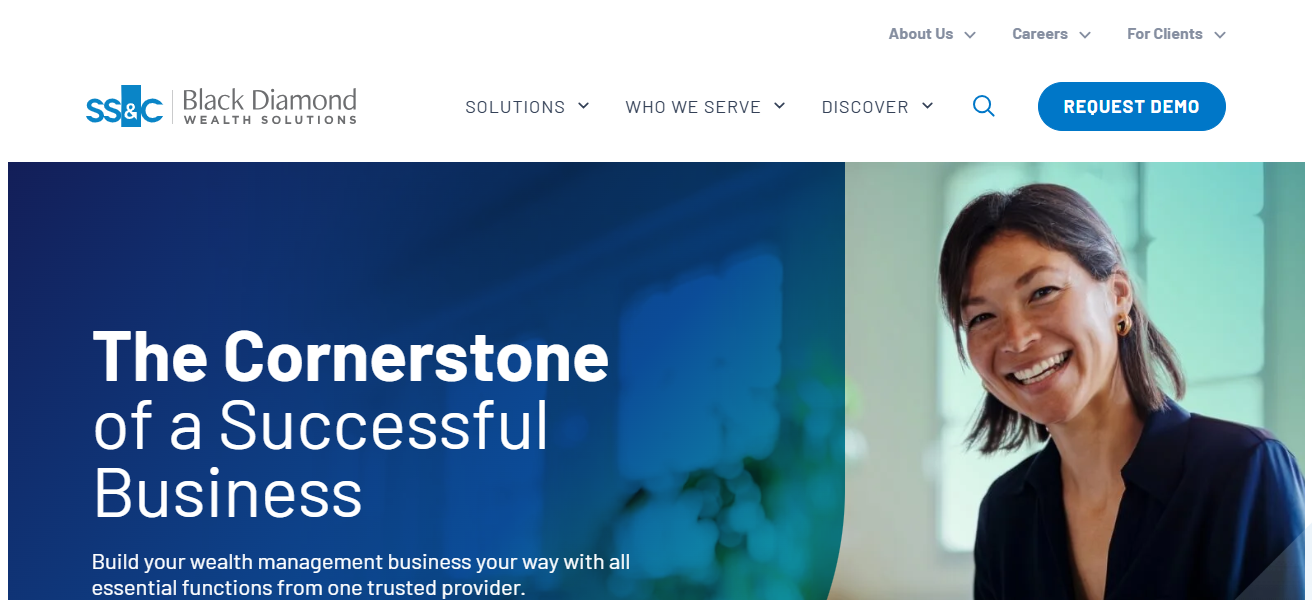
The Black Diamond Wealth Platform provides single sign on access to portfolio management, investment accounting, CRM, rebalancing, reporting, trust services and customer communication functions.
It is best suited to wealth managers, registered investment advisors, and private banks. Black Diamond is designed to streamline critical operational processes while providing configurable dashboards, custom branding, and superior user/client experiences.
It allows organizations to improve operational efficiency, scale with data precision, and engage with clients at a high level while operational complexity is reduced.
Black Diamond integrates with compliance and business intelligence, and alternative asset service providers adding even more value to organizations seeking a complete wealth management technology solution.
Features SS&C Black Diamond
Portfolio Accounting & Management — Manages and accounts for the investments in a portfolio with a detailed level of asset class allocation.
Client Relationship Management (CRM) — Manages client information, including profiles, communications, and interaction history.
Rebalancing & Trade Scheduling – Offers recommendations for optimal rebalancing based on goals and compliance constraints.
Customizable Reporting & Dashboards – Enables advisors to create designed and simplified client reports.
| Pros | Cons |
|---|---|
| Integrated portfolio management and client reporting. | Some advanced features may be overwhelming for small firms. |
| Strong CRM and rebalancing capabilities. | Custom branding may require services support. |
| Good scalability for growing practices. | Occasional updates require training refresh. |
| Trusted legacy product with broad adoption. | Reporting customizations can be complex. |
| Part of broader SS&C ecosystem with deep tools. | Cost can escalate with enterprise modules. |
4. Altoo
Altoo has been developed in Switzerland and focuses on capturing the wealth management market with its Family Office Management Software solution.
Altoo gives its clients and wealth management advisors a digital ‘home’ for all banking and non-banking assets with all the amenities like dashboards with daily updates, analyst and report generation, etc.
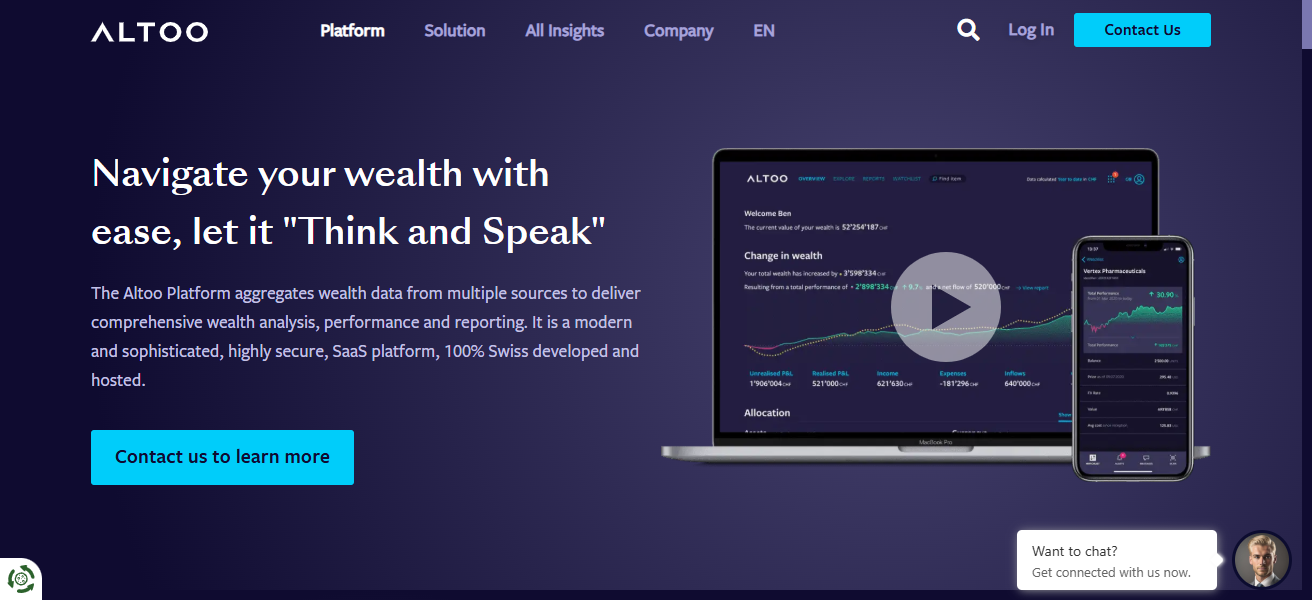
The Altoo platform provides rich information with no frills. The platform provides secure document management and the ability to track changes in a document at the same time by different users.
The Switzerland headquarters gives Altoo a good reputation in the European wealth management market for good clarity, data quality, and happy clients.
Features Altoo
Total Wealth Aggregation – Merges bankable and non-bankable wealth in an easy-to-use platform.
Performance Tracking – Tracks and analyzes gains, losses and allocation of assets over time.
Secure Document Vault – Safeguards critical documents and allows for simple retrieval.
Mobile & Web Access – Provides anywhere access to wealth information through adaptive dashboards
| Pros | Cons |
|---|---|
| Clean, intuitive UI ideal for families & advisors. | May lack deep trading or accounting features. |
| Strong Swiss security & data governance. | Smaller integration ecosystem vs larger vendors. |
| Consolidates non‑bankable assets with ease. | Advanced analytics are somewhat basic. |
| Mobile access supports on‑the‑go monitoring. | Not ideal for high‑frequency traders. |
| Good for simple wealth aggregation and reporting. | Limited CRM capabilities on its own. |
5. Landytech
Landytech offers investment and wealth management technologies to assist family offices, asset owners, fiduciaries and private banks in the aggregation and analysis of multi asset portfolios through a wealth management application built for the cloud.
Sesame consolidates information provided from over a one hundred custodians and investment channels and offers seamless integration with automated reporting and institutional analytics, risk management, and reporting of portfolio performance in real time.
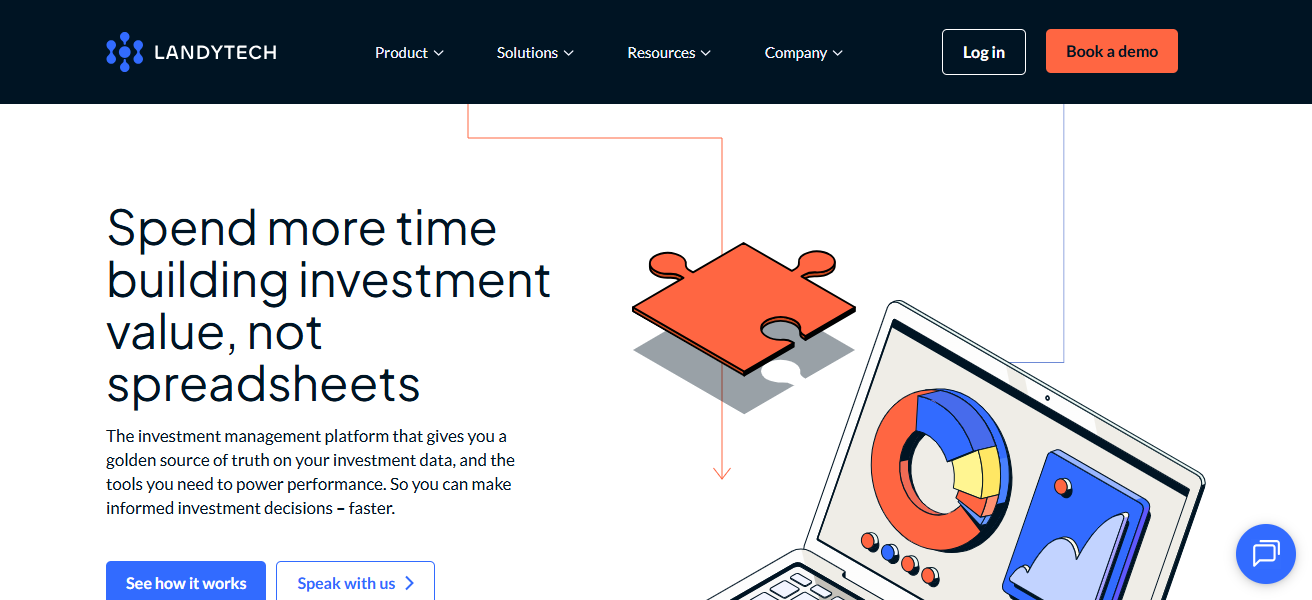
The application supports multiple entities and currencies, interactive dashboards, document vaults, and application programming interface
The technology allows clients to automate operational workflows and make confident data driven investment decisions.
The flexibility of Landytech’s customized solutions add to its appeal to complex wealth markets in Europe.
Features Landytech (Sesame)
Data Aggregation Engine – Integrates investment information across several custodians and other sources.
Risk & Analytics Tools – Offers insights on performance as well as on risks tied to the portfolio.
Multi-Entity & Multi-Currency Support – Manages varied portfolios across geographies and structures.
API-Driven Connectivity – Offers the ability for automated data transfer with other applications.
| Pros | Cons |
|---|---|
| Excellent aggregation from multiple custodians. | Newer platform—smaller user base vs legacy. |
| Institutional‑grade analytics and risk tools. | Some advanced functions require configuration. |
| API connectivity for flexible workflows. | Less off‑the‑shelf functionality for basic needs. |
| Scales for family offices & institutional users. | Premium pricing for full suite. |
| Supports multi‑entity & multi‑currency structures. | Learning curve for sophisticated modules. |
6. Canoe
Automated investment data management is Canoe’s (Canoe Intelligence) focus. Its trained AI collects and processes investment documents like fund statements, K-1s, and capital call letters.
This process documents are typically collected and organized manually slow down reporting and investment portfolios.
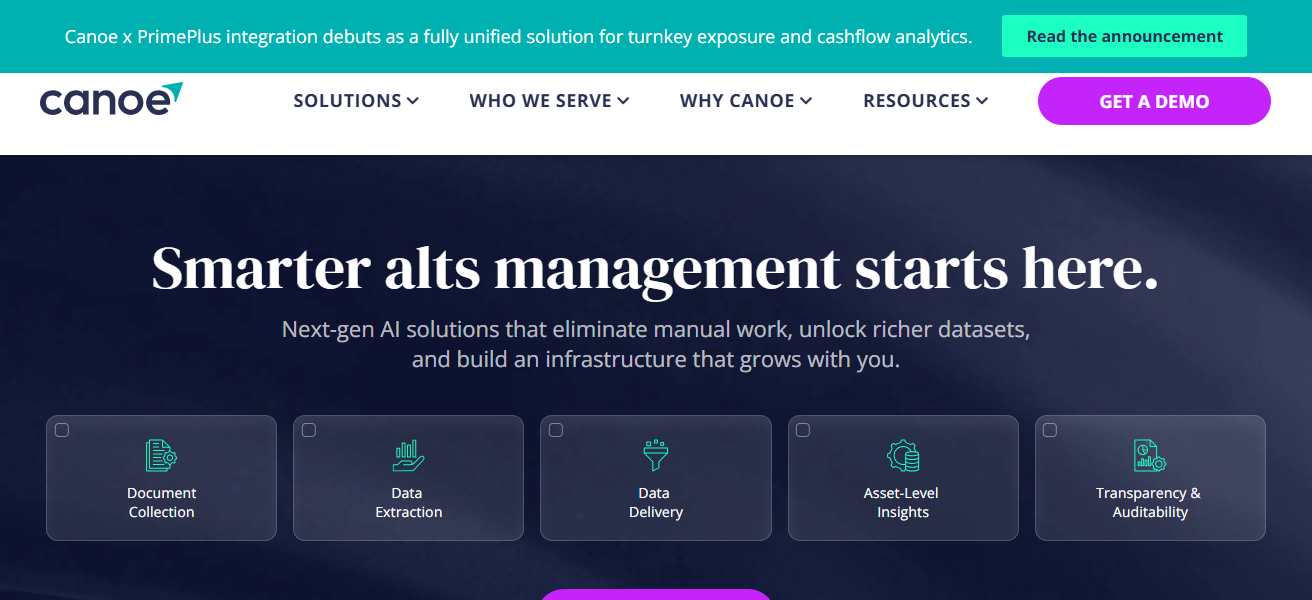
Canoe’s analytics work to clean and standardize data to enter various systems and improve reporting speed, data quality, and operational scaling.
Professionals in alternative investments have fewer manual tasks because Canoe’s software friction complex workflows and lets them advisory work.
Features Canoe (Canoe Intelligence)
AI Document Parsing – Collects data from PDFs and investment documents.
Data Standardization – Streamlines diverse data formats to provide uniform and easy-to-use data.
Alternative Investment Focus – Focus on acquiring data in private equity, hedge funds, and other illiquid assets.
Integration Export Tools – Transfers data to a portfolio or back-office.
| Pros | Cons |
|---|---|
| AI‑driven document and data extraction automation. | Focused on alts & documents — not full wealth suite. |
| Eliminates heavy manual processing. | Not a traditional portfolio management platform. |
| Improves accuracy of fund and private investment data. | May require integration to other systems to complete workflows. |
| Saves time for complex alternative investment teams. | Pricing based on volume can be unpredictable. |
| Supports compliance-ready data extraction. | Not designed for retail investor reporting. |
7. Avaloq
Since its inception, Avaloq has been one of the premier digital providers of banking and wealth management software in Europe, focusing primarily on the needs of banks, private banks, and wealth management companies.
One of its integrated platforms includes customer engagement, investing and portfolio management, risk and compliance, payments, and advanced analytics, and is available both on-site and on the cloud.
Avaloq’s digital solutions help these institutions achieve operational efficiencies, improved customer automated digital engagement, and adaptability to varying demands through high-performance technology.
Avaloq’s deep integrations and extensive partner network continue to make it a key technology provider to wealth managers.
Features Avaloq
Core Banking & Wealth Suite – Functioning banking and wealth management operations.
Risk, Compliance & AML Modules – Assists companies in fulfilling compliance obligations in every country.
Client Engagement Channels – Provides all digital access layers for advisors and clients.
Scalable Architecture – Services from the smallest banks to the world’s largest private banking operations.
| Pros | Cons |
|---|---|
| End‑to‑end private banking & wealth stack. | Very high total cost of ownership. |
| Deep risk, compliance, and core banking features. | Implementation takes longer than lighter systems. |
| Highly scalable for global banks. | Customization requires vendor support. |
| Strong partner ecosystem and integration suite. | Smaller advisors may only need parts of the system. |
| Proven track record with large incumbents. | Heavyweight for simple portfolio use cases. |
8. Temenos Wealth
Temenos Wealth is a modular platform focused on wealth and private banking, consolidating front, middle, and back office functionalities on a flexible architecture that is cloud-native.
The platform aids firms in improving client engagement and operational scalability by providing digital engagement, portfolio management, and risk and compliance tools, as well as processing for securities.
The independent modules allow wealth managers to decide what to subscribe to while enabling digital onboarding, analytics, and processing in real time, across assets.
Temenos is well regarded by European and global players seeking to modernize core systems, gain flexibility and combine digital wealth management with other banking services.
Features Temenos Wealth
Front- to- Back Office Modules – Encompasses sales, advisory, processing and reporting.
Cloud- Native Delivery – Provisioned through the cloud for security, flexibility, and availability.
Regulatory & Risk Frameworks – Built compliance and risk mitigation tools for regulatory bypassing.
Open Integration Model – Interoperability with financial technology and other external services. through APIs.
| Pros | Cons |
|---|---|
| Modular architecture for front/middle/back office. | Complex implementation for full suite. |
| Cloud‑native and scalable. | Smaller firms may find modules too robust. |
| Integrates well with broader banking systems. | Customization can require professional services. |
| Strong digital engagement capabilities. | Reporting tools may need add‑ons. |
| Excellent risk & compliance framework. | Cost scales with added modules. |
9. InvestCloud
The company is a digitally native technology platform focused on wealth management and is called InvestCloud. They have specialized technology that changes the experiences that both customers and advisors have.
They have specialized technologies in wealth and financial planning, client/customer engagement, and portfolio analytics that work with large private banking and brokerage dealers.
InvestCloud enables businesses to streamline and streamline services by interfacing with clients digitally. They are popular among wealth management firms looking to improve their technology and operational efficiencies.
Features InvestCloud
Digital Client Portal – Equipped with customizable dashboards to provide clients and interactive profile.
Modular Wealth Planning Tools – Assists in goal-supported planning, cashflow evaluation, and advisory activities.
Custom Workflow Engine – Streamlines and automates organizational activities, from onboarding to reporting.
API & Ecosystem Integrations – Integrates seamlessly with customer relationship management, custodians, and external data providers.
| Pros | Cons |
|---|---|
| Cloud‑native with strong digital experience. | Configuration can be resource‑intensive. |
| Great client engagement and planning tools. | Some core functions require integrations. |
| Modular SaaS design for flexible deployment. | Can be pricey for smaller advisory practices. |
| Excellent visualization and UX tools. | Not a plug‑and‑play solution — setup time needed. |
| API‑first platform supports extensibility. | Support quality varies across regions. |
10. Finantix
Finantix caters to wealth managers, private banks, and insurers seeking to digitally automate their client onboarding, client advisory, and client engagement processes, offering modular wealth advisory and client lifecycle management software.
He digitizes client onboarding and automates client advisory as well as engagement processes. The firm automates processes such as client profiling, risk and suitability assessments, goal planning, and compliance.
It includes client portals and helps deliver advisory services at scale. He is acknowledged, especially when integrated with larger systems, for enhancing advisory services and facilitating digital transformations in wealth advisory.
Features Finantix
Client Lifecycle Management – Automates onboarding, profiling, risk steers, and KYC for risk management.
Digital Guidance Tools – Provides personalized recommendations reflecting consumers’ objectives and level of risk exposure.
Modular Deployment – Companies select only relevant modules for increased adaptability and budget management.
Compliance & Suitability Engine – Monitors legal obligations and checks appropriateness by itself.
| Pros | Cons |
|---|---|
| Strong client lifecycle and onboarding automation. | Not a full portfolio management system on its own. |
| Flexible and modular for wealth advisory. | Requires integration for full wealth operations. |
| Enhances digital client engagement. | Less focus on core trading workflows. |
| Good compliance and risk profiling tools. | Best value when paired with wider tech stack. |
| Supports customizable client journeys. | Smaller ecosystem vs large legacy providers. |
How To Choose Best European Wealth Management Platforms
Data Aggregation and Coverage: Look for consolidation on multiple custodians, different currencies, and various asset types.
Reporting & Analytics: Good reporting on performance, benchmarking, and risk analysis are important. Client-ready documents improve the overall client experience, and reports they can modify.
Integration and APIs: Look for integration with Custodians and CRMs and other 3rd Party tools without friction. Open APIs are a good sign for potential future growth.
Automation and Efficiency: Features like document ingestion, rebalancing, and workflow automation to reduce those time-consuming manual tasks.
Scalability and Flexibility: Be sure the platform supports modular expansions and can grow with your business.
Conclsuion
To summarize, the Best European Wealth Management Platforms offer valuable functionalities that allow their clients to aggregate their portfolios, automate reports, automate processes, and engage with their clients.
Selecting the right platform will depend on the company’s size, the complexity of the assets, and the regulations that need to be followed.
These systems allow wealth managers, family offices, and private banks to improve their efficiencies and make better decisions while offering safe, transparent, and personalized wealth management.
FAQ
A system that helps advisors and firms manage investment portfolios, reporting, and client relationships efficiently.
Family offices, private banks, RIAs, institutional investors, and financial advisors.
They often support multi‑currency, multi‑jurisdiction compliance, and EU regulatory standards.
Data aggregation, portfolio analytics, reporting, automation, and security.
Many support alternatives like private equity and hedge funds, but capabilities vary.