
This article will cover The Best Finance Automation Tools for High-Growth Startups. Errors and lost time are lost when finances are handled manually.
Automation tools ease the burden of accounting, invoicing, payments, and expense management. These solutions assist high-growth startups in simplifying their operations, improving their cash flow, and supporting their growing startup with smart financial decisions.
What are finance Automation Tools?
Specialized finance automation tools offer startups increased simplification and optimization of financial operations.
These tools reduce manual data inputs and errors by automating the accounting, payment, invoicing, expense management, and financial reporting processes.
By automating repetitive tasks, these tools improve cash flow management and save your financial team valuable time.
Many tools also integrate with other business solutions, providing real-time insight and other analytics. They offer high-growth startups the ability for rapid, increased operational expansion with lower administrative burdens.
Key Poinst & Best Finance Automation Tools for High-Growth Startups
QuickBooks Automates bookkeeping, invoicing, and reporting, ensuring startups maintain accurate financial records effortlessly.
Xero Cloud-based accounting software simplifying payroll, invoicing, and reconciliation for growing businesses worldwide.
NetSuite Comprehensive ERP platform integrating accounting, CRM, and inventory management for scalable financial operations.
Zoho Books Affordable automation tool offering invoicing, expense tracking, and tax compliance for small startups.
FreshBooks User-friendly solution streamlining invoicing, expense management, and time tracking for service-based startups.
Bill.com Automates accounts payable and receivable, reducing manual errors and accelerating cash flow management.
Expensify Simplifies expense reporting with automated receipt scanning, approval workflows, and real-time reimbursement tracking.
Stripe Handles subscription billing, online payments, and revenue recognition seamlessly for digital-first startups.
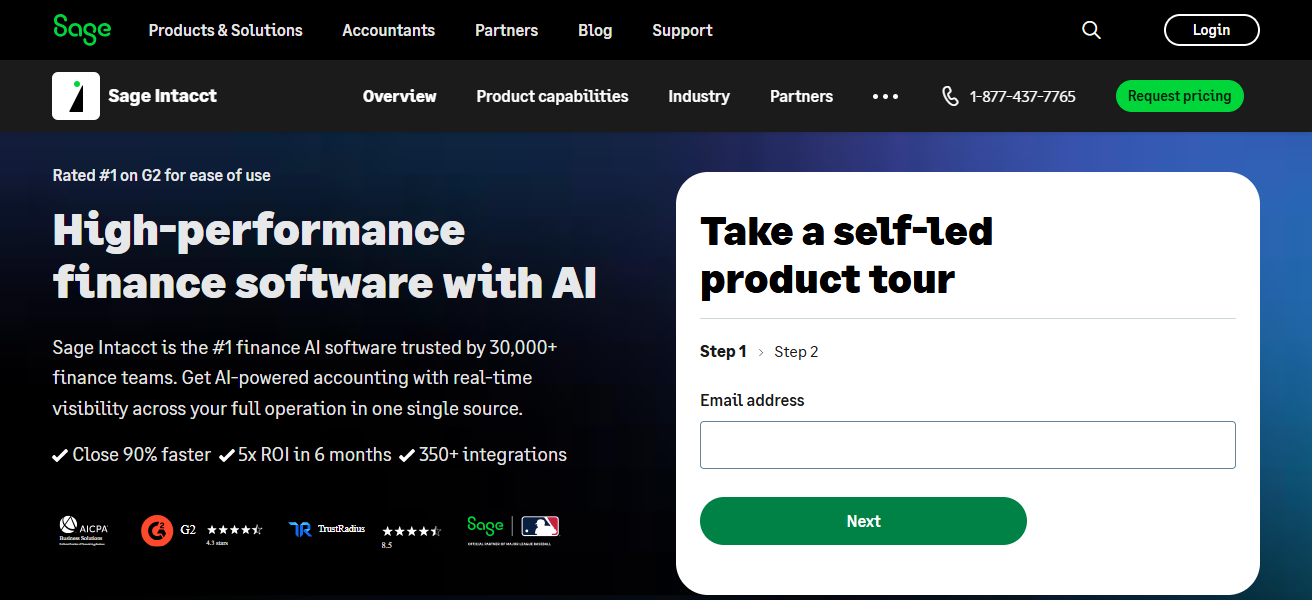
Sage Intacct Advanced financial management system offering multi-entity accounting, compliance, and real-time reporting capabilities.
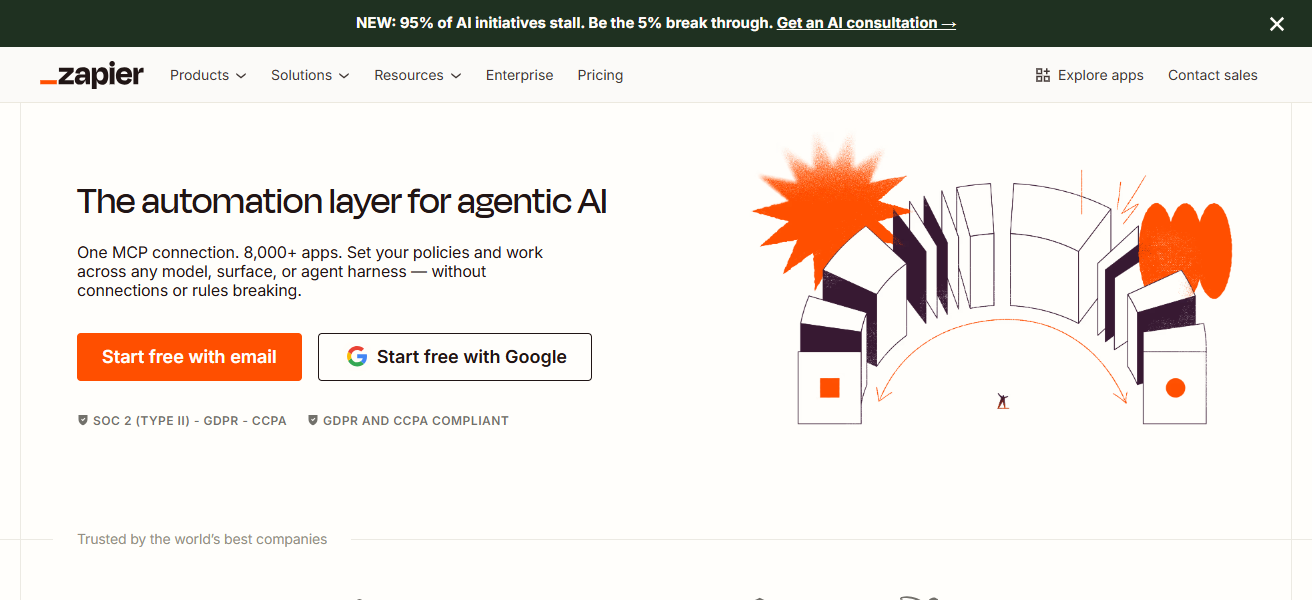
Zapier Connects finance apps, automating repetitive workflows like reconciliations, approvals, and financial close processes.
10 Best Finance Automation Tools for High-Growth Startups
1. QuickBooks
Automation of accounting for startups is dominated by QuickBooks. Their streamlined dashboard offers easy tracking of income, expenses, and even payroll.
Where Xero offers tax collaboration, QuickBooks offers tax integration to assist in 140+ form filing and quarterly tax submissions.
Real-time tracking and AI logic on optimizations for transaction categorizations offer startups automated insights for cash flow.
QuickBooks outperforms FreshBooks in integration by over 650 third party apps. This means QuickBooks offers scale for financial operations and minimal manual bookkeeping. Their real-time tracking offers high-growth companies with streamlined decision processes.
| Feature | Description | Comparison |
|---|---|---|
| Accounting Automation | Tracks income, expenses, payroll | Broader than FreshBooks, simpler than NetSuite |
| Tax Integration | Supports 140+ tax forms, quarterly filings | Stronger than Xero for U.S. tax compliance |
| AI Insights | Categorizes transactions automatically | Provides predictive cash flow, unlike Zoho Books |
| Integrations | 650+ third-party apps | Larger ecosystem than FreshBooks |
| Reporting | Real-time dashboards for decision-making | Faster than manual reporting, less complex than NetSuite ERP |
2. Xero
Xero offers a collaborative first-cloud financial management service. This is unlike how QuickBooks operates because Xero does not increase charges for additional users making it better for teams that are growing.
As Xero has automated bank feeds, transaction reconciling is done and manual reconciliation is eradicated. Of the 3, Xero is the best for global startups in multi-currency as it outperforms FreshBooks and Zoho Books.
Xero has an inventory management system, project tracking, and integrates over a thousand apps. Their financial dashboards help manage cash flow and offers high-growth companies financial insight to plan for grow without delay.
| Feature | Description | Comparison |
|---|---|---|
| Customizable Workflows | Automates invoices, reminders, payments | More flexible than FreshBooks |
| Client Portal | Real-time collaboration with clients | Lacks in QuickBooks and FreshBooks |
| Multi-Currency & Tax Compliance | Supports global business | Comparable to Xero |
| Project Billing & Expense Tracking | Integrated financial management | Broader than FreshBooks |
| Zoho Suite Integration | Works with CRM, inventory, and other tools | End-to-end ecosystem for growth |
3. NetSuite
NetSuite specializes in ERP and automated financing and is especially useful for fast-scaling startups.
Different from both Quickbooks and Xero, which focus on accounting, NetSuite provides integrated solutions for CRM, e-commerce, and inventory, which provides less siloed solutions.
NetSuite offers detailed and advanced reporting, and predictive analysis of finances enabling early stage startups to analyze data and gain understanding on path to growth.
NetSuite also provides better multi-subsidiary and multi-currency management than Zoho Books, allowing greater flexibility in global operations.
While NetSuite is more complicated than FreshBooks, it also provides billing, order management, and procurement automation, enabling startups to divert resources from operations to strategic growth.
| Feature | Description | Comparison |
|---|---|---|
| ERP Integration | CRM, e-commerce, inventory, finance in one | Full ERP vs accounting-only tools like QuickBooks |
| Predictive Reporting | Data-driven growth analytics | More advanced than Zoho Books, FreshBooks |
| Multi-Subsidiary & Multi-Currency | Manages global operations | Surpasses Zoho Books’ global features |
| Billing & Procurement Automation | Streamlines financial workflows | More complex than FreshBooks |
| Scalability | Suitable for high-growth startups | Ideal for startups nearing enterprise level |
4. Zoho Books
Compared to NetSuite and QuickBooks, Zoho Books is more valuable for small to midsize startups with high growth potential. Zoho Books’ customization features are more advanced than the other options.
For example, if X sends an invoice, and client does Y., the system can perform task Z. Zoho Books provides clients with a client portal integrated with their CRM to streamline the collaboration process. It also offers banking automation, expense tracking automation, and project billing automation.
FreshBooks is more focused on invoice billing, so it does not provide as many built-in functions as Zoho Books. With Zoho Books, and other Zoho features, you can create an end to end financial ecosystem that is fully integrated and offers you the ability to scale as you grow.
| Feature | Description | Comparison |
|---|---|---|
| Customizable Workflows | Automates invoices, reminders, payments | More flexible than FreshBooks |
| Client Portal | Real-time collaboration with clients | Lacks in QuickBooks and FreshBooks |
| Multi-Currency & Tax Compliance | Supports global business | Comparable to Xero |
| Project Billing & Expense Tracking | Integrated financial management | Broader than FreshBooks |
| Zoho Suite Integration | Works with CRM, inventory, and other tools | End-to-end ecosystem for growth |
5. FreshBooks
FreshBooks keeps things simple for service-based startups. It is simpler than NetSuite and Sage Intacct because it is designed for users of other accounting solutions who require a lot of billing.
FreshBooks automates time, billing, and invoicing, and the administration is more streamlined. It’s also easier to report more expenses using the mobile app for expense capture and receipt scanning.
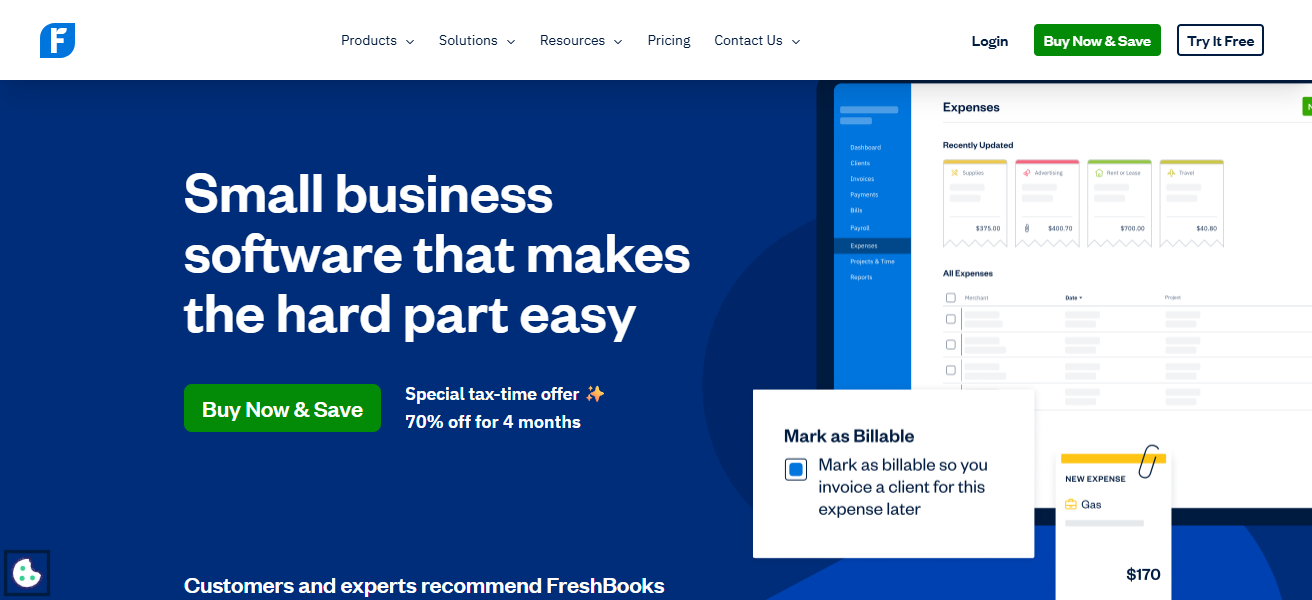
FreshBooks is easier to use than Quickbooks and Xero, and provides the client user invoicing experience and project invoicing, and reminders for late payments.
FreshBooks is designed for startups which makes it easy to minimize manual processes and increase transparency and accountablity to your clients.
| Feature | Description | Comparison |
|---|---|---|
| Simple Invoicing | Easy creation and automation | Simpler than NetSuite or Sage Intacct |
| Time Tracking | Tracks billable hours | Unique for service-based startups |
| Expense Capture | Mobile app scanning & reporting | Faster than manual tracking |
| Recurring Billing | Automates regular payments | Less complex than Stripe or NetSuite billing |
| Client-Friendly Tools | Automated reminders & portals | Best UX for small service startups |
6. Bill.com
Bill.com is designed for a high volume of transactions. Bill.com is more applicable than QBO because it has a user-friendly experience for payments at every step to include ACH, virtual card, and international payment, while QBO has a more complicated experience.
Bill.com has a hot document capture for invoice processing and user-defined payment documents which will minimize manual entries.
Bill.com also has more payment automation capabilities than Freshbooks and Zoho, and also integrates with Xero, NetSuite, and QBO more easily than the other accounting systems.
Bill.com is designed for high growth startups to manage vendor management, payment tracking and control, and approval payments to ensure liquidity and avoid investing in a bloated ERP system.
| Feature | Description | Comparison |
|---|---|---|
| Accounts Payable/Receivable | Automates invoices and payments | More targeted than QuickBooks or FreshBooks |
| Payment Automation | ACH, virtual card, international payments | Advanced compared to FreshBooks or Zoho Books |
| AI Document Capture | Reduces manual entry errors | Faster and more accurate than traditional methods |
| Vendor Management | Tracks approvals and payment workflows | Improves liquidity control vs basic accounting tools |
| Integration | Works with Xero, NetSuite, QuickBooks | Bridges accounting and payment systems |
7. Expensify
For growing startups, Expensify streamlines reporting and reimbursement of employee expenses.
While Bill.com focuses on payments, Expensify allows employees to scan and take pictures of mobile receipts and then automatically categorizes these receipts through AI technology.
Their integration with each of QuickBooks, Xero, and NetSuite provides synchronized accounting with expense-reporting and receipt management.
Spending policy approval, enforcement, and monitoring on Expensify reduces errors and fraud risks, and outmatches manual expense tracking systems, or FreshBooks with its expense reporting tools.
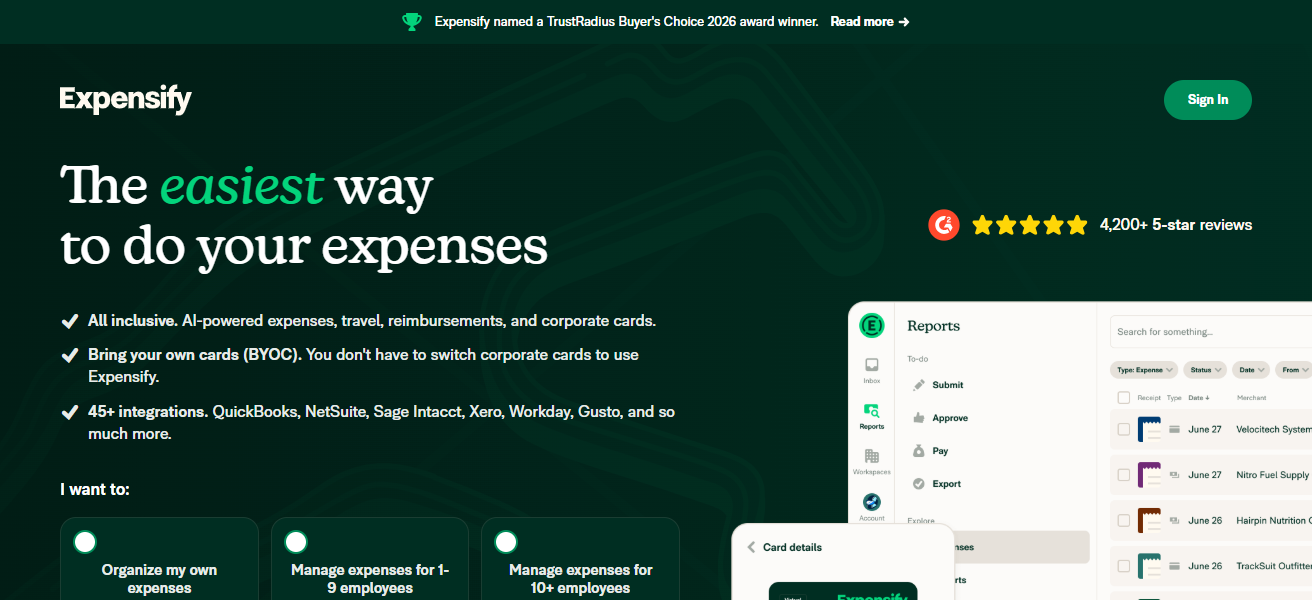
The system offers corporate card reconciliation and international expense reimbursement. For startups with global teams, Expensify is ideal.
By automating expense reporting workflow, Expensify helps financial teams gain clarity on expenses and is ideal for high growth startups.
| Feature | Description | Comparison |
|---|---|---|
| Receipt Capture | Mobile scanning with AI categorization | Faster than manual expense tracking |
| Policy Enforcement | Reduces errors and fraud | Outperforms FreshBooks expense tools |
| Corporate Card Reconciliation | Automates integration with accounting | Saves time vs manual processes |
| Multi-Currency Support | Handles international expenses | Ideal for global teams |
| Integration | Syncs with QuickBooks, Xero, NetSuite | Ensures consistent accounting across platforms |
8. Stripe
Stripe is an example of a payments processor and financial automation. It is different than QuickBooks or FreshBooks which provides accounting and bookkeeping services, Stripe helps startups by automating payment collections, subscription billing, and revenue recognition.
Stripe Connect can be used by startups to manage a marketplace and streamline multi-party payouts which is better than standard invoicing tools.
Their sophisticated analytics offer insights into spending patterns and helps with strategic financial decision making.
Stripe is not an ERP, but, NetSuite, Xero, and QuickBooks users can use Stripe to integrate their revenue dashboard with those payment systems.
High growth startups are able to scale their business and manage their cash flow with Stripe’s automated reconciliation, payment fraud prevention, and global payment collection systems.
| Feature | Description | Comparison |
|---|---|---|
| Payment Processing | Accepts multiple payment methods | More automated than QuickBooks billing |
| Subscription Billing | Handles recurring charges | Outperforms standard invoicing tools |
| Revenue Recognition | Automated ASC 606 compliance | Supports finance teams better than FreshBooks |
| Analytics | Tracks customer and transaction data | Stronger than basic reporting tools |
| Multi-Party Payouts | Manages marketplaces or vendors | Unique vs Zoho Books or QuickBooks |
9. Sage Intacct
Sage Intacct is a cloud-based financial management system made for high-growth startups that have complicated accounting processes.
Fully fledged accounting systems, they automate project accounting/automate accounting across multiple entities, currencies, and regions, and outdo Zoho and FreshBooks.
Intacct’s AI analytics and reporting systems provide real-time analyses and insights for CFO’s reporting and revenue automation
Revenue automation is an accounting system that automatically recognizes financial revenue and ensures revenue recognition is compliant with ASC 606, thereby outdoing
QuickBooks. Sage Intacct is a financial management system with the precision, reliability, and strategic visibility that starts is outgrowing its accounting systems, and/or outgrowing its financial management systems.
Sage Intacct is ideal when a startup is expanding and outgrowing the financial management systems and has multiple divisions, subsidiaries, and investor reporting.
| Feature | Description | Comparison |
|---|---|---|
| Multi-Entity Accounting | Supports multiple subsidiaries | Advanced vs FreshBooks or Zoho Books |
| AI-Driven Reporting | Real-time CFO insights | More sophisticated than QuickBooks |
| Automated Revenue Recognition | Ensures compliance with ASC 606 | Stronger than simpler tools |
| Integration | Connects with Salesforce, NetSuite, Bill.com | Supports complex financial ecosystems |
| Scalability | Ideal for high-growth startups with complex needs | Surpasses FreshBooks and Zoho Books for enterprise prep |
10. Zapier
Sage Intacct is a cloud-based financial management system made for high-growth startups that have complicated accounting processes.
Fully fledged accounting systems, they automate project accounting/automate accounting across multiple entities, currencies, and regions, and outdo Zoho and FreshBooks.
Intacct’s AI analytics and reporting systems provide real-time analyses and insights for CFO’s reporting and revenue automation; revenue automation is an accounting system
That automatically recognizes financial revenue and ensures revenue recognition is compliant with ASC 606, thereby outdoing QuickBooks.
Sage Intacct is a financial management system with the precision, reliability, and strategic visibility that starts is outgrowing its accounting systems, and/or outgrowing its financial management systems.
Sage Intacct is ideal when a startup is expanding and outgrowing the financial management systems and has multiple divisions, subsidiaries, and investor reporting.
| Feature | Description | Comparison |
|---|---|---|
| Workflow Automation | Connects apps like QuickBooks, Xero, Stripe | Bridges multiple platforms |
| Task Automation | Automates repetitive finance tasks | Faster than manual integration |
| Conditional Logic | Custom triggers for financial events | More flexible than basic integrations |
| Integration Ecosystem | Thousands of app connections | Unique; not offered by standalone accounting tools |
| Operational Efficiency | Reduces data transfer errors | Supports scaling without replacing existing tools |
Conclusion
To sum up, financial automation tools help high-growth startups manage finances accurately, efficiently, and in a scalable manner.
Startups can save time and minimize errors in accounting, payments, and reporting by using QuickBooks, Xero, NetSuite, and Stripe.
With automation in place, startups can eliminate financial constraints to prioritize growth, strategic decisions, and operational expansion.
FAQ
FreshBooks, Zoho Books, and QuickBooks are ideal for small, service-oriented startups due to their simplicity, affordability, and ease of setup.
Xero, NetSuite, Stripe, and Sage Intacct support multi-currency, multi-entity, and global payment workflows for startups operating internationally.
Yes. Most tools, including QuickBooks, NetSuite, Zoho Books, and Zapier, offer extensive integrations with CRMs, e-commerce platforms, and payment processors.
Bill.com and Stripe focus on accounts payable/receivable automation and global payment processing, offering features like virtual cards and recurring billing.