In this piece, I will explore the Best Financial Dashboard Software to give you real time insights. These tools allow companies to evaluate important financial indicators, assess cash flow, and reliably predict future performance.
- Key Point & Best Financial Dashboard Software for Real-Time Insights
- 1. Tableau Finance AI Dashboards
- Tableau Finance AI Dashboards Features, Pros & Cons
- 2. Power BI (Microsoft)
- Power BI (Microsoft) Features, Pros & Cons
- 3. Qlik Sense Finance AI
- Qlik Sense Finance AI Features, Pros & Cons
- 4. Zoho Analytics
- Zoho Analytics Features, Pros & Cons
- 5. QuickBooks Advanced Dashboard
- QuickBooks Advanced Dashboard Features, Pros & Cons
- 6. Xero Analytics Plus
- Xero Analytics Plus Features, Pros & Cons
- 7. FreshBooks Insights AI
- Freshbooks Insights AI Features, Pros & Cons
- 8. Oracle NetSuite Financial Dashboards
- Oracle NetSuite Financial Dashboards Features, Pros & Cons
- 9. SAP Analytics Cloud
- SAP Analytics Cloud Features, Pros & Cons
- 10. Workday Adaptive Planning
- Workday Adaptive Planning Features, Pros & Cons
- Conclusion
- FAQ
Thanks to AI and analytics, customizable dashboards allow finance teams to work quicker and make decisions using data. These solutions, which can be used for small companies or large corporations, effectively convert raw data into valuable insights.
Key Point & Best Financial Dashboard Software for Real-Time Insights
| Software | Key Points |
|---|---|
| Tableau Finance AI Dashboards | Advanced data visualization, AI-driven financial insights, customizable dashboards, real-time reporting, strong integration with multiple data sources. |
| Power BI (Microsoft) | Interactive dashboards, AI-powered analytics, seamless integration with Microsoft ecosystem, real-time data updates, extensive visualization options. |
| Qlik Sense Finance AI | Self-service analytics, AI-assisted insights, smart data discovery, intuitive dashboards, supports complex financial modeling. |
| Zoho Analytics | AI-powered financial insights, drag-and-drop dashboard creation, real-time reporting, extensive data connectors, predictive analytics features. |
| QuickBooks Advanced Dashboard | Financial tracking with AI insights, real-time cash flow monitoring, customizable reports, integrates with QuickBooks ecosystem, user-friendly interface. |
| Xero Analytics Plus | Real-time financial overview, AI-assisted reporting, cash flow forecasting, easy integration with Xero accounting, visual dashboards. |
| FreshBooks Insights AI | Automated financial insights, expense tracking, predictive analytics, intuitive dashboard design, easy-to-read financial summaries. |
| Oracle NetSuite Financial Dashboards | Enterprise-level dashboards, AI-driven financial planning, real-time KPIs, robust reporting, scalable for large organizations. |
| SAP Analytics Cloud | AI-powered financial analytics, predictive insights, customizable dashboards, integration with SAP ERP, real-time financial data visualization. |
| Workday Adaptive Planning | Financial planning and modeling, AI-assisted forecasting, real-time dashboards, scenario analysis, integration with Workday ecosystem. |
1. Tableau Finance AI Dashboards
Tableau Finance AI Dashboards provides users with interactive and visually appealing financial reporting tools. With AI, users can provide insightful analysis and understanding of intricate financial datasets in order to discover trends and forecast cash flows.
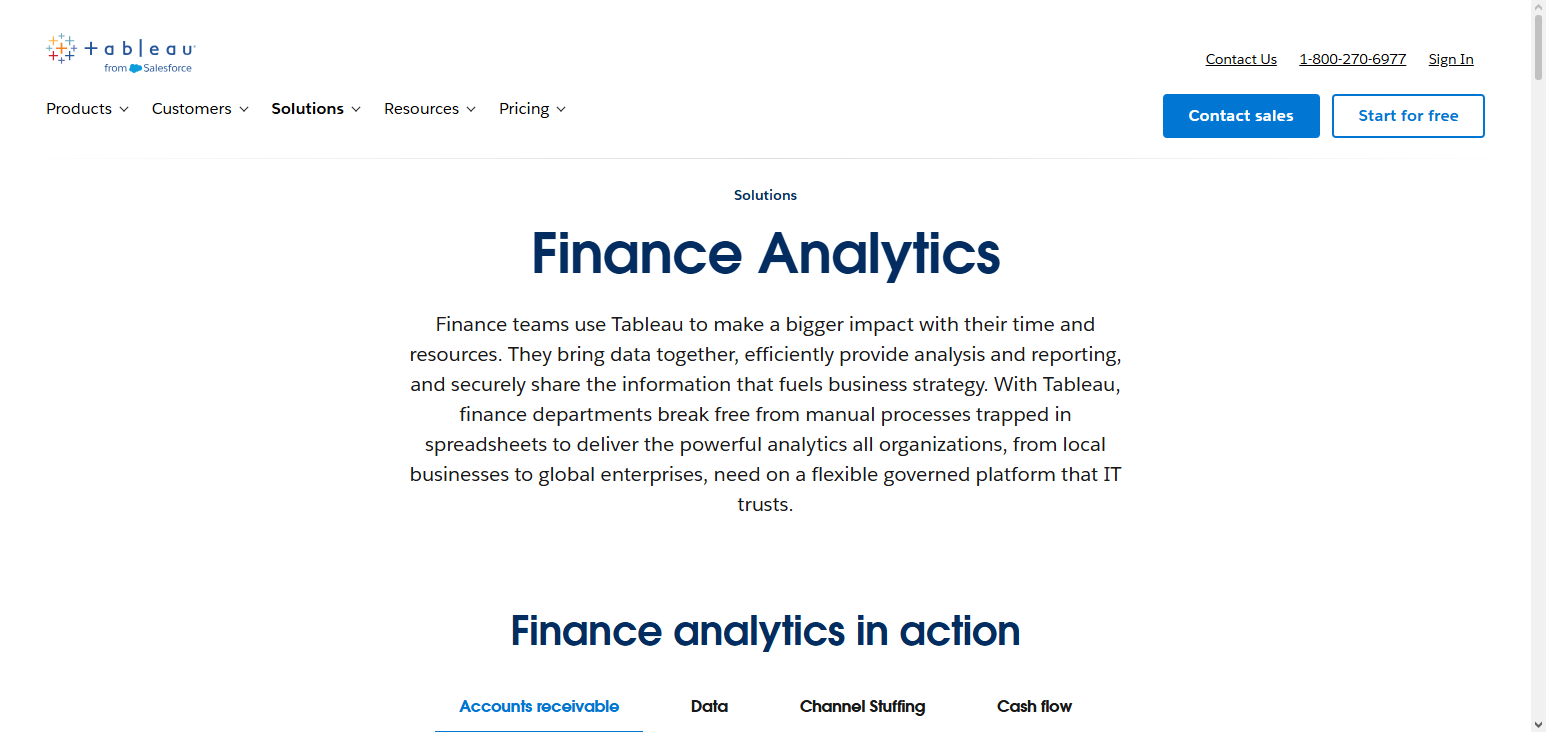
Additionally, users can integrate and customize their dashboards to their preference from multiple data sources, including ERPs and cloud databases. Dashboards can also be tailored to show KPIs. Thanks to predictive analytics and scenario modeling, Tableau is among the Best Financial Dashboard Software for Real-Time Insights because users can conduct financial analysis with all real-time data available to make accurate decisions.
Tableau Finance AI Dashboards Features, Pros & Cons
Features
- Visualization of finance using AI
- Integration with data in real time
- Dashboards for custom KPIs
- Forecasting with predictive analytics
- Data blending for multiple sources
Pros
- Powerful and flexible visualizations
- Strong depth of analytics with AI insights
- Handles large and complex data sets
- Customizable dashboards of high granularity
- Extensive integration ecosystem
Cons
- Learning curve is steeper
- High costs for the complete feature set
- Mastery requires advanced training
- Small sized firms not as ideal
- Costs of deployment and maintenance
2. Power BI (Microsoft)
Microsoft’s Power BI is a comprehensive tool for the analysis and visualization of financial data. It provides companies the ability to develop live reporting and dashboards, as well as implement other AI features, which assist in understanding financial data and optimizing the financial performance of the company. Microsoft’s Power BI is specifically integrated with Microsoft 365, Excel, and Azure for enhanced collaboration and the accessibility of data.
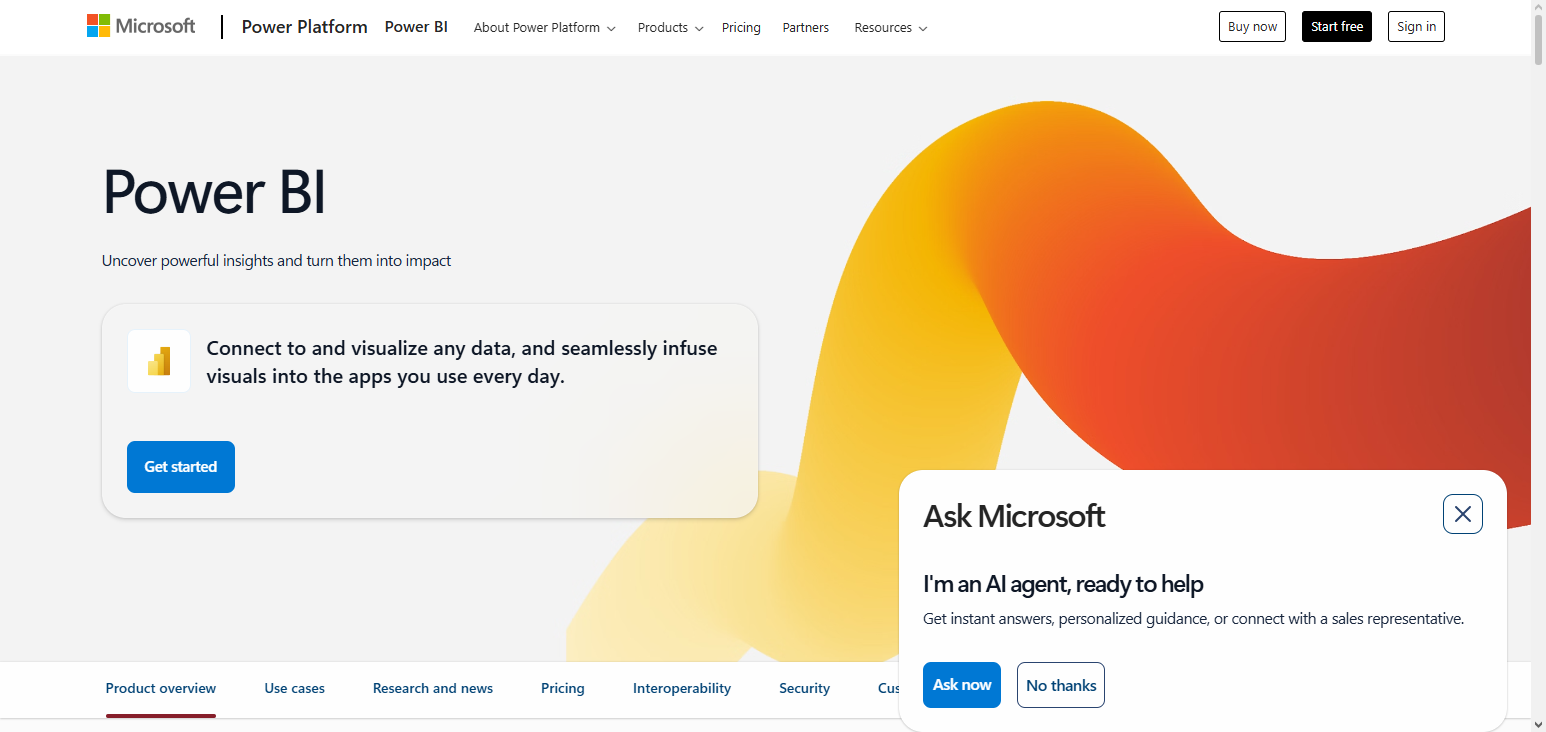
Power BI’s AI features include predictive (and other) analytics, as well as natural language queries to answer questions about financial analytics. Power BI is one of the Best Financial Dashboard Software for Real-Time Insights due to providing the ability to create precise, strategic analytics from all financial data.
Power BI (Microsoft) Features, Pros & Cons
Features
- Dashboards of finance in real time
- Queries in natural language
- Integrated with Microsoft Stack
- Predictions driven by AI
Pros
- Licensing for higher affordability and scalability
- High ease of integration with Excel and Azure
- Visualization and customization is rich
- Large community with strong support
- Value is strong for users of Microsoft
Cons
- Complexity for users not technical
- Large datasets lead to a decrease in performance
- Advanced analytics are in the Pro and Premium
- Data models require set up time
- Mobile dashboards need tweaking
3. Qlik Sense Finance AI
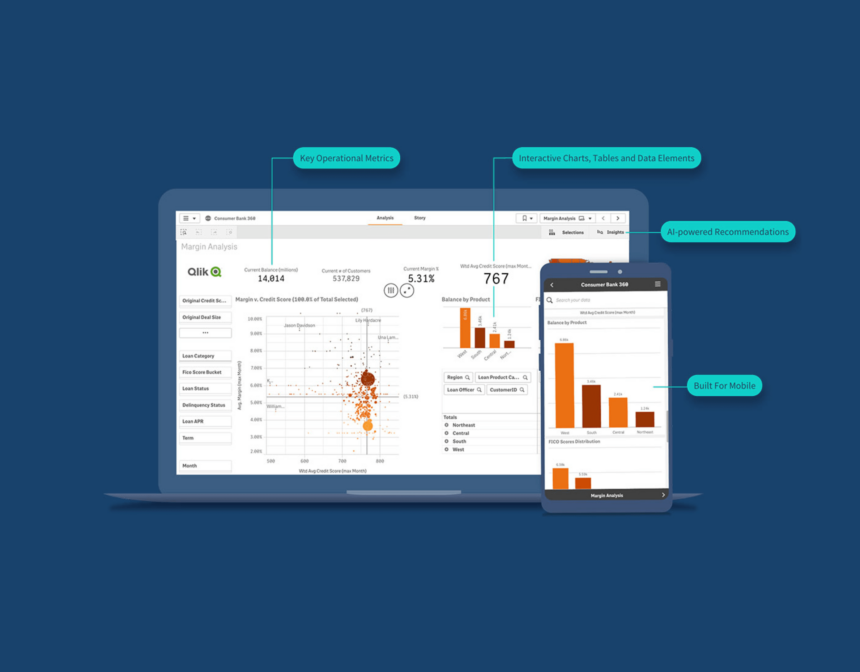
Qlik Sense Finance AI combines analytics and self-service for the assistance of finance teams in the understanding of the content. Qlik Sense supports the discovery of data, aided by AI, with features like advanced financial modeling and interactive visualizations. Dashboards and other tools from Qlik Sense provide the ability to extract and combine data from various platforms to create real-time displays of various financial metrics.
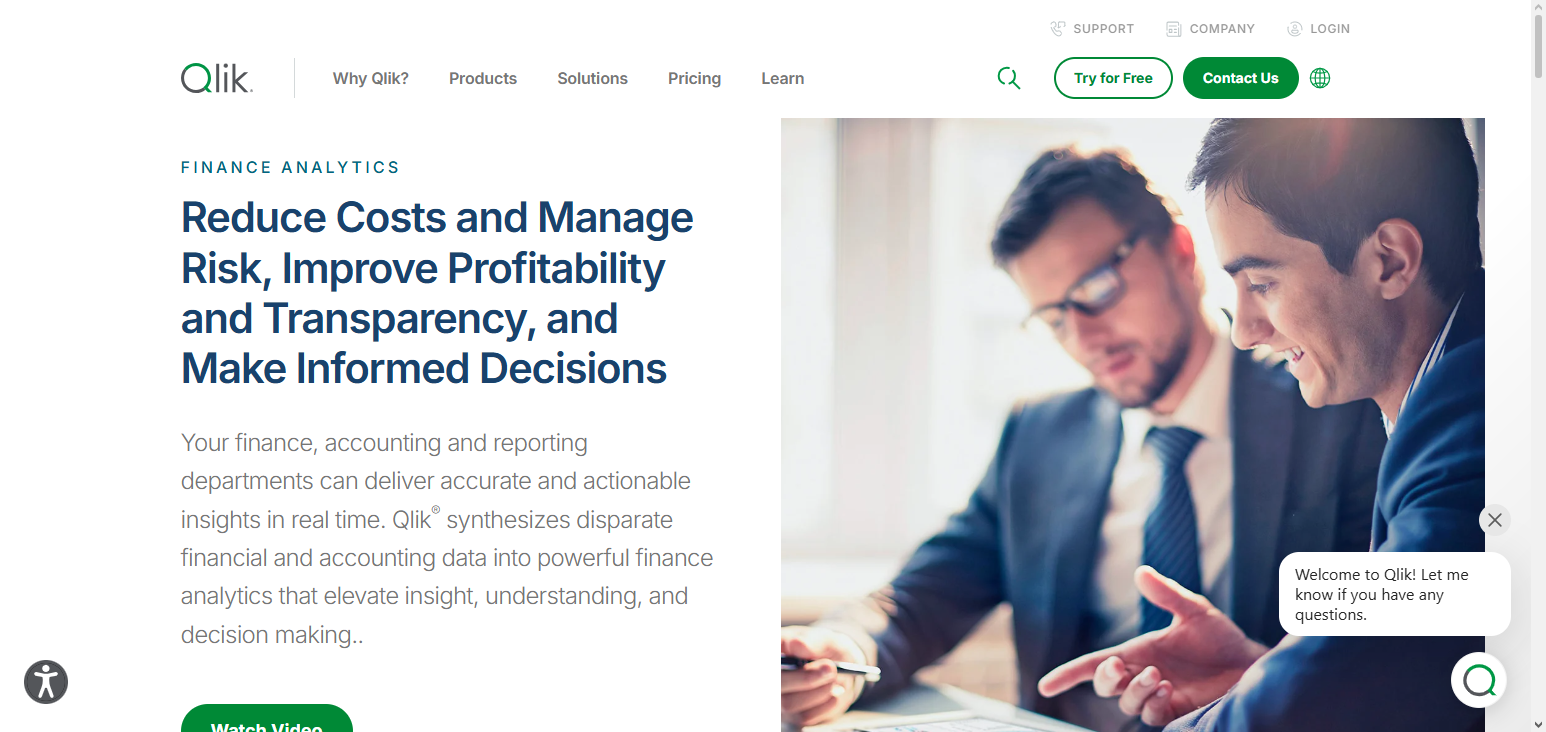
Integrative and predictive analytics provided by AI assist in the planning and management of cash flows. Qlik Sense is also recognized as one of the Best Financial Dashboard Software for Real-Time Insights. It increases the speed and accuracy of organizations making key financial decisions.
Qlik Sense Finance AI Features, Pros & Cons
Features
- Automated reasoning
- Intelligent data exploration
- Data engine
- Dashboards updated in real time
- Apps for financials tailored to clients
Pros
- Fast association and exploration of data
- AI recommendations are helpful
- Great for analysis on the fly
- Security and governance are great
- Enterprise easily scales to
Cons
- Licensing complexity
- Professional services for initial configuration
- Some competitors have a more refined UI
- Advanced functions have a steep learning curve
- Not as popular as Tableau/Power BI
4. Zoho Analytics
Zoho Analytics is an effective analytics tool that can be used by companies of any size. Through real time AI powered dashboards, users can view revenue, expenses, and cash flow. Users can also understand trends and pinpoint anomalies.
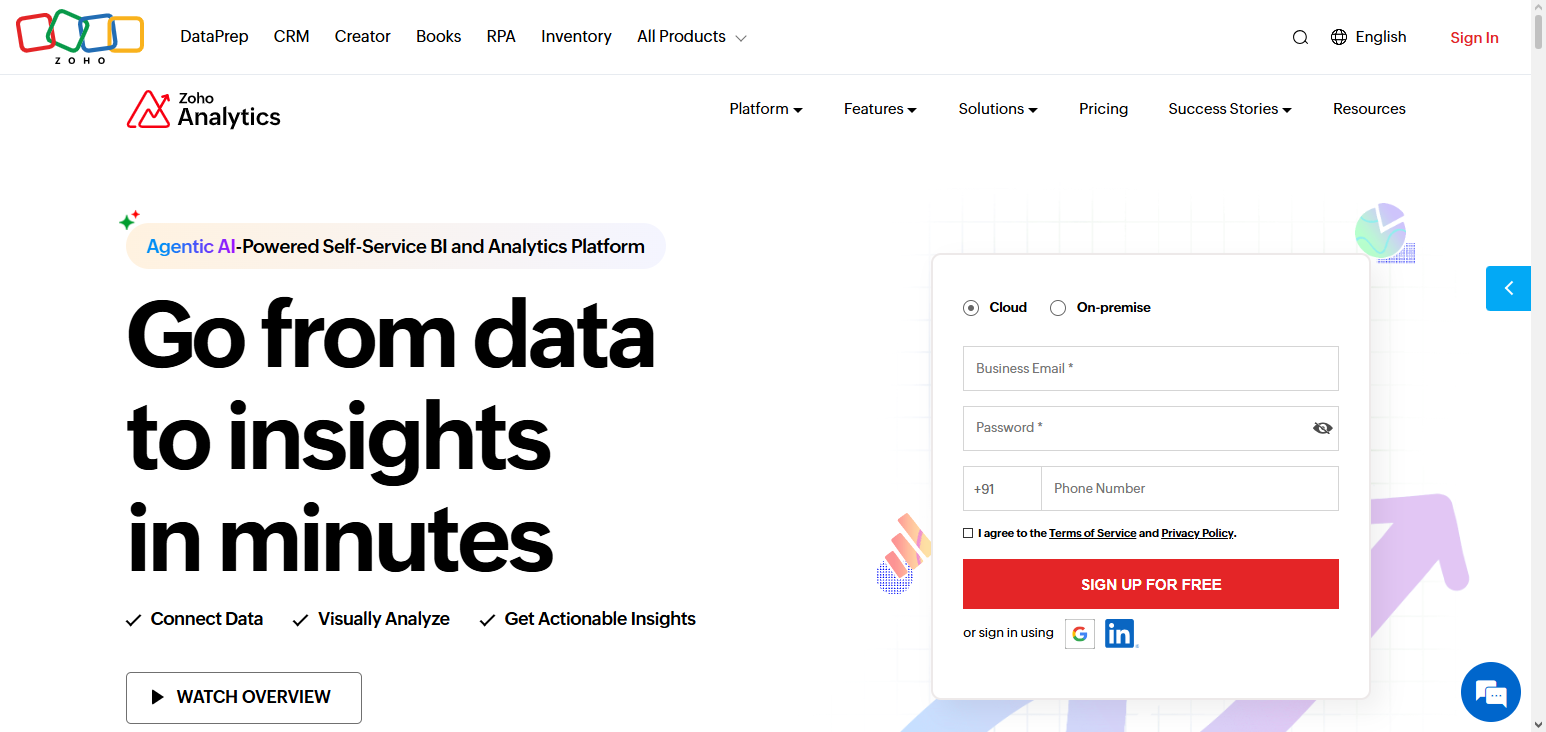
Users are also able to create dashboards and reports through the tool’s drag and drop interface, and do so without becoming experts in the technology. With over 500 integrations, Zoho Analytics connects to any accounting, ERP, and CRM, Providing analytics in real time by using effective dashboards means that finance teams can easily and effectively monitor and assess their organization’s financial performance, support the organization in making informed and effective budgeting and financial decisions.
Zoho Analytics Features, Pros & Cons
Features
- Dashboards that are easy to build
- Insights from AI with alerts
- Ability to integrate multiple sources
- Analytics updated in real-time
- Analytics can be embedded
Pros
- Simply setup and operation
- Positive ROI for small to medium-sized businesses
- Financial templates are provided
- Automation and sharing technologies are very good
- Large library of connectors
Cons
- The ability to predict is not as good as other platforms
- Limits on scalability for very large businesses
- Visual representations of data are less impressive than tableaux
- Large data sets lead to less impressive performance than other platforms
- A cluttered UI is worsens the user experience
5. QuickBooks Advanced Dashboard
The QuickBooks Advanced Dashboard provides the ability to see all financial aspects of small and medium sized companies. Tracking cash flow, expenses, invoices, and all KPIs is done using advanced dashboards and reporting setups that are integrated into the rest of the QuickBooks ecosystem.
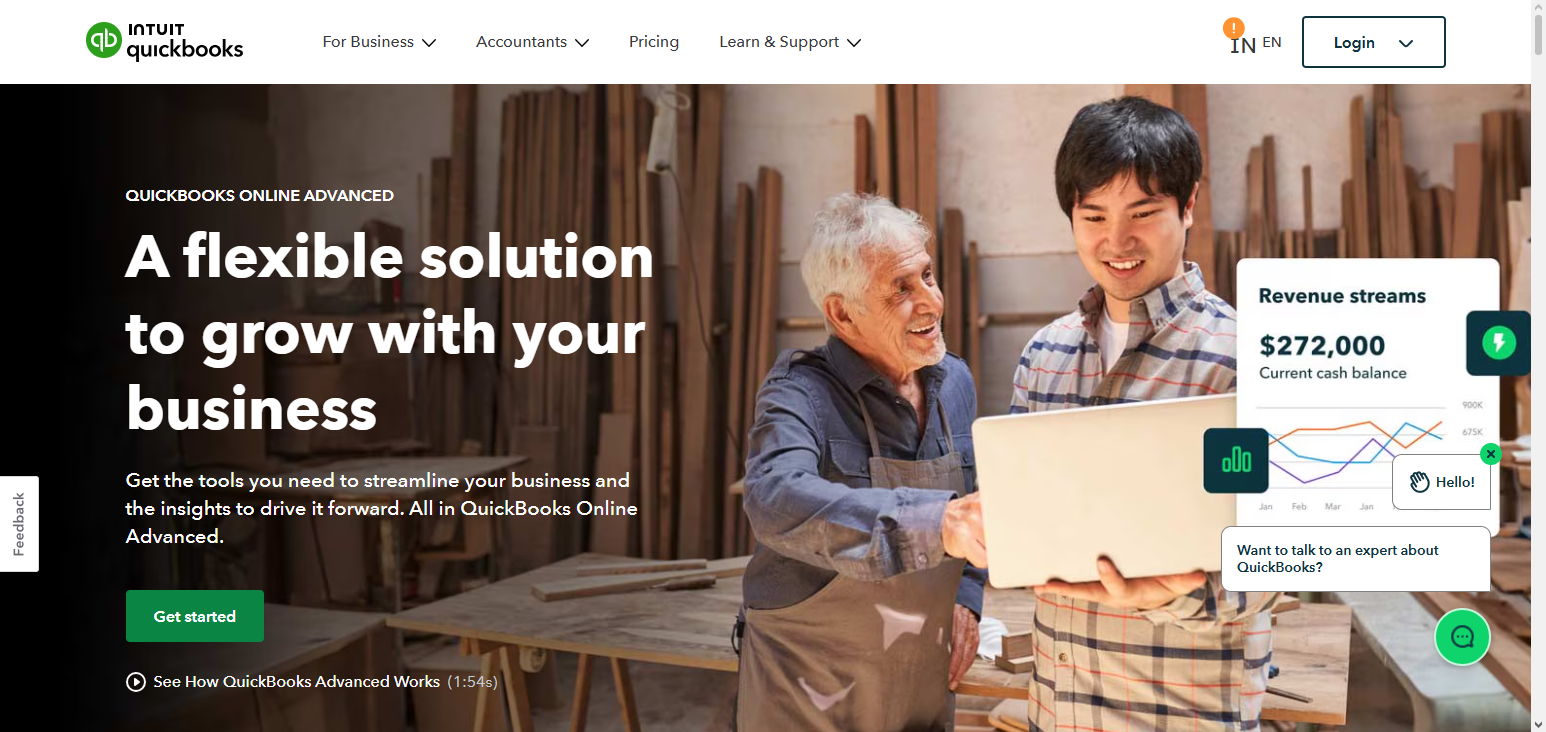
Users can utilize AI powered insights to identify trends, monitor their performance in real time, and forecast revenue, all of which is done through customizable dashboards and automated reports that are generated by the system. QuickBooks Advanced Dashboard is widely regarded as the best in its class and is compiled in books for financial dashboards and real-time insights. Users are able to see the overall financial condition of their company and make any necessary decisions to meet their company’s objectives.
QuickBooks Advanced Dashboard Features, Pros & Cons
Features
- Reporting on cash flow in real-time
- AI provides insights into trends
- Visual representations of invoices and expenses
- Monitoring of KPIs
- Integration with QuickBooks
Pros
- Integration with QuickBooks is seamless
- Easy for non-technical users
- Provides a financial overview
- Affordable for small businesses
- Auto-generated insights
Cons
- Only available in the Quick Books ecosystem
- Less robust for forecasting
- Few customization options
- Not suited for analysts
- Limited scalability
6. Xero Analytics Plus
One option is Xero Analytics Plus. They provide clients with an excellent financial dashboard where information is processed in real-time and presented in an easy to understand manner to drive better decisions. This tool uses AI to helps clients track and predict revenue, expenses, and profit and identify abnormal activities.
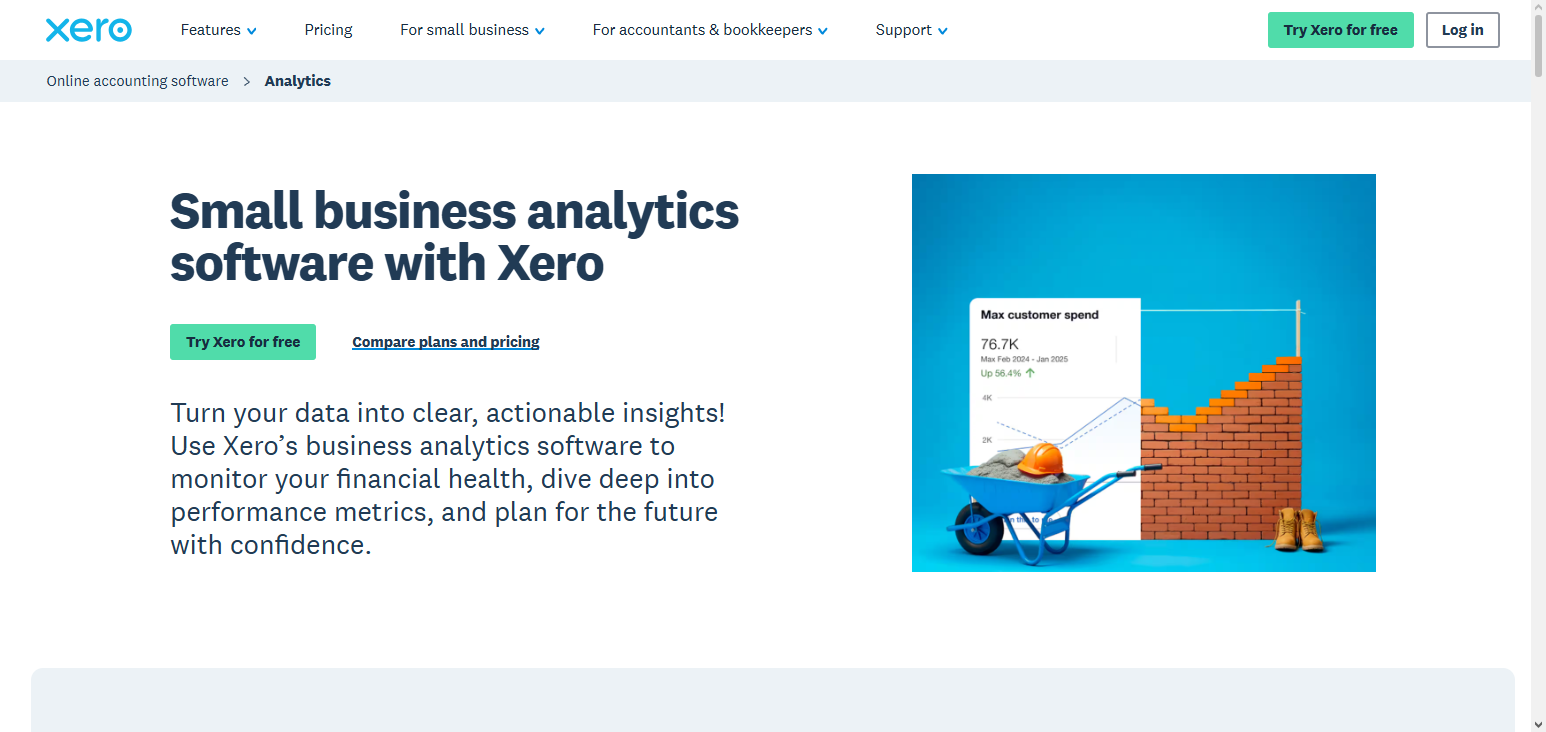
The tool comes with a customizable reporting feature where clients can create different visual dashboards in order to monitor the financial KPI’s that matter most. Targets can be set with confidence and quick access to the data clients need is always guaranteed. Therefore, Xero Analytics Plus is, with no added integrations required, one of the Best Financial Dashboard Software for Real-Time Insights to target small and growing enterprises.
Xero Analytics Plus Features, Pros & Cons
Features
- Dashboards for cash flow
- AI forecasting models
- Alerts for KPIs
- Syncs bank data in real time
- Reporting is customizable
Pros
- Easy summary of the finances
- Clear accounting view for SMBs
- Automatic sync with bank data
- Clean UI and user-friendly
- Affordable options for tiers
Cons
- Analytics not very deep
- Best use is in Xero accounting
- Basic predictive features
- Fewer options for visualizations
- Not suitable for more complex
7. FreshBooks Insights AI
Regarding simple financial dashboards that leverage good data analytics for better/stronger decisions, FreshBooks Insights AI would be an ideal ai financial dashboard for small businesses. FreshBooks clients can track revenue, expenses, profit, and client billing in real-time and their tool uses good analytics to provide predicted reporting and alerts that automate the reporting processes and highlight layers of data that are reporting anomalies.
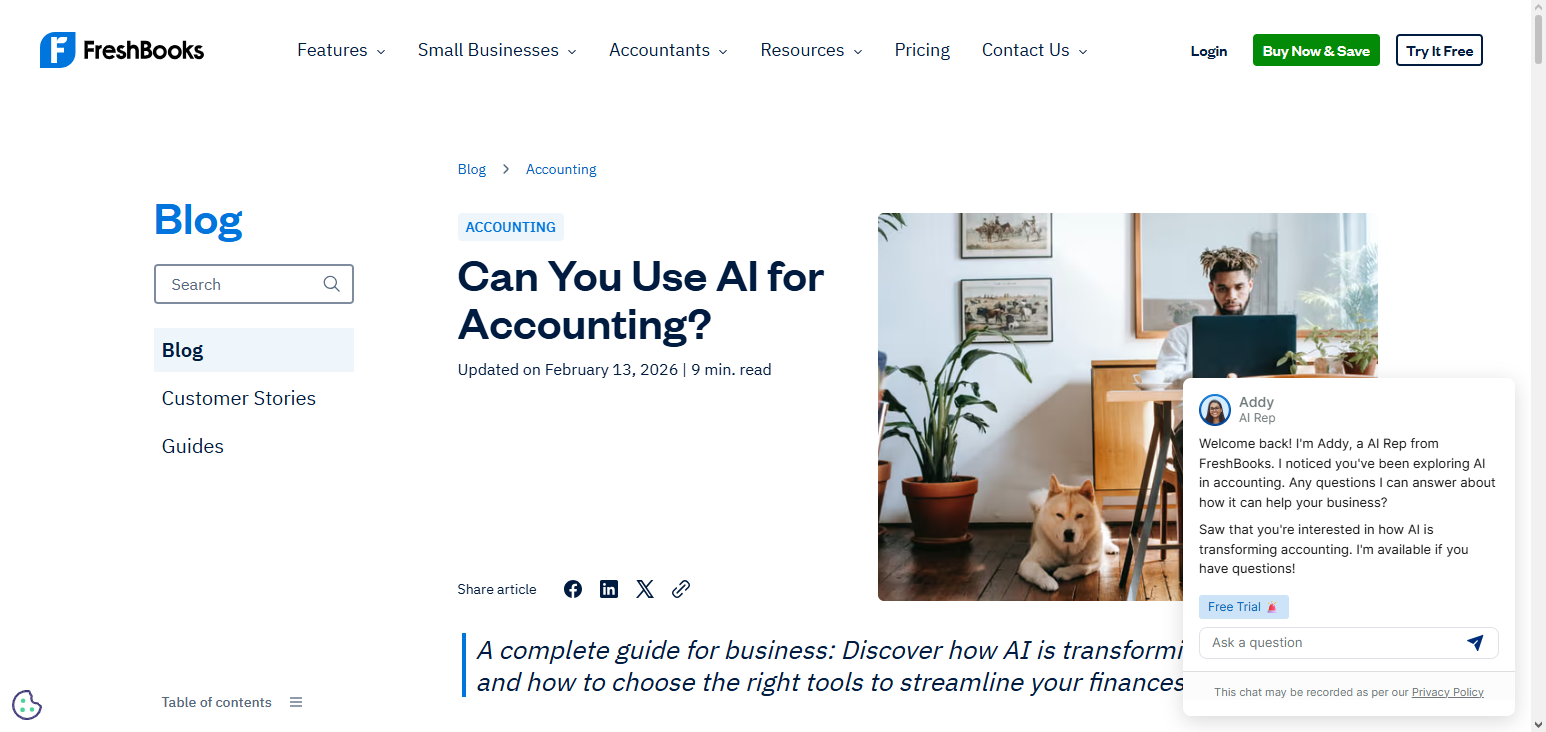
The reporting feature is customizable and allows the financial team of the business to decide what KPI’s are most important and the visual reporting feature helps in breaking down the financial data into simple and easy to understand layers. No added effort is required and FreshBooks Insights AI is, of course, one of the Best Financial Dashboard Software for Real-Time Insights.
Freshbooks Insights AI Features, Pros & Cons
Features
- Tracking of income and expenses automated
- Recommendations by AI
- Visibility of profitability per client
- Cash metrics in real time
- Dashboards that are easy
Pros
- Simple setup
- Small business and freelancer is ideal
- Categorization of expenses is smart
- Clean visualization and easy to understand
- Automated insights are useful
Cons
- Limited features for enterprises
- Fewer options on a custom dashboard
- Absence of advanced forecasting
- Fewer integration than competitor
- Unsuitable for large datasets
8. Oracle NetSuite Financial Dashboards
Dashboards from Oracle NetSuite Financials give real-time reporting and AI-based planning and analysis to give users unparalleled visibility to enterprise-grade finances. The dashboards in Oracle NetSuite Financials provide scenario modeling and predictive analytics. Integrating Oracle’s suite of applications provides users the ability to view all aspects of their business
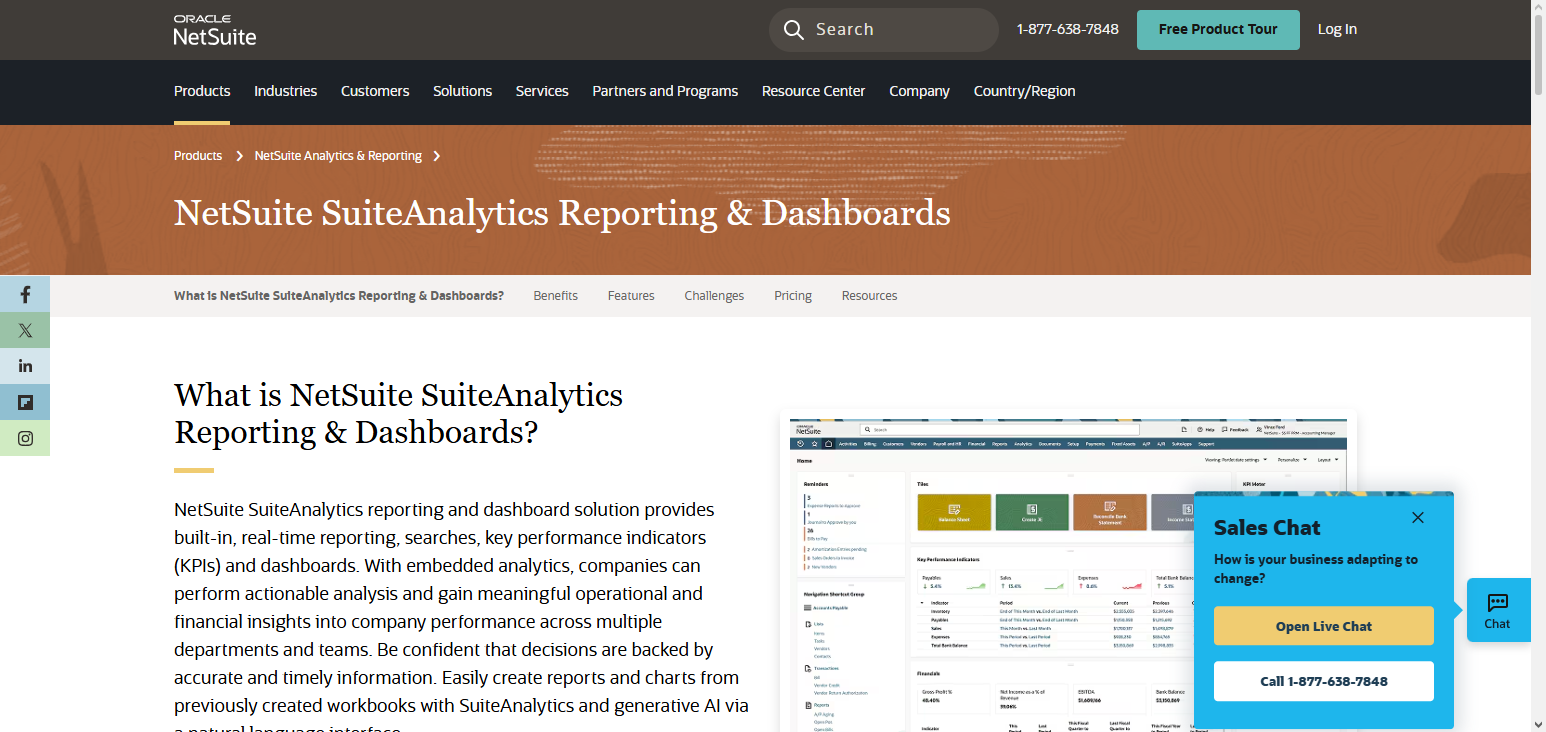
NetSuite Financial Dashboards have also earned the title of one of the **Best Financial Dashboard Software for Real-Time Insights** due to their ability to enable businesses to optimize their financial processes and make quick strategic decisions while offering visibility to actionable insights from all business units.
Oracle NetSuite Financial Dashboards Features, Pros & Cons
Features
- Financial analytics enterprise
- Real-time KPIs
- AI forecasting
- Compliance Reporting
- Integrated ERP Data
Pros
- Best for Large Enterprises
- Robust Integration with Financial Planning
- Compliance and Governance Tools
- Global Real-Time Insights
- Strong Drill-Down Analytics
Cons
- Long Time For Deployment
- Specialists Needed
- Complex Licensing Structure
- Weakness for Small Enterprises
9. SAP Analytics Cloud
SAP Analytics Cloud provides real-time analytics and predictive analytics to facilitate the financial decision-making process. Analytics Cloud provides financial professionals with artificial intelligence-based analytics, visualization, and collaborative dashboards to facilitate and improve the decision-making processes.
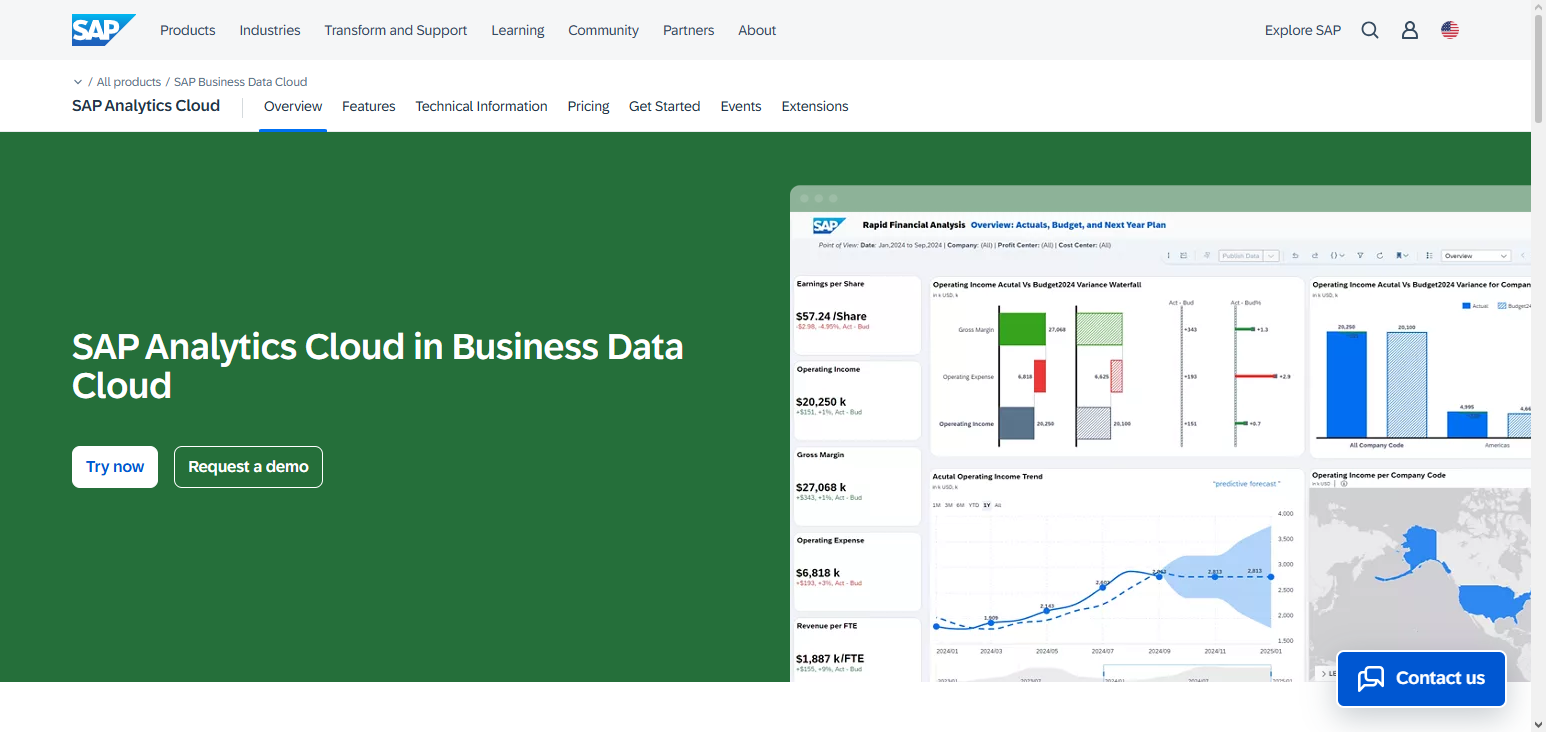
Real-time integration with SAP ERP provides comprehensive insight into revenue, costs, profitability, and forecasts. SAP Analytics Cloud also provides trend analysis, scenario planning, and customized reporting, creating a platform that allows users to utilize intelligent analytics for superior financial planning and the attainment of strategic objectives. SAP Analytics Cloud is also one of the **Best Financial Dashboard Software for Real-Time Insights**
SAP Analytics Cloud Features, Pros & Cons
Features
- Real-Time KPI Dashboards
- SAP ERP and Finance Integrated
- Self-Analytics Service
Pros
- Strong Analytics Across Modules
- Collaboration across Analytics
- Security for Enterprises
- Best Analytics for SAP Environments
Cons
- Complex for Search New Users
- Costs More
- Structured Data Governance REQUIRED
- Time for Setup
- Increased Need for Technical Setup
10. Workday Adaptive Planning
Harnessed with real time dashboards and AI, Workday Adaptive Planning provides users with accurate analytics and forecasting. Finance teams can model budgets, track KPIs, and easily perform scenario planning. Workday Adaptive Planning integrates with Workday to ensure accurate and consolidated financial data.
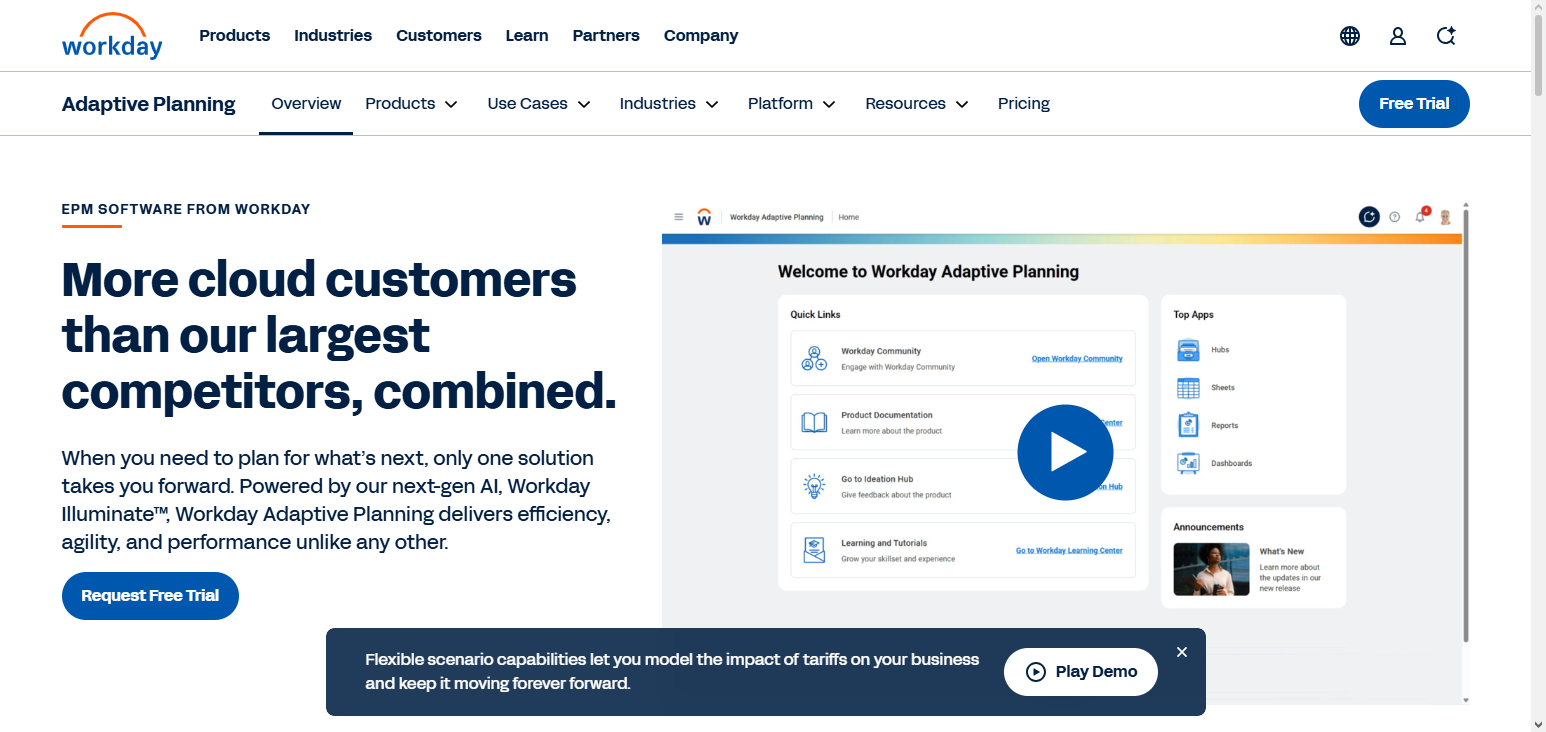
AI provides users with analytics, cash flow management, and automatic anomaly detection. Workday Adaptive Planning is recognized as one of the Best Financial Dashboard Software for Real-Time Insights. Workday Adaptive Planning provides users the ability to improve financial planning, maintain optimal budgets, and refine business strategies.
Workday Adaptive Planning Features, Pros & Cons
Features
- Budgeting and Forecasting
- Dashboards in Real Time
- Scenarios Modeling
- Cloud Planning with AI Insights
Pros
- Accuracy in Forecasting
- Planning and Budgeting Tools are Strong
- Secure and Cloud-Native
- Finance Teams Best
Cons
- Higher Price
- Requires Workday Ecosystem
- Time for Setup and Training
- Not Best for Small When Small
- Reporting has Rigidness
Conclusion
The impact of choosing the best financial dashboard software is paramount. To gain actionable insights, businesses rely on financial dashboard software such as Tableau Finance AI Dashboards and Oracle NetSuite. Such tools help finance professionals track KPIs, optimize cash flow, and improve decision-making.
Advanced AI dashboards and predictive analytics and forecasting have also been incorporated to aid finance professionals. Finance professionals at small and medium enterprises may use QuickBooks Advanced Dashboard, FreshBooks Insights AI, and Xero Analytics Plus.
These also provide simple dashboards and actionable insights. Overall, choosing the best financial dashboard software transforms raw financial data into actionable insights and increases efficiency.
FAQ
Financial dashboard software is a tool that visualizes financial data in interactive dashboards, enabling real-time tracking of key metrics like revenue, expenses, cash flow, and profitability for better decision-making.
Real-time insights allow businesses to respond quickly to changing financial conditions, detect anomalies, monitor performance continuously, and make faster, data-driven decisions.
While not mandatory, AI enhances forecasting accuracy, highlights trends, detects outliers, and streamlines analysis — making insights more actionable and efficient.
Yes, top solutions like Power BI, Zoho Analytics, and Xero Analytics Plus integrate seamlessly with accounting, ERP, CRM, and banking systems to consolidate financial data.