
In this article, I will discuss the best financial tech stacks for scaling SaaS startups. Choosing the right financial technology is crucial for startups looking to grow efficiently, manage cash flow, and streamline operations.
- What is a Financial Tech Stack?
- Key Points & 10 Best Financial Tech Stacks For Scaling SaaS Startups
- 10 Best Financial Tech Stacks For Scaling SaaS Startups
- 1. Stripe
- 2. QuickBooks Online
- 3. NetSuite ERP
- 4. Brex
- 5. Ramp
- 6. Carta
- 7. Mercury
- 8. Bill.com
- 9. Airbase
- 10. Xero
- Key Components of a Scalable Financial Stack
- How To Choose Best Financial Tech Stacks For Scaling SaaS Startups
- Cocnlsuion
- FAQ
From accounting automation to payment processing and analytics tools, the right tech stack can empower SaaS companies to scale faster while keeping finances organized and strategic.
What is a Financial Tech Stack?
A financial tech stack is an optimized set of software tools that enable companies to manage their financial operations comprehensively.
This usually includes software for payment processing, accounting, expense management, banking, and financial operations.
An effective stack for SaaS startups provides automation of recurring billing and compliance, transaction reconciliation, cash flow monitoring, and real-time reporting.
Streamlined and integrated, their operations enable companies to automate and reduce manual processes, and accurately manage financial operations as they expand globally.
Key Points & 10 Best Financial Tech Stacks For Scaling SaaS Startups
Stripe Handles global payments, subscriptions, invoicing, and fraud prevention, ensuring seamless revenue collection across markets.
QuickBooks Online Provides automated bookkeeping, expense tracking, and tax preparation, simplifying financial management for growing SaaS startups.
NetSuite ERP Offers enterprise-grade accounting, compliance, and global consolidation, ideal for scaling SaaS firms preparing IPOs.
Brex Corporate cards and spend management platform, enabling startups to control expenses and optimize cash flow efficiently.
Ramp Automates expense management, budgeting, and savings insights, helping SaaS startups maximize operational efficiency and profitability.
Carta Manages cap tables, equity, and valuations, ensuring accurate investor reporting and compliance during fundraising stages.
Mercury Provides modern banking solutions with integrations for payments, analytics, and forecasting tailored for SaaS businesses.
Bill.com Simplifies accounts payable and receivable, automating vendor payments and customer invoicing with strong audit trails.
Airbase Comprehensive spend management platform combining approvals, payments, and reporting for better financial visibility and control.
Xero Cloud-based accounting software offering invoicing, payroll, and reconciliation, perfect for small-to-mid SaaS startups.
10 Best Financial Tech Stacks For Scaling SaaS Startups
1. Stripe
As of 2026, Stripe is still the backbone of SaaS payment infrastructure. It enables global payment processing, instant payouts, sophisticated revenue recognition, and supports over 135 currencies.
Its API-first design allows seamless integration with SaaS billing engines, and its latest AI-powered fraud detection technology decreases disputes by 40%.
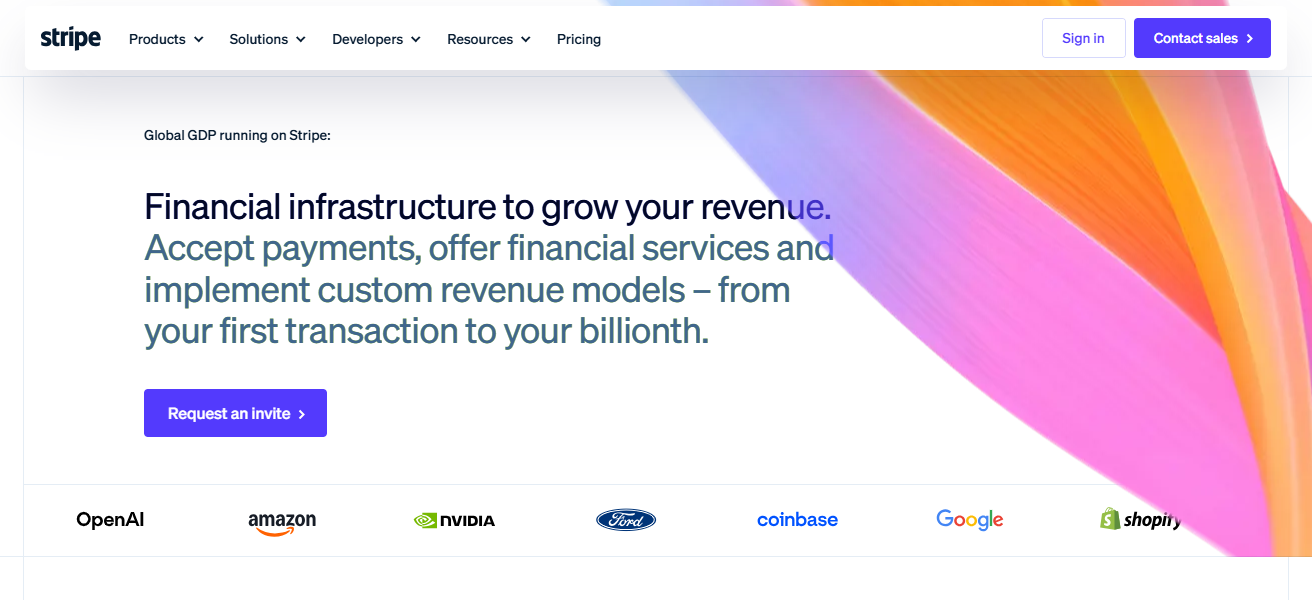
Stripe Atlas is a great resource for startups as it assists with company incorporation and compliance.
Stripe is the quickest path to scaling from pre-seed to IPO, processing over $5.8B in recognized revenue in March 2026 alone.
Stripe Features
- Global Payment Processing: Process payments in 40+ countries with multiple currencies and local payment method support.
- Subscription & Billing Automation: Manage recurring billing and invoicing, along with the complete subscription lifecycle.
- Fraud Protection: Stripe Radar 2.0 uses machine learning to identify and prevent fraudulent transactions.
- API: Integration with SaaS tools and ERPs with Xero and QuickBooks, seamlessly.
| Pros | Cons |
|---|---|
| Global payment support in 40+ countries with multiple currencies. | Can be expensive for high-volume transactions due to processing fees. |
| Subscription and recurring billing automation. | Requires developer expertise for advanced customization. |
| Advanced fraud detection with AI (Stripe Radar 2.0). | Some features, like embedded financing, are not fully available globally. |
| Extensive API ecosystem for seamless integrations. | Learning curve for non-technical finance teams. |
2. QuickBooks Online
By 2026, QuickBooks Online will be a fully integrated accounting solution using cloud computing, designed specifically for SaaS startups.
It will include automatic AI classification for transactions, real-time tax compliance, and forecasting cash flow analytics.
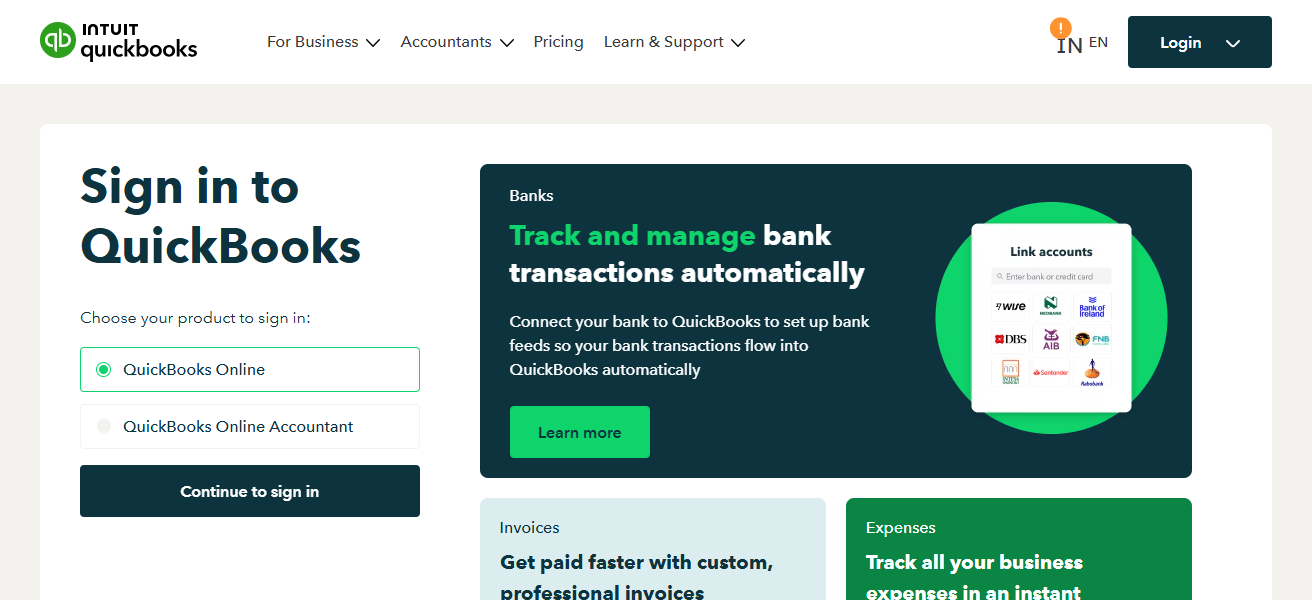
Along with multi-entity support, and API connectors for QuickBooks integration with Stripe, Mercury, and Bill.com, Startups will be able to automate their billing to match SaaS models.
Due to its low price and simple setup, QuickBooks is ideal for startups prior to moving to an ERP solution.
QuickBooks Online Features
- Expense Categorization: Bookkeeping is no longer necessary as the system categorizes all expenses.
- Cash Flow Dashboards: Access to the system provides insight into income, expenses, and runway.
- Multi-Currency: A great tool for SaaS startups with clients all around the world.
- Integrations: Easy sync with Stripe, Brex, and Bill.com along with other financial tools.
| Pros | Cons |
|---|---|
| Cloud-based accounting with real-time dashboards. | Limited advanced ERP features for large-scale operations. |
| AI-driven expense categorization saves time. | Can become expensive as the number of users grows. |
| Integrates with payments and financial tools like Stripe and Brex. | Multi-currency handling has occasional reconciliation issues. |
| User-friendly interface, ideal for early-stage startups. | Reporting options can be less customizable than enterprise solutions. |
3. NetSuite ERP
The power of NetSuite ERP will be seen 2026, offering real-time financial consolidation across subsidiaries, forecasting, and compliance with IFRS and ASC 606.
Scale-ups and unicorns operating multi-billion-dollar businesses depend on NetSuite. NetSuite features an AI-driven “System of Intelligence” that workflow automates purchases, billing, and forecasting, eliminates manual reconciliation.
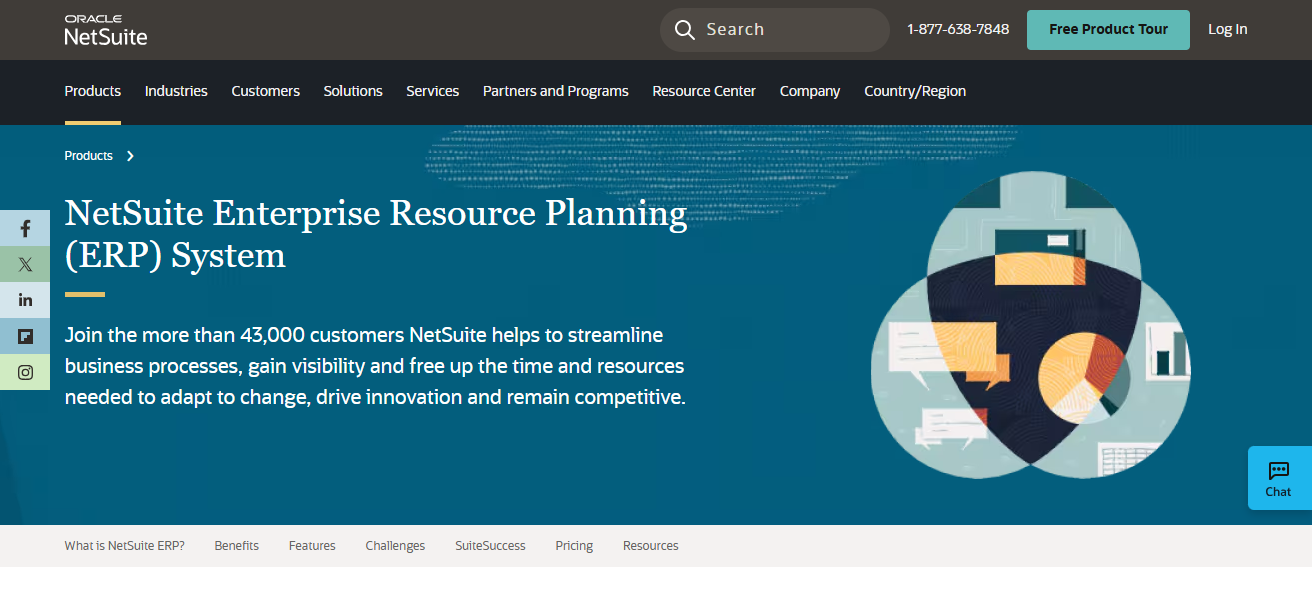
NetSuite also handles global tax regimes and complex SaaS revenue models, making the platform necessary as startups outgrow QuickBooks.
NetSuite ERP Features
- Full ERP: One platform for accounting, finance, CRM, and subscription billing.
- Revenue Recognition Automation: Fully compliant with ASC 606 and IFRS 15.
- AI-Based Predictions: Predicts customer behavior including cash flow, churn, and profitability.
- Global Expansion: Able to support multi-subsidiary, multi-currency, and multi-tax.
| Pros | Cons |
|---|---|
| Comprehensive ERP: finance, CRM, subscription billing in one. | High implementation cost and longer setup time. |
| Automated revenue recognition compliant with ASC 606. | Complexity can require dedicated financial/IT team. |
| AI-powered forecasting for cash flow and profitability. | Overkill for early-stage startups with simple accounting needs. |
| Supports multi-subsidiary, multi-currency, global expansion. | Customization can be expensive and time-consuming. |
4. Brex
Brex has established itself as the leading corporate card and spend management solution for SaaS startups. By 2026, Brex has over 35,000 customers and provides AI spend insights and benchmarks.
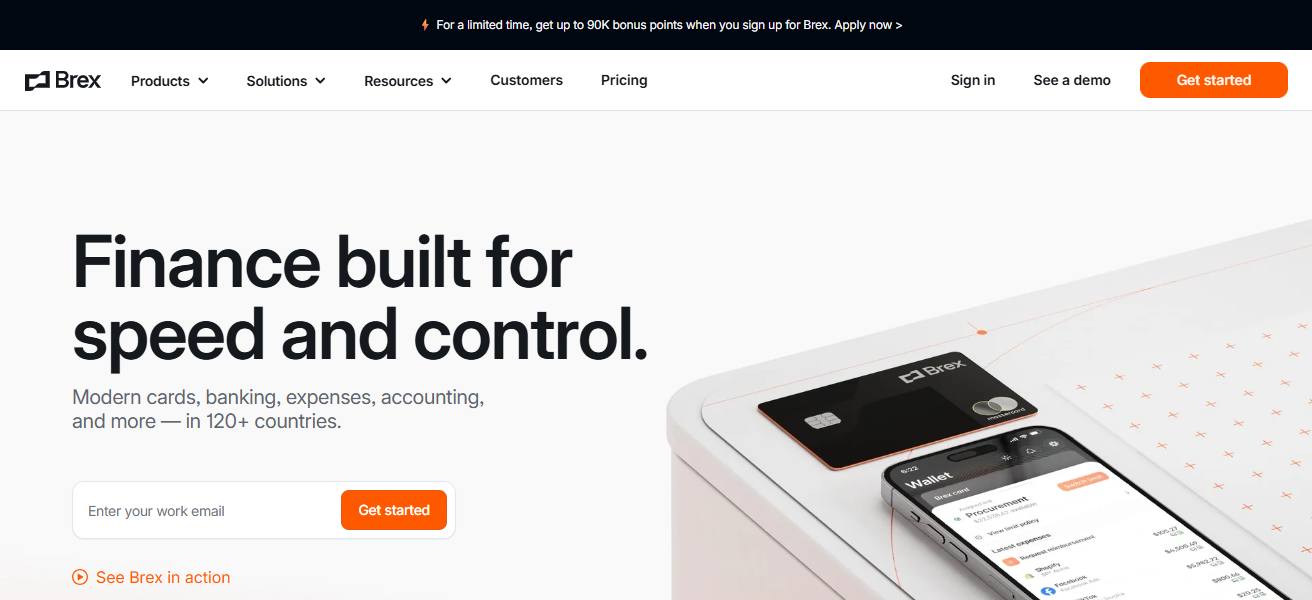
With ERP-integrated spend visibility at SaaS vendors, Brex customers have raised $1.2 billion across 11 funding rounds.
Brex customers automate expenses and receive venture debt and collections rewards to SaaS growth tools like AWS and Notion.
Brex Features
- Corporate Cards for Startups: Get instant virtual and physical cards with customized limits.
- AI Expense Management: Get expenses categorized and reported automatically.
- Real-Time Credit: Based on the current revenue and cash flow metrics.
- Accounting Integration: Easy tracking through integrations with QuickBooks, Xero, and NetSuite.
| Pros | Cons |
|---|---|
| Startup-friendly corporate cards with instant virtual/physical issuance. | Limited availability outside the U.S. for some products. |
| AI-driven expense categorization and real-time reporting. | Some advanced features only in higher-tier plans. |
| Dynamic credit limits based on revenue, no personal guarantees. | Not suitable for companies with complex international banking needs. |
| Integrates with QuickBooks, Xero, and NetSuite. | Support can be slow during peak onboarding periods. |
5. Ramp
Ramp is a spend optimization platform that analyzes billions in monthly SaaS spend. In 2026, they helped startups identify areas to save with AI vendor benchmarking.
Their “Top SaaS Vendors” report gives CFOs market intelligence on new SaaS tools and fast growth vendors.
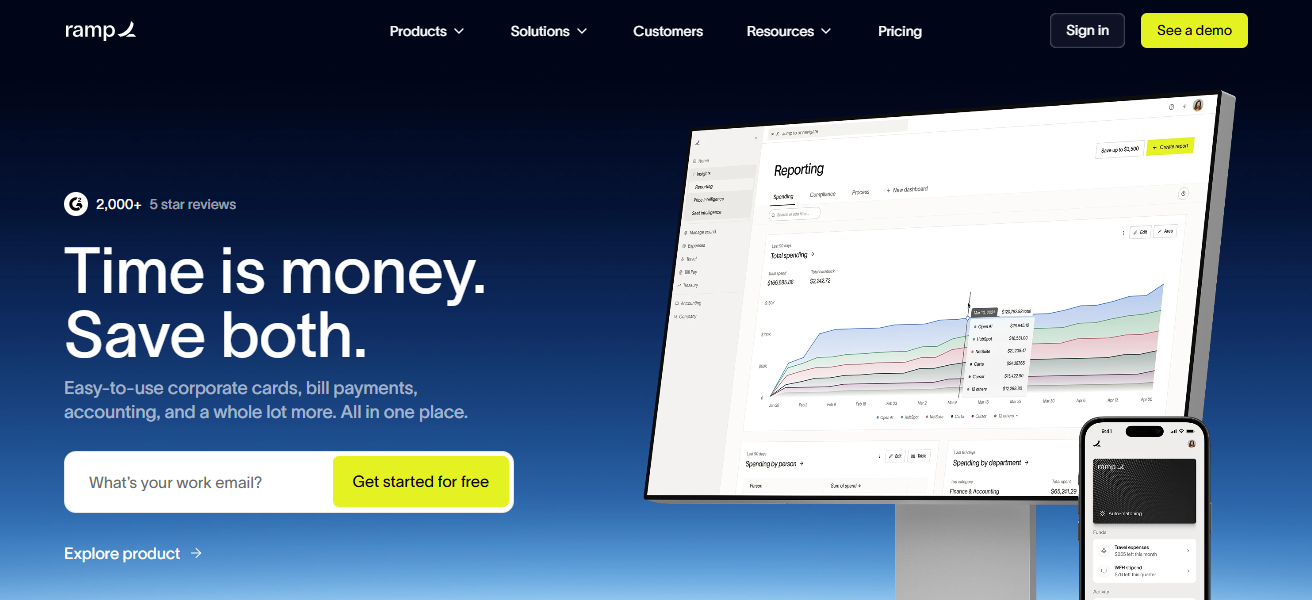
Ramp’s automation partners with QuickBooks and NetSuite to reduce SaaS spend processing time by 80% and simplify reconciliation. For high growth startups, Ramp enables cost control without hindering growth.
Ramp Features
- Automated receipt matching & anomaly detection.
- Corporate Card Control: Set & adjust control limits in real-time.
- Savings Recommendations: AI identifies areas to save, like subscriptions that can be canceled.
- Accounting Sync: Integrates to QuickBooks, NetSuite, and Xero.
| Pros | Cons |
|---|---|
| Automated expense tracking and receipt matching. | Focused mainly on U.S.-based companies. |
| AI-driven savings recommendations on subscriptions and vendors. | Limited traditional banking features. |
| Corporate card management with custom limits and controls. | Fewer integrations compared to NetSuite or Xero. |
| Real-time analytics for cash flow optimization. | Can require adjustment for teams used to manual approvals. |
6. Carta
Carta handles equity and cap table management specifically for SaaS startups. They expect that by 2026, they will be managing data for over 60,000 startups and 3,000 venture funds, managing equity and providing secondary liquidity solutions in real-time.
Their analytics have shown that AI startups have captured 44% of capital in the US. Startups depend on Carta for 409A valuations
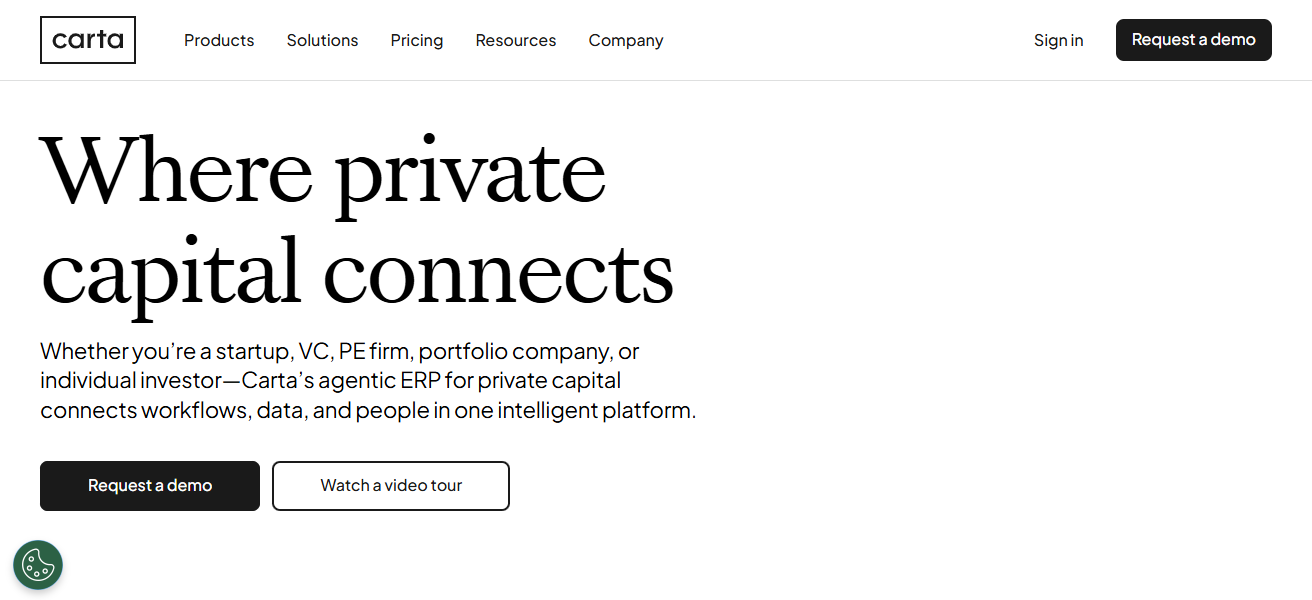
Investor reporting, and providing employee equity grants so they can be compliant and transparent during fundraising.
Their partnership with Brex and Mercury further tightens the integration within the financial stack.
Carta Features
- Equity & Stakeholder Tracking: Clarity on their equity options.
- 409A Valuations: Compliant employee stock option valuation.
- Scenario Modeling: Funding rounds, dilution, and exits.
- ERP Integration: NetSuite & QuickBooks accounting & compliance.
| Pros | Cons |
|---|---|
| Accurate cap table and equity management for startups. | Focused solely on equity; not a full financial stack. |
| Supports 409A valuations and compliance reporting. | Costly for very small startups without investors. |
| Scenario modeling for funding rounds and dilution. | Advanced analytics require paid plans. |
| Integrates with NetSuite and QuickBooks for accounting sync. | Learning curve for first-time founders managing equity. |
7. Mercury
Mercury has API-first banking solutions tailored for SaaS founders. By 2026, it will have over 200,000 served startups, complimentary wires, virtual cards, and treasury management + services.
Mercury’s banking-automation SaaS, and programmatic banking workflows, via developer-centric API, is the most automated.
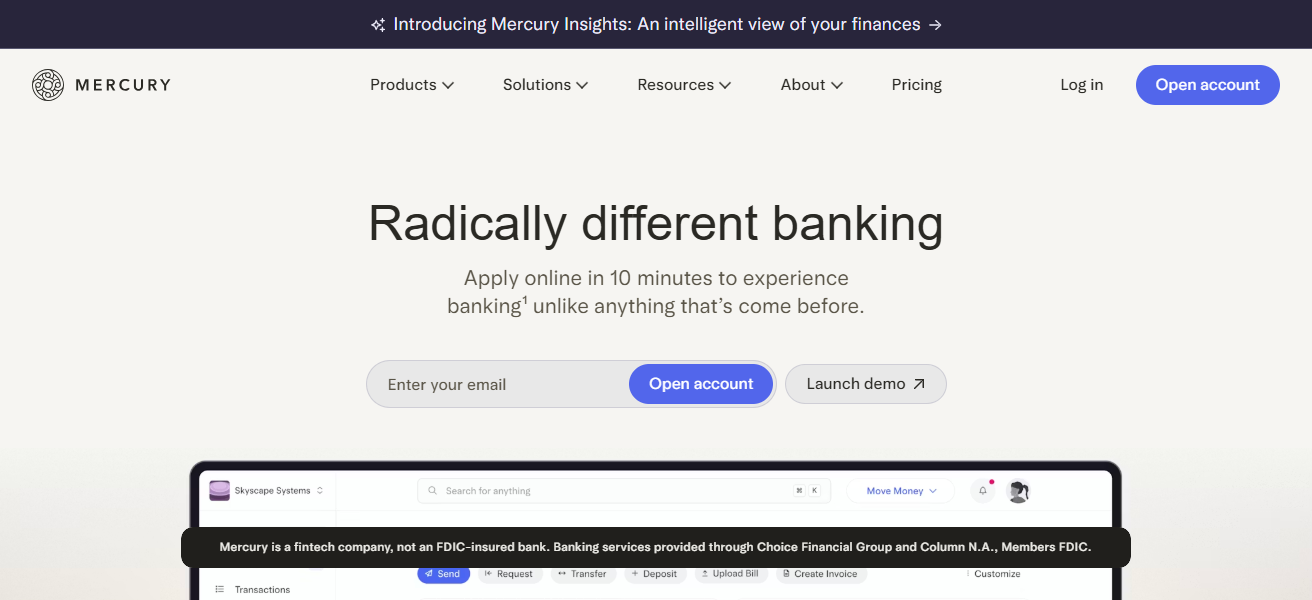
Startups with multiple funding rounds can benefit from high-yield treasury accounts & venture debt. Mercury’s banking services alongside the Stripe and Shopify integrations, further support SaaS revenue management.
Mercury Features
- Digital Banking: Checking, savings, high-yield cash accounts, & no fees.
- Programmable Payments: Automated APIs for payroll, vendor, and internal payments.
- Multi-User Control: Role-based permissions for finance teams.
- Integrations: Stripe, QuickBooks, and Brex.
| Pros | Cons |
|---|---|
| Digital banking with fee-free checking and high-yield cash accounts. | Limited physical branch access. |
| Programmable APIs for payroll, vendors, and internal payments. | Mainly U.S.-focused, limiting global expansion. |
| Multi-user role-based access for finance teams. | Interest rates on savings can fluctuate. |
| Integrates with Stripe, QuickBooks, and Brex. | Less robust credit facilities compared to traditional banks. |
8. Bill.com
Bill.com has staying power as the leader in A/P automation. In the year 2026, it predicts billions in B2B payments that will include AI invoice matching and fraud detection.
Start-ups rely on Bill.com to automate payments to vendors, sync with QuickBooks/Xero, and manage approval workflows.
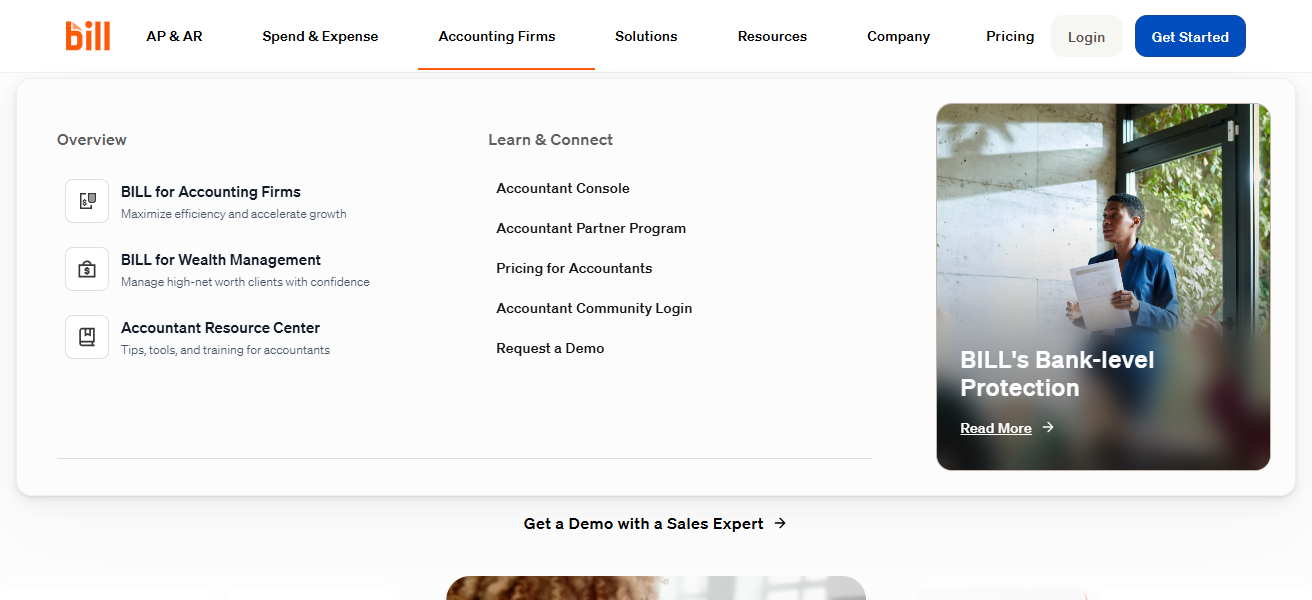
Predictive analytics of Bill.com cash outflows assists SaaS CFOs in managing liquidity. Bill.com also integrates with most ERPs and spend platforms to drive 75% reduction in AP work, allowing finance teams to focus on growth initiatives.
Bill.com Features
- Automated payable receivable: AI-driven invoice capture & approval workflows.
- Multi-Currency Payments: Supports domestic & international payments.
- Accounting Systems: Integrates with QuickBooks, Xero, and NetSuite.
- Cash Flow Visibility: Real-time dashboards to track invoices & payments.
| Pros | Cons |
|---|---|
| Automated accounts payable and receivable processes. | Not a full accounting system; needs integration with QuickBooks/Xero. |
| Supports multi-currency and international payments. | Interface can feel outdated compared to newer platforms. |
| AI-driven invoice capture and approval workflows. | Subscription cost can increase for larger teams. |
| Real-time cash flow visibility and dashboards. | Limited reporting customization. |
9. Airbase
Airbase is an all-in-one spend management solution that offers corporate cards, bill payment, and reimbursement functionality.
In 2026, Airbase Automated compliance monitoring using AI to ensure startups stay audit ready. Airbase single dashboard solution sprawl, and provides a single dashboard to monitor spending across all SaaS financial tools, including NetSuite and QuickBooks.
Airbase is ideal for mid-stage startups that need greater transparency into SaaS vendor contracts and employee spending. Automation cuts the finance team’s workload by 60%.
Airbase Features
- Corporate card kombucha: Bill payments & expense tracking.
- Automated Policy Enforcement: AI flags policy violations and approves transactions.
- Spend analytics: By department, subscription, and vendor.
- ERP Integration: Syncs with NetSuite, QuickBooks, and Xero to reduce reconciliation.
| Pros | Cons |
|---|---|
| Combines corporate cards, bill payments, and expense tracking. | Best suited for mid-size startups; small teams may underutilize features. |
| AI-driven policy enforcement and fraud detection. | Can be expensive for startups with minimal spend. |
| Real-time analytics on spend by department or vendor. | Integrations require setup and testing. |
| Syncs with NetSuite, QuickBooks, and Xero for reconciliation. | Learning curve for finance teams new to automated spend management. |
10. Xero
Xero keeps being a worldwide accounting SaaS platform serving startups in more than 180 countries. In 2026, Xero raised $230M in funding and further developed AI-driven reconciliation features.
Its strength is in multi-currency accounting, payroll, and tax compliance, which is best suited for SaaS startups with global teams.
Xero`s support and innovation is backed by 4,000 employees worldwide. With the integration of Stripe, Mercury and Bill.com, Xero provides a complete financial stack.
Xero Features
- Cloud accounting: real-time reconcilliation & tracking.
- Manual bookkeeping & Errors: AI expense Categorization reduces both.
- Multi-Currency & Invoicing: Great for international SaaS client billing.
- Integration Ecosystem: Integrates with Stripe, Brex, Bill.com, and 1,500+ other apps for complete finance management.
| Pros | Cons |
|---|---|
| Cloud-based accounting with real-time reconciliation. | May lack advanced ERP features for large-scale SaaS operations. |
| AI-driven expense categorization and reporting. | Multi-currency reporting can sometimes lag behind complex international needs. |
| Integrates with Stripe, Brex, Bill.com, and 1,500+ apps. | Some advanced financial reports require add-ons or third-party tools. |
| User-friendly and scalable for growing startups. | Payroll functionality is limited to select countries. |
Key Components of a Scalable Financial Stack
- Centralized Data: Eliminating silos by connecting bank feeds to the accounting system.
- Automation: Using rules-based workflows to handle routine tasks, such as automated invoicing and reconciliation.
- Interoperability: Ensuring tools have native integrations (e.g., Ramp integrates directly with NetSuite).
- Compliance: Implementing security, proper permissions, and automated tax handling.
How To Choose Best Financial Tech Stacks For Scaling SaaS Startups
- Scalability: Look for revenue, team, and cross-border operational growth potential.
- Integration: Look for compatibility with your current tools (Stripe, QuickBooks, NetSuite, CRM, etc.).
- Automation & Efficiency: Automated invoicing, expense and cash forecasting. Focus on predictive AI for invoicing, expense forecasting, and cash management.
- Costs & ROI: Weigh subscription fees against financial visibility and time saved.
- Security & Compliance: Considerable compliance with data security, and regulations (ASC 606, 409A, GDPR) and data security.
- Global Compliance: Support cross-country payments, and multi-currency features.
- Customer Experience: Choose tools that are user-friendly for the finance team and search for non-finance employees.
Cocnlsuion
In summary, selecting appropriate financial tech stack means everything to scaling SaaS startups. Services such as Stripe, QuickBooks, NetSuite, Brex, etc. simplify payments, accounting, expenses and equity management.
With a focus on scalability, automation, integration and compliance, startups can drive better cash flow, financial visibility, and clarity around growth. This ultimately provides the opportunity to pivot and expand on a global scale.
FAQ
Stripe is ideal due to subscription management, global payments, and API flexibility.
QuickBooks Online and Xero are top choices for ease of use, automation, and integration.
Yes, most tools like Brex, Bill.com, and NetSuite ERP integrate seamlessly to form a complete stack.
Platforms like Brex and Ramp manage team spend, enforce policies, and provide real-time analytics.